K.E. Garland's Blog, page 14
September 26, 2023


September 25, 2023
Monday Notes: 4 Ways To Gather Yourself Before Reading In Search of a Salve
If you’ve pre-ordered In Search of a Salve, thank you. I appreciate your support. That means soon, my memoir will be at your doorstep, on your eReader, or in your headphones. Soooo, I thought I’d provide a bit of guidance before you dive in. What follows has been curated based on conversations with readers who were given advanced copies or those who have anticipated what these pages hold. Here goes:
Remove my identity.“Will I see you differently?” a former high school student in his mid-thirties asked, after ordering his copy. “I just see you as a sweet little teacher.”
“Maybe,” I responded.
If you perceive me to be one way: “a sweet little” prof, an academic, a family member, a blogger, etc., then you’re going to have a hard time. It is imperative that you read this book with the perspective that this is one woman’s real life. Depending on our current or past relationship, you may be inclined to read details with an open mouth because you know me; however, I’d advise not getting stuck there.
Understand the difference between sex positivity and sex addiction.One of my daughter’s friends was giddy when she heard the title. “Alright, Mama!” she said.
She was confused. She thought this memoir was about being sex positive. While I agree with the concept of sex positivity, or the idea that people should have space to embody, explore, and learn about their sexuality and gender without judgment or shame, that is not the same as sex addiction.
I’ve spent a lot of time showing and explaining what sex addiction is in the memoir, so I won’t teach a lesson here. Instead, I will say what separates sex positivity from sex addiction is the addiction part. Addiction, according to Gabor Maté, stems from abuse, trauma or (unresolved) childhood pain, and many times it is mired in self-judgment and shame. Sex addiction is no different. It’s just that the person has used sex (and/or love) the way other addicts use substances, and it can mirror the actions of other behavior addictions, like gambling, overeating, or internet use.
This is not a book about my sexual exploits.Yes, there are some details of what I used to do, because I could not write a book with “sex addict” in the title without providing context about what that looked like in my pre-recovery life; however, I am a certain type of writer, and this is not erotica.
To that end, a few readers have described how much the book made them think about a range of topics: family, adoption, marriage, addiction, mental illness, and forgiveness, to name a few. Like any memoir worth its weight, that’s what I was going for. I want you to finish each chapter and question your so-called core beliefs. I want you to think about the relationship you have with your family, or those who you call family, but choose to ignore. I want you to think about how you treat those who you know are mentally ill or who have mental health issues.
It is a “good” read, but you won’t be able to breeze through it.More than a handful of people have told me that because of the beginning, they thought they were going to either “just read a few pages and then come back to it later,” or read the book in its entirety in one sitting. From what I understand, neither is possible.
If you’re a regular reader of my blog, then you’re already familiar with my writing style. People have told me that they continue reading, even if they don’t have experiences with the topic. The book is similar (from what I hear). However, this memoir includes heavy topics, and each chapter has double the authenticity of any blog post I’ve written. One of my mentees said she was “surprised by how candid” I was. Like I mentioned before, I hope you’ll feel as if you must put the book down, but I also hope you’ll feel as if you must pick it back up.
I think that’s about it. If you’ve already read Salve and want to add more, please do so in the comments. Otherwise, I’ll be over here doing grounding exercises and waiting for public review.
Monday Notes: 4 Ways To Gather Yourself Before Reading In Search of a SalveMonday Notes: 3 Rules I’ve Followed for Sustainable BloggingMonday Notes: It Wasn’t All BadInspiring Image #146: Transient Possessions (in Chicago)Monday Notes: Guest Interview on SA SpeakeasySeptember 18, 2023
Monday Notes: 3 Rules I’ve Followed for Sustainable Blogging
Because we live in a capitalistic society that requires money and because I desire a certain level of lifestyle, I work fulltime. Therefore, I typically prioritize my day job before all else. Once work is done, I give attention to my business, and I write. That means, I write when I can.
I always have ideas, but I don’t always have time to flesh them out; subsequently, Monday Notes was born. When I have time, I scroll through my cellphone’s notes and choose something to write about.
The idea of writing when I have time is important for me because I need un-rushed hours, space, and quiet to delve into an idea. I cannot have a work task lingering in the back of my brain or a client’s document waiting to be edited, while trying to create. My brain must be free and clear to put forth the best message.
I schedule posts.Seldom have I eked out an essay and then immediately hit publish. There have been rare occasions where I was so full with emotions that I feverishly wrote on a plane ride. But even when that happens, I still take a minute to think about if what I’ve written is what I want to share. When I do, then I wait until there’s a free Monday and schedule it under Monday Notes.
When I have a book project, like the one that is releasing September 26th, then I schedule what I want to say around Monday Notes. For example, I began posting some book news under Writer’s Workshop because I wanted to preserve the sanctity of Monday Notes’ subscribers. Those of you who subscribe to that series deserve to read regular degular stuff, not be bombarded with reasons you should buy my book. The same goes for photography. Wordless Wednesdays are scheduled and named as such so that people who want to engage with photography can do so, and those who don’t can delete.
I don’t use the blog as a diary.There’s journaling and then there’s blogging. They are different. I have a journal for tarot, a journal for relationships, a journal for book publishing and thoughts, a journal for gratitude, etc. No matter what, journaling is just for me. Long ago, when I began this blog, I vowed that I wouldn’t use it as a diary or journal. I promised myself that I’d only share experiences I thought would help someone, and I would write them in such a way, so they would, indeed, be helpful.
Blogging in this way has helped me to be accountable to myself. It has assured that I don’t blog to be petty. For example, there have been times when friends and family have deeply hurt me, and I began typing like that Kermit gif. But when I have that urge, I do as my husband suggests, and “take a beat.” I never want to weaponize my words simply because I have a platform, or simply because I can. Plus, can you imagine what a noncurated version of my blog would look like 
Anywho, the bible says, “To whom much is given.” You know the rest. Separating blogging from journaling has helped me to be responsible.
That’s how I’ve sustained blogging for eight years. There is no “right” way, so I’m interested to hear how you’ve done it. How do you keep blogging in a way that works for you?
Monday Notes: 3 Rules I’ve Followed for Sustainable BloggingMonday Notes: It Wasn’t All BadInspiring Image #146: Transient Possessions (in Chicago)Monday Notes: Guest Interview on SA SpeakeasyBook Blogger ARC Review (BookZone)September 11, 2023
Monday Notes: It Wasn’t All Bad
My debut memoir, In Search of a Salve includes heavy topics. I’ve been steeped in trauma talk, recovery research, and recovery processes for the past nine years. Being immersed in recovery life and writing about specific events has been…a lot, to say the least. Writing this memoir has required that I be hyper-focused on one topic. So, I thought I’d write something centered on happier memories, not as a form of toxic positivity, because that’s a no-no in my world, but rather, just as a reminder that there is balance in all things. All families shape us in positive and not-so positive ways, and my adoptive family was no different.
My (adoptive) mother
My mother recognized that I was gifted, and as a result, enrolled me into a gifted elementary school program, which fed into a gifted middle-school program, which fed into a gifted high school program. Without this, I would have attended a neighborhood school, like most other Black children on the West Side of Chicago. I briefly played with those kids and had a glimpse of who they were. I shudder to think what that would have looked like five days a week. Attending special schools for 11 years afforded me to not only have a strong academic base, but to also develop a lifetime of friendships with people who looked and thought like me, which affirmed one identity. For that, I’m eternally grateful.
My (adoptive) father
My father was traditional in the way he operated. He taught me how to drive and often reminded me that I can’t drive the other person’s car and mine. “Just focus on what you’re doing,” he’d reprimand. If you’ve ever ridden with me, then you know I still haven’t learned this lesson. He was also traditional in the way he warned me about the opposite sex. “All boys want one thing,” he told me. “They are always thinking with the little head, not the big one.” Finally, my father taught me something that I observed adults berate him for; he taught me to dream big. In the mid-80s, well before electric cars were seen as cost and energy efficient, he constantly worked to convert a neon blue Opal GT from gas to electric. He created an air freshener line, and according to his best friend, a major company stole his idea. No matter the outcome, watching my father helped me to see how to dream and bring one’s ideas into fruition.
My (adoptive) grandparents
I had two sets of grandparents, but everyone knows when I say, “my grandparents,” I’m talking about my mother’s parents. Well into my pre-teen years, I spent a lot of time with them during the summer. My grandfather was the president of the local school board; consequently, his role meant he and my grandmother would attend annual school board conventions. As their only grandchild (at the time), that meant I was in the back seat. They introduced me to travelling the country. Before I was 16, I’d seen much of the United States, and for this I am appreciative. Because of their influence, I learned the world was literally my oyster, that I could live anywhere. A lot of people fear leaving their home state or community due to the unknown. I’ve never had that innate sense of trepidation, and it’s partly because of my grandparents.
Other family
Other family members have positively influenced me in sporadic ways. For example, my oldest first cousin introduced me to the idea of “being myself” when I was a pre-teen. I remember proclaiming I wanted to be like her, and her immediate response was “You shouldn’t want to be like anyone, other than you.” When I was a child, my mother’s sister taught me how to riffle shuffle cards with a bridge, something I continue to impress people with to this day. She also sent me care packages when I was in undergrad, a generous act that helped me to feel connected. My other grandmother, my father’s mother always allowed me to be myself, sans judgment, which is no small act in a society that is full of constant criticism.
The family I was adopted into was like most families. There was some good, and there was some bad. And as always, sometimes the good can outweigh the bad or the bad can outweigh the good. Either way, I’m finally not ashamed to admit which one was the case for me. I’m ready to share the truth out loud.
Pre-order In Search of a SalvePre-order In Search of a Salve (audiobook)Monday Notes: It Wasn’t All BadInspiring Image #146: Transient Possessions (in Chicago)Monday Notes: Guest Interview on SA SpeakeasyBook Blogger ARC Review (BookZone)Monday Notes: Therapy Every DaySeptember 6, 2023

September 4, 2023
Monday Notes: Guest Interview on SA Speakeasy
Months ago, when I was healing from rotator cuff and bicep tendon surgery, all I could do for exercise was walk, and much of my entertainment included listening to an array of podcasts. During one of my morning walks, I came across SA speakeasy and an episode called, Female Sex and Love Addiction. The host, Roy Kim, a certified sex addiction therapist, spoke to Kim Hudson, another CSAT, about the rarely discussed topic of female sex addiction.
I listened to the episode with great interest and nodded in agreement with what Hudson had to say. Every time I come across scholarship about this subject, my life experience is affirmed, and this podcast was similar. At the end of episode 22, Roy Kim was intrigued and had more questions. I knew I could answer them. So, I made a note on my phone to reach out to him once I had an ARC version of In Search of a Salve.
July 12th, I constructed a thoughtful email.
July 20th, Roy responded with interest.
Roy read In Search of a Salve.
August 22nd, he and I recorded a podcast about the following subtopics:
The problem of sex addiction as largely viewed as a male issue.Men get away with a lot of things. Women not so much.The importance of identifying your emotions and sitting through it.Black men and women are taught to be strong, which then leads to emotional deafness.Unhealthy relationship patterns. Christians and their difficulty setting boundaries.Is God ashamed of those of us with sex addictions?What is it like to keep secrets and live a double life?Our bodies react to our traumas and our secrets.Being 40 but functioning like a hurt little 16-year-old.Kathy’s advice to women with sex addiction.The conversation Roy and I had was one of the most heart-centered discussions I have had in…my…life, and I know that it was because he and I have the same goal—to help so-called minorities heal from this specific type of addiction.
I’m sharing this for a few reasons:
MESSAGE FOR EVERYONEWhat I’ve described here is how publishing and marketing In Search of a Salve has been. I’ve felt aligned with the “right” people and experiences throughout the process. Initially, I was fearful about what readers would think and say, but responses have been affirming and loving. This is the type of energy I’ve not only craved in recovery, but also the kind of energy I need as I inch toward the release date. To say I’ve been grateful, would be an understatement.
MESSAGE FOR POTENTIAL READERSEpisode 24: In Search of a Salve (with K E Garland) will help you to determine if this book is something you want to read. If you are interested in my memoir but on the fence, the conversation that Roy and I had will help you to gain perspective on the types of subtopics the book elicits. Post-reading, the overall sentiment has been what an ARC reviewer said, you don’t have to be a sex addict, or an addict at all, to identify with this story. Our podcast convo shows this.
MESSAGE FOR INDIE AUTHORSIf you are an independent author, many experts will suggest that you market via cover reveals, blog tours, reviews, and social media campaigns. However, rarely have I seen experts suggest “doing press,” the way celebrities do when they have a new film, album, or book. We’re told to oversaturate the market like celebs, without the reach or the resources. Oftentimes marketing looks like shouting buy my book, buy my book, buy my book all over the place and to the wrong people. I’m suggesting you use podcasts as a more contemporary approach. You more than likely know someone who hosts one. Reach out and see if they’ll have you on.
MESSAGE FOR MARGINALIZED PEOPLE WHO ARE SEX ADDICTSRoy Kim agreed to have me as a guest because it is rare for someone like me, who identifies as Black and female to admit that she is a recovering sex addict. It is even more uncommon for someone who looks like me to have written an authentic portrayal of the experience. If you’re reading this and know that you have an addiction problem, but you don’t fit the so-called addiction prototype, then know this episode is for you.
I’ve created a page devoted to my guest interviews. If engaging in this type of medium is your thing, then check here toward the end of September to hear a few more.
Listen to SA speakeasy: Episode 24: “In Search of a Salve with K E Garland” via Apple Podcasts
Listen to SA speakeasy: Episode 24: “In Search of a Salve with K E Garland” via Spotify
Pre-order In Search of a Salve.
Monday Notes: Guest Interview on SA SpeakeasyBook Blogger ARC Review (BookZone)Monday Notes: Therapy Every DayMonday Notes: Low-Maintenance vs High-Maintenance RelationshipsWriter’s Workshop: Studying the CraftAugust 30, 2023
Book Blogger ARC Review (BookZone)
Book Review ARC ~ IN SEARCH OF A SALVE
Comments are allowed on BookZone.
August 28, 2023
Monday Notes: Therapy Every Day
“You want your friends to do therapy,” she said. “And that’s too hard.”
I had just shared the details of a failed friendship, and this person’s words made sense. You see, I’ve spent the last nine years in self-therapy. I allow my intuition to lead me to a new concept, then I research who the “leading authority” is on that idea, and then I read his or her work. For example, attempting to understand my oldest daughter and her choice of boyfriend(s), led me to the concept of codependence, which led me to Melody Beattie’s work, which led me to read The New Codependency. Consequently, I began to understand myself and how I’d embodied similar traits.
This is normal for me. I not only read about concepts that reveal a deeper understanding of myself, but I also apply them. When I realized I’d lived much of my young adult and adult life sans boundaries, I read about and learned how to create and enforce them, so I could show up as a healthier version of myself. This is a part of how I live, so I can function in new ways.
The problem is, as this person pointed out, everyone is not like me, and sometimes, it impacts how I relate. A lot of times, I’m having a conversation that is normal for me, but difficult for others. In essence, I’m asking others to dig deeper than they care to, than they usually do. I’ve asked friends to think about how they interact with me in relationship, and especially for those my age, it’s quite a challenge. I’ve had friends who’d rather end the relationship than to stop and figure out how to engage in a better way or to consider how I may have felt in situations. This is too hard, a friend recently told me. The this to which she referred was understanding that she never initiates a phone call with me.
For a while, friends’ responses felt personal. Each situation seemed as if the person didn’t want to see my point of view, or as if they believed that what I was saying was ridiculous—as if I’d asked them to climb Mount Vesuvius. They’d cross their eyes and fumble their words, until we were no longer communicating effectively. Now, I realize their reaction wasn’t personal. People are made up of their childhood and adolescent backgrounds and how they’ve learned to handle situations from those foundational times. Many people project, instead of reflect.
And, as this person told me, “Most people don’t want to do what the therapist says, much less read something on their own and follow through with that.”
“Hmmmph,” I said. “That’s interesting. I do therapy every day.” Therapy is not just for the therapist’s office. Just like yoga isn’t just for the mat, and practicing religions isn’t just for the church, synagogue, or mosque. It’s a daily practice and part of my life. Meaning, I will look at myself several times over in a situation, before I accuse someone else of being the problem. I’m always willing to take ownership, and subsequently, do better, if my doing better is a requirement for maintaining a bond.
But again, everyone isn’t like me. Everyone isn’t interested in examining their life or taking steps to improve. The person I spoke to reinforced something else the day we talked. “It’s okay if they don’t,” she said. “Everyone’s different.”
You can only change you is an idea I consistently reiterate on this blog, and I stand by it. I will continue to do therapy every day, with a primary goal to improve myself. However, I also know from experience that changing me for the better also changes those around me, whether they consciously know it or not.
Monday Notes: Therapy Every DayMonday Notes: Low-Maintenance vs High-Maintenance RelationshipsWriter’s Workshop: Studying the CraftMonday Notes: 10 Kuna and a Monson PostcardWriter’s Workshop: Securing Advanced Reviews for Your Back CoverAugust 21, 2023
Monday Notes: Low-Maintenance vs High-Maintenance Relationships
A few months ago, I was talking to my daughter about some relationship challenges I was having. I’d decided I no longer need to be in relationship with certain people.
“I think it’s just COVID, Mama,” she said. “The pandemic taught me that I don’t have to be running around doing all these things for people.” Then, she added, “You know … it’s important to know which relationships are low-maintenance and which are high-maintenance.”
I’m not stopped in my tracks very often during a conversation, but that last part quieted me. I had to think about it for a second, and I told her as much. What does that even mean? Why does it matter?
Here’s what I’ve come up with.
What Does It Mean?High-maintenance relationships feel tiring. I described one before when writing about my former best friend. She seemed needy and relied heavily on me as her “therapist.” She always had an issue requiring my counsel, but even after a great convo, for some reason, the issue was never resolved.
I’ve had other relationships that are accompanied with thick books for engagement of how to show up. These books included pages of rules not always aligned with my personality: Show up like this. Call on this day. Make me a priority all … the … time.
I’m sure I’ve been high maintenance to others. The tone of the text, the gloss in their eyes, or the exasperation in their voice proves it. Each says: What is it now? What more can I do? I followed the guidelines, but now there’s more. I recognize it because I’ve been that way with others. Like, dang … Haven’t I shown up enough for you?
Low-maintenance relationships, on the other hand, are synchronistic. Rules for engagement are intuited and easy. For me, this looks like reciprocity. Sometimes you pay for the lunch date, and sometimes I pay. Sometimes you suggest an activity for us to do, and sometimes I do. We equally hold space for the other person to vent. But we’re not venting all day. Most of the time, we’re having fun, laughing, talking, and sharing in life. Many of my friendships are like this. My relationship with one of my sisters is like this. It’s easygoing; there is little tension.
Why Does It Matter?Step into this analogy with me.
A few years ago, I wanted a red, Mercedes-Benz GLK. I contemplated doing all I could to get one, until I spoke with my car-aficionado husband. Not only was general upkeep expensive, like always buying premium gas, but he also told me the car wasn’t reliable. If something broke down, then I’d be paying an astronomical amount for repairs. It was a high-maintenance vehicle I couldn’t afford.
Relationships can be similar.
High-maintenance relationships are expensive. You pay with your time. You pay with your energy. Occasionally, you actually pay with money. But I’m here to affirm this for you. If you don’t have the bandwidth, it’s okay not to have them. Your reason, whatever it is, is valid. Just like that Benz wasn’t the best for my situation at the time; sometimes, some relationships aren’t either. And that’s okay.
Post-script: There is no such thing as a no-maintenance relationship. All cars, no matter their cost or age, require gas and an oil change (or electricity and new tires) 
August 16, 2023
Writer’s Workshop: Studying the Craft
There are many ways to study the craft of writing. You can earn a bachelor’s degree in English. You can attain an MFA in creative writing. You can even take a few classes here and there to learn from experts.
But what should you do if you’re like me and have no intention on setting foot in another university as a student?
Read. That’s what! Writers read, and it’s important to read books in the genre in which you intend to publish. For me, that’s memoir.
Writers read, and it’s important to read books in the genre in which you intend to publish.
Tweet
So, in 2018, I read ten memoirs to learn what bestsellers are made of and to understand what the pulse of a “good” memoir is. Here’s what I found out.

A “good” memoir focuses on one theme. My favorite memoir that demonstrates this basic principle is Jesmyn Ward’s Men We Reaped. The overarching question is why have so many of the men in her community died? The quick answer is the interrelated nature of racism, poverty, and gender. The long answer is her 256-page memoir, where chapters are written in a seesaw fashion. One chapter is devoted to understanding one man’s in-depth story, while the next chapter reflects Ward’s life as it was related to each man. By the end of the memoir, Ward has clearly made a case for how systemic racism affects human beings.

A “good” memoir has to present a bigger purpose. A bigger purpose doesn’t mean theme, necessarily, but it should answer the question: why is this author telling these stories? In My Dead Parents: A Memoir, Anya Yurchyshyn spends the first half of her book describing how much she disidentifies with her parents, how much she hates them, and how much their deaths don’t affect her. Part two digs deeper and explores who her parents really were prior to marriage and children and how this showed up in her life. This is ingenious. Anyone can write a book about why they dislike their parents. But she researches their histories as a way to see their identities, and then analyzes their lives outside of being her parents.
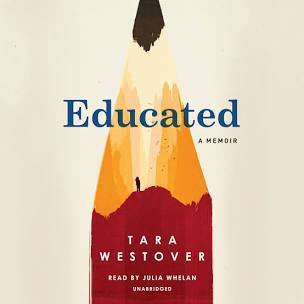
A “good” memoir weaves back and forth through time. This is a skill. Tara Westover’s Educated is superb at showing how to write a linear/not-linear story, which is important. While the overall story should be a cohesive narrative, it should travel back in time and then snap or slowly crawl back to the near present. For example, Westover remembers one of her brother’s violent acts from when she was an adolescent and then moves the story forward to a more recent memory of when she planned to visit home. The memory of the violence is important for how she will return and interact with her family in the book’s present.
A “good” memoir fits into a clear subgenre. Issa Rae uses humor for The Misadventures of Awkward Black Girl, which is a coming-of-age memoir. Kenan Trebinčević’s The Bosnia List: A Memoir of War, Exile, and Return is obviously a historical memoir, and so is The Girl Who Escaped Isis (Farida Khalaf and Andrea C. Hoffmann). Celebrity memoir is a thing, but more literary leaning ones, like Trevor Noah’s Born A Crime demonstrate sociocultural lessons. Finding Your Creative Muse explains more about these categories.
There’s nothing wrong with taking classes or seeking degrees; however, if you’d like to see what works for published authors, then I suggest reading in the genre you plan to write. I am also in no way advocating that you imitate the style of your favorite author. To me, that’s a no-no, but studying and learning about how others put words together? That’s a win for you and your growing body of work.
Are you intending to publish a book one day? Who’s your favorite author? What’s your favorite genre? What makes a book good?
Pre-order In Search of a Salve at Barnes & NoblePre-order In Search of a Salve via your favorite indie bookstorePre-order In Search of a Salve on Amazon