K.E. Garland's Blog, page 15
August 7, 2023
Monday Notes: 10 Kuna and a Monson Postcard
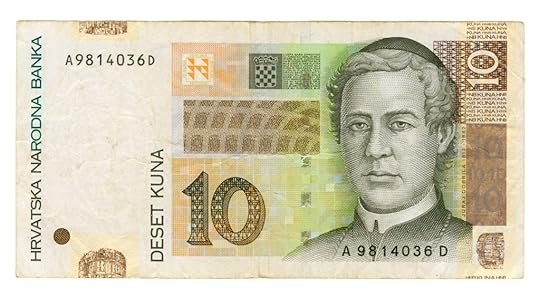
I keep 10 kuna and a Monson, Maine postcard in the front pocket of my planner.
The 10 Kn reminds me of living in Croatia. Every time I look at it, I remember how stressed I was while there. I recall the time I went to the bank to exchange 100 Kn and the teller told me they didn’t do that. I remember walking down the street with a suitcase full of dirty clothes, by myself, in search of a grocery store, so that I could exchange 100 Kn, so I could go to the laundromat. I remember crying the whole way.
But I did it, so I keep a 10 Kn to remind me that I can do hard things.
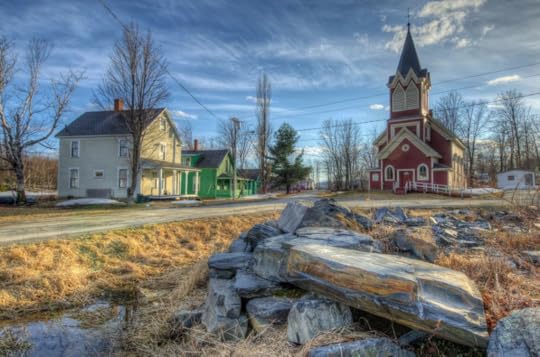
I purchased a Monson postcard during my writer’s residency in March 2022. Whenever I look at it, I remember why I wanted to win the residency. Aside from needing a quiet place to create, I told myself that, if I was awarded this residency, then that meant, I was indeed, a real writer. Sounds weird, huh? A writer, who’s won awards and who’s published in several academic journals, creative anthologies, and magazines, needed proof she was a real writer.
Well, imposter syndrome has been a constant presence in my life. That fraudulent feeling is always right there tapping me on the shoulder, asking, who do you think you are? So, I keep a Monson, ME postcard to remind myself that I am a real writer.
Keeping trinkets in plain view is just one way I motivate myself. Sometimes, I need tangible proof that if I could do fill-in-the-blank thing before, then I can do a new unbelievable thing right now.
How do you motivate yourself?
Monday Notes: 10 Kuna and a Monson PostcardWriter’s Workshop: Securing Advanced Reviews for Your Back CoverMonday Notes: Everybody’s Not a NarcissistWriter’s Workshop: Show, Don’t TellMonday Notes: Family as Performative Action

August 2, 2023
Writer’s Workshop: Securing Advanced Reviews for Your Back Cover
When my publisher said she wanted me to attain reviews for the back cover of my memoir, I started to panic. Who would write these reviews? How would I ask someone to write a review? What if they don’t like the book? These questions and more rattled around in my brain. But I didn’t tell her that.
Instead, I said, “Okie dokie,” and began to strategize.
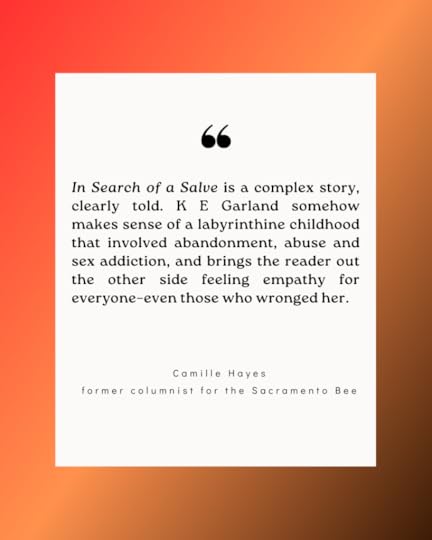
At first, I didn’t think I knew anyone, and I was partially right. Writing is a solitary event, especially the way I do it. I’m not a member of any writing groups, and I don’t frequent writing conferences. But I do write, and I have been published in quite a few anthologies, so I began by contacting one of the editors I’d worked with and had met in person—Deborah Santana. Yes. Santana’s ex-wife. I’d participated in a book reading for All the Women in My Family Sing a few years ago, and she told me if I’d ever needed anything, to let her know. Luckily, I hadn’t asked for anything, so I was able to cash in on this favor. While Deborah isn’t a reader, she did know women who were, so she sent me a list. After re-reading their essays, I chose three authors. In my email, I dropped Deborah’s name, complimented each woman on her work, and explained why I thought they would be interested in my book. I was completely surprised when Camille Hayes agreed.
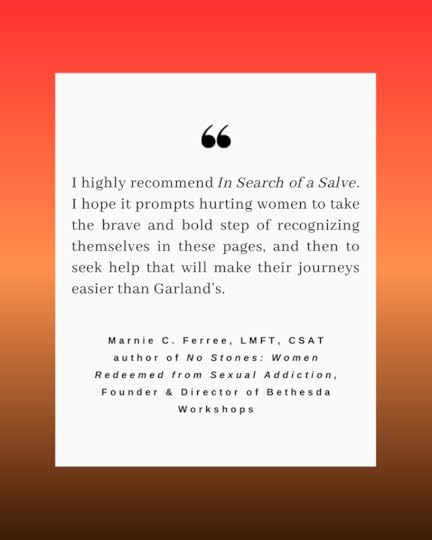
Next, I thought about my memoir’s subject matter. I’ve alluded to quite a few scholars in the book, but two were integral. Both are sex-addiction specialist, whose ideas I’ve woven throughout to qualify my experiences. The trick this time was that I didn’t personally know either of these people. I literally googled their names, read more about them, and found their emails. You could’ve knocked me over with a feather when one of them emailed me back. Her name is Marnie C. Ferree, and she is one of the leading female sex-addiction specialists in the States. She’s counseled and healed women for 30 years. Anywho, not only did she read the book, but she and I have also become fast friends.
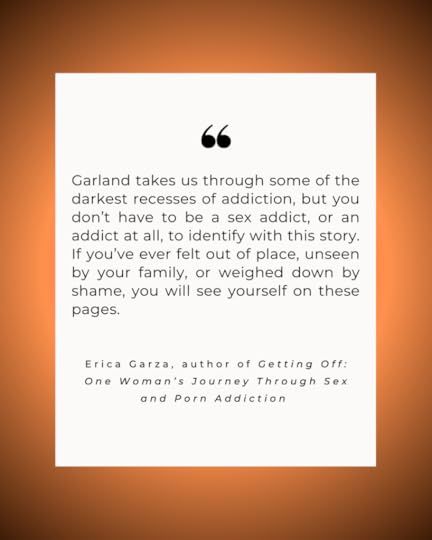
I thought it was also important to include a successful and traditionally published author. Due to six degrees of separation, I have access to a few, so I reached out to my contact, who reached out to three of her friends. There’s no success story here; they declined. I lamented for a bit, and then, did something else risky…I contacted two authors who have written about female sex addiction. About five minutes after I hit send, one of them replied—Erica D. Garza, author of Getting Off: One Woman’s Journey Through Sex and Porn Addiction. Again, I thought I was going to faint. She said she would be “honored to read and review” my book!
The last two reviews are from people I kind of know. The first, Joshua Shea, is an expert on porn addiction. We met via WordPress. Like many of you, he and I developed an online connection that ventured over to Instagram. He was more than willing to read and review, and I was appreciative because I wanted a male’s opinion. The fifth person is Mbinguni (Celestial Holmes), author of an excellent fiction novel, Looking for Hope. We met via a book club years ago, prior to her becoming an author. We are also on the same imprint, and her book is one of the reasons I felt confident publishing with NEW Reads.
So, that’s how I secured reviews for my back cover. I used my professional author contacts, asked people who had content related to my book’s topic, and took calculated risks. With a lot of alignment and a little bit of luck, five reputable people have endorsed In Search of a Salve. At some point, I’ll explain how I used my advance review copy (ARC) to attain other reputable reviews.
Pre-order In Search of a Salve on AmazonPre-order In Search of a Salve via Indie BookstoresPre-order In Search of a Salve through Barnes & NobleWriter’s Workshop: Securing Advanced Reviews for Your Back CoverMonday Notes: Everybody’s Not a NarcissistWriter’s Workshop: Show, Don’t TellMonday Notes: Family as Performative ActionInspiring Image #145: Beauty in DeathJuly 24, 2023
Monday Notes: Everybody’s Not a Narcissist
A couple months ago, I took a dark triad personality test.* It shows where you are in terms of the three dark personality traits: Machiavellianism, narcissism, and psychopathy. I answered the questions truthfully, and good news: I’m not Machiavellian or psychopathic. However, my narcissism score was a 4.7 out of 5.
Initially, I laughed this off with my husband. I mean, I’ve never been accused of being humble. If we’re talking about intelligence, I do think highly of myself, and many of the questions asked about how you viewed your intelligence compared to everyone else. But I asked my husband…is it narcissistic if it’s true? For example, I attended a high school that was number one in the nation at the time, and I received a degree that only one percent of the population possesses from a top-five public research university. I never throw this in people’s faces, but these are facts, not my opinion. Does this make me a narcissist?
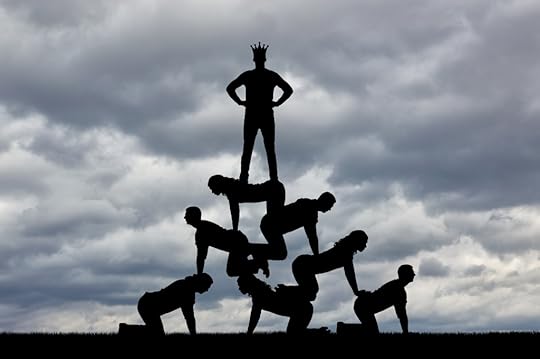
I left the answer lingering, until I found out that one of my former friends once expressed to my husband that I was, indeed, narcissistic. Though her comments were unrelated to the online quiz, it did prompt me to read about the term and traits of narcissistic personality disorder (NPD); they are as follows:
Sense of self-importancePreoccupation with power, beauty, or success EntitledCan only be around people who are important or specialInterpersonally exploitative for their own gainArrogantLack empathyMust be admiredEnvious of others or believe that others are envious of themAfter careful deliberation, I decided that I do not have NPD. Can I be arrogant? Yep. Do I have a sense of self-importance? Sure. Do I lack empathy? Anyone who is close to me, knows that I care deeply about people, and from everything I’ve read, feeling for others is something that narcissists are totally incapable of. Furthermore, I am constantly around folks who are down-to-earth; those are the people with whom I identify. Would I like to sip tea with Oprah, while discussing my book? Sure. Do I think you’re trash if you’re not Oprah. Absolutely not.
So, what’s the point? I hear a lot of people throwing psychological concepts around that have somehow become household terms. But most of us haven’t investigated the meaning of these words, because most of us are not in the mental health field or haven’t invested the time and energy to do deep dives about them. Consequently, your friend, family member, or mate may be selfish, high achieving, or egotistical, but more than likely, they are not a narcissist.
In 2020, I had a candid conversation with Dr. Dinardo for my Mental Health Matters series. In it, she said that much of the population is self-diagnosing, which is leading to misdiagnosing. “One-hundred percent of society experiences situational anxiety,” she says. “If you’re pushing yourself, if you’re trying something new, then that’s gonna be some anxiety, but at the same time, there’s the other side of it, you don’t have the skillset. Your whole entire life, you’ve been protected from failure, which is a natural part of life that happens, and you’re absolutely devastated. That’s not anxiety. That’s just failure.” It was one of the most profound things I’d heard that year. Like narcissism, we’ve used terms like anxiety and depression, when we mean stressed and sad. We say someone is toxic when the person is mean and uncaring. We read a social media quote for two seconds and think we know what trauma is. Many times, we do not.
I’m not saying we all need Psych D degrees to speak with one another, but I do think we should be a bit more careful and less accusatory. After all, calling someone a psychological term without in-depth knowledge of said concept isn’t helpful at all; ultimately, it’s just name calling.
Monday Notes: Everybody’s Not a NarcissistWriter’s Workshop: Show, Don’t TellMonday Notes: Family as Performative ActionInspiring Image #145: Beauty in DeathWriter’s Workshop: 3 Reasons I Chose a Hybrid PublisherJuly 19, 2023
Writer’s Workshop: Show, Don’t Tell
“Show, don’t tell” is age-old writing advice. As an editor, I’ve even told writers the same thing, so you’d think this would be easy for me. Well, it wasn’t. As a blogger, I’ve become used to delivering a message in a quick and easy way: create a catchy title, home in on a central message, stick to two or three points, and write a conclusion. However, full-length works don’t work that way. Memoirs, for example, require deliberate and slow writing. Readers want to see, smell, hear, touch, and taste the scene. So, I practiced this part of the craft while working with a developmental editor for five months.
Chapter five of In Search of a Salve shows what I mean. By this point in the book, I’ve shown what happened the days after my mother died, but what most don’t know is how difficult the next nine months were. Subsequently, many in my life never understood how integral one person was at that time—my friend, Mika.
Initially, I began chapter five describing who Mika was, how we met, how we became close friends, and how she positively influenced my life when we were 16. In one version of the chapter, I said this:
Our renewed friendship was one of the only healthy coping strategies I established that year.
While this lone sentence is totally acceptable for a 700-word blog, readers need more information for a book. My editor prompted me to add more details with this comment: Show us the coping, then tell us about it. Show, then tell.
I wanted to tear my hair out. My memoir had already grown from 40k words to 70k. What more could I show? But she was right. For a full-length memoir, it is unacceptable to simply write information like a mic drop and move on. Readers expect to be in and stay in the moment with you.
So, I revised the entire chapter.
Instead of beginning with Mika and our friendship, I began with these memories of my mother:
The most shocking part of my mother’s death was that she was physically present one day, and then ceased to exist the next. Up until her death, my primary world consisted of my mother, my father, and me. When it was time to grocery shop, the three of us picked through canned goods and frozen food together. From seven o’clock at night until ten, my parents sat interlocked on the couch, and I curled up on the loveseat, where we watched television together—The Love Boat and Fantasy Island on Saturday night and Alice and One Day at a Time on Tuesdays. When my mother and father wanted to see the latest movie, the three of us packed up chips, bottles of Coke, and blankets and went to the drive-in, where I sat in the backseat and watched Eddie Murphy’s career blossom. Those moments dissipated in one instant.
My mother’s death and my father’s preoccupation with Joëlle created a space of loneliness I was ill-prepared for. Silence. When my mother wasn’t dealing with her illness, she carried a lightness that manifested through Prince lyrics. Whenever I heard Dearly Beloved, we are gathered here today, I knew the air would float with Purple Rain album refrains. She’d start with “Let’s Go Crazy”and croon and move through each song until she reached the title cut, and then she’d watch the movie, mesmerized like a teenaged girl. Prince’s eccentric vibes filled every crevice of our home. If my father played DJ, then he’d pull out his Kool Moe Dee album and repeatedly play “Wild Wild West.” I remember the day the three of us visited two record stores looking for the song he’d heard on the radio. The lyrics riled him up and brought back adolescent memories of living in Cabrini Green, a time he rarely detailed. But with my mother’s death, the music stopped. Now that our home was empty, the silence was loud. Too loud.
I continued by adding more about the impact of my mother’s absence, and eventually, I returned to a description of Mika, how we’d met in the first grade, lost contact in middle school, and reconnected in the 11th grade shortly after my mother’s death. I let my words “breathe on the page,” as my editor calls it. Now that there was context, Mika’s role and the coping mechanism sentence made more sense:
I introduced her to my new hobby: watching Degrassi High, with the radio playing in the background.
“How are you listening to the radio and watching TV?” Mika asked, while turning the radio off.
I would just laugh, unaware that my hobby was a coping mechanism to drown out the quiet.
Better, right? I showed what losing my mother as a teenager was like, and I illustrated how I began to develop coping mechanisms, one unconscious strategy at a time. Frequently, writers are told to “show, don’t tell,” without specific guidance, so I hope this example is helpful.
All questions and comments are welcome below.
Pre-order In Search of a Salve on AmazonPre-order In Search of a Salve via indie bookstoresPre-order In Search of a Salve via Barnes & NobleWriter’s Workshop: Show, Don’t TellMonday Notes: Family as Performative ActionInspiring Image #145: Beauty in DeathWriter’s Workshop: 3 Reasons I Chose a Hybrid PublisherInspiring Image #144: Transient PittsburghJuly 10, 2023
Monday Notes: Family as Performative Action
I’m not interested in posing for pictures, pretending to be well, while emotions fire inside.
I’m not interested in spreading a smile wide across my face as I eviscerate deep-seated pain.
I’m not interested in keeping company with those whose life’s work is to worship Jesus, while spewing hate about others in private and praise in public.
I’m not interested in the performance of family.
I want to experience a mother whose instincts haven’t been muted by her own unmet needs, whose unconditional love isn’t predicated on codependency and control.
I want to feel the emotional security of a father, who uses words to express the intentions of his heart and the desires of his lineage, not the projection of patriarchy learned and perpetuated.
I want siblings secure enough in their attachment style to meet me through our bond of partiality, halfway toward middle ground and safety.
For when I become free from the performance of family, I can be liberated from the construct of connection. I can be loosened from the grip of a rendition of relatives. I can be released from the chains of perception of mother, father, sibling.
No. I’m not interested in the performance of family.
But this is a pipe dream in the 21st century, so I smile for the cellphones pointed in my direction, the sun behind the photographer’s back, poised to capture the golden hour of “a beautiful family,” broken inside, but perfectly documented through images portrayed via social media.
Monday Notes: Family as Performative ActionInspiring Image #145: Beauty in DeathWriter’s Workshop: 3 Reasons I Chose a Hybrid PublisherInspiring Image #144: Transient PittsburghMonday Notes: FentanylJuly 5, 2023
July 3, 2023
Writer’s Workshop: 3 Reasons I Chose a Hybrid Publisher
First things first. It’s good. I almost feel like it’s too good for me to publish. Like you could get an agent, and do a proposal, and go traditional. Honestly, I’m happy to support you in that if you want, but I’d also be happy to publish. I’ll leave that decision up to you.
NEW Reads Publications
This is what my editor and publisher had to say after she first read In Search of a Salve. Ten years ago, this would’ve been high praise and enough for me to drop my plans and head to the “Big Five” (Penguin/Random House, Hachette Book Group, Harper Collins, Simon and Schuster, and Macmillan) to pitch.
So, why didn’t I? Well, before I explain, let me briefly describe the difference between an independent press, a vanity publisher, and a hybrid publisher:
Independent Press is also called a small press. This type of publisher functions similarly to the “Big Five,” where they assume the cost of publication, such as editing, cover design, and interior design. They also work collaboratively with the author to bring the book to fruition. However, they are a small press, so they do not have the same distribution capabilities as a larger one.
Vanity Publisher is a business you pay to publish all aspects of your book. The stigma is that the author thinks their work is so great that they pay someone to publish their book, hence the vanity. Vanity presses are also stereotyped as accepting anyone’s work and not caring about the book’s success. People who use vanity presses are assumed to not be good writers. Thus, the idea of vanity publishing is frowned upon.
Hybrid Publisher is a combination of vanity publishing and an independent press. These publishers are discriminate about the authors and books they represent. The author pays a hybrid publisher to do all of the things (e.g., developmental editing, cover design, copy edit); however, a hybrid publisher also creates a contract where they split royalties with the author. By doing this, the publisher has a stake in how well the book performs.
The latter is the route I chose to go, and here’s why:
#1: Self-publishing is a lot of work.I self-published The Unhappy Wife. I sought out and paid for cover art, line editing, and copy editing. I did the same for Daddy, even though it was an anthology of other writers. The monetary cost wasn’t an issue, but the price I paid in time and energy was massive. All I want to do is write and talk about the contents of my book(s), not vet editors, find graphic designers, and fill out copyright forms.
#2: I don’t perceive other types of publishing as a dig at my self-worth.Anything other than traditional publishing has historically been seen as less than. Even with the advent and advances in independent artistry, readers assume that the person must not have been good enough to seek and attain traditional publishing. This is not always the case, which is why I began with my publisher’s quote. Many of you have complimented my writing. I think I’m a pretty good storyteller and memoirist. This is not to say that everyone who seeks publishing with the big five is also seeking validation, just that if I did, that would be one of my reasons why. However at this phase of my life, I’m not interested in hanging my self-worth on yet another so-called high achievement. I’m confident in my writer identity and believe there are many ways to skin a so-called cat. Hybrid publishing is one of them.
#3: I wanted an editor and publisher who understood the assignment.The owner of NEW Reads Publications is a Black woman. She is a millennial from my hometown, Chicago. I know all of these things because I vetted her for a year to determine if she would be a good fit for this project. I needed a Black woman because I wanted someone to tell me when it was okay to use the word booty, as opposed to derriere. I needed someone from Chicago who would understand and know how to write about what it meant to be in a magnet program for 11 years and then move to a rural, country town for senior year. I wanted a person who was progressive in thought. And as a bonus, the owner of NEW Reads is a two-time Emmy winner. I trusted from the beginning that she was appropriate.
Those are my top three reasons for choosing a hybrid publisher. If you’re an aspiring author, then be encouraged. There’s a publisher out there for you and your work, and you’ll know which route is best when the time comes. It is also worth mentioning that there are some shady-ass vanity and hybrid presses out there, so do your research and be discerning, while trusting your journey and all that comes with it.
Pre-order In Search of a Salve on AmazonPre-order In Search of a Salve via Barnes & NobleWriter’s Workshop: 3 Reasons I Chose a Hybrid PublisherInspiring Image #144: Transient PittsburghMonday Notes: FentanylCover Reveal: In Search of a Salve: Memoir of a Sex AddictMonday Notes: Practicing What I Preach: Time BoundariesJune 21, 2023
June 12, 2023
Monday Notes: Fentanyl
“Get off the couch,” she said.
He had been lying there for thirty minutes, venting about his family—his mother’s ineptitude, his father’s rules, his dumb-ass brother—he was tired of all of them. They didn’t understand his twenty-something-year-old needs.
“And pass the blunt,” she added. “You’ve been holding it too long.”
He inhaled a drag that stretched time. He paused, then his lips parted, releasing a slow cloud of smoke. He ignored her and continued ranting about his family’s immigrant culture, a square peg in an American circle.
“Come on, man,” another young woman said, her arms pasty and long. Her eyes bugged. She had just tucked her two-year-old daughter away, safe and sound in a small corner of her bed. He was blowing her high.
A third woman, the pasty one’s girlfriend, stood in the kitchen with her arms folded, examining the scene, leery about the direction of the three’s interactions.
The first woman sat on the floor cross-legged. “Sit by me,” she coaxed, patting the carpet beside her and extending her hand, short, brown, and slender.
The young man stood and took her hand, as if he were allowing her to pull him toward the ground beside her. Instead, he kicked her in the ribs, the way he used to when he tried to score goals on the soccer field, just a few years ago, when they were in high school, hopeful and free.
Her body caved. She whimpered and crouched in a fetal position.
“Woah, man,” the pasty woman said. His actions triggered memories of abuse, from her mother, her boyfriend. “What the fuck is wrong witchu, man? You having a mental breakdown, man?” She inched closer to help her friend who lie crying on the floor.
“Shut the fuck up!” he said, flinging her across the room, away from her friend and into a wall. A picture of her and her child hit the ground. Shards of glass crunched beneath his feet as he paced the room seeking more destruction.
“Y’all get in the room,” the third woman instructed. “Call his brother! I got this.”
The pasty woman grabbed her friend, and the two hid behind the locked bedroom door. The woman held her toddler, who by now was wide awake. Her friend searched her contacts for his brother’s number. After all, he was her responsibility; she’d brought him to their apartment.
A fight ensued on the other side of the door.
He punched the woman who’d chosen to defend the others; she stumbled. She fell when his fist landed a second time. He pummeled her face as if she were inhuman, as if he were superhuman. She lay lifeless. Satisfied, he pulled his shirt over his head. He unbuckled and unzipped his pants and let them fall to the ground. He stepped out of his boxers, wet with sweat. Naked, he beat the woman until her face grew puffy with resistance.
Still entranced, he looked around, wondering where everyone was. The room. Two kicks, that’s all it took for the wooden door to cave. The women cowered in the corner. The baby cried.
Finally, his father and brother arrived.
“What did you do to him?” he asked, surveying his older brother’s bloody knuckles, his nude body, his wild eyes.
The young women had done nothing to the young man. But he had accidentally done something to all of them. Doctors found traces of fentanyl in the man’s system. The weed that he’d bought and that the four smoked had been unknowingly laced with the opioid, even he didn’t know it.
But they learned that day. Overdose simply means you’ve had too much of something. Death is but one result.
The man said he thought he was in hell and had to fight his way out.
The first woman had a fractured rib. She also had labored breathing for three days afterwards.
The woman with the baby spent much of the day vomiting.
The last woman suffered a concussion and severe bruising to her face.
As you all know, I do not write fiction. This is based on a true story. Tell everyone you know that there is a fentanyl epidemic in the States; use this story if you want.
Also,
These are not “bad” young adults.This is not only a Florida problem.This is not only a white people problem.This group of friends smokes marijuana to de-stress.These twenty-somethings are not thrill-seeking drug users.This could happen to anyone you know who smokes weed recreationally.Two of the people in this story know the marijuana dealer and have bought from him before.One way to avoid this is to not do drugs at all. But that is not realistic, as this is not where we are in this country.Monday Notes: FentanylCover Reveal: In Search of a Salve: Memoir of a Sex AddictMonday Notes: Practicing What I Preach: Time BoundariesTurning 50: Do What You WantMonday Notes: A Post-Mother’s Day Message for the MotherlessJune 5, 2023
Cover Reveal: In Search of a Salve: Memoir of a Sex Addict
The time has come for me to reveal the cover for my debut full-length book, In Search of a Salve: Memoir of a Sex Addict.
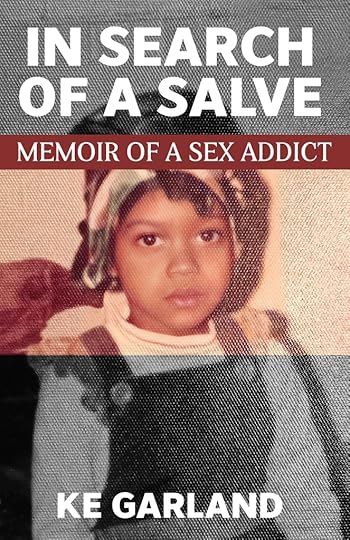
I imagine several people looking at their screens and saying, “Memoir of a Wha?” I am here to assure you that you are reading the correct words.
Hi, my name is Katherin. I am a recovering sex addict, and as only a creative nonfiction writer would do…I’ve written a memoir about it.
I’ve been writing and revising this book since 2014. Subsequently, there have been several title changes. Initially, the book was going to be called Petulia, the name that my birth mother assigned to me, but the story morphed into being a narrative about more than adoption. The next title was Codependent; that was after I did a deep dive into Melody Beattie’s book. Still, something wasn’t quite right. The something was that I was trying to save my public reputation and avoid revealing the real issue—the integral (and awful) part that sex has played in my life.
So, I took a deep breath, made a decision, and revised the memoir once again. This time, the title would be Diary of a Sex Addict and written as an epistolary. But that didn’t work either. I hadn’t really kept a diary of my life, and trying to re-create one came off as inauthentic, something I don’t want to be.
My next title was Addicted. Years ago, Zane, a famous, Black erotica author had written a fictional novel called Addicted, and I thought it would be clever to play off the title as a sort of nonfiction response, like hey…this is what real sex addiction is like. It is not pretty or sexy. It is dangerous and scary.
But my publisher told me I couldn’t name it that for two reasons: Zane had already written a book with this title, and more importantly, the book is about much more than sex addiction.
She was right.
After careful thought, I renamed it In Search of a Salve, because it encompasses what I did much of my childhood, adolescence, and adult life—searched for something to heal the pain of unresolved trauma and the feelings of being thrice abandoned by each of my parents. Sex is how I did that; thus, Memoir of a Sex Addict is the subtitle.
The CoverSo, now that we’ve gotten that out of the way, I can tell you about the cover.
As an indie author, I typically work with people I know for each phase of book production; however, this time, I went with a boutique/independent publisher (more about that decision later). Working with a publisher meant trusting that person’s contacts and process, including their graphic designer. That was hard.
Before sending materials to the creative, I envisioned and made a mockup of the cover. I kept this rendition to myself, and then sent three photos and sample covers of bestselling books that I liked. What I created is on the left. The actual book cover is on the right.
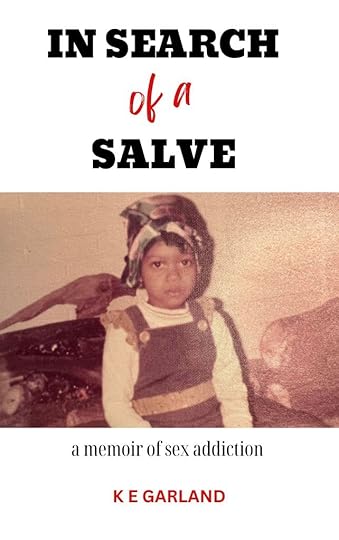
Pretty amazing, huh?
I’m happy the graphic designer chose this photo. The picture accurately depicts how I felt during much of my life: deserted, sad, and bewildered. Overall, I was living life in a despondent kind of way. Even if I was donning the big, bright smile that many people know me for, I still felt like the little girl in this photo on the inside for much of my life.
I’ve spent the last nine years writing and revising this book, and now, with the help of my editor and NEW Reads Publications, it is nearly ready for public consumption.
I do hope you’ll consider buying a copy once pre-orders go on sale, which is June 27, 2023. I also hope you’ll endure hearing about it, every now and then, because, well, that’s how books are sold in the 21st century.