Dan Jorgensen's Blog, page 488
February 17, 2016
The raw material for creativity
“I think most serious writers, certainly in the modern period, use their own lives or the lives of people close to them or lives they have heard about as the raw material for their creativity.” – Chaim Potok
Potok, who was born on this day in 1929, is most famous for his first book The Chosen, published in 1967 and listed on The New York Times’ best seller list for 39 consecutive weeks. Ultimately, the book sold more than 3.4 million copies.
Potok, who was raised in a strict Jewish household, was encouraged to only read and study orthodox Jewish writings by his parents. But after reading Evelyn Waugh's novel Brideshead Revisited as a teenager, he said he knew that he wanted to be a writer in the same fashion as Waugh, who became his lifelong writing hero and role model. He produced his first fiction at the age of 16, and at age 17 he made his first submission to the magazine The Atlantic Monthly. Although it wasn't published, he received a note from the editor complimenting his work, something all writers hope for but rarely have happen when they receive a rejection. Rejection with encouragement sometimes has a little less sting.
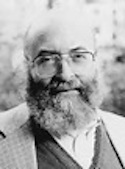
Also an artist, Potok has a number of paintings that have been purchased for collections in noted galleries. The language of art permeates his writings and one critic called him "The Michaelangelo of the written word." He wryly answered that the only time he felt like Michaelangelo was when he was doing revisions.
“I think the hardest part of writing is revising,” he said. “And by that I mean the following: A novelist, like a sculptor, has to create the piece of marble and then chip away to find the figure in it.” In Potok’s case, many fine works of art emerged from the effort.
Share A Writer’s Moment with a friend by clicking g+1 below.


February 16, 2016
It comes from reading, of course
“Reading is probably what leads most writers to writing.” – Richard Ford
Ford is a novelist and short story writer, perhaps best-known works for novels The Sportswriterand its sequels, Independence Day (winner of both the Pulitzer Prize and The PEN/Faulkner Award), The Lay of the Land and Let Me Be Frank with You, also a Pulitzer Prize finalist this past year.
A native Mississippian born on this day in 1944, Ford also wrote the terrific short story collection Rock Springs, which has been widely anthologized. A story collection mostly set in Montana, it includes some of his most popular stories and pretty much cemented his reputation as one of the finest writers of his generation.
Ford struggled with dyslexia in his growing up years and didn’t get seriously interested in reading literature until his college days at Michigan State. He has stated in interviews that his dyslexia may, however, have helped him as a reader and then in becoming a writer, forcing him to approach books at a slow and thoughtful pace.
He earned a Master of Fine Arts in Creative Writing from California-Irvine where he was taught by both Oakley Hall and E.L. Doctorow. He said he owes a tremendous debt to both for helping develop his writing skills. A fine editor, too, he has been widely sought after to do editing work and has edited many award-winning works.
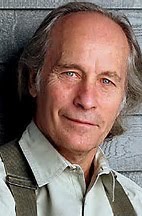 While it’s been said often, including in this blog, Ford states that the best way to be a great writer is to write about what you know best. “Happiness for me,” he said, “is getting to write about the most important things I know.”
Share A Writer’s Moment with a friend by clicking g+1 below.
February 15, 2016
Hard, satisfying and 'creative' work
In a crazy way, writing is a lot like any kind of very complex game - like chess, where you have the knowledge as you're composing all of the ramifications of each move, of each choice you make. – Adam Ross
Born on this day in 1967, Adam Ross is an American novelist and short story writer whose 2010 debut novel, Mr. Peanut, also was named a New York Times Notable Book, as well as one of the best books of the year by The New Yorker, The Philadelphia Inquirer, The New Republic, and The Economist. An intricate murder mystery, the book has been translated into 16 languages.
Born and raised in New York City, Ross was a gifted athlete and won a state championship in wrestling. But, simultaneously, he grew up interested in acting and appeared in several movies and numerous television commercials and shows as a child and teenager. His pathway into writing began as an undergrad at Vassar College and then while pursuing his MFA at the University of Washington. Since graduation, he has lived with his wife and children in Nashville, where he has been a frequent
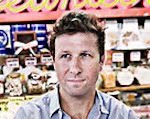 contributor to newspapers and magazines, including The Wall Street Journal, The Daily Beast and The Nashville Scene. His short stories have appeared in The Carolina Quarterly.
“I think that if you have a knack for storytelling, and you work really hard at it, you'll have a chance to tap into something deep,” he said. “But the fact remains that good sentences are hard won. Any writer worth a lick knows constructing a sentence, a paragraph, or a chapter is hard work.”
Share A Writer’s Moment with a friend by clicking g+1 below.
February 14, 2016
That 'spark' of realism
“To write a good song, an artist has to drawn from reality. There has to be some spark from realism that communicates a real feeling to someone else. You have to be real. Or you have to be a really good storyteller.” – Daryl Hall
“If I had to drop everything and just be a songwriter, I would be OK with that because that's the real joy.” – John Oates
From their first hit in 1974 through their heyday in the '80s, Daryl Hall and John Oates’ smooth, catchy take on Philly soul brought them tons of success, including six number one singles and six platinum albums.
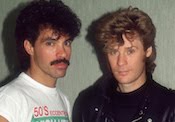
Wonderful lyricsists as well as musicians, Hall and Oates have sold an estimated 40 million records making them the second best-selling duo of all time. They’ve been honored with induction into both the Songwriters Hall of Fame and the Rock and Roll Hall of Fame for such hits as She’s Gone, Maneater, Private Eyes, Rich Girl and You Make My Dreams Come True. But, for this Valentine’s Day edition of Writer’s Moment, I thought a perfect “share” of their work would be the terrific Kiss on My List.
https://www.youtube.com/watch?v=Wd__bYa2LUw
Happy Valentine’s Day!
Share A Writer’s Moment with a friend by clicking g+1 below.
February 13, 2016
In your heart ... or in the news
“You can find poetry in your everyday life, your memory, in what people say on the bus, in the news, or just what's in your heart.”– Carol Ann Duffy
Carol Ann Duffy is a Scottish poet and playwright who serves as Professor of Contemporary Poetry at Manchester Metropolitan University, and as Great Britain's Poet Laureate, appointed in 2009. On this Valentine’s weekend, it seemed only right to share Duffy’s whimsical poem for both the day and the season of love – definitely an unorthodox look at “normal” Valentine’s Day verse. For “fun reading” and “thoughtful pleasure” as you contemplate her words, here is Saturday’s Poem from Carol Ann Duffy.
Valentine
Not a red rose or a satin heart.
I give you an onion.
It is a moon wrapped in brown paper.
It promises light
like the careful undressing of love.
Here.
It will blind you with tears
like a lover.
It will make your reflection
a wobbling photo of grief.
I am trying to be truthful.
Not a cute card or a kissogram.
I give you an onion.
Its fierce kiss will stay on your lips,
possessive and faithful
as we are,
for as long as we are.
Take it.
Its platinum loops shrink to a wedding ring,
if you like.
On this Valentine’s Day, may the poetry that you discover inspire you with many new “Writer’s Moments.” Happy Valentine's Day!
Share A Writer’s Moment with a friend by clicking g+1 below.
February 12, 2016
Because you have to, of course
“The best books come from someplace inside. You don't write because you want to, but because you have to.” – Judy Blume
Judy Blume is turning 78 today, but most of her characters and her writing remain forever young. Her novels for teens have tackled sensitive topics and been a source of controversy, but there’s little doubt that they resonate with young people. To date they have had sales closing in on 100 million copies and been translated into 32 languages – remarkable achievements.
She said she hopes that her stories have opened the doors to teens for a better understanding of themselves, the world around them, and issues that young people struggle with “growing up.” Racism, divorce, bullying, sexuality, all have all been “on the table” for Blume’s characters. “Generating discussion,” she said, is her primary goal.
Along the way, she has been recognized as one of the world’s great “storytellers” who bring kids into the reading world. “Any book that gets kids to read are books that we should cherish, we should be thankful for them,” she noted.
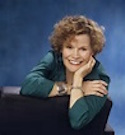
She has won more than 90 literary awards, including three lifetime achievement awards and the ALA Margaret A. Edwards Award, established to recognize one writer and a particular body of work for "significant and lasting contribution to Young Adult literature.”
Blume said she dreamed of being lots of things as a girl, but never a writer. She loved to read but didn’t picture herself as the person who would sit down and write the words that others would enjoy. But, then she started thinking about things in her own life that made for interesting conversation and be interesting to others. “I think people who write for kids, we have that ability to go back into our own lives."
As for what to let kids read, Blume has a simple response: “Let children read whatever they want and then talk about it with them. If parents and kids can talk together, we won't have as much censorship because we won't have as much fear.”
Share A Writer’s Moment with a friend by clicking g+1 below.
February 11, 2016
Daily exercise ... for the writing muscle
“Write every day. You don't have to write about anything specific, but you should exercise your writing muscle constantly.” – Jane Yolen
Yolen, who was born on this day in 1939, has written fantasy, science fiction, and children's books and is the author or editor of nearly 300 books. Her best known is The Devil's Arithmetic, a Holocaust novella. Among her other works are the Nebula Award-winning short story Sister Emily's Lightship, the novelette Lost Girls, and the kids’ books Owl Moon, The Emperor and the Kite, the Commander Toad series and How Do Dinosaurs Say Goodnight.
Yolen began writing as a journalist “for my pocketbook,” she said. But her heart was in writing poetry “for my soul.”
 Despite that, her first non-journalistic work was not poetry but a children’s book and many, many of her works sincehave been geared toward children. In fact, she is often referred to as “America’s Hans Christian Andersen.”
“Don't ever write just for a trend or fad, because it's a moving target, and by the time you get your work out there, the trend or fad is gone,” she said as her words of advice for new writers. “Dig deep; don't be afraid to write fiercely. Expose your heart.”
Share A Writer’s Moment with a friend by clicking g+1 below.
February 10, 2016
Loving (and writing) America's heartland values
“I have never been bored an hour in my life. I get up every morning wondering what new strange glamorous thing is going to happen and it happens at fairly regular intervals.” – William Allen White
Born on this day in 1868, White became America’s most renowned small town newspaper editor. Along the way, he joined with Theodore Roosevelt to become a leader of the “Progressive” movement – something we’re hearing a lot about again today as politicians maneuver for something to help them stand out in the crowded primary field. A two-time Pulitzer Prize winner and best-selling author, White became the iconic spokesperson for Middle America and his hometown of Emporia, Kansas, a “must stop” place when political leaders and celebrities were traveling across the U.S.
When I was researching background for my novel And The Wind Whispered, I was startled to see that in his younger days he traveled to the Black Hills and spent time in the community in which my book was set. Thus, he and his wife Sallie became an integral part of my tale’s narrative. I was struck by how that trip – and his meeting with Roosevelt while there – may have had some influence on his journalism and political thought. He felt Roosevelt embodied America and was greatness personified. “Greatness, generally speaking,” he said, “is an unusual quantity of a usual quality grafted upon a common man.”
A few months ago, I was invited to be part of the Writers’ Series at Emporia State University and in the process visited the famed Emporia Gazette to see first-hand the place from which White wrote so many pieces that helped make life better for the average American.The William Allen White office at The Emporia Gazette
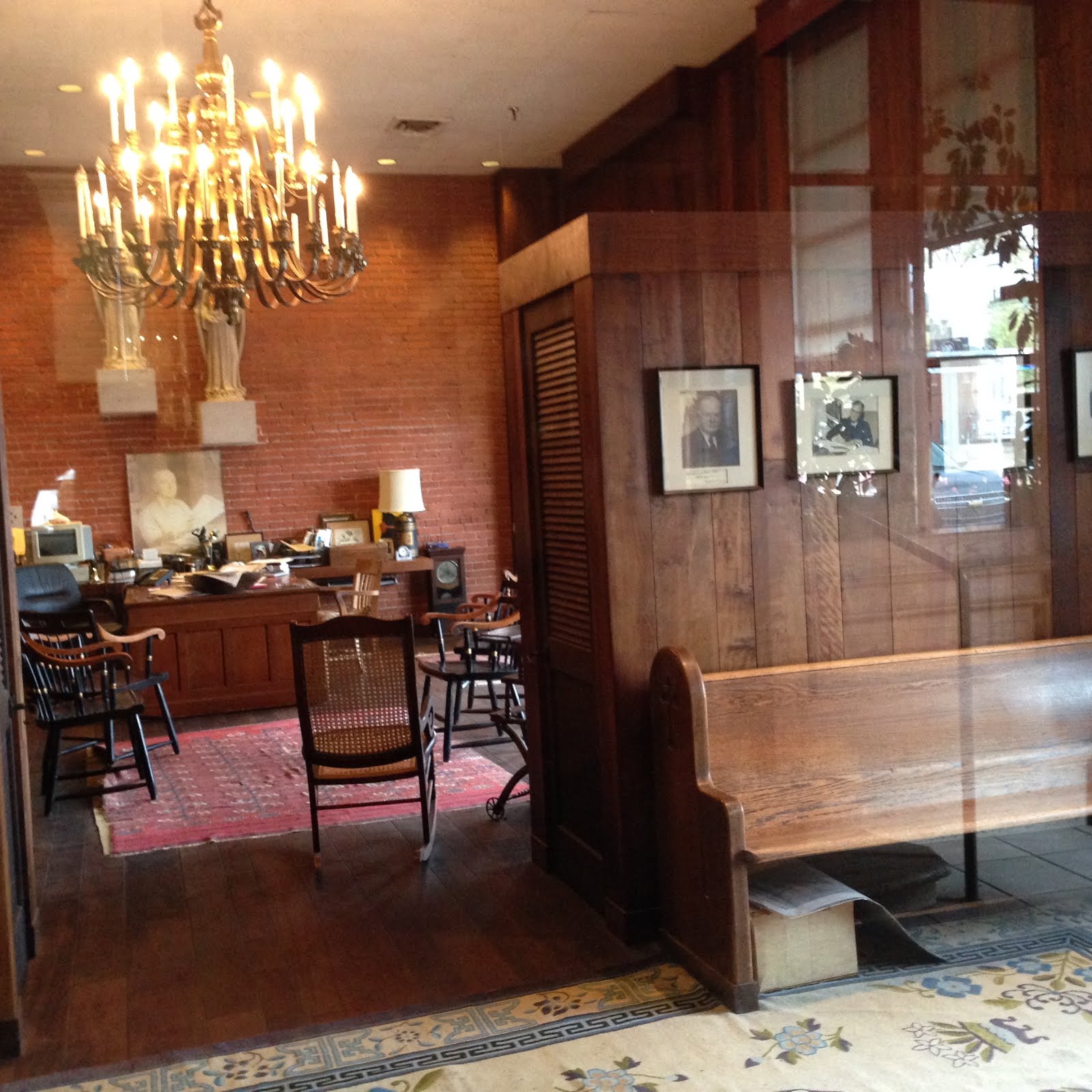 Photo by Dan Jorgensen
As he neared death in 1944, White wrote of how grateful he was to have lived and worked in America, and he said he looked forward to every day regardless of what it might bring. “I am not afraid of tomorrow,” he said, “for I have seen yesterday, and I love today!”
Share A Writer’s Moment with a friend by clicking g+1 below.
February 9, 2016
The responsibility for 'action'
“I have fallen in love with the imagination. And if you fall in love with the imagination, you understand that it is a free spirit. It will go anywhere, and it can do anything.” – Alice Walker
Today is the birthday of Alice Walker, American author and activist who wrote the critically acclaimed novel The Color Purple (1982) for which she won the National Book Award and the Pulitzer Prize for Fiction.
Walker says she was born to write. “My mother says I was writing before I was crawling. I wrote in the dirt with a twig,” she said. “I started writing as a child. But I didn't think of myself actually writing until I was in college. And I had gone to Africa as a sophomore or something - no, maybe junior - and wrote a book of poems. And that was my beginning. I published that book.”
Born and raised in Georgia, she grew up with “an oral story tradition" and chose to write them down, collecting stories in her private journals for many years. A standout student all through school, she won a full scholarship to Spelman College – a traditional Black institution in Atlanta – and then transferred to Sarah Lawrence where she had that first book of poetry published in her senior year.
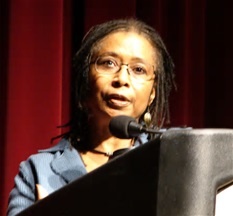
After spending time right out of college working for the Civil Rights Movement, she began her professional writing career on Ms. magazine where she won acclaim as a journalist to accompany her creative writing. And she has continued a lifetime of activism, supporting the oppressed and downtrodden around the globe.
"Artists have a responsibility to speak and to act when governments fail,” she said, “and if we don't do that, we really deserve the world we get.”
Share A Writer’s Moment with a friend by clicking g+1 below.
February 8, 2016
Wrapping 'good stories' around issues
“I always try to tell a good story, one with a compelling plot that will keep the pages turning. That is my first and primary goal. Sometimes I can tackle an issue - homelessness, tobacco litigation, insurance fraud, the death penalty - and wrap a good story around it.” – John Grisham
Grisham is the bestselling writer, attorney, politician, and activist from Mississippi best known for his popular legal thrillers. His books have been translated into 42 languages and published worldwide. And yet, Grisham, who celebrates his 51st birthday today, almost didn’t become a writer. “Writing was not a childhood dream,” he said. “I always struggled with how to get started.”
It was only after about 5 or 6 years as a lawyer that he started to “play around with fiction. I seriously doubt I would ever have written my first story had I not been a lawyer. I never dreamed of being a writer. I wrote only after witnessing a trial.”
Grisham holds degrees from Mississippi State University and the Ole Miss Law School and practiced criminal law for about a decade.
 He also served in the Mississippi House of Representatives from 1984-90 working simultaneously on his legal career and writing. His first novel A Time to Kill was published in June 1989.
Nine of his books have been made into films – a remarkable record. And, he said he’s grateful for that because it’s brought a lot more people into touch with his works, since he doesn’t think being a writer has, in itself, made him famous. “Quite often I can be in a bookshop, standing beneath a great big picture of myself and paying for a book with a credit card clearly marked John Grisham, yet no one recognizes me. I often say I'm a famous author in a country where no one reads.”
“Writing's still the most difficult job I've ever had - but it's worth it.”
Share A Writer’s Moment with a friend by clicking g+1 below.