Dan Jorgensen's Blog, page 485
March 18, 2016
The human value of creative writing
“I seem most instinctively to believe in the human value of creative writing, whether in the form of verse or fiction, as a mode of truth-telling, self-expression and homage to the twin miracles of creation and consciousness.”– John Updike
Updike, who was born on this date in 1932 (and died in 2009), was a novelist, poet, short story writer, art critic, and literary critic. Although self-deprecating about his “critic” role, most of what he wrote was a model of what good critical writing is all about. But, of course, it was his work with the novel that won most acclaim. He was a two-time Pulitzer Prize winner for books in his “Rabbit” series – Rabbit Run,Rabbit Redux; Rabbit Is Rich; Rabbit at Rest; and the novella Rabbit Remembered – which chronicles the lifetime of the middle-class everyman Harry "Rabbit" Angstrom. Rabbit Is Rich won all three major American literary prizes – the Pulitzer, the National Book Award, and the National Book Critics Circle Award.
Updike published more than 20 novels, a dozen short story collections, poetry, art criticism, literary criticism and children's books. Hundreds of his stories, reviews and poems appeared in The New Yorker and The New York Review of Books.
Ironically, writing was not his first love. “My first ambition was to be an animator for Walt Disney. Then I wanted to be a magazine cartoonist,” he said. And, he nearly succeeded, starting doing cartoons for the Harvard Lampoon and going on to graduate study in art. But when he started doing illustrations for The New Yorker in 1954 they also wanted some narrative, and he quickly found he had a knack for writing. He began doing poetry and short stories that would appear regularly in the magazine for the next 40 years.
Updike was a master of narrative. “A narrative is like a room on whose walls a number of false doors have been painted; while within the narrative, we have many apparent choices of exit, but when the author leads us to one particular door, we know it is the right one because it opens.” And, his advice to new writers: Draw heavily upon your “growing up” years. “Memories, impressions and emotions from the first 20 years on earth are most writers' main material,” he advised. “Little that comes afterward is quite so rich and resonant.”
Share A Writer’s Moment with a friend by clicking g+1 below.


March 17, 2016
That wonderfully flexible form
“The pleasure of writing fiction is that you are always spotting some new approach, an alternative way of telling a story and manipulating characters; the novel is such a wonderfully flexible form. You learn a lot, writing fiction.” – Penelope Lively
Writing has been of the utmost importance in the gregarious Lively’s life. Author of both adult and children’s literature, she earned both a Booker Prize (for the 1987 novel Moon Tiger) and the Carnegie Medal for British children's books (in 1973 for The Ghost of Thomas Kempe). In recent years she has been honored as a Fellow of the Royal Society of Literature, and elected Vice-President of the Friends of the British Library, one of her main causes.
Beside novels and short stories, Lively has also written radio and television scripts, presented a radio program, and contributed reviews and articles to various newspapers and journals. Her latest work, Dancing Fish and Ammonites, A Memoir, was published in 2013.
She didn’t start writing until she was almost 40 but has been extremely prolific since, generating dozens of books in both of her main genres. As for how she “sets” her novels, she said, “Every novel generates its own climate.
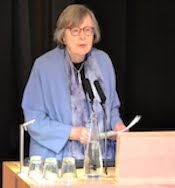 You just have to get going with it.”
In yesterday’s blog, I mentioned how author Alice Hoffman was “not much of a reader,” so I was intrigued to find that Lively, who was born on St. Patrick’s Day in 1933, has just the opposite reaction.“All I know for certain is that reading is of the most intense importance to me,” she said. “If I were not able to read, to revisit old favorites and experiment with names new to me, I would be starved - probably too starved to go on writing myself.”
Share A Writer’s Moment with a friend by clicking g+1 below.
March 16, 2016
Much like the characters of dreams
“All the characters in my books are imagined, but all have a bit of who I am in them - much like the characters in your dreams are all formed by who you are.”– Alice Hoffman
Born on this date in 1952, Alice Hoffman has had a terrific career as a writer of both adult and young adult books, many of which take on elements of “magic realism,” a genre’ she is sometimes credited with helping create. She also likes to throw in non-standard romance and relationships, making her stories even more interesting and delightful for readers of all ages.
While still an undergraduate at Stanford, where she also earned a master’s in creative writing, she penned the acclaimed short story At The Drive-In, published in the literary magazine Fiction. And Editor contacted her and asked whether she had a novel, too. She didn’t but said she’d be glad to try writing one. The result was the best-selling Property Of published in 1977. And the rest, as they say, is history. Since then she’s had 2 dozen more adult novels, a dozen young adult and kids’ books, a nonfiction book and many other short stories and essays.
And, every single one of her books has been optioned for movie rights, so she’s ended up writing many screenplays to add to her amazing resume’. Despite this success, she said, “I never see a novel as a film while I'm writing it. Mostly because novels and films are so different, and I'm such an internal novelist.” Among her more recent successes in both print and film are The River King and The Dovekeepers.
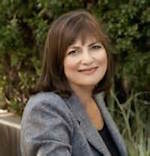
Unlike many writers, she said she doesn’t do much reading. “A lot of what I was looking for as an escape (in reading) I find in writing. And the other thing is that I don't want to get into someone else's language when I'm working.” Her success in putting a bit of herself into each character is another key to her success. “After a while, the characters I'm writing just begin to feel real to me. That's when I know I'm heading in the right direction.”
Share A Writer’s Moment with a friend by clicking g+1 below.
March 15, 2016
Headlines - a writing skill worth honing
“Some books that I've read on the Kindle, I've been like, 'I want that on my shelf.' Because it says, 'I'm the kind of person who has read this.' The kind of book that says, 'I'm serious and intellectual and historical and race-conscious.' “—Jennifer Lee
Born on the Ides of March in 1976, Lee holds the distinction of having the numeral 8 for her middle name. After not being given a middle name at birth, she assigned this one to herself as an adult “because in the Chinese culture, that number signifies prosperity and good luck.”
Author of the best-selling book The Fortune Cookie Chronicles about "how Chinese food is more all-American than apple pie,” she is a part-time journalist and full-time writer. She also serves on a variety of boards including at the Center for Public Integrity, the Asian American Writers' Workshop, and the advisory panel for the John S. and James L. Knight Foundation’s "News Challenge.” And she is co-founder and president of the literary studio Plympton.
Lee started writing as a journalist on The Harvard Crimson, then did a series of internships at some of the country’s best newspapers before settling in as a writer and editor for The New York Times. There, she occupied the “front and last lines” of the newspaper world, serving as both a copy editor and a headline writer.
Lee said she has the highest respect for copy editors and headline writers, hates “bland” headlines, and absolutely despises headlines that contain factual errors. As a onetime headline writer myself, I think beginning writers could learn much from the study this very special “art” form. It’s truly the art of learning how to boil down facts into a few key words, and an excellent lesson in how to present ideas both powerfully and concisely. Not a bad skill to have on your writing resume'.
Share A Writer’s Moment with a friend by clicking g+1 below.
March 14, 2016
'Living' the story you read
“I think the job of writing and literature is to encourage each one of us to believe that we're living in a story.” – Naomi Shihab Nye
Naomi Nye has carved out an impressive career in a wide range of genres, and is the recipient of the NSK Neustadt Prize for Children’s Literature. Her writing includes short stories, novels, poetry and songwriting.
A self-proclaimed "wandering poet," primarily because she has traveled the world to lead writing workshops and conduct inspirational talks, she lives in San Antonio – where she earned a degree in English Literature at Trinity University. Her writing career began as a child growing up in St. Louis, MO, the daughter of an American mother and Palestinian father, both writers themselves. It was her mother’s encouragement that led her to start writing in 1st grade, her first poem being published at age 7.
Among Nye’s most notable works is the terrific Young Adult novel Habibi, the story of a 14-year-old girl and her Arab father and American mother who move from a home in St. Louis to live in Palestine, mirroring a time in her own life. The semi-autobiographical piece, the title of which means “beloved,” addresses a wide
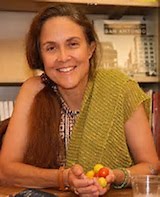 range of themes sincluding change, family values, war, peace and love. The book has won multiple awards including being named by the American Library Association as one of the best books for Young Adults written in the 20th Century.
 Nye’swritings often are connected to her experiences as an Arab-American. And, she said she finds herself amazed by the vitriolic language she often encounters in our society and politics. “I keep thinking, we teach children to use language to solve their disputes. We teach them not to hit and fight and bite,” she said. “Then look what adults do!”
Share A Writer’s Moment with a friend by clicking g+1 below.
March 13, 2016
Putting the many voices onto paper
“I think every fiction writer, to a certain extent, is a schizophrenic and able to have two or three or five voices in his or her body. We seek, through our profession, to get those voices onto paper.” – Ridley Pearson
New Yorker Pearson, born on this day in 1953, is also a bit schizophrenic in his writing genres, having authored suspense and thriller novels for adults and rollicking adventure books for kids. Many of his works have ended up on the The New York Times Best Seller list.
Over the years the prolific Pearson has authored some 30 books for adults and 20 for kids earning a basketfull of writing awards along the way and being honored as the first American to be named for the Oxford University Raymond Chandler-Fulbright Fellowship. His “Walt Fleming” and “Lou Boldt” series of mystery thrillers have built legions of followers, and for kids his “Peter & The Starcatchers” series has an equal, if not greater, following.
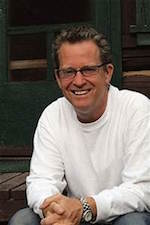
Speaking to new writers trying to get their start, he said that it’s a tough row to hoe but well worthwhile. And, he said, it means making sacrifices to find some writing time.
“For the first-time novelist you've got to get up at 5:30 in the morning and write until 7, make breakfast and go to work,” he said. “Or, come home and work for an hour. Everybody has an hour in their day somewhere. If you want to write, you need to find it.”
Share A Writer’s Moment with a friend by clicking g+1 below.
March 12, 2016
Saturday's poem? This seems perfect
“Poetry is for me Eucharistic. You take someone else's suffering into your body, their passion comes into your body, and in doing that you commune, you take communion, you make a community with others.” – Mary Karr
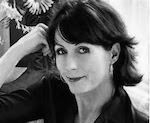
American poet, essayist and memoirist, Karr rose to fame in 1995 with the publication of her bestselling memoir The Liars' Club, set mostly in 1960s Southeast Texas where she grew up. Now a professor of English Literature at Syracuse, Karr advises her students not to write too soon about their own lives. “Writing about yourself too young is
 loaded with psychological complexities.”
Karr has won a Pushcart Prize for her essays and a Whiting Award, a Pushcart Prize, and a Guggenheim Fellowship for her poetry. “Every poem (I write),” she said, “probably has 60 drafts behind it.” For Saturday’s poem, here is Karr’s absolutely wonderful,A Perfect MessI read somewhere
that if pedestrians didn't break traffic laws to cross
Times Square whenever and by whatever means possible,
the whole city
would stop, it would stop.
Cars would back up to Rhode Island,
an epic gridlock not even a cat
could thread through. It's not law but the sprawl
of our separate wills that keeps us all flowing. Today I loved
the unprecedented gall
of the piano movers, shoving a roped-up baby grand
up Ninth Avenue before a thunderstorm.
They were a grim and hefty pair, cynical
as any day laborers. They knew what was coming,
the instrument white lacquered, the sky bulging black
as a bad water balloon and in one pinprick instant
it burst. A downpour like a fire hose.
For a few heartbeats, the whole city stalled,
paused, a heart thump, then it all went staccato.
And it was my pleasure to witness a not
insignificant miracle: in one instant every black
umbrella in Hell's Kitchen opened on cue, everyone
still moving. It was a scene from an unwritten opera,
the sails of some vast armada.
And four old ladies interrupted their own slow progress
to accompany the piano movers.
each holding what might have once been
lace parasols over the grunting men. I passed next
the crowd of pastel ballerinas huddled
under the corner awning,
in line for an open call — stork-limbed, ankles
zigzagged with ribbon, a few passing a lit cigarette
around. The city feeds on beauty, starves
for it, breeds it. Coming home after midnight,
to my deserted block with its famously high
subway-rat count, I heard a tenor exhale pure
longing down the brick canyons, the steaming moon
opened its mouth to drink from on high ...
Share A Writer’s Moment with a friend by clicking g+1 below.
March 11, 2016
End up where you need to be
“There's nothing worse than sitting down to write a novel and saying, 'Well, okay, today I'm going to do something of high artistic worth’.” – Douglas Adams
Born on this date in 1952, Adams is perhaps best known as the author of The Hitchhiker's Guide to the Galaxy, which originated in 1978 as a BBC radio comedy before being turned into a series of books that sold more than 15 million copies. Ultimately it also generated a television series, several stage plays, comics, a computer game, and in 2005 a feature film.
Adams, who died of a heart attack at age 49, also was known as an advocate for environmentalism and conservation, a lover of fast cars, cameras, and technological innovation. And, of course, for his prowess as a writer, something he started in elementary school. His first published piece came at age 10 in the school newspaper, and at age 13 a humorous short story was published in a national youth magazine. But while he loved writing, he said he always struggled with deadlines – although not without his sense of humor. “I love deadlines,” he once said. “I like the whooshing sound they make as they fly by.” Douglas Adams
 A true Renaissance man, he was not just a writer, but also an actor, singer, producer, computer game developer, and stand-up comic. His work on “Hitchhiker’s Guide” has been enshrined in The UK Radio Academy’s Hall of Fame. “I seldom end up where I want to go,” he said about his movement among careers and opportunities. “But I almost always end up where I need to be.”
Share A Writer’s Moment with a friend by clicking g+1 below.
March 10, 2016
Like cracking a safe
<!-- /* Font Definitions */ @font-face {font-family:Times; panose-1:2 0 5 0 0 0 0 0 0 0; mso-font-charset:0; mso-generic-font-family:auto; mso-font-pitch:variable; mso-font-signature:3 0 0 0 1 0;} @font-face {font-family:"MS 明朝"; mso-font-charset:78; mso-generic-font-family:auto; mso-font-pitch:variable; mso-font-signature:1 134676480 16 0 131072 0;} @font-face {font-family:"MS 明朝"; mso-font-charset:78; mso-generic-font-family:auto; mso-font-pitch:variable; mso-font-signature:1 134676480 16 0 131072 0;} @font-face {font-family:Cambria; panose-1:2 4 5 3 5 4 6 3 2 4; mso-font-charset:0; mso-generic-font-family:auto; mso-font-pitch:variable; mso-font-signature:-536870145 1073743103 0 0 415 0;} /* Style Definitions */ p.MsoNormal, li.MsoNormal, div.MsoNormal {mso-style-unhide:no; mso-style-qformat:yes; mso-style-parent:""; margin:0in; margin-bottom:.0001pt; mso-pagination:widow-orphan; font-size:12.0pt; font-family:Cambria; mso-ascii-font-family:Cambria; mso-ascii-theme-font:minor-latin; mso-fareast-font-family:"MS 明朝"; mso-fareast-theme-font:minor-fareast; mso-hansi-font-family:Cambria; mso-hansi-theme-font:minor-latin; mso-bidi-font-family:"Times New Roman"; mso-bidi-theme-font:minor-bidi;} p {mso-style-priority:99; mso-margin-top-alt:auto; margin-right:0in; mso-margin-bottom-alt:auto; margin-left:0in; mso-pagination:widow-orphan; font-size:10.0pt; font-family:Times; mso-fareast-font-family:"MS 明朝"; mso-fareast-theme-font:minor-fareast; mso-bidi-font-family:"Times New Roman";} .MsoChpDefault {mso-style-type:export-only; mso-default-props:yes; font-family:Cambria; mso-ascii-font-family:Cambria; mso-ascii-theme-font:minor-latin; mso-fareast-font-family:"MS 明朝"; mso-fareast-theme-font:minor-fareast; mso-hansi-font-family:Cambria; mso-hansi-theme-font:minor-latin; mso-bidi-font-family:"Times New Roman"; mso-bidi-theme-font:minor-bidi;} @page WordSection1 {size:8.5in 11.0in; margin:1.0in 1.25in 1.0in 1.25in; mso-header-margin:.5in; mso-footer-margin:.5in; mso-paper-source:0;} div.WordSection1 {page:WordSection1;} --</style><i style="mso-bidi-font-style: normal;"><span style="font-family: "times new roman"; font-size: 12.0pt; line-height: 200%;">“Writing a nonfiction story is like cracking a safe. It seems impossible at the beginning, but once you're in, you're in.”</span></i><span style="font-family: "times new roman"; font-size: 12.0pt; line-height: 200%;"> – Rich Cohen </span></div><div style="line-height: 200%;"><br /></div><div class="MsoNormal" style="line-height: 200%;"><span style="font-family: "times new roman"; mso-fareast-font-family: "Times New Roman";">Cohen not only is “in” but has become one of today's best nonfiction writers while maintaining a notable career as a contributing editor for <i>Vanity Fair</i>. And, he's earned his chops as a screenwriter for a number of hit television series, including joining with Martin Scorsese, Terrence Winter and Mick Jagger on the current HBO hit series <i>Vinyl</i>.<span style="mso-spacerun: yes;"> </span></span></div><div class="MsoNormal" style="line-height: 200%;"><br /></div><div class="MsoNormal" style="line-height: 200%;"><span style="font-family: "times new roman"; mso-fareast-font-family: "Times New Roman";">With nonfiction topics ranging from the Jewish mobsters of the 1920s and 1930s to the development of artificial sweetener to an in-depth look at the 1985 Super Bowl Champion Chicago Bears, his many books have been consistent <i style="mso-bidi-font-style: normal;">New York Times</i>bestsellers and <i style="mso-bidi-font-style: normal;">New York Times Notable Books. </i>Many of his magazine pieces have been collected in the <i style="mso-bidi-font-style: normal;">Best American Essay</i>s series. </span><br /><br /><span style="font-family: "times new roman"; mso-fareast-font-family: "Times New Roman";">As a fearless “time-traveler,” he is equally adept at commenting on ancient Jewish history and biblical stories as he is about the contemporary appeal of Larry David or Woody Allen.</span> </div><div class="MsoNormal" style="line-height: 200%;"><br /></div><div class="MsoNormal" style="line-height: 200%;"><span style="font-family: "times new roman"; mso-fareast-font-family: "Times New Roman";">A native of the Chicago area who now makes his home in Connecticut, he studied at Tulane University and then went into magazine journalism in New York City.<span style="mso-spacerun: yes;"> </span>In addition to his books and screenplays he continues writing regularly for <i style="mso-bidi-font-style: normal;">Vanity Fair</i><i>, </i><i style="mso-bidi-font-style: normal;">Rolling Stone</i> and </span><span style="font-family: "times new roman"; mso-fareast-font-family: "Times New Roman";"> <i style="mso-bidi-font-style: normal;">The New Yorker.</i></span><span style="font-family: "times new roman"; mso-fareast-font-family: "Times New Roman";"><span style="mso-spacerun: yes;"> </span>Noted for his writing about celebrities, he said he is fascinated by celebrities’ appeal.<span style="mso-spacerun: yes;"> </span><span style="mso-spacerun: yes;"> </span></span></div><div class="MsoNormal" style="line-height: 200%;"><br /></div><div class="MsoNormal" style="line-height: 200%;"><span style="font-family: "times new roman"; mso-fareast-font-family: "Times New Roman";">“I have long believed that celebrity, the way we worship and package and sell our stars, is what filled the need for gods that was once filled by the pictures in stained glass…in other words, a pantheon of saints without the hassle and heartache of religion.”</span></div><div class="MsoNormal" style="line-height: 200%;"><br /></div><div class="MsoNormal" style="line-height: 200%;"><br /></div><div class="MsoNormal" style="line-height: 200%;"><br /></div><div class="MsoNormal"><br /></div><div class="MsoNormal"><br /></div><div class="MsoNormal" style="line-height: 200%;"><b style="mso-bidi-font-weight: normal;"><span style="font-family: "times new roman"; mso-fareast-font-family: "Times New Roman";">Share <i style="mso-bidi-font-style: normal;">A Writer’s Moment</i> with a friend by clicking g+1 below.</span></b></div>
March 9, 2016
Writing for your own heart first
“When my writing really started to take off was when I made a decision that I would write only what I wanted to write, for my heart, and if 10 people wanted to hear it, that's fine.” – David Friedman
But, of course, far more than 10 people wanted to hear Friedman’s songs, which have included dozens and dozens of award winners and the scores of many movies, including numerous Disney animated features like Beauty and the Beast, Aladdin, Pocahontas and The Hunchback of Notre Dame.
Friedman published the music book Listen To My Heart: The Songs of David Friedman through his own publishing firm Midder Music featuring 63 of his most popular songs, including "Listen to My Heart,” "We Live On Borrowed Time,” and "Trust the Wind,” all of which reached number one on Billboard's top hits.
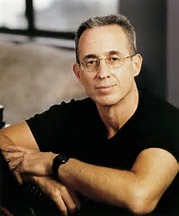
On Broadway, Friedman served as musical director for such original productions as Joseph and the Amazing Technicolor Dreamcoat, Song & Dance and Beauty and the Beast.
“In the music industry, we value large success. I realized that while I would like that, that it's not what my writing is about. And if I start making it about that, it becomes impure,” he said. So, he simply wrote his songs and they all became large successes.
Share A Writer’s Moment with a friend by clicking g+1 below.