Dan Jorgensen's Blog, page 487
February 27, 2016
A new look -- Saturday's Poem
“One reason to write a poem is to flush from the deep thickets of the self some thought, feeling, comprehension, question, music, you didn't know was in you, or in the world.” Jane Hirshfield
Hirshfield's seven books of poetry have each received numerous awards. Her fifth book, Given Sugar, Given Salt, was a finalist for the National Book Critics Circle Award and her sixth, After, was shortlisted for the T.S. Eliot Prize and named a “best book of 2006” by The Washington Post, The San Francisco Chronicle, and the Financial Times.
She also authored the highly regarded book of essays about poetry, Nine Gates: Entering the Mind of Poetry.
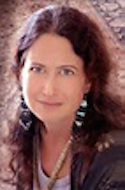 Fellow poet and critic David Barker described Hirshfield as "one of our finest, most memorable contemporary poets." Hirshfield herself said simply, “My job as a human being as well as a writer is to feel as thoroughly as possible the experience that I am part of, and then press it a little further.” Here, for Saturday’s poem is Hirshfield’s,
 Changing Everything
I was walking again
in the woods,
a yellow light
was sifting all I saw.
Willfully,
with a cold heart,
I took a stick,
lifted it to the opposite side
of the path.
There, I said to myself,
that's done now.
Brushing one hand against the other,
to clean them
of the tiny fragments of bark.
Share A Writer’s Moment with a friend by clicking g+1 below.


February 26, 2016
Writing as art ... and craft
“Writing is no dying art form in America because most published writers here accept the wisdom and the necessity of encouraging the talent that follows in their footsteps.” – Elizabeth George
On the occasion of her 67thbirthday today, I thought sharing a few more musings of the great mystery writer Elizabeth George was not only more than merited, but almost required. I’ve written about George before, but she’s such a fascinating person and writer, that I couldn’t resist sharing more about her and her work.
The creator of an amazing 19 novels about British Inspector Thomas Lynley, George has often been mistaken as British herself. But she’s American through and through, having been born in Warren, OH, where her mother was a nurse and her father a factory foreman. Then she grew up in San Francisco after her father grew tired of shoveling snow and moved the family out west.
George studied English in college and was teaching English when she first came up with the idea for her British detective and wrote the first novel in the series, A Great Deliverance. That 1988 book won every major mystery writing award and catapulted her into the career that gave us all those Lynley books plus 7 stand-alone titles, including the just released The Edge of the Light. Ever a teacher, she shares with writing groups and audiences everywhere.
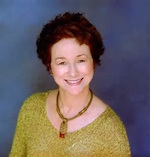 “I find it both fascinating and disconcerting when I discover yet another person who believes that writing can't be taught,” she said. “Frankly, I don't understand this point of view.
 “Art can't be taught; passion can't be taught; discipline can't be taught; but craft can be taught. And writing is both an art and a craft.”
Share A Writer’s Moment with a friend by clicking g+1 below.
February 25, 2016
To be entertained and inspired
“All I wanted to do was read, to be told stories. Stories were full of excitement and emotions and characters that entertained and often inspired.”– Cynthia Voigt
Voigt, born this day in 1942, wrote the best-selling and award-winning Young Adult books, Homecoming and Dicey’s Song– the latter of which won the Newbery Medal for excellence in American children's literature. Voigt also received the Margaret Edwards Award from the American Library Association recognizing her contribution in writing for teens.
A Massachusetts native, she found herself drawn to writing at an early age. “By the time I started high school, I knew I wanted to be a writer,” she said. After college, she went to work in advertising, and then was a teacher in both New Mexico and Maryland before writing Homecoming, the first in what became known as The Tillerman Cycle(a 7-book series about the 4 Tillerman Family kids). In the mid-1990s it also was made into a movie by the same name.
While she has had much success with her writing, Voigt said the words don’t always “flow” from her imagination.
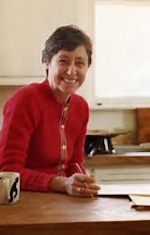
“I do have trouble starting books. I have ideas that I have trouble starting to write. But I'm the kind of person who tends to finish everything she starts out of sheer stubbornness.” Thankfully, perserverance is her forte’, and the results have give us some of America’s best Young Adult literature.
Share A Writer’s Moment with a friend by clicking g+1 below.
February 24, 2016
The 'capabilities' of words
“Words are capable of making experience more vivid, and also of organizing it. They can scare us, and they can comfort us.”– Jonathan Safran Foer
<!-- /* Font Definitions */ @font-face {font-family:"MS 明朝"; mso-font-charset:78; mso-generic-font-family:auto; mso-font-pitch:variable; mso-font-signature:1 134676480 16 0 131072 0;} @font-face {font-family:"Cambria Math"; panose-1:2 4 5 3 5 4 6 3 2 4; mso-font-charset:0; mso-generic-font-family:auto; mso-font-pitch:variable; mso-font-signature:-536870145 1107305727 0 0 415 0;} @font-face {font-family:Cambria; panose-1:2 4 5 3 5 4 6 3 2 4; mso-font-charset:0; mso-generic-font-family:auto; mso-font-pitch:variable; mso-font-signature:-536870145 1073743103 0 0 415 0;} /* Style Definitions */ p.MsoNormal, li.MsoNormal, div.MsoNormal {mso-style-unhide:no; mso-style-qformat:yes; mso-style-parent:""; margin:0in; margin-bottom:.0001pt; mso-pagination:widow-orphan; font-size:12.0pt; font-family:Cambria; mso-ascii-font-family:Cambria; mso-ascii-theme-font:minor-latin; mso-fareast-font-family:"MS 明朝"; mso-fareast-theme-font:minor-fareast; mso-hansi-font-family:Cambria; mso-hansi-theme-font:minor-latin; mso-bidi-font-family:"Times New Roman"; mso-bidi-theme-font:minor-bidi;} span.bqquotelink {mso-style-name:bqquotelink; mso-style-unhide:no;} .MsoChpDefault {mso-style-type:export-only; mso-default-props:yes; font-family:Cambria; mso-ascii-font-family:Cambria; mso-ascii-theme-font:minor-latin; mso-fareast-font-family:"MS 明朝"; mso-fareast-theme-font:minor-fareast; mso-hansi-font-family:Cambria; mso-hansi-theme-font:minor-latin; mso-bidi-font-family:"Times New Roman"; mso-bidi-theme-font:minor-bidi;} @page WordSection1 {size:8.5in 11.0in; margin:1.0in 1.25in 1.0in 1.25in; mso-header-margin:.5in; mso-footer-margin:.5in; mso-paper-source:0;} div.WordSection1 {page:WordSection1;} --“Words are capable of making experience more vivid, and also of organizing it. They can scare us, and they can comfort us.” – Jonathan Safran Foer </style><div class="MsoNormal" style="line-height: 200%;"><span style="font-family: "Times New Roman"; mso-fareast-font-family: "Times New Roman";">Best known for his novel <i>Extremely Loud and Incredibly Close</i> - also made into an award-winning movie - Foer uses the 9/11 bombings as a backdrop for the story of 9-year-old Oskar Schell, who learns how to deal with the death of his father in the World Trade Center. </span></div><div class="MsoNormal" style="line-height: 200%;"><br /></div><div class="MsoNormal" style="line-height: 200%;"><span style="font-family: "Times New Roman"; mso-fareast-font-family: "Times New Roman";">A native of Washington, DC, Foer started his writing career in 1995 as a student at Princeton University, where he took an introductory writing course with author Joyce Carol Oates.<span style="mso-spacerun: yes;"> </span>Oates took an interest in his work, telling him that he had "that most important of writerly qualities, energy."<sup> <a href="http://1.bp.blogspot.com/-SnGkDCduJlQ..." imageanchor="1"><img border="0" src="https://1.bp.blogspot.com/-SnGkDCduJl..." /></a></sup><span style="mso-spacerun: yes;"> </span></span></div><div class="MsoNormal" style="line-height: 200%;"><span style="font-family: "Times New Roman"; mso-fareast-font-family: "Times New Roman";"><span style="mso-spacerun: yes;"> </span>“She was the first person to ever make me think I should try to write in any sort of serious way,” he said. “And my life really changed after that."<br style="mso-special-character: line-break;" /><br style="mso-special-character: line-break;" /></span></div><div class="MsoNormal" style="line-height: 200%;"><span style="font-family: "Times New Roman"; mso-fareast-font-family: "Times New Roman";">“You write to please yourself, you write to move yourself, to engage yourself in the asking of questions that are important to you,” Foer said of the writing he has done since. <span style="mso-spacerun: yes;"> </span>As for both what he writes, what he reads, and what he recommends, he noted, “The best books are the ones that ask the most questions.”<span style="mso-spacerun: yes;"> </span></span></div><div class="MsoNormal"><span style="font-family: "Times New Roman"; mso-fareast-font-family: "Times New Roman";"><br style="mso-special-character: line-break;" /><br style="mso-special-character: line-break;" /></span></div><div class="MsoNormal"><br /></div><div class="MsoNormal"><span style="font-family: "Times New Roman"; mso-fareast-font-family: "Times New Roman";"><br style="mso-special-character: line-break;" /><br style="mso-special-character: line-break;" /></span></div><div class="MsoNormal" style="line-height: 200%;"><b style="mso-bidi-font-weight: normal;"><span style="font-family: "Times New Roman"; mso-fareast-font-family: "Times New Roman";">Share <i style="mso-bidi-font-style: normal;">A Writer’s Moment</i> with a friend by clicking g+1 below.</span></b></div>
February 23, 2016
A tireless worker and writer for equality
“A classic is a book that doesn't have to be written again.” – W.E.B. Du Bois
As Black History Month winds down, what better person to note and quote than the prolific author W.E.B. Du Bois, who was born on this date in 1868 and died when I was in high school in 1963.
Du Bois’ collection of essays, The Souls of Black Folk, was a seminal work in African-American literature; and his 1935 magnum opus Black Reconstruction in America challenged the prevailing orthodoxy that blacks were responsible for the failures of the Reconstruction Era. He also wrote one of the first scientific treatises in the field of American sociology and published three autobiographies, each of which contains insightful essays on sociology, politics and history.
And, he was a major advocate for education of African-American youth. Concerned that textbooks used by African-American children ignored black history and culture, Du Bois created a monthly
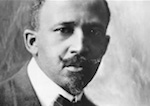 children's magazine, The Brownies' Book. Initially published in 1920. It was aimed at black children, who Du Bois called "the children of the sun."
One of the founders of the NAACP, he was a longtime editor of that organization’s journal The Crisis, and as such published many influential pieces on African-American history and the struggle for Civil Rights. A much sought-after presenter on Civil Rights, he worked tirelessly for what would become the Civil Rights Act, enacted less than a year after he died.
Share A Writer’s Moment with a friend by clicking g+1 below.
February 22, 2016
Imagine yourself 'in' the time
“I always try to find a story in the margins of history, but I don't like to do too much that's improbable.” – Philip Kerr
A native of Scotland, Kerr is best known for the Bernie Gunther series of historical thrillers set primarily in Germany during the 1930s, World War II and the Cold War. He has authored some 30 books of fiction, several nonfiction works and a dozen children's books, including the Children of the Lampseries, under the name P.B. Kerr.
Born 50 years ago today, Kerr started writing in middle school and really never stopped. In the early 1990s he was honored as one of Britain’s “Best Young Writers,” and in 2009 he won both the “RBA International Prize for Crime Writing” (also worth nearly $200 thousand in cash) and the British Crime Writers' Association's “Ellis Peters Historic Crime Writing Award.”
He resides near Wimbledon where he also writes nonfiction and essays and is a frequent contributor to The Sunday Times and The Evening Standard, although it's his writing “about the recent historical past,” that is his forte’.

As for the challenges of writing historical fiction, Kerr said his best advice is to immerse yourself in that time. “History asks us to imagine ourselves in a period, but it's a very different situation when you're in that period and faced with those situations,” he said. “(And) The hardest thing is to write about people. First and foremost, you have to encounter their humanity. That is the only way you can make them live as characters on the page.”
Share A Writer’s Moment with a friend by clicking g+1 below.
February 21, 2016
'Crying out' through your writing
“The role of a writer is not to say what we all can say, but what we are unable to say.” – Anais Nin
Born in France on this date in 1903, Anais Nin gravitated to writing at a very early age and started keeping detailed journals at the age of 11. She didn’t stop until more than 60 years later at the time of her death, and much of what she kept in them became fodder for her long and impressive writing career.
Over her lifetime she wrote everything from essays to novels, critical studies to short stories and, of course, her well-known and often controversial takes on erotica. Nin's most important works, in the judgment of both herself and scholars, are those diaries and journals, which provide a deeply explorative insight into her personal life and relationships. So far 16 volumes of her journals have been published. “My ideas,” she once said, “usually come not at my desk writing but in the midst of living.” And, of course, she wrote down daily about the life that she lived.
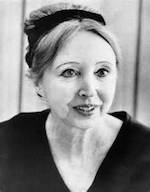
In the mid-1970s, shortly before her 1977 death, she was asked at one of her presentations what should be the motivating factor for someone seeking to make a life as a writer. Her answer was simple: “If you do not breathe through writing, if you do not cry out in writing, or sing in writing, then don’t write, because our culture has no use for it.”
Share A Writer’s Moment with a friend by clicking g+1 below.
February 20, 2016
Developing that special 'attentiveness'
“My poems always begin with a metaphor, but my way into the metaphor may be a word, an image, even a sound. And I rarely know the nature of the metaphor when I begin to write, but there is an attentiveness that a writer develops, a sudden alertness that is much like the feel of a fish brushing against a hook.” – Stephen Dobyns
“Masculine,” “witty,” and “humane” are terms frequently used to describe Dobyns’ poetry. He has published 10 volumes of poetry, including Concurring Beasts, The Balthus Poems, Cemetery Nights, and the poignant and fun-filled Pallbearers Envying the One Who Rides. His poems been anthologized in Best American Poems. A successful fiction writer as well, he has had two of his short stories chosen for Best American Short Stories. But, it’s his poems that are his forté.
“Many of my poems try to use a comic element to reach a place that isn't comic at all. The comic element works as a surprise,” he said. “Itis unexpected and energizing.”
For Saturday’s Poem, here’s Dobyns’
Loud Music
My stepdaughter and I circle round and round.
You see, I like the music loud, the speakers
throbbing, jam-packing the room with sound whether
Bach or rock and roll, the volume cranked up so
each bass note is like a hand smacking the gut.
But my stepdaughter disagrees. She is four
and likes the music decorous, pitched below
her own voice-that tenuous projection of self.
With music blasting, she feels she disappears,
is lost within the blare, which in fact I like.
But at four what she wants is self-location
and uses her voice as a porpoise uses
its sonar: to find herself in all this space.
If she had a sort of box with a peephole
and looked inside, what she'd like to see would be
herself standing there in her red pants, jacket,
yellow plastic lunch box: a proper subject
for serious study. But me, if I raised
the same box to my eye, I would wish to find
the ocean on one of those days when wind
and thick cloud make the water gray and restless
as if some creature brooded underneath,
a rocky coast with a road along the shore
where someone like me was walking and has gone.
Loud music does this, it wipes out the ego,
leaving turbulent water and winding road,
a landscape stripped of people and language-
how clear the air becomes, how sharp the colors.
Share A Writer’s Moment with a friend by clicking g+1 below.
February 19, 2016
The 'reflections' on life
“I think that when you're writing fiction what you're doing is reflecting life as you see it, and putting down how you think and how other people think, and the sort of confusions that you don't normally like to admit to.” – Helen Fielding
An English novelist and screenwriter, Fielding is best known as the creator of the fictional character Bridget Jones and a sequence of novels and films beginning with the life of a thirty-something singleton in London trying to make sense of life and love.
Bridget Jones's Diary (1996) and Bridget Jones: The Edge of Reason (1999) were published in 40 countries and sold more than 15 million copies, and were followed by two award-winning films of the same name that also achieved worldwide success. In a survey conducted by The Guardian newspaper, Bridget Jones’s Diary was named as one of the ten novels that best defined the 20th century.
Born on this date in 1958, Fielding gravitated to writing at an early age and became a journalist right out of college, first working for the BBC and then as both a journalist and columnist for most of the major British newspapers before beginning her creative writing. Helen Fielding
 Bridget Jones’s Diary, which ended up being the British Book of the Year, actually began as a weekly column in the London newspaper The Independent, written much in the way that you might make entries in a journal or diary.
Fielding credits Bridget’s success to the fact that, at heart, the story is about “the gap between how we feel we are expected to be and how we actually are.” And, of course, she says her use of humor makes it even more popular. “Comedy,” she said, “tends to come out of things which are quite painful and serious.” Just reflecting life as you see it.
Share A Writer’s Moment with a friend by clicking g+1 below.
February 18, 2016
Driven by 'the story'
“From the beginning, when I first got an idea for a story and wondered if I could write it, it has always been the story that has driven me.” – Jean M. Auel
Born and raised in Chicago and an avid reader throughout her childhood, Jean Auel is best known for her Earth's Childrenbooks, a series of novels set in prehistoric Europe that explores interactions of Cro-Magnon people with Neanderthals.
Thought at the time of their publication to be “fantasy” or “science fiction” or a combination of the two, it turns out that the interaction that Auel imagined has quite a few elements of truth as recent scientific discoveries show that we all probably carry some Neanderthal DNA.
After she got the initial idea to explore her premise of the interactions of Cro-Magnons and Neanderthals, she began extensive library research of the Ice Age for her first book Clan of the Cave Bear, published in 1980. She joined a survival class to learn how to construct an ice cave, and learned primitive methods of making fire, tanning leather, and knapping stone from the aboriginal skills expert Jim Riggs. It’s that attention to historic and day-in, day-out “detail” that captivates her readers and has won her numerous writing accolades, not only for that book but also for the 5 others that followed. To date her books have sold well over 45 million copies worldwide.
“I can't tell you any more than any other writer can tell you why they write, and I don't know what my influences are,” she said, adding that
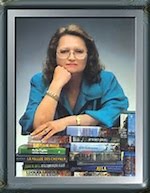 she reads and reads and reads, honing her own terrific storytelling style by observing the countless efforts of others. “I probably read 100 times more than I write, but that way when I move my characters through it, I know.”
Auel, who turns 80 today, said she has been a reader of Science Fiction and Fantasy for a long time, “since I was 11 or 12, I think. So I understand it and I’m not surprised that readers of the genre might enjoy my books.”
Share A Writer’s Moment with a friend by clicking g+1 below.