Dan Jorgensen's Blog, page 483
April 7, 2016
Holding her readers spellbound
“Mystery writing involves solving a puzzle, but 'high suspense' writing is a situation whereby the writer thrusts the hero/heroine into high drama.”– Iris Johansen
Born in St. Louis on this date in 1938, Johansen has had 17 consecutive New York Times bestsellers in the crime/mystery genre – something she didn’t first attempt until age 58. In fact, Johansen didn’t even start writing until her late 40s, first trying a “mixed” genre of historical romance and suspense beginning with her first book The Wind Dancer.
“I write 'by the seat of my pants.' I love to do research,” she said. “I am inspired by contemporary writers and contemporary events. I live in the real world.” She also is willing to try new ideas, like having two consecutive book covers that each have half of the cover picture. To see how she uses this clever idea, take a look at her books Hunting Eve and Silencing Eve. Alone, each cover works just fine, but together you get a whole new look at what is going on with both books.
Her writing world is home-based out of Georgia and in addition to her own writing she has seen
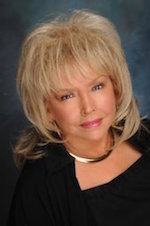 the success of son Roy Johansen, an Edgar-winning screenwriter and novelist, and daughter Tamara, who serves as her primary research assistant. “The greatest compliment a writer can be given is that a story and character hold a reader spellbound,” she said about the research work she and her daughter put into each book. “I'm caught up in the story writing and I miss a good deal of sleep thinking about it and working out the plot points.”
Share A Writer’s Moment with a friend by clicking the g+1 button below.


April 6, 2016
Heads (and voice) above the crowd
“The man who can speak acceptably is usually given credit for an ability out of all proportion to what he really possesses. The ability to speak is a short cut to distinction. It puts a man in the limelight, raises him head and shoulders above the crowd.”– Lowell Thomas
Born on this date in 1892, Thomas was a renowned speaker, mostly in broadcasting, but he also was a gifted writer and has the distinction of making Lawrence of Arabia famous.
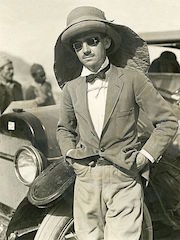
Thomas traveled as a war correspondent to Palestine during World War I where he met T. E. Lawrence, a captain in the British Army in Jerusalem. Thomas shot dramatic film footage of Lawrence with his Arab troops, and after the war he toured the world, narrating his film With Allenby in Palestine and Lawrence in Arabia and making Lawrence—and himself—household names.Lowell Thomas in Afghanistan in the 1920s .
Also magazine editor for a time, Thomas joined the young and growing business of broadcast news in the 1920s. After “talkies” made the movie scene, he narrated the weekly “Movietone” newsreels for 20thCentury Fox, further making his name the most well-known in America, if not the world. A newscaster for both CBS and NBC, his signature signoff was “So Long, Until Tomorrow,” which also became the title of his two-volume best-selling memoir.
A tireless worker, he advised to, “Do a little more each day than you think you possibly can.” He did radio – his chosen medium after trying and disliking television – until his death at age 89. He was on air longer than any other announcer until Paul Harvey came onto the scene. Thomas liked to tweak himself at times as being too caught up in reminiscing. “But,” he laughed, “after the age of 80, you know, everything reminds you of something else.”
Share A Writer’s Moment with a friend by clicking g+1 below
April 5, 2016
Just drawing from real life
“When writing I set myself 600 words a day as a minimum output, regardless of the weather, my state of mind or if I'm sick or well. There must be 600 'finished' words--not almost right words.” – Arthur Hailey
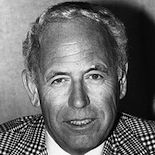
A British/Canadian novelist, Hailey's works have sold more than 170 million copies in 40 languages. Most are set within one major industry, such as hotels, banks, or airlines, and explore the particular human conflicts sparked by that environment. His novels are notable for their plain style, extreme realism based on detailed research, and a sympathetic down-to-earth hero with whom the reader can easily identify.
Born in England, he had a distinguished career in the Royal Air Force during World War II and then began writing after the war was over, moving to Canada where he established residency. In the last decade of his life he also lived in The Bahamas and it was there that he died in 2004. He first wrote as a journalist and then came up with his first novel, a “what if?” scenario about both pilots on a long-distance flight coming down with food poisoning. The resulting book, Runway Zero-Eight, began as a television movie script and then was expanded into his first best-selling novel.
Born on this date in 1920, Hailey’s most famous books Hotel and Airport also became top-grossing movies. For those of us who have tackled historical fiction,
his are models to emulate bringing together many “real-life” people with protagonists he invents to act as the glue to bring them all together in a wonderful storyline. Hailey, however, begs to differ that his “invented” characters are made up. “I don't think I really invented anybody,” he said. “I just drew on real life.”
Share A Writer’s Moment with a friend by clicking g+1 below
April 4, 2016
A special approach to storytelling
“I have believed in the biographies I have written. I truly can tell you that they have influenced our society politically, culturally, socially.”– Kitty Kelley
Born this date in 1942, Katherine “Kitty” Kelley is the author of several best-selling unauthorized biographies, including those on Jacqueline Kennedy Onassis, Frank Sinatra, Nancy Reagan, and the British Royal Family.
Kitty Kelley
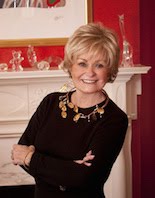 Born and raised in a wealthy Seattle family, she bounced around to several schools before earning a degree from the University of Washington and going to work in Washington, DC. There she worked for Senator Eugene McCarthy for several years before taking a job at the Washington Post. It was while there that she started to put together ideas for what would become her special writing niche.
 “The rumors of Frank Sinatra's violence and his ties to organized crime were such that journalists joked in print about me ending up in concrete boots and sleeping with the fishes if I proceeded to write his biography,” she said. Sinatra filed a $2 million lawsuit to prevent it from being published but subsequently dropped it and the book became a worldwide best seller. New York Times columnist William Safire called it "the most eye-opening celebrity biography of our time."
“People forget that unauthorized does not mean untrue,” Kelley said, “just like ‘authorized’ does not necessarily mean authentic.”
Share A Writer’s Moment with a friend by clicking the g+1 button below.
April 3, 2016
Wise words on a 'precious gift'
“A kind heart is a fountain of gladness, making everything in its vicinity freshen into smiles.” – Washington Irving
Wise words for Sunday from one of America’s premiere 19th century writers who was born on this date in 1783 and wrote his wonderful body of work from 1820 up until just before his death in 1859. In fact, just eight months before his death (at age 76, in Tarrytown, New York), he completed a definitive five-volume biography of George Washington. Irving, along with James Fenimore Cooper, was among the first American writers to earn acclaim in Europe, and through his kindness and support, he encouraged American authors such as Nathaniel Hawthorne, Herman Melville, Henry Wadsworth Longfellow, and Edgar Allan Poe, really leading the development of “American” literature.
Besides his writing, Irving was one of America’s leading diplomats and his thoughtful attention to other cultures and religions made him one of our young nation’s best assets in becoming a key member of the world community. Today’s politicians would be well-served to take a page from Irving’s advice to his fellow diplomats and writers.
“Remember, an inexhaustible good nature is one of the most precious gifts of heaven,” he advised, “spreading itself like oil over the troubled sea of thought, and keeping the mind smooth and equable in even the roughest weather.” To that, I say, Amen.
Share A Writer’s Moment with a friend by clicking g+1 below.
April 2, 2016
Sometimes they're just good words
“The problem with themes is that writers don't realize they are themes until someone points them out." –Tobias Hill
Earlier this week I wrote about Tobias Hill, poet and novelist from London. Hill read English atSussex University and spent two years teaching in Japan prior to starting his exemplary writing career, which also includes many novels and short stories. He is the author of four collections of poetry – Year of the Dog, Midnight in the City of Clocks, Zoo, and Nocturne in Chrome & Sunset Yellow – for which has won numerous awards. One London critic said of his work, “It’s rare to read something for the first time and know that you’re going to be reading it over and over for decades to come.”
Here for Saturday’s Poem is Hill’s, EXTRACT from “A Year in Japan”
She meets the train
at Burning Stone station,
red leaves in her pocket
and the river from the mountain
green as an eye.
The sun keeps rhythm
through the pines. The train beats time. She tells me that
her names translate as Three Eight Sweet One,
Sickle-Hand, and that her town
is famous for carrots, and that
the moon has no face in Japan,
but the shadow of a hare, leapt
from the arms of a god.
Later, under the sod-black trees
she hides her face against the wind
and asks me to teach her to kiss.
Share A Writer’s Moment with a friend by clicking g+1 below
April 1, 2016
Writing with meaningful emotion
“The thing is, emotion - if it's visibly felt by the writer - will go through all the processes it takes to publish a story and still hit the reader right in the gut. But you have to really mean it.” – Anne McCaffrey
Born on this date in 1926, McCaffrey was one of the all-time great writers of fantasy and science fiction (she died in 2011). Best known for her Dragonriders of Pern fantasy series, she became the first woman to win a Hugo Award for fiction and a Nebula Award for excellence in science fiction. Her 1978 novel The White Dragon was one of the first science-fiction books to appear on the New York Times Best Seller list. A Science Fiction Hall of Fame inductee, she was only the 22nd person ever selected as a Grand Master by the Science Fiction and Fantasy Writers of America.
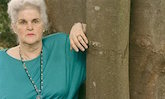 Born in Massachusetts, she lived 40 years in Ireland (a great tax haven for writers) and became a naturalized Irish citizen. A graduate of Radcliffe, she studied music and contemplated an operatic career before becoming a writer.
 McCaffrey achieved success in the early 1950s writing science fiction despite being advised thatit was “not a woman’s field.” To that she replied, “A good story is a good story, no matter who writes it.” Soon, it became one of the industry standards for aspiring Sci-Fi writers to want to write like McCaffrey, and that included writing women as primary protagonists.
She also set the standards for writing with emotion and putting the reader directly into the worlds she created. “That's what writing is all about, after all,” she said, “making others see what you have put down on the page and believing that it does, or could, exist and you want to go there.”
Share A Writer’s Moment with a friend by clicking the g+1 button below.
March 31, 2016
Let your 'self' shine through
“Be yourself. Above all, let who you are, what you are, what you believe shine through every sentence you write, every piece you finish.” – John Jakes
Jakes, who was born this day in 1932, gained widespread popularity with the publication of his Kent Family Chronicles, which became a bestselling American Bicentennial Series of books in the mid-to-late 1970s. The books sold an amazing 55 million copies.
He has since published several more popular works of historical fiction, most dealing with American history, including the North and South trilogy about the U.S. Civil War,
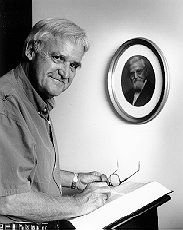
which sold 10 million copies and was adapted as an ABC-TV miniseries.
A native of Chicago, Jakes started writing while studying the craft at DePauw University and he has now penned 55 novels and 4 nonfiction books, including a terrific book on Famous War Correspondents and another on Famous “Firsts” in Sports.
I loved the Bicentennial Series and was shocked when none were made into either some type of movie, but perhaps they had too much breadth and scope to make them easily “filmable,” something I’ve learned can make or break a book’s being adapted into a film. Simple, as the old saying goes, is good. And, as Jakes likes to say:
“No writer should minimize the factor that affects everyone, but is beyond control: luck.”
Share A Writer’s Moment with a friend by clicking the g+1 button below.
March 30, 2016
En route to the 'unknown'
“With a novel, there is no hurrying it. You're constantly walking into the unknown.”– Tobias Hill A native of North London and the son of a journalist and graphic designer, Hill is a prizewinning and critically acclaimed author of five novels, four volumes of poetry, a short story collection and a children's book. He is celebrating his 46th birthday today. Amongst contemporary British authors, Hill is unusual in achieving critical recognition as a poet, novelist and writer of short stories. Over the past 10 years, he has been named one of the “Best young writers in Britain” by the London Times Literary Supplement and selected as one of the country's “Next Generation” poets. His novels have been published worldwide. Secrecy, revelation and obsession are recurrent themes in Hill's novels, which have all been best sellers. His short stories have won the prestigious International PEN/Macmillan Silver Pen Award. And, his poetry has been called “luminous” and “unforgettable.”
When asked what he likes best in his writing life, he said probably poetry because it provides him the biggest challenge.
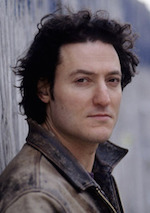
“At school, I was never given a sense that poetry was something flowery or light. It's a complex and controlled way of using language,” he said. “Rhythms and the music of it are very important. But the difficulty is that poetry makes some kind of claim of honesty.”
Share A Writer’s Moment with a friend by clicking g+1 below
March 29, 2016
Self-doubt not included
“As a writer, you have to believe you're one of the best writers in the world. To sit down every day at the typewriter filled with self-doubt is not a good idea.” – Jo Nesbo
A former Norwegian soccer star who turned to writing after a serious injury, Nesbo is not only one of Norway’s most popular writers, but also one of the world’s – particularly when it comes to crime fiction. After developing highly successful series featuring a hard- boiled detective Harry Hole, he branched out to a second series featuring a crazy professor named Doctor Proctor, who comes up with remarkable – yet somehow workable – inventions. And now he is into books starring Olav Johannson, a member of a leading crime family. His newest book, The Kidnapping, is just out and all three of his Johannson books have been optioned for movies.
When asked about where he develops his sometimes far-fetched ideas, he said “Those golden minutes before you are completely awake, when your mind is just drifting, you have no censorship; you are ready to develop any kind of idea. That's when I come up with the best and worst ideas. That is the privilege of being a writer - that you can stay in bed for an hour in the morning and it's work time.”
Born on this day in 1960, Nesbo said he doesn’t try to write to his audience but rather tries to write so that the audience is drawn to him. “You can't visit readers where you think they are,” he advised. “You have to invite them home to where you are and try to lure them into your universe. That's the art of storytelling.”
Share A Writer’s Moment with a friend by clicking the g+1 button below.