Dan Jorgensen's Blog, page 486
March 8, 2016
The heart and core of things
“For books are more than books, they are the life, the very heart and core of ages past, the reason why men lived and worked and died, the essence and quintessence of their lives.” – Gene Fowler
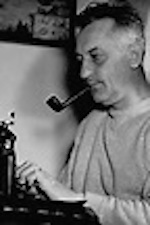
A “thought for the day” from longtime journalist, screenwriter and novelist Gene Fowler, who was born in Colorado on this date in 1890. During his lifetime (he died in 1960) he wrote 20 books, several plays and a couple dozen movie scripts while simultaneously serving as syndication manager for King Features – a major newspaper service.
I first learned about Fowler when researching my book And The Wind Whispered because of his interviews and connections with Buffalo Bill Cody, a key character in the book. Fowler also was close friends with actors John Barrymore and W.C. Fields and did one of the best books ever written about Jimmy Durante, Schnozzola. Gene Fowler
 He said his philosophy for success was simple. “Just believe in yourself and your abilities. It is always easier to believe than to doubt.”
Share A Writer’s Moment with a friend by clicking g+1 below.


March 7, 2016
Finding ways to make the story flow
“My job as an author is to tell the story in the best way possible, to make it flow seamlessly and get the reader to keep turning the page.”– Patrick Carman
A native of Oregon who now lives in eastern Washington, Carman was in advertising until 2003 when he began writing for children and young adults – a prolific and award-winning venture. Carman is a multimedia pioneer who uses technology, videos, and games to bring wired kids back to books. Millions of young readers have read, watched, and "played" books Carman has produced.
Also a noted public speaker, he presents at national events throughout the year including the National Book Festival, the LA Book Festival, and the School Library Journal Summit. He has also spoken to hundreds of thousands of students at over 1,200 schools across the country. And, he started an annual event in his own hometown, “Walla Walla Kids Read,” as a blueprint for literacy in rural communities.
“I travel to a lot of schools, and I see firsthand that while we do still have a lot of traditional readers, we don't have as many as we used to. And we're missing an awful lot of kids entirely... Do I want to get rid of the Internet? No. Obviously, I don't want
 that because of all the amazing things it brings.”
While he didn’t “officially” start writing until nearly age 40, he said he’s written for years and has drawers full of stories.
“I remember all the way back in high school thinking about writing books,” he said. “And, in fact, I've written a lot of stories. I've got dozens of stories I've written that no one's ever seen.” Kids everywhere are hoping he'll pull them out and share them.
Share A Writer’s Moment with a friend by clicking g+1 below.
March 6, 2016
Writing the landscape that shapes our lives
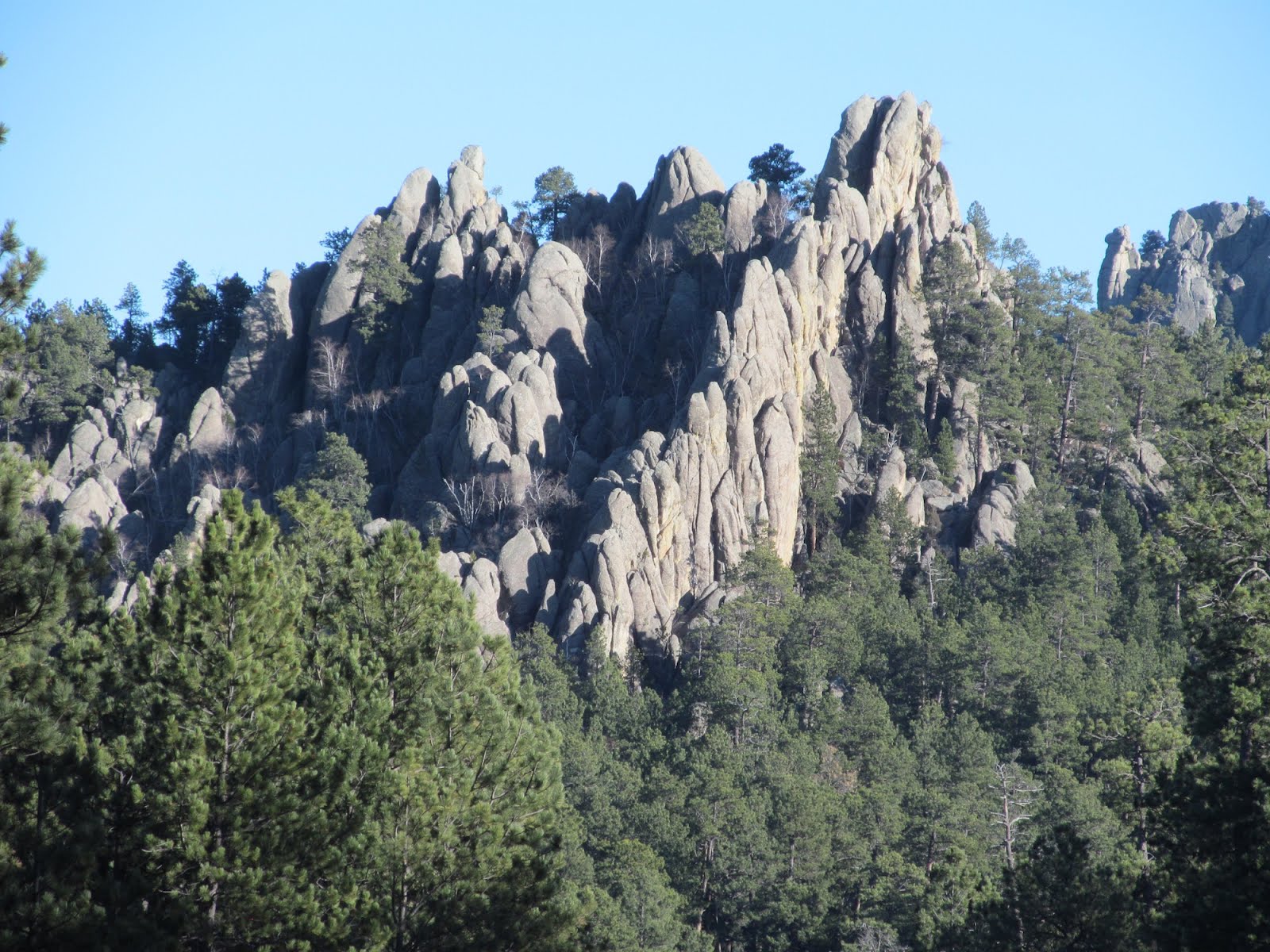 Near Harney Peak in the Black Hills (Photo by Susan Jorgensen)
“The natural world is the only one we have. To try to not see the natural world - to put on blinders and avoid seeing it - would for me seem like a form of madness. I'm also interested in the way landscape shapes individuals and populations, and from that, cultures.” - Rick Bass
A native of Texas, Bass, who was born on this date, is the son of a geologist and studied petroleum geology at Utah State University. He started writing short stories on his lunch breaks while working as a petroleum geologist in Jackson, Mississippi, and eventually gravitated toward environmental activism. Today he and his wife, artist Elizabeth Hughes Bass, live in a remote area where he both writes and works on environmental issues. He also is a well-known lecturer and teacher, often seen on television specials.
Among his more than two dozen books are the award-winning Where the Sea Used to Be, his short story collection The Lives of Rocks, and his autobiographical Why I Came West. He was also awarded the General Electric Younger Writers Award, a PEN/Nelson Algren Award Special Citation for fiction, and a National Endowment for the Arts fellowship. While he has an equal number of nonfiction and fiction works, he said approaching the latter genre’ is a more delicate proposition.
“I think a novelist must be more tender with living or 'real' people,” he said. “The moral imperative of having been entrusted with their story looms before you every day, in every sentence.
“A novel that features real people is complicated, but in the end, that extra challenge is all for the good.”
Share A Writer’s Moment with a friend by clicking g+1 below.
March 5, 2016
Poetry as a call to action
“Poetry can tell us about what's going on in our lives - not only our personal but our social and political lives.” – Juan Felipe Herrera
The author of nearly two dozen books, the poet, performer, writer, cartoonist, teacher, and activist Juan Herrera has been the United States Poet Laureate since 2015. His experiences as the child of migrant farmers have strongly shaped his work, such as the children's book Calling the Doves, which won the Ezra Jack Keats Book Award in 1997. He also was awarded the 2008 National Book Critics Circle Award in Poetry for Half the World in Light.
“I'm a political poet - let us say a 'human' poet, a poet that's concerned with the plight of people who suffer. If words can be of assistance, then that's what I'm going to use,” he said. “Poetry is a call to action, and it also is action.” For Saturday’s Poem, here is Juan Felipe Herrera’s,
Let Me Tell You What A Poem Brings Before you go further,
let me tell you what a poem brings,
first, you must know the secret, there is no poem
to speak of, it is a way to attain a life without boundaries,
yes, it is that easy, a poem, imagine me telling you this,
instead of going day by day against the razors, well,
the judgments, all the tick-tock bronze, a leather jacket
sizing you up, the fashion mall, for example, from
the outside you think you are being entertained,
when you enter, things change, you get caught by surprise,
your mouth goes sour, you get thirsty, your legs grow cold
standing still in the middle of a storm, a poem, of course,
is always open for business too, except, as you can see,
it isn't exactly business that pulls your spirit into
the alarming waters, there you can bathe, you can play,
you can even join in on the gossip—the mist, that is,
the mist becomes central to your existence.
Share A Writer’s Moment with a friend by clicking g+1 below.
March 4, 2016
As 'normal' as speaking
“I think we have a great deal of mythology around writing. We believe that only a few people can really do it. I wrote a book called 'The Right to Write.' In it, I argued that all of us have the capacity to write. That it's as normal to write as it is to speak.” – Julia Cameron
Teacher, author, artist, poet, playwright, novelist, filmmaker, composer, and journalist, Cameron is most famous for both her teaching and her many books on writing and creativity, beginning with her best-selling 1992 book The Artist's Way. Since then she has written a remarkable 30 nonfiction books, 2 novels, 6 plays and 4 books of poetry. She also has written many short stories, essays and screenplays.
“I grew up in what you might call a relentlessly creative household,” she said. “We were given art supplies, music supplies... Our mother knew enough to get us started and then stand back and not meddle. My parents never said to us, 'Don't you think you'll need something to fall back on?' They acted as though creativity was completely normal.”
Born on this day in 1948, she grew up in Chicago, went to college in New York and started her career as a writer at the Washington Post before moving over to Rolling Stone magazine. It was there that she met director Martin Scorsese and after a fairly
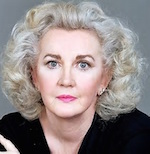 tumultuous marriage, they divorced but continued a close relationship, including collaborating on three films.
 “I have learned, as a rule of thumb, never to ask whether you can do something,” she said about her successful writing and teaching career. “Say, instead, that you are doing it. Then fasten your seat belt. The most remarkable things follow.“
Share A Writer’s Moment with a friend by clicking g+1 below.
March 3, 2016
Structuring your writing life
“I wish somebody had given me the news that ideas don't just fall on your head like fairy dust. You have to treat that like a job. You have to spend hours each day, where you're just like, 'This is the part of the day when I'm looking for an idea.'” – Ira Glass Ira Glass, born this day in 1959, is a Baltimore native who has virtually grown up in and spent his life in public radio. He started on NPR in Washington, DC, as a teenager. After learning the ropes under most of NPR’s early leaders, he became a reporter on most of the major shows like Morning Edition and All Things Considered before starting This American Life in 1995. He has hosted that show ever since and is noted for the in-depth and well-researched stories that he tells.
“I'm not a natural storyteller at all. If anything, I'm a natural interviewer, a natural listener, but I'm not a natural storyteller,” he said. Despite that disclaimer he has received the Edward R. Murrow Award for Outstanding Contributions to Public Radio, the George Polk Award in Radio Reporting, and the Medal for Spoken Language from the American Academy of Arts and Letters. In 2014 he was inducted into the National Radio Hall of Fame.
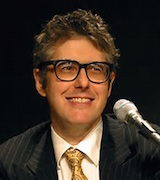
As for his writing, he said he learned the craft by watching others who he admired, something he highly recommends to young writers.
“When you're learning, especially to write, unless you're some incredibly gifted writer, a young Malcom Gladwell, say, you need to be imitating people. You need to be imitating how they make their work, how they structure it, how they design the pieces. It gives you chops; it gives you moves.”
Share A Writer’s Moment with a friend by clicking g+1 below.
March 2, 2016
Beginning at the end
“Titles are important; I have them before I have books that belong to them. I have last chapters in my mind before I see first chapters, too. I usually begin with endings, with a sense of aftermath, of dust settling, of epilogue.” – John Irving
Novelist and Academy Award-winning screenwriter Irving, who turns 74 today, first achieved critical and popular acclaim with the international success of 1978’s The World According to Garp. Since then he has had many other best sellers and also had 5 of his novels, including the Academy Award-winner The Cider House Rules, adapted to film.
Irving started writing fiction at age 26, had only limited success and became a college professor before writing Garp and earning worldwide acclaim. Of his 14 novels, 4 have reached number one on the New York Times Bestseller List, and said all of his books grow out of his development
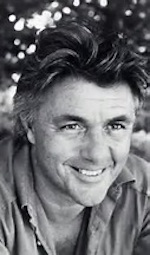 of the endings first – not necessarily a unique style but one that has paid big dividends for him. “I write the last line, and then I write the line before that,” he said. “I find myself writing backwards for a while, until I have a solid sense of how that ending sounds and feels. You have to know what your voice sounds like at the end of the story, because it tells you how to sound when you begin.”
Share A Writer’s Moment with a friend by clicking g+1 below.
March 1, 2016
Wise words of inspiration
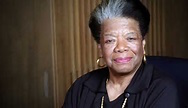
“We write for the same reason that we walk, talk, climb mountains or swim the oceans - because we can. We have some impulse within us that makes us want to explain ourselves to other human beings. That's why we paint, that's why we dare to love someone - because we have the impulse to explain who we are.” – Maya Angelou
It was my privilege to meet, talk with and learn from the great Maya Angelou. Today, as I’m traveling and speaking on behalf of my own writing, I was reminded of her wonderful quote – an inspiration to all who seek the writing life.
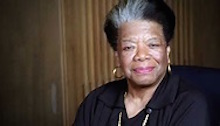 Maya Angelou
Share A Writer’s Moment with a friend by clicking the g+1 button below.
February 29, 2016
It's still 'the best' experience
“I still feel, as I did when I was six or seven, that books are simply the best way to experience a story.” – Philip Reeve
Reeve, who turned 50 yesterday, is the British cartoonist /illustrator of many books for kids, including the “Dead Famous” book Horatio Nelson and His Victory, and a number of books in the clever Horrible Histories and Murderous Maths series. He also wrote the Buster Bayliss books for young readers, which includes Night of the Living Veg, The Big Freeze, Day of the Hamster, and Custardfinger.
In 2007 he delved into historical fiction with his award-winning book Here Lies Arthur, an alternative look at the King Arthur legend.
Reeve said he was always fascinated by the illustrations as much as the writing and has strived to make his illustrations as palatable as possible for young readers.
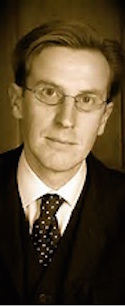 “Even tiny children looking at a picture book are using their imaginations, gleaning clues from the images to understand what is happening, and perhaps using the throwaway details which the illustrator includes to add their own elements to the story,” he said.
As for his own pathway into his career, he said, “I'm sure it came as no surprise to my friends and family when I became an illustrator and then a writer because, from about the age of 5, I was one of those children who always had his nose in a book.”
Share A Writer’s Moment with a friend by clicking g+1 below.
February 28, 2016
Taking your breath away
“If one tries to think about history, it seems to me - it's like looking at a range of mountains. And the first time you see them, they look one way. But then time changes, the pattern of light shifts. Maybe you've moved slightly, your perspective has changed. The mountains are the same, but they look very different.” – English novelist and historian Robert Harris
Yesterday was one of “those days” along the Front Range of Colorado – warm, sunny, beautiful. And the mountains near our home just begged to be photographed and so I obliged.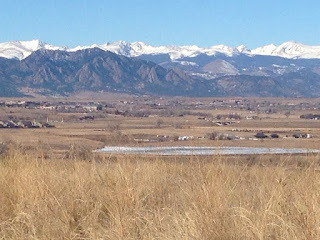 This is the view from the western edge of Broomfield, the community in which I reside. As Nathaniel Hawthorne once noted, “Mountains are earth's undecaying monuments.” And for those who have chosen to become writers, they are undecaying inspiration. I often say that if I cannot be inspired to write after viewing the beauty of the mountains, then I do not deserve to be called by the name, writer.
They do, indeed, create for us many breathtaking “writers’ moments.”
Share A Writer’s Moment with a friend by clicking g+1 below.
Yesterday was one of “those days” along the Front Range of Colorado – warm, sunny, beautiful. And the mountains near our home just begged to be photographed and so I obliged.
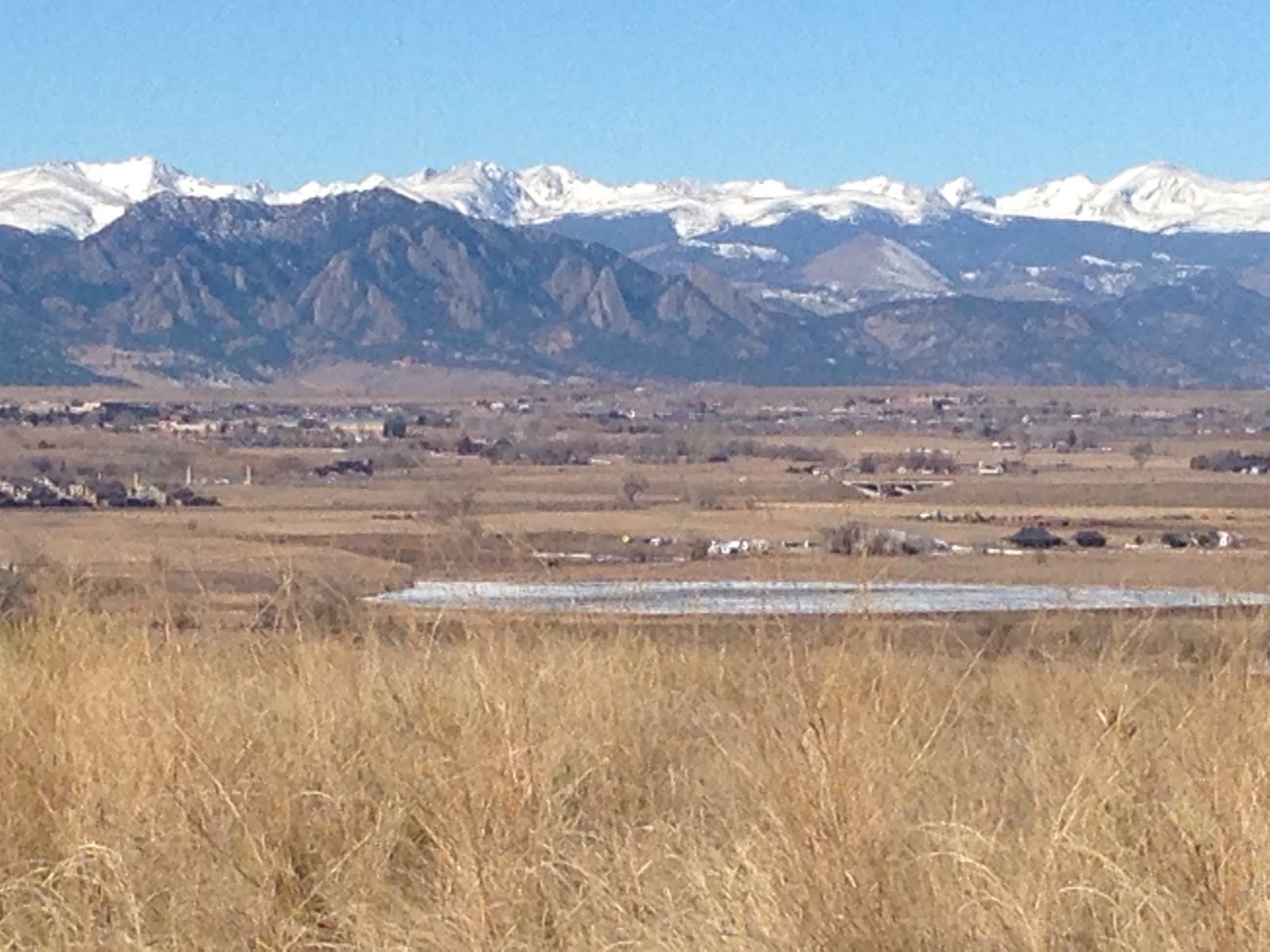 This is the view from the western edge of Broomfield, the community in which I reside. As Nathaniel Hawthorne once noted, “Mountains are earth's undecaying monuments.” And for those who have chosen to become writers, they are undecaying inspiration. I often say that if I cannot be inspired to write after viewing the beauty of the mountains, then I do not deserve to be called by the name, writer.
 They do, indeed, create for us many breathtaking “writers’ moments.”
Share A Writer’s Moment with a friend by clicking g+1 below.