Dan Jorgensen's Blog, page 490
January 29, 2016
Creating some sunshine with your words
“It is the artist's business to create sunshine when the sun fails. He who has a sun in himself won’t seek for it somewhere else.” – Romain Rolland
Rolland, born on this date in 1866, was a French dramatist, novelist, essayist, art historian and mystic. He was awarded the Nobel Prize for Literature in 1915 "as a tribute to the lofty idealism of his literary production and to the sympathy and love of truth with which he has described different types of human beings.”
He advocated for making the theater accessible to “ordinary people” and often expressed frustration with those he was trying to convince that this was a good idea. “Discussion is impossible with someone who claims not to seek the truth but already to possess it,” he once noted. Sounds a lot like our political races of today, doesn’t it?
His friend Sigmund Freud said he was profoundly influenced by Rolland’s views, especially on mysticism. Freud also was a great admirer of Rolland’s 10-volume novel Jean-Christophe, written over an 8-year period and setting the
 stage for his Nobel Prize.
 “The main thing is not to accumulate as much knowledge as possible, but to make sure that this knowledge is the child of your own efforts,” Rolland said. “Skepticism, riddling the faith of yesterday, prepares the way for the faith of tomorrow.”
Share A Writer’s Moment with a friend by clicking g+1 below.


January 28, 2016
That 'emotional' connection
“Writing a song is much like being an author. Yes, we all have tools to write (everyone has a brain I hope!), but that doesn't all of a sudden make us best selling authors.” – Ken Hill
Born on this date in 1937, British playwright Ken Hill was an acclaimed theater producer and director, primarily on the stage of the Theatre Royal Stratford East and on London’s West End. Among his many hits were The Invisible Man and the original stage version of The Phantom of the Opera, which inspired Andrew Lloyd Webber to create his own musical blockbuster version.
Hill’s stock-in-trade was musical adventure stories, including Zorro, The Musical. Hill died of cancer at age 57 and part of his lasting legacy was the establishment of a memorial trust to help nurture new writing talent for theater. The trust also gives the annual “Ken Hill Awards” for Best New Musical and to support new playwrights with writing and producing their work.
An investigative journalist before he started writing for theater, Hill also was a gifted composer and said that composers, like authors, have a lot in common with the people for whom they are writing. “Our main goal,” he said, “is to connect with the listener emotionally.”
“The prime goal of an author is the same as a musician, which is to emotionally connect with the reader in some way or another.”
Share A Writer’s Moment with a friend by clicking g+1 below.
January 27, 2016
Sharing that 'human' experience
"Our task as fiction writers isn't just to report something that didn't really happen. We have to give what we write a sense of reality. The tool of our tradition is language." -- Alice McDermott
Novelist and essayist McDermott, born on this date in 1953, is a professor at Johns Hopkins University, only the latest in a number of colleges and universities where she has either taught or been writer-in-residence across the United States. Her 1998 novel Charming Billy won both the American Book Award and the U.S. National Book Award for Fiction, and her 2013 novel Someone was a National Book Award finalist. Two of her other books were finalists for the Pulitzer Prize.
A native of New York City, she started writing while still in high school, and in 2013 she was inducted into the New York Writers Hall of Fame. Currently residing near
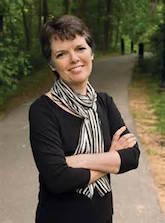 Washington, DC, she has written half-a-dozen novels and dozens of short stories and essays for Ms., Redbook, Mademoiselle, The New Yorker, and both The New York Times and The Washington Post.
 But, ultimately, she said, “I'm a novelist. I'm not a crusader, and I'm not an editorial writer. And I'm not writing fiction to convince anybody of anything ... I've always believed that you go to literature to find the shared human experience."
Share A Writer’s Moment with a friend by clicking g+1 below.
January 26, 2016
That desire to write
“If the desire to write is not accompanied by actual writing, then the desire must be not to write.” – Hugh Prather An American self-help writer, lay minister, and counselor, Prather was most famous for his very first book, Notes to Myself, which sold over 5 million copies. The work underscored the importance of gentleness, forgiveness, and loyalty.
Prather, born during this week in 1938 (he died in 2010), also wrote or co-wrote over a dozen other books that touched on thoughts about life, love and spirituality, one of the most well-known being I Touch The Earth; The Earth Touches Me. “It's this simple: If I never try anything, I never learn anything,” he wrote in that book. “If I never take a risk, I stay where I am.”

Much of Prather’s writing underscores the importance of gentleness, forgiveness, and loyalty, themes many readers loved and others scorned as “thoughts seen through rose-colored glasses.”
“Negative feedback is better that none,” Prather responded with his usual sunny outlook. “I would rather have a man hate me than overlook me. As long as he hates me I figure I must’ve made a difference.”
Share A Writer’s Moment with a friend by clicking g+1 below.
January 25, 2016
A story worth telling
“Not only is your story worth telling, but it can be told in words so painstakingly eloquent that it becomes a song.” – Gloria Naylor
The daughter of Mississippi sharecroppers who migrated to New York City’s Harlem area to escape southern segregation, Naylor was born on this day in 1950. She grew up keenly aware of life in “the mean streets” and kept track of those stories in a daily journal that became a wonderful resource for her writing.
While her parents had little education, they encouraged both their daughter’s writing and further study. She earned her bachelor’s degree in English at the City University of New York in 1981, and master’s in African American Studies from Yale University in 1983 sandwiched around her first novel, the award-winning The Women of Brewster Place. That 1982 work also was made into a movie.
Since then she has had a long and award-filled career in university teaching while also writing 6 more novels, drawing frequently on both her own life and the lives of African American women from the communities in which she has lived. Daily life, which she continues to both observe and chronicle in her journals, plays a big part of what she shares in her writing.
“I don't believe that life is supposed to make you feel good, or make you feel miserable either,” she said. “Life is just supposed to make you feel. Life is accepting what is and working from that.”
Share A Writer’s Moment with a friend by clicking g+1 below.
January 24, 2016
Writing 'the tightrope' of life
“There are two ways of spreading light: to be the candle or the mirror that reflects it.” – Edith Wharton
Wise words from one of the greatest writers in history, who was born on this day in 1862, grew up in New York City, and began writing poetry and fiction as a young girl. She even attempted to write a novel at age 11 and had her first work published at age 15.
Despite that, her Upper Crust Society family discouraged her from writing and publishing because they didn’t think it was either “ladylike” or worthwhile. But after marrying, she pursued it anyway and went on to publish 16 novels, dozens of novellas, 85 short stories, 3 books of poetry, and 9 nonfiction books. In 1921 she won the Pulitzer Prize for The Age of Innocence, and in 1927, 1928 and 1930 she was a finalist for the Nobel Prize.

Her novella Ethan Frome and her novel House of Mirth are widely studied in American literature classes in both high schools and colleges and universities around the world for their realism and portrayal of the times and places in which she lived.
Wharton loved life and writing about it and said it kept her young and vibrant. “Life is always a tightrope or a feather bed,” she said. “Give me the tightrope.”
Share A Writer’s Moment with a friend by clicking g+1 below.
January 23, 2016
The property of imagination
“The English language is nobody's special property. It is the property of the imagination: it is the property of the language itself.”– Derek Walcott
Born on this day in 1930, Saint Lucian-Trinidadian poet and playwright Derek Walcott is the 1992 winner of the Nobel Prize in Literature. He is currently Professor of Poetry at the University of Essex. In addition to the Nobel, Walcott won an Obie Award for his play Dream on Monkey Mountain; a MacArthur Foundation "genius" award; a Royal Society of Literature Award; the Queen's Medal for Poetry; and the T. S. Eliot Prize for his remarkable book of poetry White Egrets (one of my all-time favorites).
 He once noted of his poetic writing, “If you know what you are going to write when you're writing a poem, it's just going to be average.” His are not. For powerful and poignant reads, check out his “A City’s Death by Fire” or “A Far Cry From Africa.” And, for Saturday’s Poem, here is,
 Love After Love
The time will come
when, with elation
you will greet yourself arriving
at your own door, in your own mirror
and each will smile at the other's welcome,
and say, sit here. Eat.
You will love again the stranger who was your self.
Give wine. Give bread. Give back your heart
to itself, to the stranger who has loved you
all your life, whom you ignored
for another, who knows you by heart.
Take down the love letters from the bookshelf,
the photographs, the desperate notes,
peel your own image from the mirror.
Sit. Feast on your life.
Share A Writer’s Moment with a friend by clicking g+1 below.
January 22, 2016
Creating a cultural icon
It seems to me that many writers, by virtue of environments of culture, art and education, slip into writing because of their environments. I beame a writer in spite of my environments. – Robert E. Howard
American author Robert E. Howard, who was born on this date, is widely regarded as the father of the so-called “sword and sorcery” genre. Along the way, of course, he created a character almost everyone in the world now knows – Conan the Barbarian. Even though he had
 no formal training, his voracious reading, along with a natural talent for prose writing and the encouragement of teachers, created an interest in becoming a professional writer. He actually started writing at age 9, mostly tales of historical fiction centering on Vikings, Arabs, battles, and bloodshed, all key elements in many of the pieces he wrote in the late 1920s and early 1930s.
Unfortunately, his Conan books did not get published until after his death (at age 30 in 1936) and thus he had no idea that he had created a character that would stand the test of time. Today, Conan’s cultural impact has been compared to such characters as Batman, Sherlock Holmes and Tarzan. Despite never having a novel published while he was living, his writing was published in a wide range of magazines, journals, and newspapers, and he became one of the most popular writers of the new style he created.
“I do have this thing to remember,” he said shortly before his death. “I was a pioneer in my profession, just as my grandfathers were in theirs, in that I was the first man in this section to earn his living as a writer.”
Share A Writer’s Moment with a friend by clicking g+1 below.
January 21, 2016
Reflecting reality, earning awards
“Every published writer suffers through that first draft because most of the time, that's a disappointment.” – Rebecca Stead
So, for this American writer, second drafts definitely carry the “wow” factor. Stead’s 2010 novel When You Reach Me won the Newbery Medal, the oldest award in children's literature. And in 2013 she was named for the Guardian Prize recognizing her book Liar & Spy as the year's best children's book released in Great Britain.
Stead, who grew up in Manhattan, said she enjoyed writing as a child but later felt that it was "impractical" and became a lawyer instead. After years as a public defender she returned to writing after the birth of her two children, writing her first book First Light as entertainment for her oldest son. “I asked myself what it was that I wanted from writing and where my connection with books began,” she said, “and the answer to that question was definitely in childhood, because that's where my connection with reading began.”

When You Reach Me was recently named the 11th best children’s novel of all time in a survey by the School Library Journal, and Newbery judges noted, "Every scene, every nuance, every word is vital both to character development and the progression of the mystery that really is going to engage young readers and satisfy them.” It was the only 21st-century work among the top 20 in the Children’s novel rankings.
“A lot of my ideas for books come from newspaper articles. But I don't like to be actively looking for ideas,” she said. “I do try to write in ways that reflect reality, and I think that reality is rarely simple.”
Share A Writer’s Moment with a friend by clicking g+1 below.
January 20, 2016
The worlds of imagination
“Whenever you're writing a book or creating a movie or a game, your first task is to get the reader/audience/player to suspend disbelief, to buy into the logic and boundaries of your world, even though those boundaries might include things like dragons and magic. To do that, you need long threads - of history and culture.” – R.A. Salvatore
Robert A. Salvatore, born on this date in 1959, is an American author best known for The DemonWars Saga, his Forgotten Realms novels, and Star Wars: The New Jedi Order, a series of novels set in the Star Wars expanded universe. He has sold more than 15 million copies of the books in the United States alone, and 22 of his titles now have been New York Times best-sellers. On top of that, he has been highly successful writing the backstories and text for a number of science fiction-type video games.
The youngest of a family of seven, he credited his high school English teacher with being instrumental in his development as a writer. During his time at Fitchburg State College (Virginia), he became interested in fantasy after reading J. R. R. Tolkien’s The Lord of the Rings, given to him as a Christmas gift. He quickly changed his major from Computer Science to Journalism/Media and took up writing fantasy type stories. Right out of college and before becoming a full-time writer in the early 1980s, he worked as a bouncer, and attributes his fierce and vividly described battle scenes to that experience (always write what you know, right?).

“I never intended to be a professional writer,” he said. “As the story (his first novel Echoes of the Fourth Magic) developed, the one thing I had in my hopes was that this would be something tangible to separate me from the nameless, numbered masses. I loved the world of imagination.”
Share A Writer’s Moment with a friend by clicking g+1 below.