Dan Jorgensen's Blog, page 489
February 7, 2016
Figuring out the 'presentation'
“The whole difference between construction and creation is exactly this: that a thing constructed can only be loved after it is constructed; but a thing created is loved before it exists.” – Charles Dickens
Today is the anniversary of Dickens’ birth in 1812. During his relatively short lifetime (he died at age 58), he created some of the world's best-known fictional characters, establishing himself as the greatest novelist of the Victorian era. His novels, short stories and plays have enjoyed unprecedented popularity both during his lifetime, and yet today. And, both 20th century and 21st century critics and scholars have recognized him as a literary genius.
As a writer, if you’re looking for an example to guide you, just look to almost any phrase or paragraph from Dickens and you’ll be safely on your way. I’ve always loved the simplistic power of his descriptions, like this sentence about a March day. “It was one of those March days when the sun shines hot and the wind blows cold: when it is summer in the light, and winter in the shade.” Everything we need to know in under 30 words.
Dickens’ writings gave the world the term Dickensian, used to describe something reminiscent of both him and his writings, as well as things like the poor social conditions or comically repulsive characters of which he wrote. He was a master of character development and his portrayal of life and the world around him. His words still transport us into that world 200 years later.
He loved writing from an early age, but almost didn’t become a writer. He had prepared himself to be an actor, but at the time of his first tryout, he came down with a cold and could not do the reading. While recuperating, he wrote a story
 that was so well received he decided writing might be a better choice.
 He soon began a newspaper column called “Street Sketches,” which eventually became The Pickwick Papers, published when he was 24. Two years later, his novel Oliver Twist was published – the first book to have a child protagonist. He also wrote his first 4 plays during this period. He never turned back from a writing career, and said he never lacked ideas. Ideas are everywhere, he said, “You just have to figure out how to present them. An idea, like a ghost, must be spoken to a little before it will explain itself.”
Share A Writer’s Moment with a friend by clicking g+1 below.


February 6, 2016
Say it clearly ... and with beauty
“Have something to say and say it as clearly as you can. That is the only secret of style.” - Matthew Arnold
Arnold is sometimes called the third great Victorian poet, along with Alfred, Lord Tennyson and Robert Browning. In an 1869 letter to his mother, he wrote:
“My poems represent, on the whole, the main movement of mind of the last quarter of a century, and thus they will probably have their day as people become conscious to themselves of what that movement of mind is, and interested in the literary productions which reflect it."
“Poetry is simply the most beautiful, impressive and widely effective mode of saying things.” For Saturday’s poem, here is Arnold’s, Longing
Come to me in my dreams, and then
By day I shall be well again!
For so the night will more than pay
The hopeless longing of the day.
Come, as thou cam'st a thousand times,
A messenger from radiant climes,
And smile on thy new world, and be
As kind to others as to me!
Or, as thou never cam'st in sooth,
Come now, and let me dream it truth,
And part my hair, and kiss my brow,
And say, My love why sufferest thou?
Come to me in my dreams, and then
By day I shall be well again!
For so the night will more than pay
The hopeless longing of the day.
Share A Writer’s Moment with a friend by clicking g+1 below.
February 5, 2016
That willingness to share
“Every reader re-creates a novel - in their own imagination, anyway. It's only entirely the writer's when nobody else has read it.” – Susan Hill
Hill, who was born on this date in 1942, is an English author of “mostly ghost stories.” Among her works are The Woman in Black, The Mist in the Mirror, and I'm the King of the Castle, for which she received the Somerset Maugham Award – a really cool award that can only be used for foreign travel to do more research for your writing. Named for British writer W. Somerset Maugham, the award is given annually to the best writer or writers under age 35 whose book has been published in the previous year. Hill won the award in 1971 when she was 29.
An only child she said she was born to be a writer. “I was never really good at anything else,” she explained. “I had no other option. I could write; I wanted to write; I wrote. Otherwise, I was unemployable.”
Hill's novels are written in a descriptive gothic style, relying on suspense and atmosphere to create impact.
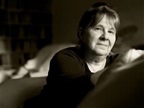 About 10 years ago she had the wonderful idea of creating a series of crime novels featuring detective Simon Serrailler, entitled The Various Haunts of Men. For terrific crime mysteries with an infused “chill” factor, I highly recommend them.
 Hill has won a number of awards for her works and was honored on a recent birthday by being named a Commander of the Order of the British Empire (CBE) for services to literature. When asked for her advice to new writers she simply advised, “Don’t overwrite. Once you finish a book, just let it go out into the world to seek its fortune.”
Share A Writer’s Moment with a friend by clicking g+1 below.
February 4, 2016
That winning writing routine
“When I get started each day, I read through and correct the previous day's 2,000 words, then start on the next. As I reach that figure, I try to simply stop and not go on until reaching a natural break. If you just stop while you know what you're going to write next, it's easier to get going again the next day.”– Neal Asher
Born in England on this date in 1961, Neal Asher has established himself as one of today’s top science fiction writers – something he “sort of inherited” from his parents, both who are educators and science fiction fans.
Although he began writing while still in secondary school, he didn’t turn to it seriously until he was nearly 30, working first as a machinist and machine programmer and then as a full-time gardener before a successful short story got him into writing full time. Influenced by The Lord of the Rings, The Hobbit and Roger Zelazny’s The Chronicles of Amber series, he soon developed his own special setting, the so-called "Polity" universe. His fast-paced, action-filled stories encompassing many classic science fiction tropes have made him a fan favorite in the genre’.
Asher with two of his award-winning titles
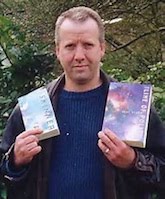 Asher makes his home near Chelmsford, England, and has turned out dozens of books and short stories – many of them award winning – since his debut piece in 1989. Asked for his advice to new writers, he said to work on developing a regular writing routine (that 2000 daily words mentioned above) and keep an active, inquiring mind.
 “For me,” he said, “the writing process is the same as the reading process. I want to know what happens next."
Share A Writer’s Moment with a friend by clicking g+1 below.
February 3, 2016
That 'swirl and swing of words'
“I love writing. I love the swirl and swing of words as they tangle with human emotions.” – James A. Michener
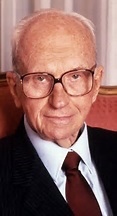
A native of Pennsylvania, Michener was born on this day in 1907 and during his long life (he died at age 90), he wrote 40-plus books, hundreds of essays and short stories, and several screenplays and radio pieces. The majority of Michener’s works were fictional, lengthy family sagas covering generations in particular geographic locales while incorporating solid history. I first got turned on to both Michener and my own itch to become a writer when my high school English teacher handed me a copy of Hawaii and said, “Read this and maybe some day you can write like he does. You have it in you.”
I have tried follow his example of doing meticulous research and his admonition of write, rewrite, and rewrite again to be sure. “I’m not a very good writer,” Michener once said, “but I’m an excellent rewriter.” Both his research efforts and rewriting skills are traits every writer of historical fiction should strive to achieve.
Trained as a historian, Michener started writing while serving in the Navy during World War II, and his first effort (at age 40) was Tales of the South Pacific. The book won the Pulitzer Prize and became the foundation for Rodgers and Hammerstein’s long-running award-winning Broadway show South Pacific, also made into a movie.
His novels have sold an estimated 75 million copies worldwide, almost all based on detailed historical, cultural, and even geological research. Another of my Michener “favorites” was Centennial,
 set in my adopted state of Colorado and written to coincide with the state’s 100th birthday in 1976. Like Hawaii, it documented generations of families whose lives and cultures shaped the history of the state.
 “I think the crucial thing in the writing career is to find what you want to do and how you fit in,” Michener offered as advice to new writers. “What somebody else does is of no concern whatever except as an interesting variation.” I would add, though, that Michener’s example is a great guide for all who seek the writing life.
Share A Writer’s Momentwith a friend by clicking g+1 below.
February 2, 2016
Nourishment for the soul
“The arts, quite simply, nourish the soul. They sustain, comfort, inspire. There is nothing like that exquisite moment when you first discover the beauty of connecting with others in celebration of larger ideals and shared wisdom.” – E. Gordon Gee
I had the opportunity to meet and talk with the thoughtful Gee when I was working with Scholarship America and we hosted a national symposium on “access to education” in Providence, R.I., where he was president of Brown University. I was struck by his commitments to opportunity for everyone to have access to higher education, and also to writing and the arts.
Gee, who was born on this date in 1944, has held more university presidencies than any other American. In addition to his time at Brown, he was president of the Ohio State University, chancellor of Vanderbilt University, president of the University of Colorado, and of West Virginia University, where he had his first presidential position in the 1980s and then returned in 2014. In 2010 Time magazine rated Gee one of the top 10 U.S. college presidents.
“I believe that it is higher education's purpose and calling to keep open the door to the American dream,” Gee once said.
 Writing and learning to question are crucial skills to be fostered in every student.
 “I believe everything learned in college is an answer to a question that someone has posed. Questions get posed differently, and the answers that come back transport us to places we never knew existed.”
Share A Writer’s Moment with a friend by clicking g+1 below.
Nourishment for the soult
“The arts, quite simply, nourish the soul. They sustain, comfort, inspire. There is nothing like that exquisite moment when you first discover the beauty of connecting with others in celebration of larger ideals and shared wisdom.” – E. Gordon Gee
I had the opportunity to meet and talk with the thoughtful Gee when I was working with Scholarship America and we hosted a national symposium on “access to education” in Providence, R.I., where he was president of Brown University. I was struck by his commitments to opportunity for everyone to have access to higher education, and also to writing and the arts.
Gee, who was born on this date in 1944, has held more university presidencies than any other American. In addition to his time at Brown, he was president of the Ohio State University, chancellor of Vanderbilt University, president of the University of Colorado, and of West Virginia University, where he had his first presidential position in the 1980s and then returned in 2014. In 2010 Time magazine rated Gee one of the top 10 U.S. college presidents.
“I believe that it is higher education's purpose and calling to keep open the door to the American dream,” Gee once said.
Writing and learning to question are crucial skills to be fostered in every student. “I believe everything learned in college is an answer to a question that someone has posed. Questions get posed differently, and the answers that come back transport us to places we never knew existed.”
Share A Writer’s Moment with a friend by clicking g+1 below.
February 1, 2016
The 'most important' thing
“I would say if you want to write, write what you care about. I think that's the most important thing. I think if you write what you care about, you stand a better chance of having the reader care about your story.”– Jerry Spinelli
An American writer of children's novels that feature adolescence and early adulthood, Spinelli is best known for his books Maniac Magee and Wringer, both Newbery Award winners. And while they are definitively “Young Adult” books, he said “I don't really write for adults or kids - I don't write for kids, I write about them. I think you need to do that; otherwise, you end up preaching down. You need to listen not so much to the audience but to the story itself.”
Born on this date in 1941, Spinelli grew up in Pennsylvania and studied at Gettysburg, one of the nation’s top liberal arts colleges, and then did graduate work at Johns Hopkins, gravitating toward history. But he was always thinking about a writing career and following in the footsteps of his journalist father. Although, as he noted, “Nobody told me how hard it was going to be to get published. I wrote four novels (for adults) that nobody wanted, sent them out all over, and collected hundreds and hundreds of rejection slips.” His fifth book was also supposed to be for adults, but instead was accepted as a Young Adult title and he was on his way. Since then, he’s written more than 30 YA books,
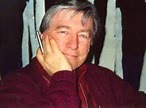 one of the most popular writers in the genre’. “My ideas come from ordinary, everyday life,” he said. “And from imagination. And from feelings. And from memories. Memories of dust in my sneakers and humming whitewalls down a hill called Monkey.”
 Share A Writer’s Moment with a friend by clicking g+1 below.
January 31, 2016
An expression of life
“I arise full of eagerness and energy, knowing well what achievement lies ahead of me.”– Zane Grey
Best known for his popular novels of the Old West, Grey idealized the American frontier and wrote some 9 million words in his lifetime. His 1912 best-seller Riders of the Purple Sage was the highlight of an amazing 90 books in the genre, many of which had second lives and continuing influence when adapted as films and television productions. Overall, his novels and short stories have been adapted into 112 films, two television episodes, and a television series, The Zane Grey Theater.
Born on this day in 1872, Grey grew up in Zanesville, Ohio, a city founded by his maternal great-grandfather Ebenezer Zane, an American Revolutionary War patriot. From an early age he was intrigued by history and even though he first chose dentistry for a career, he gravitated to writing about history and the American West. “Writing was like digging coal,” he said about his early efforts. “I sweat blood. But the spell was on me.”
Grey struggled to get his work published and actually self-published his first novel. An editor at Harper & Row, his publisher of choice, consistently rejected him, but when he did “Riders,” and the editor out-of-hand rejected it again, he got an audience with a senior vice president, made an impassioned plea and got the book published. The rest, as they say, is history – both literally and figuratively.
Besides his Westerns, he wrote 2 hunting books, 6 children’s books, 3 baseball books, and 8 fishing books. His total book sales – which made him a millionaire many times over – have been over 40 million (still counting).
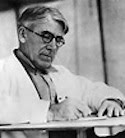 A great athlete (he was a star baseball player in college and as a minor league player) and a frequent brawler as a young man, his writing depicting both athleticism and fistfights were often cited by his readers when talking about the "realism" brought out in his books. “Well, what is writing,” he responded, “but an expression of my own life?”
 Share A Writer’s Moment with a friend by clicking g+1 below.
January 30, 2016
Saturday's Poem: 'High Flight'
January 28th marked the 30th anniversary of the explosion of the Challenger shuttle. In the disaster’s immediate aftermath, President Ronald Reagan addressed the nation and used the closing lines from the poem “High Flight” as a tribute to the 7 astronauts who lost their lives.
The poem was written by American aviator John Gillespie Magee, Jr., who died in 1941 while serving in the Royal Canadian Air Force in England. Impatient for the U.S. to assist the British, he signed up to fight for Canada and was killed in a mid-air collision after a dogfight with German Luftwaffe fighters. Lines from his beautiful poem are printed on his tombstone in Lincolnshire, England, where he was buried with full British honors. He wrote the poem just weeks before his death and sent it to his parents in a final letter home. John Gillespie Magee, Jr.
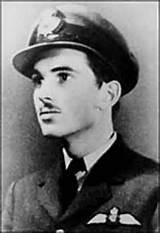
After his father, Curate of Saint John's Episcopal Church in Washington, DC, reprinted it in church publications, Archibald McLeish, the Librarian of Congress, included it in a 1942 exhibition of poems called "Faith and Freedom," and it became widely known. Here, for Saturday’s poem is “High Flight.”
High Flight "Oh! I have slipped the surly bonds of Earth
And danced the skies on laughter-silvered wings;
Sunward I’ve climbed, and joined the tumbling mirth
of sun-split clouds, — and done a hundred things
You have not dreamed of — wheeled and soared and swung
High in the sunlit silence. Hov’ring there,
I’ve chased the shouting wind along, and flung
My eager craft through footless halls of air....
Up, up the long, delirious, burning blue
I’ve topped the wind-swept heights with easy grace.
Where never lark, or even eagle flew —
And, while with silent, lifting mind I've trod
The high untrespassed sanctity of space,
- Put out my hand, and touched the face of God."
Share A Writer’s Moment with a friend by clicking g+1 below.