Dan Jorgensen's Blog, page 492
January 9, 2016
Time tested and shared
For Saturday’s Poem, I chose the poignant “Time Tested Beauty Tips” by American humorist, writer, teacher, television host, and journalist, Sam Levenson. Levenson wrote poetry only on rare occasions, but this one was one for the ages and cherished by actress Audrey Hepburn, who said it was her favorite.
Levenson wrote it in the 1950s for his granddaughter, for whom he often read bedtime stories. One night she asked him what she needed to do to grown up to be pretty. The next night, he presented her with this poem.
Time Tested Beauty Tips
For attractive lips,Speak words of kindness.
For lovely eyes,Seek out the good in people.
For a slim figure,Share your food with the hungry.
For beautiful hair,Let a child run his or her fingers through it once a day.
For poise,Walk with the knowledge you'll never walk alone.
People, even more than things, have to be restored,Renewed, revived, reclaimed, and redeemed.Never throw out anybody.
Remember, if you ever need a helping hand,You'll find one at the end of your arm.
As you grow older, you will discover that you have two hands,One for helping yourself,The other for helping others.
The beauty of a woman is not in the clothes she wears,The figure that she carries,Or the way she combs her hair.
The beauty of a woman must be seen from in her eyes,Because that is the doorway to her heart,The place where love resides.
The beauty of a woman is not in a facial mode,But the true beauty in a woman is reflected in her soul.It is the caring that she lovingly gives, the passion that she shows.The beauty of a woman grows with the passing years.
Share A Writer’s Moment with a friend by clicking g+1 below.


January 8, 2016
Adding in memories, and dreams
“When I started writing, I was a great rationalist and believed I was absolutely in control. But the older one gets, the more confused, and for an artist I think that is quite a good thing: you allow in more of your instinctual self; your dreams, fantasies and memories. It's richer, in a way.”– John Banville
Recognised for his precise, cold, forensic prose style, and for the dark humor of his generally arch narrators, Banville is considered to be both a contender for the Nobel Prize and one of the most imaginative literary novelists writing today.
Born on this date in 1945, Banville, who makes his home in Ireland, writes in two styles – one his highly developed literary style and the second as crimewriter Benjamin Black. He said he likes crime fiction because he has to be less artistic and can turn out work more quickly. Among his best-known crime stories is the best-selling Christine Falls.
As himself, Banville has written several trilogies, including The Revolutions Trilogy, focused on great men of science, and Frames, consisting of his popular The Book of Evidence, Ghosts, and
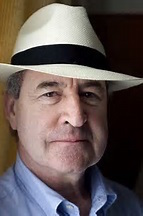 Athena, all exploring great works of art. “Sometimes, in the middle of the afternoon if I'm feeling a little bit sleepy, Black will sort of lean in over Banville's shoulder and start writing,” he said. “Or Banville will lean over Black's shoulder and say, ‘Oh that's an interesting sentence, let's play with that.’ I can see sometimes, revising the work, the points at which one crept in or the two sides seeped into each other.”
 But, “With the crime novels, it's delightful to have protagonists I can revisit in book after book. It's sort-of like having a fictitious family.”
Share A Writer’s Moment with a friend by clicking g+1 below.
January 7, 2016
Jumping at the sun
“Mama exhorted her children at every opportunity to 'jump at the sun.' We might not land on the sun, but at least we would get off the ground.”– Zora Neale Hurston
Hurston, folklorist, anthropologist, and author was born on this date in 1891 and was one of the best-known Black writers and dramatists of the 20th century.
A native of Alabama, she studied at Howard University and began writing as a journalist, eventually co-founding the school’s student newspaper. In 1925, she was offered a scholarship to further her writing at Barnard College (Columbia University) in New York and became the University’s sole Black student. From there, her writing reputation blossomed and grew as part of the renowned Harlem Renaissance, which she helped create with writer Langston Hughes.
A master of the flashback style of narration, Hurston wrote more than 50 short stories, plays and essays – most exploring or sharing the African-American experience from the last part of the 19th century through the first decades of the 20th.
 She also authored 4 novels, of which she once said, “I regret all of my books.” Her best known was the award-winning Their Eyes Were Watching God, a seminal work in both African-American and women's literature. Time magazine included the 1937 novel in its 100 best English-language novels of the last century. A terrific researcher, she noted, “Research is formalized curiosity. It is poking and prying with a purpose.”
Hurston died of heart disease in 1960, but many additional works continue to be uncovered. In 2015 she was one of the first 12 writers formally inducted into the Alabama Writers Hall of Fame.
Share A Writer’s Moment with a friend by clicking g+1 below.
January 6, 2016
Reader-writer, it's a 'shared' thing
“I don't think there was a particular book that made me want to write. They all did. I always wanted to write.” – Elizabeth Strout
Strout, who was born this day in 1956, won the Pulitzer Prize for Fiction for Olive Kitteridge, one of my favorite collections of short stories (and a great HBO mini-series, that I also loved).
Of course that’s not all this gifted New Englander has produced since she had her first short story published in 1982. A small town product (mostly growing up in New Hampshire and Maine), where her father was a science professor, and her mother – who she said was a great inspiration for her writing – taught high school.
I feel an affinity for Strout not only for the “growing up in a small town” connection, but also her slow and steady writing style (4 novels in 30 years with a 5th on the way), something with which I can strongly associate. On top of that, she is a Bates College grad, the alma mater for my oldest daughter.
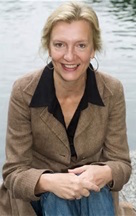
Strout has spent most of her adult (and writing) years in New York City, although she and husband James Tierney split their time between NYC and Maine, where he is the former Attorney General. Her short stories and nonfiction pieces have been published in everything from literary magazines to Redbook and Seventeen.
“I'm writing for my ideal reader, for somebody who's willing to take the time, who's willing to get lost in a new world, who's willing to do their part,” she said of her award-winning work. “But then I have to do my part and give them a sound and a voice that they believe in enough to keep going.”
Share A Writer’s Moment with a friend by clicking g+1 below.
January 5, 2016
The answer is, 'be interesting'
“There's a great appetite for smart television. Every day I get up and there are interesting stories I want to do.” – Charlie Rose
Born on this day in 1944, American television talk show host and journalist Charlie Rose grew up in a small town in North Carolina, went to Duke University and earned a law degree before getting started in journalism part time by working for the BBC.
Soon he found that it was his true calling and he continued moving up in the industry. Since 1993, his show, Charlie Rose, has been distributed nationally by PBS. He has also co-anchored CBS This Morning since 2012 and substitutes for the CBS Evening News with Scott Pelley when Pelley is off or on assignment.
 “I'm not an advocacy journalist - that's not what I do,” he said. “My role in journalism is to be able to engage the most interesting people with the best ideas.“
 Rose said journalists today need to be interesting but also on target with their interviewing. “The question,” he pointed out, “is just as important as the answer.” And, he firmly believes that if reporting and interviewing is done right, the audience will stay involved, even Millenials who have been accused of “tuning out.”
“The younger generation watches what's interesting, not whether it's presented by someone who is as old as I am, or someone who is 21. It's the material. If I did a series of conversations on things most interesting to Millennials, they would respond to it … and I do.”
Share A Writer’s Moment with a friend by clicking g+1 below.
The answer is 'Be interesting'
“There's a great appetite for smart television. Every day I get up and there are interesting stories I want to do.” – Charlie Rose
Born on this day in 1944, American television talk show host and journalist Charlie Rose grew up in a small town in North Carolina, went to Duke University and earned a law degree before getting started in journalism part time by working for the BBC.
Soon he found that it was his true calling and he continued moving up in the industry. Since 1993, his show, Charlie Rose, has been distributed nationally by PBS. He has also co-anchored CBS This Morning since 2012 and substitutes for the CBS Evening News with Scott Pelley when Pelley is off or on assignment.
“I'm not an advocacy journalist - that's not what I do,” he said. “My role in journalism is to be able to engage the most interesting people with the best ideas.“ Rose said journalists today need to be interesting but also on target with their interviewing. “The question,” he pointed out, “is just as important as the answer.” And, he firmly believes that if reporting and interviewing is done right, the audience will stay involved, even Millenials who have been accused of “tuning out.”
“The younger generation watches what's interesting, not whether it's presented by someone who is as old as I am, or someone who is 21. It's the material. If I did a series of conversations on things most interesting to Millennials, they would respond to it … and I do.”
Share A Writer’s Moment with a friend by clicking g+1 below.
January 4, 2016
Shaping history into stories of life
“Journalism still, in a democracy, is the essential force to get the public educated and mobilized to take action on behalf of our ancient ideals.” – Doris Kearns Goodwin
Biographer, historian, journalist and political commentator Kearns (born this day in 1943) has authored critically acclaimed biographies of several U.S. presidents, including her remarkable Pulitzer Prize-winning No Ordinary Time: Franklin and Eleanor Roosevelt: The Home Front in World War II and her most recent The Bully Pulpit: Theodore Roosevelt, William Howard Taft, and the Golden Age of Journalism.
“As a historian,” she noted, “what I trust is my ability to take a mass of information and tell a story shaped around it.”
 She has become a true master at blending history and eloquent writing.
A native of Brooklyn, NY, she grew up loving the old Brooklyn Dodgers and gravitated toward sportswriting as well. While simultaneously teaching at Harvard, she wrote sports and was the first female journalist to enter the Boston Red Sox locker room. She consulted on and appeared in Ken Burns’ 1994 documentary Baseball, just one of many consulting gigs she has done for everything from PBS specials to Stephen Spielberg’s Lincoln. She also has been a frequent guest on The Charley Rose Show andMeet the Press.
“I shall always be grateful for this curious love of history,” Kearns said, “allowing me to spend a lifetime looking back into the past; allowing me to learn from these large figures about the struggle for meaning and for life.”
Share A Writer’s Moment with a friend by clicking g+1 below.
January 3, 2016
Communicating -- sufficiently
“Language is an inadequate form of communication. If you've ever picked up an instrument, it's because you don't feel you are communicating sufficiently.” – Stephen Stills
Best known as part of two Rock and Roll Hall of Fame groups – Buffalo Springfield and Crosby, Stills, Nash & Young – Stephen Arthur Stills was born on this date in 1945, a literal “rolling stone.” The son of military parents, he traveled the world in his growing up years and didn’t quite know where to call home as he and his family moved from place to place.
Those experiences combined with his amazing musical talent led him into professional performance before he was out of his teen years and, ultimately, into the Hall of Fame. Both his musicianship (he performed on multiple instruments) and his writing (most of the songs of the two groups noted above plus a longstanding solo list) have made him an American musical icon.
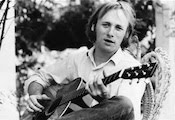 Ranked as Rolling Stone magazine’s 28thAll Time Greatest guitarist, Stills’ writing compliments his wide range of lyrics addressing everything from the American scene to politics to love. His “Love The One You’re With” is ranked one of the 100 all-time greatest. He also has written many, many songs for other singers and about other singers, including Judy Collins, with whom he had a longstanding on-again, off-again relationship, fostering the album “Suite: Judy Blue Eyes.” He said she was a great influence on his writing. “There are three things men can do with women,” he said. “Love them, suffer for them, or turn them into literature. I’ve had my share of success and failure at all three.”
Share A Writer’s Moment with a friend by clicking g+1 below.
January 2, 2016
It's emotion, not fact
“Poetry, above all, is a series of intense moments - its power is not in narrative. I'm not dealing with facts, I'm dealing with emotion.” – Carol Ann Duffy
My choice for “Saturday’s Poet,” Duffy is one of Britain's best known and most admired poets. Her poems appeal to those who wouldn't usually read poetry and they appear on the national school curriculum. "Duffy's poems are at once accessible and brilliantly idiosyncratic and subtle,” noted one reviewer. “She writes of life in all its sadness - life, as what Eliot calls, that ‘infinitely gentle, infinitely suffering thing.’”
A professor at Manchester University, her award-winning collections, which address
 issues of oppression, gender and violence, include Standing Female Nude, winner of a Scottish Arts Council Award, and Rapture, winner of the T.S. Eliot Prize.
 Here is her short poem “Talent.”
TALENT
This is the word tightrope.
Now imagine a man, inching across it in the space between our thoughts.
He holds our breath.
There is no word net.
You want him to fall, don't you? I guessed as much; he teeters but succeeds.
The word applause is written all over him.
Share A Writer’s Moment with a friend by clicking g+1 below.
January 1, 2016
New writing beginnings
Happy New Year!
2015 was a wonderful writing year, both with the publication of my newest novel And The Wind Whispered and with the ongoing daily writing that this blog provides.
The book’s successes provided opportunities to meet many other writers across the country, sometimes to share a table at an autographing session or in a panel discussion; sometimes just to meet one-on-one to discuss writing styles and experiences. Regardless of what genres writers choose or from where they (and their ideas) originate, each has similar tales about the joys and agonies of the writing process. That, of course, is why I also enjoy writing this blog, in order to present just a few of the feelings, experiences, and bits and pieces of advice and wisdom that writers and artists are willing to share – both with one-another and with the world.
And so I end this first entry of 2016 with these wise words about new beginnings from writer Arnold Bennett:
“The chief beauty about time is that you cannot waste it in advance. The next year, the next day, the next hour are lying ready for you, as perfect, as unspoiled, as if you had never wasted or misapplied a single moment in all your life. You can turn over a new leaf every hour if you choose.”
May 2016 bring successes and joys in writing and in life. Many “writer’s moments” lie before you.
Share A Writer’s Moment with a friend by clicking g+1 below.