Dan Jorgensen's Blog, page 495
December 11, 2015
Lovin' those words ... and songs
“I always loved reading. I always was the spelling bee champion. I always loved words. I always wanted to know what they meant, why you used them, who first said them. I was always interested in that.” – Brenda Lee
‘Tis the season … to hear the terrific voice and words of Brenda Lee as one of the all-time biggest holiday hit songs “Rockin’ Around The Christmas Tree” makes its annual appearance. I grew up listening the Brenda Lee’s songs – both on the radio and from my mother who didn’t hesitate to “rock out” herself while bopping around the kitchen and singing them – especially the wonderful “I’m Sorry,” which Brenda wrote at age 15. Her Christmas song, by the way, was recorded when she was just 13, hard to fathom when you hear her big booming voice. It was written by Johnny Marks, who also wrote "Rudolph the Red-Nosed Reindeer" and "Holly, Jolly Christmas."
Lee was a child prodigy, appearing on national television by the age of 10, and making her first recordings for Decca at age 11 (in 1956). Her first few Decca singles, in fact, make a pretty fair bid for the best preteen rock & roll performances this side of Michael Jackson. Between 1960 and 1962 she had a remarkable 9 Top Ten hit songs, most of which she wrote herself.
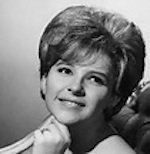
 Brenda in 1960 …. and at a recent Grammy Awards ceremony
 Still singing and writing both music and memoir-type pieces, she celebrates her 71st birthday today and said “I don’t think anyone ever gets tired of well-written, well-crafted songs. (And) I still sing because I love the sound of applause. It’s who I am … and because I still can.”We should all be grateful. Rock on Brenda.
Here’s a link to “Rockin’ Around The Christmas Tree.” As I noted. ‘Tis the Season. Enjoy!https://www.youtube.com/watch?v=Idl-K8s1GYo
Share A Writer’s Moment with a friend by clicking g+1 below.


December 10, 2015
Creating places for children to go
<!-- /* Font Definitions */ @font-face {font-family:"MS 明朝"; mso-font-charset:78; mso-generic-font-family:auto; mso-font-pitch:variable; mso-font-signature:-536870145 1791491579 18 0 131231 0;} @font-face {font-family:"Cambria Math"; panose-1:2 4 5 3 5 4 6 3 2 4; mso-font-charset:0; mso-generic-font-family:auto; mso-font-pitch:variable; mso-font-signature:-536870145 1107305727 0 0 415 0;} @font-face {font-family:Cambria; panose-1:2 4 5 3 5 4 6 3 2 4; mso-font-charset:0; mso-generic-font-family:auto; mso-font-pitch:variable; mso-font-signature:-536870145 1073743103 0 0 415 0;} /* Style Definitions */ p.MsoNormal, li.MsoNormal, div.MsoNormal {mso-style-unhide:no; mso-style-qformat:yes; mso-style-parent:""; margin:0in; margin-bottom:.0001pt; mso-pagination:widow-orphan; font-size:12.0pt; font-family:Cambria; mso-ascii-font-family:Cambria; mso-ascii-theme-font:minor-latin; mso-fareast-font-family:"MS 明朝"; mso-fareast-theme-font:minor-fareast; mso-hansi-font-family:Cambria; mso-hansi-theme-font:minor-latin; mso-bidi-font-family:"Times New Roman"; mso-bidi-theme-font:minor-bidi;} .MsoChpDefault {mso-style-type:export-only; mso-default-props:yes; font-family:Cambria; mso-ascii-font-family:Cambria; mso-ascii-theme-font:minor-latin; mso-fareast-font-family:"MS 明朝"; mso-fareast-theme-font:minor-fareast; mso-hansi-font-family:Cambria; mso-hansi-theme-font:minor-latin; mso-bidi-font-family:"Times New Roman"; mso-bidi-theme-font:minor-bidi;} @page WordSection1 {size:8.5in 11.0in; margin:1.0in 1.25in 1.0in 1.25in; mso-header-margin:.5in; mso-footer-margin:.5in; mso-paper-source:0;} div.WordSection1 {page:WordSection1;} --</style><i style="mso-bidi-font-style: normal;"><span style="font-family: "Times New Roman"; mso-fareast-font-family: "Times New Roman";">“There are so many magical places in books that you can't go to, like Hogwarts and Middle Earth, so I wanted to set a story in a place where children can actually go.”</span></i><span style="font-family: "Times New Roman"; mso-fareast-font-family: "Times New Roman";"> – Cornelia Funke</span></div><div class="MsoNormal" style="line-height: 200%;"><br /></div><div class="MsoNormal" style="line-height: 200%;"><span style="font-family: "Times New Roman"; mso-fareast-font-family: "Times New Roman";">A German author of young adult fiction, Funke (pronounced Foon-ka) was born on this day in 1958 and is perhaps best known for her <i>Inkheart</i> trilogy, published in 2004–2008. The books chronicle the adventures of teen Meggie Folchart whose life changes dramatically when she realizes that she and her father, a bookbinder named Mo, have the unusual ability to bring characters from books into the real world when reading aloud. </span></div><div class="MsoNormal" style="line-height: 200%;"><br /></div><div class="MsoNormal" style="line-height: 200%;"><span style="font-family: "Times New Roman"; mso-fareast-font-family: "Times New Roman";">Mostly set in Northern Italy and its parallel world of the fictional <i>Inkheart</i>, the central story's arc concerns the magic of books, their characters and creatures – and the art of reading.</span></div><div class="MsoNormal" style="line-height: 200%;"><span style="font-family: "Times New Roman"; mso-fareast-font-family: "Times New Roman";"> </span></div><div class="MsoNormal" style="line-height: 200%;"><span style="font-family: "Times New Roman"; mso-fareast-font-family: "Times New Roman";"><a href="http://1.bp.blogspot.com/-8bbJ7yKysSg..." imageanchor="1"><img border="0" src="http://1.bp.blogspot.com/-8bbJ7yKysSg..." /></a> </span><span style="font-family: "Times New Roman"; mso-fareast-font-family: "Times New Roman";"></span>An avid reader herself, beginning during her <span style="font-family: "Times New Roman"; mso-fareast-font-family: "Times New Roman";"></span><span style="font-family: "Times New Roman"; mso-fareast-font-family: "Times New Roman";">“growing up years in northern Germany," she said she always wanted to be either an astronaut or a pilot but then gravitated toward social work and working with children.<span style="mso-spacerun: yes;"> </span>And that, she said, led to her writing for kids. </span></div><div class="MsoNormal" style="line-height: 200%;"><br /></div><div class="MsoNormal" style="line-height: 200%;"><span style="font-family: "Times New Roman"; mso-fareast-font-family: "Times New Roman";">As for her ideas, she said "they come from everywhere and nowhere, from outside and inside. I have so many, I won't be able to write them down in one lifetime."<sup> </sup><span style="mso-spacerun: yes;"> </span>As for her characters, Cornelia said, "Mostly they step into my writing room and are so much alive, that I ask myself, where did they come from?”</span></div><div class="MsoNormal" style="line-height: 200%;"><br /></div><div class="MsoNormal" style="line-height: 200%;"><span style="font-family: "Times New Roman"; mso-fareast-font-family: "Times New Roman";">A worldwide advocate for strong libraries, she said she encourages every child and every aspiring young writer to “Read – and be curious.<span style="mso-spacerun: yes;"> </span><span style="mso-spacerun: yes;"> </span>If I was a book, I would like to be a library book, so I would be taken home by all different sorts of kids,” she said.<span style="mso-spacerun: yes;"> </span>“A library book, I imagine, is a very happy book.”<br style="mso-special-character: line-break;" /><br style="mso-special-character: line-break;" /></span></div><div class="MsoNormal" style="line-height: 200%;"><br /></div><div class="MsoNormal" style="line-height: 200%;"><span style="font-family: "Times New Roman"; mso-fareast-font-family: "Times New Roman";"> </span><span style="font-family: "Times New Roman"; mso-fareast-font-family: "Times New Roman";"></span><b style="mso-bidi-font-weight: normal;"><span style="font-family: "Times New Roman"; mso-fareast-font-family: "Times New Roman";">Share <i style="mso-bidi-font-style: normal;">A Writer’s Moment</i> with a friend by clicking g+1 below.</span></b> </div>
December 9, 2015
Start late, write strong
“My advice would be not to write until after 35. You need some experience, and for life to knock you about a bit. Growing up is so hard you probably won't have much emotion to spare anyway.” – Joanna Trollope
Born on this date in 1943, Trollope is a British writer who also writes under the pseudonym of Caroline Harvey. She started her writing career with a bang as her first novel – Parson Harding's Daughter– was the 1980 the Romantic Novel of the Year, as named by the Romantic Novelists' Association.
She’s had several novels adapted for television, especially on the award-winning PBS series “Masterpiece Theater.” The best-known is The Rector's Wife. Her “upmarket” family dramas and romances tend to transcend these two genres, and she’s noted for writing with “striking realism,” especially in terms of human psychology
 and relationships.
 “I plot the first 5 or 6 chapters quite minutely, and also the end. So I know where I am going but not how I'm going to get there,” she said. “That gives (my) characters the chance to develop organically, just as happens in real life as you get to know a person.”
Nearly 40 when she penned her first book, she said she is a firm believer that “You can’t be too old to be a writer.” But, she added, “You definitely can be too young.”
Share A Writer’s Moment with a friend by clicking g+1 below.
December 8, 2015
Taking the reader 'into the mysterious'
“When I started writing, I was a great rationalist and believed I was absolutely in control. But the older one gets, the more confused, and for an artist I think that is quite a good thing: you allow in more of your instinctual self; your dreams, fantasies and memories. It's richer, in a way.” – John Banville
Irish writer John Banville, born on this day in 1945, has been labeled "one of the most imaginative literary novelists writing in the English language today" by The Washington Post, which also termed him “Ireland’s Wordsmith.”
Considered a serious contender for the Nobel Prize in Literature, Banville has already won numerous awards, including The Booker Prize for The Sea and the Guinness Peat Aviation Award for The Book of Evidence. In 2011, Banville was awarded the Franz Kafka Prize, and in 2013 the Irish PEN Award, both for his life’s body of work.
Sometimes termed “a dark writer,” Banville's stated ambition is to give his prose "the kind of denseness and thickness that poetry has.” Banville also is a noted crime writer (as Benjamin Black), and a journalist -- writing for The New York Review of Books, The Irish Press and
 The Irish Times, where he became literary editor in 1998.
Considered by critics as a master stylist of English, his writing has been described as perfectly crafted, beautiful, and dazzling. David Mehegan of the Boston Globecalls him "one of the great stylists writing in English today. Banville himself said that he is "trying to blend poetry and fiction into some new form.”
“I want my art to make people look at the world in a new way,” he said. “I mean, what's the point of the art of writing if it doesn't take you into the mysterious?”
Share A Writer’s Moment with a friend by clicking g+1 below.
December 7, 2015
Opportunities for 'shared' experiences
“I think that theater is a unique way to communicate with people as they gather together with other people they may not even know. It creates a sense of shared community for the time of the performance that hopefully carries over into other aspects of the audience's life because they have shared this experience together.” – Pearl Cleage
While not a “writer’s moment” per se’, Pearl Cleage’s “thought for the day” seems apropos as we head into the time of year when people from all walks of life gather to enjoy the many holiday stories, plays and musicals that tell about the warmth and happiness of the season.
Twenty-five years ago I was cast as Nicholas in the wonderful musical “Here’s Love,” based on the heart-warming story “The Miracle on 34th Street.” As I went onto the stage as “Santa,” for 15 December shows, it was truly a wonder to see how people – as Cleage so accurately states – “came together” in this shared experience.
Stories of the Christmas and holiday season never seem to grow old. Most are poignant and delightful, and this time of year, perhaps more than any other, provides copious amounts of inspiration to spark a creative fire for everyone who enjoys the experience of being a writer. So, happy holidays, happy Christmas, happy Hanukah, and happy writing.
Share A Writer’s Moment with a friend by clicking g+1 below.
December 6, 2015
At the base is 'the noncerebral'
“The craft of writing is all the stuff that you can learn through school; go to workshops and read books. Learn characterization, plot and dialogue and pacing and word choice and point of view. Then there's also the art of it which is sort of the unknown, the inspiration, the stuff that is noncerebral.” – Garth Stein
Born (on this date) in Los Angeles and raised in Seattle, Garth’s ancestry is diverse: his mother, a native of Alaska, is of Tlingit Indian and Irish descent; his father, a Brooklyn native, is the child of Jewish emigrants from Austria. He is the author of The Art of Racing in the Rain, which has sold more than 4 million copies in 35 languages, and spent more than three years on the New York Times bestseller list.
Before turning to writing full-time, Garth was a documentary filmmaker who directed,
edited, and/or produced several award-winning films,
 including The Lunch Dateand The Last Party.Garth is co-founder of Seattle7Writers, a non-profit organization dedicated to energizing readers and writers and their communities by providing funding, programming, donations of free books to those in need, and generally inspiring enthusiasm for reading.
“I'm a writer because I love reading. I love the conversation between a reader and a writer, and that it all takes place in a book-sort of a neutral ground. A writer puts down the words, and a reader interprets the words, and every reader will read a book differently. I love that.”
Share A Writer’s Moment with a friend by clicking the g+1 button below.
December 5, 2015
For that 'starting point,' choose wisely
“What's so hard about that first sentence is that you're stuck with it. Everything else is going to flow out of that sentence. And by the time you've laid down the first two sentences, your options are all gone.”– Joan Didion
Joan Didion, born 81 years ago today, has been called a consummate writer and litarist, even though writing was not on her radar screen in her early years. “I wrote stories as a little girl, but I didn’t want to be a writer,” she said. “I wanted to be an actress. I didn’t realize then that it’s the same impulse. It’s make-believe. It’s performance.“
Born and raised in Sacramento, CA, she got into her writing career “unintentionally.”
As a senior at UC-Berkeley she entered an essay-writing contest for Vogue magazine (on a dare) and
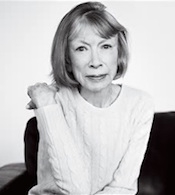 won the national top award – a job after graduation at the magazine.
In just two years at Vogue, Didion worked her way up from promotional copywriter to associate feature editor, and wrote her first novel, Run, River, which was published in 1963. She also met and married writer John Gregory Dunne, beginning both a lifelong romance and a lifelong writing partnership of sorts. With Dunne, Didion co-wrote a number of screenplays, including an adaptation of her novel Play It As It Lays and the biography of journalist Jessica Savitch Up Close & Personal.
Her novel A Book of Common Prayer was widely lauded, but her most celebrated work was her heart-wrenching non-fiction book The Year of Magical Thinking, which won the National Book Award. It chronicles the year of her husband’s death and her daughter’s battle with cancer. The book has been called a masterpiece of two genres – memoir and investigative journalism.
She believes that the difference between the process of fiction and nonfiction is the element of discovery that takes place in nonfiction. This happens not during the writing, but during the research.
“Writing nonfiction is more like sculpture, a matter of shaping the research into the finished thing. Novels are like paintings, specifically watercolors. Every stroke you put down you have to go with. Of course you can rewrite, but the original strokes are still there in the texture of the thing.”
Share A Writer’s Moment with a friend by clicking the g+1 button below.
December 4, 2015
Taking the book 'off the shelf'
“Books are like imprisoned souls till someone takes them down from a shelf and frees them.” – Samuel Butler
Maybe best remembered for his saying “It is better to have loved and lost than not to have loved at all,” Butler was born on this date in 1835. Both controversial and prophetic in his writing, he often was “in the news” for his sarcastic comments on the works of other leading writers and for his derision of various religious practices, which he found abhorrent. He also said he thought mankind was on a path toward becoming “an inferior race” that would be surpassed by and ultimately replaced by machines.
His satirical book Erewhon focused on his interest in Darwin’s theories of evolution and also prophesied how machines would gain supremacy. He even spoke of computers taking a dominant position in our lives – and he did this in the 1860s and 1870s, long before computers were even being developed.
Aldous Huxley said he was influenced by Erewhon in writing his masterpiece, Brave New World.
In addition to his own writing, which ranged from novels to essays to poetry, Butler also was a renowned translator and penned prose versions of both The Iliad and The Odyssey, which are still in use today. And while his writings were sometimes gloomy, he said he enjoyed life and everything that every day had to offer.
“Most people have never learned that one of the main aims in life is to enjoy it, “ he said. “Lifeis not an exact science, it is an art. Life is like music; it must be composed by ear, feeling, and instinct, not by rule.”
Share A Writer’s Moment with a friend by clicking the g+1 button below.
December 3, 2015
Definitely 'a kind of magic'
“Writing is literally transformative. When we read, we are changed. When we write, we are changed. It's neurological. To me, this is a kind of magic.”– Francesca Lia Block
Born into a creative family (on this day in 1962 to a poet mother and painter father) she has established herself as a writer of fiction, short stories, screenplays and poetry and also a teacher of those topics. She wrote her first novel while still a student at UC Berkeley, one of the few times she did any writing or teaching outside of her beloved Los Angeles, the focal point for most of her work. She has won acclaim for her use of imagery, especially in describing the city of Los Angeles. One New York Times Book Review critic said, "Block writes about the real Los Angeles better than anyone since Raymond Chandler.”
She writes for both adults and teens and won the Margaret Edwards Award from the American Library Association for her contribution to writing for teens. While best known for her novels, Block is also a lifelong writer of poetry. Her first two books, Moon Harvest(1978) and Season of Green
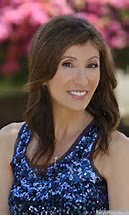 (1979), were small-press illustrated poetry collections, and since then, she has released several standalone collections of poetry, as well as incorporating poetry and lyrics into many of her novels. “Writing is very cathartic for me. As a teacher, I hear many students say that writing can be painful and exhausting. It can be, but ultimately I believe that if you push through, the process is healing and exhilarating.”
Share A Writer’s Moment with a friend by clicking the g+1 button below.
December 2, 2015
Write 'for the art of it'
“I think people become consumed with selling a book when they need to be consumed with writing it. Write because you love the art and the discipline, not because you're looking to sell something.” – Ann Patchett
She received the Orange Prize for Fiction and the PEN/Faulkner Award in 2002 for her novel Bel Canto. Patchett's other novels include her well-known and award-winning The Magician's Assistant, which was shortlisted for the Orange Prize. The Orange Prize is one of Great Britain’s most prestigious writing awards and is given annually to a female author of any nationality (she is American).
The daughter of novelist Jeanne Ray and longtime L.A. police officer Frank Patchett, she was born on this date in 1963 and was first published in the prestigious Paris Review when she was just 20 years [image error]old. After working for Seventeen magazine for 9 years, she began her creative writing career with the novel The Patron Saint of Liars, which had modest sales but hit it big as a movie adaptation.
Also the editor of a short story collection (for other aspiring writers), she opened her own bookstore in her hometown of Nashville, Tenn., when other stores were closing down and leaving few outlets for writers’ work. In 2012 she was named by Time magazine as one of the "100 Most Influential People in the World."
“I don't write for an audience,” Patchett said when asked that question. “I don't think whether my book will sell, (and) I definitely don't try selling it before I finish writing it.”
Share A Writer’s Momentwith a friend by clicking the g+1 button below.