Dan Jorgensen's Blog, page 491
January 19, 2016
The 'book lady' .. and she sings, too
“Songwriting is my way of channeling my feelings and my thoughts. Not just mine, but the things I see, the people I care about. My head would explode if I didn't get some of that stuff out.”– Dolly Parton
Country music icon and actress Dolly Rebecca Parton was born 70 years ago today in tiny Locust Ridge, Tenn., one of 12 children. Her first exposure to music came from her mother who sang, and much of the early music she learned were church songs. She started singing professionally at age 10 and by the time she finished high school she was already writing. Songs about the life that swirled around her “just poured out.”
For the hundreds and hundreds of songs she has written, she’s been honored with election to both the Country Music Hall of Fame and the Songwriters Hall of Fame. She also is a Kennedy Center Honoree for her lifetime achievements, which include many movies, television shows, founding the Dollywood Theme Park, and of course for her music. “My songs are the door to every dream I've ever had and every success I've ever achieved.”
 That having been said, she has also had a wonderful writing career and has authored many best-selling books, including the poignant children’s book, Coat of Many Colors – also a terrific song. Since the mid-1980s, Dolly has supported many charitable efforts, particularly in the area of literacy, primarily through “Dolly Parton’s Imagination Library,” part of the Dollywood Foundation.
 The program distributes more than 10 million free books to children annually, mailing a book per month to each enrolled child from the time of their birth until they enter kindergarten. Currently over 1,600 local communities provide the Imagination Library to 850,000 children across the U.S., Canada, the UK, and Australia.
“Everywhere I go, kids call me 'the book lady.' The older I get, the more appreciative I seem to be of the 'book lady' title. It makes me feel more like a legitimate person, not just a singer or an entertainer. But it makes me feel like I've done something good with my life and with my success.”
Share A Writer’s Moment with a friend by clicking g+1 below.


January 18, 2016
Stepping away from the corner
“I suppose that every one of us hopes secretly for immortality; to leave, I mean, a name behind him which will live forever in this world, whatever he may be doing, himself, in the next.” – A.A. Milne
Milne, born this day in 1882, achieved that immortality by creating both a character and dozens of sayings from that a “silly old bear” that will, indeed, live on forever. While Winnie-the-Pooh is his legacy, Milne was an amazing writer in many other ways, doing some two dozen plays, hundreds of essays, novels, short stories and poems.
But, of course, Milne is most famous for his Pooh books about a boy named Christopher Robin (after his son, Christopher Robin Milne) and various characters inspired by his son's stuffed animals. Christopher 's toy bear, originally named "Edward,” was renamed Winnie after a Canadian black bear that father and son enjoyed visiting at the London Zoo.
Christopher’s other stuffed animals – Piglet, Eeyore, Kanga, Roo and Tigger – were incorporated into Milne's stories, and two more characters - Rabbit and Owl - were created by his imagination. Those famous toys are now under glass in New York City where 750,000 people visit them every year.
 One of Winnie’s famous lines – and there are many – came from advice Milne first gave his young son. “You can't always stay in your own corner of the forest waiting for others to come to you,” he said. “Sometimes, you have to go to them.”
Share A Writer’s Momentwith a friend by clicking g+1 below.
January 17, 2016
Betty White: Staying interested and curious
“Don't try to be young. Just open your mind. Stay interested in stuff. There are so many things I won't live long enough to find out about, but I'm still curious about them. You know people who are already saying, 'I'm going to be 30 - oh, what am I going to do?' Well, use that decade! Use them all!”– Betty White
Happy Birthday to my wonderful friend Betty White, who turns 94 today. Age is definitely a state of mind for Betty, and she told me once to never think about growing old – just about “growing better.” Great advice.
There’s not much to be said about Betty that most readers don’t already know. Best known, perhaps, for her Emmy Award winning roles as Sue Ann Nivens on The Mary Tyler Moore Show and Rose Nylund on The Golden Girls(when I first got to know her personally), she’s the only actress to ever be on two shows named by The Writers Guild of America on its list of the 101 Best Written TV Series Of All Time. “The writers are the stars of every really successful sitcom,” the modest Betty agreed.
She is the only woman to have received an Emmy in all performing comedic categories, and also holds the record for longest span between Emmy nominations—her first in 1951 and her most recent in 2011. She’s also a gifted writer and haswritten 7 best-sellers, including the wonderful Betty & Friends: My Life at the Zoo, about her friends, the animals, at the Los Angeles Zoo.
 While I can’t swear to this, of course, I would say that if animals could talk, they would tell us they admire her as much as she does them. And, of course, you would be hard-pressed to find a person who doesn’t like Betty. When I asked her once what she thought was the secret to that "likability" factor she exudes – something so many strive for but so few achieve – she replied, “I just make it my business to get along with people so I can have fun. It's that simple.”
 Share A Writer’s Moment with a friend by clicking g+1 below.
January 16, 2016
Exhaling the 'poetic' experience
“Breathe-in experience, breathe-out poetry.” – Muriel Rukeyser
Muriel Rukeyser (1913-1980) was an American poet and political activist, best known for her poems about equality, feminism, and social justice. Critic and fellow poet Kenneth Rexroth once said that she was the greatest poet of her "exact generation.”
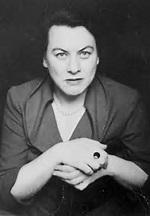
So immersed was she in writing poetry that she noted, “If there were no poetry on any day in the world, poetry would be invented that day. For there would be an intolerable hunger.”
For Saturday’s poem, here is Muriel Rukeyser’s
Myth
Long afterward, Oedipus, old and blinded, walked the
roads. He smelled a familiar smell. It was
the Sphinx. Oedipus said, 'I want to ask one question.
Why didn't I recognize my mother?' 'You gave the
wrong answer,' said the Sphinx. 'But that was what
made everything possible,' said Oedipus. 'No,' she said.
'When I asked, What walks on four legs in the morning,
two at noon, and three in the evening, you answered,
Man. You didn't say anything about woman.'
'When you say Man,' said Oedipus, 'you include women
too. Everyone knows that.' She said, 'That's what
you think.'
Share A Writer’s Moment with a friend by clicking g+1 below.
January 15, 2016
January 14, 2016
Hey, that's what I thought too!
“A writer's job is to tell the truth.” – Andy Rooney
Born on this date in 1919, American radio and television writer Rooney was best known for his weekly broadcast "A Few Minutes with Andy Rooney," a part of the CBS News program 60 Minutes. Called everything from a brilliant analyst to a grouchy curmudgeon, Rooney was first and foremost a dedicated, truth-telling reporter who started his career with Stars and Stripes during World War II.
His willingness to “go to the front lines” when others held back resulted in his being first on the scene when the U.S. 9th Army captured the bridge that led to U.S. forces crossing the Rhine and hastening the war’s end. His story made front page headlines around the world. Later, he was one of the first American journalists to visit the Nazi concentration camps, and one of the first to write about them.
Rooney left print and began his broadcast career with CBS in 1949. He went from straight news to commentary in 1957, something he honed to perfection from 1978-2011 on the 60 Minutes. In the segment, Rooney typically offered satire on trivial everyday issues, such as the cost of groceries, annoying relatives, or faulty Christmas presents. He did his final segment on Oct. 2, 2011
 and died just one month later, at age 92.
He wrote 16 books, most compilations of his 60 Minutes’ essays. One of the best is the last, written in 2009, 60 Years of Wisdom and Wit. About his essays, he noted, “I obviously have a knack for getting on paper what a lot of people have thought and didn't realize they thought. And they say, 'Hey, yeah!' And they like that.”
Rooney always credited his writing teachers and mentors for his successes and was a champion for educators. “Most of us end up with no more than five or six people who remember us,” he said. “Teachers have thousands of people who remember them for the rest of their lives.” In a way, with his writing and commentary, he too was a teacher.
Share A Writer’s Moment with a friend by clicking g+1 below.
January 13, 2016
Penetrated, layered, and revealing
“A story is a kind of biopsy of human life. A story is both local, specific, small, and deep, in a kind of penetrating, layered, and revealing way.”– Lorrie Moore
Marie Lorena Moore, born on this date in 1957, is an American fiction writer known mainly for her humorous and poignant short stories, including her New York Times bestseller Birds of America.
Moore started writing in the mid-1980s while a grad student at Cornell and her first story "You're Ugly, Too" (published in The New Yorker) was later included in The Best American Short Stories of the Century, edited by novelist John Updike. Moore won the 1998 O. Henry Award for her short story "People Like That Are the Only People Here," about a sick child and loosely based on events in her own life.
At one point in life she also thought about being a dancer. But, of course, writing interfered. “To me," she said, “writing is much freer than dancing. With writing, you could do it whenever you
 wanted. You didn't have to do little exercises and stay in shape. You could have great moments of inspiration that advanced the story. In dance, unless you're going to choreograph things yourself, you're at the service of someone else.
“Writing has to be an obsession - it's only for those who say, 'I'm not going to do anything else.'”
Share A Writer’s Moment with a friend by clicking g+1 below.
January 12, 2016
Filling emptines with imagination
“All writing is that structure of revelation. There's something you want to find out. If you know everything up front in the beginning, you really don't need to read further if there's nothing else to find out.” – Walter Mosley
Mosley, who celebrates his 64thbirthday today, is most widely recognized for his crime fiction. He has written a series of best-selling historical mysteries featuring the hard-boiled detective Easy Rawlins, a black private investigator and World War II veteran living in the Watts neighborhood of Los Angeles.
Growing up in Los Angeles as an only child, he ascribes his writing imagination to "an emptiness in my childhood that I filled up with fantasies." It was after moving to New York City and taking a course in writing at the City College of Harlem – inspired by Alice Walker’s classic novel The Color Purple– that he caught the writing bug.
 He started writing at age 34 and said he has written every day since, His first published novel, Devil in a Blue Dress, was the basis for a 1995 movie starring Denzel Washington. Since then he has penned more than 40 books in a variety of categories, including mystery, science fiction, crime fiction, and non-fiction politics. His work has been translated into 21 languages.
Mosley cites many “inspirational storytellers” as role models, and the most important one, he said, was his father. “My father always taught by telling stories about his experiences. His lessons were about morality and art and what insects and birds and human beings had in common. He told me what it meant to be a man and to be a Black man. He taught me about love and responsibility, about beauty, and how to make gumbo.”
Share A Writer’s Moment with a friend by clicking g+1 below.
January 11, 2016
Conflict, character...and some science, too
“Conflict and character are the heart of good fiction, and good mystery has both of those in spades.” – Diana Gabaldon
Born on this date in 1952, Gabaldon is an American author, known for the Outlander series of novels set in 1700s (and a bit in the mid-1900s) Scotland. Her books merge multiple genres, featuring elements of historical fiction, romance, mystery, adventure and science fiction/fantasy. A television adaptation of the novels has been on the Starz channel for the past couple seasons.
I had the chance to meet Gabaldon (who said her name rhymes with Bad to the Bone) at the Historical Novel Society’s annual meeting last June, when she was the keynote speaker and I was a presenter on “Women of the West” – in relation to my new novel And The Wind Whispered.
 With Diana at the HNS gathering A scientist first, Gabaldon is the founding editor of Science Software Quarterly (in 1984 while employed at the Center for Environmental Studies at Arizona State University). During the mid-1980s, Gabaldon wrote software reviews and technical articles for computer publications, then got into popular-science articles and comic books. In 1988, she decided to write a novel “for practice, just to learn how,” and the result was Outlander. To date, she has written 8 in the Outlander series as well as helped produce the popular TV series.
 Gabaldon said that her background in science and technology has been a great assist to her writing. “What underlies great science is what underlies great art, whether it is visual or written, and that is the ability to distinguish patterns out of chaos,” she said. “People assume that science is a very cold sort of profession, whereas writing novels is a warm and fuzzy intuitive thing. But in fact, they are not at all different.”
Share A Writer’s Moment with a friend by clicking g+1 below.
January 10, 2016
The 'bite-sized,' tasty approach
“My favorite book is the last one printed, which is always better than those that were published earlier.” – Stephen Ambrose
Born on this date in 1936, Ambrose was somewhat controversial in his writings of history, choosing to present his work in “popular” style so that it would be attract more readers. “You don’t hate history,” he once said. “What you hate is how it’s been taught to you.”
Thus, this American historian and biographer wrote in a style that focused on how ordinary readers would best like to see it -- not necessarily "scholarly," but "palatable.” It worked. A longtime professor of history at the University of New Orleans, he authored many best selling volumes of American popular history. At the time of his death (in 2002), the New York Times
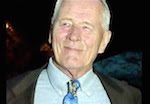 credited him with reaching "an important lay audience without endorsing its every prejudice or sacrificing the profession's standards of scholarship.”
In addition to his dozens of books and hundreds of articles, Ambrose championed (and often funded) efforts to collect oral histories – particularly from veterans of both World War II and the Korean War. He utilized many of those histories in his own writing and also consulted on such major film efforts as “The World At War,” “Saving Private Ryan,” “Band of Brothers,” and “Lewis and Clark: The Journey of the Corps of Discovery.”
In recognition of his efforts, the Rutgers University Living History Society awards the annual Stephen E. Ambrose Oral History Award to "an author or artist who has made significant use of oral history." Past winners include Tom Brokaw, Steven Spielberg, Studs Terkel, Michael Beschloss, and Ken Burns, all of who benefitted from Ambrose’s writing.
Share A Writer’s Moment with a friend by clicking g+1 below.