Dan Jorgensen's Blog, page 482
April 17, 2016
Born to write
“No one can teach writing, but classes may stimulate the urge to write. If you are born a writer, you will inevitably and helplessly write. A born writer has self-knowledge. Read, read, read. And if you are a fiction writer, don't confine yourself to reading fiction. Every writer is first a wide reader.”– Cynthia Ozick A native New Yorker born on this day in 1928, Ozick writes about Jewish American life, politics, history, literary criticism, The Holocaust and its aftermath. Much of her work explores the disparaged self, the reconstruction of identity after immigration, trauma and movement from one class to another.
The author of 6 novels, 7 short-story collections and 7 books of criticism, Ozick received a National Jewish Book Council Award for lifetime achievement in 2010, was a finalist for the National Book Award (for her Puttermesser Papers), won both the PEN/Nabokov and PEN/Malamud Awards, and earned the Presidential Medal for the Humanities. Her short stories have won multiple O. Henry first prizes and her works have been translated into 17 languages.
Ozick’s lyrical fiction style also has earned such accolades as “The greatest living American writer” (from several of her contemporaries), and the title
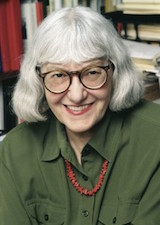 “The Emily Dickinson of The Bronx.” Meanwhile, her essay style has been called everything from “uncompromising” to “biting” to “brilliant.” She is one of the world’s definitive writers on American author Henry James.
“In an essay, you have the outcome in your pocket before you set out on your journey, and very rarely do you make an intellectual or psychological discovery,” she said in talking about why she likes both genres. “But when you write fiction, you don't know where you are going - sometimes down to the last paragraph - and that is the pleasure of it.’
Share A Writer’s Moment with a friend by clicking g+1 below.


April 16, 2016
Poetry endures for human concerns
“Poetry endures when it possesses passionate and primally sincere clarity in the service of articulating universal human concerns.”– Franz Wright
An American poet, Wright won the 2004 Pulitzer Prize for his book of poetry Walking To Martha’s Vineyard. In winning the Pulitzer, Wright joined his father James Wright in winning the prestigious award – making them the only father-child pair to win in the same category. James Wright won for his 1972 volume, Collected Poems.
Unfortunately the Wrights have another distinction, both dying fairly young from cancer – James at age 53 and Franz at age 62. But in their short lives they each left us with a legacy of plowing new ground in the poetic world, and I highly commend each of their works to every reader.
Here, for Saturday’s Poem, is Franz Wright’s short poem,
Morning Arrives
Morning arrives
unannounced
by limousine: the tall
emaciated chairman
of sleeplessness in person
steps out on the sidewalk
and donning black glasses, ascends
the stairs to your building
guided by a German shepherd.
After a couple faint knocks
at the door, he slowly opens
the book of blank pages
pointing out
with a pale manicured finger
particular clauses,
proof of your guilt.
Share A Writer’s Moment with a friend by clicking the g+1 button below.
April 15, 2016
Adding emotional reality
“Fiction allows you to embody certain ideas and give them an emotional reality. The characters allow you to get close viscerally to an idea.”– Anne Michaels
Michaels, born on this date in 1958, is a Canadian born poet and novelist and adjunct professor in the University of Toronto’s Department of English.
Among her many writing awards are a handful for her first book of poetry, The Weight of Oranges, including the Commonwealth Prize and The National Magazine Award for Poetry. But it was her first novel Fugitive Pieces, that was most honored, earning the Books in Canada First Novel Award, the Trillium Book Award, the Orange Prize for Fiction, and the Guardian Fiction Prize. The versatile Michaels also spends her “free time” composing – particularly musical scores for theater.
And while she has been honored as the new Poet Laureate of Toronto (since the middle of 2015) she said she probably most enjoys writing fiction.
“It's a fantastic privilege to spend three or four hundred pages with a reader,” she said.
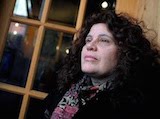 “You have time to go into certain questions that are painful or difficult or complicated. That's one thing that appeals to me very much about the novel form.”
Michaels is an advocate of teaching reading and writing to kids and in keeping journals. “I started to write things down, as a very young child, wanting to find a way to remember - to keep close, somehow - moments that made an impression on me.” And now those writingsare making an equal impression on the reading public thanks to her many and varied works.
Share A Writer’s Moment with a friend by clicking g+1 below.
April 14, 2016
Saluting the iconic Beverly Cleary
“I don't necessarily start with the beginning of the book. I just start with the part of the story that's most vivid in my imagination and work forward and backward from there.”– Beverly Cleary Everyone’s been wishing Beverly Cleary a happy 100th birthday this week (it was on Tuesday) and at first I thought that perhaps it would be redundant of me to do the same. And then, I thought, “No. Anyone who has had the body of work and impact on the writing world that she has had – and continues to have – deserves salutes from any and all.” And thus, to that, I add my voice.
I love all that she has done, not only for her creation and portrayal of outstanding characters and the writing world, but also for the greater-than-huge impact she has had on generations of young people
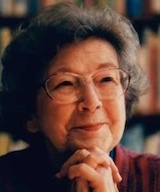 who might not have had the impetus to pick up a book or listen to a story until they saw or heard something she had written.
“The world has changed, especially for kids, but kids' needs haven't changed,” Cleary recently reflected. “They still need to feel safe, be close to their families, like their teachers, and have friends to play with.”
And per Cleary’s legacy it is up to the rest of us who seek the writing life to help insure that the opportunities for every child not only remain but continue to expand.
“Quite often,” Cleary noted, “somebody will say to me, ‘What year do your books take place?’ and the only answer I can give is, ‘In childhood’.”
Share A Writer’s Moment with a friend by clicking the g+1 button below.
April 13, 2016
Stumbling on 'cause and effect'
“Writing a story or a novel is one way of discovering sequence in experience, of stumbling upon cause and effect in the happenings of a writer's own life.”– Eudora Welty
Welty went on the trail of such writing and self-discovery in the early 1930s, diving into journalism and photojournalism to help care for her family after her father died from leukemia. Ultimately, she became one of America’s premiere writers about the American Southern Experience and the first living author to have works published by the Library of America. Honored just before her death in 2001 with the Medal of Freedom for her life’s work, she also won a Pulitzer Prize for her novel The Optimist’s Daughter.
Born on this date in 1909, she developed a deep love of reading early on, reinforced by a mother who believed that "any room in the house, at any time in the day, was there to read in, or to be read to." The house in which Eudora grew up and ultimately lived much of her life, has been designated a National Historic Landmark and is open to the public as a museum. Welty was often called “America’s Favorite Auntie”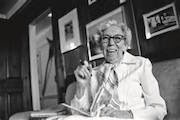
As a WPA employee in the mid-‘30s, Welty documented daily life and the effect of WPA efforts in Mississippi through both her words and photos. In 1971 she published one of the definitive photo books about the experience, One Time, One Place, and many of her books and short stories are reflective of the hard times and individual hardships she observed.
Never afraid to speak out against injustice, Welty said “All serious daring starts from within. To imagine yourself inside the life of another person... is what a storywriter does in every piece of work; it is his first step, and his last too, I suppose.”
Share A Writer’s Moment with a friend by clicking g+1 below.
Welty went on the trail of such writing and self-discovery in the early 1930s, diving into journalism and photojournalism to help care for her family after her father died from leukemia. Ultimately, she became one of America’s premiere writers about the American Southern Experience and the first living author to have works published by the Library of America. Honored just before her death in 2001 with the Medal of Freedom for her life’s work, she also won a Pulitzer Prize for her novel The Optimist’s Daughter.
Born on this date in 1909, she developed a deep love of reading early on, reinforced by a mother who believed that "any room in the house, at any time in the day, was there to read in, or to be read to." The house in which Eudora grew up and ultimately lived much of her life, has been designated a National Historic Landmark and is open to the public as a museum. Welty was often called “America’s Favorite Auntie”
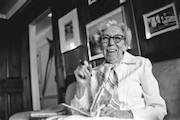
As a WPA employee in the mid-‘30s, Welty documented daily life and the effect of WPA efforts in Mississippi through both her words and photos. In 1971 she published one of the definitive photo books about the experience, One Time, One Place, and many of her books and short stories are reflective of the hard times and individual hardships she observed.
Never afraid to speak out against injustice, Welty said “All serious daring starts from within. To imagine yourself inside the life of another person... is what a storywriter does in every piece of work; it is his first step, and his last too, I suppose.”
Share A Writer’s Moment with a friend by clicking g+1 below.
April 12, 2016
From ragtag pieces to the finished quilt
“I tend to start with a kernel, a vague concept, and just begin to write things down - notes about a character, lines of dialogue, descriptive passages about a place. One idea fires another. I do that for about a year. By then there's a story, and I'll go on to a complete first draft that sews many of those ragtag pieces together.” – Scott Turow
I am a big fan of this style myself, calling it the “puzzle equation.” You have the bits and pieces, now put them together and see how the puzzle works out.
Turow, born on this date in 1949, has been called America’s bard for the litigious age, moving from a burgeoning law career to successful author of both legal thrillers and nonfiction that benefits those in need of justice. Besides his many writing awards and bestselling books he also is recipient of the
 Robert F. Kennedy Center for Justice and Human Rights Book Award given annually to a novelist who "most faithfully and forcefully reflects Robert Kennedy's purposes - his concern for the poor and the powerless, his struggle for honest and even-handed justice.”
 A Chicago native where he also practiced law, Turow has written nine fiction and two nonfiction books, which have been translated into more than 40 languages and sold more than 30 million copies. His first novel, Presumed Innocent, also was one of the best movies about the legal process. Turow has established himself as a champion of libraries and fair access to the written word for readers everywhere. “I count myself as one of millions of Americans whose life simply would not be the same without the libraries that supported my learning,” Turow said.
Share A Writer’s Moment with a friend by clicking the g+1 button below.
April 11, 2016
With writing 'right' comes great responsibility
“I tell my students you have an absolute right to write about people you know and love. You do. But the kicker is you have a responsibility to make the characters large enough that you will not have sinned against them.”– Dorothy Allison
Allison, born on this date in 1949, held a wide variety of jobs before gaining success as a writer. After growing up poor in South Carolina, she simultaneously put herself through college while working as a salad girl and a maid. After getting her degree she also worked as a nanny and a substitute teacher, and helped establish a feminist bookstore in Florida. She is a testament to persistence and following your writing dream, also working at a child-care center, answering phones at a rape crisis center, and clerking for the Social Security Administration.
It was while doing training at the SSA during the day that she started writing, returning to her motel room to write stories on yellow legal pads at night. Her intense and highly personal writing often focuses on her life experiences, including sexual abuse by her stepfather, and dealing with crushing poverty. And while she has had
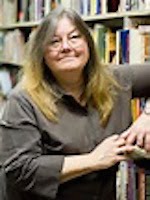 success with her work, particularly the National Book Award finalist Bastard Out Of Carolina, she said she always wrote first for herself and those close to her knowing that her work might not gain wide following.
 Now a resident of California, she has been a teacher at several colleges and universities. “I'm still very blunt: If you want to be a writer, get a day job,” she advises beginning writers. “The fact that I have actually been able to make a living at it is astonishing.”
Share A Writer’s Moment with a friend by clicking g+1 below.
April 10, 2016
Those ever-evolving tales
“I love to write. I used to be a math teacher. And I like the idea that other people could write about the same subjects, but no one would write it just the way I do. It's very individual.” – David A. Adler
Born on this date in 1947 (which also is my birth year), Adler is an American writer of nearly 200 books for children and young adults, most notably the Cam Jansen mystery series, and the "Picture Book of ..." series. He also has written many acclaimed works about the Holocaust for young readers.
Adler came up with a terrific kids’ protagonist in the form of fifth-grader Jennifer "Cam" Jansen, nicknamed Cam for her photographic memory. At various points in a “Cam” story, she closes her eyes and says "click,” mimicking the noise of a camera while memorizing a scene in front of her. She later recalls these scenes to aid in solving a mystery.
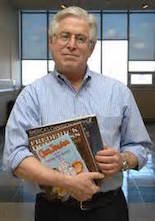 Cam is based on an elementary school classmate of Adler's. His biographies are equally enticing and he noted, “It's important to begin a biography or any book or story with something to draw the reader in.”
 A native New Yorker, Adler was teaching math there when his writing career evolved after a nephew had a question about a topic and he couldn't find anything that had been published. So, he decided to write something himself, and the rest, as the saying goes ...
“In my office I have a sign that says, 'Don't think. Just write!' and that's how I work,” Adler says in offering writing advice. “I try not to worry about each word, or even each sentence or paragraph. For me, stories evolve. Writing is a process. I rewrite each sentence, each manuscript, many times.”
Share A Writer’s Moment with a friend by clicking g+1 below
April 9, 2016
Don't forget to touch the walls
“The very least you can do in your life is to figure out what you hope for. The most you can do is live inside that hope, running down its hallways, touching the walls on both sides.”— Barbara Kingsolver from Animal Dreams
Yesterday I wrote a few words about Kingsolver’s prose on the date of her birth. She also is more than deserving of a few words about herpoetry. Her 2015 book
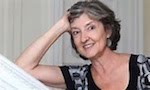 of poetry, Another America, has been widely praised. “… her poems present a vision of an underprivileged America redressed, and are, in that respect, songs of hope and longing as opposed to howls of protest and despair,” noted a review in Foreward Magazine. Booklist called it, “The best of American political poetry, melding emotion and analysis, daily life and national issues, voice and heart.”
As for why to write poetry, she said, “In my opinion when you find yourself laughing and crying both at once, that is the time to write a poem. Probably, it's the only honest living there is.” For Saturday’s Poem from her book Another America, here is,Apotheosis
There are days when I am envious of my hens:
when I hunger for a purpose as perfect and sure
as a single daily egg.
If I could only stand in the sun,
scratch the gravel and blink and wait
for the elements within me to assemble,
asking only grain I would
surrender myself to the miracle
of everyday incarnation: a day of my soul
captured in yolk and shell.
And I would have no need
for the visions that come to others
on bat’s wings, to carry them
face to face with nothingness.
The howl of the coyote in the night
would not raise my feathers, for I,
drowsy on my roost, would dream
of the replicated fruits of my life
nested safe in cartons.
And yet I am never seduced,
for I have seen what a hen knows of omnipotence:
nothing of the miracles in twelves,
only of the hand that feeds
and, daily, robs the nest.
Share A Writer’s Moment with a friend by clicking g+1 below
April 8, 2016
Seeing through characters' eyes
“Good fiction creates empathy. A novel takes you somewhere and asks you to look through the eyes of another person, to live another life.” – Barbara Kingsolver
I’ve written about the incredible Kingsolver before, but felt I hadn’t said everything I needed to say, and since today is her birthday I thought, why not write some more about her today?
Novelist, essayist and poet, Kingsolver was raised in rural Kentucky and lived briefly in the Congo in her early childhood, creating just more grist for her writing mill and resulting in the bestseller, The Poisonwood Bible/. It’s a book that definitely “puts you into the setting” and gives you a clear understanding of what her living there was all about.
Back in the States Kingsolver earned degrees in biology at DePauw University and the University of Arizona and worked as a freelance science writer before she began writing novels. Her work often focuses on topics such as social justice, biodiversity and the interaction between humans and their communities and environments. Each of her books published since 1993 has been on the New York Times Best Seller list and I highly recommend each and every one.
She is a great observer of both nature and the human condition and she loves writing about what she sees, making sure writing is an integral part of her day.
“For me, writing time has always been precious, something I wait for and am eager for and make the best use of. That's probably why I get up so early and have writing time in the quiet dawn hours, when no one needs me. It's a funny thing: people often ask how I discipline myself to write. I can't begin to understand the question. For me, the discipline is turning off the computer and leaving my desk to do something else.”
Share A Writer’s Moment with a friend by clicking g+1 below