Dan Jorgensen's Blog, page 481
April 27, 2016
Audience of 1, reaction of many
“I don't write for a particular audience. I work as an artist, and I think the audience of one, which is the self, and I have to satisfy myself as an artist. So I always say that I write for the same people that Picasso painted for. I think he painted for himself.” – August Wilson
I’ve written about the great August Wilson before, but thought it appropriate to say a few more words about him on the occasion of what would have been his 71st birthday (he died of cancer in 2005). Wilson shared with the world a wonderful look at the 20th Century American Black Experience with his cycle of 10 plays – one for each decade. Someday, my hope is to see them all in order, but for now I have to be satisfied with having seen a few, each of which was a moving, memorable and heart-warming evening at the theatre.
His Fences and The Piano Lessonare high on my list of all-time favorites, both winners of the Pulitzer Prize. He won a remarkable 25 major drama and writing awards and was inducted into the American Theatre Hall of Fame.
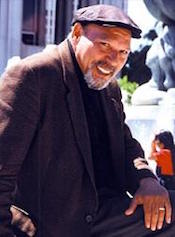
I’ve always been grateful to have lived in the Twin Cities during the years he was a playwright in residence there. Sitting in on two of his roundtable talks about theatre and writing in general were experiences I’ll never forget. It was with his encouragement that I wrote my one-act play, The First Day, and had the opportunity to experience an audience reaction to something I had written. That grew out of a statement he made to our Writer’s Roundtable session about the main difference between writing novels and writing for the stage.
“A novelist writes a novel, and people read it. But reading is a solitary act,” Wilson said. “While it may elicit a varied and personal response, the communal nature of the theatre audience is like having five hundred people read your novel and respond to it at the same time. I find that thrilling.” I did, too.
Share A Writer’s Moment with a friend by clicking g+1 below.


April 26, 2016
Developing your thinking
“Writing in form is a way of developing your thinking - your thinking along with the tradition. In a way, it's not you alone, it's you in partnership.” — Marilyn Nelson
Born on this date in 1946, poet, translator and children's book writer Nelson is author or translator of 12 books and three chapbooks. Professor emeritus of English at the University of Connecticut, she is the founder and director of Soul Mountain Retreat, a retreat center for new or emerging writers, especially poets.
Born in Cleveland, the daughter of one of the original Tuskegee Airmen, she was brought up living on military bases, and began writing while in elementary school. She said she gravitated to poetry and never looked back, although readers of her kids’ books say they’re glad she continued in that genre, too. After earning a Ph.D. in English, she taught at Connecticut for many years and ultimately was honored by the State of Connecticut as its Poet Laureate – a position she held from 2001-06.
Nelson’s poetry collections include the terrific The Homeplace, which won the Anisfield-Wolf Award and was the first of three of her books to be finalists for the National Book Award. In 2012, the Poetry Society of America awarded her the Frost Medal “for distinguished lifetime service to American poetry,” and in 2013, she was elected a chancellor of the Academy of American Poets.
 Soft spoken and thoughtful in all she says and does, Nelson said a person’s voice is as important in presenting a poem as are the words on paper. “Many performance poets seem to believe that yelling a poem makes it comprehensible,” she said. “They are wrong.”
Share A Writer’s Moment with a friend by clicking the g+1 button below.
April 25, 2016
Find a way; tell the story
“I've always believed that a good twist is one that, when it is presented to the audience, half of them say, 'I saw that coming.' And half of them are completely and totally shocked. Because if you don't have the half that saw it coming, then it wasn't fair: You never gave the audience a chance to guess it.”– Damon Lindelof
American television writer, producer, and film screenwriter, most noted as the co-creator of the television series Lost, Lindelof is a native New Jerseyite, born on this date in 1973. Both praised and criticized for his his writing, he says that that’s exactly what any writer worth his or her salt should hope to achieve. His ending for the Lost series left some viewers and critics mystified, some angry, and some feeling great.
“I love the 'Lost' ending,” Lindelof said. “I stand by it, but there are a lot of people out there who hate it.”

Regardless of how it ended, Lost received endless praise for its unique brand of storytelling and strong characters and the show never fell out of the top 30 throughout its six seasons on the air. His current writing project is the HBO series The Leftovers, based on the Tom Perrotta novel by the same name.
“As cliched as it sounds,” Lindelof said, “if you have an original voice and an original idea, then no matter what anybody says, you have to find a way to tell that story.”
Share A Writer’s Moment with a friend by clicking g+1 below.
April 24, 2016
A testament to perserverence
“Somewhere along the line, I realized that I liked telling stories, and I decided that I would try writing. Ten years later, I finally got a book published. It was hard. I had no skills. I knew nothing about the business of getting published. So I had to keep working at it.” – Janet Evanovich
Born April 22,1943, Evanovich now has over two hundred million books in print worldwide and is translated into over 40 languages. After those initial struggles, she gained fame and loyal readers with her contemporary mysteries featuring Stephanie Plum, a former lingerie buyer from Trenton, New Jersey, who becomes a bounty hunter to make ends meet after losing her job.
Evanovich’s writing has combined a terrific and sometimes droll sense of humor (“If you want to cry, you're not going to like my books”) with a knack for setting up mystery, suspense and keeping her readers totally involved. “I actually really suck at naming books, so lots of years ago, readers were sending in their ideas for titles,” she explained.
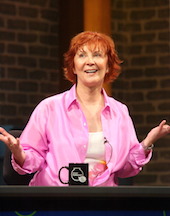 “What we realized is that they were smarter than us. So we thought, Hey, go for it. So now we have a contest every year.”
Evanovich is testament to perserverance and not giving up. During those first 10 years of trying she had dozens and dozens of rejection letters for her first books before she finally connected with a romance novel for which she received $2,000. “I thought it was an astounding sum,” she recalled. Today, just after her 73rd birthday, she is worth $120 million.
Share A Writer’s Moment with a friend by clicking the g+1 button below.
April 23, 2016
Master of 'self' in the picture
Most writers forget that "I" is an important part of the narrative, especially if they use things from their own lives in crafting their work. The reader becomes the loser when that happens because we miss out on who our storyteller is. That is definitely not the case with Andrew Hudgins, storyteller and poet, who not only uses scenes from his own life, but does so in a way that draws us squarely into the action.
Hudgins was raised in Alabama where he earned degrees. at Huntingdon College and the University of Alabama. He also has a Master of Fine Arts degree from the University of Iowa. The author of numerous collections of poetry and essays – many of which have received high critical praise. His The Never-Ending: New Poems was a finalist for the National Book Award; and After the Lost War: A Narrative received the Poets' Prize. Saints and Strangers was a finalist for the Pulitzer Prize.
Hudgins is the Humanities Distinguished Professor of English at the Ohio State University. For "Saturday’s Poem," here is his short piece,
In The WellMy father cinched the rope,
a noose around my waist,
and lowered me into
the darkness. I could taste
my fear. It tasted first
of dark, then earth, then rot.
I swung and struck my head
and at that moment got
another then: then blood,
which spiked my mouth with iron.
Hand over hand, my father
dropped me from then to then:
then water. Then wet fur,
which I hugged to my chest.
I shouted. Daddy hauled
the wet rope. I gagged, and pressed
my neighbor's missing dog
against me. I held its death
and rose up to my father.
Then light. Then hands. Then breath.
Share A Writer’s Moment with a friend by clicking g+1 below.
April 22, 2016
Celebrate our Earth
On this Earth Day, a few statements worth pondering from three wonderful writers. While they wrote or write in different genres for different audiences, each has shared a love for the
land and care for our resources.
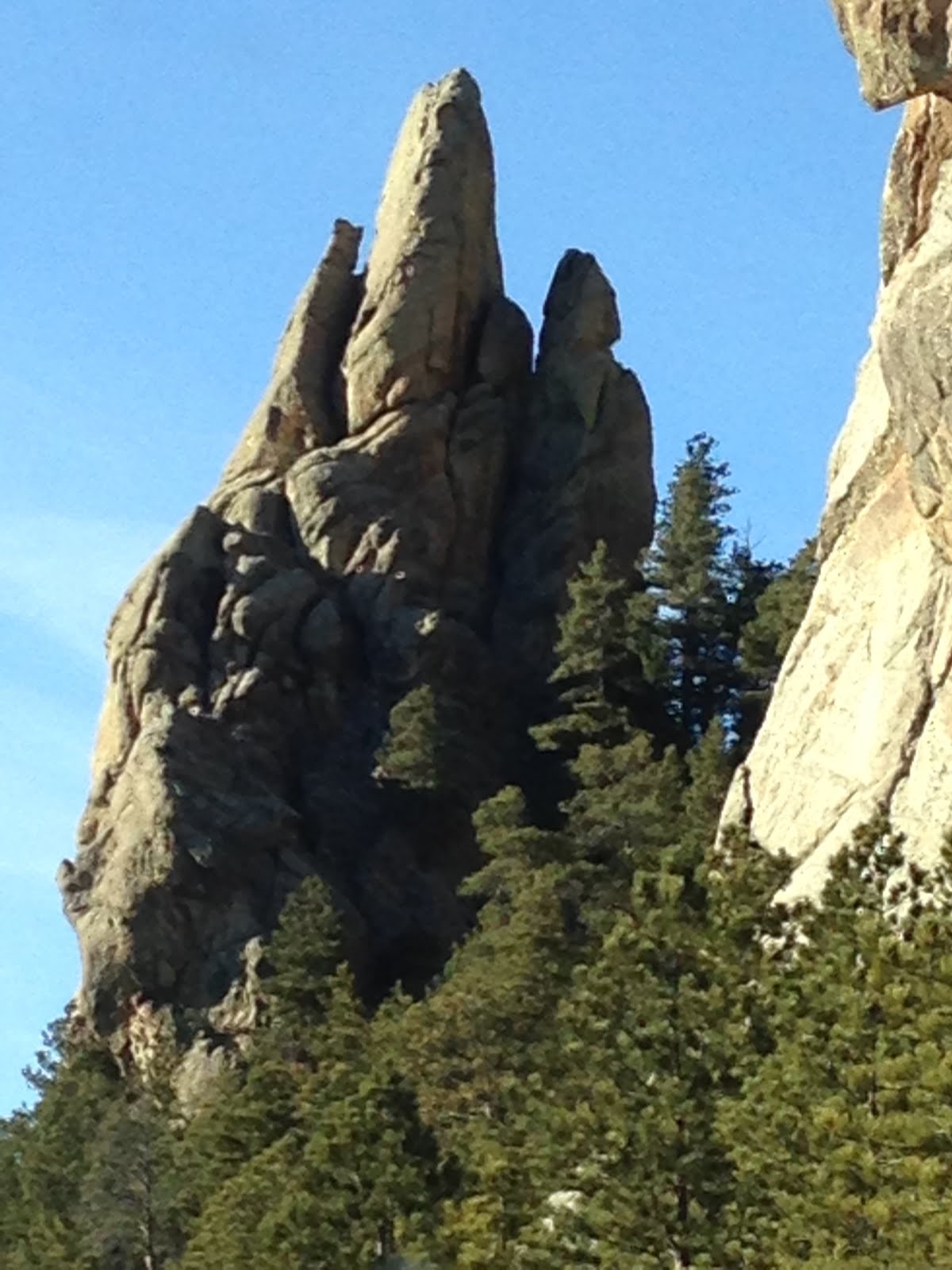
A recent photo of The Old Man's Wrinkles, a rock formation near Keystone in the Black Hills
“We are as much alive as we keep the earth alive.” – Chief Dan George
“There are places which exist in this world beyond the reach of imagination.” – Daniel J. Rice, This Side of a Wilderness
“It seems to me nothing man has done or built on this land is an improvement over what was here before.” – Kent Haruf, West of Last Chance
So, Happy Earth Day everyone. Take a few minutes to do even the simplest things to help save our earth. Pick up a few scraps of paper. Drive just a few miles less. Preserve a single glass of water, or contribute to a fund working on behalf of bringing clean, safe water to remote parts of our globe. Each of us has a part to play, and if you are among those who can communicate to others through your words, today would be a wonderful day to share some of those words on the earth’s behalf. She is, after all, the only place we have on which to reside.
Share A Writer’s Moment with a friend by clicking g+1 below.
April 21, 2016
Words for the right moment
“I'm just going to write because I cannot help it.”– Charlotte Bronte
Bronte, who lived to just age 39 before dying of typhus during pregnancy, was born on this date in 1816. The oldest of 3 Bronte sisters who survived into adulthood (2 sisters died of tuberculosis), she and her surviving sisters each wrote novels that are still considered classics of English literature.
In addition to her literary writing, she also had a remarkable lyrical style leaving us with such statements as “The soul, fortunately, has an interpreter - often an unconscious, but still a truthful interpreter - in the eye.” And “The human heart has hidden treasures, in secret kept, in silence sealed; the thoughts, the hopes, the dreams, the pleasures, whose charms were broken if revealed.”
Charlotte drew from her personal experiences as surrogate “mother” to her 3 younger siblings after their mother died following the birth of sister Anne. That life experience prepared her for both her first job as a governess and for her writing career that formally began when she and sisters Emily and Anne co-published a book of poetry under the pseudonym Bell – Charlotte as Currer; Emily as Ellis; and Anne as Acton.
While their poems did not succeed, the three women’s subsequent novels – Jane Eyre from Charlotte; Wuthering Heights from Emily; and Agnes Greyfrom Anne – were wildly successful and led to their revealing their real names to the writing world. With an innovative style that combined naturalism with gothic melodrama, Charlotte’s writing especially plowed new ground.
Charlotte believed art was most convincing when based on personal experience; so in Jane Eyre she transformed her experiences into a novel with universal appeal. But, touching on the trials that all authors face, she once lamented “Who has words at the right moment?” Fortunately for the world, Charlotte Bronte did.
Share A Writer’s Moment with a friend by clicking g+1 below.
April 20, 2016
Popular and literary ... seriously
“I want to write about serious things, but I want to write about them in a way that makes them accessible to a large number of people - to take them through the argument by dramatizing the circumstances in which these issues are being discussed.” – Sebastian Faulks Born on this date in 1953, British novelist, journalist and broadcaster Faulks is best known for his historical novels set in France – The Girl at the Lion d'Or, Birdsong and Charlotte Gray. He has also published such contemporary novels as A Week in December and the James Bond continuation novel, Devil May Care for which he won the British Book Awards “Popular Fiction Award.”
Also honored by the British Crown for his lifetime contributions to English Literature, he has had the rare accolade of being tabbed as “popular and literary at the same time.” English theatre, film and television director Trevor Nunn called Faulks' 2005 novel, Human Traces "A masterpiece, one of the great novels of this or any other century."

A leading advocate for “read before you write,” Faulks advises writers to be strong readers first. “I don't know how you can understand other people or yourself if you haven't read a lot of books. I just don't think you're equipped to deal with the demands and decisions of life, particularly in your dealings with other people.”
Share A Writer’s Moment with a friend by clicking g+1 below.
April 19, 2016
The luxury of 'deadlines lost'
“The deadlines are much, much longer with books. When I was a reporter, a lot of times I'd come in at 8:30 a.m., get an assignment right away, interview somebody, turn the story in by 9:30, and have the finished story in the paper that landed on my desk by noon.” – Margaret Haddix
Anyone who’s ever worked in journalism – particularly on “breaking news” – knows the reporter’s routine about which Margaret Haddix is speaking. “Write tight and write quick” are the daily mantras for reporters. The native Ohion (born on this day in 1964) studied at Miami of Ohio before starting her writing career as a reporter in Indiana – writing for newspapers in both Fort Wayne and Indianapolis before making her very successful switch to creative writing in the mid-1990s.
Today she’s best known for her series’ Shadow Children (1998–2006) and The Missing(2008-present) and her best-selling books Running Out of Time and The Girl With 500 Middle Names. Since switching from journalism to creative writing she has authored more than 30 books and won the
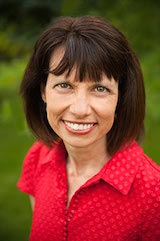 International Reading Association’s Children’s Book Award for her body of work.
 As most journalists know, creative writing is a luxury after dealing with the daily deadlines of the reporting world. “Generally I finish a first draft in 2-6 months, then I set it aside for a while so that when I come back to it I can read it with fresh eyes and figure out how to improve it. (In creative writing) I can spend as long revising a manuscript as I spent writing it in the first place.”
After two decades as a creative writer, she said she prefers the style. “It's just so much fun to make up characters, situations, and everything else about a story,” she said. “I have so much freedom and flexibility to do whatever I want.”
Share A Writer’s Moment with a friend by clicking g+1 below.
April 18, 2016
Wise words for our writing week
A few “wise or thought-provoking words” from a number of different writers – either of essays, lyrics, poetry or novels – to begin the new writing week.
***“When you're learning, especially to write, unless you're some incredibly gifted writer, a young Malcom Gladwell, say, you need to be imitating people. You need to be imitating how they make their work, how they structure it, how they design the pieces. It gives you chops; it gives you moves.” – Ira Glass, writer and producer of the NPR program This American Life
***“Writing a screenplay is like being in a bathtub. Writing a novel is like being in the sea.” – Richard Bach, author and illustrator of Jonathan Livingston Seagull
***“Writing ideas are like pizza dough, made to be tossed around.” – Anna Quindlen, author, journalist and opinion columnist for the New York Times
***“When you’re writing or composing, time is a very misleading thing. We can gain experience from the past, but we can't relive it; and we can hope for the future, but we don't know if there is one. So write for each day.” – George Harrison, songwriter, composer and performer
***“Writing is thinking. It is more than living, for it is being conscious of living. – Anne Morrow Lindbergh
And so, on to another week. Happy writing and many writers' moments to all.
Share A Writer’s Moment with a friend by clicking the g+1 button below.