Dan Jorgensen's Blog, page 484
March 28, 2016
That ancient and honorable act
“Storytelling is an ancient and honorable act. An essential role to play in the community or tribe. It's one that I embrace wholeheartedly and have been fortunate enough to be rewarded for.” – Russell Banks
Born on this date in 1940, Banks is an American writer of fiction and poetry and perhaps best known for his "detailed accounts of domestic strife and the daily struggles of ordinary often-marginalized characters.” His stories usually revolve around his own childhood experiences (growing up in poverty), and often reflect "moral themes and personal relationships.”
A winner of the John Dos Passos Award for creative writing, his works have now been translated into some 20 languages and earned numerous international awards. Two of his books – The Sweet Hereafter and Affliction – not only became international best-sellers but also were made into successful feature films.
Banks is a member of the International Parliament of Writers and is a member of the American Academy of Arts and Letters.
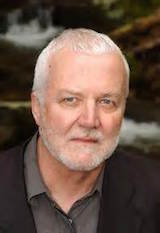
“There are people like me who want to be writers because they love to write,” he said. “…My life has now been shaped by my writing,”
Share A Writer’s Moment with a friend by clicking g+1 below.


March 27, 2016
Happy Easter!
“Easter is meant to be a symbol of hope, renewal, and new life.”– Janine di Giovanni

 Photos by Susan Jorgensen As if on cue, the flowers in our backyard corner flowerbed suddenly erupted this week as if to celebrate the glory and promise that Easter brings to us all.
 Happy Easter everyone!
Share A Writer’s Moment with a friend by clicking g+1 below.
March 26, 2016
Setting your own course...and style
“When you write it doesn't occur to you that somebody could think different from what you do.” – Howard Nemerov
Nemerov twice was Consultant in Poetry to the Library of Congress, from 1963 to 1964 and again from 1988 to 1990, basically serving as the the U.S. "poet in chief." He was thrice-honored for his The Collected Poems of Howard Nemerov, winning the National Book Award for Poetry, the Pulitzer Prize for Poetry, and Bollingen Prize. The Bollingen is a literary honor bestowed by Yale University on an American poet in recognition of the best book of new verse and for lifetime achievement.

Nemerov, 1920-1991, was one of our most-honored poets and also considered one of our “most readable.” A teacher in high school and college and at workshops around the country, he said he always enjoyed talking to kids and learning that they liked reading his work. “I liked the kid who wrote me that he had to do a term paper on a modern poet and he was doing me because, though they say you have to read poems twice, he found he could handle mine in one try,” Nemerov said.
Droll humor marks many of his poems. Here, for Saturday’s Poem, is Nemerov’sFound Poemafter information received in The St. Louis Post-Dispatch, 1986
The population center of the USA
Has shifted to Potosi, in Missouri.
The calculation employed by authorities
In arriving at this dislocation assumes
That the country is a geometric plane,
Perfectly flat, and that every citizen,
Including those in Alaska and Hawaii
And the District of Columbia, weighs the same;
So that, given these simple presuppositions,
The entire bulk and spread of all the people
Should theoretically balance on the point
Of a needle under Potosi in Missouri
Where no one is residing nowadays
But the watchman over an abandoned mine
Whence the company got the lead out and left.
'It gets pretty lonely here,' he says, 'at night.'
Share A Writer’s Moment with a friend by clicking g+1 below.
March 25, 2016
Every book is a light
“Reading should not be presented to children as a chore, a duty. It should be offered as a gift.” – Kate DiCamillo
Born on this date (March 25, 1964) in Philadelphia, DiCamillo now makes her home in Minneapolis where she is one of the world’s leading writers of fiction for kids at all reading levels, usually. Her exemplary career has already produced two Newbery Medals for The Tale of Despereaux (2003) and Flora and Ulysses (2013), one of just 6 people in the world to win two such awards. Her best-known books for young children are the “Mercy Watson” series illustrated by Chris Van Dusen.In 2014 and 2015 DiCamillo was appointed by the Library of Congress as the U.S. National Ambassador for Young People's Literature.
Unlike many other highly successful writers who devote their time strictly to writing, DiCamillo works full-time in a used bookstore, where she does some writing each weekday. “I get up. I drink a cup of coffee. I think,” she said. “The last thing I want to do is write. Then I go to the computer and write. My goal is two pages a day, five days a week. I never want to write, but I'm always glad that I have done it. After I write, I go to work at the bookstore.”
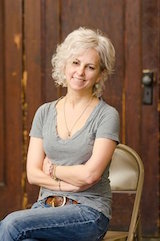
When I lived in Minnesota I always hoped to meet her but never did. At the time I wanted to tell her how much I had enjoyed reading her absolutely wonderful Young Adult book Because of Winn Dixie. If you have not read it, go get a copy and do so! Meanwhile, getting the chance to meet her remains on my list of things to do, and I assume I’ll find her paging through some books at her bookstore.
“Every well-written book is a light for me,” she said. “When you write, you use other writers and their books as guides in the wilderness.”
Share A Writer’s Moment with a friend by clicking the g+1 button below.
March 24, 2016
A 'restorative' process
“Writing is always a restorative process. It's like paddling a kayak. When you're writing, you can't do anything else. You're in the space you're in. So, in that way, it's enormously centering and restorative.”– Tabitha King
While critical reaction to her writing has been mixed, there’s only praise for King’s work on behalf of literacy and the importance of public broadcasting – both of which have occupied much of her time when she’s not writing. That does not mean that Tabitha, the wife of author Stephen King, has not been devoted to the writing craft as well. Over the years she has produced nearly a dozen novels, a number of short stories, 6 books of poetry, and 2 nonfiction books.
She and her husband also established the very active Stephen & Tabitha King Foundation to help fund community-based projects that address the underlying causes of social and environmental problems, as well as those that address the consequences. “We have a strong interest in literacy, community services and the arts,” they said.
Tabitha King –whose birthday is today – and and her husband Stephen met at thecollege library at the U. of Maine where both
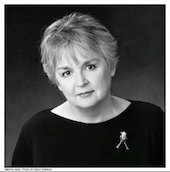 were student workers there.
Their support is aimed primarily at small communities in Maine, the “place” where they work and live, because as a place, Maine has shaped their lives and been their home for decades. “Places are extremely important when writing a long story,” Tabitha said. “Place shapes a character.”
Share A Writer’s Moment with a friend by clicking the g+1 button below.
March 23, 2016
Soaring above your scene
“A good novel is an out-of-self experience. It lifts you off the ground so that you have the sensation of flying. It says, 'Look at the world around you; learn from the people in these pages, neither quite me nor quite you, how life is lived in so many different ways.’” – Julia Glass
In 2002, Glass’s debut novel Three Junes got off to a very good liftoff, indeed, winning the National Book Award for Fiction. Since then she’s led a very good writing life having half-a-dozen more novels published, all to excellent reviews.
Born on this date in 1956, Glass said, “My life has been wonderful, but if I had to live the life of someone else, I'd gladly choose that of Julia Child or Dr. Seuss: two outrageously original people, each of whom fashioned an idiosyncratic wisdom, passion for life, and sense of humor into an art form that anyone and everyone could savor.”
A native of Massachusetts she actually already took a couple of divergent life paths, first moving to Brooklyn, NY, after college to become a painter, then trying magazine editing in New York City before taking a stab at creative writing. She now lives back in Massachusetts and in addition to the National Book Award, she’s won the prestigious William Faulkner - William Wisdom Creative Writing Competition for her efforts.
 Julie Glass at the Texas Book Festival
“All the best novels are about one thing: how we go on,” she said. “The characters must survive the fallout of their own cowardice, folly, denial or misguided passion. They squander what matters most, and still they pick up the pieces.”
Share A Writer’s Moment with a friend by clicking the g+1 button below.
March 22, 2016
Hungrily involved in solving the crime
“In a mystery, the sleuth must be believably involved and emotionally invested in solving the crime.” – Diane Mott Davidson
Mystery writer Davidson, who celebrates her birthday today, took a page (so to speak) out of author Robert B. Parker’s writing guide and decided to develop her ideas for mysteries around her two great loves – writing and recipes. Thus, her novels use the theme of food and include several food or drink recipes within their pages. On top of that, she utilizes clever titles that are a play on either a food or drink word, such as Dying for Chocolate, The Grilling Season, Killer Pancake and The Whole Enchilada (my personal fave).
Her protagonist, Goldy Schulz, is a small town caterer based in Colorado (also where Davidson resides) who solves mysteries on the side.

A native of Virginia who started writing while she was a student at Wellesley living across the hall from Hillary Rodham – today known as Hillary Rodham Clinton – Mott Davidson said she actually tried catering for a while and found it “exhausting.” She honed her cooking skills after transferring from Wellesley to Stanford. “If you don’t have much money, you have to learn to cook.”
As for her advice to new writers, she said write for the love of it and that’s when you’re most likely to succeed. “The thing is, if you make best-sellerdom your goal, you're going to be in trouble. It's a very nice thing to have happen, but if one makes that a goal like, say, a literary writer has the goal of getting the Pulitzer Prize, that's so unpredictable.”
Share A Writer’s Moment with a friend by clicking g+1 below.
March 21, 2016
Letting you 'live' within the story
“There are certainly times when my own everyday life seems to retreat so the life of the story can take me over. That is why a writer often needs space and time, so that he or she can abandon ordinary life and 'live' with the characters.”– Margaret Mahy
Born on this date in 1936, Mahy wrote more than 100 picture books, 40 novels and 20 collections of short stories. She is among a select few writers to win the biennial, international Hans Christian Andersen Medal for her "lasting contribution to children's literature.”
A native of New Zealand, she grew up with an oral tradition shared by her bridge builder father who spent hours telling his children stories – both true and imagined. She said he was a great influence on her writing. Her mother, who was a teacher, encouraged her to read and got her interested in library science, a profession she thought would be her career until she tried her luck at writing. In 1965, she wrote her first book, A Lion in the Meadow, and it took off like a rocket.
Her other best-known stories were The Haunting and The Changeover. Her works have now been translated into 15 different languages and sold millions. Mahy was named for the prestigious Order of New Zealand and then honored by the New Zealand Children’s Book Foundation with an award named in her honor. “The Margaret Mahy Award,” first presented to her in 1991, is given annually to "a person who has made a significant contribution to the broad field of children's literature and literacy.”
Margaret Mahy at her 75th birthday
 wearing her “rainbow wig”
“Reading is very creative - it's not just a passive thing,” she said shortly before her death in 2012. “I write a story; it goes out into the world; somebody reads it and, by reading it, completes it.”
Share A Writer’s Moment with a friend by clicking g+1 below.
March 20, 2016
The actualities and the possibilities
“The historical novelist has to consider what has actually happened, while the SF writer is dealing in possibilities, but they are both in the business of imagining a world unlike our own and yet connected to it.”– Pamela Sargent
Born on this date in 1948, Sargent is an American science fiction author and editor. Winner of the prestigious SciFi Nebula Award, she is best known for her series on the terraforming of Venus, and for editing various anthologies celebrating the contributions of women in the history of science fiction. Her excellent Firebrands: The Heroines of Science Fiction and Fantasy(co-authored with Ron Miller) and her Women of Wonder series are among the best in the field. Pamela Sargent
 Sargent has penned nearly 30 novels and half-dozen story collections and also collaborated on several novels in the Star Trek series. Her work is noted for its connections between time periods. She said history is crucial to SciFi writing. “A feeling for history is almost an essential for writing and appreciating good science fiction,” she said. “(It’s crucial) for sensing the connections between the past and future that run through our present.”
 In 2012, she was honored with The Pilgrim Award, presented by the Science Fiction Research Association for Lifetime Achievement in the field of science fiction scholarship. “My grandfather allowed as how I might live long enough to see a Mars landing,” she said. “I haven't, of course, except in fiction, including my own, and strongly doubt that I ever will.”
Share A Writer’s Moment with a friend by clicking g+1 below.
March 19, 2016
Good advice ... and a poem
“The mature man lives quietly, does good privately, takes responsibility for his actions, treats others with friendliness and courtesy, finds mischief boring and avoids it. Without the hidden conspiracy of goodwill, society would not endure an hour.” – Kenneth Rexroth
Good advice for both we in the "mature" life range and for us all.
Born in 1905, American poet, translator and critical essayist Rexroth laid the groundwork for what would become the 1950s beat movement. Dubbed the "Father of the Beats" by Time Magazine, he also was among the first U.S. poets to explore styles like haiku. His poetry is marked by a sensitivity to Asian writings from throughout history, an appreciation of Ancient Greek lyric poetry, and of the work of women poets. He co-created a wonderful anthology of Chinese women poets, titled The Orchid Boat, and he worked tirelessly in his last decade (he died in 1982) to promote the work of female poets in America.
With Spring nigh upon us, here for Saturday’s Poem is Rexroth’s,
Yin and YangIt is Spring once more in the Coast Range
Warm, perfumed, under the Easter moon.
The flowers are back in their places.
The birds are back in their usual trees.
The winter stars set in the ocean.
The summer stars rise from the mountains.
The air is filled with atoms of quicksilver.
Resurrection envelops the earth.
Goemetrical, blazing, deathless,
Animals and men march through heaven,
Pacing their secret ceremony.
The Lion gives the moon to the Virgin.
She stands at the crossroads of heaven,
Holding the full moon in her right hand,
A glittering wheat ear in her left.
The climax of the rite of rebirth
Has ascended from the underworld
Is proclaimed in light from the zenith.
In the underworld the sun swims
Between the fish called Yes and No.
Share A Writer’s Moment with a friend by clicking g+1 below.