Dan Jorgensen's Blog, page 480
May 7, 2016
A Mother's Day poem of praise
“Journalism wishes to tell what it is that has happened everywhere as though the same things had happened for every man. Poetry wishes to say what it is like for any man to be himself in the presence of a particular occurrence as though only he were alone there.” – Archibald MacLeish
Born on this date in 1892, American poet, writer, and Librarian of Congress Archibald MacLeish was associated with the Modernist school of poetry and winner of a remarkable three Pulitzer Prizes for his poems. MacLeish worked throughout his life to promote the arts, culture, and libraries. Among other impacts, he was the first Librarian of Congress to begin the process of naming what would become the United States Poet Laureate. For Saturday’s Poem, and for Mother's Day, here is MacLeish’s,
Poem in ProseThis poem is for my wife.
I have made it plainly and honestly:
The mark is on it
Like the burl on the knife.
I have not made it for praise.
She has no more need for praise
Than summer has
Or the bright days.
In all that becomes a woman
Her words and her ways are beautiful:
Love's lovely duty,
the well-swept room.
Wherever she is there is sun
And time and a sweet air:
Peace is there,
Work done.
There are always curtains and flowers
And candles and baked bread
And a cloth spread
And a clean house.
Her voice when she sings is a voice
At dawn by a freshening spring
Where the wave leaps in the wind
And rejoices.
Wherever she is it is now.
It is here where the apples are:
Here in the stars,
In the quick hour.
The greatest and richest good,
My own life to live in,
This she has given me --
If giver could.
Share A Writer’s Moment with a friend by clicking g+1 below.


May 6, 2016
Sometimes it's a roller-coaster ride
“If you have a craftsman's command of the language and basic writing techniques you'll be able to write - as long as you know what you want to say.”– Jeffery Deaver
An American mystery/crime writer, Deaver earned a journalism degree (from the renowned U. of Missouri program), then went on to a law degree at Fordham before starting his writing career as a journalist.
Born on this date in 1950, Deaver said he gravitated toward journalism first because he was editor of his high school literary magazine and a reporter for the school paper. But after some fulltime work on a newspaper, he switched back to law and practiced that before embarking on his very successful career and award-winning career as a novelist.
Deaver’s formula for successful writing is to first do an extensive outline. “The outline is 95 percent of the book,” he said. “Then I sit down and write, and (for me) that's the easy part.” In fact, he said it’s so easy to write that oftentimes he does it in the dark. “I can touch-type,” he added. Virtually all of his works feature a trick ending or multiple
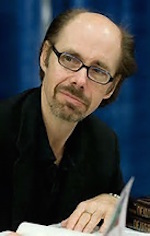 trick endings, a technique that has both endeared him to some readers and frustrated others.
“To answer that I have to describe what I think is my responsibility as a thriller writer: To give my readers the most exciting 'roller coaster ride' of a suspense story I can possibly think of.”
Share A Writer’s Moment with a friend by clicking the g+1 button below.
May 5, 2016
Presenting someone with a whole new life
“Read, every day, something no one else is reading. Think, every day, something no one else is thinking. Do, every day, something no one else would be silly enough to do. It is bad for the mind to continually be part of unanimity.”– Christopher Morley Morley, a gregarious and well-known journalist, novelist, essayist and poet, also once noted that “No one appreciates the very special genius of your conversation as much as your dog does.”
Born on this date in 1890, he had a distinguished career, writing more than 100 novels, books of essays and volumes of poetry right up until his death in 1957. He is probably best known for his 1939 novel Kitty Foyle, also made into an Academy Award-winning movie. Born in Bryn Mawr, PA, he studied at nearby Haverford and then Oxford University, where he began his writing. After graduating, he started his literary career at Doubleday, working first as a publisher’s reader. Then in 1917 he got his start as an editor at Ladies' Home Journal before becoming a newspaper reporter and columnist for the Philadelphia Evening Public Ledger.
Out of enthusiasm for the Sherlock Holmes stories,
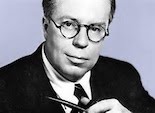 he helped found the Baker Street Irregulars and wrote the introduction to the standard omnibus edition of The Complete Sherlock Holmes.
 And, of course, he exuded a love of reading, noting, “When you sell a man a book, you don't sell him 12 ounces of paper and ink and glue - you sell him a whole new life.”
Share A Writer’s Moment with a friend by clicking g+1 below.
May 4, 2016
Ordinary words; clever outcomes
“The real art is not to come up with extraordinary clever words but to make ordinary simple words do extraordinary things. To use the language that we all use and to make amazing things occur.” – Graham Swift
Born on this date in London in 1949, Swift is considered one of the most important “contemporary” British writers. His first novel, The Sweet Shop Owner, was published in 1980, and his subsequent works have won much praise and many awards. Waterland, in particular, was one of the finalists for the prestigious Booker Prize. Both Waterland and his book Last Orders have also been made into movies that were well-received at the box office and by critics.
Swift has been in the news for his comments that e-books are not something authors should support or be happy about. “Unfortunately writers take a very small part of the profit on their books, and I think in the e-book world there is a real danger they will take even less, unless they are vigilant and robust about protecting their own interests,” he noted.

Swift is a meticulous and deliberate writer and decries those who say Swift, ironically, writes too slow.
“It can be dismaying, all the same, for a novelist to compare the slowness of the writing with the speed of the reading,” he said. “Novels are read in a matter of days, even hours. A writer may labor for weeks over a particular passage that will have its effect on a reader for an instant - and that effect may be subliminal or barely noticed.”
Share A Writer’s Moment with a friend by clicking g+1 below.
May 3, 2016
The basis for characters and ideas
“Most writers’ ideas and characters come from life experiences. And why not? It’s in your life and work, after all, that you come in contact with lots of interesting characters. And I say characters, because people you have experience with in your life tend to make up the personalities for the characters in your writing.”– Dan Jorgensen
I like to quote writers on the occasion of their birthdays and today happens to be one for me. This is a statement I like to share with book clubs and writing groups whenever I meet and talk with them. After my Tween sports novel Sky Hook came out a woman who had played on one of my basketball teams as a girl (I coached girls basketball for many years) called me and said “That was me in that story, wasn’t it?” And of course it was.
I’ve held a lot of jobs and done a lot of volunteering (and volunteering also is a great way to do things that give you these special experiences). I’ve been a farmer, cattle herder, meatcutter, worked at a grain elevator and as a crop sprayer. I was a waiter, been in the Army, coached both boys and girls basketball, been a bookseller, done theatre, played golf (badly, but I did get a hole-in-one), done public relations and lots and lots of writing, and taught creative writing and journalism to students as young as 12 and as old as 80 (and let me tell you each of those ages bring their own special set of challenges, something I say with growing insight as I approach that top age).
Thus, a writer's ideas really come from the world in which he or she resides. More often than not ideas come as bits and pieces that may seem absolutely or somewhat ridiculous alone, yet put together they become not ridiculous at all. That’s why I always write down every “bit” and every “piece.” Part of the puzzle of writing is to try to fit the bits together at a later date. I think it is a mistake, by the way, to go right to work on an idea – you should let it percolate in your brain for a while, sort of like coffee. It will either get richer and grow in stature or you’ll realize that it’s acidic and needs to be dumped or re-brewed.
And so, those are my words to share on this May 3rd. Hard to believe I’ve reached the end of my 7thdecade, but it’s been a very interesting year and I can’t wait to see what lies ahead in year number 70. Happy writing and I hope you have many "Writer's Moments."
Share A Writer’s Moment with a friend by clicking g+1 below.
May 2, 2016
Well, somebody has to do it!
“Writing a mystery is more difficult than other kinds of books because a mystery has a certain framework that must be superimposed over the story.”– Martha Grimes
Grimes is best known for her Richard Jury novels – each named for a pub and featuring Scotland Yard Inspector Jury and his friend Melrose Plant, a British aristocrat who has given up his titles. More than 20 of her 30-plus novels showcase the duo. And, she said “researching” each novel’s location has been a fun add-on for her work. “Well,” she said, “The (pub) names are very important.”
For an excellent look at Grimes and her writing process, take a look at the Sarah Fogle-edited book Martha Grimes Walks Into a Pub: Essays on a Writer with a Load of Mischief.
Born on this date in 1931 (in Pittsburgh), Grimes grew up in Western Maryland where she also studied and has taught at colleges and universities in conjunction
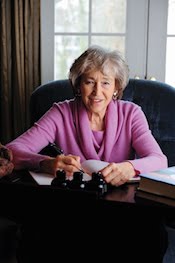 with her successful writing career. Grimes says she has always loved story-telling and putting ideas onto paper. “I just enjoy telling stories and watching what these characters do – although writing continues to be just as hard as it always was.”
Share A Writer’s Moment with a friend by clicking the g+1 button below.
May 1, 2016
It had to be 'destiny'
“Every writer I know has trouble writing.” – Joseph Heller
Born on May Day, 1923, Heller was the American satirical novelist, short story writer, and playwright, unknown in the mid-1950s when he pitched his idea for Catch-22 to Simon & Schuster, and editor Joseph Gottlieb decided to take a chance. The rest, of course, is history. The novel became one of the all-time best sellers and a successful movie, and the term joined the world's lexicon.
Catch-22 refers to absurd, no-win choices, particularly in situations in which the desired outcome of a choice is an impossibility, and regardless of the choice, a negative outcome is a certainty. In other words a Catch-22 is a paradoxical situation from which an individual cannot succeed because of contradictory rules. A simplified example would be: To apply for a certain job, you need to have experience in that job. But in order to gain experience, you need to first get the job.
Heller made up the term to reflect some of the absurdities he saw during his time in the military (I can vouch that there are always plenty of opportunities there!). Originally, he intended it to be known as Catch-18. But established author Leon Uris was in the process of publishing Milas 18, and to avoid any confusion, Heller and Gottlieb talked it over and decided to go with Catch-22instead. While some have said it was “Destiny,” Heller said “Destiny is a good thing to accept, but only when it's going your way ... So, maybe this was destiny!”
Heller's second novel Something Happened also did well and he had a stellar career as a satirist, playwright and writer of screenplays. His work was instrumental in the final versions of both the movie Sex and The Single Girl and the hit TV series McHale’s Navy.
Despite all his accolades, he never considered himself famous and once noted, “Some people are born mediocre, some people achieve mediocrity, and some people have mediocrity thrust upon them.” Medicrity like his is probably something we should all hope to achieve.
Share A Writer’s Moment with a friend by clicking g+1 below.
April 30, 2016
It's always about the language
“Poetry is, first and last, language - the rest is filler.”– Mark Strand Canadian-born (on Prince Edward Island where Anne of Green Gables was set), Strand eventually studied in America and became an American citizen where he had a distinguished career as a poet, essayist and translator. He died in 2014 at age 80.
In 1990 Strand was appointed Poet Laureate Consultant in Poetry to the Library of Congress and in 2004 he received the Wallace Stevens Award, given to "recognize outstanding and proven mastery in the art of poetry.” The Stevens also provides a cash prize of $100 thousand
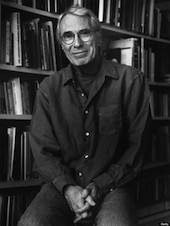 – which makes it the richest prize in poetry unless a poet happens to win the Nobel Prize.
Which is not to say he didn’t do well in the awards department. Strand received numerous prizes for his work, including a MacArthur Fellowship (The “Genius” grant) in 1987, and the 1999 Pulitzer Prize for Poetry, for Blizzard of One. Known for his highly personal touch, he said "Pain is filtered in a poem so that, in the end, it becomes pleasure."
Here, from Blizzard of One is Saturday’s Poem:
The Everyday Enchantment of Music
A rough sound was polished until it became
a smoother sound, which was polished until
it became music.
Then the music was polished until
it became the memory of a night in Venice
when tears of the sea fell from the Bridge of Sighs,
which in turn was polished until it ceased
to be and in its place stood the empty home
of a heart in trouble.
Then suddenly there was sun and the music came back
and traffic was moving and off in the distance,
at the edge of the city, a long line of clouds appeared,
and there was thunder, which, however menacing,
would become music, and the memory of what happened after
Venice would begin, and what happened
after the home of the troubled heart broke in two would also begin.
Share A Writer’s Moment with a friend by clicking g+1 below.
April 29, 2016
What you meant to say was...
“Editing is simply the application of the common sense of any good reader. That's why, to be an editor, you have to be a reader. It's the number one qualification.
As an editor, I have to be tactful, of course.”—Robert Gottlieb
Born on this date in 1931, Gottlieb is both an editor AND a writer, but it’s his editorship for which he is best known, having served as editor of The New Yorker for a number of years and editor-in-chief at book giant Simon & Schuster for 30 years.
While at S&S, he discovered and edited Catch-22 by the then-unknown Joseph Heller, and during his years there he edited works by almost every major writer – both of fiction and nonfiction.
Gottlieb said it was his love of reading that led to his fascination with dissecting how books were crafted. “I was the only child, and I know my father had certain thoughts about me. He was a lawyer and extremely literary, but he would have been much happier if I had wanted to be a lawyer, a scientist, an engineer. But what I wanted to do was read.”
For a time he thought that also might mean that he would become a writer, but he said it was something he never really wanted to be. “I don't like writing - it's so difficult to say what you mean,” he said. “It's much easier to edit other people's writing … and help them say what they mean.”
Share A Writer’s Moment with a friend by clicking the g+1 button below.
April 28, 2016
Be proactive on your story's behalf
“I think writers have to be proactive: they've got to use new technology and social media. Yes, it's hard to get noticed by traditional publishers, but there's a great deal of opportunity out there if you've got the right story.”– Ian Rankin
Rankin, the Scottish crime writer best known for his “Inspector Rebus” novels, did not set out to be a crime writer and, in fact, didn’t think he had “the right story” at first. He thought his first novels Knots and Crosses and Hide and Seek were more “mainstream,” keeping with the Scottish traditions of Robert Louis Stevenson and even Muriel Spark. And he said he was a bit disconcerted by their classification as “genre fiction,” worrying they might not draw a reading audience.
Not to worry. So far, he’s had 25 books published and 10 of them have not only been best sellers, but have been adapted for television movies – a record most writers would love to have. Rankin celebrates his 56thbirthday today at his home in Edinburgh where he sets most of his novels. One of the fun things about reading his books is to learn more about that Scottish city and the little details he weaves throughout.
Rankin, whose first job was in his dad’s grocery store, had lots of “life experiences” (always a plus for a writer)
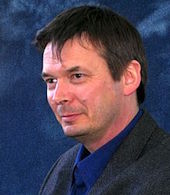 before becoming a full-time novelist. He worked as a grape-picker, swineherd, taxman, alcohol researcher (I’d definitely like to hear more about that job), hi-fi journalist, college secretary, and punk musician in a band called The Dancing Pigs.
“I am, of course, a frustrated rock star - I'd much rather be a rock star than a writer,” he said. “Or own a record shop. Still, it's not a bad life, is it? You just sit at a computer and make stuff up.” Pretty good “stuff” too.
Share A Writer’s Moment with a friend by clicking g+1 below.