Dan Jorgensen's Blog, page 476
June 16, 2016
Dreams to reality; executing visions
“To write a novel is to embark on a quest that is very romantic. People have visions, and the next step is to execute them. That's a very romantic project. Like Edvard Munch's strange dreamlike canvases where people are stylized, like 'The Scream.' Munch must have had that vision in a dream; he never saw it.”– Joyce Carol Oates
Born on this day in 1938, Oates published her first book in 1963 and has since published over 40 novels, a number of plays and novellas, many volumes of short stories, poetry, and nonfiction, and been a frequent reviewer of others’ works.
Winner of many writing awards, including the National Book Award for her novel them, two O. Henry Awards, and the National Humanities Medal, she also teaches writing at Princeton University. Five of her other books have been nominated for Pulitzer Prizes and she’s considered a “short lister” for the Nobel Prize.
Despite her remarkable and prolific output, she says she never rushes the completion process for each of her works. “My reputation for writing quickly and effortlessly notwithstanding, I am strongly in favor of intelligent, even fastidious revision, which is, or certainly should be, an art in itself,” she said.
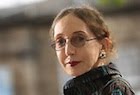
I’ve always identified with Oates because, like me, she grew up as a farm kid – me in South Dakota; she in Upstate New York. We share the experiences of doing chores and lots of them; and finding quiet spaces in the fields, or out herding cattle, or sitting alongside a creek or pond to read books, stories or whatever else we could get our hands on. And, we share the concept that dreams play a key role in a writer’s life.
“... Dreams are essential to our lives,” she said. “We can't live without dreaming - as we can't live without sleep. We are 'conscious' beings for only a limited period of time, then we sink back into sleep - the 'unconscious.' It is nourishing, in ways we can't fully understand.” Except, perhaps, through our writing, and her interpretation is exceptional.
Share A Writer’s Moment with a friend by clicking the g+1 button below.


June 15, 2016
Innate talent, creative new world
“I wrote about a bird that cleaned a crocodile's teeth. The story was so good that my teacher could not believe that a ten-year-old could write that well. I was even punished because my teacher thought I'd lied about writing it! I had always loved to write, but it was then that I realized that I had a talent for it.” – Brian Jacques
English writer Jacques, best known for his Redwall series of novels was born in Liverpool on this date in 1939 and started reading early, devouring everything from novels like Kidnapped to the Wind in the Willows books. By age 10 his vivid imagination combined with his talent for poring over books about animals led to that writing experience (noted above) which defined his writing life.
The Redwall series, centered on the triumph of good over evil, features an intricate animal-based world, ranging from peaceful mice, badgers, voles, hares, moles and squirrels to “bad guy” rats, weasels, ferrets, snakes and stoats. He does not shy away from the reality of battle, and many of the "good" creatures die. The first book, just called Redwall, alludes to the surrounding human civilization with a scene featuring a horse-drawn cart. But the subsequent books ignore humans completely. Redwall’s world portrays a society from the misty past with castles, bridges and ships built to the scale of forest creatures. His animal “heroes” write their own literature, draw their own maps, and have a world most humans envy.
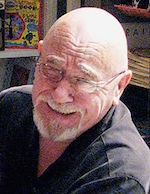
Jacques’ books were among the earliest converted into audio versions, and he was deeply involved as the lead characters while enlisting his sons and others to voice his Redwall inhabitants, many based on people he has encountered. “I am a people watcher and I have a very good memory,” he said.
For new writers, he says simply to start by writing what you know, live and dream, literally. “Sometimes, I get ideas from dreams,” he said. And, “Often, my stories are based on adventures that I, or my friends, have actually lived. Write yours, too.”
Share A Writer’s Moment with a friend by clicking the g+1 button below.
June 14, 2016
A transforming writing style
“Writers transform: they throw a hand grenade into the notion of reality that people carry around in their heads. That's very dangerous, very destructive, but not to do it means you are satisfied with the status quo - and that's a kind of danger as well, because a kind of violence is already being perpetuated.”– John Edgar Wideman
Born on this date in 1941, Wideman grew up in Pittsburgh, PA, and much of his writing is set there, especially in the Homewood neighborhood of the East End. He graduated from Pittsburgh's Peabody High School, attended the University of Pennsylvania and earned All-Ivy League basketball honors as a forward while also studying English.
While he says sports was his “main” thing, he not only enjoyed writing but became one of America’s best, starting while studying under a Rhodes Scholarship at Oxford University – just the second African-American to be selected for a Rhodes at the time. Also a graduate of the prestigious Iowa Writers’ Workshop, he has combined luminous writing and teaching careers – now for many years at Brown University.
I first was drawn to Wideman’s writing through his amazing The Cattle Killing, a novel for which he won the James Fenimore Cooper Prize for Best Historical Fiction. He’s also won the prestigious PEN/Faulkner and American Book Awards for his novel Philadelphia Fire. and been a National Book Award finalist for his memoir Fatheralong.
“I always liked to write and had fun writing, but I didn't have any pretensions about being a writer,” the modest Wideman said. “I liked to read and liked to putz around and write little stories or poems, but my thing was sports; basketball.” Maybe, but he’s also had a few slam dunks in the literary world along the way.
Share A Writer’s Moment with a friend by clicking the g+1 button below.
June 13, 2016
Assisting 'discovery' for generations
“The art of teaching is the art of assisting discovery.” – Mark Van Doren Born on this date in 1894, Van Doren was an American poet, writer, critic, scholar and professor of English at Columbia University for nearly 40 years. There he inspired a generation of influential writers and thinkers, including Thomas Merton, Allen Ginsberg and Jack Kerouac. In addition, he served as literary editor and film critic
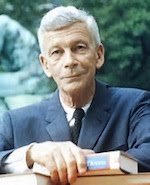 of the New York City-based magazine The Nation, the oldest continuously published literary magazine in the U.S. . His influence and body of work were recognized by The Library of Congress when he was made a Fellow in American Letters and then elected president of the American Academy of Arts and Letters.
Van Doren wrote many of the books studied by up-and-coming writers in colleges and universities across the nation, produced the award-winning verse play The Last Days of Lincoln, and won the Pulitzer Prize in poetry for his 1940 book Collected Works 1922-1938, joining older brother Carl as one of the few sibling combinations to win the award (Carl won in 1939).
But, despite his many successes in other genres, Van Doren always considered himself first and foremost to be a poet. “The job of the poet is to render the world - to see it and report it without loss, without perversion,” he wrote shortly before his death in 1972. “No poet ever talks about feelings. Only sentimental people do.”
Share A Writer’s Moment with a friend by clicking the g+1 button below.
June 12, 2016
Curiosity leads to writing and TV hit
“Fans are always asking me where I get my ideas from. The answer is that I'm very curious, and I get inspiration from everywhere. I read the newspapers voraciously, so I know what's going on in real crime. I pay attention to the strange stories people tell me, and I also read a lot of scientific and forensic journals.” – Tess Gerritsen
Born on this date in 1953 Tess Gerritsen is the best-selling author of the Rizzoli & Isles series, which also has been made into the very popular TV series. A native of San Diego, she is the child of a Chinese immigrant and a Chinese-American seafood chef, who grew up wanting to write her own Nancy Drew type novels. “I'd been writing stories since I was a child,” she said. “I wrote little books for my mom and bound them myself with needle and thread. Mostly, they were about my pets.”
Although she longed to be a full-time writer, her family had reservations about the sustainability of a writing career, prompting Gerritsen to choose a career in medicine instead. Ultimately, of course, that knowledge of medical procedures proved invaluable in her writing, especially when writing about the Maura Isles character, who is a medical examiner. Although she didn’t start writing until her mid-30s, Gerritsen’s books have been published in 40 countries and have sold 25 million copies.
In addition to her detective and mystery books, she has contributed essays in volumes published by
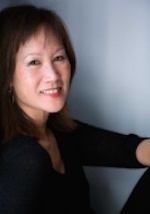 Mystery Writers of America and International Thriller Writers. She also blogs regularly about the writing business, both on her own website and on the mystery writers site, Murderati.com. “Even if I never sold another book, I'd keep writing, because the stories are here, in my head. Stories that just need to be told,” she said. “I love watching a plot unfold, and feeling the surprise when the unexpected happens.”
 Share A Writer’s Moment with a friend by clicking the g+1 button below.
June 11, 2016
A Saturday poetic delight
“Poetry and music are very good friends. Like mommies and daddies and strawberries and cream - they go together.” – Nikki Giovanni
I wrote earlier this week about Nikki Giovanni, the renowned poet and essayist who has taught at Queens College, Rutgers, and Ohio State, and is currently a University Distinguished Professor at Virginia Tech.
Her poetry has ranged from the somber, such as the chant-poem she delivered at the memorial for the Virginia Tech shooting victims, to thoughtful, and to whimsical, such as today’s short poem.
 For Saturday’s Poem, here is Giovanni’s: I wrote a good omeletI wrote a good omelet...and ate
 a hot poem... after loving you
Buttoned my car...and drove my
coat home...in the rain...
after loving you
I goed on red...and stopped on
green...floating somewhere in between...
being here and being there...
after loving you
I rolled my bed...turned down
my hair...slightly
confused but...I don't care...
Laid out my teeth...and gargled my
gown...then I stood
...and laid me down...
To sleep...
after loving you.
Share A Writer’s Moment with a friend by clicking the g+1 button below.
June 10, 2016
Craftsmanship of the highest order
“Man was very fortunate to have invented the book. Without it, the past would completely vanish, and we would be left with nothing, we would be naked on earth.” – James Salter
Born on this date in 1925, James Salter was the pen name for James Arnold Horowitz. He later adopted Salter as his legal name. A writing “craftsman” of the highest order, Salter wrote both novels and short stories and was renowned for his ability to write beautiful prose. His friend and fellow author, the Pulitzer Prize-winner
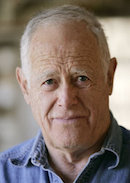 Richard Ford, noted, "It is an article of faith among readers of fiction that James Salter writes American sentences better than anybody writing today."
 Also known as a great “selector” of character names, Salter once noted, “There are writers for whom names mean nothing; everybody could be called John and Elizabeth, and the writing would be just as good. But, to me, a name is like a piece of clothing. It gives you an impression right away.”
The son of a career military officer, Salter followed his father to West Point and moved to the Air Force when it became a separate military branch in the late 1940s. He flew over 100 combat missions in the Korean War and wrote about it in his first novel, the best-selling The Hunters. Made into a highly acclaimed movie, it also made actor Robert Mitchum a star.
Salter, who died at age 90, wrote 20 best-sellers, including All That Is, at age 88, and Solo Faces, that grew out of a film script rejected by Robert Redford. Salter was a fairly successful screenwriter, including the film Downhill Racer, but he preferred writing books, and noted, “The writers of books are companions in one's life and, as such, are often more interesting than any other companions.”
Share A Writer’s Moment with a friend by clicking g+1 below.
June 9, 2016
Old-fashioned approach, futuristic results
“I think any writer keeps going back to some basic theme. Sometimes it's autobiographical. I guess it usually is.” – Joe Haldeman
Many of Haldeman's works, including his debut novel War Year and his second novel The Forever War, were inspired by his experience serving in the Vietnam War – where he was wounded in combat – and by his adjustment to civilian life after returning home. But while he used his war experience to start as a writer, it’s been his skill fashioning works of science fiction that have highlighted his career and a place in the Science Fiction Writers Hall of Fame.
Winner of numerous Hugo Awards (a top award in science fiction) for novels, short stories and novellas, this Oklahoma native also had a most interesting idea – weaving together a story of an attempt to produce a fake Ernest Hemingway manuscript with themes concerning time travel and parallel worlds. That one won both a Hugo and a Nebula.
The author of 20 novels and many collections of stories and essays, in a recent interview he called himself “Jack of all trades and master of none.” Regardless, he’s earned
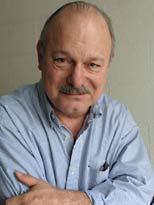 many, many admirers and been a leader in the Sci-Fi world, including being selected by the Science Fiction Writers of America officers and past presidents for its coveted “Grand Master” designation.
Born on this date in 1943, Haldeman is an “old-fashioned” writer in the truest sense, writing all of his works by hand. “There's something special about writing by hand, writing with a fountain pen, and something special about writing into a book, to take a blank book and turn it into an actual book,” he said. “I like the physical action of writing down by hand.”
Share A Writer’s Moment with a friend by clicking g+1 below.
June 8, 2016
Gems for the writing life
Three women who have made a lasting mark on the writing world, and who I greatly admire, form the basis for today’s post. These three have had dozens of “writers’ moments” and are eminently quotable, but I enjoy these particular quotes about their takes on being writers and the writing life.
“Here I am, where I ought to be. A writer must have a place where he or she feels this, a place to both love and be irritated with.”
 – Louise Erdrich “Where writers are from is one of the world' s most boring topics. Where we're born, gender or race, wealth or poverty - those are the things we spend time talking about. Yet, I wish people would stop trying to label me … and, instead … worry about whether I'm any good!”
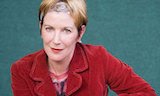 – M. J. Hyland
And, noted that she said this with a smile and tongue firmly in cheek: “A young musician plays scales in his room and only bores his family. A beginning writer, on the other hand, sometimes has the misfortune of actually getting into print.”
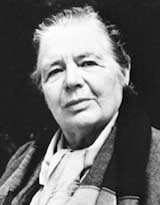 – Marguerite Yourcenar Happy writing!
 Share A Writer’s Moment with a friend by clicking the g+1 button below.
June 7, 2016
Authoring the untamed human spirit!
“We write because we believe the human spirit cannot be tamed and should not be trained.” – Nikki Giovanni
Born on this date in 1943, Yolande Cornelia "Nikki" Giovanni, Jr.is an American poet, writer, commentator, activist, and educator and one of the world's most well-known African American poets. Her work includes poetry anthologies, poetry recordings, and nonfiction essays, and covers topics ranging from race and social issues to children's literature. And, she’s one of the world’s leading advocates of poetry as a way to reach out and work hand-in-hand with one-another.
“If everybody became a poet the world would be much better,” she insists. “We would all read to each other.”
Author of some 30 books, including poetry collections, illustrated children’s books, and collections of essays, she is the winner of numerous awards, including the Langston Hughes Medal , and the NAACP Image Award, she was named one of Oprah Winfrey’s 25 “Living Legends.”
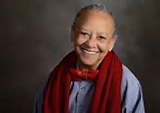 Her work is described as conveying “urgency in expressing the need for Black awareness, unity, [and] solidarity,” and is said to speak to all ages. She strives to make her work easily accessible and understood by both adults and children.
 “I am totally fascinated by people and our history as I understand and continue to explore it,” she said. “People have so much to give and so far to go and yet we have given and gone a great distance. It's really just interesting to ask: why not? And see where that takes me.”
Share A Writer’s Moment with a friend by clicking g+1 below.