Dan Jorgensen's Blog, page 473
July 16, 2016
An icon of 'poetic language'
“I try for a poetic language that says, This is who we are, where we have been, where we are. This is where we must go. And this is what we must do.”– Mari Evans Today marks renowned African-American poet Mari Evans’ 93rdbirthday.
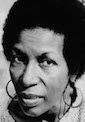 Best known, perhaps, for her poem "When In Rome,” taught in many high school and college English classes, she also contributed to and edited one of the first critical books devoted to the work of Black women writers, Black Women Writers (1950-1980): A Critical Evaluation.
 Evans published her first and most acclaimed book of poetry, I am a Black Woman, in 1970. Here for Saturday’s Poem is the title piece for that work.I am a Black woman I am a black woman
the music of my song
some sweet arpeggio of tears
is written in a minor key
and I
can be heard humming in the night
Can be heard
humming
in the night
I saw my mate leap screaming to the sea
and I/with these hands/cupped the lifebreath
from my issue in the canebrake
I lost Nat's swinging body in a rain of tears
and heard my son scream all the way from Anzio
for Peace he never knew .... I
learned Da Nang and Pork Chop Hill
in anguish
Now my nostrils know the gas
and these trigger tire/d fingers
seek the softness in my warrior's beard
I am a black woman
tall as a cypress
strong
beyond all definition still
defying place
and time
and circumstance
assailed
impervious
indestructible
Look
on me and be
renewed
Share A Writer’s Moment with a friend by clicking the g+1 button below.


July 15, 2016
Seeking and finding life's realities
“Writing is like getting married. One should never commit oneself until one is amazed at one's luck” – Iris Murdoch
An Irish-born writer and philosopher (on this date in 1919) Murdoch grew up in London and made her literary name with novels about good and evil, relationships, morality, and the power of the unconscious.
After starting her writing career with a series of philosophical essays, she published her first novel, Under the Net, in 1954, and was immediately catapulted onto the international literary scene. The novel was selected by both Time magazine and Modern Library as one of the 100 best English-language novels of the 20th century.

Murdoch went on to produce 25 more novels and many additional works of philosophy, poetry and drama. Among her many awards were The Booker Prize, The Whitbread Literary Award for Fiction, and the James Tait Black Award. Shortly before her death in 1999, she was awarded the Golden PEN Award for "a Lifetime's Distinguished Service to Literature.”
“We live in a fantasy world, a world of illusion,” Murdoch once wrote. “The great task in life is to find reality”
Share A Writer’s Moment with a friend by clicking the g+1 button below.
July 14, 2016
Creating a unique writing voice
“Every writer must find a way of writing that tells the reader: This is me and no one else. The Voice can be idiosyncratic, but it cannot be obscure. It is a blend of style and content and intent and rhythm and pure personality.”– Jeff Lindsay Jeff Lindsayis the pen name of American playwright and crime novelist Jeffry P. Freundlich, best known for his mystery-suspense novels about sociopathic vigilante Dexter Morgan – the “protagonist” (so to speak) of the dark book and cable TV series Dexter.
Born on this date in Miami in 1952, Lindsay studied writing at Vermont’s Middlebury College and broke onto the writing scene with several moderately successful suspense and “What If?” novels in the mid-to-late 1990s. Then he hit the jackpot with his first Dexterbook, Darkly Dreaming Dexter in 2004, although he had almost given up on it before Black Lizard/Vintage took a chance.
“I didn't expect any success at all,” he said about the books. “I was rejected by every publisher in the world and every agent in town.”
 Since then he’s had 7 more books in the series, all huge hits. The latest, Dexter Is Dead, was published late last year.
 Many of his earlier published works include co-writer credit to his wife Hilary Hemingway, the niece of Ernest Hemingway and an author in her own right. Like his wife’s famous uncle, Lindsay is concise and precise with his writing "voice" and style. “Good writing," Lindsay said, "does not come from verbiage but from words.”
Share A Writer’s Moment with a friend by clicking the g+1 button below.
July 13, 2016
'Self' writing led to 'world-wide' acclaim
“I don't mean it to sound egomaniacal, but in a way, for me, it was very useful to imagine that I was the only one who was taking pen in hand. I'd always been told that it was impossible to be published, so I was writing only for myself.”– Jane Hamilton
Born on this day in 1957, Hamilton grew up in Oak Park, IL, the youngest of five children, writing early in her life and accumulating many prizes for poetry and short stories even before she was out of high school. She said she always thought that even though she was not a particularly good speller that writing was what she was meant to do. “I just assumed that if you were a girl-child, you were supposed to grow up and write.”
Hamilton attended Carleton College in Northfield, MN, where I first met her in the 1990s during a speaking appearance there.
 In college, she continued along her literary pathway, earning a degree in English and heading off to be an editor at Dell Publishing for Children. But she got sidetracked en route, meeting her husband-to-be in Wisconsin and deciding to forego book editing to join his apple growing business – something they still do. But, since apple growing is “seasonal," she has had plenty of time to keep writing during “off season.”
Her first novel, The Book of Ruth, published in 1988, won the Hemingway Foundation/PEN Award, Great Lakes College Association New Writers Award, and the Wisconsin Library Association Banta Book Award for Best First Novel. She followed it with A Map of the World, firmly establishing herself in the writing world. Both books also became critically acclaimed films. Much of her work (she now has 6 best-selling novels) reflects her personal experiences, settings and characters.
E-books aside, she's an "old-fashioned" girl when it comes to books. “All I hope, selfishly,” she said, “is that there will be real books until the day I draw my last breath.”
Share A Writer’s Moment with a friend by clicking the g+1 button below.
July 12, 2016
To be a witness
“It's a journalist's job to be a witness to history. We're not there to worry about ourselves. We're there to try and get as near as we can, in an imperfect world, to the truth and get the truth out.” – Robert Fisk Born on this date in 1939, English writer and journalist Fisk grew up in the rural environs of England but became a reporter of the world. Since 1976, he has been the Middle East correspondent for various media - but primarily for The Independent - working from Beirut, Lebanon, intermittently one of the “hottest” of the Middle East hotspots. His reporting has earned him accolades from world leaders, the public, and his fellow journalists. He has been voted British International Journalist of the Year seven times. He’s also earned more British and international journalism awards than any other foreign correspondent and has published a number of books based on many of the wars and armed conflicts he’s covered. "I think it is the duty of a foreign correspondent to be neutral and unbiased on the side of those who suffer, whoever they may be." Despite his reporting successes, Fisk said covering war and people’s suffering has taken a toll on his own well-being.
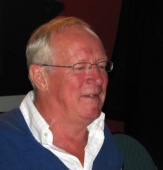 “I'm not sure whether I've been happy,” he said. “After my last book tour, I sat on my balcony with a cup of tea. I thought: 'You can't rewind the movie. I've spent more than half my life in the Middle East. There have been great moments, of course, but also great moments of horror, depression and loneliness.'”
 Share A Writer’s Moment with a friend by clicking the g+1 button below.
July 11, 2016
Recording, and wonderfully projecting
“I approach writing stories as a recorder. I think of my role as some kind of reporting device - recording and projecting.” – Jhumpa Lahiri
Born on this date in 1967, Lahiri is an Indian-American author and creative writing professor (at Princeton). After years of struggling to get even one story published, she finally broke through in 1999 and within a year had a collection that was worthy enough to not only be published – the startling Interpreter of Maladies – but to win the Pulitzer Prize for Fiction. It is one of the few story “collections” ever so-honored.
Her first novel, The Namesakeis equally wonderful. To not only experience what it’s like to have a name that is “different” but also relates to someone famous, read this book. It’s one of those books that you quietly curse under your breath as you realize it’s already 2 in the morning and you should be asleep. And, if you don’t have time to read it, find the film (by the same name). It’s a great adaptation. Lahiri, who is the first Indian-American to serve on the President's Committee on the Arts and Humanities,
 keeps busy with both teaching and writing, turning out terrific short stories every few months. Her most recent novel, The Lowland – is another “must read” for those who want to “know” the modern-day U.S. immigrant experience. It was a nominee for the Man Booker Prize and the National Book Award for Fiction.
 Although she didn’t grow up in India, she has learned much about it from her parents and says “It interests me to imagine characters shifting from one situation and one location to another for whatever the circumstances might be.” And, she added, finding just the right words, to say what needs to be said.
“In fiction, plenty (of words) do the job of conveying information, rousing suspense, painting characters, enabling them to speak. But only certain sentences breathe and shift about, like live matter in soil.
Share A Writer’s Moment with a friend by clicking the g+1 button below.
July 10, 2016
Touching people's lives
“If something in your writing gives support to people in their lives, that's more than just entertainment – which is what we writers all struggle to do; to touch people.” – Dean Koontz.
Koontz, born on this date in 1945, started as a writing teacher and decided to “practice what he preached,” in his spare time. His first novel, a science fiction thriller, was well-received, and soon he found that writing was really what he most enjoyed and was meant to do.
While he occasionally writes sci-fi yet today, most of what he does is suspense thrillers. And he also enjoys incorporating elements of fantasy, sci-fi and horror when he thinks a plot twist or special effect is in order.
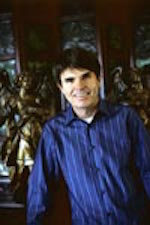 Meticulous in his approach, probably reverting back to his teaching days and how he advised his students, he noted, “I don't write a quick draft and then revise; instead, I work slowly page by page, revising and polishing.”
 His formula definitely works and to date more than two dozen of his books have been on The New York Times bestseller lists, and all of his books combined have sold over 450 million copies worldwide. Busy all the time, Koontz said he always has something going but never talks about it until it’s done.
“I never discuss a novel while I'm writing it, for fear that talking about it will diminish my desire to write it.”
Share A Writer’s Moment with a friend by clicking the g+1 button below.
July 9, 2016
Inspiring through her daily words
“Poetry is a political act because it involves telling the truth.”– June Jordan
Born on this date in 1936, Jordan was the daughter of Jamaican immigrants who became one of this nation's most acclaimed Black writers. She received dozens of writing honors, among them a Rockefeller grant for creative writing, a National Endowment for the Arts poetry fellowship, and an Achievement Award for International Reporting.
Known as "the Poet of the People,” she founded the "Poetry for the People" program at UC-Berkeley
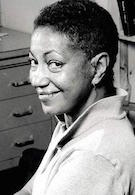 in 1991, it’s aim to inspire and empower students to use poetry as a means of artistic expression.
 For Saturday’s Poem, here is
These PoemsBy June Jordan
These poems
they are things that I do
in the dark
reaching for you
whoever you are
and
are you ready?
These words
they are stones in the water
running away
These skeletal lines
they are desperate arms for my longing and love.
I am a stranger
learning to worship the strangers
around me
whoever you are
whoever I may become.
Share A Writer’s Moment with a friend by clicking the g+1 button below.
July 8, 2016
That 'wonderful' sort of feeling
“It's a wonderful sort of feeling when people want to spend more time in a world you created.” – Erin Morgenstern
Morgenson is one of the writing world’s rising young stars. Born on this date in 1978, she also is a multimedia artist. Her novel, The Night Circus, winner of the Locus Award for Best First Novel, spent 17 weeks as the number one book on the New York Times best-seller list. It now has been published in more than a dozen languages.
Also is a testament to stick-to-it-iveness, Morgenson had more than 30 rejections before an insightful agent took on the book and got it published. The rest, as they say… A native of Massachusetts and graduate of prestigious
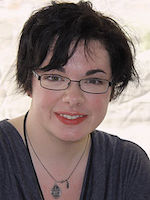 Smith College, she was a painter before a writer, studying both theater and studio art, and dabbling in magic – something that set the stage for her novel, which has been favorably compared with J.K Rowling’s Harry Potter series and works by Ray Bradbury.
 “I am a fan of magic and fantasy, particularly when it's grounded in reality,” she said. “I like the idea of having actual magic performed as stage magic, so you could assume that it was just a trick, that something is all smoke and mirrors, but there's that, like, feeling at the back of your mind: What if it's not?”
A self-proclaimed “binge writer,” she started writing as a participant in “National Novel Writing Month” – where you pledge to write a 50,000-word novel (or more if the spirit moves you) in less than 30 days. “I don't have as tight a time limit anymore, but I still write in long marathon sessions and then I won't write for a while,” she said. “I'm definitely not a write-every-day writer.”
Share A Writer’s Moment with a friend by clicking the g+1 button below.
July 7, 2016
Early to rise ... and amaze
“I get up at an unholy hour in the morning my work day is completed by the time the sun rises. I have a slightly bad back which has made an enormous contribution to American literature.” – David Eddings
Eddings made that statement shortly before his sudden death in 2009. The writing about which he spoke is an amazing output of epic fantasy series’ created in partnership with his wife Leigh. Born on this date in 1931, Eddings grew up in the Puget Sound area, and the idyllic and rugged region became the setting for some of his stories, including his first novel High Hunt, the story of four young men hunting deer. Like many of his later novels, it explores themes of manhood and coming of age.
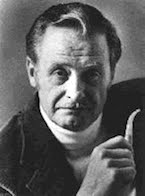 While he had only moderate success with those works, it was when he moved to fantasy that he made his mark. Eddings's call to the world of fantasy came from a doodled map he drew one morning before work. This doodle later became the geographical basis for his fictional world of Aloria.
A terrific chess player, too, Eddings took the suggestion of his wife that he incorporate some elements of chess into his books and combined with the new world he had imagined, he and Leigh wrote 5 best-selling series, starting in 1982. Their last best-selling series ended in in 2006 shortly before Leigh’s death. David died in 2009. That series, called “The Dreamers,” had characters who could use the powers of their dreams to foresee visions of the future. Often they seemed prophetic, but David pooh-poohed those who held him up as a great visionary.
“I'm a storyteller, not a prophet,” he once said with a laugh. “I'm just interested in telling a good story.”
Share A Writer’s Moment with a friend by clicking the g+1 button below.