Dan Jorgensen's Blog, page 471
August 4, 2016
Always at the cutting edge
“The best thing that can happen to people entering creative professions is the dwindling of all other possibilities.”– Dennis Lehane
Born on this day in 1965, Lehane has had striking success with both his novels and screenplays – but while many of his books have been made into successful films, he has rarely written those scripts himself, noting “I really didn’t have the desire to operate on my own baby.” Most noteworthy of his own books to film are the award-winning Gone, Baby, Goneand Mystic River. He did finally give in and help produce 2010’s Shutter Island,
 which also was very well received.
Many of his own screenplays have been for HBO series like The Wire and Boardwalk Empire, which won rave reviews for their smartly written scripts. Lehane said his initial plan was not to be a writer, “But from the moment I took my first writing workshop, I was a writer.”
Since achieving literary success he also has become a noted teacher of writing, giving back some of what first got him started. He taught advanced fiction writing at Harvard and since 2006 he has been writer-in-residence at Eckerd College (his alma mater) in Florida, usually during the spring semester. He also co-directs the Writers in Paradise conference there each January. Occasionally making guest appearances as himself on the ABC comedy/drama TV series Castle, he continues turning out one writing hit after another.
“I love to write,” he said, “so it rarely seems like work - even when it gets arduous.”
Share A Writer’s Moment with a friend by clicking the g+1 button below.


August 3, 2016
Loving writing, building foundations
“Research to me is as important or more important than the writing. It is the foundation upon which the book is built.” – Leon Uris
Born on this day in 1924, Uris started writing early – his first effort being an operetta about the death of his dog at age 6. But he struggled with language, eventually failing English 3 times in high school before dropping out at age 17.
A native Virginian, he was the son of immigrant parents and anxious to show that he was “a true American.” Thus, when the Japanese bombed Pearl Harbor, he convinced his parents to let him sign up for the Marines. Serving in the South Pacific, he fought in many battles, including Guadacanal – the basis for his first novel, (which I loved as a kid) Battle Cry. “That book was rejected 9 times,” he said later, “but it turned out to be a huge best seller.”
“I enjoyed writing,” he said. “ I think that mostwriters will tell you about the agony of writing more than the joy of writing, but writing is what I was meant to do.” In 1958 he wrote one of the all-time great books, Exodus, about the modern day founding of the state of Israel. It became an international publishing phenomenon, the biggest best seller in the United States since Gone With the Wind and number one on the New York Times bestseller list for two years.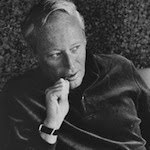
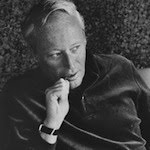
He wrote a number of other top sellers and many screenplays based on his works over the next two decades and then had another blockbuster, Trinity, about Northern Ireland’s longtime Catholic-Protestant “troubles.” Despite battling a debilitating renal illness, he continued writing until just weeks before his death in 2003.
“While you can try to reach an audience,” he said about his successes, “you just write what comes out of you and hope that it is accepted.”
Share A Writer’s Moment with a friend by clicking the g+1 button below.
August 2, 2016
A gradual, fulfilling journey
“I have likened writing a novel to going on a journey, with some notion of the destination I will arrive at, but not the whole picture - which emerges gradually as a series of revelations, as the journey goes along.”– Rose Tremain
English author Tremain, who was born on this day in 1943, is a historical novelist who approaches her subjects "from unexpected angles, concentrating her attention on unglamorous outsiders." First published in the 1960s, she has won most of historical fiction’s major awards. In 1988, she also began to share her talents with budding writers as a professor of creative writing at the University of East Anglia. By 2013, she had been appointed the University’s Chancellor, a post she still holds.
Side-by-side with her academic career has been a writing career worthy of Britain’s prestigious Whitbread Prize for Best Novel (Music and Silence) in 1999; the Orange Prize, given to Britain’s top female writer, for The Road Home in 2008; and the Walter Scott Prize for Historical Fiction for Merivel: A Man of His Time in 2013.
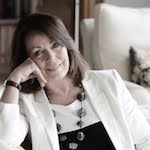
Tremain said even though her work is “historical,” there’s a bit of herself in each of her characters, male and female, and she always goes into her writing with the belief that the day’s output is waiting to be discovered. “I'm always amazed by writers who tell me they plan everything at the beginning,” she said. “I feel their writing days must be very bland.”
Share A Writer’s Moment with a friend by clicking the g+1 button below.
August 1, 2016
Milestone Achieved - A Writer's Moment
<!-- /* Font Definitions */ @font-face {font-family:"MS 明朝"; mso-font-charset:78; mso-generic-font-family:auto; mso-font-pitch:variable; mso-font-signature:-536870145 1791491579 18 0 131231 0;} @font-face {font-family:"Cambria Math"; panose-1:2 4 5 3 5 4 6 3 2 4; mso-font-charset:0; mso-generic-font-family:auto; mso-font-pitch:variable; mso-font-signature:-536870145 1107305727 0 0 415 0;} @font-face {font-family:Cambria; panose-1:2 4 5 3 5 4 6 3 2 4; mso-font-charset:0; mso-generic-font-family:auto; mso-font-pitch:variable; mso-font-signature:-536870145 1073743103 0 0 415 0;} /* Style Definitions */ p.MsoNormal, li.MsoNormal, div.MsoNormal {mso-style-unhide:no; mso-style-qformat:yes; mso-style-parent:""; margin:0in; margin-bottom:.0001pt; mso-pagination:widow-orphan; font-size:12.0pt; font-family:Cambria; mso-ascii-font-family:Cambria; mso-ascii-theme-font:minor-latin; mso-fareast-font-family:"MS 明朝"; mso-fareast-theme-font:minor-fareast; mso-hansi-font-family:Cambria; mso-hansi-theme-font:minor-latin; mso-bidi-font-family:"Times New Roman"; mso-bidi-theme-font:minor-bidi;} .MsoChpDefault {mso-style-type:export-only; mso-default-props:yes; font-family:Cambria; mso-ascii-font-family:Cambria; mso-ascii-theme-font:minor-latin; mso-fareast-font-family:"MS 明朝"; mso-fareast-theme-font:minor-fareast; mso-hansi-font-family:Cambria; mso-hansi-theme-font:minor-latin; mso-bidi-font-family:"Times New Roman"; mso-bidi-theme-font:minor-bidi;} @page WordSection1 {size:8.5in 11.0in; margin:1.0in 1.25in 1.0in 1.25in; mso-header-margin:.5in; mso-footer-margin:.5in; mso-paper-source:0;} div.WordSection1 {page:WordSection1;} </style><span style="font-family: "Times New Roman"; mso-fareast-font-family: "Times New Roman";"><br /></span></div><div class="MsoNormal" style="line-height: 200%;"><span style="font-family: "Times New Roman"; mso-fareast-font-family: "Times New Roman";"> <a href="http://1.bp.blogspot.com/-ImRZmzZZMkw..." imageanchor="1"><img border="0" src="https://1.bp.blogspot.com/-ImRZmzZZMk..." /></a></span></div><div class="MsoNormal" style="line-height: 200%;"><span style="font-family: "Times New Roman"; mso-fareast-font-family: "Times New Roman";"> Today marks the 731<sup>st</sup>consecutive entry – two full years (including this leap year's "extra" day) – of producing entries for “A Writer’s Moment.”<span style="mso-spacerun: yes;"> </span>The readership continues to grow, a sign I think that the vignettes I am choosing about writers, their successes, and the words they have to share are both inspirational and enjoyable.<span style="mso-spacerun: yes;"> </span> </span></div><div class="MsoNormal" style="line-height: 200%;"><br /></div><div class="MsoNormal" style="line-height: 200%;"><span style="font-family: "Times New Roman"; mso-fareast-font-family: "Times New Roman";">And, it has been a shot in the arm for my own writing, too.<span style="mso-spacerun: yes;"> </span>As I’ve learned more about other writers’ lives and their works, it’s both encouraged and inspired me in moving forward with the writings I want to do.</span></div><div class="MsoNormal" style="line-height: 200%;"><br /></div><div class="MsoNormal" style="line-height: 200%;"><span style="font-family: "Times New Roman"; mso-fareast-font-family: "Times New Roman";">For those blog readers who also are writers and might be similarly inspired, keep at it.<span style="mso-spacerun: yes;"> </span>Writers need to encourage other writers as much as they need to hear words of affirmation from the reading public, or from those who do reviews.<span style="mso-spacerun: yes;"> </span>For those who are reading simply for entertainment or to learn more about writers’ lives and what they have to say, thank you. And thanks for telling others.</span></div><div class="MsoNormal" style="line-height: 200%;"><br /></div><div class="MsoNormal" style="line-height: 200%;"><span style="font-family: "Times New Roman"; mso-fareast-font-family: "Times New Roman";">And now, on to Year 3.<span style="mso-spacerun: yes;"> </span>Many, many writer’s moments are waiting to be shared.</span></div><div class="MsoNormal"><br /></div><div class="MsoNormal"><br /></div><div class="MsoNormal"><br /></div><div class="MsoNormal"><br /></div><div class="MsoNormal" style="line-height: 200%;"><b style="mso-bidi-font-weight: normal;"><span style="font-family: "Times New Roman"; mso-fareast-font-family: "Times New Roman";">Share <i style="mso-bidi-font-style: normal;">A Writer’s Moment</i> with a friend by clicking the g+1 button below.</span></b></div>
July 31, 2016
Quietly exposing a hidden past
“Something happens between a novel and its reader which is similar to the process of developing photographs, the way they did it before the digital age. The photograph, as it was printed in the darkroom, became visible bit by bit. As you read your way through a novel, the same chemical process takes place.”– Patrick Modiano
French writer Jean Patrick Modiano, who turned 71 yesterday, is the 2014 recipient of the Nobel Prize in literature, presented in recognition of his amazing and powerful lifetime body of work. Interestingly, his many award-winning works, first produced in French, were not published in English until after the Nobel. But they were known worldwide, having been translated into more than 30 other languages.
Modiano's novels all delve into the puzzle of identity, and of trying to track evidence of existence through traces of the past. Obsessed with the troubled and shameful period of the World War II German Occupation of France—during which his father allegedly engaged in shady dealings—Modiano returns to this theme in all 30 of his novels.
A quiet, introspective man, he said “Writing is a strange and solitary activity.” He started early, wanting an outlet to say something about things he had learned about those War years. His first novel La Place de l'étoile (roughly translated as the place for the star) was published when he was just 22. Thus he
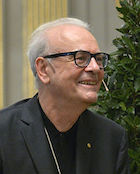 always encourages young writers to both follow their dreams and not to despair.
“Encourage aspiring writers to continue writing when things are going against them, when it feels hard,” he said. “Explain the typical obstacles that occur, and encourage and reassure them to continue, never to give up.”
Share A Writer’s Moment with a friend by clicking the g+1 button below.
July 30, 2016
Poetic thoughts on living, and life
Usually on Saturday I have a “Saturday’s Poem” to share. But today, as we end July and start the trek toward summer’s end, I thought just a few quotes about poetry would be in order – all by poets who were born in the month of July. Poetry enriches and enhances all of our lives, and for writers it is a terrific way to both express yourself and to capture the essence of a subject, or the world around you. Enjoy!
***“I like poems you can tack all over with a hammer and there are no hollow places.” – John Ashbery
***
“The poetry of a people comes from the deep recesses of the unconscious, the irrational and the collective body of our ancestral memories.” – Margaret Walker
***
“Nobody, I think, ought to read poetry, or look at pictures or statues, who cannot find a great deal more in them than the poet or artist has actually expressed. Their highest merit is suggestiveness.” – Nathaniel Hawthorne
***
“Poetry is above all a concentration of the power of language, which is the power of our ultimate relationship to everything in the universe.” – Adrienne Rich
***May your remaining summer days be filled with poetic images that will enhance your writing world and lead to countless “writer’s moments.”
Share A Writer’s Moment with a friend by clicking the g+1 button below.
July 29, 2016
Observe life, then write it
“When I read good stories, I want to write good stories too.”– Sharon Creech
And so she has. Born this day in 1945, Creech is the first American to win both Britain’s Carnegie Medal for Children’s Books and America’s Newbery Medal – for her amazing Walk Two Moons. Those two major international awards were just two of dozens of awards Creech has earned and convinced her to devote herself to writing full time, noting in her understated fashion, “There seemed to be an audience out there who wanted to read what I wanted to write.”
Her writing career, primarily aimed at the young adult market (although adults are a big audience for her works, too) has been focused on both novels and picture books. She embeds serious topics into her stories, including themes of independence, trust, childhood, adulthood, and death, but often softening the blow with her effective use of humor. “One thing I'm interested in is what shapes us: the people?
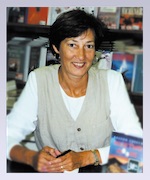 The place where we live? It's both of those and more. That's what I keep coming back to,” she said.
 As for advice to new writers, she says, “Read a lot, live your life, and listen and watch, so that your mind fills up with millions of images.”
Share A Writer’s Moment with a friend by clicking the g+1 button below.
July 28, 2016
Exploring life's coincidences
“I write for children because I am interested in fantasy and the possibilities for experience of all kinds before the time of compromise. I believe that children are far more perceptive and wise than American books give them credit for being.” – Natalie Babbitt
Happy 85th Birthday today to the author of one of my all-time favorite books, Tuck Everlasting. While Natalie Babbitt created this tale for young people, it touches each and every one of us and leaves us with both the “awe” factor and the “I wonder what would happen if?” factor as it deals with life, aging and death.
If you haven’t read it, go read it. If you want to hear more about it and Natalie herself, there’s a wonderful interview with her in the archives of National Public Radio, done in 2015 on the 40th anniversary of Tuck’s publication.
Growing up in Ohio where she wanted to be an artist, and in particular an illustrator, she entered the writing world because she had things to share with her art and some of it needed words to accompany those illustrations. Fortunately, for us all, it is one of those “necessity is the mother of invention” things that led to a benefit for readers everywhere.
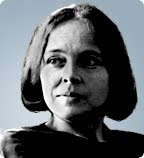
In 2012, Babbitt was awarded the inaugural E.B. White Award for achievement in children's literature by the American Academy of Arts and Letters. In commentary about her writing, New York Times reviewer George Woods said, “Mrs. Babbitt creates a plausible world and peoples it with believable humans, but the most satisfaction comes from the pleasure of her company as she effortlessly takes the reader in velvet-gloved hand to point out life's coincidences and near misses.”
Share A Writer’s Moment with a friend by clicking the g+1 button below.
July 27, 2016
Fascinated by behavior
“As a novelist, I'm endlessly fascinated by human behavior and interactions.”– Juliet Marillier A New Zealand native who now lives in Australia, Marillier was born on this date in 1948 and while she was a lifelong self-procliamed “lover of fantasy,” she didn’t start writing her own versions until 1999. Earlier, she focused on music, both on the performing side and in teaching and conducting. She got into writing with the book Daughter of the Forest, loosely based on the legend of the Children of Lir and "The Six Swans” (a story that has many versions, including one by the Brothers Grimm). That book kicked off her “Sevenwaters Trilogy,” and the second in the series, Son of the Shadows, won Australia’s top fantasy fiction award. Marillier’s novels combine historical fiction, folkloric fantasy, romance and family drama, and the strong elements of history and folklore in her work reflect her lifelong interest in both fields. However, her stories focus above all on human relationships and the personal journeys of the characters. “Each of my novels features a protagonist undertaking a difficult personal journey. On the way, each of these characters - mostly female - discovers something about herself and at the same time makes an impact on other people's lives,” she said.
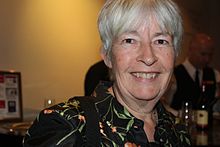 Since 1999 she has written 20 novels and dozens of short stories, 5 which have won Aurealis Awards and 4 the Sir Julius Vogel Award. She’s also been named for the American Library Association’s Alex Award, and France’s Prix Imaginales.
 Noted for her great characters, she said that to write convincing characters, “You must possess the ability to think yourself into someone else's skin.”
Share A Writer’s Moment with a friend by clicking the g+1 button below.
July 26, 2016
Journalism lays the writing 'foundation'
“The best writers who have put pen to paper have often had a journalism background.“ – Rick Bragg
Pulitzer Prize-winning journalist Rick Bragg was born on this date in 1959 in Piedmont, AL, and credits his development as a writer to his ability to be a good listener. Bragg wrote for several small newspapers before gravitating to the New York Timeswhere he became a national correspondent and then Miami Bureau Chief, covering the controversial story of young Cuban Elian Gonzalez and earning the Pulitzer for his efforts.
Among Bragg's best-known books are All Over But the Shoutin’, the story of his turbulent childhood in Alabama; and two high-profile biographies, one about POW Jessica Lynch I Am A Soldier Too, and the other about rock-and-roller Jerry Lee Lewis.
The winner of more than 50 writing awards, he is now a professor of journalism at the University of Alabama, and always hearkens back to journalism as a great foundation for any writer, a premise with which I fully agree. Learning to be a reporter teaches attention to detail, how to deal with deadlines, how to “listen” to both what is being said and what is left unsaid, and how to organize a story so that it flows to a satisfying conclusion.
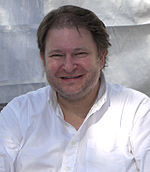
“People who think there is something pedestrian about journalism are just ignorant,” Bragg said. “I don't think there's a difference between writing for a newspaper or magazine and doing a chapter in a book.”
Share A Writer’s Moment with a friend by clicking the g+1 button below.