Dan Jorgensen's Blog, page 468
September 3, 2016
Nothing too insignificant for a poem
“Nothing is too small. Nothing is too, quote-unquote, ordinary or insignificant. Those are the things that make up the measure of our days, and they're the things that sustain us. And they're the things that certainly can become worthy of poetry.” – Rita Dove
Born in 1952, Rita Dove is the second African American to receive the Pulitzer Prize for Poetry, in 1987. And, she served as the Poet Laureate of Virginia from 2004 to 2006.
Today, for Saturday’s Poem, here is Dove’s
Autobiography of a Fifth GraderI was four in this photograph fishing
with my grandparents at a lake in Michigan.
My brother squats in poison ivy.
His Davy Crockett cap
sits squared on his head so the raccoon tail
flounces down the back of his sailor suit.
My grandfather sits to the far right
in a folding chair,
and I know his left hand is on
the tobacco in his pants pocket
because I used to wrap it for him
every Christmas. Grandmother's hips
bulge from the brush, she's leaning
into the ice chest, sun through the trees
printing her dress with soft
luminous paws.
I am staring jealously at my brother;
the day before he rode his first horse, alone.
I was strapped in a basket
behind my grandfather.
He smelled of lemons. He's died—
but I remember his hands.
Share A Writer’s Momentwith a friend by clicking the g+1 button below.


September 2, 2016
The days that 'test' you
“The most important lesson my parents taught me is that writing is a job, one that requires discipline and commitment. Most of the time it's a fun job, a wonderful job, but sometimes it isn't, and those are the days that test you.”– Jesse Kellerman
Kellerman, who celebrated his 38thbirthday yesterday, is a Los Angeles native and oldest son of the bestselling mystery novelists Faye Kellerman and Jonathan Kellerman. While he studied psychology at Harvard and playwriting at Brandeis University, it didn’t take long for him to gravitate to “the family business,” and since the arrival of his first novel in 2006 (Sunstroke) he has had 5 bestsellers of his own.
“All my books deal with the effect of intent upon action, how our understanding of good and evil depends heavily on context,” he said.Most recently, he collaborated with his father
 on The Golem of Hollywood. The psycho-suspense thriller combines Jonathan 's affinity for police procedures and Jesse 's use of unusual psychological suspense in a hunt for a murderer linked to a Jewish legend.
When asked what it’s like to follow in the footsteps of not one, but two famous writers and try to live up to their legacy, he noted, “All writers start out mimicking other writers. I've never relinquished that. I have a good ear for speech and writing patterns.”
Share A Writer’s Moment with a friend by clicking the g+1 button below.
September 1, 2016
Writing something 'truly original'
“I love writing both fiction and memoir. Both have unique challenges; bottom line, fiction is hard because you have to come up with the credible, twisty plot, and memoir is hard because you have to say something true and profound, albeit in a funny way.” – Lisa Scottoline
Born in Philadelphia, Scottoline earned an undergraduate degree, as well as a law degree from the University of Pennsylvania and later became a litigator at a law firm there. After the birth of her daughter she started writing as a way to earn money from home and her first novel, the legal thriller Final Appeal, won the 1995 Edgar Award for "Best Paperback Original Mystery,"
She has since written 14 bestselling novels, including Look Again and Don't Go, both which reached number two on the New York Times Best Seller List. Her novels have been translated into 25 languages. In recent years she’s done a number of “memoir” pieces with humor at the heart of her work, including the bestselling and hilarious Does This Beach Make Me Look Fat?: True Stories and Confessions, with Francesca Serritella.
“I love writing, I love books, and I love reading,” she said. “I read anything, including cereal boxes. I care deeply about what people think of my books, and I memorize my reviews. (And) I love to hear from my readers.

“Every writer, whether it's fiction or nonfiction, is trying to write something truly original, and that's what I think I'm doing.”
Share A Writer’s Moment with a friend by clicking the g+1 button below.
August 31, 2016
A great idea finding its time
“A great idea is usually original to more than one discoverer. Great ideas come when the world needs them. Great ideas surround the world's ignorance and press for admission.” – Elizabeth Stuart Phelps
An early feminist American author and intellectual, Phelps (born on this date in 1844) was the daughter of a Congregational minister and writer mother. She began her own writing as a young girl and was noted for her “gift for telling stories.” One source noted, "She spun amazing yarns for the children she played with. And her schoolmates of the time and a little farther on talk with vivid interest of the stories she used to improvise for their entertainment.” At age 13, she had a story published in the national reader Youth's Companion, and from that point through her teens her youth stories appeared in various national publications.
As an adult, after studying at Abbot Academy, she continued her writing career and became one of America’s most popular writers. In addition to her hundreds of short stories, she penned 57 volumes of fiction, poetry and essays. In all of these works she challenged the prevailing view that woman's place and fulfillment resided in the home. Instead Phelps' work depicted women as succeeding in nontraditional careers as physicians, ministers, artists and, of course, writers. She was widely sought after as a speaker, and in 1876
 she became the first woman to present a lecture series at Boston University on the topic “Representative Modern Fiction.”
A modest person despite her great successes and influence, she noted, “It is not the straining for great things that is most effective; it is the doing the little things, the common duties, a little better and better.”
Share A Writer’s Moment with a friend by clicking the g+1 button below.
August 30, 2016
Keeping storytelling alert
“I think stories do have an ending. I think they need to have an ending eventually because that is a story: a beginning, middle and end. If you draw out the end too long, I think storytelling can get tired.”– Melissa Rosenberg
Born on this date in 1962, Rosenberg is an American screenwriter who has won Emmys, Writers Guild of America and Peabody Awards for her work in both film and television.
A California native, she started writing plays as a child, getting neighborhood kids to perform them and planting the writing bug that continued on through adulthood. After studying and working in New York, she moved back to California, graduated from the University of Southern California and began her screenwriting career.
Among her successes were the immensely successful TV series Dexter and The Twilight Saga; episodes of many other sitcoms and drama series; and the dance movie Step Up. In recent years she has become a strong advocate for writing
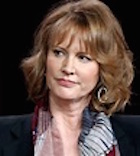 in the schools, particularly helping young girls develop skills that can be used for later careers such as her own.
“I am involved with 'Write Girl,' which is such a great organization, because they go into inner city schools and work with underprivileged girls to pair them up with other writers,” she said. “And it gets them learning to express themselves and become familiar with their own voice. They have a 100% success ratio getting those girls into college.”
Share A Writer’s Moment with a friend by clicking the g+1 button below.
August 29, 2016
Roosevelt's commentary still on the mark
“A typical vice of American politics is the avoidance of saying anything on real issues.” – Theodore Roosevelt
Even 125 years ago American statesman, author, explorer, soldier, naturalist, and reformer Theodore “Teddy” Roosevelt was right on the mark with his observance of what makes politics so frustrating for the average citizen.
This past weekend I had the chance to see and read more about our 26th President – who has an integral role in my novel And The Wind Whispered– while visiting family and friends in Washington, DC. One of our stops was at the National Portrait Gallery where we saw portraits of all of our Presidents, and read more about what they had to say about their times in office. I also took the opportunity to “pose” with Theodore for this photo.

Then, much to my surprise, the very next day while visiting one of our DC area national parks,
 who should be making the rounds than old Teddy himself. He graciously agreed to pose with me and talk about my book and what “his role” was within its pages, reminding me that he, too, was a writer, which might be an understatement at best.
In his liftetime, Roosevelt was a prolific author, writing with passion on subjects ranging from foreign policy to the importance of the national park system. Roosevelt was also an avid reader of poetry. Poet Robert Frost said that Roosevelt "was our kind. He quoted poetry to me. He knew poetry." Roosevelt wrote 18 books (each in several editions), including his autobiography and left us with myriad inspirational examples of how to live life and sayings on the same.
“Believe you can,” Roosevelt advised, “and you're already halfway there.”
Share A Writer’s Moment with a friend by clicking the g+1 button below.
August 28, 2016
The 'magic' of writing
“The nice thing about being a writer is that you can make magic happen without learning tricks.” – Humphrey Carpenter
While he is noted for his writing, he was also extremely well-known in England for his long career on BBC Radio before his death in 2005. And, he made a name for himself in the entertainment world as a versatile musician. An accomplished player of the piano, the saxophone, and the double-bass, he did the last instrument professionally in a dance band in the 1970s. And, in 1983, he formed a 1930s style jazz band, Vile Bodies, which for many years enjoyed a residency at the Ritz Hotel in London.
Carpenter also founded the Mushy Pea Theatre Group, a children's drama group based in Oxford, which premiered his Mr Majeika: The Musical in 1991 and Babes, a musical about Hollywood child stars.
Carpenter’s notable writing output was primarily biographies, including The Inklings: CS Lewis, JRR Tolkien, Charles Williams and their Friends (winner of the 1978 Somerset Maugham Award); J. R. R. Tolkien: A Biography; Ezra Pound (winner of the Duff Cooper Memorial Prize); and Benjamin Britten. And he won numerous friends for both himself and his writing with his own humorous autobiography.
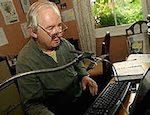
“Autobiography,” he said with a chuckle, “is probably the most respectable form of lying.”
Share A Writer’s Moment with a friend by clicking the g+1 button below.
August 27, 2016
Spoon River sampler
“How shall the soul of a man be larger than the life he has lived?”– Edgar Lee Masters
Masters wrote 12 plays, 6 novels, 6 biographies and an amazing 21 books of poetry. Among his works were Songs and Satires, Spleen, Lincoln: The Man, and Illinois Poems.
An attorney first, he practiced with Clarence Darrow in Chicago and was well-known as a defender of the poor and downtrodden. But writing was his passion and while he wrote many, many acclaimed works, his best-known grew out of his growing-up years in Lewiston, IL. The culture around Lewistown, in addition to the town's cemetery at Oak Hill, and the nearby Spoon River were the inspirations for many of his works, most notably the Spoon River Anthologywhich was built on tales about the people there.
Today, for Saturday’s Poem, is one of the 260 poems in Spoon River, from the viewpoint of the farmer, Abel MelvenyI bought every kind of machine that's known --
Grinders, shellers, planters, mowers,
Mills and rakes and ploughs and threshers --
And all of them stood in the rain and sun,
Getting rusted, warped and battered,
For I had no sheds to store them in,
And no use for most of them.
And toward the last, when I thought it over,
There by my window, growing clearer
About myself, as my pulse slowed down,
And looked at one of the mills I bought --
Which I didn't have the slightest need of,
As things turned out, and I never ran --
A fine machine, once brightly varnished,
And eager to do its work,
Now with its paint washed off --
I saw myself as a good machine
That Life had never used.
Share A Writer’s Moment with a friend by clicking the g+1 button below.
August 26, 2016
Language begins with listening
“I believe in communication; books communicate ideas and make bridges between people.” – Jeanette Winterson
The award-winning English writer Winterson, who celebrates her 57th birthday this week, first became famous for her book, Oranges Are Not the Only Fruit, a semi-autobiographical novel about a sensitive teenage girl rebelling against conventional values.
Some of her other novels have explored gender polarities and sexual identity. Winterson is also a broadcaster and a professor of creative writing. “My books always begin with a sentence and an image - not necessarily connected,” Winterson said.
After winning a basketful of top awards for Oranges, Winterson followed up by winning the prestigious John Llewellyn Rhys Prize for The Passion, a novel set in Napoleonic Europe. As a writer of historical fiction, I like to hold up this book up as an example of “how to do it right.”
A two-time winner of the Lambda Literary Award,
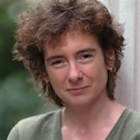 Winterson was made an officer of Order of the British Empire (OBE) in 2006 “For services to literature.” One of the best of those “services” is her sensitivity to the lives of others and her terrific portrayal of what she’s witnessed and heard.
“Everything in writing begins with language,” she said, “and language begins with listening.”
Share A Writer’s Moment with a friend by clicking the g+1 button below.
August 25, 2016
Preserving our quotes and sayings
“The wisdom of the wise and the experience of the ages is preserved into perpetuity by a nation's proverbs, fables, folk sayings and quotations.”– William Feather
Feather, born on this day in 1889, was an American
 publisher and author based in Cleveland, OH, where he built a publishing empire and shared dozens and dozens of those quotes and fables through his writings.
Born in Jamestown, NY, Feather came to Cleveland in 1903, and after earning a degree from Western Reserve University in 1910, he began working as a reporter for the Cleveland Press. In 1916, he established the William Feather Magazine, and also wrote for other magazines like H.L. Mencken's The American Mercury. His successful printing business produced several of his own books, including the simply titled but highly sought-after How to Get Ahead.
He also wrote the best-selling The Business of Life and one of the first “How-To" guides, How To Set Up a Family Budget. In his writings he espoused thrift, industry, promptness, perseverance, and dependability. He also was a spokesman and advocate for books of all kinds. “Books,” he said, “open your mind, broaden your mind, and strengthen you as nothing else can. Finishing a good book is like leaving a good friend.”
Share A Writer’s Moment with a friend by clicking the g+1 button below.