Dan Jorgensen's Blog, page 464
October 13, 2016
Shift focus and 'Play Ball'
“Baseball is a game that shouts, 'Slow Down' to America. Stop tweeting, texting, blogging, watching cable news, and obsessing about polls, lost planes, and focus-group-driven politicians.” – Mike Barnicle
A native of Massachusetts and longtime journalist for both print and electronic media, Barnicle has authored thousands of columns about American life, politics, religion and sports. I was reminded of his writing, particularly about baseball, while watching the exciting first-round playoff series between the Chicago Cubs and San Francisco Giants and thinking how this time of the year – league playoffs and World Series season – is always such a good one for those of us who love THE GAME.
As a former baseball writer (I spent a year covering the Cincinnati Reds' Triple A team for a Gannett newspaper) and practitioner of the game -- since 3rd grade -- I'm always gladdened when the playoffs and World Series arrive. And that's especially true this year, with all the uproar and negativity surrounding us during the Presidential campaign. It's gratifying to focus instead on a sporting event that has been part of America's culture for over 150 years.
Barnicle put it so well in one of his own remembrances: “That's one of the great gifts of this, the greatest of all games, baseball: it allows you, still, to lose yourself in a dream, to feel and remember a season of life when summer never seemed to die and the assault of cynicism hadn't begun to batter optimism.”Today is Barnicle’s 73rdbirthday and it’s
 been enjoyable to look up some of his award-winning columns and view some clips from his appearances on Morning Joe, Hardball With Chris Matthews, The Today Show, and 60 Minutes (Some, but definitely not all of the TV and radio programs on which he has so often appeared).
Recently he lamented about America’s immersion into technology and how it has affected the way we receive and digest events. “Everyone has a smart phone, and everything is recorded,” he said. “One event spills into another. Conclusions come quickly at the near total expense of consideration of what just actually happened.” Let's focus, instead, on something positive. Play ball!
Share A Writer’s Moment with a friend by clicking the g+1 button below.


October 12, 2016
Writing -- It's what you do
“Writers spend three years rearranging 26 letters of the alphabet. It's enough to make you lose your mind day by day.” – Richard Price
Price, a native New Yorker (The Bronx) who still makes his home there (Harlem), is one of America’s top contemporary novelists and screenwriters. Perhaps best known for his books The Wanderers and Clockers, both also made into movies, he is celebrating his 67th birthday today. Price's novels explore late-20th century urban America (set in New Jersey) in a gritty, realistic manner that has brought him considerable literary acclaim.
He also has earned acclaim for his many outstanding screenplays and television episodes. His award-winning movie The Color of Money earned him an Oscar nomination,and many of his others – Life Lessons (the Martin Scorsese segment of New York Stories); Sea of Love; Mad Dog and Glory; Ransom; and Shaft – all were highly praised. On HBO, his works have included episodes of the long-running The Wire and the recent – and amazing, I might add – mini-series, The Night Of.
Inducted into the American Academy of Arts and Letters in 2009, he was the recipient of that organization’s top literary prize in 1999. Driven to be a writer from an early age, he started seriously writing while in graduate school at New York’s Columbia University. “I write because I write - as anyone in the arts does,” he said.
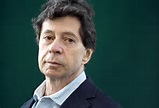 “You're a painter because you feel you have no choice but to paint. You're a writer because this is what you do.”
Share A Writer’s Moment with a friend by clicking the g+1 button below.
October 11, 2016
A singular lifelong style
“I'm not aware of a cadence when writing, but I hear it after. I write in longhand, and that helps. You're closer to it, and you have to cross things out. You put a line through it, but it's still there. You might need it. When you erase a line on a computer, it's gone forever.” – Elmore Leonard
I’ve written about Leonard in the past, but on what would have been his 91st birthday today, I couldn’t resist another bit of reminiscence about one of America’s greatest writers of “realism” in the past century. A novelist, short story writer, and screenwriter, his earliest novels, published in the 1950s, were Westerns, but he went on to specialize in crime fiction and suspense thrillers, many of which have been adapted into movies and TV shows (Count me as a big fan of his Justified books and TV series). To call Leonard’s writing “gritty,” might be an understatement,
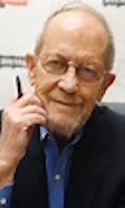 but regardless of how you classify it, it’s excellent. He shares a segment of America’s culture and dialogue that few other writers have been able to match. To get a sense of how he developed his works, look at his essay (widely available on the Internet) “Elmore Leonard’s 10 Rules of Writing.” In that, the most telling one might be: “If it sounds like writing . . . rewrite it.”
“Everyone has his own sound. I'm not going to presume how to tell anybody how to write,” he said in an interview shortly before his death in 2013. “I think the best advice I give is to try not to write. Try not to overwrite, try not to make it sound too good. Just use your own voice. Use your own style of putting it down.”
Share A Writer’s Moment with a friend by clicking the g+1 button below.
October 10, 2016
The start of Happy Trails
“When a man ain't got no ideas of his own, he'd ought to be kind o' careful who he borrows 'em from.” – Owen Wister
Wister, a Harvard classmate and close friend of Theodore Roosevelt, is often called “The father of the Cowboy novel,” a title given to him after he wrote The Virginian.On our current trip to Wyoming, Montana and Idaho, we had the good fortune to tromp over a lot of ground that Wister tromped across when gathering background for that famous book – often running across photos and quotes from him in hotels and on ranches where he visited.
Wister began his literary work in 1891 after spending several summers in the West, making his first trip to Wyoming in 1885. Like Roosevelt, Wister was fascinated with the culture, lore and terrain of the region. In the historical museum at the north end of Yellowstone National Park, we found information about his 1893 visit there, where he met the great Western artist Frederic Remington and began a lifelong friendship.
The Virginian, written in 1902, is the story of a cowboy who is a natural aristocrat. Set against a highly mythologized version of Wyoming’s Johnson County War, it takes the side of the large landowners. Wildly successful, it was reprinted a remarkable 14 times in its first 8 months alone and has continuously been in print ever since. All told, Wister wrote 8 novels, 13 nonfiction books – including one about his friendship with Roosevelt – 6 story collections, including The West of Owen Wister: Selected Short Stories, published posthumously. He also authored numerous essays and poems, several plays and even a number of operas.
Visiting Johnson County, which also is regarded as the base for Craig Johnson’s modern day series of novels and TV series Longmire, was a terrific experience – including reading Wister’s handwritten comments posted on a wall of “famous visitors” in the historic Occidental Hotel in downtown Buffalo, the county seat.
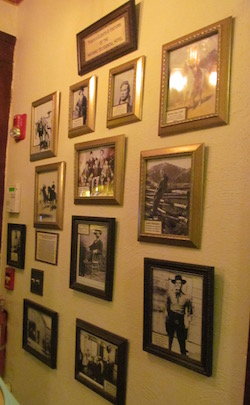
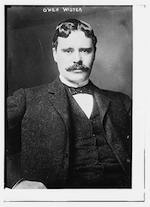
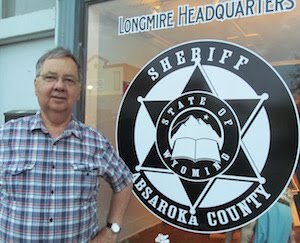
The Wall of Famous Old West Visitors in the Occidental Hotel; Wister's portrait in 1905; & stopping at “Longmire” headquarters, just down the street from the Occidental in Buffalo, WY.
Share A Writer’s Moment with a friend by clicking the g+1 button below.
October 9, 2016
Caring and writing for everyone
“I just want people to get lost in the story and at the end kind of sag and say, 'That was fun.' It's hardly my desire for them to sit and think, 'What a great literary image.'” – Michael Palmer
Palmer, born on this day in 1942, was an American physician and author whose novels are often referred to as medical thrillers.
Palmer once claimed he never wanted to be a writer and didn’t think he had much "flair" for it, even though several made the New York Times Best Seller List and his works have now been translated into 35 languages. His 1991 book Extreme Measureswas adopted into a 1996 film.
A graduate of Wesleyan University, he said he was enticed into trying his hand at writing after fellow Wesleyan alum and doctor Robin Cook wrote the hugely successful book Coma. He said he thought that if Cook could write a novel, he could too. Ultimately, up until his death from a heart attack
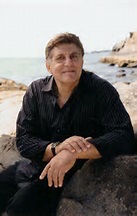 in 2013, he wrote 21 of them – the last 3 published posthumously. But, he continued practicing medicine the entire time, noting: “It seemed to me that I was put on earth to take care of people. That is what I should be doing, and I never got tired of it.”
Share A Writer’s Moment with a friend by clicking the g+1 button below.
October 8, 2016
A 'recorder' of daily emotions
“A poem records emotions and moods that lie beyond normal language, that can only be patched together and hinted at metaphorically.” – Diane Ackerman
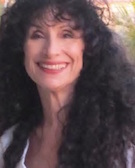
Born this week in 1948, Ackerman is known for her poetic explorations of the natural world and her wide variety of topics. Among her books of poetry is The Planets: A Cosmic Pastoral, which may have been influenced by the fact that she had astronomer Carl Sagan, creator of the TV series Cosmos, on her dissertation committee.
The Cher look-alike has authored 14 nonfiction books, 7 books of poetry and 3 children’s books and won numerous awards. In 2015, her book The Human Age won the National Outdoor Book Award and New England's Henry David Thoreau Prize for nature writing. She’s also been a finalist for both a Pulitzer Prize and a National Book Critics Circle Award for One Hundred Names for Love.
Usually I have a poem from our featured poet for Saturday, but Ackerman’s work is not available for reprint, so instead, I close this look at my selection for Saturday’s Poet with one more interesting quote, to show a bit of her writing style.”Nothing is more memorable than a smell. One scent
 can be unexpected, momentary and fleeting, yet conjure up a childhood summer beside a lake in the mountains; another, a moonlit beach; a third, a family dinner of pot roast and sweet potatoes during a myrtle-mad August in a Midwestern town. Smells detonate softly in our memory like poignant land mines hidden under the weedy mass of years. Hit a tripwire of smell and memories explode all at once. A complex vision leaps out of the undergrowth.”
Share A Writer’s Moment with a friend by clicking the g+1 button below.
October 7, 2016
Leaving out 'the dull bits'
“Fiction is life with the dull bits left out.” – Clive James
Born on this day in 1939, James is an Australian author, critic, broadcaster, poet, translator and memoirist, best known for his autobiographical series Unreliable Memoirs and a great sense of humor in many of his works. James started writing in college, working on the student newspaper at the University of Sydney, and then joined the staff of the Sydney Morning Herald. After moving to England, he became the television critic for The London Observer, beginning a 50-year career in arts and literary criticism. The winner of numerous awards and honors, he is a Fellow of the Royal Society of Literature, and was honored by the British Academy of Film Awards for his work as a critic and author. In addition to his many hundreds of literary pieces
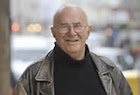 and broadcasts, he wrote 17 nonfiction books, 11 books of poetry, 4 novels, and 4 volumes of his award-winning memoirs, the first of which has now been reprinted over 100 times. And, while many of his works are on serious topics, his droll sense of humor has been an ongoing delight for his legions of faithful readers and listeners. “Common sense and a sense of humor are the same thing, moving at different speeds,” he said about his writing and broadcasting style. “A sense of humor is just common sense, dancing.”
Share A Writer’s Moment with a friend by clicking the g+1 button below.
October 6, 2016
Getting 'everyday' people involved
“One of the rules I try to follow is that normal people are going to be involved even in heroic events.” – David Brin Born on this day in 1950, Brin is an American scientist and award-winning author of science fiction that has been honored with the Hugo, Locus, Campbell, and Nebula Awards. His Campbell Award-winning novel The Postman was adapted as a feature film starring Kevin Costner, and his nonfiction book The Transparent Society won the Freedom of Speech Award from the American Library Association. A native Californian and graduate of Cal Tech (where he earned a degree in astrophysics), Brin has the unique distinction of being both a Fellow of the Institute for Ethics and Emerging Technologies and a member of the Board of Advisors for the Museum of Science Fiction. He also has a Ph.D. in Space Science. Always a voracious reader, he was attracted to science fiction writing as a way to convey both the real science he was working with on a day-in and day-out basis and the fictional world he imagined might exist because of that science.
“When I begin a book, I inevitably discover
 many things along the way, about the characters, their past histories and the political intrigues that surround them. This discovery process is vital, and I would not prejudice it by deciding too much in advance.” Brin said. “My first duty is to write a gripping yarn, and second to convey credible characters who make you feel what they feel. Only third comes the idea.”
Share A Writer’s Moment with a friend by clicking the g+1 button below.
October 5, 2016
The 'magic' in a great tale
“There is the myth that writing books for children is easier than writing books for grownups, whereas we know that truly great books for children are works of genius, whether it's 'Alice in Wonderland' or the 'Gruffalo' or 'Northern Lights.' When it's a great book, it's a great book, whether it's for children or not.” – Michael Morpurgo
Author, poet, playwright, and librettist Morpurgo, born on this day in 1943, is known best for children's novels such as War Horse (also a noted and award-winning play and movie). His forte's as a writer are "magical storytelling,” and recurring themes such as the triumph of an outsider or survival, and his characters' relationships with nature.
The London native intended to be a teacher. But it was during typical class days that he noticed how entranced and intent his students became when it was “story time,” particularly when those stories involved the magical or fantastical. “I could see there was magic in it for them,” he said, “and so it became for me.” A British Children’s Laureate (from 2003-2005),
 he is the recipient of numerous awards, including 4 Carnegie Medals – the latest in 2014 for Listen to the Moon – and recognition from around the world for his Private Peaceful, about the horrors of war and its effects on a young soldier named Tommy Peaceful. He has successfully adapted several of his books into operas or operettas.
His advice to young writers: “Write because you love it and not because it is something that you think you should do. Always write about something or somebody you know about what you feel deeply and passionately about. Never try and force it.”
Share A Writer’s Moment with a friend by clicking the g+1 button below.
October 4, 2016
Research: The key to success
“I don't believe in writing anything that I don't know about or haven't researched about personally. I like to transport the reader to places, and in order to do that I have to do the research.” – Jackie Collins Born on this day in 1937, Collins was the author of 32 novels, all of which appeared on The New York Timesbestseller lists. Her books, many still going strong, have sold over 500 million copies and been translated into 40 languages.
While she was never trained to be a writer, her husband encouraged her to do so, calling her “a born storyteller.” And so she began writing at age 31 and really never stopped, writing up until her death last year. Eight of her novels have been adapted for the screen, either as films or television miniseries and others are under consideration. Her books were often lambasted by critics and even fellow writers, but the public loved them.“I think I'm a born storyteller,” she once said.
 “Inspiration is all around me. I can read a newspaper article and come up with an idea for a book.”
Share A Writer’s Moment with a friend by clicking the g+1 button below.