Dan Jorgensen's Blog, page 467
September 13, 2016
Featuring stories of everyday kindness
“I believe that writing is derivative. I think good writing comes from good reading.” – Charles Kuralt
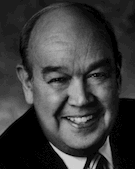
Kuralt was one of those journalists who could find the “hidden gem” stories. He was a master at sharing life from America’s backroads through his in-depth and heartfelt reporting. Widely known for his "On the Road" segments on The CBS Evening News with Walter Cronkite, he later became the first anchor of the wonderful CBS News Sunday Morning, which has continued his feature reporting tradition.
Born in September of 1934 in Wilmington, NC, he said he couldn’t remember a time when he didn't want to be a reporter. “I don't know where I got the idea that it was a romantic calling, but I thought it was,” he said. “Kids are always asked, ‘What are you going to be when you grow up?’ I needed an answer. So instead of saying, a fireman, or a policeman, I said, a reporter.”
He started his career as a radio announcer for a local station at age 14, then edited the college newspaper at the University of North Carolina. Right out of college, he started as a reporter for the Charlotte News where he wrote "Charles Kuralt's People," a column that won him a prestigious Ernie Pyle Award. After moving to CBS as a writer, he became well known as the host of the Eyewitness to Historyseries, traveling around the world for the network. His eye for historical stories led to a series during America’s Bicentennial that won him a Peabody Award for reporting. In all, he would win three Peabodys, including one for “On The Road,” for which he also won multiple Emmys.
“I think all those people I did stories about ‘On The Road’ measured their own success by the joy their work was giving them,” he said.
 “The everyday kindness of the back roads more than makes up for the acts of greed in the headlines.”
Share A Writer’s Moment with a friend by clicking the g+1 button below.


September 12, 2016
All about self-interpretation
“I wanted to be a writer that had an impact. I wanted, and still I say the same thing, I want to write books that change people's lives, change how we think and live and read and write. I wanna write books that are read in 50 or 100 years.” – James Frey
Despite controversy surrounding some of the things Frey has written – whether they are fiction or nonfiction being the primary ones – he is a writer who has been both well received and well read. His books A Million Little Pieces, I Am Number Four, and Bright Shiny Morning have all been mega-bestsellers.
Born this day in 1964, Frey also has had great success as a screenwriter and is a noted speaker, and his works have obtained worldwide popularity now being published in more than 30 languages. He said he wants to continue to publish works that will reach young adults and expand the reading population. He likes writing what empowers readers to make their own decisions about what a book is trying to say, much like someone who looks at a piece of art and interprets it for himself or herself.
“When I go to an art gallery and stand in front of a painting,” he said, “I don't want someone telling me what I should be seeing or thinking; I want to feel whatever I feel, see whatever I see, and figure out what I figure out.”
Share A Writer’s Moment with a friend by clicking the g+1 button below.
September 11, 2016
The rule: Write what you like
“Write what you like; there is no other rule.” – O. Henry
Known by his pen name, William Henry Porter was one of America’s greatest short story writers. Known for their wit, wordplay, warm characterization, and surprise endings, O. Henry’s works have not only become classics but have set a standard for generations of writers who have followed in his stead. Today, the O. Henry Award is a prestigious annual prize given to outstanding short stories.
Born in North Carolina on this date in 1862, O. Henry grew up in Texas and was on the road to success in a number of fields – trained in banking and pharmacy while building a reputation as a writer for newspapers and magazines – when he got into trouble for alleged embezzlement from a bank at which he had been working.
While the charges were never proven, he nonetheless was arrested and in a panic, jumped bail and fled the country, living for a time in South America where he began writing short stories and coined the term “Banana Republic.” Drawn back to America when his wife developed a fatal illness, he was arrested and sentenced to 5 years in prison. While there he wrote many successful stories, published under various names to hide his identity. One of those pen names was O. Henry.
Released early for good behavior, he began the most prolific part of his career, publishing dozens of best-selling stories and story collections and becoming one of America’s most well-known and beloved writers. Among his most famous stories were The Gift of the Magi; The Last Leaf; The Ransom of Red Chief (where a kidnap victim is so horrible that the kidnappers end up paying his family to take him back); Caballero’s Way (introducing the world to The Cisco Kid); and Cabbages and Kings (where “Banana Republic” was introduced).
He died young from liver disease but said he loved every minute of his life and work. “When one loves one's art no service seems too hard,” he remarked.
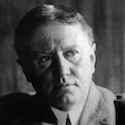 And as he lay dying he was quoted, “The true adventurer goes forth aimless and uncalculating to meet and greet unknown fate.”
Share A Writer’s Moment with a friend by clicking the g+1 button below.
September 10, 2016
Speaking to all through poetry
“The poet speaks to all men of that other life of theirs that they have smothered and forgotten.” – Edith Sitwell
Dame Edith Sitwell was both a patron of the writing and art worlds and also a critic and noted poet herself. Born in Britain on Sept. 7, 1887, she started writing while still in grammar school and had her first poem The Drowned Suns, published in London’s Daily Mirror in 1913.
Between 1916 and 1921 she edited Wheels, an annual poetic anthology compiled with her brothers—a literary collaboration generally called "The Sitwells.” A proponent and supporter of innovative trends in English poetry, she was a patron of rising young poets like Dylan Thomas while writing hundreds of poems herself. From 1913, the date of her first poem, she published poems continuously until her death in 1964. Much of her writing has been praised for its solid technique and painstaking craftsmanship. Her “war poems,” written during WWII, were
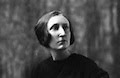 extremely popular. "Still Falls the Rain” about the London Blitz remains perhaps her best-known poem and was set to music by Benjamin Britten as Canticle III: Still Falls the Rain. Her poem The Bee-Keeper was set to music by Priaulx Rainier, as The Bee Oracles.
 Here for Saturday’s Poem, is Dame Edith’s
AnswersI kept my answers small and kept them near;
Big questions bruised my mind but still I let
Small answers be a bullwark to my fear.
The huge abstractions I kept from the light;
Small things I handled and caressed and loved.
I let the stars assume the whole of night.
But the big answers clamoured to be moved Into my life. Their great audacity
Shouted to be acknowledged and believed.
Even when all small answers build up to
Protection of my spirit, still I hear
Big answers striving for their overthrow.
And all the great conclusions coming near.
Share A Writer’s Moment with a friend by clicking the g+1 button below.
September 9, 2016
It's a process of discovery
“Writing is a process of discovering. I could never outline a narrative; that just sounds boring. There's no joy of discovery in what you're doing if that's your strategy.” – Bob Shacochis
Born in Pennsylvania on this date in 1951, Shacochis is an acclaimed novelist, short story writer, and literary journalist who also teaches creative writing at Florida State University.
Shacochis jumped right into the writing world with his first collection of short stories Easy in the Islandsearning the National Book Award in category First Work of Fiction. That was in 1985 and since then he’s had one success after another, either with his short stories, his novels, or his journalistic efforts – primarily as a war correspondent. His highly “personal” reporting style has earned him millions of fans. To get a sense of his reporting style, take a look at his wonderful nonfiction book about the U.S. intervention in Haiti, The Immaculate Invasion.
His novel writing, reflective of the concise style of Hemingway, has produced both a National Book Award finalist – Swimming in the Volcano – and a Dayton Literary Prize – The WomanWho Lost Her Soul. “I'm asked all the time, 'Doesn't it feel great
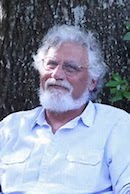 to finish the novel?',” he said. “And the answer to that is, 'No.' It's sort of a loss to stop a 10-year project, which is an imaginary project in the sense that it's a work of my imagination.”
Share A Writer’s Moment with a friend by clicking the g+1 button below.
September 8, 2016
'Hearing' the rhythm of the words
“Because music is a language unto itself, when I'm writing, I need silence. I need to hear the music and the rhythms of the words inside my thoughts”—Marianne Wiggins
The one-time wife of the exiled Iranian writer Salman Rushdie, Wiggins was born in Pennsylvania on this date in 1947 and has established her own legacy in the writing world, earning prizes and awards ranging from the prestigious Whiting Prize (for emerging standout writers) to being a finalist for the National Book Award for her novel Evidence of Things Unseen.
Both a writer and a teacher, she has been a long-time faculty member at the University of Southern California and enjoys sharing her unique style and character development with young writers. “I write on a visual canvas, 'seeing' a scene
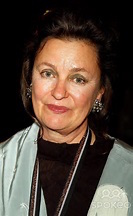 in my thoughts before translating it into language, so I'm a visual junkie,” she said. She noted that she also thinks conversations about books, hers and others, are always important and always should be on the agenda.
“Asking anyone what she or he is reading is a necessary part of conversation, exchanging news,” she said. “So I take recommendations from friends - and I always pass along a book I've loved.”
Share A Writer’s Moment with a friend by clicking the g+1 button below.
September 7, 2016
A million words .... or so
“I think it takes about a million words to make a writer. I mean that you're going to throw away.” – Jerry Pournelle
Born on this day in 1933, Pournelle is a science fiction writer, essayist and journalist who served as President of the Science Fiction and Fantasy Writers of America, commenting wryly that he thought he was the first one nobody had ever heard of.
But, he was wrong about that. This Korean War veteran and Ph.D. holder is well-known throughout the fiction and nonfiction writing worlds. With a brilliant understanding of both technology and military strategy (often a focal point of his fictional books), he wrote one book on technology and strategy that is taught at U.S. military academies and the National War College. His Sci-Fi thriller Footfall, was number one on the New York Times bestseller list. Fallen Angels won the prestigious Prometheius Award, and the National Space Society gave him the Robert Heinlein Memorial Award for lifetime achievement.
Pournelle likes to set up complex background
 situations and plots, leading the reader step by step towards what is usually not a very politically correct solution. “To doubt everything or to believe everything are two equally convenient solutions; both dispense with the necessity of reflection,” he said. “Storytellers like me and Anderson, Silverberg... we tell stories. People like them. They want to know how it comes out, they want to know what the ending is.”.His advice for new writers is pretty much cut and dried: “When you get to the point where they take you to lunch, let the editors suggest where to go.”
Share A Writer’s Moment with a friend by clicking the g+1 button below.
September 6, 2016
Daring to write 'just anything'
“Our life is a book that writes itself and whose principal themes sometimes escape us. We are like characters in a novel who do not always understand what the author wants of them.” – Julien Green
The first non-French national (he’s American) to be admitted to the famed Académie Française, Green was born on this date in 1900 to American parents living in France. After spending time in America in his late teens, he returned to France and in 1922 – after a false start as a painter – he began a nearly 80-year career as a writer.
By 1927 he had established himself in the world of French literature and probably would have remained there for the rest of his long life (he died in 1998) except for the outbreak of World War II, which once again drove him to the U.S. There, during the war, he played a major role in the United States Office of War Information, becoming
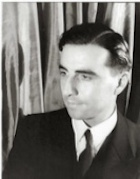 the “French” voice for Voice of America, was crucial in keeping up the French Resistance and ultimately leading to Germany’s defeat.
 He continued to write both at that time and after returning to France following the war. While he wrote numerous essays on faith and religion, he is most noted for his 19-volume diary. Spanning 80 years, the diary provided the world with a unique window on the artistic and literary scene in Paris. The popularity of his diary was, he said, based on his free form and spontaneous writing style, folksy and highly readable.
“The secret is to write just anything, to dare to write just anything,” he said, “because when you write just anything, you begin to say what is important.”
Share A Writer’s Moment with a friend by clicking the g+1 button below.
September 5, 2016
Paying attention -- it's what we do
“…As writers, paying attention is what we do. We are scribes to the ticking of the days, and we have a job to do. We are not at peace unless we are doing it.” – Larry Brooks
Brooks is the author of Story Engineering, Story Physics, and Story Fix, and also the creator of the fiction-writing craft site, Storyfix.com. He speaks frequently at conferences and workshops, which is where we met last month when we both spoke at the Historical Writers of America Conference in Williamsburg, VA. We also shared a table at an authors’ autographing session there, where I had the chance to pick his brain about his take on the writing craft during the 3-hour session.

In addition to his speaking, work as a writing instructor, and freelance writing, the Phoenix-based Brooks is critically acclaimed for his six psychological thrillers, including Darkness Bound, Pressure Points, and Serpent’s Dance.
He likes to reference the First Plot Point (also referred to as "The Moment of No Return," or "Call to Action") as a focal point for writers, especially those who are still learning their craft.
“It's more than a story twist—it's the transition between the story's setup and the launch of the hero's core dramatic journey, and it has a specific mission in terms of how it changes the story, along with criteria that make it work,” he said. “Mess this up, and the story will suffer in a potentially drastic way.”
Share A Writer’s Moment with a friend by clicking the g+1 button below.
September 4, 2016
Be diligent in seeking the truth
“We don't go into journalism to be popular. It is our job to seek the truth and put constant pressure on our leaders until we get answers.” – Helen Thomas One of the highlights of my career as a journalist was meeting with and learning from the great White House news correspondent Helen Thomas who advised me to always be tough on politicians when interviewing them, and never shirk the truth or what needs to be shared from what a political leader is saying. While today's politicians would probably list her and her questioning as "rude," she said she never thought of her questions that way. “You need to ask what needs to be asked and be tough,” she advised. Thomas was the first female officer of the National Press Club, the first female member and president of the White House Correspondents' Association and the first female member of the Gridiron Club. She wrote six books; her last, with co-author Craig Crawford was 2009’s Listen Up, Mr. President: Everything You Always Wanted Your President to Know and Do. Born on this date in 1920, she got into journalism during World War II and remained active in writing and reporting for the next 65 years. She died in 2013 at age 92. Shortly before her death and saddened by trends
 in 21st Century journalism, she wrote, “Everyone with a cell phone thinks they're a photographer. Everyone with a laptop thinks they're a journalist. But they have no training, and they have no idea of what we keep to in terms of standards, as in what's far out and what's reality. And they have no dedication to truth.”
Share A Writer’s Moment with a friend by clicking the g+1 button below.