Dan Jorgensen's Blog, page 463
October 23, 2016
Helping make sense of a teen's world
“If I can write a book that will help the world make a little more sense to a teen, then that's why I was put on the planet.” – Laurie Halse Anderson
An American writer best known for children's and young adult novels, especially the book Speak,Anderson is celebrating her 55th birthday today.
A journalist first, Anderson began her career as both a freelance writer and a reporter at The Philadelphia Inquirer in the early 1980s. In the mid-1990s she began creative writing aimed at young adults. After self-publishing a couple, her book Speaknot only was accepted by a major publisher but also hit the 1999 New York Times bestseller list. The book – a portrayal of a 13-year-old sexual assault victim who loses her ability to speak after the attack – won the Golden Kite award, the Edgar Allan Poe Award, and the Los Angeles Times Book Prize. The book has been translated into 16 languages and made into a major motion picture.It also opened the door to Anderson’s further writing
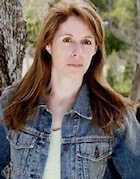 for young adults and she has had numerous hits since. Her 2000 book Fever 1793 was an ALA Best Book for Young Adults and a Junior Library Guild selection, and 2009’s Chains was a National Book Award finalist and winner of the Scott O'Dell Award for Historical Fiction. That same year she was selected for the Margaret A. Edwards Award from the American Library Association for her ongoing contribution to young adult literature.
 She said her appeal to young adults is creating characters with which teens can identify. “That can be the most painstaking aspect of being a teen, figuring out what the world really looks like. If you find someone in a book, you know you're not alone and that's what's so comforting about books.”
Share A Writer’s Moment with a friend by clicking the g+1 button below.


October 22, 2016
The 'music' in the words
“Poetry is not easy. Or should I say, real poetry is not easy.”– Robert Pinsky
Pinsky, a professor at Boston University, celebrated his 76th birthday this past week and continues going strong as a poet, essayist, literary critic and translator. The former Poet Laureate Consultant in Poetry to the Library of Congress, he has authored 19 books, most of which are collections of his poetry.
A one-time jazz musician, Pinsky said his poetry has been inspired by the flow and tension of jazz and the excitement that it made him feel. As a former saxophonist, he has said that being a musician was a profoundly influential experience that he has tried to reproduce in his poetry.
“I don't like to have a calm, orderly, quiet place to work. I often compose while driving, compose in my head. It is true that I wrote my little book, 'The Sounds of Poetry, A Brief Guide,' almost entirely in airplanes and airport departure lounges.” Today, for Saturday’s Poem, here is Pinsky’s Samurai SongWhen I had no roof I made
Audacity my roof. When I had
No supper my eyes dined.
When I had no eyes I listened.
When I had no ears I thought.
When I had no thought I waited.
When I had no father I made
Care my father. When I had
No mother I embraced order.
When I had no friend I made
Quiet my friend. When I had no
Enemy I opposed my body.
When I had no temple I made
My voice my temple. I have
No priest, my tongue is my choir.
When I have no means fortune
Is my means. When I have
Nothing, death will be my fortune.
Need is my tactic, detachment
Is my strategy. When I had
No lover I courted my sleep.
Share A Writer’s Moment with a friend by clicking the g+1 button below.
October 21, 2016
Like nailing Jello to a wall
“Completing any writing project, particularly a novel, is a daunting prospect. Many people become frozen by the prospect. Others keep waiting for the right time. Some wait for the spark of inspiration. Even experienced writers find it is easier to do anything other than actually write. – Bob Mayer I wholeheartedly agree. Sometimes the hardest aspect of the job of BEING a writer is the actual process of writing. I’ve experienced this and I’m sure the majority of writers have also – the feeling that you just can’t make yourself get to the computer, typewriter or even a notepad on some days. It’s sort-of overwhelming, and you just think that something else has to be better.
But then, of course, you sit down and hit those first keys and everything seems to “flow” back from the brain to your fingers and you find yourself back in the creative mode. Writing a blog, of course, gets the daily writing juices flowing, too, and even though I sometimes wake up in a panic that I might not have something to write about, I always seem to find a person or topic to get it going – and then I’m ready for the rest of the writing day. Also, for me, I’ve maintained my connections with the journalistic world and I almost always have one story or another on the drawing board.
Getting back to Mayer, today is his 57th birthday and I’m sure he has yet another book underway. So far this prolific author has had 70-plus novels in multiple genres, selling more than 4 million books, including Area 51, Atlantis, and The Green Berets, all #1 series. And, when I say “multiple genres,” that includes Romance where he holds the distinction of being the only male author on the Romance Writers of America Honor Roll.A former Green Beret and graduate of West Point,
 Mayer’s prolific writing encompasses both his military experience and his fascination for history, legends and mythology. And, collaborating with Romance writer Jennifer Cruise he did a series of military-themed romance novels starting with - Don’t Look Down and including the New York Times number one bestseller Agnes and the Hitman.
While getting the work done hasn’t seemed to be a problem for Mayer, he notes that for most writers it can and is a long process. “A one-hundred-thousand-word novel might take a year or several years, and then you just come to 'The End' one day,” he wrote. “But it takes hundreds of days to get to 'The End.' As a writer, you have to be ready to put in those hundreds of days.”
Share A Writer’s Moment with a friend by clicking the g+1 button below.
October 20, 2016
Flexing that 'writing muscle'
“Writing is a muscle that needs to be exercised.” – Nikki Grimes
Born this date in 1950, Grimes has authored many books for children and young adults. Growing up in Harlem, she said, "Books were my survival tools. They were how I got by, and how I coped with things. Books carried me away."
Also a poet and journalist, her interests and talents are as widely diverse as her writing skills, including award-winning photography, fiber art, and beading.
On the board of directors for the National Children's Book and Literacy Alliance, her work has earned her honors and recognition from a number of prestigious organizations including the NCTE Award for Excellence in Poetry for Children, and (a remarkable 4 times) the Coretta Scott King Author Award for her fiction – Bronx Masquerade, Dark Sons, The Road to Paris, and Talkin’ About Bessie.“Originally I had planned to write just a couple
 of children's books and then, return the focus on adult literature,” she noted. “(But) A funny thing happened along the way - I kept having new ideas, and then I looked up one day, and 30 years had passed!”
 Share A Writer’s Moment with a friend by clicking the g+1 button below.
October 19, 2016
Putting readers 'into the conversation'
I'm trying to make the readers feel as if he or she is right there in the conversation, and so I don't try to manipulate it too much.– Susan Straight
Born on this date in 1960, Straight is a National Book Award finalist for her novel Highwire Moon, one of her 7 adult novels. She’s also done a novel for young readers, and a children's book, and has written essays and articles for numerous national publications. Among the recipients of her work are The New York Times, Los Angeles Times, The Nation, and Harper's Magazine. A frequent contributor to NPR and Salon.com, her short story writing also has earned numerous accolades. The 2003 story "Mines” was included in Best American Short Stories, and 2008’s “The Golden Gopher” earned her the Edgar Allen Poe Award.A native of Riverside, Calif., Straight earned a writing
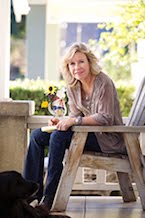
degree from Southern Cal, then traveled East to earn her MFA from U. Mass-Amherst. Returning to California, she co-founded the Master of Fine Arts in Creative Writing & Writing for Performing Arts program at University of California, Riverside in the mid-1980s.
Besides her ongoing writing career, she serves as Distinguished Professor of Creative Writing and Director of the graduate program at that school.
Her advice to new writers? “The best thing I could say is you do have to be a really good listener. If I go to a family reunion, and there's 400 people there, everybody comes up and tells me their stories, right? And I think that when you're a good listener, and you can imagine how someone's talking, dialogue is your key friend, is it not?”
Share A Writer’s Moment with a friend by clicking the g+1 button below.
October 18, 2016
A 'singular' opportunity
“Novels are one of the few remaining areas of narrative storytelling where one person does almost all of the creative heavy lifting.”– Charles Stross
Born on this date in 1964, Stross is an award-winning British writer who specializes in hard science fiction and space opera, both short stories and novels. He also writes freelance pieces about computer science and science in general – his two college degree specialties.
Stross wrote his first science fiction story at age 12 and continued writing all the way through college. After graduating with a degree in Pharmacy he went on to a graduate degree in computer science, then got back into writing in 2000, first as a technical author then as a fiction writer in 2002.
His first published short story, "The Boys,” actually appeared in 1987, and then became part of his first successful short story collection in 2002. His first novel, Singularity Sky, was published in 2003 and went right to the top of bestseller lists,
 ultimately earning a nomination for Science Fiction’s top award, The Hugo. Since then, several collections of his short stories have been nominated for both the Hugo Award and the Nebula Award.
“I think,” Stross mused, “that if there's one key insight science can bring to fiction, it's that fiction - the study of the human condition - needs to broaden its definition of the human condition. Because the human condition isn't immutable and doomed to remain uniform forever.”
Share A Writer’s Moment with a friend by clicking the g+1 button below.
October 17, 2016
Fire & Joy; Doing Their Job
“Forget market or publishers or whatever. Just write with fire and joy, and in my own experience, those are the stories of mine people have wanted to read.”– Patrick Ness
Ness, whose 45th birthday is today, is the son of a U.S. Army officer who grew up in several different states and then emigrated to Great Britain. There, he has become an award-winning author, journalist and lecturer. He is best known for his books for young adults, including the Chaos Walkingtrilogy and Monsters of Men andA Monster Calls, back-to-back winners of the prestigious Carnegie Medal from the Association of British Librarians.
While he also has written a number of adult books, it’s his young adult fiction that’s most popular, including among adults. “I think the reason teenage fiction is so popular with adults is that adults hunger for narrative just as badly as teenagers do.” Ness said. A Monster Calls is a unique book in that the original idea for it
 came from author Siobhan Dowd, who was gravely ill at the time she developed it and asked Ness to do the writing and artist Jim Kay to illustrate it. The result was a massive best seller that not only won the Carnegie for Ness but also the Kate Greenaway Medal for the art – the first time one novel has won both major awards. To cap everything off, Ness also did a screenplay for a popular BBC movie with the same name.
Ness has this advice for writers trying to determine how to craft their books. “A book cannot apologize for what people may think it should be. It has to be authoritative. That's what I want as a reader - I want to be confident that the book will do its job.”
Share A Writer’s Moment with a friend by clicking the g+1 button below.
October 16, 2016
Listen, Share, Assist -- Formula for Success
“I think every writer will tell you that their characters are always partially themselves: who I am and what I've experienced. It's always there in part of my characters.” – Joseph Bruchac
Bruchac, who has the interesting lineage of Slovak and Native American (the Abenaki tribe of upstate New York) has published poetry, nonfiction, novels, and short stories, most of which focus on Native stories, culture and history. For two great novels about the Abenaki – pre-European contact – check out his books Dawn Land and its sequel Long River.
“From my teenage years on, I sought out Native elders from many tribal nations and listened to their words,” he said. “I also started a small press, The Greenfield Review Press, and became very involved with publishing the work of other American Indian authors, especially books of poetry.” A founder of the Wordcraft Circle of Native American Writers and Storytellers, he has helped numerous Native authors get their start.
And, among the numerous non-Native writers who credit him with help is Alex Haley, who wrote Roots. Haley said Bruchac not only gave him encouragement, but helped him find other books to use in his research.
Born on this day in 1942, Bruchac has done
 some 120 books of his own and earned numerous awards, including the Lifetime Achievement Award from the Native Writers' Circle of the Americas. In recent years, he also has collaborated on 8 books with his son Jim. In addition to the novels noted above, I highly recommend his historical books March Toward the Thunder, about Native men who enlisted in the American Civil War; and Code talker: A Book About the Navajo Marines.
As for advice to new writers, he noted, “ Well, I was a very avid reader when I was a child, and I also was a good listener.”
Share A Writer’s Moment with a friend by clicking the g+1 button below.
October 15, 2016
A Poet for our ears
“I consider myself a poet first and a musician second. I live like a poet and I'll die like a poet.” – Bob Dylan
“Poet” is just on the tip of the many titles that describe this songwriter, singer, artist, and writer, who also can now add “Nobel Laureate” to the list. Dylan has been influential in popular music and culture for 6 decades. Much of his most celebrated work dates from the 1960s when his songs chronicled social unrest. Songs such as "Blowin' in the Wind” and "The Times They Are a-Changin’” became anthems for the American civil rights and anti-Vietnam war movements.
Dylan's lyrics incorporate a wide range of political, social, philosophical, and literary influences, but despite that, he says he never intended to be a spokesman; he just wanted to make good poetry and music. “This land is your land and this land is my land, sure,” he said, “but the world is run by those that never listen to music anyway.”
For Saturday’s Poem to salute Dylan’s remarkable career (and his Nobel Prize in Literature) here are the lyrics to what some have called “The first time anyone put really good poetry on the radio.” First recorded in 1964 by The Byrds, (check out a shortened musical version at: https://www.youtube.com/watch?v=NyOzGPbn2tg)Mr. Tambourine Man
(REFRAIN) Hey! Mr. Tambourine Man, play a song for me
I’m not sleepy and there is no place I’m going to
Hey! Mr. Tambourine Man, play a song for me
In the jingle jangle morning I’ll come followin’ you
Though I know that evenin’s empire has returned into the sand
Vanished from my hand
Left me blindly here to stand but still not sleeping
My weariness amazes me, I’m branded on my feet
I have no one to meet
And the ancient empty street’s too dead for dreaming
(REFRAIN)
Take me on a trip upon your magic swirlin’ ship
My senses have been stripped, my hands can’t feel to grip
My toes too numb to step
Wait only for my boot heels to be wanderin’
I’m ready to go anywhere, I’m ready for to fade
Into my own parade, cast your dancing spell my way
I promise to go under it
(REFRAIN)
Though you might hear laughin’, spinnin’, swingin’ madly across the sun
It’s not aimed at anyone, it’s just escapin’ on the run
And but for the sky there are no fences facin’
And if you hear vague traces of skippin’ reels of rhyme
To your tambourine in time, it’s just a ragged clown behind
I wouldn’t pay it any mind
It’s just a shadow you’re seein’ that he’s chasing
(REFRAIN)
Then take me disappearin’ through the smoke rings of my mind
Down the foggy ruins of time, far past the frozen leaves
The haunted, frightened trees, out to the windy beach
Far from the twisted reach of crazy sorrow
Yes, to dance beneath the diamond sky with one hand waving free
Silhouetted by the sea, circled by the circus sands
With all memory and fate driven deep beneath the waves
Let me forget about today until tomorrow
(REFRAIN)
Share A Writer’s Moment with a friend by clicking the g+1 button below.
October 14, 2016
'Trying out' lots of lives
“Looking back, I imagine I was always writing. Twaddle it was too. But better by far to write twaddle or anything, anything, than nothing at all.”– Katherine Mansfield
Kathleen Mansfield Beauchamp was a modernist short story writer, born on this date in 1888 and raised in colonial New Zealand. She wrote under the pen name of Katherine Mansfield both there and after emigrating to Great Britain. Her first published stories appeared in the High School Reporter, a New Zealand-wide journal, and the Wellington Girls' High School magazine, including stories about the repression of the native Maori people, a stand that got her in trouble with some of the New Zealand elite.
She left New Zealand at age 19 and settled in Britain, where she became close friends with modernist writers D.H. Lawrence (author of Lady Chatterley’s Lover) and Virginia Woolf.
Just when she was getting into her most prolific writing period – in the 19-teens – she was diagnosed with tuberculosis. It was also during this time that she met, then married John Middleton Murry, editor of the Avant-garde magazine Rhythm. Murry was responsible for publishing many of her works both then and after her death in 1923.In 1973, Mansfield was the subject of a BBC
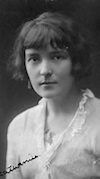 miniseries A Picture of Katherine Mansfield starring Vanessa Redgrave, and in 2011 the film Bliss focused on her early beginnings as a writer.
 She always said that writing not only was her life but her chance to experience other lives. “Would you not like to try all sorts of lives?” she asked. “That is the satisfaction of writing - one can impersonate so many people.”
Share A Writer’s Moment with a friend by clicking the g+1 button below.