Dan Jorgensen's Blog, page 460
November 21, 2016
A giant in writings for liberty
“The instruction we find in books is like fire. We fetch it from our neighbours, kindle it at home, communicate it to others, and it becomes the property of all.” – Voltaire
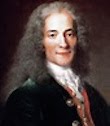
One of history’s great thinkers and writers, François-Marie Arouet, known simply as Voltaire, was a French Enlightenment writer, historian, and philosopher famous for his wit and for his advocacy of freedom of religion, freedom of speech, and separation of church and state. Born on this date in 1694, he wrote down or espoused many of the ideas that influenced our own nation’s founding fathers (He was a longtime close friend of Benjamin Franklin, for example).
A versatile writer, Voltaire produced over 2,000 books and pamphlets, and wrote plays, poems, essays, and historical and scientific works. He also wrote more than 20,000 letters and was an outspoken advocate of civil liberties, despite the risk this placed him in with the leadership of his time. He is often credited with the quote, "I disapprove of what you say, but I will defend to the death your right to say it." Others say that what he really wrote, or said, was "I detest what you write, but I would give my life to make it possible for you to continue to write it." Either way,
 that thought serves as a foundation for America’s 1st Amendment rights.
Fluent in five languages, including English, he also was a voracious reader and often said that while he was flattered by people thinking highly of his works, it was the thoughts and ideas of others that were the base for his own writings. “Originality,” he said, “is nothing but judicious imitation. The most original writers have always borrowed one from another.”
Share A Writer’s Moment with a friend by clicking the g+1 button below.


November 20, 2016
Onto the page as a new personality
“One of the amazing things about writing fiction is that you do get to be other people.” – Deborah Eisenberg
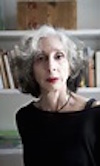
Born on this date in 1945, Eisenberg is a short-story writer who also is a teacher and an actress, another career choice that gives her the opportunity to “be” other people.
A native of Illinois, she moved to New York City early in her adult life to take a job as an editorial assistant at The New York Review of Books, a position that put her squarely in touch with writing of all types. While she worked on lots of books, she said doing books was never on her radar screen. Instead, she wanted to just write stories. “Writing does change you, and of course it feels good to do things, so you could say writing is de facto therapeutic. But really, one writes to write.”
Eisenberg taught at both the University of Virginia (for nearly 20 years) and now at Columbia University in Manhattan where she resides. Meanwhile, she also ended up publishing several books of her short stories for which she’s won several honors, including the PEN/Faulkner Award for Fiction for The Collected Stories of Deborah Eisenberg and (in 2015) the PEN/Malamud Award for Excellence in the Short Story. She also has written a play, Pastorale, which was produced at Second Stage in New York City.
As for her writing advice, she says be conversational. “It's much easier to read the stories that have a lot of dialogue . . .they flow much more easily into speech.”
Share A Writer’s Moment with a friend by clicking the g+1 button below.
November 19, 2016
To a place in the imagination
“I'm trying to write poems that involve beginning at a known place, and ending up at a slightly different place. I'm trying to take a little journey from one place to another, and it's usually from a realistic place, to a place in the imagination.” – Billy Collins
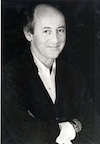
The two-time poet laureate of the U.S., Collins has a basketful of awards for his wonderful poetry – which ranges from humorous to thought-provoking to deeply moving.
Collins’ latest book of poems – his 16th – is titled The Rain in Portugal – “because it’s a lot harder to rhyme things with Portugal than it is with Spain, and rain falls there, too.” Collins reads some of his latest poems on the Nov. 12th edition of “A Prairie Home Companion,” on which he was a guest.
To listen, go to this link https://www.prairiehome.org/shows/53089, click on the “Listen” button and advance the bar to the 51-minute mark, where he comes onto the stage. You will not regret hearing him and a few minutes of his trio of short poems: “On Rhyme," “After the Funeral,” and “Thanksgiving.”
And, since we witnessed the Super Moon this past week,
for Saturday’s Poem, here is Collins’
Invention Tonight the moon is a cracker,
with a bite out of it
floating in the night,
and in a week or so
according to the calendar
it will probably look
like a silver football,
and nine, maybe ten days ago
it reminded me of a thin bright claw.
But eventually --
by the end of the month,
I reckon --
it will waste away
to nothing,
nothing but stars in the sky,
and I will have a few nights
to myself,
a little time to rest my jittery pen.
Share A Writer’s Moment with a friend by clicking the g+1 button below.
November 18, 2016
Not what you 'know;' what you 'feel'
“Reading and writing, like everything else, improve with practice. And, of course, if there are no young readers and writers, there will shortly be no older ones. Literacy will be dead, and democracy - which many believe goes hand in hand with it - will be dead as well.” – Margaret Atwood
Born on this date in 1939, Canadian poet, novelist, literary critic, essayist, and environmental activist Atwood has been one of the world’s leading writers and thinkers for more than six decades. She is a winner of the Arthur C. Clarke Award and Prince of Asturias Award for Literature, and has been shortlisted for the prestigious Booker Prize five times (winning once). While she’s perhaps best known for her novels – highlighted by her book The Handmaid’s Tale -- she’s also written 15 books of poetry and hundreds of essays, many of which are thoughtful and thought-provoking discussions on government and democracy. Critics have called her a "scintillating wordsmith" and an "expert literary critic” in her own right.
Also gifted with a keen scientific mind to compliment her writing skills, Atwood is credited with inventing the LongPen and the associated technologies that facilitate remote robotic writing of documents in ink anywhere in the world. And she’s a renowned university writing professor.
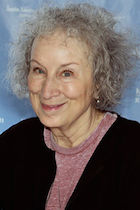 Her advice for students, “If you're waiting for the perfect moment, you'll never write a thing because it will never arrive. I have no routine. I have no foolproof anything. There's nothing foolproof.”
“Fiction is not necessarily about what you know, it's about how you feel. That,” she says, “is the truth about fiction,”
Share A Writer’s Moment with a friend by clicking the g+1 button below.
November 17, 2016
Adversity and success set a writer's path
“I think that everything you do helps you to write if you're a writer. Adversity and success both contribute largely to making you what you are. If you don't experience either one of those, you're being deprived of something.”– Shelby Foote
Although he mostly wrote fiction, it is for his hugely successful – and huge – 3-volume series on the history of the U.S. Civil War for which he will probably most be remembered. Born on this date in 1916, Foote – first and foremost a historian – wrote his million-and-a-half word masterpiece The Civil War: A Narrative almost entirely by hand (with an old-fashioned nib pen) – doing 300 to 500 words a day for over 10 years.
A native of Mississippi where he grew up as a great admirer of fellow Mississippian William Faulkner, Foote said he began writing as a boy and “just never stopped.”
“I began the way nearly everybody I ever heard of - I began by writing poetry,” he said. “And I find that to be quite usual with writers, their trying their hand at poetry.” Although he was not one of America's best-known fiction writers,
 Foote’s 1953 novel Follow Me Down won great admiration from critics and fellow writers alike, including Faulkner, who once told a University of Virginia class that Foote "shows promise, if he'll just stop trying to write like Faulkner.”
Just prior to his death in 2005, Foote said he still thought Faulkner was among the best writers of the English language. “If you want to study writing, read Dickens. That's how to study writing, or Faulkner, or D.H. Lawrence, or John Keats. They can teach you everything you need to know about writing.”
Share A Writer’s Moment with a friend by clicking the g+1 button below.
November 16, 2016
A sea filled by your life's 'rivers'
“I think the novel is not so much a literary genre, but a literary space, like a sea that is filled by many rivers. The novel receives streams of science, philosophy, poetry and contains all of these; it's not simply telling a story.”– Jose Saramago Portuguese novelist and Nobel Prize Winner Saramago was born on this date in 1922 to a family of landless peasants in a small rural village. “I had no books at home,” Saramago said, “So, I started to frequent a public library in Lisbon. It was there, with no help except curiosity and the will to learn, that my taste for reading developed and was refined.”
Many writers will tell you that the love of reading was the first spark in their own creative world, and that is definitely the case for Saramago, who was taken away from his grammar school education at age 12 because his family was so poor they could not afford to keep him in school. Sent to train to become a mechanic, he continued to read everything he could get his hands on, ultimately teaching himself to write both journalistically and creatively as well.
After working as a car mechanic for two years, he convinced the local newspaper, Diário de Notícias, to give him a chance and eventually he worked his way up to assistant editor. His first books came out when he was in his late 30s and 40s, but his first best seller didn’t come until at age 60 with the publication of Memorial do Convento. A baroque tale set during the Inquisition in 18th-century Lisbon. It tells of the love between a maimed soldier and a young clairvoyant, and of a renegade priest's heretical dream of flight. The book not only established him as one of Portugal’s leading writers but also put him onto the world writing scene. He won the Nobel Prize in Literature in 1998.
In offering his formula to others seeking to follow in his footsteps,
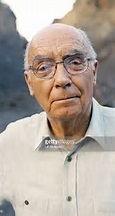 he said simply, “I do not just write, I write what I am. If there is a secret, perhaps that is it.”
Share A Writer’s Moment with a friend by clicking the g+1 button below.
November 15, 2016
It's all about 'The Book'
“Ultimately, it's about the quality of the writing whatever style you are writing.”– Tibor Fischer Born on this date in 1959, British novelist and short story writer Fischer entered the writing world with a bang with his first novel Under the Frog (in 1993) being featured on the prestigious Booker Prize shortlist.
Noted for their humor and surprise end-results, his writings often feature dysfunctional characters who eventually manage to achieve some kind of redemption. The Thought Gang is about a delinquent and alcoholic philosophy professor who hooks up with a failed one-armed bandit in France to form a successful team of bank robbers. While Good to be God features a broke, unemployed habitual failure who uses his friend's credit card to start a new life in Florida. There, he decides the fastest way to make a fortune is to “become” a deity.
The Royal Literary Fund writing fellow at City and Guilds of London Art School, he also is a frequent speaker at book and literary events and tells new writers that they are the keys to their own success. “As an author, I realize, you're on your own.
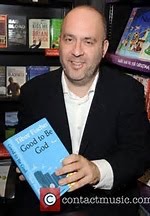 You have to do everything you can to help ‘The Book’,” he said. “I make sure people know it's out there, and then they can make up their own minds whether they want to read it.”
Share A Writer’s Moment with a friend by clicking the g+1 button below.
November 14, 2016
Being understood tops the writer's list
“Anybody who writes doesn't like to be misunderstood.” – Norman MacCaig
Born on this date in 1910, MacCaig was a highly regarded teacher and poet whose writing was known for its humor, simplicity of language and (he would like this) easy understandability.
But, he didn’t start that way. His first book, Far Cry, published in 1943, was considered difficult to read. He listened to critics, changed his writing and went to more traditional rhyming and free verse styles that were lucid, clear-cut and filled with humor.
At the time of his death in 1996, fellow writer Ted Hughes wrote about MacCaig that, “Whenever I meet his poems, I'm always struck by their undated freshness, everything about them is alive, as new and essential, as ever.” For enjoyable poetic reads that cover his 5 decades of writing, check out his books A Common Grace, A Man in My Position, and Ordinary Day, each presenting delightful offerings of daily life, people and the world.“All I write about is what's happened to me
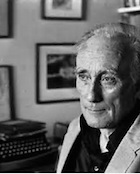 and to people I know,” MacCaig wrote upon receiving The Queen’s Gold Medal for Poetry in 1986. “The better I know them, the more likely they are to be written about.”
 Share A Writer’s Moment with a friend by clicking the g+1 button below.
November 13, 2016
Talk's cheap ... and the spice of life
“Fiction is to the grown man what play is to the child; it is there that he changes the atmosphere and tenor of his life.” – Robert Louis Stevenson
Born on this day in 1850, Scottish novelist, poet, essayist, and travel writer Stevenson’s most famous and enduring works are Treasure Island, Kidnapped, Strange Case of Dr Jekyll and Mr Hydeand A Child's Garden of Verses. The first stands up as one of the great adventure “thrillers” of all time, and the latter as one of the most delightful ways to spend time with your young child, enjoying the love of good rhyme and the great things about which the rhymes are written.
Since writing my historical novel And The Wind Whispered, I’ve enjoyed getting to know a fellow historical writer, Mark Wiederanders of Sacramento, Calif., who has further brought the remarkable Stevenson back to life for me. If you haven’t read Wiederanders’ Stevenson’s Treasure, I highly recommend it to you. A really terrific book.
On this date of Stevenson’s birth, I remember reading his insightful quote about writing: “The difficulty of literature is not to write, but to write what you mean; not to affect your reader, but to affect him precisely as you wish.” I would say that he overcame the difficulty and affected us very well indeed. A noted travel writer, Stevenson was a great
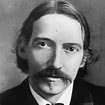 conversationalist and traveling companion. “Talk is by far the most accessible of pleasures,” he noted. “It costs nothing in money, it is all profit, it completes our education, founds and fosters our friendships, and can be enjoyed at any age and in almost any state of health. All speech, written or spoken, is a dead language, until it finds a willing and prepared hearer.”
Share A Writer’s Moment with a friend by clicking the g+1 button below.
November 12, 2016
'America's Poet' for Saturday's Poem
“I knew I would read all kinds of books and try to get at what it is that makes good writers good. But I made no promises that I would write books a lot of people would like to read.” – Carl Sandburg
At the time of his death in 1967, Sandburg – the only poet ever to address a joint session of Congress – was called by President Lyndon Johnson “… more than the voice of America, more than the poet of its strength and genius. He was America."
He won three Pulitzer Prizes: two for his poetry and one for his amazing 6-volume biography of Abraham Lincoln. He was widely regarded as "a major figure in contemporary literature,” especially for the many volumes of his collected verse, including Chicago Poems, Cornhuskers, and Smoke and Steel.
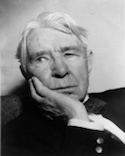
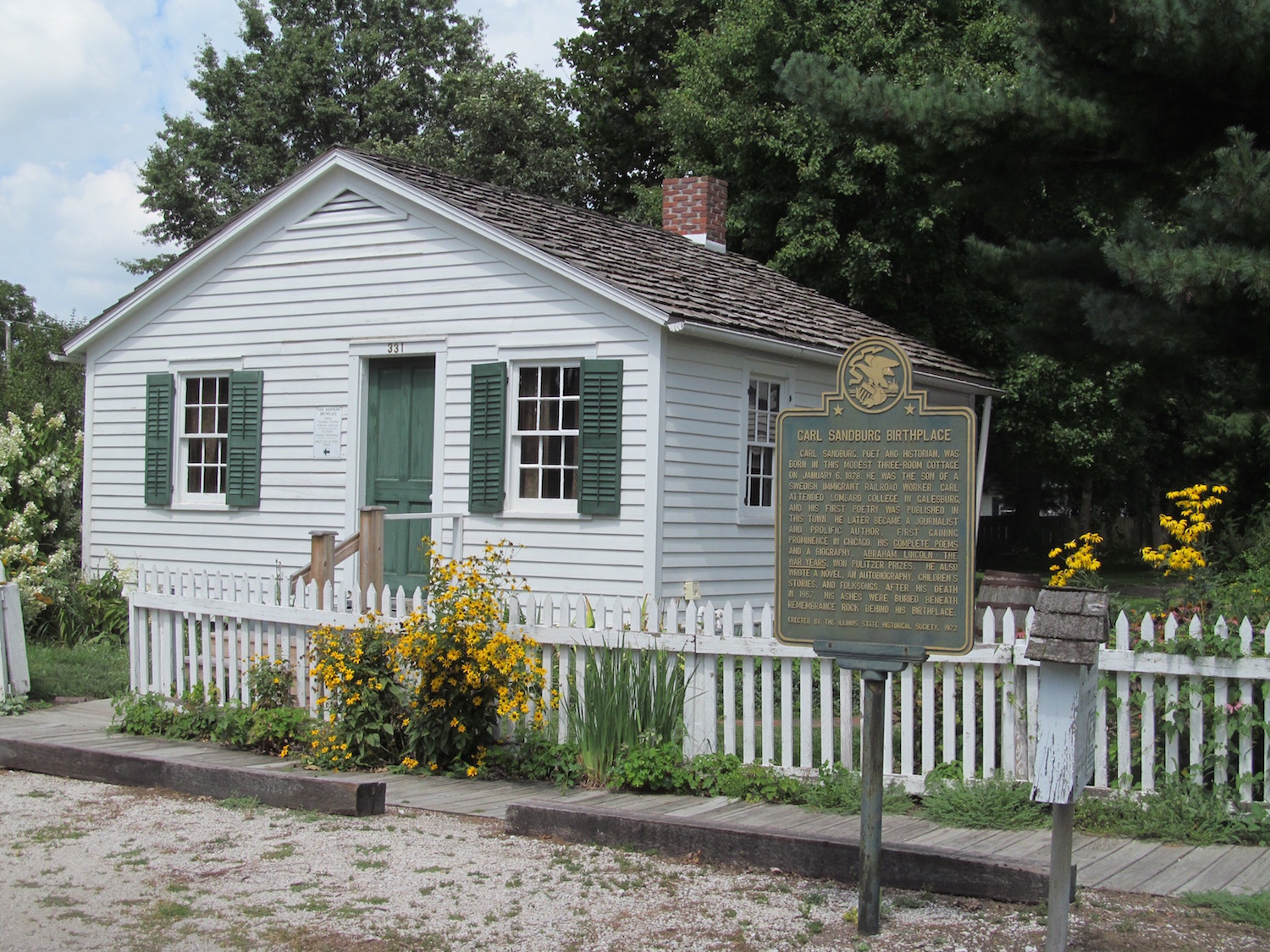 Sandburg grew up in this modest home in the small western Illinois city of Galesburg. Traveling near there this summer, I stopped by to see the home, learn more about his life and history, and snap this photo. It’s a visit I highly commend to all.
“Poetry,” Sandburg once said, “is the opening and closing of a door, leaving those who look through to guess about what is seen during the moment.” For Saturday’s Poem here is Sandburg’s
The FenceNow the stone house on the lake front is finished and the
workmen are beginning the fence.
The palings are made of iron bars with steel points that
can stab the life out of any man who falls on them.
As a fence, it is a masterpiece, and will shut off the rabble
and all vagabonds and hungry men and all wandering
children looking for a place to play.
Passing through the bars and over the steel points will go
nothing except Death and the Rain and Tomorrow.
Share A Writer’s Moment with a friend by clicking the g+1 button below.