Dan Jorgensen's Blog, page 465
October 3, 2016
Satisfying those expectations
“Endings are the toughest, harder than beginnings. They must satisfy the expectations you have hopefully generated in your reader - not frustrate them, leave the reader grasping at elusive strings.” - Jeffrey Thomas
Thomas, born on this date in 1957, is a prolific writer of science fiction and horror, best known for his stories set in a nightmarish future city called Punktown. The stories tend to feature common citizens as their protagonists, rather than the larger-than-life heroes of cliché science fiction, with few characters recurring. The one exception is a mutant private eye named Jeremy Stake, protagonist of several novels, including Deadstockand Blue War, two of his most popular.
Besides numerous appearances of his short fiction in magazines and anthologies, there have also been foreign language editions of several of his Punktown books released in Germany, Russia, Poland, and Greece.“I've polished up stories for their reprinted
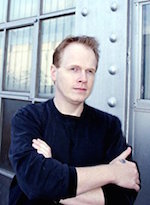 appearances. I guess there's always something to be changed or improved,” Thomas noted. “But one could get carried away and work on one story indefinitely. I'm too restless for that, too eager to begin the next one.”
 Share A Writer’s Moment with a friend by clicking the g+1 button below.


October 2, 2016
How to 'do it right'
“When you are interviewing someone, don't just write down what he says. Ask yourself: Does this guy remind you of someone? What does the room feel like? Notice smells, voice inflection, neighborhoods you pass through. Be a cinematographer.” – Gene Weingarten For aspiring journalists, take note of Weingarten’s advice. For creative writers, the same. Being aware of your “surroundings” is crucial to the success of your stories. His writing, whether part of his humorous online chat, “Chatalogical Humor,” or serious features like his Pulitzer Prize-winning “Fatal Distractions,” is always succinct, clear and distinct, putting the reader firmly and fully into each tale.Born on this date in 1952, Weingarten is actually
 a two-time Pulitzer Prize-winning journalist known for both his serious and humorous work. His column, Below the Beltway, is published weekly in The Washington Postmagazine and syndicated nationally by The Washington Post Writers Group, which also syndicates Barney & Clyde, a comic strip he co-authors.
While he sometimes makes his writing look effortless, Weingarten is quick to cut to the chase: “The one thing an aspiring writer must understand is that it's hard. If you think it's not hard, you're not doing it right.”
Share A Writer’s Moment with a friend by clicking the g+1 button below.
October 1, 2016
Celebrating a true 'Renaissance Man'
<!-- /* Font Definitions */ @font-face {font-family:"MS 明朝"; mso-font-charset:78; mso-generic-font-family:auto; mso-font-pitch:variable; mso-font-signature:-536870145 1791491579 18 0 131231 0;} @font-face {font-family:"Cambria Math"; panose-1:2 4 5 3 5 4 6 3 2 4; mso-font-charset:0; mso-generic-font-family:auto; mso-font-pitch:variable; mso-font-signature:-536870145 1107305727 0 0 415 0;} @font-face {font-family:Cambria; panose-1:2 4 5 3 5 4 6 3 2 4; mso-font-charset:0; mso-generic-font-family:auto; mso-font-pitch:variable; mso-font-signature:-536870145 1073743103 0 0 415 0;} /* Style Definitions */ p.MsoNormal, li.MsoNormal, div.MsoNormal {mso-style-unhide:no; mso-style-qformat:yes; mso-style-parent:""; margin:0in; margin-bottom:.0001pt; mso-pagination:widow-orphan; font-size:12.0pt; font-family:Cambria; mso-ascii-font-family:Cambria; mso-ascii-theme-font:minor-latin; mso-fareast-font-family:"MS 明朝"; mso-fareast-theme-font:minor-fareast; mso-hansi-font-family:Cambria; mso-hansi-theme-font:minor-latin; mso-bidi-font-family:"Times New Roman"; mso-bidi-theme-font:minor-bidi;} pre {mso-style-noshow:yes; mso-style-priority:99; mso-style-link:"HTML Preformatted Char"; margin:0in; margin-bottom:.0001pt; mso-pagination:widow-orphan; font-size:10.0pt; font-family:Courier; mso-fareast-font-family:"MS 明朝"; mso-fareast-theme-font:minor-fareast; mso-bidi-font-family:Courier;} span.HTMLPreformattedChar {mso-style-name:"HTML Preformatted Char"; mso-style-noshow:yes; mso-style-priority:99; mso-style-unhide:no; mso-style-locked:yes; mso-style-link:"HTML Preformatted"; mso-ansi-font-size:10.0pt; mso-bidi-font-size:10.0pt; font-family:Courier; mso-ascii-font-family:Courier; mso-hansi-font-family:Courier; mso-bidi-font-family:Courier;} .MsoChpDefault {mso-style-type:export-only; mso-default-props:yes; font-family:Cambria; mso-ascii-font-family:Cambria; mso-ascii-theme-font:minor-latin; mso-fareast-font-family:"MS 明朝"; mso-fareast-theme-font:minor-fareast; mso-hansi-font-family:Cambria; mso-hansi-theme-font:minor-latin; mso-bidi-font-family:"Times New Roman"; mso-bidi-theme-font:minor-bidi;} @page WordSection1 {size:8.5in 11.0in; margin:1.0in 1.25in 1.0in 1.25in; mso-header-margin:.5in; mso-footer-margin:.5in; mso-paper-source:0;} div.WordSection1 {page:WordSection1;} </style><i style="mso-bidi-font-style: normal;"><span style="font-family: "Times New Roman"; mso-fareast-font-family: "Times New Roman";">“People are always giving you credit for really wanting to say more than you said. What you've got to say, you say.”</span></i><span style="font-family: "Times New Roman"; mso-fareast-font-family: "Times New Roman";"> – Shel Silverstein</span></div><div class="MsoNormal" style="line-height: 200%;"><br /></div><div class="MsoNormal" style="line-height: 200%;"><span style="font-family: "Times New Roman"; mso-fareast-font-family: "Times New Roman";">This past week marked the 86th anniversary of the birth of Silverstein, an American poet, singer-songwriter, cartoonist, screenwriter, children’s book author and illustrator, whose works to date have been translated into 30 languages and sold over 20 million copies.<span style="mso-spacerun: yes;"> </span>Hard to label because of the many, many genres in which he wrote, perhaps his best-known book – continuously in print since its publication in 1964 – is the remarkable and poignant <i style="mso-bidi-font-style: normal;">The Giving Tree</i>.<span style="mso-spacerun: yes;"> </span></span></div><div class="MsoNormal" style="line-height: 200%;"><br /></div><div class="MsoNormal" style="line-height: 200%;"><span style="font-family: "Times New Roman"; mso-fareast-font-family: "Times New Roman";">Silverstein, who died in 1999, won two Grammy Awards, including one for Johnny Cash’s mega-hit <i style="mso-bidi-font-style: normal;">A Boy Named Sue</i>, and one for the song <i style="mso-bidi-font-style: normal;">I’m Checking Out</i>, which also won a Golden Globe and an Academy Award nomination.</span></div><div class="MsoNormal" style="line-height: 200%;"><span style="font-family: "Times New Roman"; mso-fareast-font-family: "Times New Roman";">But it was, perhaps, his wonderful poetry<a href="http://3.bp.blogspot.com/-U-m4UnoxcM4..." imageanchor="1"> <img border="0" src="https://3.bp.blogspot.com/-U-m4UnoxcM..." /></a></span></div><div class="MsoNormal" style="line-height: 200%;"><span style="font-family: "Times New Roman"; mso-fareast-font-family: "Times New Roman";"> – especially for kids, but often across generational lines – for which he will long be remembered and revered.<span style="mso-spacerun: yes;"> </span>Poems like “Where The Sidewalk Ends,” “Clarence Lee From Tennessee,” “The Missing Piece,” and “A Light in the Attic” have become standards in children’s literature, and loved to be read by adults.<span style="mso-spacerun: yes;"> </span></span></div><div class="MsoNormal" style="line-height: 200%;"><br /></div><span style="font-family: "Times New Roman"; mso-fareast-font-family: "Times New Roman";">For Saturday’s Poem, here is Silverstein’s extremely touching and heart-felt:</span> <div class="MsoNormal" style="line-height: 200%;"><br /></div><div class="MsoNormal" style="line-height: 115%;"><b style="mso-bidi-font-weight: normal;"><span style="font-family: "Times New Roman"; font-size: 14.0pt; line-height: 115%; mso-fareast-font-family: "Times New Roman";">The Little Boy and the Old Man</span></b></div><div class="MsoNormal" style="line-height: 115%;"><br /></div><pre style="line-height: 115%;"><b style="mso-bidi-font-weight: normal;"><span style="font-family: "Times New Roman"; font-size: 12.0pt; line-height: 115%;">Said the little boy, "Sometimes I drop my spoon."<br /> Said the old man, "I do that too."</span></b></pre><pre style="line-height: 115%;"><b style="mso-bidi-font-weight: normal;"><span style="font-family: "Times New Roman"; font-size: 12.0pt; line-height: 115%;"><br /><br />The little boy whispered, "I wet my pants."</span></b></pre><pre style="line-height: 115%;"><b style="mso-bidi-font-weight: normal;"><span style="font-family: "Times New Roman"; font-size: 12.0pt; line-height: 115%;"> "Well, I do that too," laughed the little old man.</span></b></pre><pre style="line-height: 115%;"><b style="mso-bidi-font-weight: normal;"><span style="font-family: "Times New Roman"; font-size: 12.0pt; line-height: 115%;"><br /><br /><span style="mso-spacerun: yes;"> </span>Said the little boy, "I often cry."<br /> The old man nodded, "So do I." </span></b></pre><pre style="line-height: 115%;"><b style="mso-bidi-font-weight: normal;"><span style="font-family: "Times New Roman"; font-size: 12.0pt; line-height: 115%;"> </span></b></pre><pre style="line-height: 115%;"><b style="mso-bidi-font-weight: normal;"><span style="font-family: "Times New Roman"; font-size: 12.0pt; line-height: 115%;">"But worst of all," said the boy, "it seems </span></b></pre><pre style="line-height: 115%;"><b style="mso-bidi-font-weight: normal;"><span style="font-family: "Times New Roman"; font-size: 12.0pt; line-height: 115%;"> Grown-ups don't pay attention to me.”<br /><br />And he felt the warmth of a wrinkled old hand.<br /><span style="mso-spacerun: yes;"> </span>"I know what you mean," said the little old man.</span></b></pre><div class="MsoNormal" style="line-height: 200%;"><span style="font-family: "Times New Roman"; mso-fareast-font-family: "Times New Roman";"><br style="mso-special-character: line-break;" /><br style="mso-special-character: line-break;" /></span></div><div class="MsoNormal" style="line-height: 115%;"><br /></div><div class="MsoNormal" style="line-height: 200%;"><b style="mso-bidi-font-weight: normal;"><span style="font-family: "Times New Roman"; mso-fareast-font-family: "Times New Roman";">Share <i style="mso-bidi-font-style: normal;">A Writer’s Moment</i> with a friend by clicking the g+1 button below.</span></b></div>
September 30, 2016
Celebrating a giant for peace and justice
“I write to understand as much as to be understood.”– Elie Wiesel
Born on this day in 1928, Wiesel was not only a Nobel Peace Prize Laureate but also the author of 57 books, written mostly in French and English. His powerful and wrenching book Nightwas based on his experiences as a prisoner in the infamous Nazi death camps of Auschwitz and Buchenwald. He died this past July at age 87.Along with writing, he was a professor of humanities
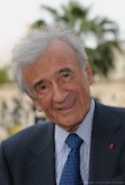 at Boston University, which created the Elie Wiesel Center for Jewish Studies in his honor. He was involved with Jewish causes, and helped establish the United States Holocaust Memorial Museum in Washington, D.C. The Norwegian Nobel Committee described Wiesel as "one of the most important spiritual leaders and guides in an age when violence, repression and racism continue to characterize the world."
Known as a writer with an uncanny knack of involving the reader almost from the outset of each of his books, he noted, “There is a difference between a book of two hundred pages from the very beginning, and a book of two hundred pages which is the result of an original eight hundred pages. The six hundred are there. Only you don't see them.” In other words, you just “know” from where you start reading what has already transpired because of the effectiveness of what he has written.
Wiesel won a remarkable 30 international awards and honors, including the U.S. Presidential Medal of Freedom and the John Jay Medal for Justice. His memoirs are terrific examples for those seeking to write these types of works. His advice: “With memoir, you must be honest. You must be truthful. Not to transmit an experience is to betray it.”
Share A Writer’s Moment with a friend by clicking the g+1 button below.
September 29, 2016
Write what you like to read
“Sometimes the characters develop almost without your knowing it. You find them doing things you hadn't planned on, and then I have to go back to page 42 and fix things. I'm not recommending it as a way to write. It's very sloppy, but it works for me.” – Barbara Mertz
An American author who wrote under her own name as well as under the pseudonyms Elizabeth Peters and Barbara Michaels, Mertz was a noted academic as well as a leading writer. Born on this day in 1927, she earned multiple degrees in ancient history and Egyptology, including a Ph.D. in the latter field.
One of her remarkable 19-book series (written as Peters) focused on a professor who held a degree in Egyptology. I say remarkable because all told she wrote 71 books, including many series built around mystery and suspense. And while she was best known for those, two of her nonfiction books on ancient Egypt also have stood the test of time. Those, her first works in the mid-60s, are still in print.
More than a dozen of her books were nominated for or won best novel or best mystery awards, led by Trojan Gold; Naked Once More; The Last Camel Died at Noon; The Snake, the Crocodile, and the Dog; and Night Train to Memphis.
The recipient of a number of grandmaster
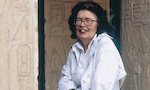 and lifetime achievement awards, including being named Grandmaster at the Anthony Awards (for mystery writing) in 1986 and Grandmaster by the Mystery Writers of America in 1998. She wrote bestsellers right up until her death in 2013.
When asked why she liked writing mysteries, suspense and thrillers instead of more of her "scholarly" works, she replied that it was what she most enjoyed. “There are lots of things to write about, but I think it would be difficult to write books I don't like to read.”
Share A Writer’s Moment with a friend by clicking the g+1 button below.
September 28, 2016
You live through your characters
“Fiction, for me, is sort of a protracted way of saying all the things I wished I said the night before.” – Christopher Buckley
The only child of arch-conservative author and speaker William F. Buckley, Christopher was born on this day in 1952 and has made his own way in the writing world as a noted humorist and satirist, creating such well-known works as The White House Mess, No Way To Treat A First Lady and Thank You For Smoking– the latter made into a terrific film as well.Buckley’s humorous pieces have appeared in all of the nation’s
 leading newspapers, and he also has had an ongoing career as a magazine writer and editor, particularly at Forbes. And, Buckley has done considerable time in p.r. and says that “In public relations, you live with the reality that not every disaster can be made to look like a misunderstood triumph.” As a former p.r. practitioner myself, I have to simply add, How True!
Buckley’s p.r. efforts were primarily in the political arena and his first-hand knowledge of the political world has often provided the base for his satirical fiction, which he says he finds most enjoyable. And, he says writing is a great way to live a life you might only imagine, noting, “You live vicariously through your characters.”
Share A Writer’s Moment with a friend by clicking the g+1 button below.
September 27, 2016
Building your writing 'foundation'
“I think young writers should get other degrees first, social sciences, arts degrees or even business degrees. What you learn is research skills, a necessity because a lot of writing is about trying to find information.”– Irvine Welsh
Born on this day in 1957, Scottish novelist, playwright and short story writer Welsh is perhaps best known for his novel Trainspotting, also made into a critically acclaimed film. His work often depicts the “mean streets” of his native home of Edinburgh, where he grew up the son of a dock worker and waitress.
After dropping out of high school, he tried his luck at a variety of jobs before getting into the London music scene, where for a time he thought his success might rest with writing songs. But it was while telling some of the tales of his childhood and upbringing that he was encouraged to start writing down some of those stories and that led to his writing Trainspotting. He returned to school, worked on several degrees and finished the book.
Despite being lambasted by some as “too mean,” it became an almost instant success and started him on his writing path. And in response to what he was writing, he said, “The first job of a writer is to be honest.”Since then (1993), he has written 9 novels
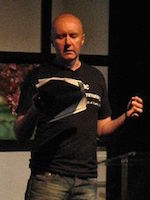 – several following his first group of characters – a number of books of short stories, and several plays and screenplays. He’s also directed several short films. Welsh's writing is dominated by the question of working class and Scottish identity in the period spanning the 1960s to the present day.
“Writing,” Welsh said, “is about culture, and should be about everything. That's what makes it what it is.”
Share A Writer’s Moment with a friend by clicking the g+1 button below.
September 26, 2016
The 'notable' way to remember
“Always carry a notebook. And I mean always. The short-term memory only retains information for three minutes; unless it is committed to paper you can lose an idea forever.” – Will Self
Born on this day in 1961, Self is a novelist, journalist, political commentator, television personality and author of 10 novels, 5 collections of shorter fiction, 3 novellas, and 5 collections of non-fiction writing. Also a regular contributor to dozens of the world’s top magazines and journals, his work has been translated into 22 languages. Fiction, though, is his forte’ and he said. “I always wanted to write fiction. Always. As far back as I can remember it's been integral to my sense of myself - everything else was always a displacement activity.”
A native Londoner, he is a graduate of Oxford University and first got interested in writing at age 10, greatly influenced by great science fiction writers like the great Frank Herbert. Self’s first published book, a 1991 collection of his short stories called The Quantity Theory of Insanity thrust him into the public eye as one of the new generation of great English writers, and since then he’s been nominated for many awards, in particular for his novels Umbrella and Dorian.
As for advice to new writers, he says simply, “The writing life is essentially one of solitary confinement - if you can't deal with this, you needn't apply.”
Share A Writer’s Moment with a friend by clicking the g+1 button below.
September 25, 2016
Life's work becomes the prize
“Without discipline, there's no life at all.” – Katharine Hepburn
Known for her fierce independence and spirited personality, Hepburn was a leading lady in Hollywood for more than 60 years. She appeared in a range of genres, from screwball comedy to literary drama, and she received four Academy Awards for Best Actress — a record for any performer.
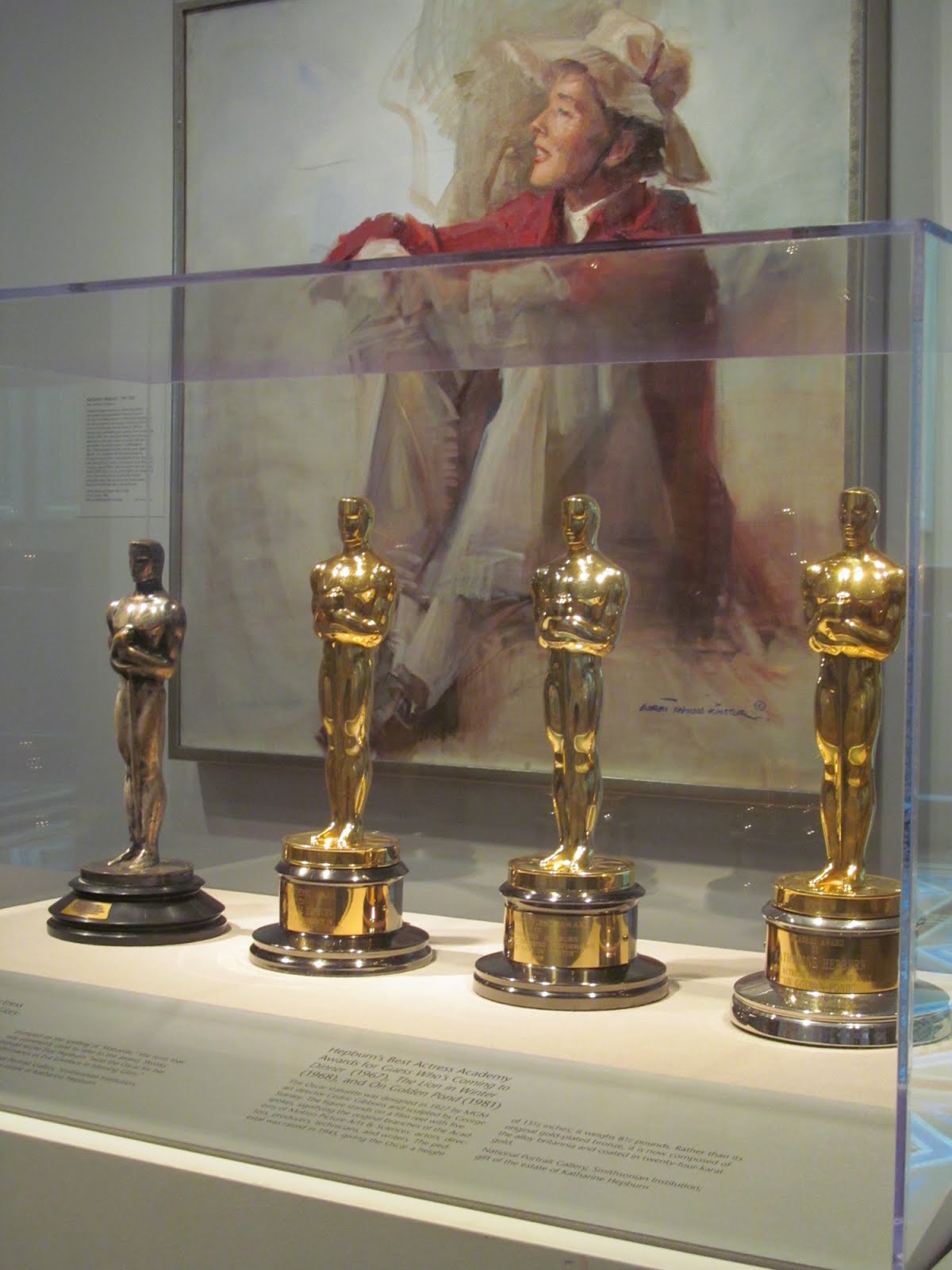 On a recent visit to the National Gallery in Washington, DC, we found this display of both the 4 Oscars AND one of her favorite portraits. So I felt compelled to snap this photo and to write a few words about this marvelous actress, who also was a bestselling author for her 1991 autobiography Me: Stories of my Life. The book topped bestseller lists for over a year.
In 1999, Hepburn was named by the American Film Institute as the greatest female star of Classic Hollywood Cinema. Also a Kennedy Center recipient and Film Institute Hall of Fame inductee, she was named in a number of books and magazine lists among the most influential women of the 20th Century. Hepburn died at age 96 in 2003.
In her later life, she once remarked, “For me, prizes are nothing. My prize is my work.”
Share A Writer’s Moment with a friend by clicking the g+1 button below.
September 24, 2016
The 'delicious' world of poetry
“Every afternoon, I would shut the door of my bedroom to write: Poetry was secret, dangerous, wicked and delicious.” – Donald Hall
Considered one of the major American poets of his generation (he celebrated his 88th birthday this past week), Hall’s poetry explores the longing for a more bucolic past and often reflects many a poet’s abiding reverence for nature.
Hall uses simple, direct language to evoke surrealistic imagery. In addition to his poetry, he has built a respected body of prose that includes essays, short fiction, plays, and children’s books. He also is noted for the anthologies he has edited. Hall has long been a popular teacher, speaker, and reader of his own poems. Once criticized for the simplicity of a poem, he replied, “Everything important always begins from something trivial.”
For Saturday’s Poem, here is Hall’s
An Old Life
Snow fell in the night.
At five-fifteen I woke to a bluish
mounded softness where
the Honda was. Cat fed and coffee made,
I broomed snow off the car
and drove to the Kearsarge Mini-Mart
before Amy opened
to yank my Globe out of the bundle.
Back, I set my cup of coffee
beside Jane, still half-asleep,
murmuring stuporous
thanks in the aquamarine morning.
Then I sat in my blue chair
with blueberry bagels and strong
black coffee reading news,
the obits, the comics, and the sports.
Carrying my cup twenty feet,
I sat myself at the desk
for this day's lifelong
engagement with the one task and desire.
Share A Writer’s Momentwith a friend by clicking the g+1 button below.