Dan Jorgensen's Blog, page 461
November 11, 2016
Providing 'a slice' of imagination
“Literature overtakes history, for literature gives you more than one life. It expands experience and opens new opportunities to readers.”—Carlos Fuentes
Born on this date in 1928, novelist and essayist Fuentes is perhaps best known for his books The Death of Artemio Cruz – often called THE seminal work of modern Spanish American literature – and The Old Gringo. The New York Times described Fuentes as "one of the most admired writers in the Spanish-speaking world.”
The Guardian called him "Mexico's most celebrated novelist,” perhaps in part because of his being honored by his home nation with its highest civilian award, the Belisario Domínguez Medal of Honor. He was often named as a likely candidate for the Nobel Prize in Literature, though he never won (the Nobel is only awarded to living artists and writers and he died in 2012).
Fuentes described himself as a pre-modern writer, using only pens, ink and paper. He asked, "Do words need anything else?" Fuentes said that he detested those authors who from the beginning claim to have a recipe for success. In a speech on his writing process, he related that when he began the writing process, he began by asking, "Who am I writing for?" Translated into 24 languages with sales around the globe in the
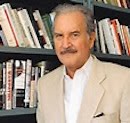 many millions, Fuentes hated being pigeonholed into one classification or another. “I'm a writer, not a genre. Don't classify me, read me.” As for advice to young writers, he said simply, “I am not interested in slice of life, what I want (from a writer) is a slice of the imagination.”
Share A Writer’s Moment with a friend by clicking the g+1 button below.


November 10, 2016
Setting a steady writing pace
“Inspiration comes from everywhere. From life, observing people, etc. From movies and books you love. From research.” – Holly Black
Black, who turns 45 today, is a prolific and very diversified American writer, editor and producer. Winner of the Newbery Medal for her novel Doll Bones, she’s also well-known for her children’s fantasy series The Spiderwick Chronicles – co- created with writer and illustrator Tony DiTerlizzo – and Young Adult trilogy The Modern Faerie Tales.
When I say “prolific” and “diversified” that might be an understatement. Since breaking onto the scene in 2002, she has authored nearly 30 novels and many dozens of short stories. She’s also written so many different types of books that she’s joked about putting out a guide so that people who like a certain type of her writings can quickly locate them. If so, she’d probably go with social media for making those connections, since she’s a major practitioner of its use.“I think there are a lot of really positive aspects to social media
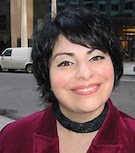 for novelists,” she said. “Even though our work is pretty solitary, through Twitter and Tumblr and Facebook and Instagram and blogging in general, we're better able to connect directly with readers.”
As for her advice to new writers, she says don’t be intimidated by how much you need to write. “Can you write 200 words a day? 100? 50? In six months, 50 words a day is 9,000 words. That's 2-3 short stories,” she said. “ If you did 200 words every day, in three months that's 36,000 words. That's half a short novel.”
Share A Writer’s Moment with a friend by clicking the g+1 button below.
November 9, 2016
Immersed in the heart of the story
“The thing that makes vivid writing is when the reader is in the body of the story, the body of the character. Things smell like something; there's weather, there's texture, there's light.” – Janet Fitch
Born on this date in 1955, Fitch grew up in a family of voracious readers, but didn’t thonk about writing until she had completed her education at Reed College in Oregon. As an undergraduate at Reed, she had decided to become a historian, attracted to its powerful narratives, the scope of events, the colossal personalities, and the potency and breadth of its themes.
But when she won a student exchange to Keele University in England, where her passion for Russian history led her, she awoke in the middle of the night on her 21st birthday with the revelation she wanted to write fiction, and that’s what she’s done. Among her award-winning works are the wonderful (and intense) White Oleander, an Oprah Book Club selection and a really terrific film, too.
Born and raised in Los Angeles, Fitch has now gravitated back to her old stomping grounds and is a faculty member in the Master of Professional Writing Program at the University of Southern California, where she teaches fiction.Among her ongoing words of advice to her
 students is to remember that the protagonist is the reader's portal into the story. “The more observant he or she can be, the more vivid will be the world you're creating,” she said.
 As for what serves as her personal muse? “I always read poetry before I write, to sensitize me to the rhythms and music of language.”
Share A Writer’s Moment with a friend by clicking the g+1 button below.
November 8, 2016
Writing to illuminate conflict and triumph
“Citizenship is a tough occupation which obliges the citizen to make his own informed opinion and stand by it.” – Martha Gellhorn
Quoting the amazing journalist Martha Gellhorn just seemed like the right thing to do on this Election Day. Besides, it’s the anniversary of her birth – in 1908 in St. Louis. While she was born and raised in the heartland of America, she became a product of and reporter on the world; some of the finest reporting, news and feature writing ever done by an American journalist.
And while she wrote about every topic from government to society, it was her war correspondence for which she is most noted, reporting on every major world conflict that took place during her 60-year career (she died in 1998 at age 90). In 1999 The Martha Gellhorn Prize in Journalism (given annually for reporting excellence) was established in her memory and honor.
Along the way she also became a part of the lore surrounding Ernest Hemingway, ultimately becoming his third wife. It was a marriage that grew out of their time together covering the carnage of the Spanish Civil War. From there they both were reporters during the Second World War II, although it may have been their competition as writers that eventually caused them to drift apart.
Gellhorn brought new passion and depth to her war coverage stories. Her book, The Face of War, is one of the best you’ll ever read about this remarkable reporter’s work. It’s both a chronicle and a primer on effectively writing about conflict, its terrors, and aftermath.Although newswriting was her career field,
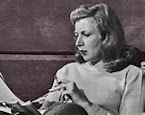 she also published books of fiction, did travel writing and p.r., and wrote reams of correspondence. Her selected letters were published posthumously in 2006. In them, her fierce independence as a writer shines through. “I have no intention,” she once stated, “of being a footnote in someone else’s life.” Instead, many became the footnotes in hers.
Share A Writer’s Moment with a friend by clicking the g+1 button below.
November 7, 2016
Putting 'anxiousness' aside
“I think that there must be a point of self-immersion in a story that is a point of no return. You get far enough in that the story has really touched you to the core and deeply troubled you and made you unhappy and fearful, and then how do you get out of that? I'm a writer, so my way of getting out of that is to write.” – Helen Garner
Born in Australia on this date in 1942, Garner is known for incorporating and adapting her personal experiences into her fiction, something that has brought her both praise and criticism, particularly with her novels, Monkey Grip and The Spare Room.
Award-winning for both her fiction and nonfiction (she also has won acclaim for her screenwriting), she said “I think some people wished I'd kept myself out of the book. But I kind of insist on it because I want the reader to share my engagement with the material, if you like, not pretend that I'm doing it completely intellectually."While some critics have been disdainful of
 her work, others have heaped praise like this late 1980s comment by Don Anderson. “There are four perfect short novels in the English language,” he said. “They are, in chronological order, Ford Madox Ford’s The Good Soldier, Scott Fitzgerald’s The Great Gatsby, Hemingway’s The Sun Also Risesand Garner's The Children's Bach.”
This year her non-fiction book Everywhere I Look came onto the market almost simultaneously with her receiving the prestigious Windham-Campbell Literary Prize (from the U.S.) for her lifetime achievement in non-fiction. The prize is one of the richest in the world and should soothe some of Garner’s well-known angst about her writing skills.
“Writers seem to me to be people who need to retire from social life and do a lot of thinking about what's happened - almost to calm themselves,” she once said. “I think writers are very anxious.”
Share A Writer’s Moment with a friend by clicking the g+1 button below.
November 6, 2016
Bringing her readers on the journey
“I love writing picture books and story books because of the exciting, visual life that artists and illustrators give to them. And most of all, I love writing novels because of the inner, emotional journeys that they take me on. Hopefully, the reader comes with me!” – Berlie Doherty
Doherty, who celebrates her 73rdbirthday today, is a British novelist, poet, playwright and screenwriter. Best known for her children's books, for which she has twice won the Carnegie Medal, she has also written many plays for theatre, and radio and television series. “I love writing plays,” she said, “because they are living, fluid things that are energized by the producer, designers, musicians, actors and audience.”
Her books encompass multiple genres, some drawing on her experiences as a social worker and others on social issues. The award-winning Dear Nobody focuses on teen pregnancy, while The Snake-Stone is about adoption. Her recent books tackle maladies like child trafficking (Abela: The Girl Who Saw Lions) and homelessness (Far from Home: The Sisters of Street Child).And a major focus of many of her works are
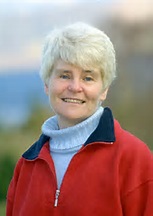 settings along rivers, lakes and seas. “I love to watch the movement of light on water, and I love to play in rivers and lakes, swimming or canoeing,” Doherty said. “I am fascinated by people who work with water - fishermen, boatmen - and by a way of life that is dominated by water.”
Share A Writer’s Moment with a friend by clicking the g+1 button below.
November 5, 2016
A song for your 'self'
“When you begin to write poems because you love language, because you love poetry. Something happens that makes you write poems. And the writing of poems is incredibly pleasurable and addictive.” – C. K. Williams (1939-2015)
A native of New Jersey, Williams came comparatively late to the writing of poetry, though he was encouraged by his father from an early age to read poems and learn them by heart. It was in penning a love poem at the age of 19 that Williams discovered a sense of vocation and from that moment on "knew that that was what I was going to do.”His poetic style involved long flexible lines and
 while he wrote on many topics, children, marriage and the ties of family were often his significant themes. Among his many awards were the National Book Award for The Singing and a Pulitzer Prize for Repair. For Saturday’s Poem, here is Williams’
 The Singing
I was walking home down a hill near our house on a balmy afternoon under the blossoms Of the pear trees that go flamboyantly mad here every spring with their burgeoning forth
When a young man turned in from a corner singing no it was more of a cadenced shouting Most of which I couldn't catch I thought because the young man was black speaking black
t didn't matter I could tell he was making his song up which pleased me he was nice-looking Husky dressed in some style of big pants obviously full of himself hence his lyrical flowing over
We went along in the same direction then he noticed me there almost beside him and "Big" He shouted-sang "Big" and I thought how droll to have my height incorporated in his song
So I smiled but the face of the young man showed nothing he looked in fact pointedly away And his song changed "I'm not a nice person" he chanted "I'm not, I'm not a nice person"
No menace was meant I gathered no particular threat but he did want to be certain I knew That if my smile implied I conceived of anything like concord between us I should forget it
That's all nothing else happened his song became indecipherable to me again he arrived Where he was going a house where a girl in braids waited for him on the porch that was all
No one saw no one heard all the unasked and unanswered questions were left where they were It occurred to me to sing back "I'm not a nice person either" but I couldn't come up with a tune
Besides I wouldn't have meant it nor he have believed it both of us knew just where we were In the duet we composed the equation we made the conventions to which we were condemned
Sometimes it feels even when no one is there that someone something is watching and listening Someone to rectify redo remake this time again though no one saw nor heard no one was there
Share A Writer’s Moment with a friend by clicking the g+1 button below.
November 4, 2016
Craftsmanship grows out of 'scraps and pieces'
“Writing doesn't come real easy to me. I couldn't write a novel in a year. It wouldn't be readable. I don't let an editor even look at it until the second year, because it would just scare them. I just have to trust that all these scraps and dead-ends will find a way.” – Charles Frazier
As a “deliberate” writer myself – especially when I’m working on fiction – I can commiserate with Frazier and long ago decided that getting it done right, regardless of how long it takes to finish is the best route to follow. Frazier agrees, noting, “Well, I'm a slow writer. For me, a good day is a page, maybe a page and a half. I'd love to be more efficient, but I am not.” Celebrating his 65thbirthday today, Frazier is mostly lauded for his first novel, the terrific Cold Mountain – both an award-winning book and the movie that won Renee Zellweger her first Academy Award. But I’m equally enamored with his novel Thirteen Moons and highly recommend it to all. It is a story of both struggle and triumph against the emerging U.S. government's plan to remove native Cherokee people to Oklahoma. His writing is a study in how to draw upon the
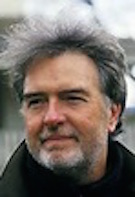 culture and history of a region – in this case both his home state of North Carolina and Appalachia. And, he said he loves both the music of the region and working to incorporate it into his writings.
“It always helps me connect with characters, to think about what music they respond to.”
Share A Writer’s Moment with a friend by clicking the g+1 button below.
November 3, 2016
Catching up on great quotes
I was tempted today to focus on a politician or two, just to join in all the noise from the current campaign season. But, better sense came over me and I decided, instead, to just “catch up” on some of the quotes that I’ve accumulated during the past few months and not had time to present.
Here are some comments by writers and other famous folks who also had some writing successes during their lifetimes, starting with a couple from “The Wizard of Westwood,” longtime Hall of Fame basketball coach John Wooden, who had 13 national championships at UCLA.
“If you don't have time to do it right,” Wooden once asked, “when do you think you’ll have time to do it over?” A great reader and author of several inspirational books, Wooden also noted that “The worst thing about new books is that they keep us from reading the old ones. I love re-reading the classics and old favorites.”***From French author Andre Malraux, who was born on this day in 1901: “Often the difference between a successful person and a failure is not that one has better abilities or ideas, but the courage to bet on one's ideas, to take a calculated risk - and to act.” In other words, to be bold!
***From longtime radio and television personality Art Linkletter: “My philosophy is to do the best you can for somebody. Help. It's not just what do you for yourself. It's how you treat people decently. The golden rule; there isn't big anything better than the golden rule. It's in every major religion in one language or another.”***And, finally, from one of my all-time favorite writers, Ernest Hemingway: “All good books are alike in that they are truer than if they had really happened. After you are finished reading one you will feel that all that happened, happened to you and afterwards it all belongs to you: the good and the bad, the ecstasy, the remorse and sorrow, the people and places and how the weather was.”
As the political season winds down, immerse yourself in a “favorite read.” And, happy writing as you uncover or discover your next “Writer’s Moments.”
Share A Writer’s Moment with a friend by clicking the g+1 button below.
November 2, 2016
'Immersed' in the story
<!-- /* Font Definitions */ @font-face {font-family:Times; panose-1:2 0 5 0 0 0 0 0 0 0; mso-font-charset:0; mso-generic-font-family:auto; mso-font-pitch:variable; mso-font-signature:3 0 0 0 1 0;} @font-face {font-family:"MS 明朝"; mso-font-charset:78; mso-generic-font-family:auto; mso-font-pitch:variable; mso-font-signature:1 134676480 16 0 131072 0;} @font-face {font-family:"MS 明朝"; mso-font-charset:78; mso-generic-font-family:auto; mso-font-pitch:variable; mso-font-signature:1 134676480 16 0 131072 0;} @font-face {font-family:Cambria; panose-1:2 4 5 3 5 4 6 3 2 4; mso-font-charset:0; mso-generic-font-family:auto; mso-font-pitch:variable; mso-font-signature:-536870145 1073743103 0 0 415 0;} /* Style Definitions */ p.MsoNormal, li.MsoNormal, div.MsoNormal {mso-style-unhide:no; mso-style-qformat:yes; mso-style-parent:""; margin:0in; margin-bottom:.0001pt; mso-pagination:widow-orphan; font-size:12.0pt; font-family:Cambria; mso-ascii-font-family:Cambria; mso-ascii-theme-font:minor-latin; mso-fareast-font-family:"MS 明朝"; mso-fareast-theme-font:minor-fareast; mso-hansi-font-family:Cambria; mso-hansi-theme-font:minor-latin; mso-bidi-font-family:"Times New Roman"; mso-bidi-theme-font:minor-bidi;} .MsoChpDefault {mso-style-type:export-only; mso-default-props:yes; font-family:Cambria; mso-ascii-font-family:Cambria; mso-ascii-theme-font:minor-latin; mso-fareast-font-family:"MS 明朝"; mso-fareast-theme-font:minor-fareast; mso-hansi-font-family:Cambria; mso-hansi-theme-font:minor-latin; mso-bidi-font-family:"Times New Roman"; mso-bidi-theme-font:minor-bidi;} @page WordSection1 {size:8.5in 11.0in; margin:1.0in 1.25in 1.0in 1.25in; mso-header-margin:.5in; mso-footer-margin:.5in; mso-paper-source:0;} div.WordSection1 {page:WordSection</style><span style="font-family: "times new roman"; mso-fareast-font-family: "Times New Roman";">“I often tell people who want to write historical fiction: don't read all that much <b style="mso-bidi-font-weight: normal;">about</b> the period you're writing about.<span style="mso-spacerun: yes;"> </span>Read things <b style="mso-bidi-font-weight: normal;">from </b>the period that you're writing about. There's a tendency to stoke up on a lot of biography and a lot of history, and not to actually get back to the original sources.” – Thomas Mallon</span></div><div class="MsoNormal" style="line-height: 200%;"><br /></div><div class="MsoNormal" style="line-height: 200%;"><span style="font-family: "times new roman"; mso-fareast-font-family: "Times New Roman";">An award-winning Novelist, essayist, and critic, Mallon (whose 65<sup>th</sup> birthday is today) is known for historical novels that are renowned for attention to detail and context as they provide their readers into a “fly on the wall" view of the historical events swirling around them.<span style="mso-spacerun: yes;"></span></span></div><div class="MsoNormal" style="line-height: 200%;"><br /></div><div class="MsoNormal" style="line-height: 200%;"><span style="font-family: "times new roman"; mso-fareast-font-family: "Times New Roman";">The author of 9 novels, including <i>Henry and Clara</i>, <i>Two Moons</i>, <span style="mso-bidi-font-style: italic;">and<i>Watergate</i></span>, he also has written one of the definitive works on plagiarism, <i style="mso-bidi-font-style: normal;">Stolen Words</i>, and two volumes of his insightful essays.<span style="mso-spacerun: yes;"> </span>All told, he has written 16 books and hundreds of news stories, features and essays in his long career as journalist and creative writer.</span><i><span style="mso-bidi-font-family: "Times New Roman"; mso-fareast-font-family: "Times New Roman";"></span></i><span style="mso-bidi-font-family: "Times New Roman"; mso-fareast-font-family: "Times New Roman";"></span></div><div class="MsoNormal" style="line-height: 200%;"><br /></div><div class="MsoNormal" style="line-height: 200%;"><span style="mso-bidi-font-family: "Times New Roman"; mso-fareast-font-family: "Times New Roman";">As a journalist who is fairly well versed about Watergate, I really enjoyed Mallon’s terrific crafting of his 2013 novel <i>Watergate</i>, a finalist for the 2013 PEN/Faulkner Award for Fiction.<span style="mso-spacerun: yes;"> </span>The colorful retelling of the Watergate scandal from the perspective of 7 characters is a truly great read.</span></div><div class="MsoNormal" style="line-height: 200%;"><span style="mso-bidi-font-family: "Times New Roman"; mso-fareast-font-family: "Times New Roman";"><span style="mso-spacerun: yes;"> </span></span><span style="font-family: "times new roman"; mso-fareast-font-family: "Times New Roman";"></span></div><div class="MsoNormal" style="line-height: 200%;"><span style="font-family: "times new roman"; mso-fareast-font-family: "Times New Roman";">Historical fiction, he said, is the genre in which he is most interested. “I think the main thing that has led me to write historical fiction is that it is a relief from the self,” he said. <a href="http://3.bp.blogspot.com/-7jjNPzJD7Xs..." imageanchor="1"><img border="0" src="https://3.bp.blogspot.com/-7jjNPzJD7X..." /></a></span></div><div class="MsoNormal" style="line-height: 200%;"><span style="font-family: "times new roman"; mso-fareast-font-family: "Times New Roman";">As for advice to writers of historical fiction, he offered this system that has worked so well for him.<span style="mso-spacerun: yes;"> </span>“For almost every novel I've written, I've read the daily newspaper of the time almost as if it were my current subscription. For <i style="mso-bidi-font-style: normal;">Two Moons</i>, which was set in 1877, I think I read just about every day of the <i style="mso-bidi-font-style: normal;">Washington Evening Star </i>for that year. For <i style="mso-bidi-font-style: normal;">Henry and Clara</i>, I read the <i style="mso-bidi-font-style: normal;">Albany Evening Journal </i>of the time.”<br style="mso-special-character: line-break;" /><br style="mso-special-character: line-break;" /></span><span style="font-family: "times"; font-size: 10.0pt; line-height: 200%;"></span></div><div class="MsoNormal" style="line-height: 200%;"><br /></div><div class="MsoNormal" style="line-height: 200%;"><b style="mso-bidi-font-weight: normal;"><span style="font-family: "times new roman"; mso-fareast-font-family: "Times New Roman";">Share <i style="mso-bidi-font-style: normal;">A Writer’s Moment</i> with a friend by clicking the g+1 button below.</span></b></div>