Dan Jorgensen's Blog, page 469
August 24, 2016
Packing writing with emotion
“When you write fiction, you can sort of invent more but also pack it with emotions that are very pertinent to you. Whereas with nonfiction, you have to be as factual as possible but also hopefully - also bring... emotional relevance to the piece.”—Oscar Hijuelos
Born on this day in 1951, Hijuelos (who died at age 62 of a heart attack) was an American novelist of Cuban descent who became the first Latino to win a Pulitzer Prize in fiction (for his book The Mambo Kings Play Songs of Love). Hijuelos also held the distinction of spending a year in the hospital as a young child and effectively losing his ability to speak Spanish during his convalescent period. He later wrote of that time: "I became estranged
 from the Spanish language and, therefore, my roots.” But, he still chose to write of the immigrant experience. “It's true that immigrant novels have to do with people going from one country to another, but there isn't a single novel that doesn't travel from one place to another, emotionally or locally.”
Educated in New York City, where he began his career in advertising, he started writing in short stories and dramas, then was encouraged by his family to try a novel about the Cuban-American experience. That book – Our House in the Last World – was critically received and launched a novel-writing career mostly focused on Hispanic-Latino Americans. Shortly before his death he was honored with the Hispanic Heritage Award for Literature.
Also a musician, he said music became an important backdrop to many of his writings, noting, “Music infuses your spirit with a certain energy that I try to convey in my work.”
Share A Writer’s Moment with a friend by clicking the g+1 button below.


August 23, 2016
Made of the stories we hear
“You have to relax, write what you write. It sounds easy but it's really, really hard. One of the things it took me longest to learn was to trust the writing process.” – Diane Setterfield A British author who just celebrated her 52nd birthday, Setterfield studied French Literature at The University of Bristol and taught at numerous schools as well as privately before her debut novel, The Thirteenth Tale, soared to the top of the New York Times bestseller list. A Gothic suspense novel, now also a successful BBC television series, the book has sold more than 3 million copies in 38 nations. Her newest book, Bellman & Black,also is now
 on the worldwide market.
 Always a reader who still puts reading at the top of her list of things to do when she’s not writing, Setterfield said she knew she was interested in pursuing a relationship with the man who became her husband when she learned he had more books than she did.
“Books are at the very heart of my life,” she said.
“We are made of the stories we have heard and read all through our lives.”
Share A Writer’s Moment with a friend by clicking the g+1 button below.
August 22, 2016
Matching 'voice' with emotion
“Choosing the narrator for a first-person story like 'Downriver' is a crucial decision because the voice has to be one the reader wants to listen to, and the voice has to be a match for the emotion you want the story to carry” – Will Hobbs
Celebrating his 69th birthday today, Hobbs grew up in a military family, moving often. When his dad was stationed in Alaska, “I fell in love with mountains, rivers, fishing, baseball, and books.,” he said. After college and marriage, he settled in the southwest mountains of Colorado where he began teaching and writing.
The author of 19 novels for “Tweens” and young adult readers, as well as two picture book stories, Hobbs credits his sense
 of audience to 14 years teaching reading and English. When he turned to writing, he set his stories mostly in wild places he knew from firsthand experience. Hobbs has said he wants to “take young people into the outdoors and engage their sense of wonder.
“Seven of my novels take place in the Southwest, in the Four Corners area which has been my home since 1973. I know these mountains, rivers, mesas and canyons well, so it's been natural for me to draw on my own personal experiences here.”
Share A Writer’s Moment with a friend by clicking the g+1 button below.
August 21, 2016
History, Science - a 'thrilling' combination
“Whenever I start a novel, I'm always looking for two things: a bit of science that makes me go 'what if?' and a piece of history that ends in a question mark.”—James Rollins
James Rollins is a pen name of James Paul Czajkowski, born on this day in 1961 in Chicago. He began his career as a veterinarian, something he said he still enjoys doing when the need arises. After starting his writing in short stories, he moved to action-adventure/thriller mystery novels in the late 1990s and became a full-time writer following the success of his first novel, Subterranean.
Rollins' experiences and expertise as an amateur spelunker and a certified scuba diver have provided content for many of his novels. Now translated into more than 40 languages, his Sigma series has been lauded as one of the "top crowd pleasers" (New York Times) and one of the "hottest summer reads" (People Magazine). In each novel, acclaimed for its originality, Rollins unveils unseen worlds, scientific breakthroughs, and historical secrets. The 7th in the series – The 7th Labyrinth – is set for a December release.

“I don't actually have a one wellspring of inspiration. Though I'm most often inspired while reading - both fiction and nonfiction,” Rollins said. “I subscribe to National Geographic, Scientific American, Discover, and a slew of other magazines. And it is while reading articles for pleasure and interest that an interesting 'What if?' will pop into my head.”
Share A Writer’s Moment with a friend by clicking the g+1 button below.
August 20, 2016
The unflappable Ogden Nash
“If you don't want to work you have to work to earn enough money so that you won't have to work” – Ogden Nash
Born on this day in 1902, Nash was known for his light verse, and at the time of his death in 1971 The New York Times said his "droll verse with its unconventional rhymes made him the country's best-known producer of humorous poetry.”
Nash wrote over 500 pieces of comic verse. The best of his work was published in 14 volumes between 1931 and 1972. When Nash wasn't writing poems, he made guest appearances on comedy and radio shows and toured the United States and the United Kingdom, giving lectures at colleges and universities. One he often liked to read and which I selected for Saturday’s Poem, is:Goody for Our Side and Your Side Too Foreigners are people somewhere else,
Natives are people at home;
If the place you’re at
Is your habitat,
You’re a foreigner, say in Rome.
But the scales of Justice balance true,
And tit leads into tat,
So the man who’s at home
When he stays in Rome
Is abroad when he’s where you’re at.
When we leave the limits of the land in which
Our birth certificates sat us,
It does not mean
Just a change of scene,
But also a change of status.
The Frenchman with his fetching beard,
The Scot with his kilt and sporran,
One moment he
May a native be,
And the next may find him foreign.
There’s many a difference quickly found
Between the different races,
But the only essential
Differential
Is living different places.
Yet such is the pride of prideful man,
From Austrians to Australians,
That wherever he is,
He regards as his,
And the natives there, as aliens.
Oh, I’ll be friends if you’ll be friends,
The foreigner tells the native,
And we’ll work together for our common ends
Like a preposition and a dative.
If our common ends seem mostly mine,
Why not, you ignorant foreigner?
And the native replies
Contrariwise;
And hence, my dears, the coroner.
So mind your manners when a native, please,
And doubly when you visit
And between us all
A rapport may fall
Ecstatically exquisite.
One simple thought, if you have it pat,
Will eliminate the coroner:
You may be a native in your habitat,
But to foreigners you’re just a foreigner.
Share A Writer’s Moment with a friend by clicking the g+1 button below.
August 19, 2016
Being part of a bigger picture
“When your dreams include service to others - accomplishing something that contributes to others - it also accelerates the accomplishment of that goal. People want to be part of something that contributes and makes a difference.” – Jack Canfield Canfield, who turns 72 today, is an author, motivational speaker, seminar leader, corporate trainer and entrepreneur, who has built his success around the spectacular Chicken Soup for the Soul series, which has more than 250 titles and 500 million copies in print in over 40 languages.
Canfield is the founder and CEO of The Canfield Training Group in Santa Barbara, California and founder of The Foundation for Self-Esteem in Culver City, California. Canfield hosts a radio program and writes a globally syndicated newspaper column and holds a Guinness World Record for having seven books
 on the New York Times best-seller list at the same time.
“By taking the time to stop and appreciate who you are and what you've achieved - and perhaps learned through a few mistakes, stumbles and losses - you actually can enhance everything about you,” Canfield said. “Self-acknowledgment and appreciation are what give you the insights and awareness to move forward toward higher goals and accomplishments.”
Share A Writer’s Moment with a friend by clicking the g+1 button below.
August 18, 2016
Casting the die; staying the course
“When I was only eleven years old, I decided to become a writer. I told this ambition in a letter to Laura Ingalls Wilder; the die was cast. How could I go back on my word?” – Sonia Levitin
A German American immigrant who escaped from Nazi Germany as a young girl (her family was Jewish), she was born Sonia Wolff on this day in 1934. She wrote her first poem at age 8 and has not only kept her word but ended up with over 40 novels for young adults and children. For good measure, she added a number of plays and wrote numerous essays on topics for adults.
Levitin began her professional writing career as a publicity columnist for several newspapers, but after her first novel Journey to America became an instant classic, she began to pick up traction as a professional novelist. Her novels for young adults often featured semi-autobiographical characters. And most of her books focus around historical events and tragedies, the theme being courageous main characters faced with difficult challenges
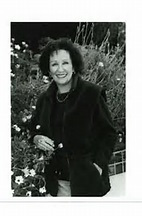 who must "take charge" in order to overcome these obstacles.
A frequent presenter on both writing and the immigrant experience, and a longtime teacher of creative writing, Levitan noted, “Through my writing, I have made new friends and continued to learn about this world of ours in all its wonder, with all its challenges.”
Share A Writer’s Moment with a friend by clicking the g+1 button below.
August 17, 2016
Imagination plus craftsmanship equals great writing
“I have no favorite genre or style but treat each novel with the same care, imagination and craftsmanship. It's as difficult to write a crime or a children's novel with a touch of style and grace as it is a literary novel.”– Garry Disher
Australian author Garry Disher knows of what he speaks, since he has been one of the world’s most noted authors of both crime fiction and children's literature.
Born this week in 1949, he grew up on his parents' farm in South Australia and began his writing career while still in college – first in Adelaide, then in Melbourne universities. In 1978, in recognition of his growing skill in the writing world, he was awarded a creative writing fellowship to Stanford where he wrote his first short story collection.
Disher travelled widely overseas before returning to Australia, where he has taught creative writing, but mostly doing writing full time since 1988. He has written more than 40 crime fiction and children's books, but in recent years he’s also gained recognition for his books about the craft of writing. Having read through some of his pieces, I highly commend them to anyone seeking to become a writer or advance a career as a writer. The books are chock full of great advice, examples and just good common sense that many writers sometimes overlook in their haste to get the words down on paper.

For a wonderful look at terrific Young Adult fiction, take a look at his The Devine Wind, and for a great example of the best in crime fiction, read his “Challis/Destry” series, especially Chain of Evidence, which won Australia’s Ned Kelley Award for best crime novel.
“A good writer can set a thriller anywhere and make it convincing: the trick is to evoke the setting in such a way that it highlights the crime or unsettles the reader.”
Share A Writer’s Moment with a friend by clicking the g+1 button below.
August 16, 2016
Writing to triumph over adversity
“It's funny, I'd rather be known as a writer who crafted a really nice piece about women's friendships over time. But that doesn't roll off the tongue like 'YouTube sensation.'” – Kelly Corrigan
Corrigan became that so-called “YouTube Sensation” with her essay “Transcending,” about women’s friendships and support for one-another during trying times, particularly when dealing with cancer. Many of her works have been about her own battle with breast cancer, although her first book The Middle Place, is a memoir about her Irish-American father’s battle with and triumph over the disease.
Corrigan launched a “how-to” website called “Circus of Cancer,” for friends and family of women with the disease, and she created the annual benefit concert Notes and Words in 2010, which has since raised over $5 million for Children's Hospital & Research Center in Oakland, Calif., where she and her family live. An annual event, Notes & Words features bestselling authors and top recording artists onstage together at the Fox Theatre in Oakland.
A native Virginian, she was born on this day in 1967, went on to The University of Richmond and then earned a Masters in Literature from San Francisco State University. She also is the host of Foreword, a series where top thinkers take on big time ideas.
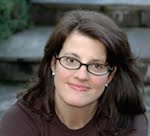
Speaking with humor and compassion to groups at hospitals, corporations, and nonprofits, she recounts the many experiences she has written about in her books and urges her audiences to be civically engaged by sharing her guide for finding important work, the value of participation, and the rewards of deep community involvement.
Share A Writer’s Moment with a friend by clicking the g+1 button below.
August 15, 2016
Sparking memories to fire up writing
Attending my wife's high school class reunion, the conversation turned toward "remembering" through writing. Many great ideas about sharing memories came into play, but one that came from their former 4th grade teacher seemed especially worthy of putting down here as we begin another new week.
She said she had received what she called "A starter book" for Christmas. In that, each page had a starter heading that was more or less "a prompt" for the individual to keep going. It would start with something like, "Every year as we celebrated the arrival of Spring, we would...." or "May Day was a great time for students in our school when I was young. We always liked to..."
While the prompt that was there always wasn't apropos, she said it usually spurred something else in her memory and she had not missed a single day in putting down a "full" new book.
That also reminded me of an exercise that two friends from St. Olaf College developed for their Elderhostel class that they created. Bruce Roberts and Howard Thorsheim, both professors of psycyhology at St. Olaf, came up with something they called "Bring A Thing." They would gather seniors together to talk about their childhood memories and also ask each one to bring one thing that was remindful of a special time in their lives. Bring a thing sparked dozens of conversations and often led to people at the gatherings leaving fired up to write down things that they had not spoken about for years -- providing a stimulating exercise for themselves and great memories for their families.
It seems as if anyone who teaches writing always tells would-be writers to remember that each has a "starter" story -- something from their own lives. Reunions, whether they be class style, family or community, truly can be a stimulus for getting the ink flowing toward that end. Happy writing as you recall your "Writer's moments."