Dan Jorgensen's Blog, page 470
August 14, 2016
Using humor to soften the blow
“The American press has the blues. Too many authorities have assured it that its days are numbered, too many good newspapers are in ruins.”– Russell Baker
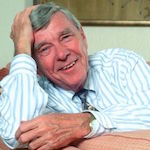
Baker, who turns 91 today, is an American writer known for his satirical commentary and self-critical prose while writing primarily for The New York Times. Often, his biting commentary would include elements of humor that made even those who disagreed with him want to read on to see what he might have to say. “Serious journalism need not be solemn,” he noted.
He won a Pulitzer for his commentary and then won another for his autobiography Growing Up. He also hosted the PBS show Masterpiece Theatre from 1992 to 2004.
A 1947 graduate of Johns Hopkins University, Baker decided to become a writer because, as he said in his usual disparaging way, "what writers did couldn't even be classified as work." His writing covered the spectrum, including a time when he was going to be a poet. But, “I gave up on new poetry … when most of it began to read like
 coded messages passing between lonely aliens in a hostile world.”
Thus, his primary work was in journalism, although he also was an essayist, a noted biographer and one-time playwright for Home Again, Home Again. He wrote or edited 17 books, and in recognition of his long and successful career, he was named a Fellow of the American Academy of Arts and Sciences.
Baker also was a strong advocate for what might be considered a dying art – writing letters. “A man writing a letter,” he said, “is a man in the act of thinking.”
Share A Writer’s Moment with a friend by clicking the g+1 button below.


August 13, 2016
Carved through words for posterity
“Your work is carved out of agony as a statue is carved out of marble.”– Louise Bogan
Bogan, a native of Maine, was born on this date in 1897, and made history when she was appointed the fourth Poet Laureate to the Library of Congress in 1945 – the first woman in the role.
As poetry editor of The New Yorkermagazine for nearly 40 years, she played a major role in shaping mainstream poetic sensibilities of the mid-20th Century.
Her works were widely published in most mainstream and arts magazines, often highly praised by critics and fellow writers alike, and she was honored by the American Academy of Poets for her lifetime efforts. For Saturday’s Poem, here is Louise Bogan’s
Song for the Last ActNow that I have your face by heart, I lookLess at its features than its darkening frame
Where quince and melon, yellow as young flame,
Lie with quilled dahlias and the shepherd's crook.
Beyond, a garden, There, in insolent ease
The lead and marble figures watch the show
Of yet another summer loath to go
Although the scythes hang in the apple trees.
Now that I have your face by heart, I look.
Now that I have your voice by heart, I read
In the black chords upon a dulling page
Music that is not meant for music's cage,
Whose emblems mix with words that shake and bleed.
The staves are shuttled over with a stark
Unprinted silence. In a double dream
I must spell out the storm, the running stream.
The beat's too swift. The notes shift in the dark.
Now that I have your voice by heart, I read.
Now that I have your heart by heart, I see
The wharves with their great ships and architraves;
The rigging and the cargo and the slaves
On a strange beach under a broken sky.
O not departure, but a voyage done!
The bales stand on the stone; the anchor weeps
Its red rust downward, and the long vine creeps
Beside the salt herb, in the lengthening sun.
Now that I have your heart by heart, I see.
Share A Writer’s Moment with a friend by clicking the g+1 button below.
August 12, 2016
Storytelling 101 at its finest
“One way an author dies a little each day is when his books go out of print.”– William Goldman
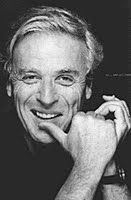
Goldman, who turns 85 today, is one of my favorite screenwriters – Academy Award-winning screenplays for Butch Cassidy and the Sundance Kid and All the President's Men being just two of the many highly successful works that he either wrote, or for which he served as a consultant.
Goldman first came to prominence for his novels before turning to film. His most notable works were the thriller Marathon Man, the comedy-fantasy The Princess Bride – both of which he adapted into very successful films – and Tinsel, one of the first “insider” tales about the treatment of women in the movie-making industry. He also wrote a number of mysteries, winning two Edgar Award for his efforts.
Described by fellow author Sean Egan as "one of the 20th century’s most popular storytellers," Goldman grew up in Chicago, earned a writing degree from Oberlin College and started writing as a poet.
 While writing many of his other top selling works he did research on Butch Cassidy and The Sundance Kid for nearly 10 years and said it was one of his favorites.
Often referred to as “a reluctant writer,” Goldman said, “The easiest thing to do on earth is not write.” He also noted, “But this is life on earth, you can't have everything.”
Share A Writer’s Moment with a friend by clicking the g+1 button below.
August 11, 2016
Find the good, and praise it
“In my writing, as much as I could, I tried to find the good, and praise it.”– Alex Haley
Born on this day in 1921, Haley wrote one of the pre-eminent books on the African American experience with his massive best-seller Roots: The Saga of an American Family. The 1976 book has been in continous print since it’s appearance, bolstered by two critically acclaimed television adaptations – the first in 1977 and the second this past year. The first adaptation established a record-breaking audience of over 130 million viewers.
The book and miniseries raised the public awareness of African American history and inspired a broad interest in genealogy and family history for all races causing Haley to say that was one of his proudest accomplishments. ”In every conceivable manner," he said, "the family is link to our past, bridge to our future.”
A native of New York, Haley's first book, which catapulted him onto the national scene, was The Autobiography of Malcolm Xpublished in 1965.
A Coast Guard veteran from both World War II and the Korean War, he was self-taught as a writer in order to “report” on things to folks back home, writing both for individuals and for his community newspapers. After his Coast Guard career, he expanded his reportorial efforts, which eventually led him to his biographical writing. While he achieved some recognition for his other works, it was Roots that always dominated.
“(But) I look at my books the way parents look at their children,” Haley said. “The fact that one becomes more successful than the others doesn't make me love the less successful one any less.”

Share A Writer’s Moment with a friend by clicking the g+1 button below.
August 10, 2016
Passing through to greatness
“I like the condition of being an outsider in writing, just passing through.”– Barry Unsworth
Unsworth was an English writer known for his historical fiction. He published 17 novels, and was shortlisted for the prestigious Booker Prize three times, winning once for Sacred Hunger. Born on this date in 1930, Unsworth did not start to write historical fiction until his sixth novel, Pascali's Island, the first of his Booker Prize nominees.
While he told great yarns, he was sometimes criticized for his “poetic license” with the subjects he chose to write about, but he said it was all about the story and not the actual history that he was choosing for his focus. “I’m not a biographer,” he said. “I’m a novelist.”
One of his best, obviously, was Sacred Hunger, which was a wrenching tale about the 1770s slave trade. An equally dynamic sequel, The Quality of Mercy, was his last book, published shortly before his death in 2012. .
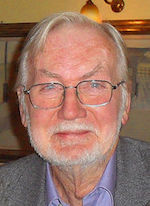
“Writers of historical fiction are not under the same obligation as historians to find evidence for the statements they make,” Unsworth said. “I believe, for us it is sufficient if what we say can't be disproved or shown to be false.”
Share A Writer’s Moment with a friend by clicking the g+1 button below.
August 9, 2016
A shared endeavor
“A writer is, after all, only half his book. The other half is the reader and from the reader the writer learns.” – P. L. Travers
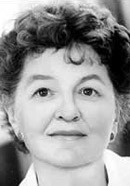
Australian-born (on this date in 1899) British novelist, actress, and journalist Travers emigrated to England and lived most of her adult life there, although she spent a number of years in America, living on several Southwest U.S. Indian Reservations and writing journalistically about the experience. Best known for her Mary Poppins’ series of children's books, she also was a noted actress during the 1920s. It was while acting that she changed her name to P.L. Travers, her birth name being Lyndon Goff.
Her first writing came as a poet during her teenage years and she was fairly successful. She let that go after getting into acting, but writing continued to be a draw, and after touring the world with a Shakespeare Theater company, she found her true calling writing children’s books. “My family didn't like me going on the stage,” she said, “but they didn't much like my being a writer, either.” By the time she had finished her long career, Travers was honored as an Officer of the Order of the British Empire by Queen Elizabeth II. She died in 1996.
Travers approached her writing with a questioning mind and never thought that what she had to say might be considered “answers” to any sort of writing puzzle. Perhaps every writer should think along those lines, especially when people want them to provide that magic elixir for putting words on paper. “For me, there are no answers, only questions,
 and I am grateful that the questions go on and on,” Travers said. “I don't look for an answer because I don't think there is one. So, I'm very glad to be the bearer of a question.”
Share A Writer’s Moment with a friend by clicking the g+1 button below.
August 8, 2016
Asking the 'write' questions
“I wrote Sophie's World in three months, but I was only writing and sleeping. I work for 14 hours a day when I'm working on a book.” – Jostein Gaarder
Norwegian author Jostein Gaarder, born on this date in 1952, is the author of numerous novels, short stories and children’s books. Also an intellectual, Gaarder is noted for writing books from a child’s perspective, often using metafiction (writing stories within stories). His biggest claim to fame is Sophie’s World: A Novel about the History of Philosophy, which has been translated into 53 languages and produced over 30 million copies.
Gaarder grew up in Oslo the son of two educators and the second generation of children’s book authors (his mother also had several children’s books published). That background helped develop a deep-rooted interest in reading, writing and teaching.
After several modest outings with his early works, he achieved his first big success in 1990 with The Solitaire Mystery, winner of the Norwegian Literary Critics’ Award and the Ministry of Cultural and Scientific Affairs Literary Prize. Then in 1991 he published Sophie’s World, which gained him worldwide acclaim.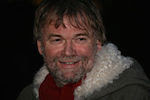 Gaarder has been involved in both politics and the promotion of sustainable development for nearly two decades. He established the Sophie Prize in 1997, an international award bestowed on foundations and individuals concerned with the environment. And, he said, as a writer he seeks answers and doesn’t like to provide them, noting, “I am really more interested in questions than in giving answers.”
Share A Writer’s Moment with a friend by clicking the g+1 button below.
Norwegian author Jostein Gaarder, born on this date in 1952, is the author of numerous novels, short stories and children’s books. Also an intellectual, Gaarder is noted for writing books from a child’s perspective, often using metafiction (writing stories within stories). His biggest claim to fame is Sophie’s World: A Novel about the History of Philosophy, which has been translated into 53 languages and produced over 30 million copies.
Gaarder grew up in Oslo the son of two educators and the second generation of children’s book authors (his mother also had several children’s books published). That background helped develop a deep-rooted interest in reading, writing and teaching.
After several modest outings with his early works, he achieved his first big success in 1990 with The Solitaire Mystery, winner of the Norwegian Literary Critics’ Award and the Ministry of Cultural and Scientific Affairs Literary Prize. Then in 1991 he published Sophie’s World, which gained him worldwide acclaim.
 Gaarder has been involved in both politics and the promotion of sustainable development for nearly two decades. He established the Sophie Prize in 1997, an international award bestowed on foundations and individuals concerned with the environment. And, he said, as a writer he seeks answers and doesn’t like to provide them, noting, “I am really more interested in questions than in giving answers.”
 Share A Writer’s Moment with a friend by clicking the g+1 button below.
August 7, 2016
Where to find your ideas
“I always tell my students, 'If you walk around with your eyes and ears open, you can't possibly live long enough to write all the novels you'll encounter.”– Jill McCorkle
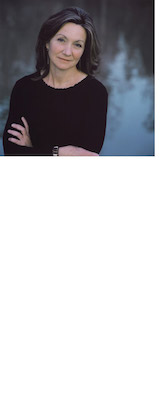
Short story writer and novelist McCorkle was born on this date in 1958 in North Carolina where she grew up writing and never stopped, finding ideas in every nook and cranny around her. A writer who also enjoys sharing her skills, she has not only written dozens of pieces but also has been a creative writing professor at some of the top institutions in the nation, teaching at Tufts, the University of North Carolina, Duke, Harvard, Bennngton and now North Carolina State.
McCorkle has the distinction of having her first two novels – The Cheer Leader and July 7th – published on the same day in 1984. Five of her books have been named New York Times notable books, and McCorkle has received the New England Booksellers Award, the John Dos Pasos Prize for Excellence in Literature and the North Carolina Award for Literature.
As for advice to new writers, she said character development is a key. “You want to feel that your reader does identify with the characters so that there's a real entry into the story - that some quality speaks to the individual.”
Share A Writer’s Moment with a friend by clicking the g+1 button below.
August 6, 2016
Writing on behalf of the earth
“The care of the Earth is our most ancient and most worthy, and after all our most pleasing responsibility. To cherish what remains of it and to foster its renewal is our only hope.” – Wendell Berry
A native Kentuckian, born this day in 1934, he grew up on a farm and continues to farm yet today, although writing and speaking are important and busy parts of his life. A prolific author, he has written many novels, short stories, poems, and essays, and is an elected member of the Fellowship of Southern Writers.
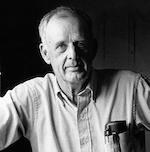 Elected to the American Academy of Arts & Sciences in 2013, he also is a recipient of The National Humanities Medal.
 Berry's lyric poetry often appears as a contemporary eclogue, pastoral, or elegy; but he also composes dramatic and historical narratives, and I encourage you to look up his works "Bringer of Water" and "July, 1773." Or for a wonderful view of his view of farm life and nature, read his book Clearing. For Berry, poetry exists "at the center of a complex reminding.” Here, for Saturday’s Poem, is Berry’s:WaterI was born in a drought year. That summer
my mother waited in the house, enclosed
in the sun and the dry ceaseless wind,
for the men to come back in the evenings,
bringing water from a distant spring.
Veins of leaves ran dry, roots shrank.
And all my life I have dreaded the return
of that year, sure that it still is
somewhere, like a dead enemy’s soul.
Fear of dust in my mouth is always with me,
and I am the faithful husband of the rain,
I love the water of wells and springs
and the taste of roofs in the water of cisterns.
I am a dry man whose thirst is praise
of clouds, and whose mind is something of a cup.
My sweetness is to wake in the night
after days of dry heat, hearing the rain.
Share A Writer’s Moment with a friend by clicking the g+1 button below.
August 5, 2016
Following life's 'purpose'
“One of the great joys of life is creativity. Information goes in, gets shuffled about, and comes out in new and interesting ways.”– Peter McWilliams
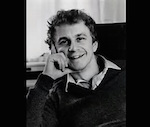
A Michigan native born on this day in 1949, McWilliams was an author, poet, self-publisher and photographer who started writing and publishing early, producing and self-publishing a collection of poems called Come Love with Me and Be My Life at age 17.
By age 25 he was a self-proclaimed Transcendental Meditationist and actively writing about his newfound philosophy. In the process, he produced a series of TM books that made the New York Timesbestseller lists. A terrific photographer as well, his book of photographs, Portraits - A Book of Photographs by Peter McWilliams, also hit many bestseller lists.
In all, he authored more than 40 books and was a successful speaker before dying young (age 50) after contracting non-Hodgkin’s Lymphoma. In the process he became one of the early activists for the use of marijuana for medical treatment
 – his specifically and something he thought was “his purpose” in life.
“While goals are chosen, a purpose is discovered,” McWilliams said. “Our purpose (as human beings) is something we have been doing all along, and will continue to do, regardless of circumstances, until the day we die.”
Share A Writer’s Moment with a friend by clicking the g+1 button below.