Dan Jorgensen's Blog, page 472
July 25, 2016
Seeing the same words for the first time
“All my life I've looked at words as though I were seeing them for the first time.” – Ernest Hemingway
When Hemingway’s birthday rolls around (he was born in July, 1899) I seem to be reading yet another volume from his books of letters. I’ve been gratified to learn that there are about 20 more volumes to come, so I should be immersed in the words he chose to share with friends, acquaintances and even adversaries for as long as I hope to produce “Writer’s Moment.”
I like to say when doing talks or meeting writers’ groups that Hemingway was many things, some of them admirable, many not, but above all he was a great observer of life, of the human condition, and of nature. And he was meticulous in his choice of words and his use of them. “I rewrote the ending to Farewell to Arms, the last page of it, thirty-nine times before I was satisfied,” he said in one interview.
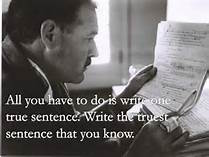
He often wrote by hand and would sit down each morning and completely re-read, edit and re-write whatever he had done the previous day before creating his next output. Rarely satisfied with his first creation he said he was grateful for the opportunity to re-read each day, then read again when a typist had transcribed it, and finally to read the galley proofs before it appeared.
Sometimes chastised for being “too concise,” he said writers don’t need to be long-winded or flowery if they are effective with their word selections. “If a writer knows enough about what he is writing about, he may omit things that he knows,” he said. “The dignity of movement of an iceberg is due to only one ninth of it being above water.”
Share A Writer’s Moment with a friend by clicking the g+1 button below.


July 24, 2016
Integrity and 'class' personified
“Integrity is not a conditional word. It doesn't blow in the wind or change with the weather. It is your inner image of yourself, and if you look in there and see a man who won't cheat, then you know he never will.” – John D. MacDonald
Born on this date in 1916, crime/suspense novelist and short storywriter MacDonald achieved the highest accolade in his genre, named a Grandmaster by the Mystery Writers of America shortly before his death in 1986. A self-proclaimed “accidental writer,” he also was the winner of a National Book Award, and is perhaps best-known for his popular, critically acclaimed Travis McGeeseries.
MacDonald's literary career began in 1945 while in the Army. Waiting in the Pacific for his ship home, he wrote a short story and mailed it to his wife Dorothy. She loved it and submitted it to Esquire -- which promptly rejected it. So, she sent it to Story magazine, which accepted it for $25, pretty good payment for the time.
MacDonald decided to give writing a further try. After writing almost nonstop for 4 months and getting hundreds of rejection slips, Dime Detective took a short story and paid him $40. Encouraged, he re-worked other stories and was off and running. Ultimately, he sold more than
500 stories to detective, mystery and adventure magazines.
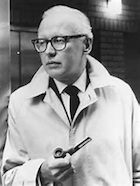
His first novel appeared in 1950, but it was his 1957 book The Executioners that put him on the map. An almost continuous best-seller since, it also holds the distinction of being the focus of two feature films, both box office successes.
His character Travis McGee made his first appearance in 1964 in The Deep Blue Good-bye, starting a run of 21 bestsellers featuring him. Each title in the series includes a color, the last being The Lonely Silver Rain shortly before MacDonald’s death. This past May, Nathaniel Philbrick - author of In The Heart Of The Sea and Mayflower - said: "I recently discovered John D. MacDonald’s Travis McGee series … and it's as prescient and verbally precise as anyone writing today can possibly hope to be."
Share A Writer’s Moment with a friend by clicking the g+1 button below.
July 23, 2016
Happy life, happy poetry
“I always tell students that writing a poem and publishing it are two quite separate things, and you should write what you have to write, and if you're afraid it's going to upset someone, don't publish it.”– Wendy Cope
A contemporary English poet, Cope (who turned 71 this week) has attracted a popular following with her lighthearted, often comical poetry, as well as achieving literary credibility by winning a number of awards and making an award shortlist almost annually over the last two decades.
Named an Officer of the British Empire (entitling her to be addressed as Dame Wendy) in 2010, she is far from expressing herself as royalty when writing her poems. In fact, she has been lauded for her keen eye for the everyday, mundane aspects of English life, especially the desires, frustrations, hopes, confusions and emotions in intimate relationships.
 She also is a great writer for kids, and empathizes with their hopes, dreams and frustrations.
 For Saturday’s Poem, here’s just one of the dozens and dozens of clever Wendy Cope poems that I’ve loved reading over the years. And, I hope you'll look for her, too. Enjoy, and happy weekend!
The Orange
At lunchtime I brought a huge orange – The size of it made us all laugh.I peeled it and shared it with Robert and Dave – They got quarters, and I had a half.
That orange, it made me so happy,As ordinary things often doJust lately. The shopping. A walk in the park. This is peace and contentment. It’s new.
The rest of the day was quite easy,I did all the things on my listAnd enjoyed them, and had some time over.I love you. I’m glad I exist.
Share A Writer’s Moment with a friend by clicking the g+1 button below.
July 22, 2016
Writing whatever you can imagine
“The one thing emphasized in any creative writing course is 'write what you know,' and that automatically drives a wooden stake through the heart of imagination. If they really understood the mysterious process of creating fiction, they would say, 'You can write about anything you can imagine.'”– Tom Robbins
Born on this day in 1932, Robbins grew up (as he puts it) “as a hillbilly” in the mountains of North Carolina, the grandson of two Baptist preachers who he said were “mightily influential” in his development as a storyteller.
In addition to Even Cowgirls Get The Blues (both a bestseller and a highly popular movie) Robbins is the author of 8 novels, numerous short stories, many essays and several screenplays. In 2000, Robbins was named one of the 100 Best Writers
 of the 20th Century by Writer's Digest magazine, and the legendary Italian critic Fernanda Pivano called Robbins “the most dangerous writer in the world.” In October 2012, Robbins received the 2012 Literary Lifetime Achievement Award from the prestigious Library of Virginia.
 As he celebrates his 84th birthday, Robbins still maintains a regular daily writing schedule. “I show up in my writing room at approximately 10 a.m. every morning without fail,” he said. “Sometimes my muse sees fit to join me there and sometimes she doesn't, but she always knows where I'll be. She doesn't need to go hunting in the taverns or on the beach or drag the boulevard looking for me.”
Good words for any writer to heed. It’s hard for your muse to be effective if she can’t locate you at in your creative space.
Share A Writer’s Moment with a friend by clicking the g+1 button below.
July 21, 2016
Going to a world of her own
“I was encouraged to be imaginative and read, and it was a great childhood for a budding writer because I had the time and the freedom to go into a world of my own.” – Sarah Waters
Born on this day in 1966, Sarah Waters grew up in Wales and said that while she did read, read, read and eventually become a writer, it wasn’t first on her list of aspirations. “For a long time,” she said, “I wanted to be an archaeologist.”
She said that she thought she was headed for university at a fairly eearly age, even though no one else in her family had been. “I really enjoyed learning. I remember my mother telling me that I might one day go to university and write a thesis, and explaining what a thesis was; and it seemed a very exciting prospect. I was clearly a bit of a nerd.”
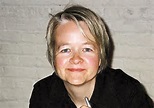
While she enjoys writing historical fiction, she also likes to shock her readers from time-to-time with some rather graphic details, “keeping them on their toes, so to speak.” Her most recent book, The Paying Guests, is not only a terrific murder mystery but a detailed study of life in London right after World War I.
“I love research,” Waters said. “Sometimes I think writing novels is just an excuse to allow myself this leisurely time of getting to know a period and reading its books and watching its films. I see it as a real treat.”
Share A Writer’s Moment with a friend by clicking the g+1 button below.
Imagination running wild
“I was encouraged to be imaginative and read, and it was a great childhood for a budding writer because I had the time and the freedom to go into a world of my own.” – Sarah Waters
Born on this day in 1966, Sarah Waters grew up in Wales and said that while she did read, read, read and eventually become a writer, it wasn’t first on her list of aspirations. “For a long time,” she said, “I wanted to be an archaeologist.”
She said that she thought she was headed for university at a fairly eearly age, even though no one else in her family had been. “I really enjoyed learning. I remember my mother telling me that I might one day go to university and write a thesis, and explaining what a thesis was; and it seemed a very exciting prospect. I was clearly a bit of a nerd.”
While she enjoys writing historical fiction, she also likes to shock her readers from time-to-time with some rather graphic details, “keeping them on their toes, so to speak.” Her most recent book, The Paying Guests, is not only a terrific murder mystery but a detailed study of life in London right after World War I.
“I love research,” Waters said. “Sometimes I think writing novels is just an excuse to allow myself this leisurely time of getting to know a period and reading its books and watching its films. I see it as a real treat.”
Share A Writer’s Moment with a friend by clicking the g+1 button below.
July 20, 2016
Practicing a wide daily writing diet
“My cure for writer's block is to step away from the thing I'm stuck on, usually a novel, and write something totally different. Besides fiction, I write poetry, screenplays, essays and journalism. It's usually not the writing itself that I'm stuck on, but the thing I'm trying to write. So I often have four or five things going at once.” – Jess Walter
I like to work on several things simultaneously, so what Walter says resonates with me as a writer. And, writing this blog, of course, is always a catalyst for getting my writing juices flowing.
Born on this day in 1965, Walter is the Spokane, Wash.-based author of 6 novels, a collection of short stories, a non-fiction book, and myriad essays and short stories. To date, his works have been published in 26 countries and translated into 28 languages.
His number one best-seller, the 2013 Beautiful Ruins, has an interesting premise. It revolves around the people who surround or interact with Elizabeth Taylor and Richard Burton during the filming of Cleopatra. And, of course, everything fits into the “What If?” category.
A frequent speaker, too, he says the best advice he can give
 to new writers is to “just do it and don’t worry,” noting that he wrote for 7 years and made a total of $25 before finally breaking through.
“Forget being 'discovered.' All you can do is write,” he added. “If you write well enough, and are stubborn enough to embrace failure, and if you happen to fall into the narrow categories that the book market recognizes, then you might make a little money. Otherwise, it's a struggle. (But) A gorgeous struggle.”
Share A Writer’s Moment with a friend by clicking the g+1 button below.
July 19, 2016
Imagining the past in creative style
“Writing is a solitary occupation. Family, friends, and society are the natural enemies of the writer. He must be alone, uninterrupted, and slightly savage if he is to sustain and complete an undertaking.”— Jessamyn West
Mary “Jessamyn” West, born on this date in 1902, was an American author of short stories and novels, notably The Friendly Persuasion. Her stories, although shaped by her imagination, are loosely based on tales told to her by her mother and grandmother about their Quaker farm life in rural Indiana.
It’s interesting also to note that her grandmother also was the grandmother of Richard Nixon and to observe the divergent paths the cousins took to fame. While Nixon was serving as vice president, West’s best-selling novel became an Academy Award-nominated movie. Then, her sequel titled Except for Me and Thee, another best-seller, came out at the same time that Nixon became President. That book, too, became a successful movie.Although she spent most of her life in California,
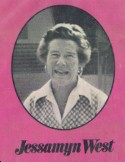 almost all of her 21 novels are about Indiana, a state in which she did not live and seldom visited. "I write about Indiana because knowing little about it, I can create it from the images I’ve learned from my grandmother’s stories. The past is really almost as much a work of the imagination as the future.”
Share A Writer’s Moment with a friend by clicking the g+1 button below.
July 18, 2016
Hearing from an American treasure
“Novelists go about the strenuous business of marrying and burying their people, or else they send them to sea, or to Africa, or at the least, out of town. Essayists in their stillness ponder love and death.” – Cynthia Ozick
Ozick is one of America’s treasures when it comes to writing both essays and novels. I was driving Sunday and heard a marvelous interview with this 88-year-old novelist, essayist, and short story writer. As soon as I got home I tracked
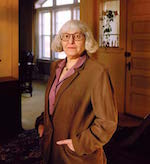 down the link to the interview to share with readers of this blog. The interview is about 7 minutes long. I promise it will be 7 of the best minutes you’ll spend as you listen to the insights and thoughtful discourse from this terrific writer. And while she “teaches” as she shares, she feels writing really cannot be taught.
“No one can teach writing, but classes may stimulate the urge to write. If you are born a writer, you will inevitably and helplessly write,” she said. “ A born writer has self-knowledge. Read, read, read. And if you are a fiction writer, don't confine yourself to reading fiction. Every writer is first a wide reader.”
Here is the link to her interview. Enjoy.http://www.npr.org/2016/07/17/486172884/why-does-cynthia-ozick-write-i-simply-must-she-says
Share A Writer’s Moment with a friend by clicking the g+1 button below.
July 17, 2016
Matching up on life experiences
“When you're watching somebody read your material and they smile and nod, you know you've found that place where your experience and their experience match, even though they aren't the same exact experience.”– Chris Crutcher
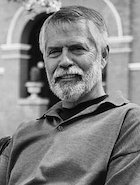
Born on this date in 1946, Crutcher has combined a successful career as a family therapist with an equally successful career as a writer for teens. In the process he has been honored with a lifetime achievement award – the coveted Margaret Edwards Award (recognition for writing for teens) – from the American Library Association.
Many of his novels concern teenaged athletes (especially swimmers) who face major problems and get the help and support they need from wise, caring adults – usually either a teacher or a coach. Unafraid to tackle such issues as abusive parents, racial and religious prejudice, mental and physical disability, or crushing poverty, Crutcher’s books have won the praise of millions despite being censored by those who think they are too graphic. Despite this controversy, he has earned dozens of awards. One of his most honored books is 2007’s Deadline,
 the story of a high school senior dying from a rare blood disease and who has kept that fact a secret so that he can pack a lifetime of full living into his last year of life.
“What I hope my writing reflects... is a sense of the connections between all human beings... and a different perspective on the true nature of courage,” Crutcher said. “For me, those are things worth exploring and writing about.”
Share A Writer’s Moment with a friend by clicking the g+1 button below.