Dan Jorgensen's Blog, page 474
July 6, 2016
Head first into history ... and life
“Writers displace their anxiety on to the tools of the trade. It's better to say that you haven't got the right pencil than to say you can't write, or to blame your computer for losing your chapter than face up to your feeling that it's better lost.” – Hilary Mantel
Born on this day in 1952, Mantel is a leading writer of historical fiction and the first woman to win the prestigious Booker Prize twice – for the first two novels in her fictional trilogy of Thomas Cromwell’s rise and fall in the court of Henry VIII. The first, 2009’s Wolf Hall, not only won a basketfull of writing awards but also has been adapted as both a stage play and a BBC Masterpiece Theater production.
The second, Bring Up the Bodies, has been a multiple writing award-winner and is in production for a BBC show. Her anxiously awaited third installment, The Mirror and the Light, is in progress. The trilogy’s broad-based success comes from Mantel’s ability to reach out to readers of all ages. “History offers us vicarious experience,” she said. “(And) it allows the youngest student to possess the ground equally with his (or her) elders.”

Mantel has established herself as a great historical writer and a great biographer and autobiographer. Many of her top tales are based on her real-life experiences, including the terrific Eight Months on Ghazzah Street, which drew on time she lived in Saudi Arabia and is a great exploration of the tensions that can arise between Islamic culture and liberal Westerners.
A prolific writer, she said she has the perfect formula for overcoming writer’s block, and prescribes it to all who seek the writing life. “If you get stuck, get away from your desk. Take a walk, take a bath, go to sleep, make a pie, draw, listen to music, meditate, exercise,” she advised. “Whatever you do, don't just stick there scowling at the problem. Don't make telephone calls or go to a party; (because) if you do, other people's words will pour in where your own lost words should be.”
Share A Writer’s Moment with a friend by clicking the g+1 button below.


July 5, 2016
The greatest showman
“Literature is one of the most interesting and significant expressions of humanity.” – P. T. Barnum
When I teach courses in public relations, I always like to spend some time talking about the great showman and marketer Phineas Taylor “P.T.” Barnum, who I think gets a bad rap primarily for a statement he never made, “There’s a sucker born every minute.” What he did say, though, was that “Every crowd has a silver lining. They just want something to entertain them and upon which to spend some of that silver.”
Politician, showman, and businessman, Barnum, who was born on this date in 1810, founded the internationally acclaimed Barnum & Bailey Circus, and promoted some of the most widely sought after events of his time, including concerts – truly the first promoter of what today would be called “rock star” tours. His promotion and nationwide tour of Swedish opera singer Jenny Lind earned hundreds of thousands for himself and Lind and showed him the true power of great marketing.
After that, he staged dozens of theatrical productions – also the first to be “toured,” organized flower shows, beauty contests, dog shows, and poultry contests. His most popular were baby contests (fattest baby, handsomest twins, etc.) .

Barnum also was an author, publisher, philanthropist, and for some time a politician, but he always said of himself, "I am a showman by profession...and all the gilding shall make nothing else of me.” As a writer and editor, he started a pictorial weekly newspaper Illustrated News and wrote an autobiography, which through many revisions sold more than one million copies. An avid reader, he encouraged everyone to read, read, read, especially newspapers. “He who is without a newspaper is truly cut off from his species.”
But, of course, it is his showmanship and marketing that have stood the test of time. “Without promotion,” he once said, “something terrible happens... nothing!”
Share A Writer’s Moment with a friend by clicking the g+1 button below.
July 4, 2016
The potency and power of words
“Words - so innocent and powerless as they are, as standing in a dictionary, how potent for good and evil they become in the hands of one who knows how to combine them.” – Nathaniel Hawthorne
Born on the 4th of July in 1804, Hawthorne became one of the prominent mid-19th Century American writers, primarily through his writings about his native New England. His fiction works are considered part of the Romantic movement and, more specifically, Dark romanticism, and his themes often center on the inherent evil and sin of humanity with moral messages and deep psychological complexity.
The most prominent story that has lasted through the ages, of course, is his tale of adultery, The Scarlet Letter. It’s success catapulted him from near-obscurity into the center of the New England writing movement that included such prominent writers as Ralph Waldo Emerson and Henry Wadsworth Longfellow. He took advantage of his new popularity to rapidly publish The House of the Seven Gables, Wonder Book for Girls and Boys, and a new version of his earlier book Twice-Told Tales.
The great-great grandson of one of the judges at the Salem Witch Trials, Hawthorne wrote often about Puritanic themes and espoused being pure, accurate and meticulous, especially when it came to the power that writers' words can convey. “Accuracy is the twin brother of honesty; inaccuracy of dishonesty,” he noted. “Easy reading is damn hard writing.”
Share A Writer’s Momentwith a friend by clicking the g+1 button below.
July 3, 2016
Building close 'fictional' friendships
“One of the things that writing has taught me is that fiction has a life of its own. Fictional places are sometimes more real than the view from our bedroom window. Fictional people can sometimes become as close to us as our loved ones.” – Joanne Harris An English author, Harris is best known for her award-winning novel Chocolatwhich was later turned into an Oscar nominated film starring Juliette Binoche, Judi Dench and Johnny Depp. Her two dozen-plus books have won numerous awards, and now been published in more than 50 countries. She’s also made a name for herself as a literary judge for a number of major writing awards. Born on this date in 1964, Harris started
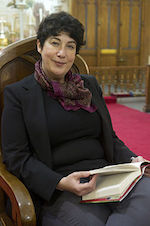 writing in elementary school and had stories published while still in high school. Early on her novels often were focused on mysticism, literary ghost stories and magic. But after Chocolat’s success, she branched into a wide range of genres, including two books of short stories, a couple of cookbooks, including one in French, a fantasy based on Norse mythology, and several psychological thrillers.
“I like literature that you respond to in some way,” she said. “You laugh, you cry, you turn the light on - that's great, it's eliciting a response by proxy. If you can actually get someone to sit on the edge of their seat and feel nervous if there's a knock at the door, then you've done something pretty terrific as a writer.”
Share A Writer’s Moment with a friend by clicking the g+1 button below.
July 2, 2016
Our inspiring poem of celebration
Francis Scott Key, 1779-1843, was an American lawyer, author, and amateur poet, from Georgetown, Washington, D.C., who wrote the poem “The Defence of Fort McHenry” that gave us our nation’s national anthem. Key, who had been sent to negotiate the release of American prisoners aboard one of the British ships in Baltimore Harbor, was instead, detained aboard the ship himself as the British prepared to bombard Fort McHenry and capture the city. Unable to do anything but watch the bombardment from the deck – on the night of September 13–14, 1814 – he saw at dawn that the American flag still flew above the embattled fort and reported this to the prisoners being held below.
After the assault failed, he was allowed to return to Baltimore and, inspired, he wrote his famous poem about the experience – the first stanza now used as our anthem. Here, in it’s entirety on this 4th of July weekend, and for “Saturday’s Poem,” is
The Star Spangled Banner
O say, can you see, by the dawn’s early light,What so proudly we hailed at the twilight’s last gleaming?Whose broad stripes and bright stars through the perilous fight, O’er the ramparts we watched were so gallantly streaming; And the rocket’s red glare, the bombs bursting in air, Gave proof through the night that our flag was still there; O say, does that star-spangled banner yet wave O’er the land of the free, and the home of the brave? On the shore dimly seen through the mists of the deep, Where the foe’s haughty host in dread silence reposes, What is that which the breeze, o’er the towering steep, As it fitfully blows, now conceals, now discloses? Now it catches the gleam of the morning’s first beam, In full glory reflected now shines on the stream; ‘Tis the star-spangled banner; O long may it wave O’er the land of the free, and the home of the brave! And where is that band who so vauntingly swore That the havoc of war and the battle’s confusion A home and a country should leave us no more? Their blood has washed out their foul footsteps’ pollution. No refuge could save the hireling and slave, From the terror of flight and the gloom of the grave; And the star-spangled banner in triumph doth wave O’er the land of the free, and the home of the brave! O! thus be it ever, when freemen shall stand Between their loved homes and the war’s desolation! Blest with victory and peace, may the heav’n-rescued land, Praise the power that hath made and preserved us a nation. Then conquer we must, for our cause it is just. And this be our motto— “In God is our trust;" And the star-spangled banner in triumph shall wave O’er the land of the free, and the home of the brave.
Happy 4th of July!
Share A Writer’s Moment with a friend by clicking the g+1 button below.
After the assault failed, he was allowed to return to Baltimore and, inspired, he wrote his famous poem about the experience – the first stanza now used as our anthem. Here, in it’s entirety on this 4th of July weekend, and for “Saturday’s Poem,” is
The Star Spangled Banner
O say, can you see, by the dawn’s early light,What so proudly we hailed at the twilight’s last gleaming?Whose broad stripes and bright stars through the perilous fight, O’er the ramparts we watched were so gallantly streaming; And the rocket’s red glare, the bombs bursting in air, Gave proof through the night that our flag was still there; O say, does that star-spangled banner yet wave O’er the land of the free, and the home of the brave? On the shore dimly seen through the mists of the deep, Where the foe’s haughty host in dread silence reposes, What is that which the breeze, o’er the towering steep, As it fitfully blows, now conceals, now discloses? Now it catches the gleam of the morning’s first beam, In full glory reflected now shines on the stream; ‘Tis the star-spangled banner; O long may it wave O’er the land of the free, and the home of the brave! And where is that band who so vauntingly swore That the havoc of war and the battle’s confusion A home and a country should leave us no more? Their blood has washed out their foul footsteps’ pollution. No refuge could save the hireling and slave, From the terror of flight and the gloom of the grave; And the star-spangled banner in triumph doth wave O’er the land of the free, and the home of the brave! O! thus be it ever, when freemen shall stand Between their loved homes and the war’s desolation! Blest with victory and peace, may the heav’n-rescued land, Praise the power that hath made and preserved us a nation. Then conquer we must, for our cause it is just. And this be our motto— “In God is our trust;" And the star-spangled banner in triumph shall wave O’er the land of the free, and the home of the brave.
Happy 4th of July!
Share A Writer’s Moment with a friend by clicking the g+1 button below.
July 1, 2016
A writing (and writers') pioneer
“The biggest stories are written about the things which draw human beings closer together.” – Susan Glaspell
A Pulitzer Prize-winning playwright, actress, novelist, and journalist, Glaspell founded – along with husband George Cram Cook – the Provincetown Players, America’s first modern American theater company. During the Great Depression she served in the Works Progress Administration (WPA) as Midwest Bureau Director of the Federal Theater Project, created not as a cultural activity but as a relief measure to employ artists, writers, directors and theater workers during that terrible ordeal.
Born on this date in 1876, she was a prolific writer, producing 9 novels, 15 plays, over 50 short stories, and a biography. She often set her semi-autobiographical stories in her native Iowa and was a leading writer on such contemporary issues as gender, ethics, and dissent, while featuring deep, sympathetic characters who took principled stands.
Sometimes called “American Drama’s best kept secret,” she is today recognized as a pioneering feminist writer and our country’s first important
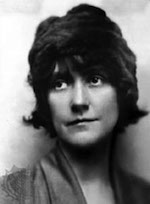 modern female playwright. Her one-act play Trifles, written in 1916, is frequently cited as one of the greatest works of American theater. It was adapted as a short story and 50 years later as a movie under the title A Jury of Her Peers.
Inspired by the great journalist Nellie Bly (one of my own inspirations), she was a reporter by age 18, then went on to study at Drake University where she got her first taste of “being on-stage,” excelling in male-dominated debate competitions. She continued writing while in school and the Des Moines Daily News made her its first full-time female reporter, covering the legislature and murder cases.
“I am glad I worked on a newspaper,” she later said, “because it made me know I had to write whether I felt like it or not. And I loved it!”
Share A Writer’s Moment with a friend by clicking the g+1 button below.
June 30, 2016
Framing the everyday world
“With a photograph, you are left with the same modes of interpretation as you are with a book. You ask: 'What do we know about the author and their background? What do I know about the subject?'” – Joel Sternfeld
Born on this date in 1944, Sternfeld is noted for his large-format documentary pictures of the United States and for helping establish color photography as a respected artistic medium. With many works in the permanent collections of the Museum Of Modern Art in New York City and the Getty Center in Los Angeles, he has not only established himself as an artistic “force,” but also influenced a generation of color photographers.
And, his writing in support of his photographs have made him an important chronicler of his life and times. American Prospects, perhaps Sternfeld's most known book, explores the irony of human-altered landscapes in the United States. To make the book, Sternfeld photographed ordinary things, including unsuccessful towns and barren-looking landscapes. His book On This Site: Landscape in Memoriam is about violence in America. Sternfeld photographed sites of tragedies, supplemented by his thoughtful text about the events that happened there.
 Green Valley, AZ, 1978, by Joel Sternfeld – Bachmann Gallery, Berlin A longtime professor of photography at New York’s Sarah Lawrence University, his own books of photos and his essays on photography are part of the photographic teaching lexicon at many institutions in the U.S. and abroad. “A photographer must choose a palette just as painters choose theirs,” he said. And, I would add, as a writer chooses a topic on which to focus his or her words.
To see more of his works currently at MOMA, check out this website: http://www.moma.org/collection/artists/5656?locale=en
Share A Writer’s Moment with a friend by clicking the g+1 button below.
June 29, 2016
Exuberance from deed and pen
“True happiness comes from the joy of deeds well done, the zest of creating things new.” – Antoine de Saint- Exupéry
Born on this day in 1900, the French writer, poet, aristocrat, journalist, and pioneering aviator Saint- Exupéry became a laureate of several of France's highest literary awards and also won the U.S. National Book Award. He probably is best remembered for his novella The Little Prince and for his lyrical aviation writings, including Wind, Sand and Stars and Night Flight.
I’ve written about this wonderful writer and great aviator before. And while he is remembered for his writing, his trailblazing career as a pilot and his heroism on behalf of his country during World War II are equally worthy of attention. And his journalistic writings played a major role in rallying the French forces and French underground in the battle to reclaim his homeland.
While not precisely autobiographical, much of Saint-Exupéry's
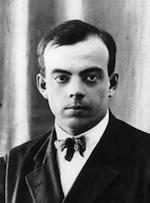 writing was inspired by his experiences as a pilot, including of course the incredible Little Prince and the highly intense and descriptive Night Flight.
 As for his interpretations and explanation of things he wrote about, he noted, “The meaning of things lies not in the things themselves, but in our attitude towards them.” Saint- Exupéry died in 1944 while flying a recon mission for the Allies in advance of their invasion of southern France. We can only wonder how much more he would have produced? But we can be grateful for what he gave to the world.
Share A Writer’s Moment with a friend by clicking the g+1 button below.
June 28, 2016
'Revitalizing' - a special writing art
“Reason is a fine thing, but it is not the only thing available to a writer. It's just part of the arsenal of many things available to a storyteller. Revelation, for example.” – Mark Helprin
Born on this date in 1947 (my own birth year), Helprin has a broad resume’. He is not only a novelist and journalist but also a conservative commentator, Senior Fellow of the Claremont Institute for the Study of Statesmanship and Political Philosophy, Fellow of the American Academy in Rome, and Member of the Council on Foreign Relations. While Helprin's fictional works straddle a number of disparate genres and styles, he has stated that he "belongs to no literary school, movement, tendency, or trend.”
The child of two artists – his father was a well-known film industry leader and his mother a stage actress – Helprin was born in Manhattan, studied at both Harvard and Princeton, and simultaneously became a statesman and writer with his non-fiction writing
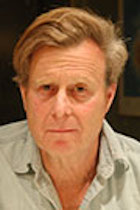 focused on conservative causes. His commentary has been called “biting,” and in debates he often gains the upper hand by not saying anything. “Well-timed silence,” he noted, “is the most commanding expression.”
On the “creative” side, he has won numerous awards and his book Winter’s Tale has often been cited as “the single best work published in the past 25 years.”
As writers, he said, “We create nothing new—no one has ever imagined a new color—so what you are doing is revitalizing. You are remembering, then combining, altering. Artists who think they're creating new worlds are simply creating tiny versions of this world."
Share A Writer’s Moment with a friend by clicking the g+1 button below.
June 27, 2016
Daily feeds of 'good language'
“When I write, I have a sort of secret kinship of readers in all countries who don't know each other but each of whom, when they read my book, feels at home in it. So I write for those readers. It's almost a sense of writing for a specific person, but it's a specific person who I don't know.”– Teju Cole A writer, photographer, and art historian, Cole was born on this date in 1975 in Kalamazoo, MI, to Nigerian parents, the oldest of four children. After growing up in Lagos, Nigeria, Cole moved back to the United States at the age of 17 to attend college and never left the U.S. again. He is a 1996 graduate of Kalamazoo College.
He has authored several books, including the multiple award-winning Open City, a terrific story of a young Nigerian immigrant in Manhattan. Cole’s essays, creative photography, and use of social media also have drawn the attention of numerous critics and other writers. Salman Rushdie called him “the most gifted of today’s younger generation of writers.”
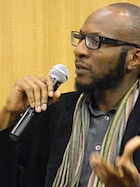 Cole currently serves as distinguished writer in residence at Bard College and is a regular contributor to The New York Times and The New Yorker. He’s attracted a worldwide following for his interesting and thoughtful almost daily – some label them “poetic” – posts on Twitter.
“I'm not trying to be a poet on Twitter,” he said. “I'm trying to be aware of the fact that a very simple sentence, well written, can have a very moving effect without that person knowing why. (As a reader) There's a deep genetic part of you that somehow, even without your permission, recognizes good language when it arrives.”
Share A Writer’s Moment with a friend by clicking the g+1 button below.