
Carrie Contey's Blog, page 7
October 30, 2014
My time with the Middle Schoolers
As I mentioned a few weeks ago in this fun post, I had the opportunity to teach two classes at a middle school here in Austin. This is a switch up for me, as I am 99.9% of the time working with parents, but what I talked about wasn’t much different! Brains, emotions, self-care, and my favorite…is-ness!
As soon as we settle in, I meet each of the students. This is critically important to me. I ask them to share their name, and something they LOVE doing. Some know immediately, some take their time, and others can’t pick just ONE and share a whole slew of things they love.
I am in HEAVEN.
The topics I bring up are foundations of my work:
Understanding the human brain
Self-Care & Empathy
The students DIVE in. They answer questions with insight, clarity, and honesty that I relish. I ask the students to think about how they act in their red, yellow, and green brains. They think and write and ask more questions.
Then I introduce the concept of self-care…but not in those words! I give them this Brain and Cup handout, and ask them, “When you are in your different brain states, what are you needing?”
In my opinion, this question isn’t asked nearly enough. Too often we get caught up in the behaviors and emotions of all of it and don’t pause to think about what we are needing. And many of the students outline activities that are SO similar to parents and adults.
Red brain? Need to be alone. Need to express hard emotions. Need to be heard.
Yellow brain? Need to go outside. Need to practice a sport – alone. Need to listen to music.
Green brain? Let’s connect and laugh and hang out with friends and family. Let’s tell stories and share ideas. Lets do homework!
Yes, I promise you, a student literally said when he is in his green brain, that’s when he WANTS to do homework.
After all this discussion, a student comments, “I thought I was just moody. Now I get why I’m feeling a certain way.”
!!!
column_break

We also talk about how they could apply this information in interaction with their parents. Many of them acknowledge that they know, can feel, can sense when their parents are stressed or depleted. They comment that they could use this knowledge to appropriately interact – and when they really need to be heard, make sure their parent is in a place where that can be received. (you’re welcome parents! ;)
Now, at the beginning of the class I asked them to tell me one thing they love. And that’s because I discussed an incredibly important idea with them. The idea of “is-ness.” This is something I spend quite a bit of time on in my year long program, Evolve, and I wanted to bring it up with them as well.
Isness is the idea that we arrive who we uniquely are and that development is simply an unfolding — a quirky, potentially puzzling, not always making sense, unfolding — that is driven by something way beyond nature or nurture. It’s our Isness.
I whole-heartedly told the students that they arrive as who they are. It’s valuable and worthwhile to explore who you are and what you are here to do and what you enjoy! We opened up the conversation of how to tap into their isness and follow their bliss.
I can tell you this much: those conversations, this work, that is my Isness. And I am beyond grateful I get to share it with you.
Much love,
Carrie
P.S. If you’re looking for support on brain development and emotions, you can purchase this online course for just $10! Audio, video, & a worksheet! Enjoy.


October 15, 2014
What to do when they LOVE their games
This is one of my favorite stories that highlights an important conversation around our bias with technology and connection with the young people around us.
Heads up:
I changed the names of the people for their privacy.
Dear Carrie,
“Seth” is 7 1/2 years old. Seth, like most children, seems drawn to video games. For months leading up to his 7th birthday, he asked, pleaded and talked about wanting an xbox. After much discussion, my husband and I agreed to get one.
Wow, what a BIG mistake.
Over the past 6 months, it has quickly become an obsession – to the point where he would have meltdown after meltdown when his video game time was up. Around February, we decided that he would be allowed to play 30 minutes of video games each week, and he could read for additional time. His reading has improved astronomically. However, it has now gotten to the point where from the minute he wakes up, to the minute he goes to sleep, all he talks about and thinks about is his video game time on the weekend. How much he has read, how much he still needs to, so that he can reach the next level in his video game. Seth seems to have forgotten about everything else. When others steer conversation into another direction, he quickly brings them back to the video game topic.
It has gotten to a point where my husband and I both feel like this was a poor choice on our part and that the xbox needs to go. How do we handle the discussion with Seth? Very matter of factly and move on, keeping discussion to a minimum? Explain it in more detail? This is going to be extremely difficult for him, and I am anticipating a lot of anger and tears.
About a year ago, we started implementing TV time to only on weekends. Do you think we should eliminate the TV too? We watch Netflix through the xbox, but both Anton and I are happy to cancel the subscription. We want this transition to be as painless as possible.
Any help and advice is greatly appreciated.
- Stressed Momma
***************
Hi amazing Momma,
I hear your question. I think your best bet is a two step process.
First, sit down with him, appreciate his passion and his interest and his deep adoration for the games (there’s nothing inherently wrong with that at all). Perhaps even ask him what it feels like when he’s playing. What he loves about the games. What he would do if he could play as much as he wants. What kind of game he would design. etc. Show genuine interest and appreciation for his passion.
Then, in another conversation, let him know that you are going to experiment with taking a break. Let him know that when he’s older and on his own as an adult, he can play as much as he wants. And right now, since you are the guides and your job is to keep him safe and help him learn about lots of aspects of life, you are going to put these boundaries on the gaming. And then just let him have all the feelings he’s going to have.
It’s tricky because if this was a different passion, say art or writing or a sport, you probably wouldn’t be restricting it. There’s a lot of stuff out there saying, “Too much video stuff is wrong! They get too obsessed! It’s bad for their brains!” etc. I don’t think that’s the case, in general. I think if you are living balanced lives and playing outside and showing him all sorts of cool stuff about life, yes, he might get obsessed with a game when it’s new and fresh, but I suspect over the long haul he will find a way to balance his own system around that interest.
I think it’s perfectly fine for you to put boundaries on it because it’s not feeling quite right to you, however, be mindful not to villainize it. It’s possible that later on he might be someone who creates games or innovates something that we don’t know about yet. If that’s the case, he’ll find his way back, so you are definitely at liberty to put boundaries on it now. And, make sure that you do it with a sense of “This is our choice. Later you will get to make your own choices.”
How does this sound/feel to you?
-Carrie
column_break

And her response, which was the coolest of the cool of the cool!
Dear Carrie,
Thank you so much for the great advice. :)
You brought up some good points, ones that I hadn’t thought of before.
One morning, a couple of weeks ago, when Seth and I had some alone time, I asked him about video games and what he likes about them. We had a really good conversation and I realized that it had little to do with the video game system itself, but more about Star Wars.
He LOVES Star Wars.
We started talking about Star Wars, playing with Lego Star Wars characters and reading books about Star Wars. When summer was approaching I brought up the fact that I thought it would be a good idea to put the xbox away until the fall. To be honest, I was expecting an outburst or meltdown. We had neither. He said, “ok,” and went back to playing. It has been almost a month and he hasn’t asked about it and doesn’t seem to talk about the gaming system at all.
Thank you so much for your kind words, support and continuous positive outlook in life.
-Relieved Momma
Yes!! High fives all around! Clarity and connection and love and play and joy! I wish the same for you and yours.
Love,
Carrie
P.S. This exchange happened through my year long Evolve program, of which this momma has been an integral part.
P.P.S. If you’re looking for a quick class on technology and boundaries, you can snag an online course right over here!
A boy and his video games…
This is one of my favorite stories that highlights an important conversation around our bias with technology and connection with the young people around us.
Heads up:
I changed the names of the people for their privacy.
Dear Carrie,
“Seth” is 7 1/2 years old. Seth, like most children, seems drawn to video games. For months leading up to his 7th birthday, he asked, pleaded and talked about wanting an xbox. After much discussion, my husband and I agreed to get one.
Wow, what a BIG mistake.
Over the past 6 months, it has quickly become an obsession – to the point where he would have meltdown after meltdown when his video game time was up. Around February, we decided that he would be allowed to play 30 minutes of video games each week, and he could read for additional time. His reading has improved astronomically. However, it has now gotten to the point where from the minute he wakes up, to the minute he goes to sleep, all he talks about and thinks about is his video game time on the weekend. How much he has read, how much he still needs to, so that he can reach the next level in his video game. Seth seems to have forgotten about everything else. When others steer conversation into another direction, he quickly brings them back to the video game topic.
It has gotten to a point where my husband and I both feel like this was a poor choice on our part and that the xbox needs to go. How do we handle the discussion with Seth? Very matter of factly and move on, keeping discussion to a minimum? Explain it in more detail? This is going to be extremely difficult for him, and I am anticipating a lot of anger and tears.
About a year ago, we started implementing TV time to only on weekends. Do you think we should eliminate the TV too? We watch Netflix through the xbox, but both Anton and I are happy to cancel the subscription. We want this transition to be as painless as possible.
Any help and advice is greatly appreciated.
- Stressed Momma
***************
Hi amazing Momma,
I hear your question. I think your best bet is a two step process.
First, sit down with him, appreciate his passion and his interest and his deep adoration for the games (there’s nothing inherently wrong with that at all). Perhaps even ask him what it feels like when he’s playing. What he loves about the games. What he would do if he could play as much as he wants. What kind of game he would design. etc. Show genuine interest and appreciation for his passion.
Then, in another conversation, let him know that you are going to experiment with taking a break. Let him know that when he’s older and on his own as an adult, he can play as much as he wants. And right now, since you are the guides and your job is to keep him safe and help him learn about lots of aspects of life, you are going to put these boundaries on the gaming. And then just let him have all the feelings he’s going to have.
It’s tricky because if this was a different passion, say art or writing or a sport, you probably wouldn’t be restricting it. There’s a lot of stuff out there saying, “Too much video stuff is wrong! They get too obsessed! It’s bad for their brains!” etc. I don’t think that’s the case, in general. I think if you are living balanced lives and playing outside and showing him all sorts of cool stuff about life, yes, he might get obsessed with a game when it’s new and fresh, but I suspect over the long haul he will find a way to balance his own system around that interest.
I think it’s perfectly fine for you to put boundaries on it because it’s not feeling quite right to you, however, be mindful not to villainize it. It’s possible that later on he might be someone who creates games or innovates something that we don’t know about yet. If that’s the case, he’ll find his way back, so you are definitely at liberty to put boundaries on it now. And, make sure that you do it with a sense of “This is our choice. Later you will get to make your own choices.”
How does this sound/feel to you?
-Carrie
column_break
And her response, which was the coolest of the cool of the cool!
Dear Carrie,
Thank you so much for the great advice. :)
You brought up some good points, ones that I hadn’t thought of before.
One morning, a couple of weeks ago, when Seth and I had some alone time, I asked him about video games and what he likes about them. We had a really good conversation and I realized that it had little to do with the video game system itself, but more about Star Wars.
He LOVES Star Wars.
We started talking about Star Wars, playing with Lego Star Wars characters and reading books about Star Wars. When summer was approaching I brought up the fact that I thought it would be a good idea to put the xbox away until the fall. To be honest, I was expecting an outburst or meltdown. We had neither. He said, “ok,” and went back to playing. It has been almost a month and he hasn’t asked about it and doesn’t seem to talk about the gaming system at all.
Thank you so much for your kind words, support and continuous positive outlook in life.
-Relieved Momma
Yes!! High fives all around! Clarity and connection and love and play and joy! I wish the same for you and yours.
Love,
Carrie
P.S. This exchange happened through my year long Evolve program, of which this momma has been an integral part.
P.P.S. If you’re looking for a quick class on technology and boundaries, you can snag an online course right over here!
October 6, 2014
Advice to Parents – from 6th Graders
Every year I visit a dear friend’s Psychology classes at a local middle school here in Austin. As we were nailing down the logistics, she shared a brilliant activity with me. And of course, I HAD to share it with you.
Most schools have some sort of open house, where the families can come meet the teachers. The day this was happening, my friend asked her English class,
“What advice would you give to your parents?”
The students gave some incredible feedback (duh!) which she then shared with the parents.
So good! So good!! So good!!!
Take a read, and let me know which number resonates with YOU!
(I love #8! And #5! And all of them!)
Enjoy!
Carrie
column_break

.
“What advice would you give to your parents?”
Answers from an Austin middle school class
(Thank you Sarah Waggoner)
1. Be more spontaneous!
2. Don’t worry. The kids are all right!
3. Give us better lunches
4. Help us with optimistic, sincere advice
5. You’re doing a great job
6. Follow through on threats
7. Take me seriously
8. You were young and stupid like me once, don’t forget
9. Let me fly
10. I want to figure out who I am without you
11. Offer help, don’t force help
12. Explain why you’re angry
13. Ask me if I need to be left alone or if I need help
14. My life isn’t easier than yours!
15. Don’t get caught up in assumptions that aren’t true
16. Tell me what you were like when you were a kid
September 26, 2014
When the going gets tough…
A family member gets ill, a loved one passes away, parents divorce. All of these issues are challenging. And when there are children in the family who are affected by these serious circumstances, it can be extra difficult to know how, when, where and what to tell them.
How much information do they need? Is there such a thing as giving them too much information? What are they picking up from the words and emotions of the adults around them? These are all good questions to be thinking about when you are communicating big and scary information to children. Below are some dos and don’ts for helping yourself and your children when serious situations arise in your family.
Do
slow down
be honest with yourself and your kids about emotions
connect first and then talk
make it simple and honest
keep kids posted on what’s happening
Do slow down
Before you say or do anything at all, slow yourself down. Even if you only have a moment to take one deep breath, do it. Taking the time to slow yourself down in the midst of a challenging situation is critical. Composing yourself, even if it is just a little bit, can be the difference between your children thinking that they are in serious danger and understanding that this is a serious situation. Letting them know, both with your words and your emotions, that “this is a serious situation and right now we are safe” is invaluable.
Do be honest with yourself and your kids about emotions
Before you communicate with children, get clear on how you are feeling. Children are finely tuned into the emotional states of their parents. If are you saying one thing, but feeling something else, they know. When they feel this incongruence, it can evoke anxiety. And in the midst of talking about family challenges, there’s no need to add anxiety to the situation. Taking the time to honestly acknowledge how you are feeling is important. Your growing people can handle you having feelings. What’s harder for them to deal with is when they sense you feeling upset and hear you saying, “Everything is fine.” Be honest–it is an emotionally safer way to proceed.
Do connect first and then talk
Take the time to connect eye-to-eye, skin-to-skin and heart-to-heart before you share big news. Do your best to create an environment that feels safe to both of you–and make sure you have the time and space to answer their questions.
Do make it simple and honest
When you are communicating with your children, do your best to be honest. Tell them clearly what is happening and then wait for questions. If a question is asked that you can answer, keep the answer short and sweet. Only answer the question being asked. If a question is asked that you can’t answer, just say, “I don’t have an answer to that. I’m sorry. If I figure it out, I will let you know.”
Do keep kids posted on what’s happening
You don’t have to give them all of the details of what’s happening, but do your best to keep them informed, especially if the adults are feeling lots of big emotions. For example, you might look your child in the eye and say, “Wow, we are really going through something. This is different isn’t it? Right now, we are figuring stuff out. And I promise we are safe.”
Keep it short and sweet, but do be vocal about what is going on. And name your feelings regularly. For example, “Sweetheart, I’m having a sad day, but it’s not about you. I’m going to take care of myself, and we are safe.”
After slowing yourself down, getting clear on how you are feeling and connecting with your children, communicate. Let them know what’s going on and keep them posted as things unfold. Reach out for support from loved ones and individuals who are important to your children. And know that this too shall pass, and you and your children will get through this challenging time of life together.
Love,
Carrie
column_break

Do Not
assume kids are not listening
overlook your own self-care
go it alone
project too far into the future
forget your children are resilient
Do not assume kids are not listening
Children are very aware of what is going on around them. And they are extra tuned in when they sense that something is serious. If you do not want them to hear about a situation, don’t talk about it around them. Even if you are whispering or talking quietly, assume they are hearing what is being said.
Do not overlook your own self-care
In the midst of serious situations, remember that it is imperative to put the oxygen mask on yourself first and then help the children. They know when you are going through something big. The best way to help your children during this time is to remember to take care of yourself so that when you are with them, you are relatively present and available. That doesn’t mean happy and cheery all the time, but it does mean tuned into yourself, no matter what you are feeling. When you are out of touch with yourself and under-resourced, you are out of touch with the people around you. Being well-resourced and working diligently to fill your cup a little bit every day is the best thing you can do for your children in the midst of these circumstances.
Do not go it alone
It sounds cliche, but it really does take a village. If you are too overwhelmed by your situation, call upon family and friends who can support you and your children during this time. Be sure to have some good friends, babysitters and teachers in your children’s lives so when you are not quite up for it, they have people who can give them positive, non-stressed care and love. Let people lighten the load and fuel you with their energy.
Do not project too far into the future
It is easy as a parent, especially when you are stressed, to obsess about what’s going to happen down the road. Stop! Be here now. Stay connected to this moment. Do whatever it takes to stay present. Even if you are flooded with negative emotions, do your best to feel what you feel without the story. The story, especially the “what ifs” that evoke fear and worry, are useless. They perpetuate the negative feelings and that is nothing you or your children need during this time. Of course, you are going to feel sad, scared and angry. All of these feelings are normal. And when you feel it, feel it. Just sit and say over and over again, “I’m scared, I’m scared, I’m scared, right now I’m feeling scared.” Being in the moment is what your kids want from you more than anything–even when times are tough.
Do not forget your children are resilient
No matter what, don’t forget that your children are strong people who are very resilient and will weather what is happening. Even tragedies can be overcome when there is enough love, support, honesty, connection and empathy. You may not realize it in the moment, but you will all get through this, and you will all thrive on the other side.
September 22, 2014
Q&A: Supporting littles through divorce?
My soon-to-be ex and I share the parenting of our daughter fairly equally. Do you have any tips, resources, key things to watch for and do to support her during this time of uncertainty, transition, and big emotions? I would really appreciate any input/perspective right about now.
I appreciate how mindful you and your partner are being about this transition. Yes, it’s a big shift and I know you are going to navigate it with ease and grace. Here are some tips and tools that can be helpful along the way:
1. Make your self-care top priority. Your daughter is tuned into you and you are going through something big. The only remedy to that is taking care of yourself and getting support so that when you are with her you are relatively present and available. That doesn’t mean happy and cheery all the time but it does mean tuned into yourself, no matter what you are feeling. Children can handle emotion, they can’t handle when we say one thing and they feel another. And this is often the result of us not being aware of our own state of being. Not being present. When we slip on the self-care, we are more vulnerable to feeling the stress, that is inherent to this type of situation, and freaking out. Being well resourced, and working diligently to make it happen everyday, is the best thing you can do for your daughter right now. Check this out for a refresher and quick list of self-care ideas.
2. Be playful and have other playful, supportive adults around you. It takes a village. Be sure to have some good friends, babysitters, teachers, etc. in your child’s life so when you are not quite up for it she has people who can give her positive, non-stressed energy. Let people lighten the load and give you both energy. Give yourself breaks. The more space you have, the more you will be able to authentically grieve and process what needs to come through. And the more present you will be as your child processes whatever comes up for her. Circle the wagons.
column_break
3. Keep her posted on what’s happening. You don’t have to give her details but it’s better to say things like, “Wow, this is really different isn’t it? Right now we are figuring stuff out.” Keep it short and sweet – but do be vocal about what’s going on. And, name your feelings, regularly. “Sweetheart, I’m having a sad day, but it’s not about you. I’m going to take care of myself and we are safe.” Be lovingly matter of fact. Tell her clearly and honestly what’s happening and then wait for questions. If a question is asked that you can’t answer just say, “I don’t have an answer to that, love. I’m sorry. If I figure it out I will let you know.” More info on having hard convos, here!
4. Empathy, empathy, empathy. Your daughter is having her own experience and her own feelings about this big changes that are happening. She needs presence. She needs listening. She needs to know she can share her feelings with both of you.
5. Be kind and gentle and patient with yourself. Give yourself space. This is not a normal situation. Things are stressful. Be loving and compassionate.
I send you all my very best through this time of big change.
-Carrie
P.S. This question was submitted to me on this Snap Shot of You survey. If you want to submit a question or idea for the blog, please hop over here to let me know.
September 10, 2014
You’re on FIRE!
Oh man! A few weeks ago I had a conversation with Fire Nation about being an entrepreneur, and it included some fantastic questions that I want to share with you!
You can listen to the (super fun, energy filled, chatter box of information) interview here. And while you’re at it, take a second to marinate on these questions for yourself.
What’s your success quote? What pivotal quote/mantra have you applied along your journey?
When did you stumble? When did you encountered failure, and what lessons did you learn?
What’s one of your AH-HA moments? What’s the story around that moment, and what steps did you take to turn that light bulb moment into success?
What is one thing that really excites you in your life right now?
I’d love to read any of the answers to these questions – you can write them below, or shoot me an email at hello@carriecontey.com.
Blasting you with a flood of love!
Carrie
column_break
September 8, 2014
Supporting an Amazing Community
I love being the first. Maybe it’s because I’m the youngest in a set of amazing siblings. Maybe it’s because I have a big laugh. But I love being first, which is why I’m so delighted to be part of the launch of this series…
The Austin Jewish Academy is pioneering their Parenting Institute. At these events, the general public (that means YOU!) is welcome to join together and learn about pressing issues in parenting. The first event for Parenting Institute is on September 30 and is sure to be a beautiful evening.
While I don’t ascribe to any specific religious practice, I deeply appreciate the work being done at the Austin Jewish Academy. They are devoted to empowering students to change the world. Check out their core values:
Integrity
Practicing honesty, respect, kindness and compassion.
Community
Collectively raising our children within a safe and nurturing environment.
Tradition
Learning through timeless Jewish values and Torah, infusing students’ lives with meaning and purpose.
Excellence
Challenging students across all disciplines with the highest standards and an integrated curriculum to create life-long learners.
Empowerment
Providing students with the tools to reach their full potential.
Tikkun Olam
Creating a model community and improving the welfare of society at large.
Beautiful, beautiful goodness happening at Austin Jewish Academy!
Come join me to hear all about the brain, connecting with littles, and amping up your own self love. The more the merrier! Hop over here to get your tickets (at just $12 each!) today!
Love,
Carrie
column_break

August 21, 2014
Sailing smoothly into the new school year
It’s that time of year again (whew, how’d that happen so fast?!?) and your little and not so little people are heading back to school. Hoping to make this a smooth transition for the whole family? Of course you are! Here are some tips and tools to get you off to a great start and flowing in the direction of ease and joy.
Check in with yourself – You first! How are you feeling about the shift? Truly and honestly, what feelings does this time of year evoke?
Excitement? Relief? Anxiety? Dread? Exhaustion? Joy?
It’s likely there’s a whole soup of emotions swirling around inside of you. Feeling mixed emotions is normal. Allow it all. Take time to check in with yourself and honestly and lovingly explore what you are feeling in the midst of this transition. Your growing people are tuned into you. They are vibing off of your emotional tone. Knowing where you are will allow you to become more present and steady in yourself. This, in turn, allows your growing people the freedom to be where they are and feel what they feel. And that’s going to allow them to find their way.
Fill your cup – It’s easy, and sometimes feels unavoidable in the midst of all the have tos of this time of year, to abandon your self-care. DON’T DO IT! The best way to support your growing people in the midst of this transition, which can be wobbly as everyone gets used to the routines and the demands, is to make sure you are doing what you need to do to stay relatively steady. Figure out a few basic things you can do for yourself, that don’t take too much time, and do them. Every day.
Here are three suggestions. Pick one, or find your own, and experiment with it:
>> Get up 10-30 minutes earlier than everyone, drink a big glass of water and jump up and down (trust me on this one).
>> Meditate for 2-10 minutes in the morning.
>> Write down at least 10 appreciations every day.
>> Go for a walk. Alone.
Make space - Heading back to school is a change. Change can evoke big feelings. Big feelings are necessary as we grow and find our way into new situations and routines. Give everyone a lot of space as you start the transition. Be spacious with your words. Be spacious with your concerns. Be spacious with your transitions. Slow down and be present to what is. It’s not going to stay this way. Tell yourself, “We are in the back to school transition. I need to take care of myself and hold relatively steady. I trust we are finding our new groove.” Put a frame around the next several weeks in your mind. It can save you a lot of unnecessary discomfort and bring a whole lot more peace.
column_break
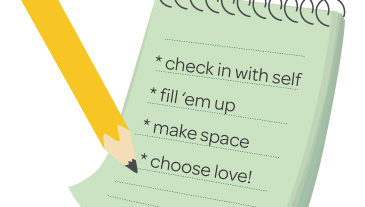
Load your littles up with emotional meals and snacks - Getting back into the school groove can be a mixed bag of easy and challenging moments. If you want to influence more of the moments toward smooth sailing, be sure to fill up their emotional love tanks. Here’s how…
>> In the morning, once you’ve filled your own cup a bit, spend some time giving each child some special love and attention. Even if it’s just a sweet hug, a little extra eye contact, or a few words of appreciation, connect emotionally before moving toward the tasks at hand.
>> Give them “preminders” (ideally the night before and then again in the morning) by kindly letting them know how the morning is going to flow.
>> Take lots of deep breaths and do what you can to stay present as you get everyone where they need to go.
>> Don’t forget the physical meals and snacks too. A little protein in the morning and right after school can often go a LONG way.
And finally…
Don’t expect it AND don’t be surprised by it - There might be meltdowns.
Let me repeat that.
THERE MIGHT BE MELTDOWNS.
There might be regressions and not listening and unsavory behavior. Don’t expect it but don’t be surprised by it. And, most importantly, don’t take it personally. They are adjusting. They are exhausted. They are using up their human brain energy to “sit still, be good, pay attention, listen to the teacher, don’t touch that, stop wiggling, be nice to your classmates, learn learn learn!” for 6-8 hours a day. They are wiped out and they are not going to come home in their most resourced, human brain place. Be patient. Be loving. Be boundaried. Be willing to let some stuff slide.
Create the physical and emotional space for them to come home and blow off steam. It’s not personal. It’s dysregulation. Be the one who help them re-regulate. If you want to hear more about this check out this video I did two years ago.
Oh, and did I mention your self-care?
Here’s to a smooth and sweet transition back to school.
With love,
Carrie
August 12, 2014
Truly, lucky us.
It’s been a whirlwind kind of a week, with news from all over the place of anguish, hate, and depression. Yet life for many of us an incredibly prosperous and privileged life continues on.
I frequently encourage families and parents to have a daily practice, an hourly practice, a moment to moment practice of appreciation and gratitude. I do this because it helps rewire our brains around prosperity and gratitude, and this is incredibly impactful when we have to face much harder situations.
Many of us already have so much and are so rich (not just in money) and that richness needs to be appreciated. And not so that more can come, but because the richer and more prosperous one feels, the more they are available to give and serve in productive ways that support the whole. I know a lot of people who use their financial and energetic wealth for very very very good. If they didn’t feel that sense of prosperity they wouldn’t give as much as they are giving.
Also, we’ve got to get clear on how WE want to live life so that we are as aligned with our own Truth and purpose and security and ease and joy and love as possible.
Why? Because I really do believe that when people shift into a prosperity mind-set, they free up energy, that often goes to the worries of not having enough/being enough/doing enough. Once they turn toward, “I am enough, I have enough, I do enough,” more often than not, they can get on with the business of doing what they are here to do. And in many cases, feeling secure about themselves and money allows people to give more. Not just money but time and energy and love.
To me, and this is just me, the more I have the more I give. The more personally and financially secure I feel (and to me that’s less about the amount of money I have and more about the mindset I hold) the more I can and love being able to give to friends in need and organizations I value and projects I’m passionate about. I love having enough to build my business so more families can access great support and information. I’m not interested in people amassing wealth for the sake of being wealthy, I’m interested in them getting to a place where they see how amazing their lives already are and then putting their passion and sense of well-being to good use in the world. And as a result, perhaps they are inspired to keep their money flowing so that the whole benefits from that as well.
column_break
It’s about being one of the people who gets to play with flowing bigger sums of money and energy, so I can support more people. Me having less does not give others more. (This goes for parenting too, which is why I am an avid cheerleader for self-care.) Me appreciating what I have and allowing more to flow through has given me the sense of security and freedom to share WAY more than I ever did before. I love it and I want to move toward doing more and more and more of it.
I don’t know what others are supposed to do with their lives. But I do believe that everyone gets a shot at living the life they are here to live. At least, that would be my wish. That everyone gets to know themselves and find what works for them and play with dreams and feel safe and love their lives. To me, feeling prosperous, in all different ways, is a route to getting in touch with discovering what feels right for me.
I guess for me the bottom line is this: It’s not right or wrong to have money or the privileges of being safe and taken care of. It’s what you do with it, with those experiences. You get to choose. You get to choose what’s right for you. And, my guess is you are going to choose well because you are thinking about it.
Much love,
Carrie
Carrie Contey's Blog

- Carrie Contey's profile
- 2 followers

