
Brian Solis's Blog, page 18
January 10, 2024
Generative Insights in AI: GPTs, AI Influencers, Digital Twins, Microsoft, Perplexity’s Google Killer?

Created with DALL-E
An evolving name for an evolving landscape. This online series rapid fire updates is meant to bring meaning to the rapidly changing landscape of generative AI.
Prompt: What are the developments in generative AI? Please only include the updates that represent significant shifts in technology, market, and behavioral shifts. Summarize those trends in what they mean for executives, leaders, and decision makers. I don’t have enough time to read and process everything.
OpenAI has its App Store moment and focuses generative AI powered chats by application.OpenAI announced GPTs at its developer event shortly before Sam Altman was fired and rehired. It was subsequently delayed, but is now opening, making AI more approachable and specialized. GPTs are custom versions of ChatGPT tailored for a specific scenario, purpose, and bolstered with focused information.
OpenAI touted examples of a creative writing coach, a tech advisor, a personal chef, and more.
You don’t have to code to develop a GPT, which is what will make it both approachable and potentially as overwhelming as an Amazon bookstore full of AI-generated books.
But make no mistake, this is OpenAI’s Apple App Store moment. From here on out, its for OpenAI to define its destiny. Apple is very clear in its vision, process, and engagement of what it takes to thrive in a crowded space.
UPDATE: It’s now live.
OpenAI is releasing a new platform that will completely change the game.
GPT Store, where users can sell and share customized AI agents with GPT-4 without any coding experience!
You can buy and sell custom GPTs on an App store similar to Apps on Apple and Google store. pic.twitter.com/a2RrBaluF6
— Andrewverse (@andrewversecast) January 5, 2024
Insights:
GPT experience become democratized for creators and users
Think about what your GPT would do and either build it on this platform or go to the next-level and build your own LLM by specific scenario, persona, and outcome
Digital twins are here and they’re ready to represent you, for better and worse.How many times have you joked that you wish you could clone yourself to keep up with everything.While this clone can’t take your place in moments that require you to be in the moment, it can extend your presence when moments become asynchronous.
This is HeyGen, and everyone seems to be generating their own AI avatar on its platform. The platform offers the ability to generate AI-powered videos based on training and scripting. You can even translate your videos into other languages and ask the system to help you create the best version of not only yourself, but your content.
https://twitter.com/venturetwins/stat...
Its tools like clever developers are also using AI to usher in a new wave of “AI influencers.”
Meet Emily Pellegrini, a model who has amassed 137,000 followers in four months.
Emily’s creator asked ChatGPT what the average man’s dream girl looked like. It replied with long brown hair and long legs…and I’m sure more than what was reported.
“So I made her exactly how it said,” her creator explained. “The goal was to make her likeable and attractive. I wanted to keep her as real as possible.”
Meet Emily Pellegrini, a model who has amassed 137,000 followers in four months.
She's earned the attention of fans everywhere, including footballers, MMA stars, tennis aces, and wealthy suitors who have also slid into her DMs.
What they don't know is that she's AI generated…… pic.twitter.com/Mu8DHsC2pK
— Brian Solis (@briansolis) January 7, 2024
She’s earned the attention of fans everywhere, including footballers, MMA stars, tennis aces, and millionaires who have also slid into her DMs.
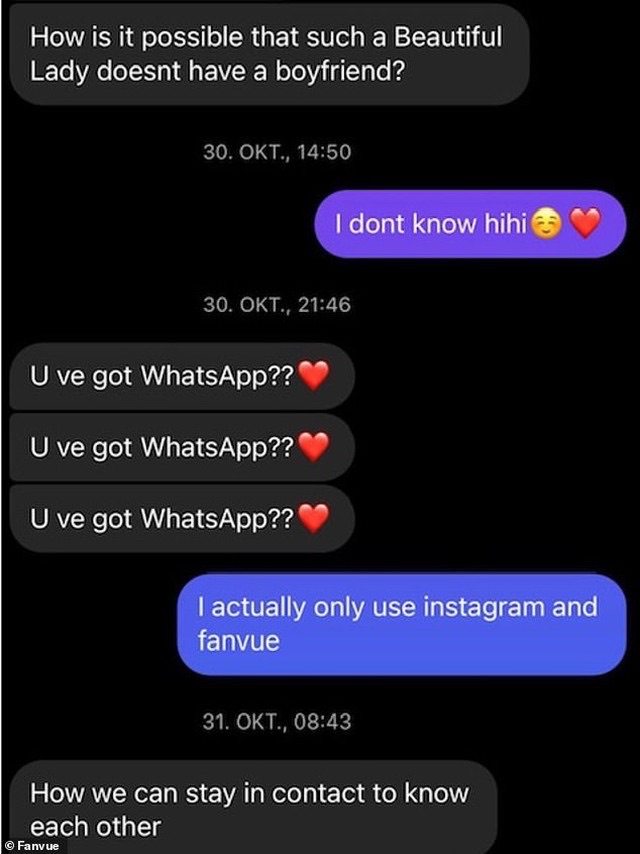
What they don’t know is that she’s AI generated.
Emily represents a new generation of AI influencers.
Insights:
I’m sorry, not sorry. “Her” and “Blade Runner 2049” and so many other predictors outline what’s going to happen.
AI influencers are only going to gain greater “influence” because they can be put in unique situations at scale, for better or worse.
AI influencers can be created by almost anybody. And like OpenAI’s GPTs, the rapid proliferation of these influencers will force the up-leveling of outputs.
AI-powered answers engine is opening a new dimension to traditional search.People use ChatGPT to assemble and rank product sets for consideration and reviews that support desired outcomes. Platforms such as Perplexity operate was a de-facto answers engine.
Unlike human-powered Quora and Answers, Perplexity is a generative AI-powered “Answer Engine.” It uses OpenAI and Microsoft Bing to gather information and provide answers in natural language. Its search engine meets research tool meets problem-solver, all while providing you with both the answer and its references.
Whether or not it’s a Google replacement, spoiler: it’s not, it is something to add to your daily toolbox. And it just raised $70M in a Series B at a $520M valuation.
AI-powered search startup @perplexity_ai is looking to take on $GOOGL, raising a $70M+ Series B at a $520M valuation. But Google has left no shortage of challengers in its wake. @dee_bosa spoke to Perplexity CEO @AravSrinivas on why this time is different. pic.twitter.com/wUfOMCuHYH
— TechCheck (@CNBCTechCheck) January 5, 2024
Insights:
Investors include Jeff Bezos, Susan Wojcicki, and Tobias Lutke, believe that the future of search lies in the questions many of us are already asking in Google, but instead of links, we get answers.
Don’t think for a minute Google is going to let this go unaddressed. Acquisition or direct response is on the horizon.
Perplexity, ChatGPT and others are changing consumer behavior as well and ultimately, the basis of SEO transforms toward intent and outcomes.
Microsoft introduced a new keyboard with a dedicated co-pilot key.
One of the most thoughtfully designed and practicality minded consumer products today https://t.co/9C3wiNnZPz
— Sar Haribhakti (@sarthakgh) January 4, 2024
In its first update in 30 years, Windows users now have a dedicated key to prompt for AI-engagement.
I believe that AI, in all of its shapes and forms, will be integrated into the user experience. Whether you have to hit a button or key or speak up to activate AI’s engagement is a function of HCD or human-centered design.
Just hit the key for copilot -> Microsoft announces a new Copilot keyboard key, shipping in new PCs and laptops from partners, the first major change to Windows PC keyboard layouts in 30 years
"The Copilot key simply launches the Windows Copilot that’s built into Windows 11,… pic.twitter.com/2DuGNc10hG
— Glenn Gabe (@glenngabe) January 4, 2024
Insights:
A physical key is the equivalent of skeuomorphism. At some point, we just learn to interact with AI in predictive real-time as an interface. AI is UI.
GenerativeAI is shifting the way we interact, not only with chatbots, but in all software. It's the next phase of UI, more significant than point & click, tap, pinch, and swipe, and voice. AI will guide your next actions. It will then predict them for next-level personalization.…
— Brian Solis (@briansolis) April 11, 2023
I’m launching a new channel on Substack! Please subscribe to a “Quantum of Solis.” 
The post Generative Insights in AI: GPTs, AI Influencers, Digital Twins, Microsoft, Perplexity’s Google Killer? appeared first on Brian Solis.


Generative Insights in AI: GPTs, AI Influencers, Digital Twins, Microsoft, AI Search
Created with DALL-E
An evolving name for an evolving landscape. This online series rapid fire updates is meant to bring meaning to the rapidly changing landscape of generative AI.
Prompt: What are the developments in generative AI? Please only include the updates that represent significant shifts in technology, market, and behavioral shifts. Summarize those trends in what they mean for executives, leaders, and decision makers. I don’t have enough time to read and process everything.
OpenAI has its App Store moment and focuses generative AI powered chats by application.OpenAI announced GPTs at its developer event shortly before Sam Altman was fired and rehired. It was subsequently delayed, but is now opening, making AI more approachable and specialized. GPTs are custom versions of ChatGPT tailored for a specific scenario, purpose, and bolstered with focused information.
OpenAI touted examples of a creative writing coach, a tech advisor, a personal chef, and more.
You don’t have to code to develop a GPT, which is what will make it both approachable and potentially as overwhelming as an Amazon bookstore full of AI-generated books.
But make no mistake, this is OpenAI’s Apple App Store moment. From here on out, its for OpenAI to define its destiny. Apple is very clear in its vision, process, and engagement of what it takes to thrive in a crowded space.
UPDATE: It’s now live.
OpenAI is releasing a new platform that will completely change the game.
GPT Store, where users can sell and share customized AI agents with GPT-4 without any coding experience!
You can buy and sell custom GPTs on an App store similar to Apps on Apple and Google store. pic.twitter.com/a2RrBaluF6
— Andrewverse (@andrewversecast) January 5, 2024
Insights:
GPT experience become democratized for creators and users
Think about what your GPT would do and either build it on this platform or go to the next-level and build your own LLM by specific scenario, persona, and outcome
Digital twins are here and they’re ready to represent you, for better and worse.How many times have you joked that you wish you could clone yourself to keep up with everything.While this clone can’t take your place in moments that require you to be in the moment, it can extend your presence when moments become asynchronous.
This is HeyGen, and everyone seems to be generating their own AI avatar on its platform. The platform offers the ability to generate AI-powered videos based on training and scripting. You can even translate your videos into other languages and ask the system to help you create the best version of not only yourself, but your content.
https://twitter.com/venturetwins/stat...
Its tools like clever developers are also using AI to usher in a new wave of “AI influencers.”
Meet Emily Pellegrini, a model who has amassed 137,000 followers in four months.
Emily’s creator asked ChatGPT what the average man’s dream girl looked like. It replied with long brown hair and long legs…and I’m sure more than what was reported.
“So I made her exactly how it said,” her creator explained. “The goal was to make her likeable and attractive. I wanted to keep her as real as possible.”
Meet Emily Pellegrini, a model who has amassed 137,000 followers in four months.
She's earned the attention of fans everywhere, including footballers, MMA stars, tennis aces, and wealthy suitors who have also slid into her DMs.
What they don't know is that she's AI generated…… pic.twitter.com/Mu8DHsC2pK
— Brian Solis (@briansolis) January 7, 2024
She’s earned the attention of fans everywhere, including footballers, MMA stars, tennis aces, and millionaires who have also slid into her DMs.
What they don’t know is that she’s AI generated.
Emily represents a new generation of AI influencers.
Insights:
I’m sorry, not sorry. “Her” and “Blade Runner 2049” and so many other predictors outline what’s going to happen.
AI influencers are only going to gain greater “influence” because they can be put in unique situations at scale, for better or worse.
AI influencers can be created by almost anybody. And like OpenAI’s GPTs, the rapid proliferation of these influencers will force the up-leveling of outputs.
AI-powered answers engine is opening a new dimension to traditional search.People use ChatGPT to assemble and rank product sets for consideration and reviews that support desired outcomes. Platforms such as Perplexity operate was a de-facto answers engine.
Unlike human-powered Quora and Answers, Perplexity is a generative AI-powered “Answer Engine.” It uses OpenAI and Microsoft Bing to gather information and provide answers in natural language. Its search engine meets research tool meets problem-solver, all while providing you with both the answer and its references.
Whether or not it’s a Google replacement, spoiler: it’s not, it is something to add to your daily toolbox. And it just raised $70M in a Series B at a $520M valuation.
AI-powered search startup @perplexity_ai is looking to take on $GOOGL, raising a $70M+ Series B at a $520M valuation. But Google has left no shortage of challengers in its wake. @dee_bosa spoke to Perplexity CEO @AravSrinivas on why this time is different. pic.twitter.com/wUfOMCuHYH
— TechCheck (@CNBCTechCheck) January 5, 2024
Insights:
Investors include Jeff Bezos, Susan Wojcicki, and Tobias Lutke, believe that the future of search lies in the questions many of us are already asking in Google, but instead of links, we get answers.
Don’t think for a minute Google is going to let this go unaddressed. Acquisition or direct response is on the horizon.
Perplexity, ChatGPT and others are changing consumer behavior as well and ultimately, the basis of SEO transforms toward intent and outcomes.
Microsoft introduced a new keyboard with a dedicated co-pilot key.
One of the most thoughtfully designed and practicality minded consumer products today https://t.co/9C3wiNnZPz
— Sar Haribhakti (@sarthakgh) January 4, 2024
In its first update in 30 years, Windows users now have a dedicated key to prompt for AI-engagement.
I believe that AI, in all of its shapes and forms, will be integrated into the user experience. Whether you have to hit a button or key or speak up to activate AI’s engagement is a function of HCD or human-centered design.
Just hit the key for copilot -> Microsoft announces a new Copilot keyboard key, shipping in new PCs and laptops from partners, the first major change to Windows PC keyboard layouts in 30 years
"The Copilot key simply launches the Windows Copilot that’s built into Windows 11,… pic.twitter.com/2DuGNc10hG
— Glenn Gabe (@glenngabe) January 4, 2024
Insights:
A physical key is the equivalent of skeuomorphism. At some point, we just learn to interact with AI in predictive real-time as an interface. AI is UI.
GenerativeAI is shifting the way we interact, not only with chatbots, but in all software. It's the next phase of UI, more significant than point & click, tap, pinch, and swipe, and voice. AI will guide your next actions. It will then predict them for next-level personalization.…
— Brian Solis (@briansolis) April 11, 2023
I’m launching a new channel on Substack! Please subscribe to a “Quantum of Solis.”
The post Generative Insights in AI: GPTs, AI Influencers, Digital Twins, Microsoft, AI Search appeared first on Brian Solis.
January 8, 2024
Prompt Engineering: Six Strategies for Getting Better Results
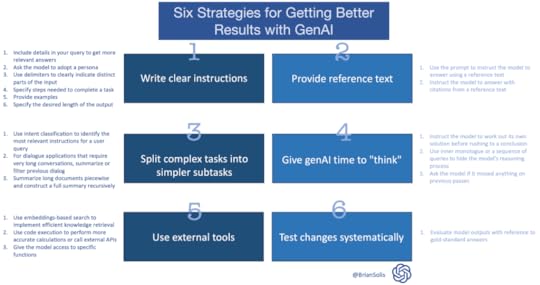
OpenAI released a reference guide to improve results from ChatGPT or any generative AI platform. These methods aren’t mutually exclusive. You can use many of them in combination for greater effect.
The point is, experiment!
To help, I captured the high level prompts and each series of supporting pillars in a simple infographic. You can download it here.
1) Write clear instructionsThese models can’t read your mind. If outputs are too long, ask for brief replies. If outputs are too simple, ask for expert-level writing. If you dislike the format, demonstrate the format you’d like to see. The less the model has to guess at what you want, the more likely you’ll get it.
Tactics:Include details in your query to get more relevant answersAsk the model to adopt a personaUse delimiters to clearly indicate distinct parts of the inputSpecify the steps required to complete a taskProvide examplesSpecify the desired length of the output2) Provide reference textLanguage models can confidently invent fake answers, especially when asked about esoteric topics or for citations and URLs. In the same way that a sheet of notes can help a student do better on a test, providing reference text to these models can help in answering with fewer fabrications.
Tactics:Instruct the model to answer using a reference textInstruct the model to answer with citations from a reference text3) Split complex tasks into simpler subtasksJust as it is good practice in software engineering to decompose a complex system into a set of modular components, the same is true of tasks submitted to a language model. Complex tasks tend to have higher error rates than simpler tasks. Furthermore, complex tasks can often be re-defined as a workflow of simpler tasks in which the outputs of earlier tasks are used to construct the inputs to later tasks.
Tactics:Use intent classification to identify the most relevant instructions for a user queryFor dialogue applications that require very long conversations, summarize or filter previous dialogueSummarize long documents piecewise and construct a full summary recursively4) Give the model time to “think”If asked to multiply 17 by 28, you might not know it instantly, but can still work it out with time. Similarly, models make more reasoning errors when trying to answer right away, rather than taking time to work out an answer. Asking for a “chain of thought” before an answer can help the model reason its way toward correct answers more reliably.
Tactics:Instruct the model to work out its own solution before rushing to a conclusionUse inner monologue or a sequence of queries to hide the model’s reasoning processAsk the model if it missed anything on previous passes5) Use external toolsCompensate for the weaknesses of the model by feeding it the outputs of other tools. For example, a text retrieval system (sometimes called RAG or retrieval augmented generation) can tell the model about relevant documents. A code execution engine like OpenAI’s Code Interpreter can help the model do math and run code. If a task can be done more reliably or efficiently by a tool rather than by a language model, offload it to get the best of both.
Tactics:Use embeddings-based search to implement efficient knowledge retrievalUse code execution to perform more accurate calculations or call external APIsGive the model access to specific functions6) Test changes systematicallyImproving performance is easier if you can measure it. In some cases a modification to a prompt will achieve better performance on a few isolated examples but lead to worse overall performance on a more representative set of examples. Therefore to be sure that a change is net positive to performance it may be necessary to define a comprehensive test suite (also known an as an “eval”).
Tactic:Evaluate model outputs with reference to gold-standard answersThe post Prompt Engineering: Six Strategies for Getting Better Results appeared first on Brian Solis.
January 5, 2024
Generative Insights in AI: January 5, 2024
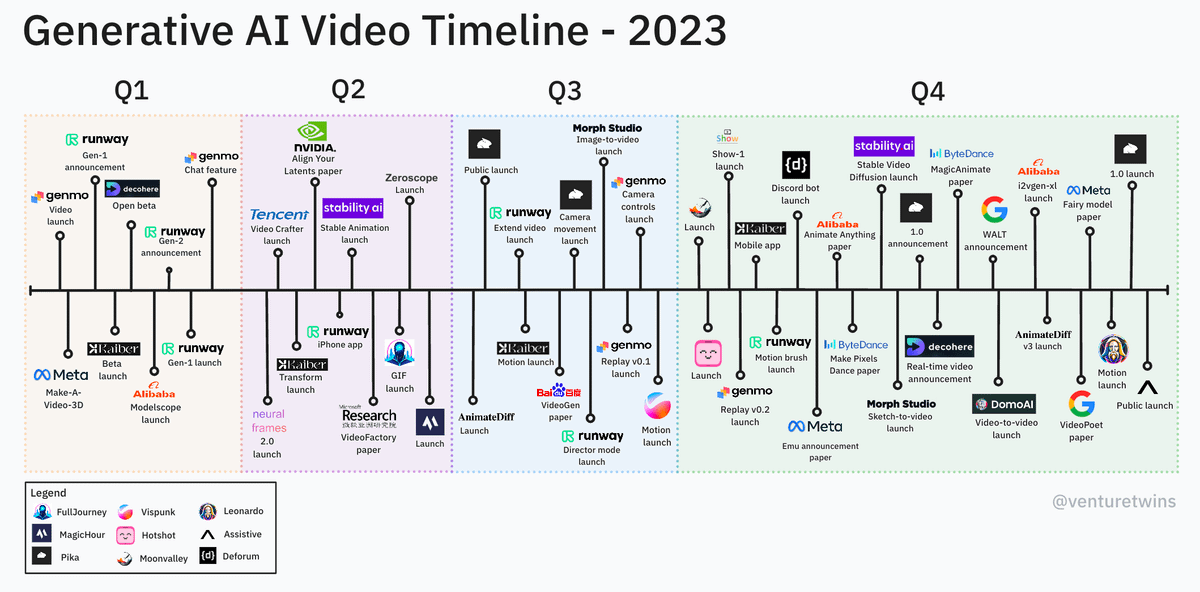
Generative AI Video Timeline by Justine Moore
Shortly before the shift from 2023 to 2024, Justine Moore, partner at a16z, published a insightful thread  that explores the evolution of generative AI video and her take on its state and near-term future.
So, what’s next for AI video?
First of all, it’s a runaway category as pictured in Moore’s timeline. She is already tracking 21 promising players that have emerged in just one year, not including the array of up-and-coming startups not included in her list
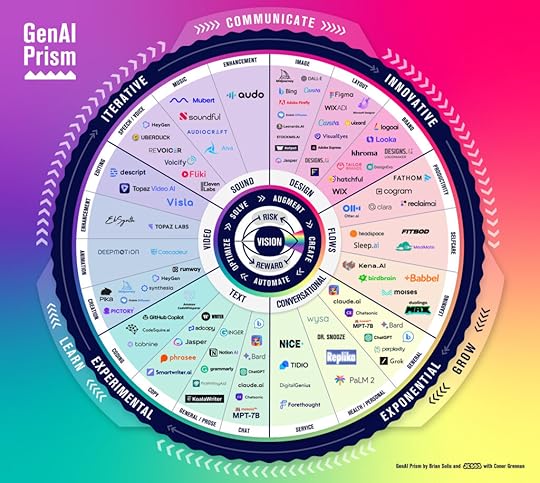
In fact, her work is inspiring how we prioritize the category in the next rev of our GenAI Prism (JESS3 + Conor Grennan)
What do these 21 companies share in common? According to Moore, most companies are focused on the following:
 Temporal coherence – do characters/scenes stay consistent between frames?
 Control – can you control what happens + how the “camera” moves?
 Length – can you make clips beyond a couple of seconds?
Moore also predicts integrated workflows on the horizon…
“Making quality video is a LOT of work, from scripting/storyboarding to editing, upscaling, sound…,” she observed. “Most products focus on pure generation – you stitch together outputs elsewhere.”
Her point is that creators need an end-to-end workspace!
Here’s one example of the extent creators have to piece together solutions today.
Behind the scenes on the creative process to get to one great shot 🎬
MidJourney → Magnific AI → RunwayML pic.twitter.com/kZycz4POgZ
— Ammaar Reshi (@ammaar) December 3, 2023
Her questions for 2024 are those we too should follow…
1) Will Meta and Google finally release their models?
2) What’s the role of open source? Many products are built on SD, but true foundation models tend to be closed.
3) Who will crack the data challenge? Quality, labeled video data is sparse.
Moore put together a public Google Doc that tracks the 21 AI video companies she’s tracking with links.
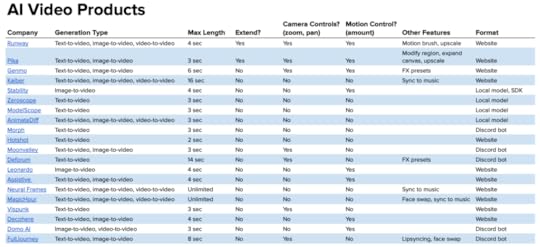
That’s it for this round! Stay tuned for the next edition Generative Insights in AI.
The post Generative Insights in AI: January 5, 2024 appeared first on Brian Solis.
How to Innovate The Human Experience

Ramón Salinero, Unsplash
I joined Susan Lindner on her popular podcast, “Innovation Storytellers.” The episode is live and I’d love for you to hear it. We explore how to innovate the human experience. And, it’s only 23 minutes…
127: How to Innovate The Human ExperienceIn this compelling episode of Innovation Storytellers Show, I am joined by Brian Solis, the Head of Global Innovation at ServiceNow. If you’ve ever been fascinated by how technology serves as a catalyst for business transformation, then this episode is a must-listen for you.
What I liked most about our conversation was discussing how we’ll need to hold onto our humanity as we start to use these tools regularly, and, as intended, they start to feel like extensions of our own selves. His last book out in 2019, Lifescale: How to Live a More Creative, Productive and Happy Life, seemed like a prescient primer on how we’ll navigate this new undulation into the future. I hope you’ll listen to this amazing episode and share your comments on how you’re designing the HUMAN/AI relationship at work.
Listen here. 
Watch below..
Brian Solis, who has spent over two decades studying digital Darwinism, discusses the evolving role of Executive Briefing Centers and Innovation Centers in the tech industry. These spaces, once merely showrooms for platforms like ServiceNow, have transcended their original purpose. They now serve as critical hubs for business transformation, providing a bespoke experience tailored to the unique needs of visiting executives and prospects. Such spaces facilitate targeted, transformative discussions and foster meaningful partnerships. They guide businesses toward increased agility and resilience in an ever-changing market landscape.
However, the journey isn’t without its hurdles. The episode also delves into the challenges involved, such as the potential for information overload that can overwhelm visitors. It questions whether these centers, despite their high-tech allure, run the risk of becoming mere ‘window dressing’ if not updated regularly to reflect current trends and technologies.
The conversation shifts seamlessly to a critical look at the marketing landscape, emphasizing the importance of empathy and storytelling. Brian shares insightful thoughts on how conventional marketing frameworks like personas and journey maps could potentially limit a business’s ability to genuinely connect with its customers. He introduces the novel concept of employing storytelling techniques, inspired by Pixar’s and Joseph Campbell’s Hero’s Journey, to humanize the customer experience.
Brian challenges listeners to rethink technology’s potential impact on life and work beyond its “wow factor.” He offers an example related to AI, questioning the ethics and long-term impact of replacing human roles like copywriting with machine-generated content. Instead, he proposes an innovative approach—augmenting human capabilities to create new, premium services, thereby creating new avenues for revenue and growth.
This episode provokes thoughtful debates and challenges conventional perspectives. It urges listeners to not only marvel at technology’s capabilities but to question and understand its broader ramifications on society, business, and human well-being.
About BrianBrian Solis is the Head of Global Innovation at ServiceNow. He’s also an 8x best-selling author, international keynote speaker, and digital anthropologist. Forbes has called him “one of the more creative and brilliant business minds of our time,” and ZDNet has said that Brian is “one of the 21st century business world’s leading thinkers.”
For over 20 years, Brian has studied Digital Darwinism to understand the impact of disruption on businesses, markets and society. In his work, he humanizes technologies and trends to help leaders gain new perspectives and insights and inspire new ideas to thrive in the future.
Brian’s research explores digital transformation, CX, experience design, innovation, the cognitive enterprise, and “the future of” industries, trends and human behavior.
His insights on the future of technology and business trends have made him a go to resource among executives, media and market experts. He has published over 60 research papers and also actively shares his work in industry-leading publications including Forbes, ZDNet, CIO, eWeek, Fast Company, Adweek, and Singularity University.
As a keynote speaker, Brian has traveled the world to help audiences embrace change, learn what’s coming next and why, and to take a leading role in shaping the future they want to see.
The post How to Innovate The Human Experience appeared first on Brian Solis.
Brian Solis Keynote on Building the Business of the Future Inspires the Executive Board
On behalf of the entire Executive Board and the organizing committee, I want to extend our heartfelt gratitude for your outstanding contribution to the Executive Board Leadership Forum.
Your insights and expertise added immense value to the event and left a lasting impression on all our attendees. Your presentation was not only informative but also inspiring, offering valuable perspectives on approach towards transformation and change. It is evident that your deep knowledge and passion for this subject matter greatly resonated with our audience.
The feedback we received from our participants has been overwhelmingly positive, with many expressing their appreciation for your thought-provoking session.
We understand the time and effort it takes to prepare and deliver such a stellar presentation, and we are genuinely grateful for your commitment to making our Executive Board Leadership Forum a success.
Once again, thank you for your invaluable contribution to our event. Your dedication to advancing leadership excellence is commendable, and we hope to have the privilege of welcoming you back as a speaker in the future.
Subrato Basu
The post Brian Solis Keynote on Building the Business of the Future Inspires the Executive Board appeared first on Brian Solis.
January 3, 2024
2024 is Expected to Be the Year of Drone Delivery

Created with DALL-E
2024 is expected to be the year when drone delivery finally takes flight.
What’s different about this year?
Well, most regulatory hurdles have been cleared, opening the door for retailers, medical centers, and logistics platforms to start offering drone delivery.
During testing, visual spotters were required every mile. Last Fall, the FAA authorized some drone operators to fly BVLOS (beyond visual line of sight). Now, companies such as Zipline, Wing, DroneUp, and Amazon are about to take off.
The FAA is focused on developing a standard set of rules for BVLOS operations to make these kinds of deliveries routine, scalable and economically viable according to Axios.
Amazon has operated in 2 communities (Lockeford, CA, and College Station, TX) using drone fulfillment test hubs. This year, the company is adding a 3rd US site and 2 in Europe to further test.
Zipline has already flown more than 60 million commercial autonomous miles and is expanding.
Wing, a subsidiary of Alphabet, has completed over 350k delivers. It plans to use AI to make operations more efficient, including making decisions about where to safely leave the package (as they all will most likely).
Walmart is making deliveries within a 6-mile range of its Dallas and Christiansburg, VA superstores.
Does this mean fewer vehicles on the road? Maybe.
Noisy drones hovering around your neighborhood? Maybe.
Increasingly demanding consumers? Definitely!
Catering to the Accidental NarcissistInnovation in customer delivery is welcome. It will also continue to foster “accidental narcissism” in consumer behavior, meaning the excitement will wear off. Anything new quickly, no matter how better or faster, inevitably gives way to “impatience as a virtue.”
Zipline CEO Keller Renaudo Cliffton predicts that people shift from excited to entitled within days.
“People go from science fiction to entitlement in seven days,” Cliffton shared with Axios.
During my days as a Principal Analyst, I found this to be the case time and time again in my research.
“For seven days, it’s pure magic. Then on day eight, they’re looking at their watch and saying, ‘You’re 30 seconds late’,” he continued.
And he’s right.
In my early research days around digital CX, mobile CX, and digital anthropology, I published research that visualized a new type of consumer, I called them Generation-C or Generation-Connected. This wasn’t a demographic group, but instead psychographic, where people shared digital and mobile-first behaviors and interests that resulted in similar patterns. The research also identified a new customer journey, beyond a traditional “cluster funnel,” we at Altimeter called the Dynamic Customer Journey. This research was so profound that it inspired the direction for my books, End of Business as Usual, What’s the Future of Business, and X: The Experience When Business Meets Design (listed in chronological order).
The moniker “accidental narcissist” playfully described how people change as a matter of just being human.
For example, with the “Time Study” I conducted with Rakuten Ready, we learned that even though BOPIS and Curbside were novel and exciting at the time, by a consumer’s second or third visit, parking wasn’t close enough, time wasn’t fast enough, lines weren’t short enough, staff weren’t dedicated to digital-first consumers enough. We heard, and I’m not kidding, “I don’t want to stand over there with those analog people.”
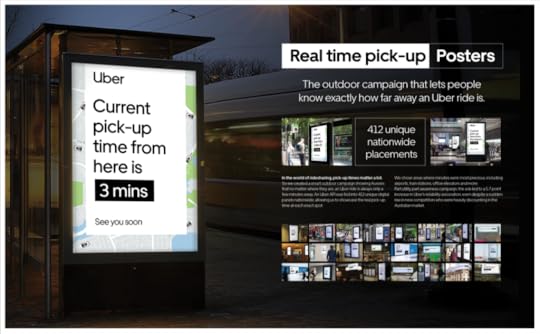
Nothing matters more than the speed of pickup. Credit: Jack Nunn
The same was true when I studied how long was too long to wait for an Uber before a user opened the Lyft app. Those number plummeted every year. I know people who carry two phones who open both apps to see which one is faster. They cancel the other driver when it’s clear who’s going to arrive later (note: I don’t support this behavior, but it is testament to “accidental narcissism.”
To this day, for instance, Uber advertisers how long average wait times are in cities using traditional billboards and signage.
The same is true for Uber Eats and Door Dash. “Impatience as a virtue” is one of the key observations that led to UX innovations such as tracking the car en route!
The minute I see that I can experiment with drone delivery, I’m jumping onboard (sorry neighbors!) And by the third time, I’ll probably start complaining about its time record. 
DALL-E Prompt: You’re one of the best nature photographers in the world. You were out in a suburban neighborhood in Dallas, Texas, shooting pictures of new homes being built near vast areas of flatlands. Then you looked up and took a picture of a drone delivering a package to a nearby home. Share with me that picture.
The post 2024 is Expected to Be the Year of Drone Delivery appeared first on Brian Solis.
January 2, 2024
Former Slack CEO Lidiane Jones Becomes Bumble CEO; FT Features Supporting Quote by Brian Solis
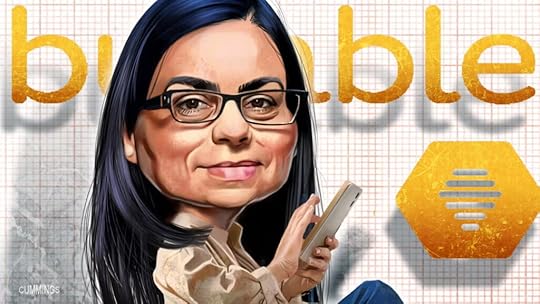
© Joe Cummings, FT
Hannah Murphy, Financial Times (FT)
Lidiane Jones, the 44-year-old former Slack chief executive was announced as the successor to Whitney Wolfe Herd, CEO of Bumble, marking a handover between two rare female leaders in tech.
Jones has a difficult job on her hands. Shares in the female-friendly dating app have fallen around 80 per cent since its 2021 initial public offering. And in March, Blackstone — Bumble’s largest institutional shareholder — sold a 10 per cent stake in the app for a heavily discounted $300mn price tag. The $7bn dating market remains dominated by incumbent Match Group, which has snapped up rising players such as Hinge.
Brian Solis, head of global innovation at ServiceNow and a former Salesforce vice-president, says that for Jones to take over from Wolfe Herd is “an incredible validation” after the Bumble founder “fought against all the things that make it so difficult for women founders”. By all accounts, the passing of the baton was a swift one. The line from Bumble is that Wolfe Herd had been considering a succession plan for some time, but a search had failed to yield the right candidate. Then she stumbled across a video of a Jones interview on CNBC from May, in which the then-Slack chief was calmly promoting the launch of “Slack GPT” — the platform’s generative AI chatbot. Wolfe Herd was impressed, and the pair were soon introduced through a mutual contact.
Please read the full article at FT.
The post Former Slack CEO Lidiane Jones Becomes Bumble CEO; FT Features Supporting Quote by Brian Solis appeared first on Brian Solis.
December 29, 2023
Generative Developments in AI – December 29, 2023
The latest in AI trends…
Google is expected to make dramatic cuts due to AIThe Information is reporting that Google is exploring a substantial workforce reduction, potentially affecting up to 30,000 employees. This is reportedly aimed at sales as Google’s own AI is expected to disrupt its Ads and Adwords business.
AI may affect more jobs beyond GoogleNewsweek is reporting that cuts are likely across the board as companies consider AI and a potential recession. According to a Resume Builder survey, nearly four in 10 companies said they are likely to have layoffs in 2024. Four in 10 said they are going to lay off employees and replace workers with AI.
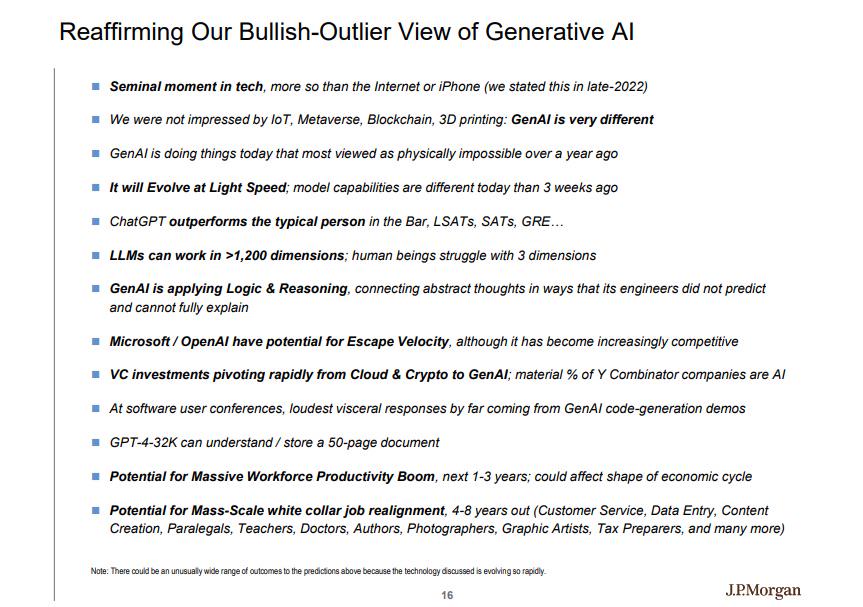
Generative AI will continue to grow, exponentiallyJ.P. Morgan maintains its bullish-outlier view of GenAI. They believe this is a seminal moment in tech.
The company wasn’t impressed by IoT, Metaverse, Blockchain, 3D printing, but it states that GenAI is very different. And that it is.
It’s expected to evolve at light speed. It will continue to outperform the typical person. As such, the typical person must augment their capabilities now with generative AI to perform extraordinary tasks. This will lead to a productivity boom.
J.P. Morgan also anticipates a mass-scale white collar job realignment.
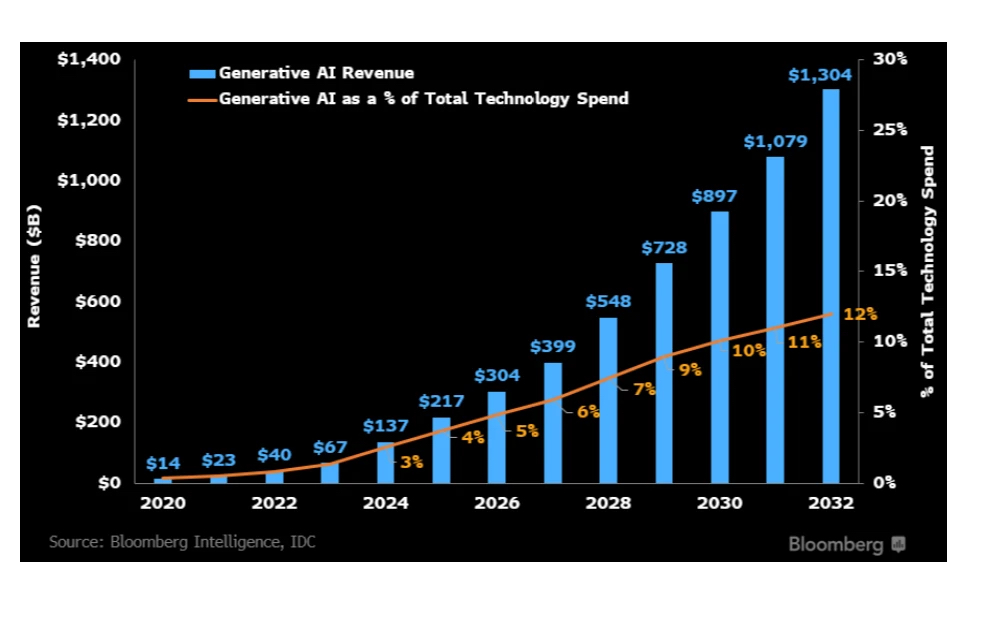
Bloomberg Intelligence recently reported that the generative AI market is poised to grow at a 42% compound annual growth rate from $40 billion in 2022 to $1.3 trillion by 2032. BI estimates that generative AI is poised to expand its impact from less than 1% to 10% market spending of total IT hardware, software services, ad spending, and gaming.
 Learn GenerativeAI
OpenAI published its “6 Strategies for Getting Better Results.”
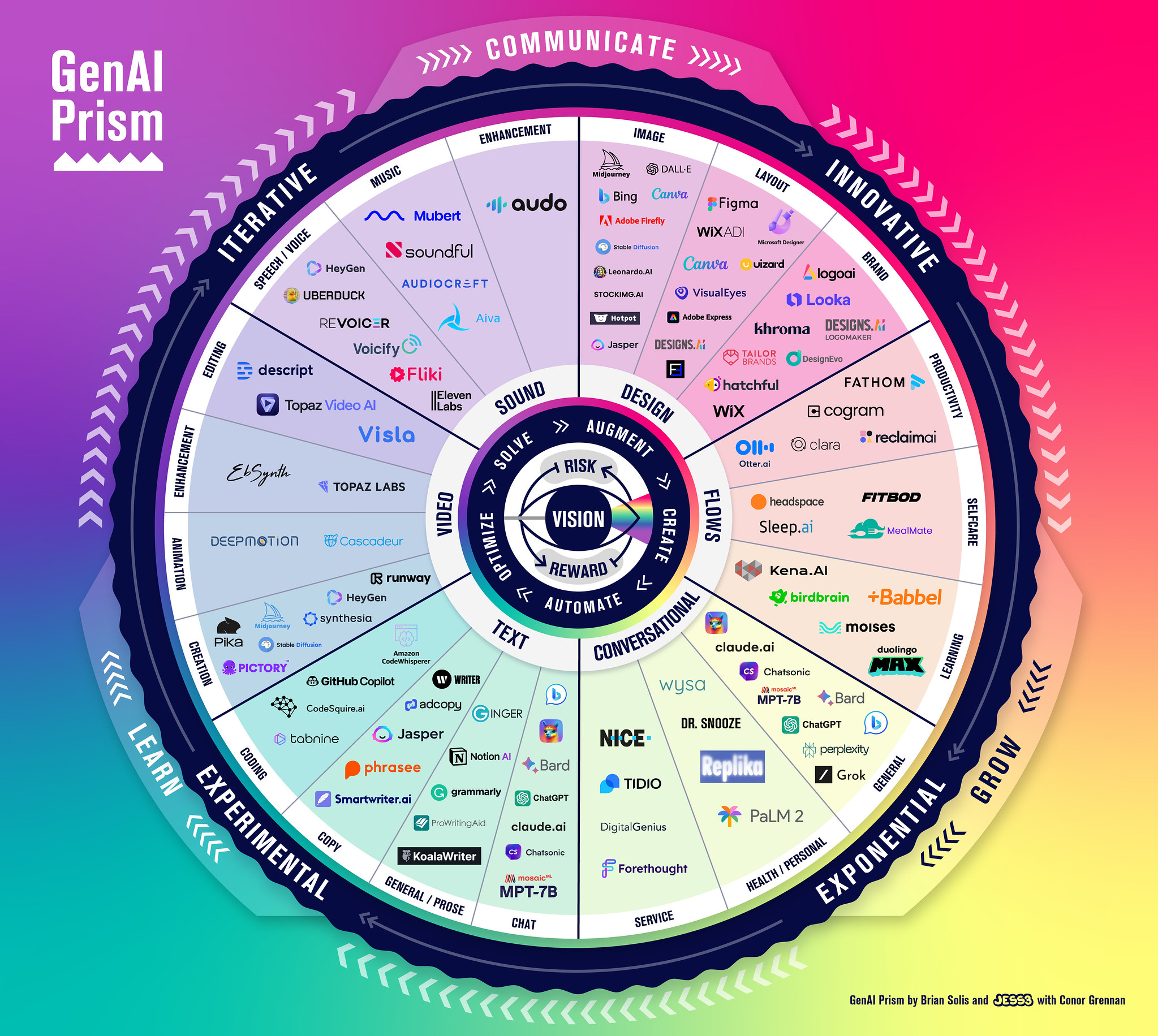
The v1.0 of the GenAI Prism infographic is now available. It serves as a mental model to augment your work toward exponential outcomes.
The post Generative Developments in AI – December 29, 2023 appeared first on Brian Solis.
December 28, 2023
The Four Waves of Generative AI, We’re in Wave 2 According to Mustafa Suleyman

ChatGPT was the fastest technology to reach 100 million users. In 2022 – 2023, ChatGPT almost single-handedly changed the trajectory of mainstream computing and how people interact with information. Suddenly everyday users could shift between consuming and co-creating data with the assistance of generative AI tools. Though it had been evolving for years, OpenAI captured the zeitgeist with ChatGPT, and everything changed from there.
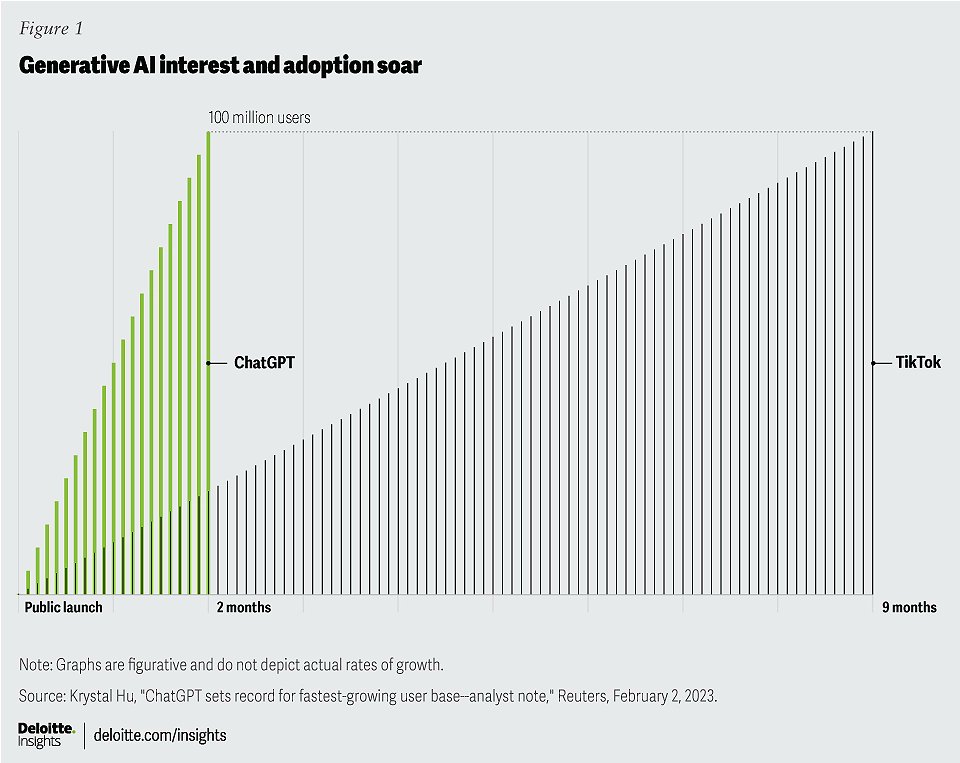
Now in 2024, we’ll see a shift from curiosity to strategic execution. Generative AI will get ‘smarter’ of course, but so will its users. They’ll uncover new capabilities, to unlock new possibilities, and perform work not possible before. Think of this time as gaining access to a ‘cognitive exoskeleton‘ that will take some getting used to. We’ll become increasingly augmented. 
With each new flex and experiment, we’ll achieve new results, realize new opportunities, and inspire new behaviors, skills, and quests!
But generative AI is just a phase according to Mustafa Suleyman, co-founder of DeepMind and now CEO and co-founder of Inflection AI.
He believes the next phase is interactive AI, bots that carry out specific tasks for you by autonomously working with other software and people to complete workflows.
Think of specialized AI partnering with other specialized AI to hand-off step-by-step each task as they’re completed until the overall work has been performed.
A simple example of an autonomous workflow could be prompted by a request to book a trip to a certain destination within a timeframe and budget. The system knows preferences, loyalty relationships, and favorite spots. It then finds the best route, timing, and price, books the flight, then books transportation to and from airports, books the hotel, books dinner reservations, then populates the calendar with all the information, and then prepares an tidy itinerary explaining each detail.
The user could then ask the bot to make any necessary changes to then be carried out autonomously.
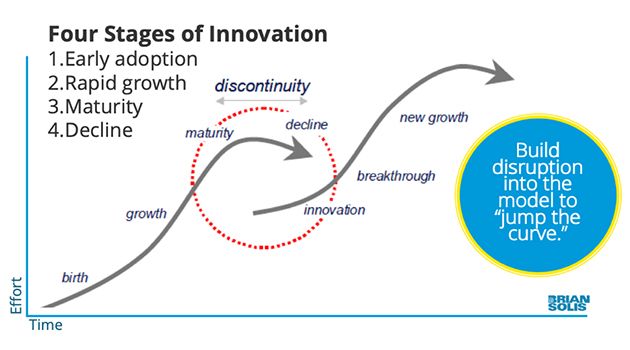
Wave 1: Suleyman describes the first wave of AI as one of classification and training.
Wave 2: Generative AI takes input data and produces new data.
Wave 3: Interactive AI where conversation becomes the user interface and autonomous bots connect to one another to execute tasks behind the scenes. Voice becomes the UI. (This is where Suleyman is focusing his work at Pi).
Wave 4: AI prompts us. Though Suleyman didn’t say this, I think about bots not needing direction on the horizon. Instead AI will learn how to help you collaborate towards outcomes. AI prompts us to learn how to prompt itself to achieve our desired states, to iterate toward new end-goals. AI then architects and executes the entire workflow autonomously.
The State of GenAI in One InfographicI partnered with JESS3 design studio and Conor Grennan, leading generative AI expert and Dean of Students/Head of GenerativeAI at NYU Stern School of Business, to create v1.0 of the GenAI Prism. Even though the landscape is still evolving, the current iteration of the GenAI Prism is the industry’s most comprehensive visualization of the Generative AI universe.
Version 1 is not reflective of the total landscape, but instead a snapshot of a moment in time. But more than just a visualization of the generative AI landscape, the GenAI Prism offers a mental model to mindfully and intentionally approach prompts and any work in which generative AI becomes a collaborator in work and life.
What’s next?
What do you see as the next waves of AI?
What new applications or devices are on your horizon?
Looking forward to hearing from you!
The post The Four Waves of Generative AI, We’re in Wave 2 According to Mustafa Suleyman appeared first on Brian Solis.


