P.J. Fox's Blog, page 6
January 24, 2016
More Wattpad Don’ts
The first and biggest mistake is not taking Wattpad seriously as a platform. And, judging by what I’ve heard from other authors, the primary reason they don’t succeed with it is that they…don’t. They, on some level, think it’s beneath them. Because it’s free, probably, and they’re suspicious of that model. Or they see it as a repository of One Direction fanfic and see themselves as above that. Why any author thinks they’re above getting a hundred million reads is beyond me but there you have it. If it’s not the “right” genre, then it doesn’t count–and they can’t possibly learn anything from it! So if they’re on Wattpad at all, it’s to plant a few flags Eddie Izzard style and then go back to doing something “real.”
And guess what?
They’re not fooling anybody about their perspective, or motives, least of all native Wattpaders.
Don’t only post samples. This is basically saying, “I’m on here to poach you away from Wattpad, to Amazon or wherever, to buy my ‘real’ book.” It’s undermining the point of Wattpad, and it’s a turn off. Why would someone read only samples from you, when they can read whole books from someone else? A lot of great books (including by authors you’ve heard of) are on there. You get what you put in to any relationship, and half-assing things on your end is no way to build a following. On any platform. Yes, it’s okay to post samples of your other books (I do, on Wattpad as well as on this site), but if it’s all you post then you’re setting yourself up for failure.
Don’t post once and then forget about it. The Wattpad community is one that searches out, and rewards, active participants. Personally, when I see a story that has, say, a certain number of parts but that hasn’t been updated in months or even years, I don’t read it. It doesn’t matter if there are five parts or fifty; I’m not going to invest in a story that the story’s on writer hasn’t bothered to finish. Moreover, the singular joy of Wattpad is immediate feedback; this is a great beta reader opportunity. If the author isn’t there…it’s like periscoping with an empty room.
Don’t post everything in a single chapter. When you do, you severely limit your feedback opportunities and, potentially, bore your readers. Most like their stories in bite-sized chunks of, say, a thousand words or so. If they want to read more, they will. But a single 10,000 word “chapter” (I have seen this) isn’t appealing. Moreover, you’re missing out on the votes and reads that’ll (hopefully) help you climb the rankings in your category. Say, for example, that you do have a 10,000 word story. If ten people read it, as a single chapter, that’s 10 reads and, if you’re supremely lucky, ten votes. But if you split that up into 10 chapters, that’s 100 reads and (again, if you’re supremely lucky) 100 votes. Or, at least, the possibility of those votes.
It’s worth spending some time getting to know what Wattpad really is, and how it works. Who’s on there, who isn’t, and what they want. Not because you’re trying to write to that audience (you should never do that, in my opinion), but because you can’t connect with people if you’re not interested in them. Blatant flag planting says, not, “I really care that you enjoy this story” but “I’m using you.” I mean, really–which do you find more appealing, in your own life? Which approach encourages your greater investment? Remember: if it wouldn’t work on you, it won’t work for you. Be the writer you want to meet, not the writer who’s so obsessed with sales that they neglect to ever build a fan base.


The Partly Finished Manuscript
To state the obvious, writing is more of a marathon than a sprint. The problem is that, in terms of the traditional viewpoint, running quickly is a bad thing. Other authors, if not the average reader, tend to view productivity with grave suspicion. As though, if you sit down at your desk and actually produce something, every single day, your writing can’t possibly be any good. Whether my writing actually is any good aside, I obviously disagree with this. For me, indeed, the opposite is true. The less direction a writer seems to have, in approaching their work, the less readable (again, for me) it tends to be. Something of a writer’s energy does, I think, seep into the story itself. I can tell when another writer is treading water.
And the fact is, either you have something to say or you don’t. If you have something to say, it usually isn’t that difficult of a matter to do so. The issue becomes, simply, how. I’ve discovered this the hard way, too, in my own work. I’ve abandoned manuscripts, including finished manuscripts, because the fact of my having produced them didn’t mean they were any good. Indeed, these discarded pages were the ones that took me the longest. They were what I thought I should write, not what gripped my own interest.
These days, I’m very self-indulgent in that I only write what I love. Yes, I have my off days; seven days out of seven I’m not racing down to the computer almost the minute my eyes open to make coffee and get to work. But on those rare days that I’m not (probably one out of every fourteen), I grab my camera and go scouting for locations. Or I ponder whatever plot issue is gripping me while I bang metal in my studio. Not because I think I should but because I honestly can’t help myself. In a way, it’s a lot like being pregnant; past a point, this thing takes on a life of its own. And it lets you know what it wants and, if for no other reason than your own sanity, you’d better obey.
And I think, if your story isn’t taking on a life of its own, you have to ask why.
As of last night, I’m 1/5 of the way through the manuscript of Prince of Darkness. Which is of course the sequel to Book of Shadows. I like to try new things (if you want results you’ve never gotten before, you have to try things you’ve never tried before), but I have to admit that this “writing as performance art” approach is a little hair raising. Even when I was posting Book of Shadows, chapter by chapter, I’d written quite a bit ahead and was posting on a set schedule. With Prince of Darkness, I’m posting each new chapter as I finish it. Written, edited, read by hundreds of people. So my readers, this time, are very much in real time with me and have been since January 9, when I started.
From January 9 to January 23, that’s 20,000 words in 15 days. Which sounds like a lot, but actually only averages to about 1,333 words per day–significantly less than what you’d need to complete NaNoWriMo (which I hate). Which, in that way, is what makes it a marathon, regardless of speed. The book appears not because you have a few monster writing sessions but because you do a little more each day.

I do hope to get back up again, soon, to my more typical output of around 2,000 words per day, but things have been busy. That, and I’ve been sick (and yes I got the flu shot). I have exactly 40 days before Book of Shadows is featured on Wattpad (beginning of March, hooray!), so even if I continue on at my current and rather slow rate that’s another 53,320 possible words. At which point I’d be 3/4 through the book. If I wrote 2,000 words per day, on the other hand, I’d be done. Either way, though, it’s not the worst thing. And, either way, I should–fingers crossed that no aliens invade, or anything–be done with Prince of Darkness by the end of March at the latest. At which time, I’ll start the third (and, I think, final) book in the series, Blood to Drink.
Thoughts?


January 12, 2016
How To Write A Novel
The best of the best, in terms of my writing advice, is now free to read on Wattpad.
What’s Wattpad? Wattpad is an entirely free (to sign up for, and to use) website where you can read literally thousands of books in all different genres. Originally published as I Look Like This Because I’m A Writer, How To Write a Novel is both the second, updated edition as well as much more interactive. You can leave comments on each section, asking me to cover certain things or certain things more in depth. Or, if you so choose, tell me where I went wrong!
Personally, I think the interactive format is ideal for nonfiction. And if enough people agree with me, and read this book and share their thoughts, I’ll post Indie Success on Wattpad as well. Now, the fact that my writing advice is on Wattpad means it’s no longer eligible for Kindle Unlimited–but I think this is a much better trade! You don’t have to subscribe to anything and you can talk to me (and everyone else on Wattpad) directly. Hooray!


January 3, 2016
Wattpad Update #2
If you missed the first update, go here.
I wrote the first chapter of Book of Shadows on November 9 and wrote the last on December 31. As of this morning, Book of Shadows is at 6K reads (#99 in Vampire) with 801 votes and 552 comments. I’ve submitted it to be featured, so right now we’re waiting to see whether it will be. Keep your fingers crossed! I’m also, as you know, if you follow me on Facebook, beginning to take notes for the sequel. At the end of Book of Shadows I gave readers the opportunity to weigh in on whether they wanted a sequel and what, if so, they were hoping it would contain. I’m exceedingly gratified, to say the least, that for the most part what people seem to want jibes with what I’m already planning on writing. I’m even more gratified that so many people have been so generous with their time, commenting not only on this issue but on each chapter.
Seeing as how I’ve reached two major milestones, breaking the top one hundred in my category and actually completing the book, I thought it was time for another update on what I’ve learned.
Pay attention to your bio. A lot of writers, even really good writers, have a hard time remembering that literally every word is an elevator pitch. How you write about yourself in your Wattpad bio, just like everything you say on Facebook and Twitter, previews the writing in your book. If your bio is boring, then–rightly or wrongly–prospective readers are most likely going to decide that your book is, too. Don’t skip the “other stuff,” figuring it doesn’t matter as much as your book. The “other stuff” is what convinces people to take a chance on reading your book. And for your bio especially, remember: Wattpad is not a dating site. Keep the information you offer short, sweet, and to the point.
Pay attention to your blurb. Your blurb might be one paragraph, or two, but you have until the end of the first sentence to convince anyone to continue reading. If–again, your pitch–doesn’t grab your reader right away, you’re going to lose them. Remember: they don’t know you, they don’t feel any personal loyalty to you. They only have so much free time, and you need to give them a reason to devote that free time to you.
Pay attention to your cover. People do judge books by their covers. The amount of care that appears to have gone into a cover–how well designed it is and, overall, how professional it looks–is going to directly influence a potential reader’s impression of the book. Appealing books have appealing covers. Conversely, covers that seem amateurish or slapped together convey (again, rightly or wrongly) the message that this author isn’t really trying.
Remember your audience. There are a lot of platforms out there, including your own website. There’s a reason I sell my jewelry on Etsy instead of Amazon. It’s impossible to say, with any certainty, who’s on Wattpad and who isn’t; but Wattpad seems to model the greater reading (and purchasing) spectrum in that it’s populated hugely by opinionated teenage girls. Now, you may be writing for a different demographic–or think you are–but if you think you’re above the type of reader who’s made Wattpad famous in the first place…then this isn’t your platform. People can tell when you’re looking down on them. Just like I, as a writer, notice when other writers make disparaging comments about my genre. That doesn’t make friends and influence people. It makes you come across as a stuck up turd.
The bottom line is this: before you put that first chapter up, put as much work or more into creating an appealing environment for it. Be professional, interesting and, above all, be welcoming–because, while you might imagine your target audience, you can never truly predict what that audience will (or won’t) be and so trying to limit, or to appeal to a certain kind of person, can only alienate potential (potentially really enthusiastic) readers. Because remember: these types of constructs are based on–almost always faulty–assumptions. And you know what they say about assumptions.
And, too, be yourself. One of the great things about Wattpad is that it isn’t stuffy. It provides an opportunity for authors–famous, infamous, and everywhere in between–to interact directly with their fans. Ivory tower bullshit…well, it’s going the way of the dodo everywhere, in my opinion, but it never really flew on a number of online fora. People don’t sign up for Wattpad because they want to hero worship. Some traditionally published authors think of it as they’re deigning to join Wattpad but…just last year, several teenagers walked away with really lucrative Big Five deals because their stories (including a Harry Stiles fanfic) were just that popular.
Stay humble.


January 2, 2016
Hazelnut Sponge Cake With Nutella Frosting
This recipe is by special request from fans on my Facebook page. I made it for Christmas Eve. I’m lucky it turned out so well, too, since it was one of my made up recipes; I searched and searched, but couldn’t find anything that promised to deliver the kind of cake I wanted. Now, I will add that with this cake, the secret is in more than the combination of ingredients; how you put them together really, really matters. Do not just dump everything in a bowl and mix, or you won’t get the results you want. Unless, of course, you want something that tastes less like cake and more like a brick. So with that being said, read on….
YOU WILL NEED:
For the cake:
1 cup (2 sticks) butter, softened
½ cup vegetable shortening
3 cups granulated sugar
5 eggs, room temperature
2 cups all-purpose flour
1 cup hazelnut meal
2 teaspoons baking powder
¼ teaspoon salt
1 cup whole milk
2 teaspoons vanilla extract
For the frosting:
1 cup unsalted butter, softened
3 to 4 cups confectioner’s sugar
1/2 cup (or more!) Nutella
1 tablespoon vanilla extract
2 tablespoons milk
pinch of salt
TO MAKE:
Preheat the oven to 350 F.
Grease three 8″ cake pans.
Cream your butter, shortening, sugar, and vanilla together until very white and fluffy (about 4 minutes). This step is VITAL. It will add air to the cake without making it tough. When baking, as a general rule, you want to avoid over-beating your eggs; which is why dumping everything together into a bowl rarely yields satisfactory results.
Add in the flour, hazelnut meal, baking powder, and salt.
In a separate bowl, whisk together the eggs and milk.
Beat the eggs and milk mixture into the batter.
Distribute the batter evenly between cake pans and bake for 30 minutes, or until a toothpick inserted in the center of the cake comes out clean. Note that this recipe was developed using a gas oven; electric ovens tend to produce shorter cooking times, meaning you should check your cake after 25 minutes. Some gas ovens, meanwhile, have much longer cooking times than mine. So the first few times you make this cake, you’ll want to keep a weather eye on it.
After the cake is done, and while the cake is cooling (I use wire racks from the restaurant supply store), begin creaming together the ingredients for the frosting. You may, depending on how much Nutella you use, need to add slightly more either butter or milk (or less confectioners sugar) to achieve your desired consistency.
Assemble that cake!
If you can’t find hazelnut meal in your local grocery store, you can either a) whip out that food processor and grind some hazelnuts up yourself or b) order online. I buy mine on Amazon. I also use Bob’s Red Mill all purpose white flour, which is neither bleached nor bromated and which in my humble opinion at least makes everything taste better. I also do not own, or want, a single fancy kitchen gadget. I learned to cook without them and have never felt the need for them. The only upgrade I’ve ever made was purchasing a hand mixer. It’s so much easier than using a wooden spoon!


January 1, 2016
How To Write Three Books In A Year
Yesterday I finished my ninth novel, Book of Shadows. Which you can read for free, in its entirety, online. Eventually, I do plan on turning Book of Shadows into a real book, but almost certainly not before I’ve written its two sequels. Ideally by the end of this summer. Maybe into the fall, if things go exceptionally slowly; I’m the mother of a toddler and my jewelry business is beginning to pick up steam. But I have no doubt, even so, that I will have written another three books by the end of 2016. Just like I did in 2015, and just like I did in 2014.
I’m not going to pretend to tell you how to write. At least not in this post. There are plenty of resources out there, geared toward that topic. Although, as I point out in my own book on the craft, there’s also no substitute for practice. Tips and tricks are great, and they can help; finding your own voice is a necessity. One thing I did do, that I think everyone should do, is write–just to write. Just to do just that. Not in the hopes of publication; not for any reason other than to explore and, ultimately, to learn. Lucius Annaeus Seneca observed that if one does not know to which port one is sailing, no wind is favorable. This is true, and it’s true for your writing as well. If you don’t know who you are, as a writer, and what your goal is, you have no means of evaluating advice–on anything.
But, presuming you know how to write–or think you do–then what?
If writing is your job, or if you want it to be your job, then treat it like your job. You’re not going to become a bestselling author, or any kind of author, by sitting around dreaming of being asked to appear on panels at cons. Nor are you by engaging in magical thinking about the “right” agent or the “right” publisher. These things can help. A lot of things can help. But, in the end, this is your career. And, thus, your responsibility. Not your agent’s; not your publisher’s. Waiting for someone else to take ownership of your life is the surest recipe for failure there is. If you want people to read your book, then you need to give them a reason to read your book. No, that’s not “someone else’s job.” Neither, indeed, is it anyone else’s job to make you sit down at your computer and write. The world will take your work–not you, mind you, your work–as seriously as you do.
Don’t confuse taking your work seriously with taking yourself seriously. Referring to yourself as Author Jane Grey, or posting about all the awesome reviews you’re getting, might be fun. The feedback you get from all the voices living inside your computer may make you feel good. But you’re still wasting your time. I know a lot of people who write a lot less than I do, and who make a lot less money than I do, and who are perpetually confused–and resentful–that I’m where they think they should be. Because beating your chest like Tarzan does not a working professional create. You’ll always be a lot better off actually doing your job, than wandering around the office trying to convince everyone else how great you are at it.
Don’t be an Amway salesperson.
Don’t waste your time on gimmicks. Crafting your next manuscript with a quill pen might make you feel special, but it won’t accomplish anything. Which goes back to the whole “is this actually your job” question. Do you expect your CPA to bring his abacus to work, because it helps him get in touch with his inner Luca Pacioli? Are you coming to his office for a history lesson? Too many authors seem to forget what their actual, daily purpose is. And let’s face it: if you don’t have anything to say, then dressing up in special costumes or using tools so antiquated that they’re actually a hindrance to productivity is not going to help.
Do the following exercise: list five things that you’re good at (but not, and I repeat not, five things that you are). In other words, no “I’m an amazing writer.” Tell me–tell yourself–something concrete about your actual skill set. Are you a good proofreader? Have you mastered the medieval history section at your local library? Don’t keep telling yourself that looking at yourself in the mirror and thinking I’m destined to conquer my field is enough. Good self esteem is good (although hubris isn’t), but it’s no substitute–again–for actual hard work. Give yourself a reason to be proud of yourself that isn’t based on narcissism, and you’ll quickly find that other people are more interested in you too.
I’m not so great. I put my pants on one leg at a time like everybody else. But what separates me from my arguably (at least in their own minds) more talented colleagues is that I work goddamn hard. I’m at my desk by five every morning, writing. I write a minimum of 2,000 words per day. I edit myself ruthlessly. I’m in this, not to prance around feeling good about myself but to make a living at something I love. Which, indeed, I do quite handily and have for a couple of years now.
Not everyone likes honesty. Some people would rather be told, as they’re driving straight for the edge of a cliff, that they’re doing the best thing possible. I’m…too interested in the health and welfare of other people to high five them for failing. That, to me, is far more cruel. Although I’m sure some would disagree; I’ve lost friends, although not good friends, for refusing to agree that drug addiction, sloth, theft, and abuse were good things. Simply because that was what the person wanted to hear. I’d rather that we all actually be successful, and actually be happy, than have to pretend at it. The fact still remains, though, that I’ve gotten to where I am by taking my own advice. I’m far, far harder on myself than I ever have been, or would be, on anyone else. So, depending on what you think of where I am, you can decide for yourself whether my advice is worthwhile to take.


December 29, 2015
Is The Cannon Thing True?
In Book of Shadows, which is free to read online, Sepha wonders about a cannon:
She stared at the tank in front of her. An M-4 Sherman. She thought. But she wasn’t sure. The parks of New England were full of such things, tanks and cannons and who knew what else. She’d read a story awhile before about a cannon that had been sitting in one park since the Civil War, all that time loaded with a live round. City workers had dutifully filled the muzzle with concrete, not bothering to check the breech. Thus creating, she supposed, the potential for some terrifying shrapnel. Another way to die, that she was missing out on.
She’s sitting in a place called, also somewhat unbelievably, Patton Park. Not because the vaunted general is from here (he, like Sepha, originally hailed from California) but because he moved here after he retired. He…and his tank. The Patton family farm, Green Meadows, has each of its fields named after different soldiers who died under the younger Patton’s command command in Vietnam.
History is interesting.
And the history behind Book of Shadows is all…well, real. There might be no vampires that we know of (yet), but Hamilton is certainly a real place. And Alex’s backstory is the result of a great deal of research. But those who’ve been with me for awhile know I’m fascinated by the 1857 mutiny and, indeed, based a section of another book on it. In researching for this book, though, I spent a great deal of time not only reading but also driving around, and hiking around, and getting to know my surroundings. It was one thing to know them as a resident; quite another to discover them, all over again, as an author.
Reading is helpful, but no amount of reading can really replace getting out there. This is the second book I’ve set in the so-called “real” world, but it’s the first I’ve set in my own backyard and one of the reasons behind that is that there is so much going on here. I, personally, find the area’s history (from the Salem Witch Trials to the China Trade, the whaling trade, and everything in between) fascinating. There’s still a dark stain, here; which I think is part of what H.P. Lovecraft must have picked up on.
There’s only one element–aside from, arguably, Alex–that’s a bit fanciful, which is that I renamed an inn in Marblehead for the purposes of one dinner and added a restaurant. Fans of the town’s history will know that there was once a restaurant there and fans of the broader Commonwealth’s history will recognize features of the Wayside Inn in Sudbury (which is, indeed, America’s oldest continuously operating inn). But all the really stupid stuff–from weapons to country club rivalries–is true.
What’s your favorite unfortunate bit of history?


December 23, 2015
Disney Junior: From Most To Least Disturbing
Disney Junior’s afternoon lineup is really disturbing. And I don’t just mean all the scenes in Star Wars: Rebels where Chopper, who is clearly supposed to be black (if the hilariously stereotyped music videos featuring his “rapping” are anything to go by), acts as the crew’s slave and constantly gets hit for not doing his job right. Star Wars: Rebels is, indeed, a single protracted exercise in uncomfortably racist humor. But, then again, so is Goldie and Bear. I watched an episode of that show with my son last night that managed both to convey that African Americans don’t have jobs and that you have to “shrink to his size” before you can communicate successfully with your Mexican gardener, and that led me to decide that it was time to write this post. So, without further ado…
Miles From Tomorrowland absolutely tops this list. This world appears to be a matriarchal one, where men exist for the sole purpose of providing pleasure. To wit, we see in every episode how Miles’ sister is receiving an education–presumably, so she can become a ship’s captain like her mom–while Miles, himself is left to roam around in the company of a mechanical babysitter. There doesn’t appear to be any even expectation that Miles will apply himself about anything, or to anything. Because why should he? His father’s sole role, apart from humoring his mother, seems to be looking handsome and providing pancakes.
And that all is ignoring the fact that these two quite young children are a) in space, alone, with no companions their own age, b) exposed continually to adult-sized threats and, c) in the case of Miles’ sister, expected to work along side the adults. Childhood does not seem to be a feature of this society. Which begs the question: at what point are children–the female ones at least–trained for the jobs they’re then forced to take? Are their parents parents, or coworkers?
Goldie and Bear is an absolutely terrible show, with terrible music. Also, I’m sorry, it’s right there in the opening: she vandalized his stuff so he has to be her friend forever. What kind of Stockholm Syndrome relationship is this? Moreover, okay. Bear and his family are clearly supposed to be black. But apparently interracial friendship is so horrendous of a concept that Goldie has to be a different species altogether. Interspecies being easier to handle? Bear’s parents are home all day, every day, because apparently we’re also digging right to the bottom of the barrel for the most harmful stereotypes we can find and projecting them straight into children’s minds. Meanwhile Goldie…Goldie, like so many other children in these shows, appears to have no parents at all.
She and Bear just–what? Hang around, doing nothing, getting menaced by the neighborhood pedophile? What exactly is Big Bad Wolf’s deal, anyway? And why aren’t they in school? Why doesn’t Bear wear pants? Why, when Goldie is mean to Bear in one episode, does Bear’s mother tell Bear that he “has” to be friends with her regardless? And not just right now, but forever?
Sofia the First is a show about a girl who becomes “a princess overnight.”
Okay.
How?
Did the–mysteriously genitals free–king just abduct her mom? Like, while he was riding through the village? What happened to Sofia’s dad? What, for that matter, happened to the king’s wife? Is he, like, keeping her locked in the dungeons Jane Eyre-style? It wouldn’t surprise me, because his children are clearly disturbed. James, who shakes like a leaf when anyone approaches him, seems to spend most of his time in the corner wishing he had friends. He’s not good at anything, and the other children make fun of him for that. Or treat him like an invalid. Amber, meanwhile, is a narcissist with a serious violent streak. These two, who’d top almost any list for step siblings from hell, need professional help. Which Sofia, on some level, seems to realize.
She has friends. She has some sense of values. Unlike, presumably, the future ruler(s) of this kingdom. What happens to her, though, when the king gets tired of this wife? Does she go into the dungeon, too? Why is this never explained? And why has no one, for that matter, noticed that Sofia seems to spend an awful lot of time talking to animals (and responding to comments that no one else can hear)? Could it be because, in this world, no one seems terribly attached to their children? After all, this “school for royalty” she attends appears to be some sort of boarding school where children from around the globe are just…dumped. When their presumable parents appear, it’s really only ever to talk to Sofia. What’s up with that?

PJ Masks is yet another show about children with no parents. These children leave their beds in the middle of the night to spar with other children, Lost Boys-style, who also have no parents. In fact, in this year’s supposed “holiday” episode, we discover that Luna Girl lives alone under some sort of underpass and has no one and nothing to keep her company except her moths. Bring on the cheer, kids! I’m sorry, but “this child acts out, to the point where she appears villainous to other children, because she’s homeless” isn’t an appropriate storyline for toddlers. Or indeed for many adults!
Jake and the Never Land Pirates, the last show on this list, is about a man with three different children by three different women who lives in a trailer park. At least according to my son. You see, Captain Hook (“Daddy Hook,” as my son calls him) is Jake’s father. He’s also Izzy’s and Cubby’s. Mr. Smee is grandpa, and the two crack addicts sailors are uncles. Various episodes revolve around such blue collar woes as trying out a new and ill-fitting prosthetic, the angst you cause your kids when you make money illegally, and sobering up enough to enjoy the holidays.
Being a reformed redneck myself (although how reformed depends on who you ask), I recognized these things right away. Just like I also recognized the kids’ apparently never ending quest for a legitimate role model, Captain Hook’s mom’s disgust with his life choices and the fact that, when push comes to shove, Captain Hook really does act like a parent. Although seriously, have you ever seen the weed episode? Those tikis, man. I do think, though, that anyone who’s spent time in a trailer park would recognize the landscape: oddly shaped, often cobbled together houses that might be close together in theory but that really do constitute their own little kingdoms. Lots of strange “treasure” lying around. And danger, too, most often posed by the neighbors. Many of whom also seem obsessed by inexplicable and arguably pointless things. A fondness for lawn ornaments.
My, it’s amazing how wholesome Disney can be.


December 11, 2015
Book Not Selling? It Might Be Your Cover
I’ve written before about packaging your book for success and how sometimes, if your book isn’t selling, it might be your blurb. Or indeed it might be your categories, or keywords. How people find your book has as much to do with your success as anything, because their methods are illustrative of their expectations. In other words, someone who’s looking for a Highlander romance is going to type in “Highlander romance.” Not, necessarily, Dulnain Bridge, although that might be a lovely spot and, indeed, the setting of your book. Packaging–from blurb to categories to keywords to cover–is all about demystifying the matching process, of book to person who wants book.
Which all sounds exceedingly obvious, until you make your first mistake.
There are certain elements of storytelling that, to the average reader, do not belong in certain genres. And this is where you, the author, are going to have to face the fact that your conception of your own book is going to be, for many potential readers, wrong. And accept that. Because once it’s published, that story is no longer about you. One of my husband’s professors, in college, used to love (and in my opinion overuse) the phrase, “trust the tale, not the teller.” But he had (and has, I presume) a point: which is that effective storytelling is about connecting, on a personal level, with your audience. They aren’t reading about you; they aren’t connecting with you. Your story is what matters and your story is successful to the extent that it helps them access something within themselves. Which is why someone who buys a book expecting hard science fiction is going to be so upset when he, instead, finds romance.
It’s not about whether the book is good. That someone isn’t attracted to your kind of book isn’t a comment on its value, any more than someone of an incompatible sexual orientation not being attracted to you is a comment on your value as a person. Trying to make a square peg fit into a round hole–literally or metaphorically–is a waste of time and energy.
I, personally, don’t see mutual exclusivity between science fiction and romance. To me, most if not all of the best books have romantic themes. But, as it turned out, the vast majority of my readers disagreed. And so The Price of Desire was re-shelved. But then came the problem that, even though the blurb very clearly stated that the events in this book centered on, and were told through the lens of, a relationship between two people, the cover said Alastair Reynolds and not M.M. Kaye. Do people even read blurbs? Sometimes I wonder. I mean, they notice if it’s a really bad blurb but, at the same time, they also really do just books by their covers. How people read blurbs is, largely, determined by what they think of the cover. Which meant that, in the case of The Price of Desire, too much of a hard science fiction-type cover made a lot of readers dismiss the relationship between Kisten and Aria as probably irrelevant to the story.
You have to decide whether you want to sit around hoping for the next breakthrough novel or whether you want to sell a book. And keep in mind, breakthroughs only tend to happen after the novel has been successful in its own genre. And by “own genre” I mean where the balance of readers expect to find it shelved. Harry Potter didn’t start out as adult reading material.
Romance, in and of itself, is an exclusionary category. It can’t be “science fiction with a strong romantic bent,” it has to be romance shelved into the sub-category of science fiction romance. It can’t be an historical novel; it can’t be fantasy. It has to, first and foremost, be romance. One of the reasons for which, I personally believe, being that romance as a genre tends to be heavy on the female leads. Quarantining anything woman-forward as “romance” allows the Sad Puppies/Rabid Puppies-type readers to avoid sullying themselves with a book written from an unwanted perspective.
So once you’ve sorted all that out, you might have to face the fact that your original cover is no longer appropriate. Because it appeals, not to your target audience but to, as happened with The Prince’s Slave, a group of readers who want less women and brown people and aren’t afraid to say so in Amazon reviews.
Which is how we went from this:

To this:
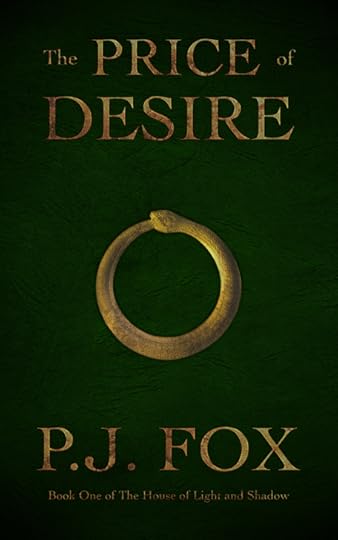
Less science fiction, more…question? I could have gone with abs (at one point considered abs), but this isn’t really an “abs” book in that the hero isn’t someone the average reader wants to date. As well as I’ve also been told that no one wants to read about politics. Which is probably how this book ended up so many “one star or less”-type lists on Goodreads, along with A Clockwork Orange and Great Expectations.
It’s not that one is better than the other, it’s that one aligns better with the expectations of my intended audience. Browse through romance novels–in all sub-genres–and you’ll see that one common theme is abs. Abs, abs, and more abs. And, on occasion, a girl admiring those abs. Even when abs have nothing to do with the book. Because abs–and I think a next best thing to blank-type cover can function similarly–is a calling card. “Be warned: this book has girls, and not in the window dressing kind of way.”
I was a little resistant to the idea of a new cover, at first, because it seems like giving in. Oh, okay, guys, my book had too much sex and too many brown people, I’ll take out the spaceship so it won’t feel like you wasted your lunch money. But I had to reconcile myself, logically, to the fact that that wasn’t my intended audience anyway. And that by failing to tempt them, I’d be doing myself a favor. Fewer one star reviews!
But back to the issue of romance. Those who actually read romance rarely, in my experience, define it as a category. If you ask, what’s X book about or what’s Y book about, you’ll get an actual answer. About, you know, the plot. Ask people who don’t read romance–or whose entire identity, as an author, seems framed around the idea of not writing romance–and they’ll assault you with adjectives. Stupid, lame, at least I’m not writing that. The foundational assumption being, I guess, that giving a shit about other people is the worst thing in the world.
Inside and outside of books, though, there are women who persist in being more than She-Ra clones and/or window dressing. And who aren’t afraid to have feelings! Because they recognize, even if many readers do not, that having feelings does not make one weak. That having an identity that isn’t “sword wielding man of vaguely European descent” isn’t actually the be all and end all–and that many of us, indeed, frame our identities entirely without reference to our distinctly white, distinctly male counterparts!
Too often, these days, fantasy is defined–almost entirely by fantasy authors, in my experience, along with a tight knit cadre of readers who encourage them in doing so–in terms of what it’s “supposed” to be. If you write something that isn’t, you know, a Terry Goodkind ripoff or a Joe Abercrombie ripoff, it’s A Really Big Deal. And everyone wants to comment on that, and on whether such an unwholesome degree of originality makes your book worthy.
Deciding that isn’t your circus can make you…unpopular. Trust me on this, I know. My disinterest in earning a place at the (supposed) cool kids’ table has alienated some of my fellow authors. But I’m not writing for them; I’m writing for myself. And, secondarily, for my fans. I’m not trying to win over people (authors or readers) who don’t think romance belongs in “real” books, a) because doing so is impossible and b) because I’m too busy trying to make my own life, personal and professional, into something I’m proud of to worry about rooting out every possible detractor.
Tell me your thoughts in the comments.


December 8, 2015
Wattpad Update #1
Now that I’ve been on Wattpad a month, it’s time for the first post in a series where–once again–Fox learns the hard way so you don’t have to. So if you’re new to this blog, welcome! And if you’re a longtime reader, welcome to this new series! I’m going to intersperse updates along with other posts; you’ll be able to find them all under the Wattpad tag. And hopefully, what I learn will be interesting. And helpful!
Book of Shadows currently has 1.3K reads, 158 votes and 118 comments. The highest ranking its achieved so far is 211 in “vampire.” As of yesterday (I update every Monday, Wednesday and Friday), I’ve uploaded fourteen parts: thirteen chapters plus a playlist. So for thirteen chapters, is this good? Is it bad? I have no idea. There’s relatively little information out there in the way of defining metrics, and certainly not enough to inform expectations. But I’m sure a lot of us have the same question as far as, what constitutes “doing well?” Especially for a work in progress?
Eventually, when BoS is finished, I’d like to get it featured. But that’s a long way in the future and right now I’m just concentrating on producing the best story I can. Which, incidentally, I do not recommend updating so frequently unless you have a good buffer. Rushed writing isn’t usually good writing. I posted Chapter Thirteen yesterday, but I finished writing Chapter Thirty One this morning.
So far though, here’s what I’ve learned:
DO respond to every comment, and be gracious. Even if you don’t particularly like what a person is saying (they take issue with a certain character, or scene, or have caught a typo, etc), recognize that they’re still taking time out of their lives to communicate with you. And, speaking as someone who’s published books the regular way, you’re going to get that feedback regardless. Getting it before the “real” book comes out is invaluable.
DO respond to every (appropriate) private message.
Do NOT hesitate to ignore someone, or to flag their message as spam, if they’re being gross or hostile or otherwise bullying. Yes, you’re putting your work out there. Your work, not yourself. It’s okay to have boundaries. I’ve had some people send me overly inquisitive, or just plain rude messages–although usually on Facebook–making assumptions about me as a person based on what I write about or demanding that I justify some aspect of my work, or myself. It feels awful. But just because someone thinks you owe them something, doesn’t mean you do.
DO include a reminder at the end of each chapter to vote, share, etc. People forget! Don’t flame them for it but, like, help them to remember. Politely.
DO join the community! Read other people’s stories. Vote on them (if you like them).
Do NOT do so with an agenda. Everyone can spot a faker. Really, people who think they’re so subtle…aren’t. Knowing that someone is reading your work so you’ll read theirs, etc, is a HUGE turn-off. If you’re genuine, and interesting, that’s going to attract people–and that’s also the only thing that will. Be a friend, not a scam artist.
Okay, so that’s the starting point. What have I missed? What, fellow readers and writers, are YOUR questions about Wattpad?