P.J. Fox's Blog, page 2
February 9, 2017
The Top 5 (Petty) Things That Jealous People Do
Writing. Sigh. For everyone out there doing it, there are a thousand more who want you to know that if they did it, they’d be the best. That they are, in fact, the most talented writer in the world. And they’re going to prove it to you, by criticizing your work. Except, not in any meaningful way. No, they’re going to…
Criticize your spelling. Almost always wrongly. You’ll know you’ve met one of these when they sail in and tell you that “denigrate” should be spelled “degenerate.” Their own vocabularies are pea-sized; any attempt by you to use a word not featured in Fifty Shades of Grey is going to be labeled an error. What, words come in syllables? Watch for these literary geniuses to also leave reviews on Amazon, wherein they decry the fact that the one typo they (think they) spotted so destroyed the book for them that they couldn’t even glean its basic meaning. One star.
Criticize your grammar. Again, almost always wrongly. Jealous, small-minded people are easily intimidated. They make themselves feel better about the fact that your writing is actually good by coming up with something you’re bad at. Something only they can help you with. Look, I just ended two sentences in a row with a preposition! Surely, I must be crying out for a guru to sail in through the window and reteach me middle school English. In all seriousness, though, for this kind of person casting themselves as that guru has nothing to do with you and everything to do with them and their need to feel superior. It is, after all, a lot easier to tear someone else down for creating “wrong” than it is to get off your ass and create something, yourself.
Subtly (or not so subtly) insinuate that you’re plagiarizing. Because, after all, they’re not coming up with any original ideas. A variant on this approach is assuring you that your work is fan fiction, when it very clearly isn’t. But they read one book, and it was Twilight, and Twilight had a boy and a girl and your book has a boy and a girl and…well, obviously.
Plagiarize your work. I can’t tell you, after I premiered Dark Obsession on Wattpad, how many followers and fans suddenly had a hero named Thorn. Who, of course, bore absolutely no relation to my main romantic love interest even though he was also a sex addict who lived in a castle.
Lie. Usually about the level of their own success. Which is…really sad. But that girl with a few reads on Wattpad isn’t earning thousands per month from their Futures program; that guy who’s had half a book up on Radish for half a year now isn’t getting rich, either. Your friend with one book on Amazon–however it was published–isn’t putting in his first order for a golden toilet. The idea of being a writer fulfills the same kind of fantasy for a lot of people as the idea of being a pop star. And the closer their life is to that (teen) movie perfect ideal, the more likely that that’s all it is.
Okay, world, what did I miss?
Let me know in the comments.


February 7, 2017
Creepy Marketing
So here’s a conversation I had earlier this evening, on a Facebook page. A complete and total stranger approached me, identified that I was a writer, and asked for advice. I told him, as politely as I could, that I wasn’t really interested. That turned into:
Him: Maybe I can send a rough draft and you can give me your opinion?
Me: Unfortunately, no. I don’t read manuscripts.
Him: Okay that’s fine. I can at least throw ideas around to you.
Me: I’m always happy to make new friends, but friends only. I’m not a writing tutor.
Him: I understand. Thank you.
Him: I hope it’s okay to message you. I sent a link to my YouTube page where I made a video with my poems and stop motion animation.
Note: This conversation occurred after I’d already told him that I wasn’t interested. Repeatedly. In polite, but clear terms.
Then I received this message (corrected for spelling and grammar to be readable):
Him: Hello PJ, I was wondering if it would be OK if you can watch this. I used [he describes his video at great length]. It’s okay if you don’t want to watch it but it will give you an idea of what I write.
Me: So here’s the thing. Like I said, I’m looking for friends. Someone meeting me and saying, basically, “hey, something about you is useful to me, how about you giving me hours of your free time to help me?” is a real turnoff.
Him: Oh sorry, I just don’t talk to other writers that often so I got excited. If I offended you I am sorry. I do hope we can still be friends.
Me: I feel like I’ve already addressed this a couple of times in comments with you.
Him: Yes you have, and I am still asking for opinions. I will not ask anymore. It’s not that often I can speak with other writers. I apologize again.
Me: This kind of pushiness is going to make most people, regardless of their jobs, really uncomfortable.
Him: True and I understand and I’m not trying to use you. It’s not that often I find someone who likes writing.
Him: So once again I am sorry. I got excited because you been through more than I have, you have published books so I something wonder if I am doing anything right and when I find someone who has been through I ask to see if I am doing it right, too. So if you still think I’ve asked for too much I understand. You can unfriend and we don’t have to chat.
Now let’s discuss.
What went wrong?
Oh, where to begin. For those of you who haven’t read my post on users, it’s here. “Let’s pretend to be friends, because I’ve decided that knowing you will be useful to me” isn’t hot. It’s the opposite of hot. It’s also absolutely guaranteed to make me not want to be friends with you. Because what the heck is your concept of friendship? Users are enough of a problem to begin with; someone who begins your friendship with unreasonable requests is also absolutely guaranteed to be a real treat later on. I guess, too, because they don’t really see other people as people, users never seem to think of this: what’s in it for the other guy? Why, exactly, am I supposed to divert time away from my own career and hobbies, from my family, for someone who doesn’t even know me and doesn’t want to?
Second, and maybe less obviously to some readers, you can talk about something without asking for something. I’m (somewhat) active in a number of different groups on Facebook, I post a lot on Twitter…I geek out with fellow geeks all the time about comics, and all the other geeky stuff I love. At no point do any of us do anything but share our enthusiasm. “You’re a writer” isn’t an excuse to demand favors. Back when I was still a practicing attorney, I regularly met other folks who enjoyed the law but who weren’t (or sometimes were!) attorneys. And guess what!?! They didn’t expect me to start working for them, for free. Variations on the “oh, I just don’t get out much” ploy are all exercises in the same thing: guilt. Really interested in writing? In people who like writing? In people who do it for a living? Ask them about themselves! Share your thoughts on the topic! List some of your favorite books, and series!
The first rule of marketing is to remember that the people you’re approaching don’t owe you anything. This isn’t about what they can do for you or, even worse, what they (for some unknown reason) should do for you. This is about what you can do for them. The worst thing you can possibly do is hit someone with a hard sell on how they’re beholden to you. First impressions are first impressions; whatever you’d do at a cocktail party is what you should do, here. Unless, of course, you’re one of those guys who gropes girls and then vomits on them. In which case, congratulations! That’s exactly how you’re coming across online. And “creepy, rapey dude” is no one’s ideal brand platform. Lose your sense of entitlement.
And remember the bottom line: good marketing is making people feel good about themselves.
January 30, 2017
How (Not) to Network
People always get super friendly with me, and start apologizing for having been too busy to show an interest in my life, right before they ask me for something. And they really, really hate it when I notice. Now, granted, I usually don’t say anything; but nor do I tend to transform into the fountain of generosity they seem to expect. I do give advice, like I did in my last blog post, but it’s rarely–if ever–the advice they want and so causes more problems than it fixes. Writing is perceived, by a surprising number of people, as a career of last resort; “I really don’t know what interests me, and I really don’t feel like committing to much, so I think I’ll write” is a statement I hear often. And as much of a career plan as a lot of people think they need. They, of course, know more than I do about what it takes to be a successful author so my mumblings about “hard work” are usually ignored. Next, I might even start telling them that publishing houses don’t give out free unicorns!
And listen, I get where they’re coming from: they didn’t waste their time on me before, because I had no utility before. Asking me about my health (still problematic, although much better!), my son, even so much as “liking” the occasional picture on Facebook…too hard! But then something comes along and–hey! They remember that I might somehow serve a purpose after all. Like, for example, I might transform them into Stephen King overnight with my magic beans advice, or share some of my contacts in the publishing world.
So while I’m not good enough to be a lot of people’s friend, I am good enough to be their servant. Awesome! Just what I was always waiting for!
Listen. Cultivating networks isn’t pay for play. You might not, in your self-absorption, realize how you’re coming across. But everyone else sure does. In this business–in every business–reputation is everything. And if you gain a reputation as a user, that’s going to stick with you. The old saw we all remember from third grade, about how you have to be a friend to have a friend, is true. We all need support systems, of one kind or another; and that, of course, includes professional networks! But you can’t plant flags; you have to invest.
Be friends with people, because you actually like them. Care about them. Not what they can do for you, them. Put in the time necessary to first create, and then sustain, meaningful relationships based on something other than their fulfilling whatever your current wants and needs might be. You’re reaching out for help, to another author; have you read their work? Can you, for that matter, name a single one of their books? What reason do you have for asking that particular individual, as an individual, for help other than “I know you” and “I want to make some money, myself?”
Put yourself in the other person’s shoes and ask, is this how I’d want to be treated?
Business isn’t a numbers game; it’s a people game. There’s always going to be someone stronger, faster, better coming along down the road. To the extent that you treat people as interchangeable, you give them a reason to view you as equally interchangeable. I can tell, everyone can tell, when someone isn’t being genuine. Vince Lombardi said that the achievements of an organization are the result of the combined efforts of each individual; what you can take away from that, as far as writing goes, is the idea that you have to give as much–or more–as you expect to receive. Entitlement doesn’t win any games, and it doesn’t create any teams. On the other hand, if you work hard to show how valuable you are to the people whose team you want to join, then you’re going to get results.
January 28, 2017
What’s It Really Like, Being a Writer?
I got some great questions, last night, about the so-called writing life. I decided to answer them here, because they were such good questions that I thought, you know, I’m sure someone else would like to read these. And maybe share them with a different writer, for their answers. Because every writer, I think, is going to answer these differently. To some extent, at least. My approach to writing, as both a love and as a career, is reflective of a certain ethic and, let’s face it: there’s a reason my friends tell me that Clint Eastwood is my spirit animal. Is that ethic negative? I think no. To me, there’s nothing more empowering than honesty. With yourself, with others, and about your situation. Writing isn’t easy; in fact, there’s a solid argument to be made that this is the hardest profession you could possibly choose. But it can also be the best. Success, in any field, takes work. Work when you don’t feel like working, work when you don’t feel like doing anything at all. Every once in a while I encounter someone who’s convinced themselves that writing is “easy,” that it’s some kind of golden ticket. For them…my advice isn’t what they want to hear. But for everyone else: I’m honest, because that’s my nature. And because I want you to succeed.
How do you get started with a new novel?
Back when I was first writing, every page was a torment. Especially the first page. I’d obsess over it for hours. But writing is a lot like basketball: reviewing tapes can be helpful but, in the end, the only thing that improves you is practice. I’ve said before that I wrote a million words of crap before I wrote a single thing that I thought was worth publishing, and it’s true. Actually, I wrote more than a million words of crap. I completed numerous manuscripts. And the first time I did, oh boy, I felt like I’d just conquered the world. Of course, the prose was unbearable and the story it contained…what story?
Five completed manuscripts, plus dozens and dozens of short stories, half stories, manuscripts I started and abandoned…I’ve never gone back to any of them. They served their purpose, which was teaching me everything I didn’t know about how to write. Now, your mileage may vary; I have writer friends who’ve produced work they were really proud of much sooner. Although we all evolve as writers. If, that is, we’re doing it right. My first “real” novel was published several years ago and, working on the final edits for my thirteenth novel now I’m amazed at how much I’ve continued to evolve. Were I to sit down and write The Price of Desire now, I’d do it completely differently. What made me decide, though, that that novel was the one? That I was ready? I really have no idea; that’s just one of those things, like knowing when you want to date somebody. You just know. But, regardless, you shouldn’t expect to publish the first thing you finish.
Writing is a craft like any other; even if you do end up publishing your first completed manuscript, it’s not going to represent the apex of your abilities. No one’s a master right out of the gate. Moreover, pushing yourself to publish something, anything, in order to (hopefully) make money isn’t going to work. It’s putting the cart before the horse. Would you buy a piece of furniture from someone who didn’t know the difference between a chisel and an awl? Would you set yourself up as a master cabinetmaker if you’d never held either? People pay for quality; not to be guinea pigs.
If you want guinea pigs, the best thing to do–in my opinion–is create an account on Wattpad. You’ll get feedback, and lots of it. And, as with every other craft, the most negative feedback is usually the most helpful. When it comes to writing, your ego is most definitely not your amigo. The more you can put it aside, the better off you’ll be. And in many cases, of course, Wattpad leads to great things. Some of the most successful authors working today have begun by giving their work away for free, whether on Wattpad or some other site.
And finally, don’t polish turds. I know so many would be writers who are still, years on, editing and re-editing the same manuscript. And while I understand the temptation, this is a really bad idea. Going back to the basketball analogy, that’s like playing one game and then spending the next decade analyzing it. You may become an expert in that game, in that one tape of that game, but you won’t learn how to play basketball. You only learn to play basketball–to do anything–by getting out there. Try, and try again. Be willing to make a fool of yourself. If something doesn’t work, then scrap it and try something else. Coaching is really helpful, but only to the extent that you have an internal sense of who you are as a player. Lucius Annaeus Seneca said, if one does not know to what port one is sailing, all winds are favorable. And it’s true: knowing yourself is what’s going to help you separate the good advice from the bad. Or maybe not even bad, just not applicable.
Write every day. If you’re stuck on a story, start a new one. The specter of beginning grows less and less horrifying, the more you write. Having well over a million published words under my belt, at this point, beginning is no different than middling or ending. I’m so used to the act of writing that I can focus completely on my story.
How thoroughly do you outline and plan before you start writing?
Not very. I’m not an outliner. Not because I don’t see the value in outlines, but because they just don’t work for me creatively. My characters tend to grow and change on me, and new characters tend to simply appear. At some point, I feel like, for every author there’s that moment when the story–for lack of a better term–comes alive. After which point an outline can become a hindrance. I don’t want to feel any divided loyalties between the story I’d planned on writing, a few days or weeks or months ago, and the story that now needs to be told. That being said, I am a notetaker. I always start out with a general idea for my plot; I know the beginning, middle, and end. I usually add to my notes, during the actual writing process, as ideas come to me.
I know people who’ve gotten so trapped in the preplanning phase that they’ve completely lost sight of their story. An outline, to the extent that you even want to use one, is a tool. Nothing more, and nothing less. Getting so bogged down in the minutiae of your proposed world that you end up creating a tabletop gaming manual is…not helpful. Whatever outlining you do, whatever world building you do, it should always be in service to the story. And people want to read stories. Recently, I was asked to beta read a manuscript that began with over ten thousand words of description of the flora and fauna on a hypothetical planet in a hypothetical solar system. Now, I knew that everything about this planet was incredibly important to the author; but readers don’t care. Readers want characters, and plots. Remember the iceberg rule: only about 10% of what you’re thinking should be visible.
I keep looking at my writing and feeling like it’s not quite good enough, not quite there, missing something. Do you ever feel like that? And, if so, how do you handle it?
I feel like that all the time. Every writer does. A career in the arts is an exercise in self-doubt.
I deal with it, honestly, by ignoring it. I’m writing for me; these are stories, inside of me, that I have to tell. I know, in my own heart, when I’ve gotten it right. Which still makes bad reviews disappointing but…hey. That’s what this fabled thing called work-life balance is for. I go for a walk or, if my son is home, play with him. According to Stephen King, you can write for yourself or you can write for other people but I personally believe that all good writers are writing for themselves. You have to have something you’re trying to say, that’s unique to you; that’s about more than wanting to be a writer. Write what you’d write if you were trapped, for the rest of your life, on a desert island and knew that no one else would ever read a single word.
And yes, of course, it’s easy for me to say all of this…now. Because my iceberg is my million words of crap. I practiced, and practiced, and practiced until my writing was good enough, was there, and wasn’t missing something. At least, to me. For hours, every day. For years. Does it take everyone else as long? Maybe not. Some people are probably “natural writers” in the way that some people are so-called “natural athletes,” meaning they need less practice time. But Larry Bird, famously, was told by coach after coach that he’d always be a benchwarmer. How hard you have to train has nothing to do with the potential you can eventually achieve.
What kind of income is realistic for a new writer, if I manage to publish a novel?
Most writing hopefuls look at getting published as the apex achievement, and equate the famousness of their eventual publisher with their chances of success. But how you’re published doesn’t matter and you shouldn’t plan on making any money at all on your first book. You might! But you shouldn’t plan on it. First of all, your publisher isn’t the gatekeeper: the reader is. A good book is a good book and readers care about quality, not name brand. I know a number of writers who scored excellent deals with Top Five publishers, only to find themselves back where they started a year or two later. And I know a number of writers who are self-published, and who do very well for themselves. More importantly, though, is that however you’re published you have to keep writing. Publishing one book and expecting that to be that is like showing up for your first day at a new job and asking where you sign to receive your retirement package. Writing is a career like any other; expect to put in thirty years.
And yes, there’s a handful in every field. Stephenie Meyer, E.L. James, Mark Zuckerberg. They, from the outside looking in, seem–and, again, I stress seem–to effortlessly dominate. But however adaptable these public personae might be to our private fantasies, their achievements (real or imagined) are irrelevant. Success is about being happy; no one should, in my opinion, choose any career out of a desire to amass wealth. At my advanced age of thirty-three I can tell you that Bob Marley is right: “Money is just numbers and numbers never end. If it takes money to be happy, your search for happiness will never end.” Do something for love, on the other hand, because you just can’t imagine waking up and doing anything else, and you’ll never regret your life.
But will you be able to eat?
There are a lot of writers who make a living as writers, but most don’t. Most writers have day jobs. The last time I checked, according to Forbes, the average yearly income for a traditionally published author was 10K USD per year. The average income for a self-published author was 5K USD per year. Now, these numbers are a little skewed; the self-published category is taking into account a lot of real drivel. More self-published authors earn 100K USD per year than traditionally published authors. Either way, though, these numbers can be depressing.
Before I started writing full time, I was an attorney.
As to how much money you can realistically hope to make…there’s really no answer to that question. Some authors do incredibly well right off the bat. Others struggle for years. How much money you need, to live the life you want, is a better question. If you’re fortunate enough to live in a country with socialized healthcare, so much the better. I live in Massachusetts, which is the best state in the Union for a lot of reasons, but no state–and no country–is exactly a utopia for the arts. Especially these days. Do you live with your parents? Do you otherwise have a solid social and economic support network? What are you looking at for costs related to things like healthcare? Even for those of us who do comparatively well, we’re still responsible for (in America) purchasing our own. How comfortable do you feel, realistically, with the idea of working ten or twelve hours a day for what might turn out to be less than minimum wage?
How much time do you spend writing every day?
I write for at least eight hours per day, six days per week. I write every day, but Saturdays or Sundays I often write somewhat less; usually around four hours. Then, I spend another two to four hours on writing-related activities–like this blog. Writing is a full time job, like any other. You can’t treat any job like a hobby, and expect it to remain a job much less expect to get ahead.
How do you find the time and energy and motivation?
Compared to the hours I spent working at jobs I hated to put myself through eight years of school, writing after dinner was a joy. I grew up poor, and that taught me discipline. I never suffered from the middle class expectation of “time off.” Everyone I knew had multiple jobs. I didn’t think about being tired, I was just grateful for the opportunity. An opportunity that, I knew, a lot of people didn’t have. I think, there’s a certain mindset out there that views time away from TV and games as “unfair.” The truth, though, is that success requires sacrifice. Expecting success to come without making any changes to your own approach, or lifestyle, is simply entitlement. When I was tired, or wanted to do something else, I ignored that.
My motivation came, ultimately, from the fact that there was nothing I wanted to do more than write. That’s still true, today. It’s not about the money, for me; I want to be able to eat but, more than that, writing is just something I have to do. If I knew I’d never make another penny, I’d be pretty discouraged…but I wouldn’t stop writing. The hardest thing for me, honestly, isn’t sitting down to write but getting up to do anything else. I’m exceedingly fortunate that my husband is willing to help out around the house! To succeed in this field, to succeed in any field this challenging, you really do need strong support. I can tell you honestly that I wouldn’t be anywhere close to where I am, I wouldn’t be anywhere at all, if it weren’t for my husband. And not because he’s willing to vacuum, although that certainly helps; but because he understands my dreams.
How do you get feedback while you’re working on something?
I joined Wattpad, because I wanted beta readers. Asking your friends is…a mistake. If they can even motivate to read your story which, in all honesty, they probably won’t, they’re not going give you feedback that might hurt your feelings. If you want real feedback, ask total strangers. Initially, it did hurt my feelings that most of my friends couldn’t be bothered to so much as read a blurb, let alone an opening chapter; and as for my friends (“friends”) who are writers…the jealousy is strong. This is a field full of needlessly competitive, talentless hacks who often spend more time trying to sabotage each other than actually writing. The fact that I manage to pay my bills with my books, at least most of the time, has made me enemies.
Your first goal, every writer’s first goal, should be to save enough money to hire an editor.
And then, over time, you’re going to want to build your own team: of people dedicated to your success. That team should ideally include an editor and a publicist, but it should also include the people attracted to your platform: your fans on Wattpad and Tumblr and Twitter and Facebook. Get out there, be friendly, be humble, and make connections. And realize that, even if every single one of your friends bought every single one of your books, it wouldn’t make a difference to your bottom line. Your success, just like your feedback, is going to come from without. You’re not selling Amway, here; to make 50K USD per year, before taxes, you’re going to have to sell 40 books per day. Every day. I’ve had writers (and hawkers of Scentsy and whatever else) tell me that I had to “prove” my friendship by doing or buying something. Which led to, when I refused, their ending the friendship. Keep your career separate.
Now I’m turning it over to you, readers: what question(s) should I answer next?
January 23, 2017
Why Are Writers Such Dicks?
Writers, I’m convinced, vaguebook more than any other group.
I’m serious. If my peers spent half as much time writing as they did throwing shade at each other online, they could stop being jealous of how many books I’ve published. I personally have never really understood this attitude of, “I’m gonna piss on my neighbor’s garden rather than attempt to care for my own,” but whatever. I got into writing, not for the abject misery but for the actual writing. The abject misery is just a bonus.
I’ve been called a “prostitute” for selling my work, and worse. And recently I’ve experienced a new tactic from those for whom “success” means winnowing out the competition. Then, I guess, the mediocrity of whatever they’re managing to produce will be less obvious? I’ve started to read little thoughts, shared on Facebook, about what’s “wrong” with my work. Of course, I’m never mentioned by name and my books are never mentioned by title. That wouldn’t be vaguebooking; that would require courage. But the target is…obvious. Vaguebooking can’t be too vague, or it won’t achieve its intended effect.
What’s the point? To undermine me. To the extent, ideally, that I stop writing. You don’t get off on my erotica, my sex scenes are contrived, the psychology of my characters doesn’t make any sense. A major component of bullying is the psychological warfare of convincing someone that they don’t have the right to be themselves. That they’re not up to some abstract, as yet undisclosed set of standards and thus should accept the bully’s authority. The bully knows.
Some of us understand that there’s more than enough success to go around and that, indeed, we all get a larger slice of the pie when we help each other to the table. Some of us don’t. Some of us also understand that we’re not in control of others’ reactions to our work. Just like nobody gains fans from being told “become my fan,” nobody loses fans because someone else told them “you’re not allowed to like that person’s work.” Telling someone “I’m the better author” is fine…if your apex professional goal is to look like a tool. You’re far better off showing them that you’re, not the better author but worthwhile in your own right by actually writing a book.
January 15, 2017
What’s Radish?
So I’ve been talking a lot, on here and on Facebook, about how my latest effort is on Radish. But what is Radish? And why am I posting things there, and not on Wattpad? Or, indeed, saving them for traditional publication?
Radish is, in their own words, “a serialized web fiction app that enables the writer to earn an income from their work, as well as building an audience of dedicated readers.” In other words, Radish is an opportunity. And I agree with them that it’s an opportunity writers, particularly web fiction writers, deserve: to share their work, and make an income. For most of us, we work for books on months if not years with no idea if we’ll ever earn a single cent from our efforts; I, myself, routinely put in twelve hour days. I’m excited about Radish, because I want to be able to do what I love, and take care of my family. And because, selfishly, I want my work to be rewarded.
So how does Radish work, exactly?
Each book, on Radish, is one of three models:
Premium: where readers pay per chapter to read the book.
Freemium: where readers pay to read the latest chapter now, or wait one week after it’s been posted to read it for free.
Free: just what it sounds like.
Right now, Fallen is free and The Witch King is freemium. However, keep in mind, the first three chapters of every book are always free. Meaning that you can try before you buy! Nobody, especially the writer, wants a dissatisfied reader. What I want, what every writer wants, is readers who love what they’re reading and who want to keep reading. You unlock premium and freemium chapters with coins, and each coin costs a few cents. Buying a book on Radish is much, much cheaper than buying it on Amazon!
So I hope, dear reader, to see you there–and I hope to hear, on Facebook, about how you’re enjoying The Witch King!
January 13, 2017
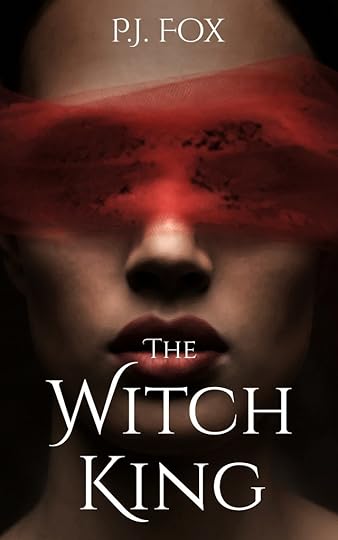
The Witch King is on RADISH!
Have you heard of Radish? It’s awesome. It’s an app, which is free, that connects you to some of your favorite authors–and lets you preview their newest works! Before anyone else! Including, as of this morning, mine: The Witch King.
The first three chapters, on this and every book on Radish, are free to read. After that, you can either a) wait a week for the next chapter to “unlock” (i.e. become free) or pay a few cents to read it right away. Pretty awesome, am I right?
So what’s The Witch King about?
Kimber is captured and sold, as a slave, into a world of depravity. Jordan, the daughter of a man wanted for treason, makes a deal with the devil. Paige comes home, one afternoon, to discover that home as she knows it no longer exists. Anhaga, the tribesman, swears his allegiance and bides his time. While Edward, the king who’s king in name only, dances like a puppet on strings for the invaders who now control his kingdom. Mercia, once a loose coalition of duchies where freedom and sunlight reigned, is now a lair of monsters. Monsters whose fate, all will discover, is joined with that of their unwilling subjects.
Because a greater evil is coming.
Looking for my Books?
I’ve gotten this question a lot lately: where are your books, and how can I read them? And what about your newest books, the ones you’re working on, right now? Is there some super special secret place to read those?
And now, I have your answers!
First, there’s always the bookstore. Or Amazon, if you don’t like the bookstore. Barnes & Noble also has a website. Should you want that brick and mortar experience, though, remember that any bookstore, whether chain, independent, whatever, can special order my books for you. Just ask! This is helpful to me, too, because if you discover a store that isn’t carrying my books…imagine all the people who are missing out! Or still safe, depending on how you choose to look at things. Everyone who’s asked their local crack book dealer to carry me has exposed me to a wider audience. Thank you!
Should you want an e-book, for contractual reasons you’ll mostly have to get those from Amazon. But fear not! You don’t need an actual Kindle to read a Kindle book, just Amazon’s (free) software. Which works just fine on any phone, tablet, or other device.
Should you not want to spend any money at all, you can wait for me to announce a free book promotion. Which would probably require following me on Facebook, because this is where I tend to announce these kinds of things. Or you can follow me on Wattpad, or Radish. I generally usually have at least one full length book on Wattpad, which is an entirely free site. But, these days, the excitement is really on Radish. Radish is an awesome site where you can read books either for free or, depending on the book, for a few cents per chapter. That’s right, cents. I’m premiering my newest (and in my opinion most ambitious, and exciting) work there, right now: The Witch King. The first free chapters of every book on Radish are always free, but with chapters four and higher you’ll be able to either a) fork significantly less change than you might find in the bottom of your average shoe and read them right away or b) wait a week and read them for free. Yes. That’s right. On the “freemium” model, I’m using for The Witch King, every chapter “unlocks” after seven days. The patient pay nothing!
Radish, right now, is app only. But it’s a free app, and easily downloadable! So you should absolutely check it out.
And yes, you should absolutely say hi on Facebook.
January 9, 2017
Embarrassing Mistakes
It took me a long time to understand why, in reviews, a certain brand of troll armchair critic would castigate me for my supposed spelling mistakes. Spelling mistakes that didn’t exist, but that nevertheless called for either firing or hiring a proofreader. Immediately! Before I somehow managed to humiliate myself further. But then I got into an argument online (someone had come to my page, complaining that I wasn’t more sympathetic to racism) and the problem was laid bare: my vocabulary was too large. She, too, told me I needed to “learn how to spell,” in that case because I said denigrate. Not knowing that word, she assumed that I must mean degenerate. And so she tried to score a point.
And it was like a light went off! Ahh! [cue singing of angels]
They don’t understand me!
I suppose the larger question, though, is why we want to score points on each other at all. Let’s say my books were riddled with mistakes. Would that really be worth damaging my livelihood over? A few, much bigger names than mine have horrible copyediting for their books and I’ve never felt the need to point it out. Probably because I’m confident enough in myself, that I realize there’s enough success to go around. Nobody else, by creating, is “stealing” anything from me. I read their books, and others, for fun; not as some kind of exercise in competition.
Now do most people understand my books just fine? Yes, they do. Or, at least, this is what my sales seem to indicate. But most people don’t leave reviews. At least, not on my books. I’ve calculated it out and for every, honestly, I think it’s at least 6,000 books I sell I might get one review. One. Which means that my detractors get a much bigger platform than–I think, at least–they should. Or that I, based on the quality of my writing, deserve.
I feel like saying to these people, Amazon isn’t the right place to try to prove to the world–or, more properly, yourself–that you’re somehow superior. Including to those people who’ve actually written a book, as opposed to just thought about writing one. And no platform is the right place to try to tear somebody else down, to affect their livelihood, because you’re feeling insecure.
But that’s what trolls do: they spread the love. The fact that their criticisms are baseless and stupid isn’t going to be obvious, though, unless and until someone actually takes the plunge and reads one of my books. Then they’ll discover that color wasn’t a spelling mistake; I’m American, and use American English. Neither was a reference to a camel hair coat. One armchair critic, never having heard of a camel hair coat, informed me that I’d meant “caramel.” And in every single review, which mentions this type of thing, there’s nothing about the story at all–only the sentiment, expressed with varying degrees of rage, that the “mistakes” made it impossible to read. Or, if not read, then enjoy.
Someone even asked, on Wattpad, in reference to the first chapter of Book of Shadows, “what language is this?
TLDR: since I’m not about to start writing like a semi-lobotomized lemur on acid, those of you with a vocabulary larger than twenty words need to make the effort to start reviewing my books.
November 17, 2016
Thank You To All Who Entered My Giveaway!
For those of you who don’t know, yesterday I ran not one but two–two–giveaways through Amazon for Princess Reimagined. I was absolutely stunned at the response. The first giveaway, which was for 10 books, filled up so quickly (Amazon allows a certain number of entrants, based on the odds of winning that you’ve set) that it was over before I could even post a link on Facebook. So, because quite a few people were disappointed, I ran another one. And that one filled up, too!
As of this morning, 35 of you are now proud owners of Princess Reimagined, out of the hundreds of you who entered. And I just want to say thank you, thank you, so much. You have no idea how much your enthusiasm means to me. I really, really hope you–those of you who’ve won it and those of you who decide to take a chance and buy it–have a wonderful time coloring!
This is my first coloring book, but art means a lot to me. I’ve been drawing, painting, sculpting, etc. for years. It’s been my therapy and my friend. For those of you who aren’t familiar with my art, and are wondering about what’s inside the coloring book, you can check out my art’s Facebook page. I’m also, at the urging of my husband, starting a new project: illuminated manuscript pages to color. I’ll be sharing some work in progress pictures from that, soon, too.
And of course I’m writing. I’m about 30,000 words into Predators in the Mist, and really happy with the story so far. All of my books, of course, are available on Amazon and wherever books are sold, but those of you who are so inclined can also read them on Wattpad. Wattpad is free, to sign up for and to use, which means that the price of my stories is putting up with some ads. Which some people tell me are annoying but–I have no control over them! Still, free is nice, right?
Finally, if you are one of my new coloring book friends, please consider sharing your work with me on Facebook! I’d love to see! And if you do like Princess Reimagined, please do also consider leaving a review on Amazon. They really help.