
David Williams's Blog, page 53
February 6, 2017
A Theology of Walls
[image error]
There are walls in the Bible.
The first and most familiar? The walls around Jericho. Those walls served a particular purpose: safety and security. And they stood, as the story goes, to keep out a foreign rabble, a mass of humanity fleeing slavery and oppression on their way to a land where they could settle.
The choice of the residents of Jericho was not to show welcome, to shut their doors against this strange motley army of aliens that came through their land. On many levels, this is an understandable response. Here, a people who were taking the resources of every land they passed through. There were so many that they posed a threat, both to the culture and to the economic structures of the region. It was not just a migration, not just a flight, but an invasion of an host that took what it needed by force when hospitality was not offered. Which, more often than not, it wasn't.
So hiding behind a wall certainly makes sense, seen from the perspective of Jericho.
But those walls came tumbling down, as the story goes. Those trumpets must have been played by Fred Wesley. So much funk, even them walls gonna dance.
The issue here, as it is in so much of the Biblical narrative, is hospitality. Closing doors to the journeying stranger in need is a violation of the fundamental ethos of every Semitic culture, and by extension, a violation of the will of the God of Israel.
Walls appear again in the narratives of Ezra and Nehemiah, the scribe and governor charged with rebuilding Jerusalem with the blessings and resources of Cyrus of Persia. Jerusalem's walls would permit the Jewish people to regain their integrity as a nation-state. The walls, a new bulwark against invasion, and a mark of the renewed strength and pride of Judah. Both Ezra and Nehemiah saw the rebuilding project as part of the divine work, the will of YHWH in re-establishing the boundaries of a shattered people.
Here, it's primarily presented as a theology of reconstruction and collective identity formation.
But there's a twist. A theological minority report, woven up into Scripture. Because physical rebuilding was not the only item on Ezra and Nehemiah's agenda. They were also obsessed with racial purity, on re-establishing the blood-integrity of the Hebrew people.
So in addition to the physical walls, Ezra and Nehemiah instituted a policy of driving out the foreigner, casting out the wives and children whose heritage was mixed or impure, colored by the "lesser" peoples of ancient Palestine. They were straight out racist.
And the Bible resists that part of their story. That resistance comes from the book of the Prophet Isaiah, which makes a fiery case for the inclusion of the foreigner and the alien. The foreigner who honors the laws and God of the land must be welcomed, saith the Lord through Isaiah. It comes from the Book of Ruth, which came into its final written form after the exile, reminding the people that their greatest king had Moabite blood.
Those walls cast up to keep the Other out, says my sacred Book of Books, do not come without peril to the souls of those that build them.
Seems worth keeping in mind.
The first and most familiar? The walls around Jericho. Those walls served a particular purpose: safety and security. And they stood, as the story goes, to keep out a foreign rabble, a mass of humanity fleeing slavery and oppression on their way to a land where they could settle.
The choice of the residents of Jericho was not to show welcome, to shut their doors against this strange motley army of aliens that came through their land. On many levels, this is an understandable response. Here, a people who were taking the resources of every land they passed through. There were so many that they posed a threat, both to the culture and to the economic structures of the region. It was not just a migration, not just a flight, but an invasion of an host that took what it needed by force when hospitality was not offered. Which, more often than not, it wasn't.
So hiding behind a wall certainly makes sense, seen from the perspective of Jericho.
But those walls came tumbling down, as the story goes. Those trumpets must have been played by Fred Wesley. So much funk, even them walls gonna dance.
The issue here, as it is in so much of the Biblical narrative, is hospitality. Closing doors to the journeying stranger in need is a violation of the fundamental ethos of every Semitic culture, and by extension, a violation of the will of the God of Israel.
Walls appear again in the narratives of Ezra and Nehemiah, the scribe and governor charged with rebuilding Jerusalem with the blessings and resources of Cyrus of Persia. Jerusalem's walls would permit the Jewish people to regain their integrity as a nation-state. The walls, a new bulwark against invasion, and a mark of the renewed strength and pride of Judah. Both Ezra and Nehemiah saw the rebuilding project as part of the divine work, the will of YHWH in re-establishing the boundaries of a shattered people.
Here, it's primarily presented as a theology of reconstruction and collective identity formation.
But there's a twist. A theological minority report, woven up into Scripture. Because physical rebuilding was not the only item on Ezra and Nehemiah's agenda. They were also obsessed with racial purity, on re-establishing the blood-integrity of the Hebrew people.
So in addition to the physical walls, Ezra and Nehemiah instituted a policy of driving out the foreigner, casting out the wives and children whose heritage was mixed or impure, colored by the "lesser" peoples of ancient Palestine. They were straight out racist.
And the Bible resists that part of their story. That resistance comes from the book of the Prophet Isaiah, which makes a fiery case for the inclusion of the foreigner and the alien. The foreigner who honors the laws and God of the land must be welcomed, saith the Lord through Isaiah. It comes from the Book of Ruth, which came into its final written form after the exile, reminding the people that their greatest king had Moabite blood.
Those walls cast up to keep the Other out, says my sacred Book of Books, do not come without peril to the souls of those that build them.
Seems worth keeping in mind.


February 4, 2017
The Johnson Amendment and Religious Liberty
The video above is worth watching, particularly in our current context. It was produced, distributed, and played in conservative evangelical churches all around the country on the Sunday before the election. Mike Pence, governor and vice-presidential candidate, right there up on the sanctuary screen, talking about how good Christians should feel called to vote for Donald Trump. Why? Because he's 1) pro-life and 2) going to press for the repeal of the Johnson Amendment, which forbids congregations from endorsing candidates or parties.
Of course, the video itself seems a pretty flagrant violation of said rule. I mean, "Mike Pence and Donald Trump: Men of God?" Pence, I can see. He's right out of central casting. But Donald? Lord have mercy. Were there alternatives? Did, after showing this, those pastor show their congregations "Bernie Sanders: The Lord Descends from Heaven As a Sparrow" and "Gary Johnson: Jesus Totally Gets High With Him?" I think not.
Out of curiosity, I went to my sermon blog and ran a search. When, I wondered, was the last time I mentioned Donald from the pulpit?
It was in October of 2015, back when he was a joke candidate, out on the periphery of the national consciousness, just the reality-television absurdly-coiffed conspiracist buffoon who capered and leered and entertained us with his offensiveness. Before that, I'd used his name twice, both times in the context of talking about someone being "fired."
Since things got...weird, I've committed to making no explicit mention of him from the pulpit. Lord have mercy, the Drama Queen In Chief takes up too much of our bandwidth as it is.
Again out of curiosity, I did a second search. In the last eight years, I mentioned Barack Obama twice. Once, in the context of directing the congregation to the Epic Rap Battle Youtube video between Romney and Obama, a rap battle won most notably by Abraham Lincoln and a giant American eagle...and which was watched millions of times more than the actual debate between the two candidates. The second time, in the context of calling out both Democrats and Republicans for the pernicious influence of money in politics.
It is, of course, technically against the law for a pastor to endorse a candidate or political party from the pulpit. If you want to be a 501(c)3, and exempt from taxation, you can preach on social issues all you want. You can be pro-life or pro-choice. You can preach in favor of sane gun safety or hand out Smith and Wesson M&P 15 Sport II tactical carbines to every new member. You can do these things, and still be nonprofit.
But you cannot endorse or explicitly support a candidate or party and hold on to your nonprofit status. Well, that's how it's supposed to work.
The argument for this, from the position of the Constitution, is that formally favoring churches with both exemption and the ability to preach partisan politics is a violation of the Establishment clause of the First Amendment. From that slippery slope, it becomes easier and easier for congregations to become just another arm of the party in power.
But the argument for this from the position of the church is stronger.
Whenever the Gospel becomes the servant of a particular political perspective, it is betrayed. Whenever a church chooses to be explicitly in the camp of one party or another, the Gospel is no longer served. When the state has the power to co-opt faith...as my denomination's Barmen Declaration so pointedly notes...that faith has become corrupted.
Even if our administration and Congress delivers this spiritual Trojan horse to America's churches, I have no intention of changing what I am currently doing. My religious liberty and the integrity of the Word matters too much to me.
February 2, 2017
When the Friends Fall Away
One of the clearest signs you are in an abusive relationship: your friends fall away.
The one who seeks control does not want you to have any friends, no natural connections with anyone other than the relationships they control. Oh, you can see their friends when they come over. Sure. But your own relationships? Never. Those lie beyond their power, and nothing beyond their power is permitted.
And so from day one of an abusive relationship, the abuser starts cutting away your friends and family. They criticize them. They create drama with them, going out of their way to be offensive, forcing you to choose between them and everyone else. They convince you that those friends actually despise you, that the family members who express concern are really just trying to control you.
One by one, those friends fall away. Or you think they do. The odds are they still care, but you have more and more trouble perceiving it as you fall deeper into the abuser's dark spell.
The goal of the abuser: destroy your sense of your best self, and gradually narrow your world until the only thing you can see is them. The doors close. You don't go out any more. You don't see anyone any more. You only see what you are allowed to see. You stay safe and secure in the dark sanctuary of their control.
The abuser does this with an admixture of charm and fear. They're the one who gets you. They're the only one who knows all the answers. The world is frightening, and you are weak and ignorant, and you need them to protect you. They say this with absolute confidence, and it's hard to look away.
They seem so strong. And the weaker you feel, the stronger they become.
This, for anyone who counsels, is what abuse looks like. It is what we are taught to look for.
And what is true for individual souls? It is, our world's dark history teaches, just as true for the soul of a nation.
January 30, 2017
The Champion of the Little Guy
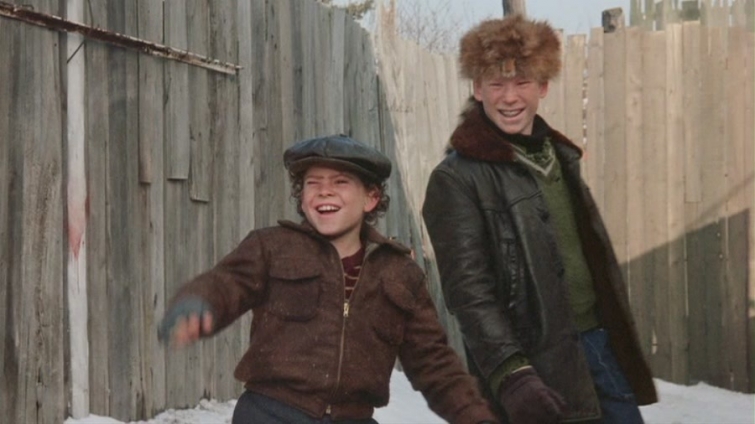
November 17, 1947
I made a new frend today after school.
His name is Scut, which is not Scott. No one can call him Scott because he says so. Hes so funy, which is why the teechers hate him, because he dosen't take nothin from nobody. Hes like Dad, only before the whisky, when hes happy and the baseball is on the radio and were wnning.
I thoght it wud be a bad day, because lst night Mom was crying again after Dad got mad becasue diner was coldt. I didnt think it was cold but Dad was alredy mad becaus the forman yelld at him for being late and said he wud be fird and that wasnt fair because of Dads nerves and his condition. Mom didnt say nothin but brung dinner and Dad got madder an madder and she said please John I'll warm it then he smashed hsi plate on the flor and took the muny from the jar and said really bad words to mom and wnt to Tonys on the corner.
mom cried till I went to slp, and Dad didnt come home, but he was on the cowch when I got up for stupd school.
Mom wasnt there she was at Aunt Bettys agin and the lunch muny was gone so I didnt eat but I didnt care.
The teecher were stupid, and I didnt lissen because I was too mad at them and at mom for no lucnch and Dad for being mean. I was glad when school was done but I didnt want to go home becase I didn't and so I thoght maybe I could lift somethin from Welbys cause I was hunry.
And there was Scut, like popd out of nowhere, and he says hey fagit, where you goin little fagit. I new him from befor and he flunked two grades and hes strong and big, but nobody calls me fagit not even Dad like he did when he found my last diary and said diaries is for girls and fagits I didn't rais no fagit. He burned it and thats why I hide this and write in the dark because I aint no fagit.
And so when he said fagit I got mad again about Dad, so I said right back I'm going to steal candy and pop from Welbys your the fagit. So Scut punchd me in the arm and knoked me down and I hert but it werent near as hard as when Dad does it so I said that the best you got fagit.
I thoght he was goin to punch me again but he laughed and said your funny and I said dam strait I am and he laughd again.
And he said you really gonna steal from WElbys I bet you ain't and I said I do it all the time because I done it twice before and he said show me so I did. The casheer wasnt paying attention gab gab gab on the phone so I got three Mr Goodbars and two bottles of coke and when I got outside there was Scut. He grinned all slylike a fox and said I was like a ganster like a little Al Capone and I said dam strait. Then I said last time I stole a beer and he said no you didnt and I said yes I did because I almost did and could have and that counts.
Then he says hey whats your name and I says Grover what you going to do about it and he laghs and says nutin Al Capone and then he says my name is Scut and I said yeah I know. And he grinned at that again, and his eyes got all squinty and dangerous and then he hit me in the other shoulder but not hard at all and said dam strait you know everybody knows me specialy the principal and I laughed.
so I gave him a coke and Mr goodbar and we ate them and they were good.
Then we saw thes stupid kids from school, the teechers pets and snitches and suckups and he says watch this.
And he jumps out just like hes Frankenstein or Drakula and they screemed like girls and went runnin away. It was so funy.
Its good to have a frend whos strong and makes you laugh and does whatever he wants because nobody tells him what to do.
Scut and I are gonna be best frends I can tell.
January 26, 2017
Character Analysis

I really don't get the appeal. I mean, honestly. Not even at all.
Not because I'm a Democrat, because I don't self-identify that way these days. I find that party faintly embarrassing a significant portion of the time. Not because I'm a liberal, because, hey, liberals bend over backwards to try to find reasons the other guy might have a point. It's what we do. It's our superpower, and our hubris.
But because I love to tell stories. As part of the process of writing, I create characters. Or rather, I find myself getting to know them as they live into the tale I'm telling.
Here's what fuddles me: as a writer and storyteller, I just can't figure out how anyone...anywhere...thinks the man who is president is the hero of the story we're telling ourselves together right now.
Cast against the narratives of the science fiction I have loved since a boy, it's not hard to recognize the figures he most resembles. A Hutt, perhaps at some early stage of the evolution of that species. A Ferengi with a hairpiece, perhaps. He's certainly got the Ferengi skin tone down.
Or Jean Baptiste Emmanuel Zorg, his name glowing in lights at the top of Zorg tower, as he revels in and profits from the chaos he creates.
An entertaining persona, without question. But not a hero.
Perhaps Daddy Warbucks, in that he is rich and by the frame of that old story, rich is good. But that's as far as the comparison goes. Daddy Warbucks had the good grace to let himself go bald, the cartoon character looking rather less cartoonish than the flesh-and-blood man.
I go to spy thrillers, and here we have a morally questionable businessman who surrounds himself with beautiful women, is opposed by the CIA and MI-6, and took power with the support of the KGB and Russian operatives? If this were an Ian Fleming novel, we know which side James Bond would be on. Although there, while Fleming wasn't known for the subtlety of his characters, I'm not sure our POTUS-hair passes Bond-movie muster. Even in the Roger Moore era.
I go to tales of the supernatural, the character that pops most cleanly is Greg Stillson, the temperamental charismatic populist from the Dead Zone, who surrounded himself with bikers and flags and wandered around with a construction hat on his head. Only Stillson, well, at least he was a senator first.
Maybe something written by Ayn Rand, whose dismal and borderline unreadable Objectivist parable/rants celebrate selfishness and the wealthy. But Rand's heroes are uniformly cold, rigid, and calculating, ubermensch who tower above the fray, gazing down on lesser mortals with contempt. They aren't at all *needy.*
I go to history itself, the story of humankind thus far, and there are other characters like him. No, not Hitler. Sweet Lord Jesus, everyone isn't Hitler. He really is nothing at all like Hitler as a person. But he's a whole bunch like Mussolini. Now, I'll admit, there was always something faintly appealing about Il Duce. He wasn't as coldly evil, and occasionally sympathetic in his needy posturing bravado. But he wasn't a hero.
And when I go to my sacred book, the story of stories that is the narrative foundation of my Christian faith, it doesn't get any easier. Though he may share an appetite for women, he's certainly not David, the warrior poet with a soft heart. David felt guilt. David had a passionate, intense, anguished faith.
Though he builds things, he is also not Solomon, because wisdom understood in Biblical terms is careful, measured, and magnanimous. Wisdom builds bridges. Wisdom is not disruptive or impulsive.
And he is the self-evident antithesis of Jesus of Nazareth, and bears no resemblance to Paul or any other of the disciples or apostles.
He's like Nero, a man of appetites, a natural entertainer, beloved by the masses and despised by the erudite and the learned. He's like Herod the Great, with his messy family and his moods and his ego and his reputation for building big gaudy edifices to himself.
Hmmm. Now that I think about it, maybe Herod...not Antipas, but the Great...is the closest scriptural analog. He certainly was committed to making Judah Great again, and was equally the puppet of a foreign power.
But the Herodians were not...cough...not the heroes of the Bible.
So maybe we're looking at a mashup of Jean Baptiste Emmanuel Zorg, Herod the Great, and Benito Mussolini, in a tale told by Ayn Rand.
Still not the sort of story I'd think we'd want to have a hand in writing.
So strange.
January 18, 2017
Your Worries and Your Strife
 As I approached the public bathroom door, I could hear him singing inside. It did not dissuade me.
I'd been out for a long walk, through playing fields and along a creek, and as I walked, I'd been meditating on how little what we possess shapes our happiness. I'd recently had the good fortune to be driving around in a powerful, sexy, amazingly fast car for a few days. That gave me pleasure. Yet here I was, on a briskly cool day, with just the legs God gave me and the bright sun overhead. Was I any more or less content?
The answer, as I considered it, was that I was not. A soul that is content can find contentment in simplicity, just as surely as it can find joy in riches. Those who have wealth are no less likely to feel unsettled and anxious of soul, no matter what pleasures and distractions they provide themselves. Once the body is fed and warmed and given purpose, contentment is not contingent on the objects around us. Just that "daily bread" should be enough, as the Master taught it. I felt that, as I walked, His indictment of our endless greed, of my own whispering acquisitiveness.
Then, as the morning's coffee began to catch up with me, I realized my contentment should lead me to the nearby restroom.
Where someone was singing, loudly.
The voice was affiliated with a tiny little guy, perhaps three, maybe three and a half. He was singing at the top of his lungs, as children of that age can do without fear of social approbation, while his dad helped him get his jacket zipped.
"JUST THE BEAAAR NECESSITIES, THE SIMPLE BEAR NESSESSANEES," he sang, evidently having seen a Disney Jungle Book video recently. "FERGEET BOUT YER WORRIES UM A STRIFE," he continued. "IT'S THE BEAAAR NESESSANEES, THE SIMPLE BEEEAR NETESATEES, FORGEEET ABOUT YOUR WORRIES AND YOUR STRIFE!" The song fragment, just on a circling earworm loop in the little boy's head, was directly connected to his vocal cords. "ITS USTJA BEAAR NECESATEES, THE SIMPLE BEAAAR NESSTETASTEES, FORGEETaBOUT YOUR WORRIES AND YOUR STRIFE."
So the song cycled, repeating and repeating, as his little hat was placed on his little head and little mittens on his little hands.
His father, roughly my age with a little more grey in his beard, gave me a tired look, and an apologetic smile, which was hardly needed. I smiled back, in the full knowledge that this song was going to be stuck in his head for a while.
As it had been in mine.
January 12, 2017
The Unrepentant

The sentence, death, and it's easy to see why.
He is utterly unrepentant, a soul poisoned by a hate so deep that he still sees no wrong in his actions. The death of his innocent victims and the suffering he inflicted on those families mean nothing to him, not against the hate that burns in his heart against those who he was taught to despise.
So he must die, or so our culture asserts. There is no question, none, that he is evil. He is not "insane," not against any meaningful measure. He is lucid, aware, responsive, and completely committed to the dark ideology that led him to commit a reprehensible crime. He would, if given a gun and a chance, do it again.
He is a despicable human being. I, personally, despise him and all that he stands for.
So we will kill him. Not eagerly. Not with heat and passion, but efficiently. "Humanely."
Yet seen through the lens of Jesus and his teachings? His death still cannot be embraced, not if you stand in a meaningful relationship with the Nazarene. It is antithetical to the teachings of my Master.
There are many reasons that this is so, but the one that burns most fiercely in my soul is this: he is, now, unrepentant. Without repentance, he will remain a monster. I accept this, because it is self-evidently true.
But I cannot say, with certainty, that he will always be so. I cannot say that three years from now, or ten years from now, or twenty, that something will not change in him. That compassion might not find its way into his blighted soul.
I do not wish him to be free to do harm. But when we as a culture choose to kill him, when we coolly end his mortal coil, we are assuming that he cannot ever be made whole.
And that assumption, of grace precluded, cannot ever define the Christian way.
January 11, 2017
Thanks, Obama
 It was the same present I got last year for Christmas, and that was fine with me.
The gift? A car rental, and by that I don't mean some nondescript sedan. I get to rent something fun, something rather less practical than my minivan or the hyper-efficient transport pod we use to negotiate our urban jungle.
So from the Avis lot at the airport, I picked up a bright yellow 2016 Camaro SS, which I used to drive my older son back to college after his winter break.
It's a gorgeous car, wildly styled yet pleasing to my eye. As a lover of all things automotive, it's something more. It is the high water mark of the internal combustion engine, and perhaps one of the best American cars ever made. The seats? Comfortable, although the rear seats are fit only for legless toddlers. The motor? That big vee eight is immensely powerful, putting out over four hundred and fifty horsepower through a slick-shifting eight-speed automatic. Acceleration, once you get the great fat rear tires to hook up, rests in the roller-coaster happy place between exhilarating and terrifying. And yet it's not sloppy, not all about burnouts and straight lines. It handles exceptionally well, and...if driven calmly...can also deliver nearly thirty miles to the gallon.
All this, for a price that puts it into the potential reach of an average working American. Perhaps even the Americans who assemble the 2016 Camaro at a factory in Lansing, Michigan.
And here, a truth that speaks to the glory of American car culture:
This car would most likely not exist in its current form without Barack Obama.
Left to their druthers, the market-anarchist Ayn Rand ideologues who now control Congress would have allowed General Motors to fail, back when everything went to heck in a handbasket 10 years ago. Chevrolet would still exist, no doubt, in some form, as the pieces of GM were sold off to those who wield global capital. Would it have been discernably American? Probably not.
But wiser heads prevailed, folks who realized that the marketplace takes no pride in American greatness.
And let it be said, without question, that the 2016 Chevrolet Camaro is a great car. Better, against almost every measure, than any American muscle car ever made.
My journey back after dropping off my son took me along some of the most beautiful highways in America, the wide-open stretches of I-81 that lead through the Shenandoah Valley. I had an old folk-country music mix on the stereo, Kenny Rogers and Willie Nelson and John Denver and bluegrass gospel, interspersed with the sweet rich basso of that 6.2 liter eight. The night sky was clear and speckled with stars.
It felt good. Great, even. It's never been greater.
Thanks, Obama.
December 21, 2016
Going Rogue
 I face, it seems, something of a conundrum.
On the one hand, I feel obligated to be culturally relevant. I have to know what the volk know, or I risk being out of the loop on the few broadly held social referents that define our net-fractured zeitgeist.
On the other, I honestly don't know if I'm up for an endless stream of Star Wars movies.
I was there for the first three, perfect in the completeness of their mythopoetic arc. They were new and exciting and wonderful.
I read a couple of the expanded universe novels as a lad, and owned a handful of late 1970s comics. I thoroughly enjoyed the spare brilliance of the Gennady Tartakofsky animated Clone series.
Then it just kept on going. I groaned my way through the cluttered, commodified, soulless prequels. I diligently went to see The Force Awakens, and struggled through its peculiar, sloppy, cannibalistic drabness.
I may be done.
"Oh, have another movie," says Disney. "Just one more! It's wafer-thin!"
But I know they're lying. The movies will stack up to the far horizon, one profit-margin-padding tale after another, endless fractal franchise spinoffs spreading wider than a fangrrls bookshelf. That prospect is exciting in the way that going to Starbucks is exciting.
It was, once. Remember that, those of you old enough to have experienced the spread of that franchise? Oooh, a Starbucks, you'd say. Now? Not so much. You go in, get your morning bump of stimulant fluid, and you're out. Or perhaps it's like the release of a new Apple product. Remember when that was a thing, an event, a moment? Now, it's just yet another expensive rectangle.
It feels like that.
December 19, 2016
Living Water
 We take so much for granted, perhaps nothing quite so much as water.
It's right there, whenever we need it. Want a drink? Just head to your kitchen, and there it is. Clean, potable, safe drinking water. Oh, maybe we want to filter it, because we don't like something about the flavor. Maybe we worry, if we're a regular reader of InfoWars or a character in Dr. Strangelove, that fluoride might be a communist plot to contaminate our precious bodily fluids.
But the truth is that we have all the water we need, whenever we need it, and gathering that water is so simple that it is almost an afterthought. Of course it's there. Of course.
For so many in the world today, that is not their experience of reality. Getting water consumes a substantial part of the energy of a day, often in ways that are remarkably time consuming and physically demanding. Think, for just a moment, what you would need to do to get water if the taps stopped flowing. What would you need to do, if you couldn't just run to the store and buy it? Couldn't load up your trunk or truck-bed with it?
I know, for my little house in Annandale, what that would entail. There's a stream that runs at the foot of the valley where my suburban home is located, a stream that meanders along in the green Annandale valley of Sleepy Hollow. It's about a half-mile from the house, all downhill. There are small catfish in that stream, and the occasional crawdad. It flows with mostly clear water, mixed in with some of the debris generated by a typical American neighborhood. A soda can here. A fast food wrapper there. A couple of plastic bags undulating in the flow.
That's the closest source. It'd be a half-mile there. Then, you'd have to fill a container. One gallon of water, if we'll recall, weighs eight and a half pounds. I'd then need to figure out how much I needed per day. The average American household? To slake our oversized thirst, we use 400 gallons a day. 3,400 pounds of water, which at 50 pounds carried each trip, would mean 68 trips up and down that hill. Even if we used half, or a quarter of that amount, living a saner and less wasteful life, it would still be more than we could manage.
Clearly, things would need to change, and get harder. Life as we have come to know it would no longer be possible.
At the front of the sanctuary of our little congregation, there's a glass container, partially filled with water. It's a reminder, week by week, of how our community is striving to provide clean and accessible water to a community as we partner with a nonprofit that will use our resources to dig a well for those who lack our wealth.
But it's also a reminder of how much we rely on one another, of how deeply we come to take our lives for granted.



![[image error]](http://img.7te.org/images/570x363/pink-floyd-the-wall-desktop-1680x1050-hd-wallpaper-1170669png-330222.png)

