
David Williams's Blog, page 49
January 10, 2018
Resolutions and Intentions
 As the cosmic odometer rolled over to two thousand and eighteen, it was time again for the great tide of humanity to flow into local gyms. It was resolution time, as we commit ourselves again to doing the things we know we really should already have been doing in the first place. This is the year, we tell ourselves.
I'd thought a little bit about that, back in early November, as I wrestled with two things that really did require my attention. They were stock-standard self-care. First, I needed to get back into the habit of doing weight-bearing exercise. I'm great at nice long leisurely contemplative walks, and fine at puttering about on a bicycle on a lovely day. But grunting away with weights? Not so much. So that I wanted to do.
Second, I'd started to chafe at my evening pattern of having a couple or three nice india pale ales/glasses of an inexpensive cabernet. It was a habit, sure, and nothing more than a pleasant thing to go with whatever book I might be reading. But I realized, at some point in early November, that I couldn't remember the last evening when that hadn't happened. It seemed too rote, too deeply ingrained. I committed to significantly reducing my intake.
So there, in November, I had made my decision about resolutions. I'd do one of these things, come the New Year. But which one?
After a little prayerful contemplation, I came to the conclusion. I would do both. And I would do them immediately.
I wouldn't wait for the new year, because why wait? Here, two things that I knew I needed to do, two areas of my existence that required some intentionality. I had already come to the conclusion that I'd like to make the effort, and that the effort was worthy. Why postpone the good? There's no good reason to wait to do the right thing.
Not "intend" the right thing. Intention alone is meaningless. Sometimes worse than meaningless.
But to actualize that intention, to make it part of the warp and woof of time and space.
That, I think, is the challenge of faith. It's easy to settle back and wait for precisely the right moment, for the "right time" to act. It's equally easy to just putter about and wait for the Good Lord to move. In some things, that's a perfectly fine approach, particularly those things over which we have no agency.
But in so far as the good relies on our hope-fueled intention, there is never any point in waiting. We need to act, not the day after tomorrow or at some arbitrary moment in our planet's orbit around our G-type star.
Once we have determine what we need to do, the time to do it is now.


December 19, 2017
Stewardship and Anxiety
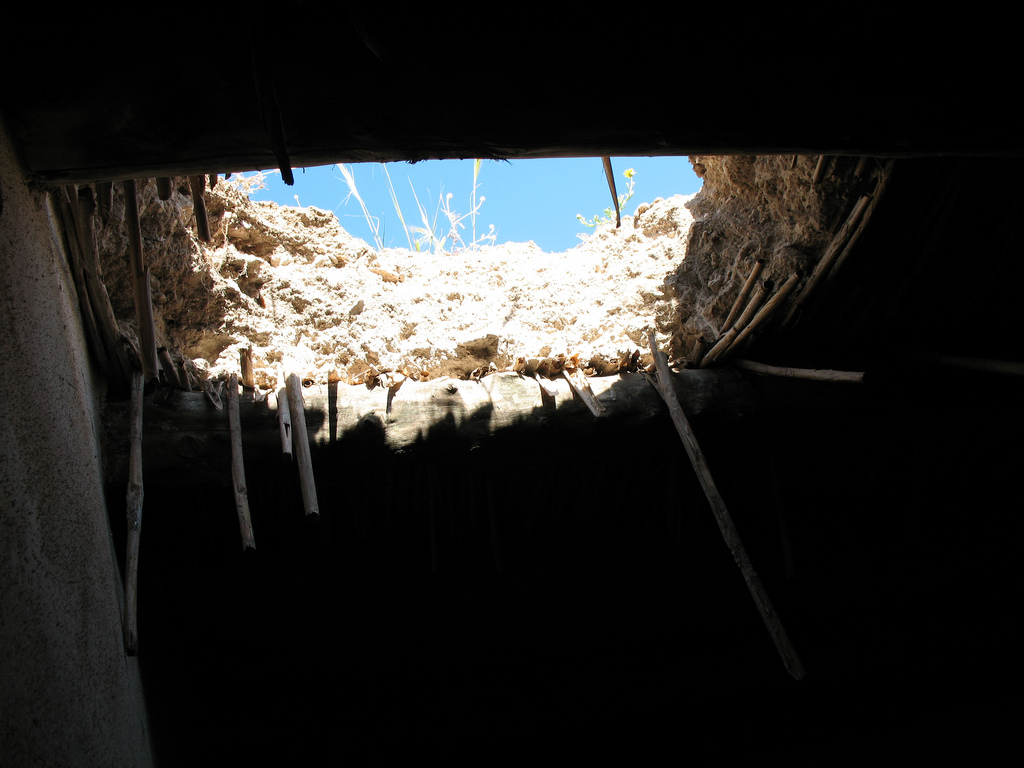 The word from the fellowship hall was not good.
It's an old building, one built with loving amateur hands back when I was young enough to come up for a children's sermon. It serves my little church well, in the way an old and well worn hammer still does the simple job for which it was made. It's not fancy, because we're not fancy. We need a part of our common house that we can tap for...well, anything. We need a multi-use space, suitable for fellowship and celebrations, for meetings and as an offering to community. It's as well made for donuts and coffee as it is for a room full of dancing, squealing poms.
It's a significant asset of our fellowship.
And it looks like the roof is failing. That big rain from the first days of winter lit up the first signs of it. Moisture, pooled on the tiles near the back wall. The tell-tale signs of water damage where it had seeped into the drywall. The hope, of course, that it would all magically clear itself up, was dashed as soon as the next rains came. It hadn't just blown into one of the roof vents, or come it through a door left ajar.
It was the shingles, designed to last 20 years, finally giving up the ghost after over twice that.
The question now, for my church, is whether we patch, or just replace the whole roof. It's time, whether we want it to be time or not.
There are churches that would struggle with this choice. We'd need to fundraise. We'd need to be in full on panic mode, or raiding funds that were meant for other things, or talking about going to the bank and taking out a loan.
But that's not how good stewardship works. Care for the things we as a community hold in common is not something we should do anxiously, or without foresight. It's just part of the way that we take care of the world we inhabit. Good stewardship...over family finances, those of communities, or of nations...is not a creature of immediacy, of pressing out against the edges of what can be done. It leaves space for the unanticipated, space to be a little less fearful about what the future will inevitably bring.
It's an attitude, and a way of life.
And so for the last seven years, my congregation has been spending less than we put into the common pot. It means, now, that the roof can be repaired by writing a check. No panic. No anxiety. No ringing the alarm klaxons and preaching sermon after sermon about how God loves a cheerful giver, so smile when you write that check, dagflabbit.
In those seven fat years, we've stored up for the lean times that inevitably come. It's just wise living.
As we move into 2018, we continue to reap the benefits of that way of life.
And, hopefully, the benefits of a nice dry fellowship hall.
October 24, 2017
Wha' Happened?
That we were all privy to John Podesta's emails and internal Clinton campaign documents was one of the most peculiar abominations of the 2016 election.
How did we see those things? They were stolen by Russian agents, fed to an organization that exists primarily to subvert the integrity of the United States, and then blithely regurgitated by a profit-driven press.
And I read them. There were details in there that are still relevant.
One that struck me, because I bothered to read the emails that we...Jesus Mary and Joseph, why did the press do this...were given: The Clinton campaign helped give us Donald Trump.
Oh, not directly. But because...like the similarly realpolitik Vladimir Putin...the Clinton campaign machine viewed him as the weakest, least competent, most defeatable Republican candidate.
And they needed the worst.
All of the polling during the campaign showed Clinton losing to every other Republican. As the pollster-shamans read the monkey entrails of our culture, she lost to Cruz and to Rubio, to Kasich and to Bush and to...Jesus...there were so many.
She trailed all of them. In every poll.
All but one.
That one was Trump. The best polling showed she had a real shot against Trump, because, Lord have mercy. What proud, decent American would vote for him? I mean, really.
People who knew what they were doing and had reliable datasets suggested that she could best him...alone among the Republican candidates...by two percent or so. It was consistent, solid, and replicable, as reliable as one of those European Model trend lines that we use to track the hurricanes battering our coastline.
What we know is that the Clinton campaign did everything in their power to raise the profile of the weakest and least competent candidate. They actively responded to him, knowing that their engagement would inflame the Republican base, who had been taught to despise Clinton more than they valued competence and integrity and sanity itself. By inflaming the base, you raise his profile, and by raising his profile, you increase the chances of getting the candidate you want to oppose.
In that, her campaign's steering efforts were successful. The Clinton campaign got the opponent that they wanted. And they beat him, in the popular vote, by precisely the margin the very best polling suggested.
So when the question is asked by the person for whom I voted in the last election: Wha' Happened?
The answer can be, legitimately: you got the opponent you wanted.
October 6, 2017
Our Many Voices
As I work my way through the brilliant, mischievous Screwtape Letters with my little class at my little church, I find myself encountering a repeated theme worth examining.
As Clive Staples Lewis would have us understand it, our God cares about individuality and personhood. There's something about the uniqueness of persons that drives the Creator of the Universe to allow us to be distinct within ourselves, while still and at the same time yearning to be conformed to God.
It's one of the things that drives the demonic Screwtape simply batty. He can't grasp how you can be part of something, and yet simultaneously maintain your identity as an individual. In Hell, after all, the goal is for the stronger to devour the weaker, subjugating the weaker will to the more powerful, until everything is washed out by the grey controlling sameness of power.
But God...or the "Enemy," as Screwtape likes to call God...desires to light us up with unconditional love, yet with each of our souls turned in its own unique way to the service of love.
What, I'd found myself wondering, would that look like? What image or metaphor supports that kind of diversity in unity?
In a recent evening in my household, conversation turned to sixteenth century British composer Thomas Tallis. As much as I miss the bustle and clamor of my kids when they were tiny, I have to admit, it's also kind of cool that my offspring will suddenly start talking eagerly about sixteenth century British composers.
I love Tallis, and the piece in question was Spem in Alium, a choral work of astounding beauty and complexity. It's a forty voice motet, which means that...from what is a remarkably simple beginning...the piece gradually adds parts until there are forty voices all going at the same time.
Meaning, not forty people divided into soprano, alto, tenor, baritone and bass sections.
A forty member choir. Forty different voices. Forty different parts, each distinct from the other, interweaving with one another.
It's both beautiful and blindingly complicated, as if our little fellowship were to gather on a Sunday, and there in the hymnal was your part...yours alone...to be sustained while the people on either side of you sang something different.
That might seem unattainable, but on a certain level, we're already doing it when we become part of a living church.
Each of us, in our own distinct way, trying to live in harmony with one another. Each life, distinct, yet part of the same song, with harmonic interplay so complex it dizzies us with delight.
That, I think, is what Screwtape found so frustrating, and what it means for us to be both one in purpose and yet still very much ourselves.
October 1, 2017
WHEN THE ENGLISH FALL
 Available at:
Your local independent bookseller
Barnes and Noble
Amazon
and wherever books are sold.
A riveting and unexpected novel that questions whether a peaceful and nonviolent community can survive when civilization falls apart.When a catastrophic solar storm brings about the collapse of modern civilization, an Amish community in Pennsylvania is caught up in the devastating aftermath. Once-bright skies are now dark. Planes have plummeted to the ground. The systems of modern life have crumbled. With their stocked larders and stores of supplies, the Amish are unaffected at first. But as the English (the Amish name for all non-Amish people) become more and more desperate, they begin to invade Amish farms, taking whatever they want and unleashing unthinkable violence on the peaceable community.Seen through the diary of an Amish farmer named Jacob as he tries to protect his family and his way of life, When the English Fall examines the idea of peace in the face of deadly chaos: Should members of a nonviolent society defy their beliefs and take up arms to defend themselves? And if they don’t, can they survive?David Williams’s debut novel is a thoroughly engrossing look into the closed world of the Amish, as well as a thought-provoking examination of “civilization” and what remains if the center cannot hold.Praise for WHEN THE ENGLISH FALL: New York Times Book Review Editors Choice In print September 10, 2017 / Online September 7, 2017“This oddity of a novel (and sly parable for the threat of climate change) puts a clever spin on ‘prepper’ fiction . . .”
The Presbyterian Outlook September 4, 2017“This novel will stir your imagination. A discussion based on this book is likely to be lively, touching on root issues such as the role of community, technology and money, as well as violence, forgiveness and revenge. Because the novel features plain folk, the language and story are simple, deceptively so. But make no mistake, it will cause you to consider some complicated topics, such as whether or not the providence of God will be enough once the grid goes down.”
Englewood Review of Books September 1, 2017Positive Review“A thoughtful, meditative novel that convincingly depicts the daily life of a community that is dedicated to simplicity, humility, and peace . . . Williams juxtaposes this community with a violent and broken society, and it is the fallen world that comes away looking strange or foreign by comparison.”
Journal Courier (Jacksonville, IL) September 2, 2017Summary Review
New York Times Book Review In print September 3, 2017“Intriguing . . . [Jacob’s] words are simple and, like a buggy-tugging horse, each pulls its weight. This stylistic staidness runs in satisfying counterpoint to the dramas unfolding . . . an apt and original spin on the genre of ‘prepper fiction.’”
Los Angeles Times In print July 30, 2017“In this beautifully written book, we are exposed to questions that we may never have even thought to ask.”“It’s rare to find a debut novel as finely crafted as When the English Fall. This book drew me in with its first line — ‘I hold her, tight in my arms, and she screams,’ and kept me riveted long after I’d finished it. The open ending leaves room for a sequel, and I’d be glad to spend more time with this community and discover what’s next for it. But whether it’s a direct follow-up to this book or a different story entirely, you can bet I’ll be reading whatever Williams chooses to do next.”
Christian Science Monitor (online; see print coverage below)July 27, 2018“Contemplative . . . quietly told . . . but Williams creates an impressive sense of dread that builds. When the English Fall is thoughtful and the events are believable.”
Christian Science Monitor (print edition)July 24, 2017“10 Best Books” Roundup“An unusually good post-apocalyptic novel.”
Boston Globe July 7, 2017“Entrancing . . . the narrative voice is deceptively simple, lulling, holding, at times, the power of prayer.”
Minneapolis Star Tribune July 21, 2017“I never realized I wanted a postapocalyptic Amish novel, but the premise is so perfect I can’t believe that it’s never been done before — or that someone did it so well on the first try. It’s a gorgeous, moving book that’s creepier than you might expect. Williams’ use of tension, suspense, and compression is masterful, calling to mind the distilled prose of Ron Rash. In the past decade, pop culture may have become oversaturated with postapocalyptic stories, but this one is fresh, unique and unforgettable . . . A quiet, brilliant little novel.”
The Christian Century (online and in print)July 18, 2017Review and Interview“Simple yet elegant . . . Williams strikes the right pitch in Jacob’s sensible prose and sly wit.”
WYPR Radio (Baltimore, MD)July 26, 2017On-air reading of the starred Kirkus review
Los Angeles Times Reviews RoundupJuly 29, 2017
The Week July 28, 2017Ran Boston Globe review
LitHub.com Roundup: “Five Books Making News This Week”August 8, 2017
BarnesAndNoble.com August 16, 2017Author interview“A remarkable slice of apocalyptic fiction.”
Newsday Online July 19, 2017 (in print July 23)“Clever . . . the totality of When the English Fall is surprisingly moving, and Jacob a sympathetic and compelling guide to a world that feels closer every day.”
Arkansas Democrat-Gazette July 23, 2017“An important and remarkably affecting first novel.”
The Missourian (Washington, MO)July 11, 2017“Smart, subtle, and powerful . . .”
Bookworm Column (Published in local newspapers throughout the country, including Savannah Morning News, Charleston Express (Charleston, AR) Bristol Herald Courier, Quad-City Times, Daily Journal , Globe Gazette , Telegraph Herald , Lacrosse Tribune , Goshen News , Rushville Republican , Marco Eagle , Peninsula Clarion , Eagle Times, and others.)July 10, 2017“A post-Apocalyptic Amish novel? How does that work? (It works fine. Better than fine. It’s incredible). You’ll be blown away by the juxtaposition of serene beauty, mindfulness, prayer, and a dark urgent terribleness-to-come. (That works, too. Very much so). A stunner . . . You’ll love When the English Fall so much, you’ll need to share.”
Sun Prairie Star (Sun Prairie, WI)RoundupAugust 7, 2017
The Swellesley Report (Wellesley, MA)August 5, 2017Review
WTVR Virginia This Morning (CBS affilitate) August 3, 2017Interview
Richmond Magazine Interview featureAugust 2, 2017
Yakima Herald-Republic (Yakima, WA)August 23, 2017
Omnivoracious July 11, 2017“Best Books of July”“Fascinating . . . Williams grants us access into a closed society, a reminder of how reliant the rest of us are on technology to sustain our way of life—and that even the most steadfast will struggle in the face of chaos. When the English Fall is a gripping story, with an ending that made me want to go back and read it all again…”
Omnivoracious July 10, 2017Adrian Liang / “Best Science Fiction and Fantasy of July”“A fascinating exploration of the corrosive effect of anger and the strength that can be found in holding true to one's beliefs, even if it leads to the harder path.”
Business Insider July 13, 2017“Best Summer Reads Under 400 Pages” Roundup
BarnesandNoble.com July 14, 2017Review
Library Journal June 28, 2017Debut Novels Roundup
The Qwillery July 12, 2017Author Interview + 2017 Debut Author Challenge
St. Louis Post-Dispatch June 2, 2017Summer books roundup
Omaha World-Herald June 26, 2017Summer books roundup
KARE TV (Minneapolis, MN) June 24, 2017Summer books roundup“Tense and utterly realistic.”
Lancaster Online / LNP Media (Lancaster, PA)July 23, 2017Author Q&A and event listing
LNP Media Group (Lancaster, PA)July 11, 2017Short feature
Ephrata Review (Ephrata, PA)July 12, 2017Event listing
Tor.com July 7, 2017July releases roundup
BookRiot New Books Newsletter July 11, 2017Mention
Chicago Review of Books June 5, 2017Summer books roundup
Bookish May 30, 2017Summer books roundup
Barnes & Noble Sci-Fi blog January 6, 2017Brief review“A fascinating debut.”
Publishers Weekly October 21, 2016New sci-fi books roundup
Omnivoracious June 2, 2017Summary review
The Millions March 15, 2017Mention
EarlyWord May 29, 2017Brief review
BookReporter July 21, 2017“Perfect for contemplation or discussion . . . The bulk of the narrative raises many important questions about modern life, community, and personal responsibility and compassion, making it a more than worthwhile addition to the rapidly growing genre of post-apocalyptic literature.”
Largehearted Boy July 24, 2017BookNotes contribution
TheLoudLibraryLady.com July 6, 2017“Contemplative and powerful . . . This book has changed the way I think and live – a true victory in the world of literary fiction.”
Nerds of a Feather July 17, 2017Author Q&A
Beth Fish Reads July 3, 2017Review
Avalina’s Books July 7, 2017Review
ReadingAndEating.com August 4, 2017Review
A July 2017 Library Reads Selection (Also included in Shelf Awareness )A July 2017 Indie Next PickA July 2017 Amazon Top 10 Best Book of the Month A July 2017 Kobo Best Book of the Month (Sci-Fi, Fantasy, & Horror category)A July 2017 BookReporter Top Pick of the Month
Trade Reviews and Author Endorsements« “A standout among post-apocalyptic novels, as simply and perfectly crafted as an Amish quilt or table. Lyrical and weirdly believable.”—Kirkus Reviews, starred review
« “A quiet, ideas-focused dystopian novel that will stay with readers long after they have turned the final page.”
—Library Journal, starred review
“When the English Fall takes its place in the landscape of post-collapse survivalist fiction as satisfyingly as a puzzle piece clicking into a gap. You'll read it and wonder how you never realized it was missing. Jacob's determination to remain true to his faith, his struggle to protect his family and aid his neighbors while chaos gathers around him, is both convincing and affecting, and gradually, without ever seeming to grasp for it, his humble, questing voice accrues a surprising power.”
—Kevin Brockmeier, author of The Brief History of the Dead
“[A] satisfying postapocalyptic novel . . . The unique spin draws readers into an alarmingly plausible story of contemporary civilization’s demise.”
—Publishers Weekly
“Told in the quiet, simple prose of a quiet, pious man, this is an intriguing take on the dystopian novel.”
—Booklist
September 15, 2017
Stories and Teaching
 As Fall arrives, and school gets cranking again, our little church restarts its education program...and for the adults, that means diving back in to reading.
A couple of years back, our denomination decided that pastors should be called "Teaching Elders," which had historically been the title for the folks who got up and preached on Sunday. This distinguished us from the "Ruling Elders," who did pretty much everything else to make the church go. That decision didn't stick, because it confused people. "A teachity what? You do what? Is that even a job? "
And so we went back to being Ministers...or just plain ol' "pastors," but the idea remained. The job of the Presbyterian pastor is to preach and teach, and so I'm once again stepping up
The class for this Fall Semester at PPC? A slow, sustained, six week reading of The Screwtape Letters by C.S. Lewis. I'm a huge fan of Lewis. I have been ever since I was young and wandering the green fields of Narnia in my imagination. Although I really appreciate his essays and his reflections on the Christian life (Mere Christianity is brilliant, and A Grief Observed so powerfully poignant), it's his storytelling that really sets him apart as a teacher of the faith.
Screwtape is a fine example. What Lewis is attempting in this book is nothing more than an exploration of the heart of human sinfulness. Questions about the nature of truth, the ground of human resentments and angers, and our desire for power and control? They're heavy, heavy stuff. So heavy, in fact, that it'd be a little difficult getting human beings to wade through them.
But instead of just walloping us over the head with theology, Clive Staples Lewis gets creative. He tells us a story, guiding us through the life and struggles of a young man whose life is being shaped by the inputs of his "guardian demon," an inexperienced young servant of darkness who's struggling to claim that soul for Hell. We don't hear the voice of Wormwood...just the reactions and guidance of his Uncle Screwtape, an experienced senior demon who has risen high up in Hell's bureaucracy (because of course Hell has bureaucracy.)
What could have been tedious suddenly becomes mischievous, and by wrapping up some hard-hitting insights into humanity in an elegantly crafted story, Lewis finds a better way to teach.
As, or so I seem to recall, did Jesus.
September 9, 2017
The Book that Lost the Election

Evidently, Hillary Clinton is still processing.
Which is why she's got a new book coming out. What Happened, it's called.
There are a hundred reasons that Hillary Clinton isn't president. A thousand, even. With a margin that close, every mistake and dirty trick counted. Every last one of them.
Sure, Comey had an impact, as did the criminal theft of documents from the DNC. That was pretty much exactly Watergate, only if the KGB had been subcontracting for Haldeman. Lord have mercy, I still don't get why the press went along with that.
There was more than a smattering of sexism in there, because, duh. And some truly psychopathic slander from the right wing, stuff that honestly should have been dealt with in court. If you accuse me in a publication, baselessly but relentlessly, of being a serial murderer? Honey, that's libel by definition. That Laura Ingraham wasn't slapped with a great fat lawsuit is, again, beyond me.
But everything else mattered, too.
The choice, after an energizing, competently run, unifying convention, to have her disappear for weeks into fundraisers with billionaires instead of capitalizing on that energy to build momentum with citizens? That lost the election.
The choice to use Mr. Congeniality Tim Kaine as an attack dog? Sure, that's the political machine "script" for a VP. But ultimately, it was as witless as assigning Mr. Noodle from Sesame Street to troll someone on Twitter. That sub-sentient, wasteful, by-the-book choice lost the election.
The closed-fisted failure to give out some rackafrackin' yard signs, which made even Democratic strongholds seem....when you drove through them every single day...like Trumpland? Spend your damn millions on something other than consultants, because that dispiriting choice lost the election.
The choice to continue to bombard us with ads, and hit us up for cash to fund a bloated, top-heavy, overpaid campaign even on the night of the election?
All those little things put Trump into office. It was a death by a thousand cuts.
That being true, it is also true about the book put out during the campaign. It was the campaign book that lost the election.
I'm a believer in the power of literature, and so I'll say it clearly: Stronger Together, the book? It lost the election.
Back in 2008, Barack Obama had two books in play. They were both utterly readable, engaging, and actually written by him. They humanized him, brought him home, and brought the reader inside both his mind and his aspirations for the nation.
Dreams of My Father? Man. I'm a writer, and wow. That book was moving, brilliant, thoughtful, and deeply human. The Audacity of Hope? It was a big vision book, a book that showed the kind of farsightedness and intelligence that we look for in our leaders. Readers...and we are still out here...connected with them.
Stronger Together was none of those things. It was a terrible, drab, mechanical book. It's talking points, page after page of talking points. It tells no story. It reads like the minutes of some particularly endless meeting, one where you go over the same points over and over again and it never seems to end. It reads like a textbook, and not an interesting one. As such, it was a dismal waste of paper, the kind of read that sucks the joy and hope out of a room.
It was a missed opportunity, and every one of those counted.
Here, a candidate who needed...needed...to be humanized. She didn't need us to know she was the Smartest Girl in the Class (tm). Dammit, woman, we already know how sharp and competent you are. She needed to be made sympathetic. That was her weakness, her vulnerability, her kryptonite. The right story would have changed that.
So instead, the powers that be within her campaign chose to go with...this? Heck, I agree with most of it, and it's still a book so boring it could trank a charging allosaur.
Madness.
If they'd given us a book with meat and emotional purchase? Things might have been different. Like, say, setting the best biographer willing to take on the project to the task of telling the story of Hillary and Bill and those last days of the Clinton White House.
Not the sepia "oh I loved that girl so much" whitewash we got when Bill talked at the convention. But the real story of their tears and rage and anger, a relationship between two brilliant, gifted, flawed human beings on the edge of interpersonal ruin. Her frustration of Gore's loss, as the work of a decade came undone. Her choice to continue in politics.
And the relationship. That marriage. Not fluff and treacle, but life and mess and the deep work of rebuilding. I mean, really: how the hell are they still together? That would have been a question worth answering. I'd honestly read that. Why does there still seem to be genuine affection between the two of them? How did they find their path to reconciliation, after one of the most public humiliations of the 20th century? How did they heal?
Hell, you could have left the book with the same title, and used the rebuilding of their relationship as a radiantly powerful living metaphor for reconciling a divided, distrustful nation.
That would have been actually interesting. To human beings. To human beings who vote.
People would have read it, and talked about it. There'd have been interviews. Tears. Choked up voices, as old pains were remembered. Real human drama.
She'd have had the buzz, and the attention, and it would have made all the Fox-froth and Brightfart-blather about Benghazi and emails seem...well...boring. It would have made Trump seem boring, because, Jesus Christ on a Bike, when you get past the adolescent bluster and the endless fountain of chaos-muppet BS, he's really a very dull man. Never before in human history has such a tedious, shallow, ketchup-on-a-fifty-dollar-steak soul taken up so much bandwidth.
Now, of course, folks have the right to their privacy. To being guarded. I get that. I do. As an easily wounded introvert, I know at a gut level that letting the world in is the hardest thing.
But how much does that matter, in the face of the result? I mean, really. What were the stakes? Just the integrity of the republic, and the future of the planet.
What happened?
A dismal, unimaginative book happened.
And in an election that close? That made the difference.
August 30, 2017
Intractability and Obsession
In life, a little conflict is inevitable.
We don't always agree with one another. We don't always see things the same way. That's just how things are, given that we're not creatures with a hive-mind. Well, not yet, anyway.
But conflict can escalate, and reach a point where it ceases to be a place of mutual decision-making. It can become charged, and then heated, and then?
Then it can become intractable.
Intractable conflict is tricky, because, well, it's intractable. Once you've reached that stage, you do not want to have a facilitator working you through to win-win with your *cough* "conflict partner." You want to immolate your "conflict partner." You want them to burn. You want their utter destruction. They are the devil incarnate, a monster above all other monsters. You despise them with a rage that goes way down deep, hating every single thing about their being.
In conflict resolution circles, and amongst counselors and mediators, this is a problematic stage. Such conflicts often defy resolution. Because, well, duh.
That friendship is broken. That marriage is over. You will never, ever ever have your former relationship with that person. Period.
But that stage of conflict dynamic doesn't just permanently color your view of your enemy. When you're enmeshed in intractability, it messes with you.
You start seeing echoes of that conflict in every aspect of your life. You become obsessive, coloring each and every thing you encounter with the blood red hues of that particular hatred. Intractable conflict flavors everything with its sourness.
Let's imagine, for example, that you watched the recent eclipse. Here, an event of unique cosmic beauty, remarkable and glorious. Under normal circumstances, in the absence of intractable conflict dynamics, you'd simply marvel at it. "Wow," you'd say. "I know, right?" would say your neighbor.
If you're mired in intractable conflict, you will mutter, "I wonder if X is watching the eclipse. God, I hate X. I can just imagine their [profanity deleted] face looking up all stupid and [profanity deleted.] I hope they burn out their eyeballs." "Um." would say your neighbor, looking at you with faint alarm and edging away slightly.
Meaning, your ability to see any beauty or joy or wonder in life has been eclipsed by your obsession with X.
Good thing that didn't happen, huh? Whew.
This is the danger of that depth of hate. It consumes all of your other relationships, as it pours out over the floodgates and inundates every other part of your soul.
Which, for our own well being and sanity, and for our capacity to maintain a modicum of graciousness in life, is why attentiveness to its hold over us is so significant.
August 23, 2017
The Luxury of Wonder
[image error]
The light grew dim, though it was a cloudless mid-day, and it was a thing to behold. It was the height of the day, but wrong. Off. Strange. Even the shadows seemed deeper.
I and the lad wandered out again and again into the driveway, peering up at the dimming sun through a set of approved glasses.
A mom wandered up the street, her two bustling little boys in tow, each holding a cardboard pinhole contraption. I offered the glasses to her, and she accepted. "Oooh," she said.
I helped her place the glasses on two upturned and eager faces. "Oooh," went the little voices.
A cluster of neighbors gathered on their lawn, each with glasses, gazing upward as they lounged in the grass.
Two houses down, other neighbors peered up from behind the shade of a tree, seeking a glimpse. I walked over, offered the glasses, and they both happily accepted the opportunity to look up at the 80% occluded disk.
Then, peals of thunder, as a great thunderhead billowed up, moving towards us. There was a rumble. And another. Rain, coming with the stillness of a once-in-a-lifetime event.
The birds grew quiet. All was hushed. A little magic.
All except for the sound of the gas-powered line trimmer, snarling hornet-high from the bottom of the street. And the roar of a stand up riding mower, being started up.
It was one of the lawn care teams that bustle through our neighborhood all through the week. The men, all Latino, recent immigrants, most likely. They were hustling hard for their money, putting in hour after hour in the hot sun. Now slightly less hot, not that they seemed to notice.
There was work to be done, and a schedule, and the eclipse that caught the nation's breath did not slow them.
Even when the sun itself faded into the magic halflight, and the air cooled, their pace did not change. The lawn had to be mowed. The task had to be completed. They were fiercely diligent about their labor.
I watched them, for a moment, for three, to see if they peered upward. But they did not.
They did not have the luxury of wonder.
I and the lad wandered out again and again into the driveway, peering up at the dimming sun through a set of approved glasses.
A mom wandered up the street, her two bustling little boys in tow, each holding a cardboard pinhole contraption. I offered the glasses to her, and she accepted. "Oooh," she said.
I helped her place the glasses on two upturned and eager faces. "Oooh," went the little voices.
A cluster of neighbors gathered on their lawn, each with glasses, gazing upward as they lounged in the grass.
Two houses down, other neighbors peered up from behind the shade of a tree, seeking a glimpse. I walked over, offered the glasses, and they both happily accepted the opportunity to look up at the 80% occluded disk.
Then, peals of thunder, as a great thunderhead billowed up, moving towards us. There was a rumble. And another. Rain, coming with the stillness of a once-in-a-lifetime event.
The birds grew quiet. All was hushed. A little magic.
All except for the sound of the gas-powered line trimmer, snarling hornet-high from the bottom of the street. And the roar of a stand up riding mower, being started up.
It was one of the lawn care teams that bustle through our neighborhood all through the week. The men, all Latino, recent immigrants, most likely. They were hustling hard for their money, putting in hour after hour in the hot sun. Now slightly less hot, not that they seemed to notice.
There was work to be done, and a schedule, and the eclipse that caught the nation's breath did not slow them.
Even when the sun itself faded into the magic halflight, and the air cooled, their pace did not change. The lawn had to be mowed. The task had to be completed. They were fiercely diligent about their labor.
I watched them, for a moment, for three, to see if they peered upward. But they did not.
They did not have the luxury of wonder.
August 21, 2017
The Amoral Leader

What does amoral leadership look like?
It's a pertinent question for anyone in a community. Or a company. Or a nation. Because amorality, in a position of power and influence, does damage.
Morality is about purpose. It requires an individual or group to be oriented to a particular end, one that exists outside of themselves.
That can be a beautiful thing, when a leader casts out a vision that transforms a community. That kind of leadership created this nation. Such visions took us to the moon. Such dreams began the long, slow process of healing our racial divide.
But morality has a shadow side.
Nazis and Klansmen and Bolsheviks are "moral," in that they have a worldview and a vision. That vision would move a group towards a particular end. The dominance of the master race is a purpose. Brutalized, sanitized conformity is an end. Those ends are monstrous and demonic, but nonetheless "moral."
But amoral individuals have no worldview, because they don't really see the world. They stand in relation to nothing but themselves. Nothing outside of them matters. Their "morality" is recursive, solipsistic, and tautological...which is a fancy pants way of saying, simply: it's all about them.
That is not morality. Morality requires orientation to an external reality. If a self has nothing towards which it orients itself other than itself, it is a vortex, a collapsed star, in which no action has any meaning towards any end.
The amoral being serves only their own interest. And having nothing to define their direction outside of that interest, there is nothing to give that self integrity. They can be anything. They will do anything. It doesn't matter if they contradict themselves, because they have nothing that gives them cohesion. No compass. No anchor. No rudder. Not a single metaphor for coherence applies, because they have no meaningful connection to anything outside of themselves.
Nothing matters, other than sating their hungers and reactively following their impulses, and impressing their will on the subject and objects around them.
Such souls can be wildly self confident, full of bravado. They can seem strong, because they are willing to do anything and violate any norm. They can be amusing, because their incongruous actions surprise us, and nothing they do is predictable.
But put such an individual in leadership, and whatever they are leading will begin to pull apart. The foundations of stability and mutual trust that give any gathering of humans cohesion will shake.
A family will fray. A community will be torn by conflict and misdirection. A ship will founder adrift, whether at sea or traipsing shiny amongst the gorram stars.
And a nation? What happens to a nation?
We appear to have decided to find out.



![[image error]](https://d2v9y0dukr6mq2.cloudfront.net/video/thumbnail/A0c7kEP/videoblocks-senior-man-mowing-the-lawn-grass-landscaping-garden-in-the-evening-shadow-sun-spring-summer-calm-relaxing-gardening-retired-pensioner-mature-male-white-caucasian-in-60s-70s-mower-equipment_h2qi1hfcx_thumbnail-small11.jpg)