David Williams's Blog, page 47
May 1, 2018
Why the Car Will Not Die
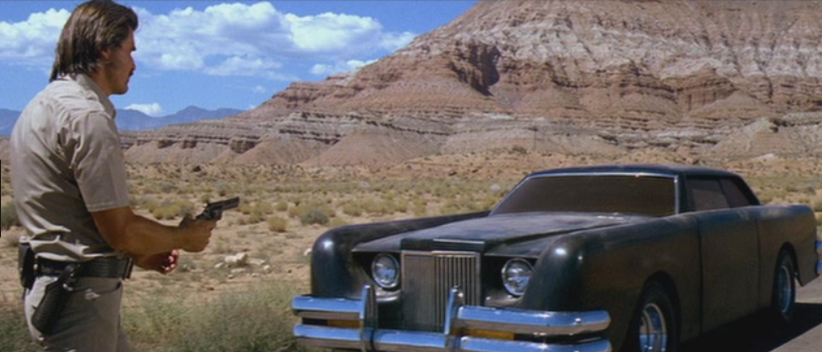
The announcement came as little surprise to those who've been following trends in the automotive industry. Ford is no longer going to build cars for sale in the United States. Oh, they'll produce the Mustang. But everything else is being relegated to the dustbin of history.
From here on out, it's SUVs and pickups, period.
Other manufacturers are gearing up to follow suit, with GM preparing to abandon several of its longstanding models. The reason: sales of cars have plummeted, as Americans move to larger and more spacious 'utes as their standard vehicle. The new Honda Accord, for example, is struggling to find a foothold in the market, even though it's received glowing reviews.
The car is dead, trumpet the car media headlines. The car is dead, says the business news.
Only, well, I'm not so sure.
Because yeah, utes and crossovers are more spacious. And pickups are awesome and practical. Somehow now they've become luxury vehicles in their own right, with the average new truck ringing in at $46,000 this last year.
But what they're not is particularly efficient, and after five years of historically low gas prices, the market is shifting. Were it not for US hyperproduction, as we frack like there's no tomorrow, gas prices would be painfully higher. The Russians and OPEC have ratcheted back production, and our efforts to counterbalance that are now the only reason we're not seeing prices well above the $4.00 level.
We're drawing fracked crude out of the ground at a rate so fast that we'll have burned through US proven reserves in just over ten years...and that can't be sustained.
It's like it's 1971 all over again, and we're blithely repeating the errors of history.
When prices go back up, the car will return.


April 11, 2018
Playing Fortnite as a Pacifist
 As both a pastor and a lifelong gamer, I often dip my toes into the game du jour.
I played Candy Crush. Once. It...er...wasn't my thing. I played Pokemon Go, for about an hour. Cute and good exercise, but again, not really my thing.
And The Game right now? It's Fortnite Battle Royale, a wild free-for-all third person shooter/building game. One hundred players start it, parachuting onto an island from a "battle bus." There, players spend their time collecting weapons and equipment and resources to build forts, as a lethal energy storm slowly closes in and the play area gets smaller and smaller.
The goal: survive as long as you can. Top 25 is great. Top ten is better. And being number one, the last player standing? That takes some skill.
I wasn't sure how much I'd enjoy the game. But my son downloaded it to our PS4, and so I gave it a go.
I was terrible. I am terrible at the game as it is meant to be played. I can't hit the side of a barn. I can't build.
Yet most of the time, I'm top ten out of a hundred. Sometimes, top two or three. How? Because I've found it's highly entertaining to play as a pacifist.
In a game defined by gathering weapons and aggressively harvesting resources and building, I don't do either.
I don't collect weapons. Oh, maybe a pistol, because it's easier to be small if you're holding a pistol instead of a pickaxe. But I don't use it for anything other than reducing my profile. I pick up heals and shield potions as I can find them, and then...I sneak. I hide. I move from shadow to shadow, behind trees, under stairs, and in bushes.
I also don't build. Because building calls attention to yourself, makes you a target, brings in the aggressive players, instigates conflict over resource. Why bother?
I don't hurry out of the Battle Bus, plunging in a wild rush to the island to grab resources and fight for advantage. I wait as late as possible, and then open my glider immediately. Then I peacefully float above the island, as the fighting begins far below me and rages on. I have no part of it. By the time I land neatly in the center of the storm's first circle, nearly four minutes of game time have elapsed, and typically half of the players who started have already been eliminated.
Then I just move slowly and quietly, and find cover. If I choose that cover well, I might not move for ten minutes.
In a round I played yesterday, I got to number two, tucking myself neatly into a crevice in his fort while the gamer who would ultimately win fired wildly at nothing for nearly five minutes, building and building and building as the storm closed in tight.
Eventually, I walked out into the open, pickaxe in hand, and stood there until the player saw me and ended the game. Good for you, buddy!
My son thinks playing this way is insane, and he's probably right. Camping in a virtual bush for 15 minutes with no intention of winning is...odd. But it changes the whole dynamic of Fortnite.
Early in the game, it's peculiarly calming. Soaring down, gentle as a dandelion, selecting your landing place with care. Then finding cover and sitting quiet and watching the storm billow and the simulated grasses rock in a softly blowing virtual breeze. You just sit and chill. Maybe read a blog post. It's nice.
Midgame, as other players build and battle one another, it's fascinating to watch their frantic exchanges, and more situational awareness is required to move stealthily, seek optimal position, and choose cover good enough that another player can run right by you and not notice.
Endgame requires considerable focus and a sense of where the remaining players are, as you move from cover to cover inward, the storm tightening into a tiny ring. It also means...when you're in the top five...that you get to watch some brilliant and subtle building skills, reminiscent of something out of Inception or Doctor Strange. And playing hard-core stealth...as anyone who's stealth-played Metal Gear games will attest...can be genuinely intense.
Do you win? No. It's possible, if the other player fell or got trapped in the storm. I know it has happened, and have seen the videos from others who use the same playstyle.
But the goal of pacifist play is different. Success is not "winning" at the expense of others. Not zero sum. But enjoying the game, as you wish to play it.
And that such a strategy means consistently making top decile doesn't hurt, either.
There's a lesson in there somewhere, I think.
April 4, 2018
On Trump and Cyrus
 Over the last couple of bizarre years, the evangelical movement in the United States has faced something of a conundrum.
On the one hand, they've just gotten everything they've ever wanted in the political realm. They've gotten a president who aggressively declares his support for the core political aims of evangelicals. Finally, after enduring eight years of Obama forcing Christians into reeducation camps, where we all had to wear hijabs while watching drag queens dressed like Streisand sing the Internationale, a president who respects Christian values.
He's pro-life, pro-America, pro-guns, and promises to protect white American Christianity behind that big beautiful wall that's going up any day now.
On the other hand, the president is flagrantly, transparently, and obviously not a disciple of Jesus of Nazareth. He built much of his business empire on gambling, and his brand on being a Hefner-style playboy who trades in his wives for younger models...while still fooling around with whatever he can get on the side. He celebrates conspicuous consumption and the power of Mammon. He's brash, profane, and a deeply skilled bully. He lies without shame. The spirit of repentance and selfless humility that defines the Way of Jesus is not to be found in the golden-calf shine of his brand.
He is not a Christian. I mean, c'mon. If the ethic that governs your life is the opposite of what Jesus asked us to believe, and you don't do anything Jesus taught us to do, you are not a Christian. That's not being judgmental, any more than saying "Anton LaVey was not a Christian" is being judgmental. It's simply a statement of fact.
And that gobsmackingly obvious empirical reality creates a dissonance in the evangelical movement. The president is not part of the Jesus thing, in language, appearance, form, belief, or deed. He is Other, and for a movement that often relies on Other-fear more than it should, that's challenging.
When confronted with a dissonance that threatens to destabilize our self-understanding, human beings have various coping mechanisms. We can resolve the dissonance through honest self-appraisal, after which we change our path and redefine ourselves honestly.
Or we can find a way to rationalize, which is a hell of a lot easier on our pride.
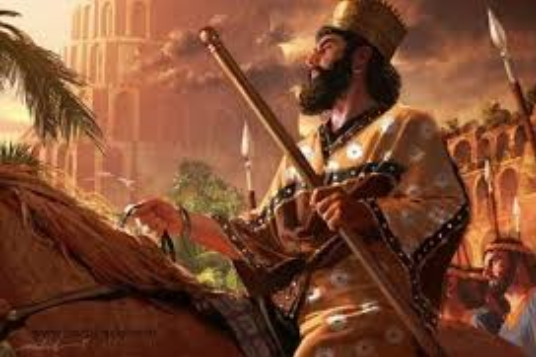
In choosing door number two, evangelicals have gone digging through their bibles in search of an obvious infidel/unbeliever who served God's purposes. For that, they've taken a cue from the far-right and ultra-orthodox in Israel, and point to an unusual figure in scripture: Cyrus of Persia.
Cyrus, though he was the farthest thing from a Jew, liberated the Jews from their Babylonian captivity and helped re-establish them in the land of Israel. The book of the prophet Isaiah praises Cyrus as an instrument of YHWH, going so far as to describe him as a mashiach, an "anointed one" of God.
Over the last year and a half, I've been researching Cyrus and the fall of Babylon for a recently drafted work of historical fiction, and having immersed myself in both contemporary histories and ancient texts about Cyrus the Great, I can say without reservation: The idea that our current POTUS is Cyrus?
It's total bollocks.
Why? Because Cyrus of Persia, as a leader, bore almost no resemblance to the current president of the United States. Sure, they were both male bipedal hominids, but that's pretty much where the similarities ended.
Cyrus was raised as a warrior-scholar, and was front and center as a general. He was a remarkably dangerous opponent on the battlefield, and a long-game strategist in all of his conquests. But he wasn't a chickenhawk. When Persia fought, Cyrus fought on the front lines. That was, in point of historical fact, how he died...fighting alongside his "Immortals" against an insurgent barbarian queen. He did not stay back in the royal city of Pasargadae, carefully nursing his bone spurs on the tennis court.
Cyrus of Persia was a man of deep personal honor. He kept his word, which meant he could be trusted by both friend and foe to honor an agreement. He was a legendarily good and faithful husband to his beloved wife Cassandane, whose death was recorded as a shattering tragedy in his life.
Cyrus of Persia united his people. He didn't play to one group or another, because that kind of "disruptive leadership" does not unite a nation around a single purpose. Just as a moral person directs themselves towards a unifying purpose, so too does a moral nation find its identity in great aims. In that, Cyrus assiduously cultivated an image of honor and nobility among his people. He knew, as humanity has known from ancient times, that chaos, moral ambiguity, and devouring entropy are not the tools of greatness.
Cyrus of Persia was a classical liberal, whose primary strength as a leader was a deep and respectful understanding of other cultures and their strengths. He was perfectly willing to learn from other societies, and to integrate them into the greater Persia he spent his life building. For pointed example, after defeating Croesus of Lydia...the man who pretty much invented currency...most historical accounts tell us that he brought Croesus back to Persia. There, he replicated Lydia's success in creating a trusted monetary system for Persia. Cyrus also knew other cultures and peoples were all potential allies, and knew that Persia was strengthened by honoring her neighbors rather than bullying them. Ahem.
Cyrus, by reputation, was a man of unusual graciousness. He treated defeated enemies with respect, often co-opting them into his empire. He did this with Croesus, with his uncle Astyages after the defeat of the Medes, and with Nabonidus, emperor of Babylon, whom he spared. His prodigious abilities on the battlefield were ultimately less significant than his ability to win over the hearts and minds of his enemies.
Cyrus was respected, deeply, by those who were enemies of Persia. Even the Greeks--no friends of Persia--looked on him as a model of what it meant to be a perfect leader. Xenophon's Cyropaedia, written from an Athenian perspective, may be more hagiography than reliable history...but it's a mark of how powerfully Cyrus was held in regard in the ancient world.
This...er...is not the case with the POTUS now.
To be utterly honest, there is one interesting similarity between the two, a similarity that's at the narrative heart of my now-drafted novel manuscript.
How did Babylon fall? Not battles. Not force of arms. From the admittedly variable historical record, it's apparent that Cyrus of Persia significantly used disinformation and weaponized information to conquer Babylon. The "fake scrolls" produced by Cyrus and his scribes brought Babylon to her knees.
Building on the festering resentments of Babylonian conservatives, Cyrus used weaponized information and propaganda to drive a deep wedge between the worshippers of the traditional Babylonian god Marduk and the royal house of Nabonidus and Belshazzar. It meant that when Cyrus invaded, Babylon was so divided against itself that it folded like wet tissue paper before his advancing Persian armies, and that the gates of the city of Babylon itself opened to him as a triumphant hero.
Though Babylon the Great had stood as the greatest power in the ancient near east for generations, Cyrus so completely divided Babylon that it was forever shattered as a nation.
So I suppose, to be fair, that this may yet prove to be a similarity between the two.
Which is something I'm sure American evangelicals can feel good about.
April 3, 2018
Lent, Social Media, and Social Isolation

I haven't had that rough a Lent since I tried to give up coffee.
To be honest, I thought it'd be easy. My discipline, for the Lenten season, was simply to curtail my level of social media engagement. I allowed myself one hour in the morning, and nothing more. After nine in the AM, I was done for the day.
No more Facebook. No more Twitter. That was it.
This seemed entirely viable, and for a day or so, it felt fine. Just a quick check in, and then on to my day. How civilized! How straightforward!
And with the increasingly pernicious hold that corporatized social media has had on our culture, it also felt faintly empowering. No more manipulation! No more everyone freaking out about everything always! No more microtargeted ads I don't need to see!
But after a week or so, it began to feel rather less positive, and significantly more...isolating.
In large part, that's because the dynamics of my life have trended towards isolation. As a pastor, I serve a wonderful community of souls, but my work with my sweet little Jesus tribe is very part time, and I'm not nearby. That means I may see that group of people Wednesdays and Sundays, but otherwise I'm working remotely. Meaning, by myself.
I've also been trying to make a go of it as a writer, with modest success. Writing, though, is a semi-monastic avocation, also involves a tremendous amount of time spent by oneself.
With that, and with my offspring now both basically adults and my time as a shuttle-dad at an end, I find myself in a position familiar to a surprisingly large number of American adults.
I'm alone, most of the time.
I've always been an introvert, so my energies do tend that way, and I'm comfortable with...and need...more time by myself than most souls. There are boundaries, though, to what is and is not healthy solitude.
Four days out of seven, from the point at which I drop my wife off at the metro in the morning to early evening, my life currently involves functionally zero face-to-face human interaction. I might talk to a friend now and again, or get a call from family.
But most days, it's pretty much just me and the empty house. If I go for a walk, it's me and an empty suburban neighborhood, one that seems less "quiet" and more "desolate" in the middle of what for most folks is their working day.
Like many who look around and realize things have become too quiet, I'll find ways to get out, creating intentional inefficiencies in my day. I'll do smaller grocery shops, fully aware that I'd rather walk or bicycle to get a small load of groceries simply because it means I'm not rattling around at home. I'll hit the library for books. I volunteer, delivering food for Meals on Wheels, which gives me an opportunity to be socially present for the chronically ill and the elderly. I feel their isolation, and taking a few moments to talk and be present is as life-giving for me as it is for them.
In the context of that life, social media had become a synthetic proxy for human interaction in my day. It is...for good or ill...a virtual watercooler, to which I can go and get a sense that there are still other human beings out there that I know and that know me. I like, I retweet, or I comment, and it almost feels like people are around. What that offers, in moments when the sense of disconnect feels too potently concentrated, is a social lifeline.
Meaning, simply, that setting aside that form of media for forty days really did feel like a desert experience. It stripped away Zuckerberg's synthetic veneer of connection, and the ooh-here's-a-thingness of my curated Twitter feed.
For forty days, it was just me and the reptiles of my stagnant mind, as William Blake once put it.
And that was unsettling to my soul's complacency, as Lent should be. Curtailing social media had the effect of stopping a numbing process, like day two of the flu when you back off the laddered acetaminophen and ibuprofen to see if the fever comes back. That you are artificially suppressing symptoms doesn't mean the illness is gone.
As the time progressed, I found myself adapting.
My library journeys found me returning with a book about the dynamics of human isolation and our fundamental need for social connection. Among the striking things in that book were two things.
First, that isolation sabotages our thinking. We lose the ability to critically assess our own actions, which leads to both fearful and recursive thought patterns and a tendency towards socially awkward behavior. I know those ways of thinking have roots in me, roots that have me rehashing or ruminating over things in ways that are not healthy for my soul.
Second, that the only way out that consistently works is turning yourself towards others in selfless service. What that does, according to those who research the human psyche, is create the positive other-ideation that isolation destroys. And from positive other-ideation, we learn to trust, and from trust, we find connection.
Then I went back and studied the sayings of the Desert Fathers, the anchorite monastics of early Christianity, who spent a soul-staggering amount of time by themselves. They all went just the tiniest bit crazy, but they also seemed to find ways to cope that preserved their integrity.
Not all of those can be replicated these days without loved ones applying clinical interventions, but some can. The desert fathers defeated the demons of isolation by being relentlessly selfless, defying the demons..and they really did think they were demons...of anxious fearfulness, sexual compulsion, and gnawing greed by doing precisely what the best psychological research suggests. Though many spent years in their monastic cells or in wilderness places, when they did wander shabby and wild-eyed into the company of others, they were relentlessly compassionate. Even they took time for what they called synaxis, for "being together," and it was a place of nourishment for them.
And there, perhaps the best spiritual insight offered up from this last season of fasting: Both psychology and the insights of monastic mysticism present us with the strangest paradox of human loneliness and social isolation. It's negative impacts cannot be overcome by the mediating structures of technology, and most particularly not by profit-driven structures designed to create compulsive use. Those can distract, or numb, but they do not provide what we ultimately need, any more than an opiate cures a broken bone.
We need each other, face to face, real to real, soul to soul.
And more significant, this year's fast came with the reminder that the self blossoms in the soil of others. We do not love ourselves most deeply by turning that love inward, by "learning to love yourself." Our souls grow when we love the other, and when we ground that love in something deeper still.
Good to get that most fundamental reminder, this Lenten season.
March 29, 2018
The Pox
 Tonight is all quiet again, and it makes me think about the scary things, but I’m maybe less scared because I know Daddy keeps me safe. I know it. I know it real good. When I say my prayers I say thank you for my Daddy. For Mama too.
I can hear Jon and Mary and Sarah and they are all asleep and Jon is snoring a little. I can’t hear Daddy and Mama, but I know they are right downstairs and their room is near the door. Every once in a while there’s a clickity click click of Buck’s nails as he goes snuffing around the house in his lumpy way, and it wakes me up but I then feel safe because he’s a good good dog.
And he’s big and he has big teeth and when he barks it’s like his whole body barks, worf worf down low and thick and deep.
Mama tucked me in tonite and she said, baby girl, you know it’s OK, Daddy’s here and Mama’s here and Uncle Jim’s just right there in the next farm and we’re all together and we all watch out for each other just like family should. And she rocks me like she did when I was five, and even though I’m nine and bigger now it still feels good.
An Daddy came up, and said goodnight little Button you try to sleep tonite and gave me a bristly kiss on my head just like he always does. And I should sleep and I try and everybody else is sleeping. The blankets are nice and warm and the house is cooling down and it’s so cozy but I’m still scared and my heart feels all tight.
It’s cause of the Pox.
I wish I never heard of the Pox and it wasn’t real, but it is an that scares me terrible way down in my heart. Specially now. Real special terrible now.
I member when Daddy first told me, cause I was seven and old enough to go picking, and he took me up real serious and said, Button, we got to talk bout you going into the woods. And I said Daddy I can do it, Jon does it, and you know sometimes I come back from the schoolhouse now all by myself when I help Ms. Jess with the cleanup.
And he smile that big easy Daddy smile and says yeah, yeah Button, you’re a great helper. But then he got all serious. Button, the schoolhouse is up North near to town. But you got to be careful in the wild woods to the South. We go there, and the pickings are good, but our family isn’t nowhere near town cause we like it out here, and sometimes the Pox spreads up this far.
I’d heard Daddy and Uncle Jim talking bout that sometimes, and him and Mama whispering some nights before Daddy went out with a bunch of men from the town on horseback. Mama’d cry real quiet after he went out, and even more for happiness when he came back right before sun-up.
But I knew better than to ask bout things where it weren’t my place.
Now Daddy sat there right in front of me, all grim, and told me bout the Pox.
Usually it stays to the South, Button, down in the Barrens and the Long Hot Dry. But sometimes in bad seasons it gets hungry, and leaves the Poxed lands, and tries to go spreading on up this way to the sweet green top of the world.
But what is it, Daddy, I said.
He got quiet again. Button, it’s like a sickness, something like that flu you got last year. ‘member that, how bad you and Mary and Mama got even with Doc coming here?
I nodded. That felt so bad, cept when I broke my wrist I never felt worse, like my head was goin to just bust open. Daddy was so scared, cause he knew that little Cousin Daniel just had died from it. He was barely more than a baby, and that was so sad. I would a been scared, too, but I was too sick feeling to be anything else.
Yeah, well, says Daddy, that’s what it’s kinda like. When the sun gets red ‘cause the dust blows from the Dry into the Barrens, the Pox gets hungry, and it comes up here to eat and spread. It wants real bad to make us into it.
I looked all fuddled, cause I didn’t know what he meant, and I said so. So Daddy tried to splain it a little more.
The Pox looks kinda like people. Almost. Some of them may have been people, once. But they aren’t. They’re...something else. And if we aren’t careful, if we don’t keep watch and keep it back, every one of us will just get all eaten up by it. No more me. No more Mama or you. Just the Pox, everywhere, and no more people in the whole wide earth.
What, what does it look like, I said, my voice all hitchin up.
Daddy told me. It was horrible and scary and I don’t like to be thinkin about it, but course now I can’t help it cause I seen it for myself.
And then Daddy said, Button, you go pickin, but you get out a the woods before the sun gets too low in the sky, cause that’s when it comes. If you ever see the Pox in the woods, you hide and stay real quiet till you can run, then you come on home fast and quiet as you can and you get me or Uncle Jim. And you can’t ever let it touch you. Don’t get close, no matter what. He paused, like he was thinking of something.
And...don’t you listen to it.
That got me even more scared and I said, it can talk, Daddy?
He looked real hard. Yeah, Button. It talks. But all the Pox does is lie, so’s it can get you close and...touch you. You don’t listen. You don’t ever listen. If you ever see the Pox, ever, you just do exactly what I told you. You do anything you need to get away. You hear?
And I said yes and I really did mean it but now I’m so scared I’m so stupid I should have done what Daddy said.
I’m so stupid, so stupid.
I shouldnta stayed out there in the woods, so stupid. I shouldnta gone in so deep, but two days ago it was Saturday and it was so nice and pretty and I kept saying oh, just a little more, and I thought I was being real careful, and even though I’d never been that far I thought I can find my way back real easy, then right when I knew I’d gone too far I found the patch.
Oh, there was so many blackberries, like the biggest patch I ever seen ever and I had both of them new big ol baskets I made in class, and Emmy was her usual snotty self, like you’ll never fill baskets that big, she said, and I said sure I will.
And they were so many all sweet and fat and the squirrels and birds hadn’t gotten them and I just guess I lost track a time.
I was like halfway through the second basket when I thought oh no, it’s getting dark, like, how did I not notice? The woods were all shadows and strange. And I knew Mama’d be mad and Daddy’d be madder and I was going to get a hiding and I’d totally deserve it. So I started back, quick as I could.
But it got darker, and that setting sun was so red and I was like, suddenly all so scared, and I musta turned all wrong because then the path wasn’t where I thought because everything looked all different in the dark. And the thing I thought was the path was like all brambles and thorns and nothing looked right at all.
And I wanted to yell out, but I was too far, nobody knew where I was, and then I went one way for a while but it was even more wrong and then I fell and got all scratched up and dropped all of the berries in one of the baskets.
The woods were getting much dark now, where I couldn’t even really see totally right, and then it was like I could hear everything moving. Rustling here and there, and hootings, and strange sounds, and I think I musta thought they were the Pox coming and that made me even more scared and dumb.
Because it was probably squirrels and birds. The Pox is quieter than that. But I didn’t know that then.
I was just about given up when I saw the clearing and the old barn. I remember Jon telling me bout it once, about how he found it hunting, and there it was all deep in shadow. There was what was left of a house, too, but that old barn had somehow kept on standing, from long ago when some family tried to make a go in their own clearing.
And it looked scary, but it looked like maybe a place to hide, just hunker down in a corner and be real quiet like Daddy said, I think that was what I was thinking.
I was so stupid.
I came in through that busted open barn door into the almost dark of that big hollow building, stepping so careful, and it smelled like dust and rot, the wood at the doorpost old and almost falling apart in your hand. There was a big hole up there in the roof where it had fallen in, and that was the only light in the whole barn, coming in through that hole.
It weren’t much light, but the rest of the barn was so dark, so I moved to it because I don’t know.
And then they stepped into the light too. Both of them, so quiet you couldn’t barely hear them move, and my heart jumped up into my throat sos I could hardly breathe. My fist went all tight round the basket handle, so's I could hear it crunch and it kinda cut in and hurt but I was too scared to notice.
There was a big Pock, and a little Pock, and they looked just like Daddy said the Pox would look. Almost like people.
The big Pock looked like a man taller than Uncle Jim, and the little Pock was like it was a girl just a little older than me. It was hanging on the big Pock, hardly standing at all, and it looked like there was something wrong with it. They were wearing clothes, almost like people clothes, though they was a bit strange and torn up.
But even though it was dark, they weren’t people. You could see it, just like Daddy told me.
You can tell cause their skin is gone rotten through and through, Daddy had said. It’s not white and pink like the skin of real human people. Pock skin is all wrong colors, like a bad apple or a dead deer you find half eaten in the field. All the Pox are rotted and wrong and have no soul and you can see it on their outside, Daddy said.
That’s how you know for sure a Pock is not a person, Daddy said.
And that’s just what they were, skin like sickness, black as the night woods, and I was so scared I could hardly move, and then the big Pock spoke.
Please, it said, in a whisper voice that was scary cause it was like almost a person voice. We’re just so hungry. All we are is hungry. Please. We don’t mean no harm, it said. It took a step closer, and the smaller Pock came with it, eyes down, wobbly on its feet.
I wanted to run, just run, but it was like I was in a bad dream, and my body couldn’t move, l couldn’t make it move.
It came closer still, and I could see it was terrible lean, like a skeleton almost, eyes sunk into the dark hollow of its head.
Hey girl, hey. Little girl, hey, we’re just so hungry, please… and it saw the basket, and took another step. Berries? You got berries? We haven’t...eaten. It’s been days. If you could just...just maybe give us some, just a little, not all of them just...”
And I opened my mouth, cause I was trying to scream but I couldn’t and nothing would come out.
Hey, hey, and the Pock was speaking soft now, soft as a snake, Don’t be scared, hey, you’re lost, we’re lost and scared too, look, don’t be scared, and still it talked and it was lying, lying so it could touch me, lying so it could spread, and another step forward, and its hand reaching out, dark rot Pox flesh on a big bony hand.
Worf, worf, came the sound, so nearby, it was Buck I knew it, I heard him and it was like I suddenly woke up and I dropped the berries and bolted like a bat-struck ball. The Pock lunged and grabbed and Wait! Stop, you something something it said, and it had the basket, and it was coming after me and it had my basket but I was out the barn door and running right fast.
There coming up was Daddy, and Uncle Jim, and a bunch of the men from church, all of them with torches and guns, and Buck just worfing and barking deep and angry.
Daddy, I said, and he dropped his rifle and held me. Button, he said, Oh God, Button, you don’t never ever do that again, you hear me you…
But then Uncle Jim saw the Pock, stopped up sudden right there at the edge of the barn shadow. And the Pock saw Uncle Jim, and Uncle Jim raised his big powder gun.
No, said the Pock, its voice sounding almost like it was scared. No please I’ve got a…
Uncle Jim’s musket barked deep like Buck, and the big Pock fell back into the dark.
Did it touch you, baby, did it touch you, Daddy whispered, kneeling down in close. I shook my head no, no, no. Then, even quieter, is there any others in there, Button, is there?
And I nodded, cause there was.
Daddy stood up. Burn it, he said. Burn it dead.
The men with torches came at that barn real careful, while others kept guns up, and some lit the edges of that dry crumblerot wood, and others pitched their torches in to where the straw and the big Pock body lay.
I’m taking Button home, Daddy said to Uncle Jim. Make sure nothing gets out. And Uncle Jim nodded all serious.
That barn went up so quick, flames a jumping, the fire burned high and bright and lit up the woods all round and cast our shadows like giants. Daddy and me were just reaching the edge of the clearing when all a sudden I heard the small Pock start up its screaming.
Screaming and screaming, and it sounded so much like a girl, like it was really a girl and she was burning alive and I never heard anything so horrible in my life.
I tried to cover my ears I did, but that Pock just cried out so’s covering your ears didn’t help, and it went on and on and didn’t stop until there was a shot and then it did.
But I can still hear the Pox, there in my head, even right now in my bed in the dark with my covers held tight. That voice. That scream.
That’s what I told Mama last night when I woke everybody up, and she held me, and said oh Button, just you know me and Daddy will always keep you safe. Just you tell yourself that. It’ll go away.
So that’s what I say now, and I feel a little better. Daddy will always keep me safe. He will.
I know it.
March 28, 2018
Production Value
 It was the strangest demonstration.
It had all of the right feel, at least initially. The crowds, pouring from the Metro, bearing signs and placards. Here and there, chants beginning, and a sense of growing energy. It was familiar, and while it wasn't as impossibly vast as the roaring throngs that overwhelmed the nation's capital for the "Women's March," the numbers were there.
People care about the radicalized absurdity of America's absolutist gun fetishism, and about the dismal toll it takes in American blood and treasure. That our children now are forced to do safety drills in schools as they used to during the height of the Cold War? That we are increasingly told not that we have a right to bear arms, but that we *must* live out our national life as an armed camp always or be at risk? That's not freedom. It's madness. It's an unacceptable incursion onto our liberty.
And that matters, so by the hundreds of thousands, Americans were showing up.
We arrived, pouring onto Pennsylvania Avenue, and it was...well...different.
In some ways, it was positive.
The kids who spoke...and they were all kids...were excellent and strikingly effective. I was so struck by the eleven year old girl that I could not believe she wasn't scripted...so much so that skeptic-me went online to see what she sounded like "off-script." She was just as articulate. And no, not "golly, she's so articulate" in that way. C'mon. Give me some credit. Meaning: off the cuff, an eleven year old girl was more composed and precise in her use of language than most adults. In front of a throng that stretched as far as the eye could see.
But in other ways, it was...odd.
Like the choice to have music blaring from the vast arrays of speakers as the crowd gathered. It was a nice pop playlist, sure.
But I've never been in a crowd that size, gathered for a political purpose, where there was less ambient organic energy. People were trying. Chants started, only to be quashed because the crowd couldn't hear itself over the speaker arrays. "What do we want," they would start, and what we wanted, evidently, was to be listening to Kei$ha.
It reminded me of "contemporary praise worships" I've attended where the guy running the board had turned it up so loud that the congregation couldn't sing along, even to the songs they knew by heart. Nothing kills the energy of a group more effectively.
Eventually, the masses just sort of sat there, waiting for the event to start. Three hundred and fifty to five hundred thousand people, and in the brief breaks between songs it was kind of...quiet. Tranked, even.
When the event began, the kids were, again, great.
But I and hundreds of thousands of others were mostly just standing there, watching a meticulously produced show on the nearest Jumbotron. There'd be a young speaker, then a pop star, then a video. People would boo at the appropriate moments, or chant at the appropriate moments. But it felt more about what was going on on the screens, and less about the gathered people.
As if we were not part of the thing we were part of, but instead were watching ourselves be a part of the thing we were doing. It felt buffed and polished and managed, like a carefully posed selfie. Or a concert. Or megachurch worship.
Perhaps that is the choreographed way of rallies these days, or a feature of a tightly managed political display in the new media age. It seemed to work for most folks, but...given the stakes...I hungered for more of an edge.
There was almost none of the wildness of other demonstrations, that "we-the-people" moment that comes when a city realizes that a mass movement has overcome it, that the "official route" is suddenly four then seven then ten blocks deeper.
Ah well. It probably looked good for the folks streaming it at home.
March 13, 2018
The Talent
 The studio waited, white and stark and empty.
So quiet. So still and clean and pure. Utterly untouched.
The lighting still soft, at forty percent.
Almost there.
Just meters away, Sol paced around the control room, checking over shoulders of the techs as they muttered into their mikes, looking at the array of screens...archaic, but high-function...that showed every angle of the new, improved studio.
He ran a hand through his thinning hair, feeling the sheen of sweat gathering on his scalp, the rush of blood in his ears. Nervous? Sol? He can’t get nervous, he’s the king of the world, and yet here he was rocking back and forth on his heels, his weight shifting anxiously across the perfect soles of his buttercream leather Ferragamos.
C’mon. He breathed in, breathed out, centering himself. Gotta stay focused, gotta be on your game, this is all the damn marbles. Again.
“Sol?”
It was Tran, materializing like out of nowhere, man, almost spooky how she just could sneak up on you like that. Her eyes locked on his, dark and focused as a leopard’s in her round flat face.
“Yeah. Whaddaya got?” Sol barked out his genial Jersey rasp, always more than slightly overloud, enough to startle the uninitiated. Tran didn’t even blink.
He wasn’t sure if she ever blinked.
“All cams at 100%. Initial run showed three point two percent of units suboptimal, but techs got on it, and we’re good to go. Studio’s scrubbed, sterilized, absolutely bio-clean, everything per contract. We’re tight and ready.”
“Feeds?”
“Everything at W.O.T. No bandwidth issues, all subsidiaries reporting. Pre-shows lighting up on schedule. Between pre-shows, retrospectives, and C-level tuber-chatter, we’re already up to thirty seven point three five of total North American traffic. On track to exceed projections.”
“How’s our girl doing?”
“‘She’s ready.”
So close. So close. The door to the dressing room was still closed, sealed nice and tight. Wasn’t quite time for the star to appear.
It was all flowing as Sol had requested, and there was no way the studio was going to say no. Not to him. Not when it came to Tyler Smith-Kim. What TySK needed, TySK got.
Whatever we need, babe, you give us whatever we need, Sol had said to the prim NetViews exec over a three milligram lunch, and boy, had she delivered. And the good girls and boys at NetViews had got on it, because that was their damn job, and bam.
There it was. Just as he wanted, upgraded and retrofitted and cutting edge. The room, a perfect blank slate. Visually, utterly empty. Fifty meters by fifty meters by fifty meters, a perfect cube. The interior, spotless. The floors, pressure and heat sensitive, capable of providing weight-and-mass sim data down to microgram levels.
The cams were everywhere, invisible, embedded in the walls and floors, six hundred maxdef dot-cams, each capable of IR and UV, and giving resolutions four powers of magnitude higher than human vision. That was one hundred and twenty seven percent improved over the last product cycle, and baby, that created some seriously profitable synergies.
You wanted to drill down to the mites that feasted on TySK’s sloughing skin cells? Optimized! Maximal! Sales of Granulia 3.2, the must-have software package that let you get down to nanoscale TySKvid? Never been better.
Hell, he’d never thought that’d take off like it had, but the grrls down in pre-marketing knew their stuff. There were over forty seven successfully monetized mitecam sub-toobs on NOWee dedicated to that whole process.
Watch their tiny jaws! Nom Nom Nom! Laugh along with the DookieTwins NOW-award winning toob-commentary! Watch for hours as mite leavings dried on the surface of her body, and were caught up and carried on the air currents of the studio. Bid on individual motes...each utterly unique...as they were drawn towards the harvesting filters for packaging and distribution to collectors!
The market for blockchain-certified TySK MiteDrops had been super hot last year, with futures showing significant potential for growth in the coming fiscal quarter. Sure, some analysts argued that there was real danger of a MiteDrop bubble, but analyst predictions of a per-unit ceiling at 1500ISK had underestimated the enthusiasm of the market and the limits on supply.
Sol still wished he’d done more than low-risk that part of his portfolio, but hell. You can’t win ‘em all.
And with the new product dropping, heh...dropping...that enthusiasm was now running at a fever pitch.
Not that the old product was any less desirable. It had been twelve months since TSigh! had blown the doors off the industry. Two hundred trillion ISK at opening, more VR subs than ever in history.
A full year, and the chatter hadn’t come close to diminishing.
Hell, as Sol had told the board at the annual convention two weeks ago, even the performance of TySKlassic had never been stronger. Using the synergy generated at launch, the plans for updeffing the old TySK VR onto VerReal had reignited the fanbase, bringing a new gen into play, and the fanboyzandgrrls had already generated nearly seventy five thousand new vids rearguing the merits of product that was over a decade old.
The impacts on the broader market were even more significant. The big tech boys were up nearly seventeen percent, as the higher visual refinement of primary, secondary, and tertiary feeds made upgrading consumer grade viewrigs pretty much a requirement.
And pharma? Wow. It was nuts, with sales of the new formulations of NausYex Plus and Spinaway exceeding even the most optimistic fantasies of the pitchmen.
Sure, stabilizing and augmenting the VR experience with the recommended dose of Synethesiar had seemed enough three product cycles ago. But that was forever. Forever. And the seven point two percent of potential market lost to residual dizziness and nausea was biting into growth. NausYex and Spinaway cut that by seventy five percent, and when you layered in the collateral sales of anti-anxiety meds to deal with the side effects, it was just profit all the way down.
All. The. Way. Down.
Damn.
And all of this, from her genius, her brilliance, her idea. His girl.
Seven short years ago, they’d been number three, back in the day, man, when Lil’ NasteE dominated the industry. Back in the day when there was an industry outside of TySK-affiliated holdings. Before TySK was the DOW, the bluest of blue-chips, the beating heart of the entertainment economy. Total market valuation, as of close yesterday? It exceeded the GDP of all but four nation states.
Sure, there’d been other players back then. But their loops and tracks had gotten incestuous, the industry was stagnating, there wasn’t a single damn new idea out there. PornCore? Old news. Cuttersynth? There was only so much you could sample the sound of a blade opening flesh. And people talking about people, critiquing the critiques of the critiques? It just got..old. It’d been done.
There was nothing new.
Traffic was down. People were bored. Nothing exciting, just one artist sampling the samples of a mashup of other artists, an endless recursion, art devouring itself.
And then Tyler, Tyler herself had called a meeting. Just him. Alone in his office. And she had said...he had the recordings…”I have an idea.”
He’d coughed. Tyler had always been hard-core, totally dedicated, relentless. Of all the talent he represented in thirty years in the industry, she was the only one who’d ever really freaked him out. She was always five steps ahead of him, always hungry and questing and willing to do things that, well, he’d thought he was cynical and had seen everything. He’d thought nothing could surprise him. Man. But she did. Every time.
If Tyler Smith-Kim had an idea, it was going to be a thing.
She’d popped up a CAD program on her flat, whisked it over to him, showed him the schematics she’d worked on herself. He’d skimmed her proposal, watched the sims, and...Jesus.
“Babe, Tyler, I love you, babe, you know that. But you can’t do this. This is…” and he’d coughed again and stammered, Jesus, Sol himself coughing and stammering. “...this is crazy. You’ll...it’ll…”
“Can’t? Of course I can. It’s the only way,” she’d said, through her perfect cam-ready lips. “I’ve pre-signed the permissions. Legal’s already been over it. It’ll work.”
“You can just take a break. Maybe spend some time in zero gee. We can afford the station again, just away from everything, you know we can totally swing the launch fees, and if…”
She didn’t say a damn thing. Just looked at him, her symmetrical blue/green eyes fixed on his. Held him, for a long time, until he was forced to look away.
“You work for me, Sol.”
His voice, a submissive rumble. “For how long? How long would you do this?”
And she had smiled.
“Read the contracts, Sol. As long as it brings it in, babe. As long as it brings it in. ”
So they built the Black Box. Hermetically sealed, atmospherically controlled. No inputs. Nothing. No light. No sound. Total darkness. Just her mind, alone with itself. Nutrients and fluids. Bedding. A toilet. Everything padded.
Every outside influence, gone. Every stream and loop and meme, shut down. Just her, Tyler Smith-Kim, alone with her genius. After six months, the door would open, and she’d hit the studio, and it’d be like nothing else. Nothing but her genius.
He’d figured it’d be six months. She’d come out, it’d crash, and she’d be out. Great stunt, babe, he’d say. Way to get to number two, he’d say.
But she was right. Damn, but she was right.
It’d been seven years. Fourteen product drops, not a stunt at all, but an event. Not even “an event,” not any more. It was the event. Nothing like it, ever.
Release One had been the biggest thing ever. Just straight to the top of pretty much every damn thing. The wild tonalities of her singing, totally like nothing else, nothing ever. Oh, you could hear the influences, sure, from Classical, Jazz, Afrobeat, Throat singing, Jesus, just everything. But it came together new, finally something really new.
The bored, jaded world forgot everything else.
Lil’ NasteE? Her next seven tracks were just resampled from Release One. It was all TySK. She was it. She was all media, all the time.
And when TySK returned to the Black Box after twenty four hours of dropping track after track? When that door closed on her voice at crescendo, holding that impossible note, and the world gasped? The stage was set for more.
Six more months, and every month, the buildup increased. Marketing and pre-marketing kept driving the wave, until pretty much nothing else mattered. It was the biggest thing.
DayTwo? DayTwo was where he was sure it would end. Twelve months in total isolation, and when that door opened? She didn’t sing. Just, well, she just talked. More croaked, really. And crawled around. And wept. And begged for it to end.
Four days, she screamed and clawed at the walls of the studio, until her fingers left bloody tracks on the whiteness of the walls. It was hard to watch, but damn, everybody was watching. And sampling. And oversampling.
When she crawled, sobbing so hard she was shaking, back into the Box? Hell, that was hard on Sol. On the whole team. But a contract is a contract.
And DayTwo was bigger than ever. Made Release One look like some tweener toobing for the first time. Watching. Arguing. Making music and talking about music. There was talk of legislation, of criminal charges, but their friends on K Street made sure that all went away.
It just grew, and grew, and grew.
And every time, every product drop was different.
TSigh! was just that one sound, that shuddering utterance that came from her as she crawled into the studio. But it was enough, because it was unique and it was TySK, it could be slowed and modded and shifted and tuned. And critiquing.
And critiquing the critiques of the critiques, in the same endless meta-masturbation.
It was what people did. But hell, did it make money.
The bruises that patterned her arms and back, turned into a thousand silkscreens. The mites. The speculation. That missing right ring finger? Man. Yeah. That was a trend for a month or two. And the…
“Sol?”
Tran, again, breaking him from his reverie.
“We’re thirty seconds from live.”
Sol blinked, pulled himself together. The control room, looking at him.
“Alright, people.” Here, the terse but confident speech, what was expected. “You know what’s at stake. But you’re the best, the best in the business, because TySK is the damn business. Are we gonna make this happen?”
The response, not adequate, because they knew he’d say
“Seriously, are we gonna make some damn money today?”
And they roared, as a broad toothed grin split his flat red face.
And the countdown continued, echoed across a billion screens, as countless eyes waited for the door to open and the curtain to rise.
----
It was bright.
That was the word for the pain. Bright. Light light
Brightlightbrightlightbright, pressing into her eyes light, blink, blink, how did you keep them closed, she didn’t remember didn’t remember
It hurt. The light hurt. And it made all of her friends go away. Dishy clattered about, her sweet smooth roundess no longer a comfort, the soft ssssh of her voice as you rubbed her belly meaningless.
Nipple, oh nipple, who gurgled away her thirst, so generous and soft and big in the dark. The light made her small and dead.
Mr. Hole who ate the gurf that came from her, and who screamed back her own stenchvoice when she cried out the sads and the rage? No big welcome. No big. Welcome. He was gone
And the light yawned and howled its hungry nothing at her
And it wouldn’t leave her
Alone
Not until she gave it what it wanted wanted her so she
Crawled into the hunger
wanted the
Show
So she crawled into the hurt that
Wanted
The Show.
Which Must
Go
On.
March 9, 2018
The Fundamental of Our Economy
 Though the morning was cold and I was running late, I'd somehow managed to forget to fill up my bike. I'd thought about it, but then was in too much of a rush, and didn't. Feh.
 I had gas, sure. But it wasn't enough to get me where I was going. So, muttering to myself for my own shortsightedness, I motored on over to the nearest gas station, put four-and-a-half gallons in the tank, and boom, I was off.
At $2.39 a gallon, the ten bucks and seventy six cents I spent will last me a couple of weeks of commuting. Motorcycles tend to roll that way.
But we, as a society? We do not roll that way. Nor do we feel we have to. I mean, heck, gas is cheap. It's as cheap as it's always been. Cheaper, even, which has a significant impact on more than just personal transportation. Cheap fuel impacts our economy across the board, as the cost to both produce and move goods is held down. The ease of movement it creates also benefits the service industry, as the "transaction cost" of traveling to service locations is minimized. Fuel costs are exerting no upward pressure on inflation.
Ten years ago, that didn't look like it would be the case. Gas prices were soaring to record levels in constant dollar terms, reaching their highest point ever historically in 2008.
Then came the aggressive pursuit of hydraulic fracturing, or "fracking," which opened up shale oil reserves. And then came massive Saudi overproduction, designed to shut down new US exploration by making it economically unviable. And now? Now...thanks to fracking...America's accessible reserves have more than doubled, and our production of oil is going like gangbusters, even as the Saudis and the Russians cut back in an effort to hold prices up.
So now record-breaking American oil production is keeping gas prices low, which means we can livin' large and buying our big ol' utes and trucks like there's no tomorrow. And low gas prices keep interest rates low, which helps drive our roaring, superheated market.
But there will be a tomorrow.
The United States is currently producing 10 million barrels of oil a day, up more than 100% from ten years ago.
Current shale-inclusive industry projections of viable reserves under US control? 40 billion barrels.
The math on that is pretty straightforward. At current production rates, we will have completely exhausted our known reserves in just over 10 years.
It can't continue. It's a finite resource. And we won't run at our current production rate for ten years. We can't. We'll have to throttle back, as we move to less accessible reserves.
When does eventually happen, that'll drive inflation up, because every single thing will cost more.
In an economy already superheated by debt, where even the whisper that inflation might be happening is enough to send Wall Street into a panic? And with the majority of the world's remaining reserves controlled by Russia, Saudi Arabia, and the new Venezuelan/Chinese partnership?
I just can't see how that ends well.
Shortsighted choices almost never do.
March 7, 2018
The New, Improved Opioid of the Masses
 So I had a thought, one that is doomed to be utterly unpopular. It came as I reflected on the latest mass-market production from the superhero-industrial complex, which churns out film after film about the godlike beings that seem to sell so many movie tickets.
Superhero narratives, or so I've mused before, are nothing more and nothing less than the god-fables of a post-theistic age. They reach back into a human hunger for primal polytheistic stories, as immensely powerful beings who represent archetypes of the human experience do amazing things. They battle. They squabble. They canoodle. Then they battle some more. It matters not if it's Marduk or Superman, Shango or Storm, Thor or...Thor.
We love these stories, and have as long as we've been able to tell tales. They're fun, and they speak truths about both the world and human nature.
So that leaves me with assertion A: Superhero stories serve the same purpose in our culture as the stories of the gods in polytheistic cultures.
Which brings me to assertion B, that old classic Marxist line. As Karl would have it, religion is the opiate of the masses. Now, as a Christian and a pastor, I've got some real beef with that as a general statement. Faith has power to transform culture, and...as it's oriented to the truly transcendent...shatters the power-idols of culture and nation. In the United States, abolitionists were fiercely, intensely religious people, as were the most effective leaders of the civil rights movement. Elsewhere, faith has given peoples the strength to defy imperial and colonialist power.
But people of faith would be deluding themselves if they didn't acknowledge how religion has also been co-opted, over and over again, in the service of human power. It has been used to justify the domination of whole peoples, and so fused with the ethos of our concupiscent power structures as to give some legitimacy to Karl's point.
Assertion B is then nothing more than a modified version of Marx: Religion often serves the purposes of power, agitating or pacifying a populace towards ends that have nothing to do with the transcendent.
So IF (Superhero Movies are Post-Theistic Archetypal Narratives) AND (Religion is the NeoOpiate of teh Masses), THEN _______________?
Given the corporate power dynamics behind most of these stories, my sense of these tales is that there's a tendency for them to become...distractions. Power has always known that nothing keeps the masses placated like good ol' fashioned circus.
Take, for example, the two big news stories about Africa recently. Story number one was, of course, Black Panther. This old and awkwardly well-intended creation of 1970s comic books (Jungle Action!) has been reworked and repurposed into an Afrofuturist fable, in which a technologically sophisticated and fiercely independent African nation stands proud. It's undeniably cool. Africans like it.
But then there was also the news from the real world we inhabit. That was much quieter, but more of a harbinger of Africa's future. South Africa is running out of potable water, after a catastrophic and unprecedented drought. The city of Cape Town is almost completely dry, as public reservoirs and private wells go empty. Draconian conservation measures are in place, as the city of half-a-million struggles to stave off what they're calling "Day Zero:" the day the local water utility will be forced to turn off the taps.
On the one hand, the fantasy, involving alternate pasts and vibranium. On the other, the reality, in which the future looks...different. Harder. More demanding.
And so we turn our attention to the appealing daydream.
February 28, 2018
It Knows What I Want
 For more than a year, I'd muttered about it under my breath every single time I went on Facebook.
There, my feed, bearing the reflections and ruminations of all of my social-media friends and acquaintances.
But it wasn't chronological. It was carefully sorted and prepared for me by the machine-mind, as algorithms showed me what they'd determined I most wanted to see.
So every single time I went on Facebook, I'd change the settings back to chronological ordering, which made me grumble in that first-world-problem sort of way. Why can't you just let me look at the [blessed] thing in the way that I choose? If every single time I use your service I have to change a setting, shouldn't that clue you in to THAT BEING THE SETTING I WANT IN A RANTY ALL CAPS WAY? Grumble grumble grumble.
And then, about two weeks ago, right before I started time-delimiting my social media interaction for Lent, that changed all on its own.
I'm not sure why. I'd gotten into a conversation on Facebook with two friends from college about how impossible it was to change, and then, lo and behold, it was changed.
The shift happened because my Chromebook browser started defaulting not to facebook.com, but to facebook.com/?sk=h_chr, which automatically sorts your feed chronologically. I didn't request this. It just...happened. Which was itself kind of weird, in that Google-becoming-sentient sort of way. I suppose I'd selected that option enough that the browser simply learned it as my choice. One AI learning system provided its own solution to my interface with another AI learning system.
What was weirder still: after a week or two, I realized something unsettling. For all of my whimpering and kvetching about Facebook's AI selecting my feed?
I actually prefer the algorithm.
Because the machine-generated list I thought I despised is just much, much more interesting.
I mean, y'all are great, but...um. The posts featured by the algorithm contain the most active conversations between friends about significant events.
They're discernably more relevant and more engaging than simple chronology. I feel more likely to chime in, to spend time. That's a qualitative and subjective thing, sure...but social exchange is fundamentally qualitative. Whatever it's doing seems to be working. It didn't at first, not at all. My "Top Stories" used to feel off, like, c'mon, I don't care about this.
Now? Now it seems to have learned. Improved. It seems to know what I want.
Which is...great?
Um.