Cassey Ho's Blog, page 32
March 2, 2023
Should You Do A Sugar Detox? Dietitian Thoughts.
There are a few topics in nutrition (okay maybe more like several) that never fail to get people fired up. Sugar is a big one.
 Should you do a sugar detox?
I’m just going to say it – cutting out sugar is not sustainable for most people.
I was even hesitant when we dedicated one day to avoiding added sugar in our Detoxify Your Life Challenge. I’m more of a moderation kind of girl, you know?
Ultimately, I decided that there is some value in taking one day off of added sugar. First of all, doing this will give you some perspective on the foods you’re eating on a regular basis. Are you eating more added sugar than you think? And who knows, maybe you’ll make some connections between added sugar and your mood or energy levels.
I know one day is just…one day. It’s not a sugar “detox.” But I’m still interested in seeing what you notice! After this mini experiment, the goal is not to obsessively check labels and feel guilty every time you eat sugar. The goal is to recognize where the added sugar in your diet is coming from, and to learn a simple way to practice mindfulness.
 ‘Added Sugar’ vs ‘Natural Sugar’
You may have noticed that I’ve been saying “added” sugar over and over, and not just “sugar.” Sugar is naturally in a lot of healthy foods, like fruit. I’m very much team fruit.
Added sugar is just like it sounds. It’s not naturally occuring in a food, but is added during processing. Some examples of added sugars you may see on a label include brown sugar, can sugar, corn syrup, malt syrup, honey, and molasses.
Wait, I thought honey was natural?Confusing, I know. Honey is naturally occurring, but also still considered an added sugar. The same goes for maple syrup and agave.
However, there is an exception for 1-ingredient foods. In other words, a jar of honey or bottle of maple syrup won’t be labeled with added sugar.
Also, it’s not that honey isn’t healthy – it’s just technically an added sugar in most cases.
View this post on Instagram
A post shared by Kacie Barnes | Toddler & Kids Dietitian (@mamaknowsnutrition)
Sneaky foods with added sugar (sometimes)
We know stuff like candy, ice cream, and an venti Iced Caramel Macchiato have a lot of added sugar. But there are some less obvious foods to be aware of too.
It’s often these “sneaky” foods that cause us to eat more added sugar than we realize.
BarsBreakfast bars, granola bars, protein bars, you name it. These are notorious for being higher in added sugar than you might think. I was just watching a reel by RD Kacie Barnes (AKA @mamaknowsnutrition) that compares Nutrigrain Bars to Oreos. Both have basically the same amount of added sugar – 12g for 1 bar, and 13g for 2 Oreos.
This is not to say “stop eating bars” …or even Oreos. I love Oreos. It’s just a little food for thought to help you out when you’re buying snacks for yourself and your family.
What’s a good option? Here’s what I look for:
10g or less added sugarAt least 3 grams of fiberat least 4 grams of protein (at least 8 grams if you’re looking for a true protein bar)YogurtI love yogurt because it’s so accessible and portable. It’s a great source of nutrients and probiotics, but can also be a great source of… added sugar.
The culprits are usually flavored yogurts – especially those “fruit on the bottom” varieties (this one has 15g per serving) and anything that resembles a dessert (the ones with cookie crumbles ARE tasty, but…yeah. Full of added sugar).
Again, I’m not saying to avoid these at all costs. I know the Trader Joe’s yogurt I love is not the best option out there, but I still buy it occasionally. If you want to lower the amount of added sugar you’re taking in, start glancing at the label and try to get something with 10g of sugar total or less.
Tip: Most of the time I buy plain, unflavored yogurt and then flavor it myself with berries (heat them up so they become jammy) or honey.
 Premade Smoothies
I LOVE smoothies. No one here is demonizing smoothies. But when it comes to added sugar, we need to be aware of certain options. I’m talking about the bottled smoothies at your grocery store, and some choices on the menu at your local smoothie shop.
Examples:
This Protein Plus Smoothie has 25 grams of added sugar.
This Acaí Antioxidant Smoothie doesn’t specify added sugar on the label, but has 53 grams of total sugar. If you look closely, there is raspberry sherbet in the smoothie, plus sugar listed more than once on the detailed nutrition label.
SaucesIt’s not a shock to learn that ketchup, barbecue sauce, and some salad dressings are pretty sugary, but people often underestimate how much they’re getting. Why? Because they underestimate how big their portions actually are.
Two tablespoons is smaller than you might think when it comes to sauces and salad dressings. Of course it depends on the brand, but some barbecue sauces have 16 grams of added sugar in 2 tablespoons. You can get 8 grams of added sugar in 2 tablespoons of ketchup, and 8 grams per 2 Tbsp of poppyseed salad dressing.
GranolaAh granola, why do you have to be so sneaky? Not only do some granolas contain crazy amounts of added sugar, but the serving size of most granola is wayyy smaller than what we’re actually consuming.
Who could blame us? Granola is delicious.
Here’s the good news – granola can be a great source of protein and fiber. So in my book, it can get a pass.
 How much added sugar per day is too much?
The Dietary Guidelines For Americans 2020-2025 recommend that everyone age 2 and older limit added sugar to less than 10% of their total daily calories. For someone eating 2000 calories per day, this comes out to be about 50 grams of added sugar.
To put this in perspective, the average American eats closer to 70 grams per day. One 12-oz can of Coca Cola contains 39 grams of added sugar.
Should you do a sugar detox?I don’t think a sugar detox is sustainable for most. However, I do see the value in trying it for a day, just to gain some perspective.
Although I think it’s great to be mindful about added sugar in your everyday diet, I’d argue that many of us could be putting more energy towards getting MORE of certain nutrients into our diets. For example, fiber. Most of us aren’t getting enough!
If checking the label for added sugar feels overwhelming or becomes something you obsess over, it’s okay to let it go. Focus on adding color to your meals, incorporating more variety, or maybe eating enough throughout the day (because you may not be if you’re craving sweets at night!).



The 10-Day Detoxify Your Life Challenge
Hey guys!
Ready for a new challenge?! Last month we dated ourselves, and this month we’re going on a 10-day detox.  But it’s not what you think! Promise.
We’re “detoxing” our lives, meaning we’re decluttering all of the things that aren’t serving us. The things that just don’t feel GOOD anymore. And by doing that, we’re making room for what’s next.
We’re making room for growthDo you ever feel really excited about your dreams and aspirations, but life just feels too cluttered to make them happen? Like okay, after I take care of X, I will finally start working on that goal.
The problem is, X is in the way for much longer than you plan, because taking care of it is a whole thing (and usually not something fun). X weighs you down and drains your energy.
Enter: The Detoxify Your Life Challenge.
A 10-day detox for your lifeThe Detoxify Your Life Challenge will help us slowly start to chip away at the things that are clogging up our mental load, adding to our stress, and just not making us feel great. As we chip away, we’ll start to feel a little lighter, and we’ll finally have space to grow.
And omg just wait until you feel how satisfying it will be to check off every day. Are you ready to see what we’re detoxing for the next 10 days?!
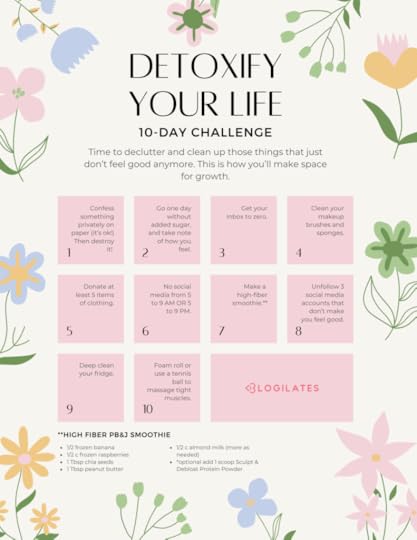
Some tips!Keep an eye out on Blogilates.com to dig deeper into the things we’re detoxing!Follow @blogilatesdotcom on IGOn Day 2, we’re going added sugar-free. Don’t stress over this – it’s just one day, and we’re focused on added sugar, not all sugar! The goal is to see how you feelLmk if you make the high fiber smoothie recipe!! It’s super pretty, so post pics and tag me @blogilates!!The deep tissue massage/foam roll day (Day 10)! Be warned that if you have tight muscles, this won’t be a relaxing massage. But it WILL feel amazing after! If you need tips or moves to follow, I have a video and more info here
Our 10-day detox challenge starts Monday, March 6!
Mark your calendars, print the challenge graphic, and get excited!!! Our 10-day detox starts March 6! If you can’t start Monday, that’s okay too! You can do this challenge on your schedule, out of order, or even repeat if needed.
Comment below letting me know if you’re IN!

The BMI Isn’t as Helpful as You Think — Especially if You’re Not A White Man
If you’ve ever been to the doctor, you’ve had your BMI (body mass index) recorded. Even if your physician didn’t specifically ask for it, all they need is your height and weight to determine if you’re within the recommended weight range.
But while we routinely rely on BMI as an indicator of health, a growing body of research is revealing that this so-called scientific measurement is causing some major medical inequities.
 What is BMI?
The BMI equation, weight in kilograms divided by height in meters squared, was created in 1832 by Belgian mathematician Adolphe Quetelet. He was interested in finding a statistical relationship between body type and antisocial tendencies, believing men who diverged from the ideal (aka average) were more susceptible to criminality and other immoral traits.
This eugenic way of thought has since been disproved countless times over, but during his heyday, Quetelet’s work earned him recognition as a “father of the social sciences.” However, in hindsight, there was one glaring issue in Quetelet’s methods.
He only measured men, and nearly all of the men he surveyed were European. So his ideal man was really the ideal white man.
Also, Quetelet gathered this data in search of a moral statistic, not a medical one. The BMI’s current purpose has thus strayed very far from its originally intended purpose, and people—especially people of color—are suffering because of it.
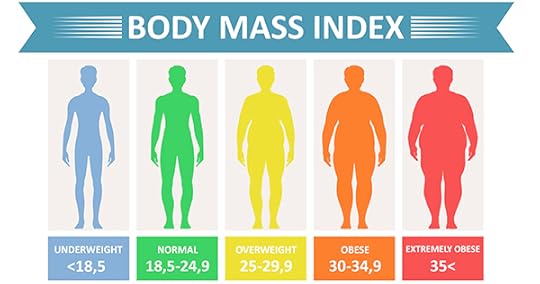
Image: CDC
How is BMI used today?As physicians linked more cardiovascular diseases to weight in the 1950s, the medical field started to adopt the Quetelet Index—renamed BMI by physiologist Ancel Keys in 1972—as its main indicator of obesity. “When there became an increasing concern over obesity’s relation to health risks, there needed to be a basic measurement to determine who was overweight,” explains Dr. Chisom Ikeji, an internal medicine physician. “Medical professionals, insurance companies, and researchers all became okay with using BMI, not really taking into consideration how it works and how it could potentially impact health on an individual level.”
Since BMI became a staple measurement in the US and abroad, research has linked an overweight or obese BMI to an increased risk of type-2 diabetes, cancer, heart disease, and other serious conditions. Currently, the CDC and World Health Organization define a BMI between 18.5-24.9 as healthy. A BMI below 18.5 is underweight; a BMI between 25-30 is overweight; and a BMI over 30 is obese.
While the CDC notes that BMI is “not diagnostic of the body fatness or health of an individual,” Dr. Ikeji says some physicians treat it as so. “If physicians are looking at that number without looking at the patient, or considering how their body composition might affect the BMI, they’re going to make an assumption about a patient,” she continues. “That’s a general bias all health professionals have.”
That bias doesn’t start in the waiting room either. For decades, health insurers routinely denied people coverage or charged them excessive premiums based solely on their BMI. The Affordable Care Act (ACA) has since banned discrimination against preexisting conditions, including severe obesity, for newly purchased insurance plans. However, the ACA still allowed workplaces to penalize employees up to 30% of the total cost of their coverage if they didn’t satisfy the requirements of a health-contingent wellness program.
This loophole was closed in 2019 after the AARP sued the Equal Employment Opportunity Commission, arguing that some of these programs’ required biometric screenings (which could include BMI and waist measurements) invaded employees’ privacy.
 Where does BMI fall short?
BMI became a medical standard back when approximately 13% of the US population identified as non-white, but now that this figure has grown to over 40%, reliance on the BMI is leading to disparities in who is considered at risk for potentially life-threatening diseases. As Dr. Ikeji summarizes, the primary reason BMI doesn’t work as a blanket measure is because it doesn’t account for racial variations in body composition.
In practice, BMI is used as a proxy measurement for adipose tissue (the technical term for body fat), which increases our risk of disease when in excess amounts. However, the fat-to-weight ratio (what I’m dubbing the FWR) isn’t the same for everyone.
A 2009 study of reproductive-aged women found that at the same BMI, white women had the highest total fat mass while Black women had the lowest. (The magnitude of the discrepancy also grew as BMI increased.) A following report attributed the difference to Black women, on average, having a higher percentage of muscle and bone mass when compared to white women.
Due to this racial variation, a 2003 study found that the optimal BMI range for Black patients actually extended to 30 instead of the CDC-recommended 25, with a consistent risk to life span not observed until a BMI of 37. On the other end, Asian women tend to have a higher percentage of body fat than white women, doubling their risk for type-2 diabetes at the same BMI. Across racial lines, an estimated 74 million Americans—who either seem overweight, but really aren’t, or who seem of a healthy weight, but still have metabolic issues—have had their wellness misjudged on the basis of BMI.
@drchizikejiBMI is a scam
#blackdoctors #medicine #health
♬ original sound – Dr. Chisom Ikeji
These studies (and many others that focus on different communities) demonstrate the BMI’s failure as an equitable indicator of body fat. But even if the BMI was reformulated to accurately measure adipose tissue for all women, it still wouldn’t be foolproof. That’s because even if women have the same amount of fat, how they carry it is also important.
In the 2009 study, researchers found that Hispanic and white women held most of their fat in their midsection while Black women favored their legs. And while being pear or apple-shaped usually only comes up when talking about how to dress for our silhouette, studies show that fat around one’s midsection increases one’s risk for cardiovascular disease while leg fat is actually negatively correlated with it. Factoring in both body composition and fat distribution, it becomes abundantly clear that the BMI, to put it scientifically, is not giving.
Are there any alternatives to BMI?Even though it’s been made abundantly clear that the WHO’s BMI ranges aren’t one size fits all, countries are redefining them to better predict health risks. Japan, China, and India have all lowered the cutoff for a healthy BMI to account for the average body composition of their primarily Asian populations, while researchers in South Africa, Ethiopia, and Kenya have investigated which cut-offs best suit their demographic profiles as well.
In the UK and the US, healthcare professionals are pushing for official ethnicity-specific BMI guidelines, but there should also be reform in how physicians are taught to judge a patient’s BMI. While it would have been nice, Dr. Ikeji didn’t learn about the racial variations in BMI-related risks during medical school. “I had the privilege of my mom being a physician,” she says. “At a young age, she told me that the BMI does not make sense for us.”
Unlike Dr. Ikeji, most practicing doctors in the US don’t have a medically-trained, Black mother to provide this supplemental education (but should definitely be mandatory) education. Not every physician is going to question whether a Black woman with a BMI of 29 is actually overweight or if an Asian-American woman with a BMI of 24 is at risk for type-2 diabetes.
It shouldn’t be the burden of patients to know all of this, but until the CDC’s guidelines catch up with reality, Dr. Ikeji recommends keeping tabs on your health by minimizing processed foods and stress, making sure you can go up a few flights of stairs without getting winded, and getting routine bloodwork done every couple of years.
If you’re concerned about your weight or aren’t sure if you should be, then consult a physician and ask them to measure your waist-to-height ratio, which has proven to be a better indicator of cardiometabolic risk. And in the final, wise words of Dr. Ikeji. “If you have a provider that’s only looking at your BMI, find somebody else.”

The BMI Isn’t as Helpful as You Think — Especially if You’re Not White
If you’ve ever been to the doctor, you’ve had your BMI (body mass index) recorded. Even if your physician didn’t specifically ask for it, all they need is your height and weight to determine if you’re within the recommended weight range.
But while we routinely rely on BMI as an indicator of health, a growing body of research is revealing that this so-called scientific measurement is causing some major medical inequities.
What is BMI?The BMI equation, weight in kilograms divided by height in meters squared, was created in 1832 by Belgian mathematician Adolphe Quetelet. He was interested in finding a statistical relationship between body type and antisocial tendencies, believing men who diverged from the ideal (aka average) were more susceptible to criminality and other immoral traits.
This eugenic way of thought has since been disproved countless times over, but during his heyday, Quetelet’s work earned him recognition as a “father of the social sciences.” However, in hindsight, there was one glaring issue in Quetelet’s methods.
Nearly all of the men he surveyed were European, so his ideal man was really the ideal white man. Also, Quetelet gathered this data in search of a moral statistic, not a medical one. The BMI’s current purpose has thus strayed very far from its originally intended purpose, and people—especially people of color—are suffering because of it.
Image: CDC
How is BMI used today?As physicians linked more cardiovascular diseases to weight in the 1950s, the medical field started to adopt the Quetelet Index—renamed BMI by physiologist Ancel Keys in 1972—as its main indicator of obesity. “When there became an increasing concern over obesity’s relation to health risks, there needed to be a basic measurement to determine who was overweight,” explains Dr. Chisom Ikeji, an internal medicine physician. “Medical professionals, insurance companies, and researchers all became okay with using BMI, not really taking into consideration how it works and how it could potentially impact health on an individual level.”
Since BMI became a staple measurement in the US and abroad, research has linked an overweight or obese BMI to an increased risk of type-2 diabetes, cancer, heart disease, and other serious conditions. Currently, the CDC and World Health Organization define a BMI between 18.5-24.9 as healthy. A BMI below 18.5 is underweight; a BMI between 25-30 is overweight; and a BMI over 30 is obese.
While the CDC notes that BMI is “not diagnostic of the body fatness or health of an individual,” Dr. Ikeji says some physicians treat it as so. “If physicians are looking at that number without looking at the patient, or considering how their body composition might affect the BMI, they’re going to make an assumption about a patient,” she continues. “That’s a general bias all health professionals have.”
That bias doesn’t start in the waiting room either. For decades, health insurers routinely denied people coverage or charged them excessive premiums based solely on their BMI. The Affordable Care Act (ACA) has since banned discrimination against preexisting conditions, including severe obesity, for newly purchased insurance plans. However, the ACA still allowed workplaces to penalize employees up to 30% of the total cost of their coverage if they didn’t satisfy the requirements of a health-contingent wellness program.
This loophole was closed in 2019 after the AARP sued the Equal Employment Opportunity Commission, arguing that some of these programs’ required biometric screenings (which could include BMI and waist measurements) invaded employees’ privacy.
Where does BMI fall short?BMI became a medical standard back when approximately 13% of the US population identified as non-white, but now that this figure has grown to over 40%, reliance on the BMI is leading to disparities in who is considered at risk for potentially life-threatening diseases. As Dr. Ikeji summarizes, the primary reason BMI doesn’t work as a blanket measure is because it doesn’t account for racial variations in body composition.
In practice, BMI is used as a proxy measurement for adipose tissue (the technical term for body fat), which increases our risk of disease when in excess amounts. However, the fat-to-weight ratio (what I’m dubbing the FWR) isn’t the same for everyone.
A 2009 study of reproductive-aged women found that at the same BMI, white women had the highest total fat mass while Black women had the lowest. (The magnitude of the discrepancy also grew as BMI increased.) A following report attributed the difference to Black women, on average, having a higher percentage of muscle and bone mass when compared to white women.
Due to this racial variation, a 2003 study found that the optimal BMI range for Black patients actually extended to 30 instead of the CDC-recommended 25, with a consistent risk to life span not observed until a BMI of 37. On the other end, Asian women tend to have a higher percentage of body fat than white women, doubling their risk for type-2 diabetes at the same BMI. Across racial lines, an estimated 74 million Americans—who either seem overweight, but really aren’t, or who seem of a healthy weight, but still have metabolic issues—have had their wellness misjudged on the basis of BMI.
@drchizikejiBMI is a scam
♬ original sound – Dr. Chisom Ikeji
These studies (and many others that focus on different communities) demonstrate the BMI’s failure as an equitable indicator of body fat. But even if the BMI was reformulated to accurately measure adipose tissue for all women, it still wouldn’t be foolproof. That’s because even if women have the same amount of fat, how they carry it is also important.
In the 2009 study, researchers found that Hispanic and white women held most of their fat in their midsection while Black women favored their legs. And while being pear or apple-shaped usually only comes up when talking about how to dress for our silhouette, studies show that fat around one’s midsection increases one’s risk for cardiovascular disease while leg fat is actually negatively correlated with it. Factoring in both body composition and fat distribution, it becomes abundantly clear that the BMI, to put it scientifically, is not giving.
Are there any alternatives to BMI?Even though it’s been made abundantly clear that the WHO’s BMI ranges aren’t one size fits all, countries are redefining them to better predict health risks. Japan, China, and India have all lowered the cutoff for a healthy BMI to account for the average body composition of their primarily Asian populations, while researchers in South Africa, Ethiopia, and Kenya have investigated which cut-offs best suit their demographic profiles as well.
In the UK and the US, healthcare professionals are pushing for official ethnicity-specific BMI guidelines, but there should also be reform in how physicians are taught to judge a patient’s BMI. While it would have been nice, Dr. Ikeji didn’t learn about the racial variations in BMI-related risks during medical school. “I had the privilege of my mom being a physician,” she says. “At a young age, she told me that the BMI does not make sense for us.”
Unlike Dr. Ikeji, most practicing doctors in the US don’t have a medically-trained, Black mother to provide this supplemental education (but should definitely be mandatory) education. Not every physician is going to question whether a Black woman with a BMI of 29 is actually overweight or if an Asian-American woman with a BMI of 24 is at risk for type-2 diabetes.
It shouldn’t be the burden of patients to know all of this, but until the CDC’s guidelines catch up with reality, Dr. Ikeji recommends keeping tabs on your health by minimizing processed foods and stress, making sure you can go up a few flights of stairs without getting winded, and getting routine bloodwork done every couple of years.
If you’re concerned about your weight or aren’t sure if you should be, then consult a physician and ask them to measure your waist-to-height ratio, which has proven to be a better indicator of cardiometabolic risk. And in the final, wise words of Dr. Ikeji. “If you have a provider that’s only looking at your BMI, find somebody else.”
February 27, 2023
Fitness Progress Isn’t Linear, and That’s Okay!
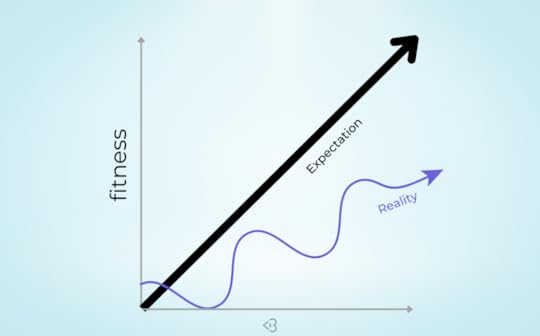
As an organization lover and a self-recognized Type A, I love things to follow a concrete path. I derive satisfaction from neatly tracking things step by step as if my life were a personal line graph heading towards my goals. Anyone else?
While this progressive tracking may make sense in some areas of your life, it doesn’t apply to fitness. Instead of the tidy line graph I know and love, health and fitness progress is likely to look like some squiggly waves and loops trending in an upward trajectory. Regardless of where you are in your health and fitness journey, there’s going to be some upslopes and downslopes because fitness progress is not linear.
So, what do these waves look and feel like?As you kick off a new workout program (perhaps one of our favorite challenges!), you may notice immediate progress. You might be able to increase reps or weight day to day, you might notice a boost in both sleep quality and energy and your clothes might even start to fit differently.
This upward trend on your personal fitness line graph might start to naturally dip as you continue on though. Your progress on rep and weight increases may slow or stall, your energy level may stay the same and your clothes may fit the same week over week. It’s probable that you are also going to have some workouts that just don’t feel great. You might feel sluggish, tired, sore and unmotivated.
The path to your goals will have ups and downsView this post on Instagram
A post shared by Self-Care Is For Everyone® (@selfcareisforeveryone)
First things first: these dips are normal, natural and to be expected in your fitness journey. You are not alone in this.
Progress is often rapid at firstWhen we look at the beginning of training cycles, most people often see rapid progress, which results from a few things. Firstly, you are training your nervous system to efficiently recruit and use the muscles you already have. As such, you’re likely not lifting, running or cycling to your full muscular potential.
As your nervous system intelligently catches on, you’re able to eventually meet your potential, which is why you may notice that you can quickly up your intensity in the first few weeks or that your body composition shifts as your muscles begin to work in a different, more efficient manner.
Progress may slow as your body adaptsAs you continue to increase your intensity and volume in your fitness schedule, muscular growth begins to accompany this nervous system training. Muscular growth happens on a slower rate and also depends on the growth of blood vessels, fascia and other organs that support the muscular system — all of which take time.
At the same time that your body is adapting to muscle growth, you’re simultaneously fatiguing your nervous system and your existing muscles and tendons, which need time to recover before functioning at their highest levels. The more intense your workout is, the longer your recovery period may be, and thus, you may see a dip in your progress.
Life happensIn addition to your body’s physiology, life happens. A classic progress-oriented line graph doesn’t account for injury or sickness recovery where you can’t push to your max, a morning after a restless night with a sleepless or sick child where you can hardly keep your eyes open, a busy travel schedule, cramps and fatigue during that time of the month or a really stressful week at work that takes its toll on both your body and mind.
These life snags are bound to happen, and may tweak your desired linear progress. But, as they say, life happens. And, it happens to all of us.
 Linear Periodization vs. Linear Progression
You may be reading this and thinking, “Okay, this makes sense. But I’ve heard of linear something in fitness. Isn’t that a thing?”
Linear periodization may be on your mind. Linear periodization is a fitness planning model that increases volume and intensity over a set period of time. Workouts in a linear period may increase load, volume or intensity variables every one to four weeks, which allows your body to adapt in a safe and consistent manner.
So, while linear periodization does follow that pretty line, it doesn’t guarantee linear progress based on both your body and external factors.
Ride The WavesFitness isn’t going to progress in a linear fashion. Between your body’s natural pace of muscular growth, your system’s need for recovery and of course, life, your line graph may look like ocean waves as you assess your progress. And, just like surfers, we encourage you to ride them.
How?
First, look out for your important non-scale victories (NSVs) that you may be overlooking while assessing your fitness journey. These key health improvements, ranging from pain relief to clear skin to blood pressure to mood, can help you tap into a more holistic picture of your overall health. You actually might be progressing further than you previously thought if you’re only focused on the number on your scale, your mile time or the weight of your dumbbell.
Second, take time to recover. Rest days may not feel the best when you’re goal-oriented, but they are essential and can keep your progress in an upward trajectory and away from injury and a long-term dip. According to a theory called the Generalized Adaptation Syndrome, when you workout, your body emits a stress response in the form of fatigued muscles or nerves. If you give these muscles or nerves proper time to heal and rest, your body will supercompensate and come back stronger. Have you ever noticed that you may workout harder after your scheduled rest days or after a good massage that worked out all the kinks? This is the theory (and your next upslope!) in action.
Last but not least, if you’re feeling down about your progress, take a peek back at your original motivation, or your “why,” to get reinspired. Recognize that good things take time, and the hard work makes it worth it.
Consistency > A Linear Path
@blogilates How to STOP QUITTING. Save this. It works. #bye2021 #2022 #motivation #dontquit #fitnesstips #fitnessmotivation #motivational ♬ Steven Universe – L.Dre
At the end of the day, progress in the gym — just like learning a new skill, dating, grief or anything in between — is not linear. There will be months of progress and months with none. There will be great workouts and so-so ones in between. It’s inevitable and part of the process.
Rather than fixate on the neat line graph, focus on the habits and consistency. Fitness is a lifetime journey and showing up everyday amidst the highs and the lows will keep your progress on an upward trajectory — bigger, better and healthier.

The Blogilates March 2023 Workout Calendar!
Hey guys!
Isn’t spring supposed to be around the corner?! It’s been SO COLD here in LA. Over the weekend, we had a winter weather advisory and then the heat in our house broke! Luckily, I had layers and layers of faux sherpa to keep me nice and cozy
Anyways, I hope this crazy weather is over soon. I’m ready for sunshine!
In the meantime, I have something that will heat things up a bit, no matter what the weather is like where you live!
Your March Workout Calendar!!!


How to follow the March Workout Calendar
Check the Blogilates YouTube playlists to find all of the videos you need for this month’s calendar!!
OR you can get everything you need (and more motivational tools!) on the BODY By Blogilates app! If you don’t have the app yet, it will making following along to this month’s workouts even easier! You can access not only the calendar, but all of the videos in one place. Find challenges and free programs like the Glow up Sessions and the 200 Ab Challenge there too!
Now that you know where to find your workouts, here’s what you can expect each day of the March Workout Calendar. You ready?!!!
SUNDAY: Recovery
MONDAY: Total Body
TUESDAY: Abs
WEDNESDAY: Booty
THURSDAY: Total Body
FRIDAY: Arms
SATURDAY: Legs & Thighs
Do each video once (unless otherwise stated) and check off as you go! Most days will be 45 min max of exercise.
If you get the BODY By Blogilates app, your workout calendar and workouts will all be in one place! And it’s so fun and motivating to get that “Workout Complete” checkmark 
And you MUST check out the new Social feature in the app!
The Blogilates community is the BEST. So, I wanted to create a space where we could all feel a little more connected to each other! The social feature (in the most updated version of the app) is a place where you can share photos and/or text thoughts and comment on each other’s post. Think the good ol’ days of Instagram!
If you're just getting started...
Or want to ease into working out, my Beginner’s Calendar is a great place to start! It’s a free 4-week program to get you stronger so that you can join in on the monthlies when you are ready.
Time to check in!
Tell me you’re IN for this month’s calendar!!
[image error]
February 25, 2023
90s Nostalgia Is Now “Historic,” According to American Girl.
So, I guess we’re calling 90s nostalgia “historical” now?

Photo: American Girl
American Girl announced new “Historical Characters” this week: Isabel and Nicki Hoffman, twins from the 90s (1999 to be exact) who are in their girl power era.
As an “elder millennial,” my initial reaction went something like this:

When I saw Isabel and Nicki’s accessories, I stopped feeling like an ancient artifact myself, and starting reminiscing about the artifacts of my childhood. American Girl nailed the late 90s nostalgia, transporting me right back to my own 1999 bedroom.
 The outfits
Who else circled everything in the dELiA*s and Alloy catalogues, but never actually ordered anything? Isabel and Nicki’s outfits are the exact vibe I wanted (read: wished my mom would pay for) in 1999. Down to the chunky highlights – omg did their mom let them highlight their hair?! Jelly.
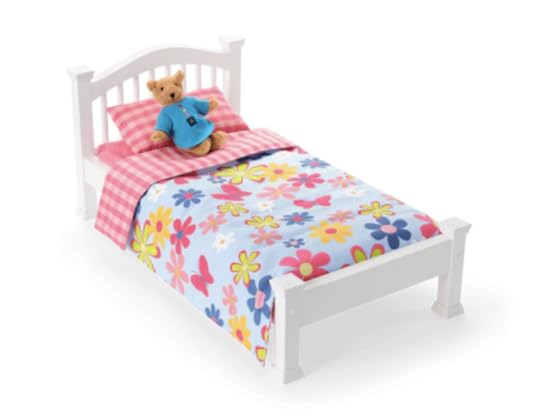 Did I…have this exact floral bedding?
Those groovy flowers had us in a chokehold. If you didn’t have the floral comforter, you had at least one giant flower pillow (our version of Squishmallows).
And then there was the floral “Best Friend” picture frame from Claire’s – we all had one! Pretty sure my school folders were covered in these flowers too.
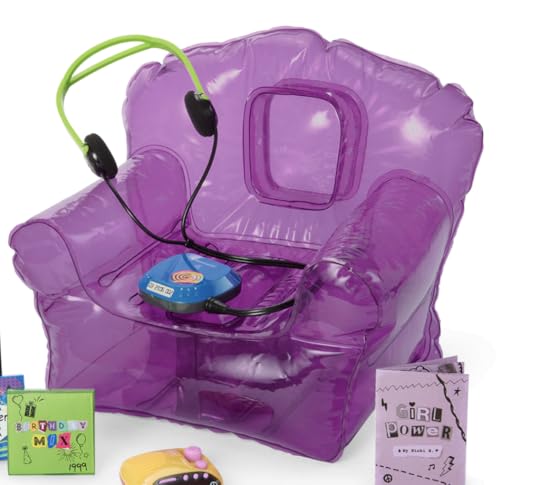
Image: American Girl
The blow-up chairThe impractical chair we HAD to have. Mine was purple just like Isabel and Nicki’s, but with butterflies (you know the ones).
I can still hear the annoying squeak it would make every time I moved, and feel the way my legs would get sweaty after sitting in it for awhile (IYKYK).
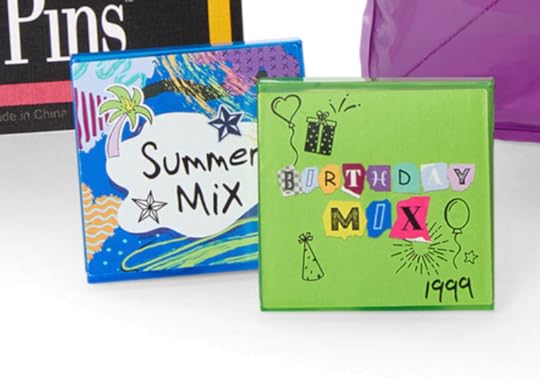 Yes, that’s a portable CD player
Did you spot it on the blow-up chair? And the burned CD mixes with custom covers?!
I think this is the 90s nostalgia I miss the most. I LIVED for making “mixes” with the songs I downloaded on Limewire (sorry for the viruses, mom and dad). We put so much thought and work into these, from planning the playlist to decorating the CD itself with Sharpie.
And the memories we have with these CD players! I vividly remember holding onto mine as I ran drills at middle school track practice. Yep, just running while holding onto a whole CD player, with headphones connected by a cord.
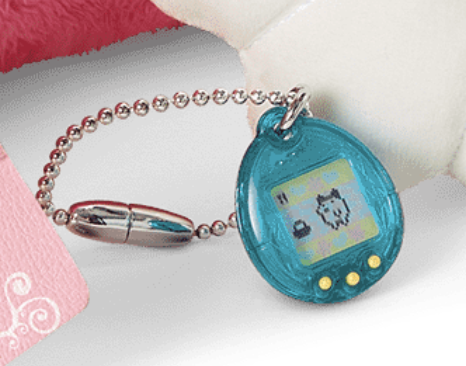
Image: American Girl
The TamagotchiThe alien pet that taught us that being a parent is hard AF. How were we supposed to feed and take care of them when we were so busy rewinding VHS tapes and playing M.A.S.H.?
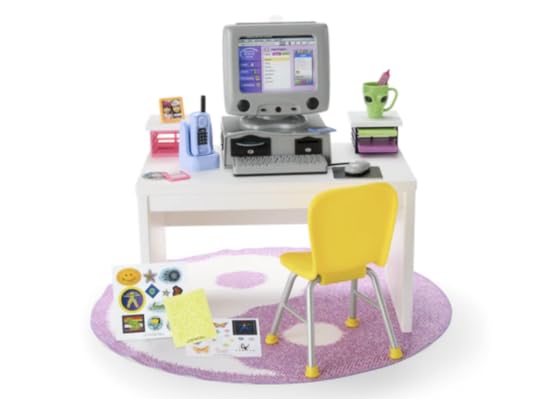
Image: American Girl
The computer setupThe final shot to the heart… the 90s computer setup. As if the clunky desktop, floppy disk, and home phone aren’t enough to take you back to the days when AOL ruled the world, the computer plays dial up sounds. You can listen to them here, and relive the trauma of not being able to sign on quickly enough to catch your crush on AIM.
While you’re there, experience more bits of 90s nostalgia in Isabel and Nicki’s interactive bedroom, or as AG savagely calls it, a “museum virtual experience.”
What pieces of 90s nostalgia are we missing?What “historic” mementos of our childhood did AG leave out?
According to American Girl, These Pieces of 90s Nostalgia Are “Historic”
So, I guess we’re calling 90s nostalgia “historical” now?
Photo: American Girl
American Girl announced new “Historical Characters” this week: Isabel and Nicki Hoffman, twins from the 90s (1999 to be exact) who are in their girl power era.
As an “elder millennial,” my initial reaction went something like this:
When I saw Isabel and Nicki’s accessories, I stopped feeling like an ancient artifact myself, and starting reminiscing about the artifacts of my childhood. American Girl nailed the late 90s nostalgia, transporting me right back to my own 1999 bedroom.
The outfitsWho else circled everything in the dELiA*s and Alloy catalogues, but never actually ordered anything? Isabel and Nicki’s outfits are the exact vibe I wanted (read: wished my mom would pay for) in 1999. Down to the chunky highlights – omg did their mom let them highlight their hair?! Jelly.
Did I…have this exact floral bedding?Those groovy flowers had us in a chokehold. If you didn’t have the floral comforter, you had at least one giant flower pillow (our version of Squishmallows).
And then there was the floral “Best Friend” picture frame from Claire’s – we all had one! Pretty sure my school folders were covered in these flowers too.
Image: American Girl
The blow-up chairThe impractical chair we HAD to have. Mine was purple just like Isabel and Nicki’s, but with butterflies (you know the ones).
I can still hear the annoying squeak it would make every time I moved, and feel the way my legs would get sweaty after sitting in it for awhile (IYKYK).
Yes, that’s a portable CD playerDid you spot it on the blow-up chair? And the burned CD mixes with custom covers?!
I think this is the 90s nostalgia I miss the most. I LIVED for making “mixes” with the songs I downloaded on Limewire (sorry for the viruses, mom and dad). We put so much thought and work into these, from planning the playlist to decorating the CD itself with Sharpie.
And the memories we have with these CD players! I vividly remember holding onto mine as I ran drills at middle school track practice. Yep, just running while holding onto a whole CD player, with headphones connected by a cord.
Image: American Girl
The TamagotchiThe alien pet that taught us that being a parent is hard AF. How were we supposed to feed and take care of them when we were so busy rewinding VHS tapes and playing M.A.S.H.?
Image: American Girl
The computer setupThe final shot to the heart… the 90s computer setup. As if the clunky desktop, floppy disk, and home phone aren’t enough to take you back to the days when AOL ruled the world, the computer plays dial up sounds. You can listen to them here, and relive the trauma of not being able to sign on quickly enough to catch your crush on AIM.
While you’re there, experience more bits of 90s nostalgia in Isabel and Nicki’s interactive bedroom, or as AG savagely calls it, a “museum virtual experience.”
What pieces of 90s nostalgia are we missing?What “historic” mementos of our childhood did AG leave out?
February 24, 2023
I Tried 5 Sports Bras to “Size Up” How They Fit Larger Busts
This article features links to brands that I tried in order to give my honest review and advice on sports bras for larger busts. I included referral links for products I tried, and all opinions are my own. We earn a small commission from these links, at no additional cost to you.
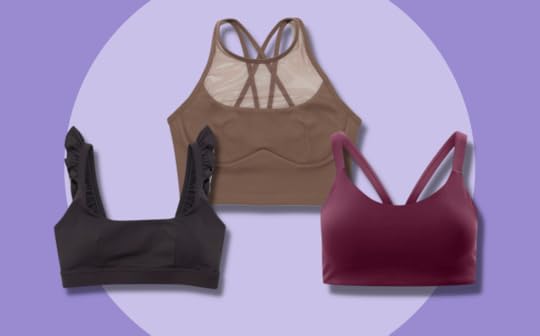
As someone with a larger bust, finding the right sports bra is imperative. I’ve tried my fair share of bras in the past, but somehow always end up using the same 2-3 of them that I’ve found most comfortable. For reference, I wear a 44D or 2X-3X depending on the brand.
When it comes to sports bras, it can be a bit more difficult because you want the bra to fit, but also provide the adequate amount of support for your workout. Plus there’s no denying that some sports bras were just designed with smaller busts in mind…and the sizing just doesn’t translate.
If you’re reading this, it’s safe to say that you’re probably looking to order more sports bras and interested in how your bust will measure up against other brands. Choosing the right size can be hard, especially when every brand has slightly different sizing or you’re shopping a new brand. Luckily for you, I took the hassle out of the process by trying out a variety of brands to see how their sizing stacks up.
POPFLEX
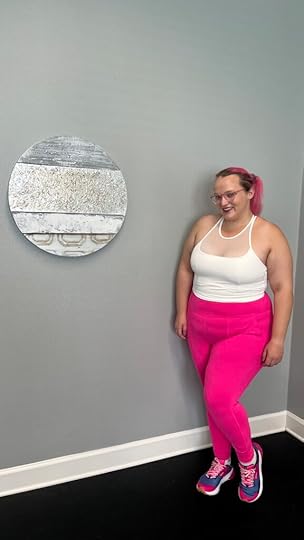
Since I write for Blogilates, you know I had to start with one of POPFLEX’s most recent launches – the Celeste Mesh Bralette. My first impressions were that it’s stylish and comfortable. I’ve never worn a mesh bra before so it was a first for me.
In terms of size, I ordered a 2X. I made this decision based on the POPFLEX size guide, which indicates a 2X is between sizes 18-20 or 47-51 inches. They also offer a more in-depth guide to finding the right fit, including a video guide for how to measure, and the opportunity to schedule a free one-on-one consultation with a fit stylist.
The bra fits just right, and how I like it — comfortable with support.
I used this bra (and the others) during my current workout regimen which mostly consists of weights and light cardio. It held up well and I’ve worn it multiple times since. If you’re looking for a bra for more intense exercise, whether that’s burpees, long runs, jumping jacks, etc., then I’d recommend the bra below.
Personally, I found the Romance Ruffle Bra (which I ordered in the same size) to be more supportive for those higher intensity workouts. It’s better suited for those workout classes, whether that’s Zumba or Pilates, and the best part is you’ll feel super confident because the bra is very chic and fashionable. Sometimes I even wear this bra around my house because it’s so cute and comfy.
Girlfriend Collective
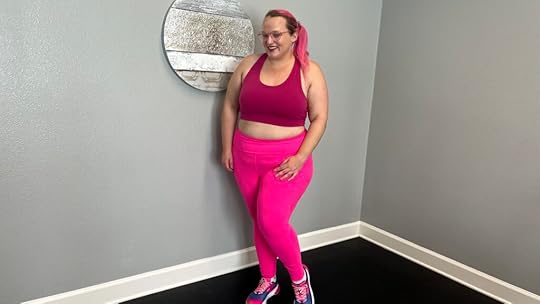
I’ve tried Girlfriend Collective apparel in the past and was a huge fan. I especially love the inclusivity of the brand with a large size range. With that said, I ordered an XXL in the Plum Lou-V Back Bra. Based on the brand’s size chart, an XXL is suitable for a 43-46.5 inch bust and that’s where I fall.
Again, the fit was all there, and the color was gorgeous. It is supportive without being too tight and restrictive which is hard to come by when looking for sports bras for larger busts.
Old NavyI haven’t been to Old Navy in a hot minute, but I wanted to test out their sports bras. They are relatively affordable at $24.95 and are said to provide “medium-support.”
I ordered the PowerPress Strappy Sports in a 3X which ranges from an underbust of 43-45 inches based on their sizing chart. This is a larger size than I’d normally get at most retailers, but I wanted to make sure it would fit. It didn’t provide as much compression as I would have liked, and the sizing was almost there. I probably could have sized down!
AthletaAthleta is considered to be a sister-brand to Old Navy so I wanted to try it out, too. Would the sizing translate across both brands?
Out of all the bras I tried, the Advance Bra is definitely the most supportive, but also very uncomfortable. It’s not really a pleasant experience working out in this bra.
If it’s pleasant to not have your chest bounce around then it’s worth it, I guess? But I’d rather bounce a bit than not be able to move comfortably. (I ordered it in my usual size of 44D.) I think it was the band that I did not like about this bra because the straps were comfortable and the clasps were easy to close, but the band felt too tight. There was no movement which I feel is an important factor when it comes to finding a sports bra.
Fabletics
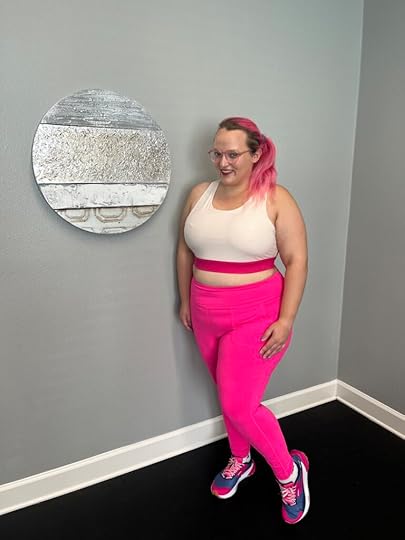
I’ve heard rave reviews about Fabletics from not only people I know, but also from social media influencers and content creators — think Demi Lovato, Lizzo, etc. With that said, I wanted to get my hands on a bra (or two) from them to see how their larger sizes work for me. And that’s exactly what I did.
The first bra I tried was the No-Bounce Sports Bra in a 2X. According to their size chart, that size is made for a bust between 45-48 inches. Now, that’s slightly bigger than my 44-inch, but I know no-bounce sports bras tend to be super tight and I wanted to have some more wiggle room.
It fit just right and provided an ideal amount of stretch without compromising the compression at the chest. Was there no bounce at all? No. There was still some bounce when I ran and did jumping jacks. Was it super tight where I couldn’t move? Absolutely not. I think this size provided the right balance of compression and flexibility making for a comfortable piece.
Additionally, I decided to order what I’d consider to be a more everyday sports bra. The Kessler Medium-Impact Sports Bra that I got in a 2X was super cute, but I was more concerned about the fit and functionality. It was comfortable, but not too compressive. It kept my chest raised, but not in place. It’s best for those workouts where you’re more still whether that’s lifting weights or stretching.
 Advice for choosing the perfect sports bra size
When it comes to finding the best sports bra for you, you’ll want to make sure to consult with the size guide on each brand’s website. Although the measurements may be similar, there will still be some nuances you’ll want to keep an eye on before placing your order — so you may not be the same size across the board.
Also, compression is most definitely a factor to consider when picking a sports bra. You don’t want the bra to be so tight where it’s restricting your breathing, but also not loose to the point where everything is bouncing around. Overall, I’d suggest using your usual size, the size guide, and reviews to make an informed decision before buying a sports bra to help ensure you have the best experience possible.
February 22, 2023
Spotlight: Julia Collins on Creating Businesses to Fight Climate Change

Food is a love language for many, but for Julia Collins, her connection to food and her passion for technology helped her start her small business, Moonshot, a food business to fuel a climate-friendly food environment.
The journey to foodtechFrom a young age, food was an expression of safety, joy and connection for Collins and her family. After she graduated from Harvard, she moved to New York and spent a decade working with and building companies like Murray’s Cheese Bar and Harlem Jazz Enterprises, the company responsible for the award-winning restaurant, The Cecil. She even managed Mexicure, a popular Mexican barbeque fusion restaurant.
While her culinary journey was growing, Collins decided to pursue her love for technology and move back to the Bay, where she grew up. Here, she co-founded Zume Pizza, and began understanding the ways in which the intersection of food and technology existed to create delicious food that’s better for people and accessible.
Foodtech is the application of technology to address challenges in the food industry, such as improving food safety, increasing efficiency and sustainability, and creating new food products. This industry is rapidly growing, driven by advances in areas like artificial intelligence, robotics, and biotechnology.
View this post on Instagram
A post shared by Moonshot (@moonshotsnacks)
But, that’s not all. After giving birth to her first son, Mosi, Collins began to see the growing concerns around climate change, and wanted to use her background to take action.
Q&ABlogilates spoke to Collins to understand the impact she has made in foodtech and what’s next for her.
Climate change is clearly a big topic right now. What does climate-friendly food mean to you?Did you know more than a third of global greenhouse gas emissions come from land use and food systems? This is one of the climate change statistics that made me wake up and say that enough is enough, and no more. I believe that all people have the right to be a part of the solution to climate change and sometimes it can be as simple as choosing your favorite snack.
So in 2020, I launched Moonshot, leaning into my passion for and experience in the food industry with the vision of building a climate-friendly food movement.
How does Moonshot follow this mission and what’s the objective?
Moonshot restores and heals the relationship between humans and nature by expanding regenerative agriculture. At Moonshot we make every decision with the health of people and the planet in mind. We source our ingredients from organic farmers who are practicing regenerative agriculture. We reduce transportation impacts by managing the length of our supply chain so that the majority is less than 100 miles long. We use packaging made from recycled materials. We are also carbon neutral certified, meaning we neutralize our unavoidable emissions with high-quality carbon offsets.
The vision has always been to build more than just one cracker or brand. Our mission is to catalyze a climate-friendly food movement, where everyone contributes to a healthier future for all beings and the planet.
What can the community do in terms of education/awareness to help the world better understand the relationship between sustainability, food and climate change?
I like to call myself a Climatarian, living a planet forward lifestyle. This means that when it comes to what I eat, where, and purchase, I am always thinking about how to choose the actions that support my desire to live on a healthier planet. Being a Climatarian is actually a lot of fun because it allows me to enjoy life more fully, knowing that I am living in alignment with my values.
To begin living a more planet forward lifestyle, the best thing that you can do is to ask a lot of questions and really explore where your food and products come from. Reading labels for calorie counts is so last decade! Now, it’s time to get curious about how our favorite brands are taking action on climate change. Look for clues like organic and regenerative ingredients, circular, compostable or recycled packaging, carbon labels or carbon neutral certifications. These are good indicators that brands are standing up for people and the planet.
What have been some of the successes you’ve experienced in your career?
My biggest successes are rooted in my ability to live and work in my authentic truth. By simply being my full, Black, female self in a position of power and strength, I push back on societal norms about what Black women can or should do. It’s an honor to pave the path for more Black excellence to emerge.
More tangibly, I focus on using my position to advance the work of other women, specifically women of color, and non-binary people. As an angel investor, as a board member of organizations like the Climate Collaborative, as a founder and a mother, I’m constantly in search of ways in which my privilege can lift others coming up behind me.
What about some challenges and how did you deal with them?
One of the challenges I’ve faced is the lack of Black voices in the current narrative around climate change. This has only motivated me more to become vocal in the movement. I see a huge opportunity for Black people to emerge as strong voices in the climate movement because the worst of what is happening in the context of our rapidly warming planet disproportionately affects Black and Brown people.
There is no social justice without climate justice. It’s vitally important that climate activism be radically inclusive. All people have the right to be part of the solution to climate change.
What’s next for you?
Our team is really focused on empowering the next generation of Climatarians. We are more than just a team that built a brand, we are a community of catalysts. Through our work at Moonshot and our sister company Planet FWD, we are excited to support brands and consumers alike in building a regenerative and climate-friendly future!
Also, we’re working on some exciting new things, including a new flavor which we will unveil in the near future.
Cassey Ho's Blog

- Cassey Ho's profile
- 49 followers