Aidan Moher's Blog, page 14
November 19, 2014
Cover Art for Karen Memory by Elizabeth Bear
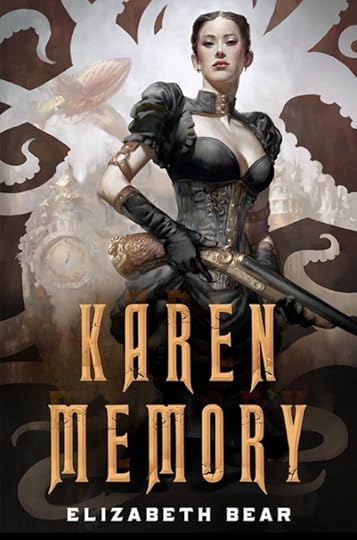
How is Elizabeth Bear following up the best epic fantasy trilogy of the past decade? With a rip-roarin’ standalone Steampunk novel about a prostitute with a heart of gold, of course. Not what you were expecting? Me neither, but Bear is full of surprises and one of the most versatile writers in SFF.
And, just look at that cover by Cynthia Sheppard! Cephalopods? Shotguns? Creamy Steampunk goodness? Checks all around.
The back cover copy is the perfect companion for the bold and beautiful cover:
Hugo-Award winning author Elizabeth Bear offers something new in Karen Memory, an absolutely entrancing steampunk novel set in Seattle in the late 19th century—an era when the town was called Rapid City, when the parts we now call Seattle Underground were the whole town (and still on the surface), when airships plied the trade routes bringing would-be miners heading up to the gold fields of Alaska, and steam-powered mechanicals stalked the waterfront. Karen is a “soiled dove,” a young woman on her own who is making the best of her orphaned state by working in Madame Damnable’s high-quality bordello. Through Karen’s eyes we get to know the other girls in the house—a resourceful group—and the poor and the powerful of the town. Trouble erupts into her world one night when a badly injured girl arrives at their door, seeking sanctuary, followed by the man who holds her indenture, who has a machine that can take over anyone’s mind and control their actions. And as if that wasn’t bad enough, the next night brings a body dumped in their rubbish heap—a streetwalker who has been brutally murdered.
“Karen Memory was one of those books that was a long time in the making,” Bear told Tor.com when they revealed the cover today. “I wrote her first words — ‘You ain’t gonna like what I have to tell you, but I’m gonna tell you anyway.’ — in September of 2009, and I wrote the final words in January of 2014. In between, I lived with Karen’s voice in my head, because she was full of stories, and she wanted to tell them to anyone who would listen. And soon I get to share those stories with readers, which is one of the great thrills of my writing career!”
“[Karen Memory] is as amazing as I knew it would be,” said Beth Meacham, Bear’s editor at Tor Books. “But the problem was, how to get the cover for it right? Because Karen deserved nothing but the very best, and there were too many tempting scenes to illustrate. But this, this is perfect. This is Karen Memery, practical, spunky, a little sexy and a whole lot dangerous. In her own way.”
Karen Memory will hit store shelves and eReaders in February 2015.
The post Cover Art for Karen Memory by Elizabeth Bear appeared first on A Dribble of Ink.


November 18, 2014
The Rise of Chu: Chatting with Wesley Chu about returning to Angry Robot Books and his new series, The Rise of Io

Angry Robot Books announced on November 17th that they have signed Wesley Chu, author of The Lives of Tao, to a three book, six-figure deal for a follow-up sequel to his critically acclaimed science fiction series. The first volume of The Rise of Io will be released in August, 2016.
“Although The Rise of Io is set in the same warring Genjix and Prophus universe as the Lives of Tao books, this brand new series will open the Quasing world to new readers as well as fans of the hugely successful Lives of Tao books,” Angry Robot Books revealed about the series in their announcement. This is sure to appeal to Chu’s current fans, and newcomers looking to check out his work.
“Wesley Chu’s Tao series has been a runaway success for Angry Robot,” said Marc Gascoigne, Managing Director and Publisher at Angry Robot Books, “and we’re delighted that he has re-signed for us for this brand new trilogy of novels. He manages to combine lofty science fiction themes with pure Hollywood pacing, and quite frankly his novels just rock.”
He manages to combine lofty science fiction themes with pure Hollywood pacing, and quite frankly his novels just rock.
More details on the trilogy are light, but Chu pulled back the curtain slightly when I asked him if he was ready to reveal anything to tantalize readers. “The Rise of Io follows a street-smart con-woman named Ella who is inhabited by a low-ranking insecure Quasing who has made all the wrong decisions in history,” he revealed. “She finds herself in a heap of trouble as she’s hunted by the Genjix, some gangsters she conned, the authorities, and of all people, her parents who are tired of her antics. The two distrust each other but must figure out how to work together to complete an important mission.”
Angry Robot Books has had a very tumultuous (and very public) year in which its Senior Editor, Lee Harris, left for Tor.com, and it was eventually purchased from Osprey Group by a relative unknown in the SFF publishing industry, Etan Ilfeld and Watkins Media.
“Like most other Angry Robot authors, I’ve been very concerned about the state of the publisher for the past six months,” Chu revealed to me. “I was one of their first authors affected by the production freeze as the different parts of Osprey Group were put up for sale.” The Lives of Tao was due for its seventh reprint all the way back in May, but nothing was happening.
Of course I was pretty unhappy about the whole thing. After talking to the folks at Angry Robot, I understood that those decisions came from Osprey’s owners, not Angry Robot. It didn’t make the situation any better but it wasn’t their fault.”
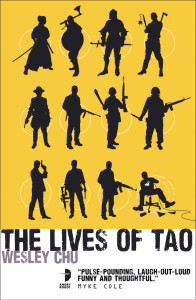
Buy The Lives of Tao by Wesley Chu: book/eBook
Unlike Night Shade Books, which has had trouble regaining momentum after its own similar issues, the new Angry Robot Books is making a determined effort to rekindle its relationship with its authors. After some initial hesitation, Chu decided to return to the publisher that helped to launch his career.
“I hadn’t considered signing on for more books until my agent, Russell Galen, spoke with the new owner, Etan Ilfeld, and came back saying he liked the guy and would work with him,” Chu said. “That’s when I warmed up to the idea. Russ is very savvy and I trust him implicitly with my career.”
The efforts made by Ilfeld and the Angry Robot/Watkins Media team were immediately noticeable, Chu said. “Royalty statements were sent out quickly, payments started flowing and there seemed to be a new energy coming from the people who work here.
“[Ilfeld] is honestly very enthusiastic about really creating a high level of success around Angry Robot and its authors.”
The post The Rise of Chu: Chatting with Wesley Chu about returning to Angry Robot Books and his new series, The Rise of Io appeared first on A Dribble of Ink.

November 17, 2014
MTV’s Elfstones of Shannara adaptation finds its Amberle Elessedil
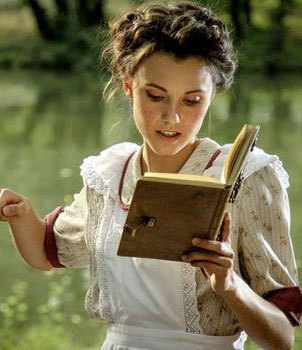
As reported by Entertainment Weekly, Poppy Drayton has landed the role of Amberle Elessedil in MTV’s adaptation of Terry Brooks’ The Elfstones of Shannara. Amberle is an elvish princess in exile after refusing her duties as a Chosen, caretakers of the mystical Ellcrys tree. Her past catches up to her, however, when she is swept away with young Wil Ohmsford on a quest to save the Elvish people from a demonic threat.
I’ve no real objections to Drayton’s casting, though my one bit of exposure to her, Downton Abbey, left me a lukewarm. The Elfstones of Shannara is a novel that relies heavily on the relationships between its myriad characters, and finding other actors that fit well alongside Drayton, and create a natural camaraderie and chemistry with her will be very important.
Like all Shannara fans, I’m most eager/interested/terrified to see who MTV chooses to cast as the looming Druid, Allanon.
Entertainment Weekly also reports that, “Jonathan Liebesman (Teenage Mutant Ninja Turtles) will direct the first two episodes. He’ll also executive produce the series alongside Gough, Millar, Brooks, Dan Farah, and Jon Favreau (Iron Man).”
The post MTV’s Elfstones of Shannara adaptation finds its Amberle Elessedil appeared first on A Dribble of Ink.

November 16, 2014
Details emerge about Telltale’s Game of Thrones adventure game, including first screenshots
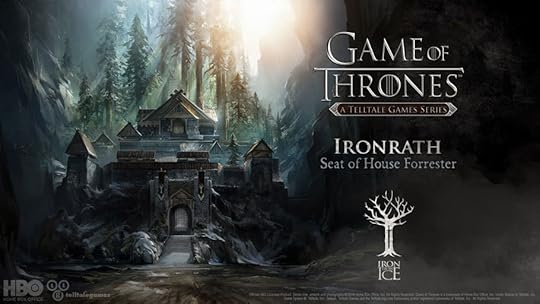
The first season of the Game of Thrones adaptation will take place in parallel with events that occur near the end of the television show’s third season and the beginning of its fifth season, and the plot will revolve around the Forresters, vassals of House Glover of Deepwood Motte, and their seat in Ironrath.
The Forresters are a minor house in Martin’s series, only mentioned briefly in A Dance with Dragons, according to Adam Whitehead. He also points out that Telltale’s adaptation is based on the television show, and not directly on Martin’s novels, so events in the game will not influence or necessarily be influenced by Martin’s future novels. The first episode, called “Iron from Ice, after the Forresters’ words, will be released sometime before the end of the year.
Despite its impending release, there are no official screenshots, though those below recently leaked via Twitter user @Lifelower, and give us a first glance at Telltale’s take on Martin’s popular universe.
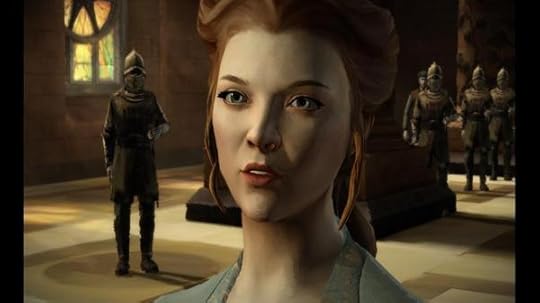
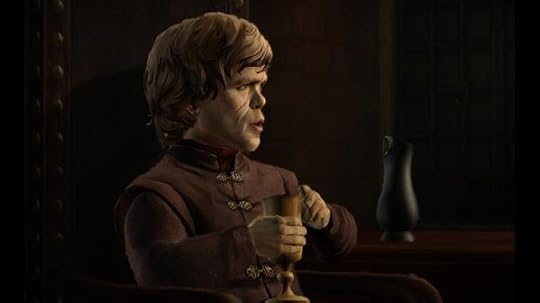
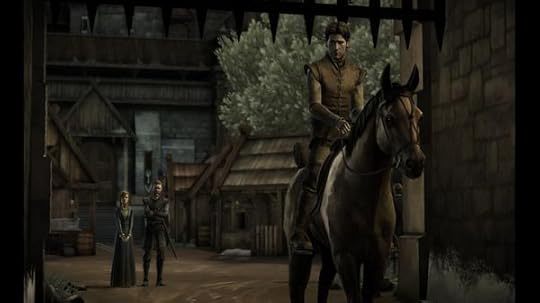
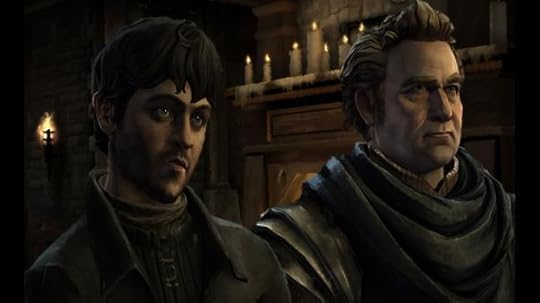
For being a minor house, the Forresters certainly role with a who’s who list of Westeros celebrities if the leaked screenshots are anything to go by, including Tyrion and Cersei Lannister, and Margaery Tyrell. Whitehead speculates that the plot of the series’ five episodes appears “to revolve around both the Forresters’ involvement in the War of the Five Kings (presumably in which they support Robb Stark) and their rivalry with House Whitehill.”
The Game of Thrones videogame will be available on PC and all major home consoles when it’s released later this year.
The post Details emerge about Telltale’s Game of Thrones adventure game, including first screenshots appeared first on A Dribble of Ink.

November 10, 2014
HBO and Interstellar writer working on Asimov’s Foundation
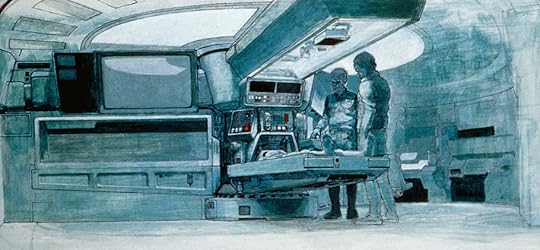
That’s a set of books where the influence they have is just fucking massive [...] there are some ideas in those that’ll set your fucking hair on fire.
Via io9 and The Wrap, HBO has hired Johnathan Nolan, most recently known for his work on Interstellar, to write a television adaptation of Isaac Asimov’s seminal science fiction series, Foundation.
“Well, I fucking love the Foundation novels by Isaac Asimov,” Nolan told Indiewire on November 4th, less than a week before this news broke. “They’re certainly not well-known, but that’s a set of books I think everyone would benefit from reading. That’s a set of books where the influence they have is just fucking massive. They have many imitators and many have been inspired by them, but go back and read those, and there are some ideas in those that’ll set your fucking hair on fire.”
Nolan’s assertion that Asimov’s classic is ‘certainly not well-known,’ is a little fishy, especially coming from someone who works directly on major science fiction IPs like Interstellar, but his enthusiasm for the series is refreshing and encouraging.
Though there is no word on whether the adaptation will be ongoing, or a predefined mini-series of episodes, io9 points out that “the books have enough material to last a very long time.” Syfy hopes they have the Game of Thrones for science fiction fans in their adaptation of James S.A. Corey’s The Expanse series, but who better to usurp that title than the creators of televisions favourite fantasy and one of science fiction’s most legendary names?
The post HBO and Interstellar writer working on Asimov’s Foundation appeared first on A Dribble of Ink.

November 6, 2014
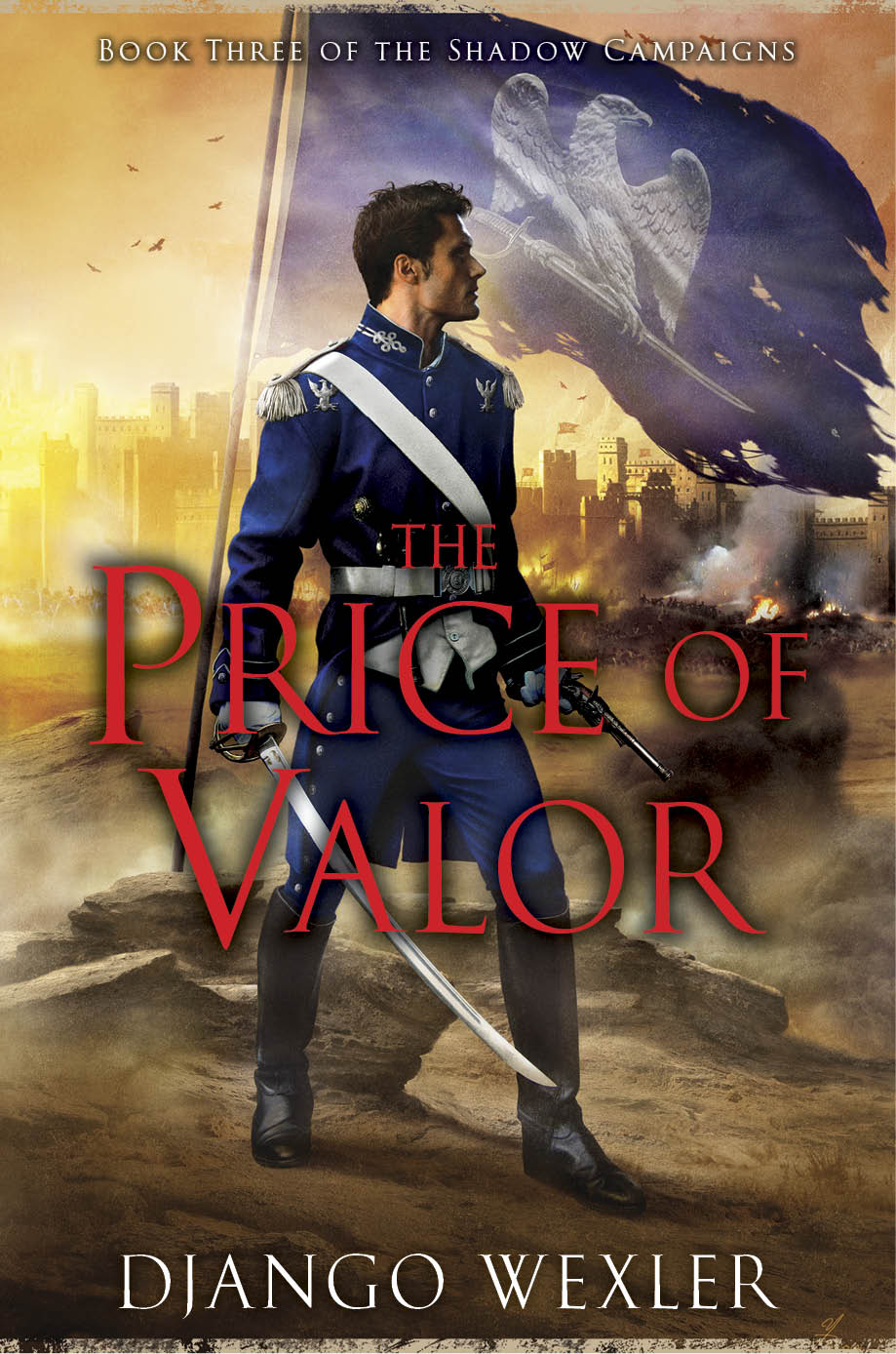
Cover Art for Price of Valor by Django Wexler
In the wake of the King’s death, war has come to Vordan.
The Deputies-General has precarious control of the city, but it is led by a zealot who sees traitors in every shadow. Executions have become a grim public spectacle. The new queen, Raesinia Orboan, finds herself nearly powerless as the government tightens its grip and assassins threaten her life. But she did not help free the country from one sort of tyranny to see it fall into another. Placing her trust with the steadfast soldier Marcus D’Ivoire, she sets out to turn the tide of history.
As the hidden hand of the Sworn Church brings all the powers of the continent to war against Vordan, the enigmatic and brilliant general Janus bet Vhalnich offers a path to victory. Winter Ihernglass, newly promoted to command a regiment, has reunited with her lover and her friends, only to face the prospect of leading them into bloody battle.
And the enemy is not just armed with muskets and cannon. Dark priests of an ancient order, wielding forbidden magic, have infiltrated Vordan to stop Janus by whatever means necessary…
Price of Valor is the third volume of Wexler’s Shadow Campaigns series, which has been popular among readers and critics alike. Reminiscent of the Orbit Books’ covers for Brian McClellan’s Powder Mage series, the covers of all three novels embrace the themes of colonialism that run through Wexler’s series.
As a proper English-speaking blogger, I am, of course, upset that they forgot the ‘U’ in the word ‘Valour,’ but I shall let it slide, forgiving the transgression as a result of the overall Ammmmuuurrriccaaannnaaaa design of the cover. And so, as a cold-blooded Canadian, I’d have much preferred to see the Eagle on the flag replaced with a piece of bacon, the sabre with a wood axe, and the military uniform tossed aside in favour of a nice Canadian Tuxedo. ‘Cause, hey, there can never be enough Canadiana in the world, right?
The cover art for The Price of Valor is by Paul Youll.
Price of Valor is coming from Roc Books in July, 2015.
The post Cover Art for Price of Valor by Django Wexler appeared first on A Dribble of Ink.

November 5, 2014
An Uncanny chat Lynne and Michael Damian Thomas
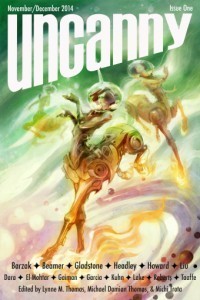
It’s not often that an independent new science fiction and fantasy magazine coalesces with as much enthusiasm and pedigree as Lynne and Michael Damian Thomas’ Uncanny, which debuted its first issue this past Monday, featuring content from some of genre’s best names, such as Neil Gaiman, Tansy Rayner Roberts, Christopher Barzak, and Amal El-Mohtar.
I caught up with the Thomases to chat about Uncanny, their successful Kickstarter Campaign, and launching a magazine into competitive field of online science fiction and fantasy magazines.
Uncanny launched via a very successful Kickstarter campaign, buoyed in part by Lynne and Michael’s previous successes, and also by a science fiction and fantasy community hungry for a new online magazine that focuses on the vast diversity and endless opportunities possible in speculative fiction. This early success gave Uncanny a leg up over similar magazines that have to start building an audience from scratch. “It gives Uncanny the ability to provide a whole year’s worth of the best fiction, poetry, and nonfiction we can find,” Michael said. “Over 1,000 people believed in us enough to fund this project. We owe it to them to make it the best possible magazine that we can. We have a lot of goodwill right now; it’s time to deliver.”
Over one thousand backers believed that Lynne and Michael Damian Thomas had the pedigree to launch one of the most ambitious magazines in recent memory, immediately joining the ranks of Hugo Award winners such as Lightspeed and Clarkesworld as top flight publishers of genre fiction and non-fiction. And for good reason: Uncanny is a new magazine, but the editorial staff behind it is anything but.
If people have enjoyed what we’ve done previously, we hope that they will enjoy this even more, as we’ve added space unicorns. Which are awesome.
“We believe we bring all the lessons we’ve learned from previous projects to the table,” Michael told me when I asked what their editorial history brought to the new magazine. “Uncanny is the culmination of the ‘Dig’ books that Lynne and Michael worked on, Apex Magazine, and our work on Glitter & Mayhem. It has elements of all of these things in its DNA. If people have enjoyed what we’ve done previously, we hope that they will enjoy this even more, as we’ve added space unicorns. Which are awesome.”
But it’s not just Lynne and Michael that make things happen at Uncanny. “We are also blessed with an experienced staff,” Lynne said. “Michi Trota, our managing editor, brings a lot of editorial knowledge and enthusiasm. Erika Ensign and Steven Schapansky are veteran podcasters who bring a lot of technical knowledge and creative ideas, and Deborah Stanish is a deeply experienced interviewer and podcaster. Amal El-Mohtar’s skills as a reader are just glorious.”
The editorial and support staff bring a lot of experience to Uncanny, but their vision for the magazine is fluid and evolving, and its voice is still forming.
“What’s a typical Uncanny story look like?” I asked.
“We don’t quite have a ‘typical’ Uncanny story just yet,” said Lynne. “In fact, we’ve been amused at authors on social media saying, “That’s not an Uncanny story,” about potential submissions before the first issue is out! However, if you’re looking for the general tone of Uncanny, the stories by Christopher Barzak, Rachel Swirsky, Maria Dahvana Headley, Kat Howard, and Amal El-Mohtar from Glitter & Mayhem probably are the most reflective. They have gorgeous prose, weirdness, strong characterization, and haunt you after you’ve finished reading them.”
Though the Kickstarter campaign had specific goals to launch the magazine and support it for a year of publication, the editors have a vision for a much longer future. “We don’t want this to be a one year project, or something that we have to Kickstart every year,” they revealed. “Our goals are financial sustainability, and finding the largest possible number of readers for these amazing works. We’re so proud of what we’ve already purchased, and we want everyone to read these pieces and love them as much as we do. We look forward to finding and sharing phenomenal voices from across the planet with our readers.”
Uncanny Issue #1 is available now.
The post An Uncanny chat Lynne and Michael Damian Thomas appeared first on A Dribble of Ink.

November 3, 2014
Grim Oak Press cancels follow-up to Unfettered
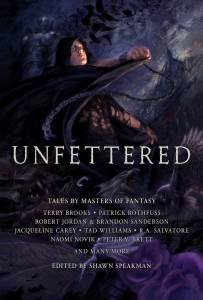
Buy Unfettered
Grim Oak Press has announced that Unveiled, the highly anticipated follow-up to Unfettered, has been canceled due to a conflict between its publisher and editor.
“[Unveiled] will not be happening,” revealed Shawn Speakman, publisher at Grim Oak Press. “And it’s important to say, through no fault of my own. After waiting for more than six weeks for the simplest of work to be done on the anthology, editor Roger Bellini asked me to renegotiate the contract. In the renegotiation, he asked for 17.5% of hardcover and ebooks sales—less than originally in the contract, true—and his name still on the dust jacket. In return, he would not be editing the book. This would give Roger large royalties for effectively doing what I consider very little work on the book,”
As of the time this was written, Bellini, who was attached to the ill-fated Neverland’s Library anthology, has not commented on the cancellation of Unveiled.
“After talking with my book agent, I decided it best for Grim Oak Press to terminate the contract,” Speakman announced, spelling the end for this iteration of Unveiled.
This is disappointing news for readers and the authors involved in the project. Given Grim Oak Press’ success with Unfettered, readers can hope that the anthology finds a new editor before long.
Speakman discusses the cancellation in more depth on the official Grim Oak Press website.
EDIT (Nov. 3rd, 2014 – 7:05pm): Speakman confirmed on Reddit that he’s working on a different anthology. It won’t be called Unveiled or feature the same lineup of writers, however.
EDIT (Nov. 4th, 2014): Turns out that Bellini owns rights for the stories, so Grim Oak Press and Speakman are unable to use the collected stories in a new iteration of Unveiled. It’s unclear what Bellini intends to do with the anthology, but he, theoretically, could sell the it to another publisher.
EDIT (Nov. 4th, 2014): Having spoken with several of the authors announced for the anthology, none of them were under contract yet for their stories (though some had already submitted them), suggesting that Speakman and Grim Oak Press might be able to reassemble the stories under a different title.
The post Grim Oak Press cancels follow-up to Unfettered appeared first on A Dribble of Ink.

Biting Style: The Bone Clocks and Anti-fantasy by Max Gladstone
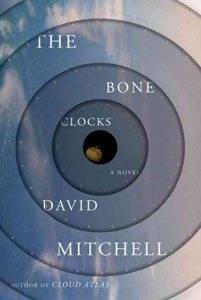
This is not a review of David Mitchell’s The Bone Clocks.
I don’t even mean that in the self-consciously Magrittesque kind of way. If this were a review I’d tell you to read the book, or not, which I don’t plan to do. I mean, okay, for those of you who haven’t made up your minds on David Mitchell’s latest opus: while I had an excellent time on every individual page, the book landed strange for me, and this essay is me trying to figure out why. Asking “Should I read this book” is like asking “Should I take up power lifting?” or “Should I learn Chinese?” Answer: depending on your goals, your experience, your medical history, your ambitions, how much free time you have—Maybe?
I do, though, think this book succeeds at something really really cool and interesting, even if it fails as a unit. And the shape of this cool interesting thing challenges the goals and underlying structures of modern science fiction and fantasy—especially fantasy.
Because Mitchell’s written a fantasy novel. That point seems impossible to argue. His world contains immortals who teleport, throw fireballs around, and kill people with a thought. To call it anything else would be silly. And yet…
Mitchell’s written a fantasy novel. That point seems impossible to argue.
Let’s face it: the science fiction and fantasy community tends to moan about the “genre divide,” the fact that, say, Gene Wolfe and Nnedi Okorafor don’t stand much chance of winning the Nobel Prize for Literature. That’s a fine conversation to have, but the more we have it the more we tend to overlook the fact that great writers on the literary side of the line are biting our style in the best possible way—taking genre markers and doing fabulous, weird things with them.
Yes, some literary writers reap praise for using the genre toolbox to create work that, on a genre shelf, would pass unnoticed or fall into the gap of “well-written but unremarkable”—but many make masterpieces. David Foster Wallace’s Infinite Jest is a science fictional retelling of Hamlet (or, more precisely, the parts of Hamlet that take place before Act I); Madeline Miller’s The Song of Achilles is a lyric Trojan war tragedy complete with gods and ghosts. (The reverse happens too: Karen Joy Fowler’s used science fictional techniques to write a killer literary novel in We are All Completely Beside Ourselves.)
So let’s talk about the The Bone Clocks. The rest of this essay, my lawyer instructs me to tell you, includes spoilers for that book, as well as for The Magicians, Cloud Atlas, The Sandman, and the first thirty minutes of Secret of Mana. Cool? Cool.
As in Mitchell’s novel Cloud Atlas, we’re treated here to a series of novellas that, very loosely speaking, follow a central character—Holly Sykes—through her life, from her teenage years in the 80s to her grandmotherhood in 2043. The first and last novella star Holly, while the rest follow other characters who intersect her life. A supernatural war takes place behind the novel’s scenes, between a group of basically peaceful immortals and another of spiritual carnivores: magicians who gain eternal life by eating human souls.
So far, so good. Most fantasy novels, given this sort of backdrop, would naturally settle in to some sort of Hero’s Journey. Holly’s first encounter with Magic Stuff happens after she’s run away from home; that will be her call to adventure, and we’ll follow as she learns the truth of the hidden world. She’ll discover, amid earthshattering adventures, that the bourgeoise reality of Gravesend and her family pub is the tissue paper surface over a world of secret powers and transcendent danger. She’ll beat the Bad Guys in a triumphant display of mystic acumen, or Love, or Whatever Our Target Virtue Is This Week, but she Can’t Go Home Again, or if she Can, her Going Home becomes a tragedy of magic, friends, and love abandoned.
This structure stands at the core of modern genre. I’m not saying it’s bad, or even good, just that it’s there. This is Star Wars, this is The Dark is Rising, this is Wizard of Earthsea, this is The Lord of the Rings and War for the Oaks. (All stories, by the way, for which I have a deep affection.)
But this isn’t The Bone Clocks. I’ll call what he’s doing anti-fantasy, and I think it’s wonderful.
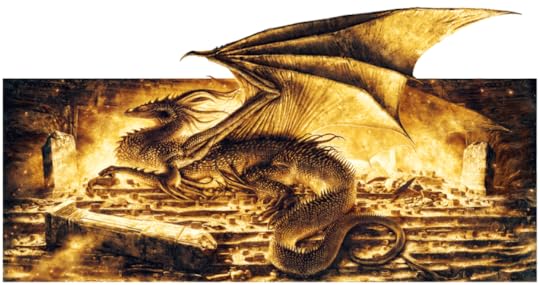
Art by Mike Nash
When will I get my Hogwarts letter, or stumble into Narnia? When will I turn out to be the Chosen One?
See, that Hero’s Journey, when implemented weakly, has a glaring problem: the home village starts to seem awfully small and useless set against the background. The village is the eggshell that contains and constrains our young Hero, until its destruction frees her. After emerging wet and sticky as a fledgeling chick, she must clean herself of the (often perfunctorily handled) trauma before she, or more often he, can soar above the world, unbound by cruel gravity! Etc. So we who read stories of this kind over and over as children start to think, damn, I can’t wait for something to come and tear me away from this place, and these losers. When will I hear the Call to Adventure? When will I get my Hogwarts letter, or stumble into Narnia? When will I turn out to be the Chosen One?
When will this illusion I’m living break open to confront me with the Real?
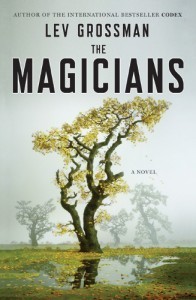
Buy The Magicians by Lev Grossman: Book/eBook
This is the mindset Lev Grossman skewers in The Magicians, where Quentin keeps waiting for existential satisfaction to descend on him from On High as if God Herself opened the Ineffable Faucet. And of course the continually-repeated joke of that book is that it never happens, because you stay you, even when you can do magic. It doesn’t help for Quentin to go to magic school, or master magic, or go to Fillory, or even to learn that basically the entire world has been arranged for his benefit. We need to go hunt down meaning, or build it, rather than waiting in our discontent for the faucet to open. (Reactions to The Magicians seem to vary widely depending on when the reader in question processed that particular insight. Folks who figured it out earlier tend to have relatively little sympathy for Quentin.)
That’s the psychological picture. Socially, in fantasy novels the “real” world can seem like a shadow when set against the magical Other. (Sometimes it’s literally described that way: when you get to the Other World the colors are sharper, more vivid, etc.) Some books reinforce this phenomenon by presenting the hero’s pre-magic life in cursory terms at best. We’re supposed to believe the protagonist wants to get back to her home village—but do we really care? In the first act of the SNES classic Secret of Mana (Seiken Densetsu 2), when my Hero was banished from his home, my first reaction was: good riddance! It was a boring village.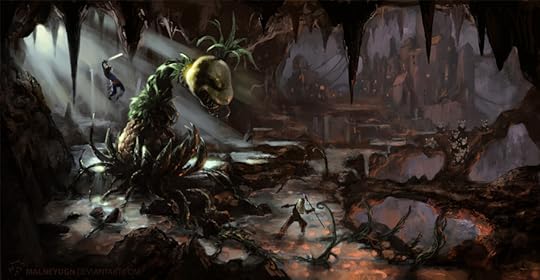
Art by Lam Nguyen
If that’s fantasy, then the Bone Clocks is an anti-fantasy: it wrestles constantly with fantasia’s tendency to sap meaning from normal human life.
(This, at the risk of derailing into discussion of my own work, is part of the reason I try to focus on my characters’ relationships to their home towns, even when that relationship is an ambitious “get me the hell out of this dump, I want to rule the world!” as in Tara’s case—antipathy is interesting. Anyway.)
If that’s fantasy, then the Bone Clocks is an anti-fantasy: it wrestles constantly with fantasia’s tendency to sap meaning from normal human life. The fantasy element here is textbook cool, with all the weird names and strange language I love (though Mitchell’s lack of experience writing pure fantasy does him a slight disservice: some of the language he invents for fantastical concepts fits poorly in the mouth—psychosoterica and psychovoltage, for example and in my opinion), but it’s by far the least compelling part of the book. It’s a classic case of cool as the enemy of caring. Outside of the fantasy elements, the human stakes in each scene are masterfully drawn, the drama tight and elegant, the characters’ individual flaws and foibles clear and compelling, while the fantasy is a shadow-play at best. I cared much more about whether the war reporter would go to his daughter’s school play or accept his next assignment, whether the teenage runaway would make it in the big world, whether the Bad Boy of British Letters would eventually become a decent human being, than about the soul carnivores’ machinations.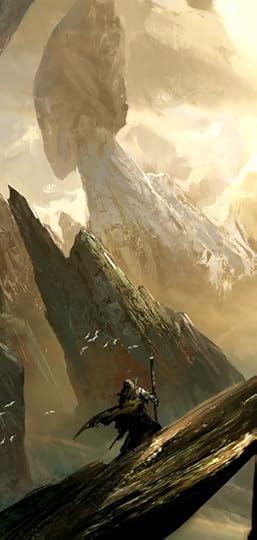
Art by Kekai Kotaki
Ordinarily I have a kind of sick sadistic expectation when reading a fantasy (or for that matter horror) novel: when’s the cool stuff coming? When will those pleasant peasants bite it? But in The Bone Clocks I found myself dreading the very material for which I usually drool. A bad guy pops out of a hole in the air to ruin the day of an acerbic novelist, and for once rather than saying “yeah, let’s see some action!” I’m scared for our novelist friend. I don’t just want him to survive the confrontation with the evil wizard—I want the evil wizard never to show up. That wizard’s intrusion feels like a disgusting joke—he’s an inhuman creature warping the reality of people I know and love. And he does kill people. And every death matters.
Rather than Magic appearing as a strange new world, a hidden reality, the Truth that’s Out There, here Magic is a choice that pulls people out of reality, that destroys the reality it encounters. Embracing the Magic, heeding the Call to Adventure, again and again throughout The Bone Clocks, leads to abandoning love and wonder and everything that makes life worth living. Sometimes the moral environment demands people make that sacrifice—for example, to fight for truth in the face of overwhelming lies and tragedy, as in the case of the war reporter deciding whether to return to the front. But often people throw themselves out of the world, and out of the human community, for no good reason, due to promises of power, immortality, and wealth, or even for simple pique. Sometimes those same choices can even be unmade, at least in part. Souls can be saved.
In this book, for all its immortal war games, we bone clocks are ultimately what matters.
And here’s the best part, sort of, from this angle: the magical plot turns out to be absolutely inconsequential! The world in the final chapter of The Bone Clocks is falling apart Mad Max style in spite of the Good Guys’ victory. Sure, one Good Guy stands against the darkness—but he barely matters. In the world of the novel we ordinary humans have done a great job screwing up our world all on our own, with minimal Bad Guy intervention. Holly Sykes’ ultimate significance is just, and more than just, that she’s a person, a human being with the capacity for dreams, growth, and love—in this book, for all its immortal war games, we bone clocks (the immortals’ word for humans) are ultimately what matters.
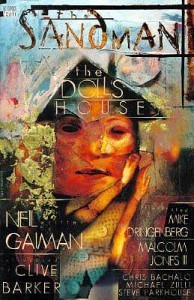
Gaiman, in The Doll’s House, has Dream of the Endless caution his sister Desire that “we” (the Endless, immortal god-type things) “are their dolls,” their in this case referring to humanity. In context, the line suggests that, much as Desire and Dream may feel human lives insignificant, humans are actually the ones that matter. This is one of my favorite lines in The Doll’s House, in all of Sandman in fact, precisely because it turns the usual order of fantasy on its head. Gaiman never quite follows through on the potential of this line IMO—the most meaningful moment in each human character’s life is always that character’s contact with the Endless—but it’s a great sentiment that illuminates the issue I’m hammering here. The Bone Clocks follows through. And while The Magicians does a great job of showing that magic doesn’t provide existential validation, The Bone Clocks shows that human life can.
Now. All that said, I don’t know if the book works. It certainly isn’t perfect. For example, consider the final Mad Max-in-Ireland chapter, which returns to Holly Sykes’ point of view for the first time since she was fourteen. There’s very little magical intervention here, just character—which fits perfectly with the anti-fantasy concept. Ideally, though, for a character-driven story, this would be the chapter where we see how much Holly’s grown—where the climax of the Magic plot in the penultimate chapter is revealed to be a shadow of the actual human resolution. That resolution should probably feature Holly doing something she never would have done if the events of the novel hadn’t happened—or at the very least, show some depth to Holly we never would have suspected earlier. Mitchell doesn’t take either path, as far as I can tell. Holly makes a sacrifice for another, but it’s no surprise that she does so; she would have made the same decision at fourteen, I think. As such, for this reader at least, the final chapter felt a bit pointless, serving mostly to show how the world of The Bone Clocks becomes the future of Sonmi-451 (dammit, I just got that Bradbury reference. Mitchell!!!!) and Sloosha’s Crossing from Cloud Atlas. I closed the book, as a result, a bit at odds with myself. I couldn’t really say what had just happened, in spite of enjoying every page turn. This essay, among other things, has been my struggle to unravel that confusion.
I thought reading other analyses would help, but James Wood’s review in the New Yorker misses the anti-fantasy aspect of the book which I found so compelling—possibly because Wood’s lack of fluency with the fantasy canon (he describes this book as having the “demented intricacy of science fiction”) keeps him from appreciating The Bone Clocks’ relationship to the fantastic. Wood complains that for him the human action’s meaningless because of the fantasy realm and the secret war; in fact, fantasy realm and secret war alike are constantly portrayed as slightly good at best when they observe and support human life, and demented when they impose themselves upon it. Human activity, human choice, is the only realm important for Mitchell—every time a character turns from humanity to embrace the fantastic, it’s presented as a tragedy, while even the supernatural Good Guys end up murdering a sympathetic character for no good reason. Fantasia, in this novel, is boys playing with toys, while the “mundane” world matters.
To sum up: I read The Bone Clocks as a sophisticated unraveling of core tropes of the fantasy genre, a masterful pommel horse routine that two-foots the landing. I wonder if fantasy will rise to the challenge I think this book presents, by embracing the power and tragedy of human relationships, by rendering the real world real—if fantasy will bite the lit-ra-ture’s style back. If so, it’ll be fun to read.
Buy The Bone Clocks by David Mitchell
This essay first appeared on Max Gladstone’s blog on October 15th, 2014
The post Biting Style: The Bone Clocks and Anti-fantasy by Max Gladstone appeared first on A Dribble of Ink.

October 28, 2014
2015 Hugo Nominations v 0.1 — Best Novel
The flush of the 2014 Hugo Awards is fading, and, with the holidays just peeking around the corner, I wanted to take the time to discuss some of my favourite novels from 2014, the ones that, at this very moment, would comprise my nomination slate for the 2015 Hugo Award for Best Novel. Will it change by next spring when nominations are due? Undoubtedly.
These are all terrific novels, and, if you haven’t read them already, well, I envy you.
Best Novel
City of Stairs by Robert Jackson Bennett
Say hello to the best fantasy novel of 2014.
Even as I was startled by its twisted depth, I adored every moment I spent with City of Stairs. Colonialism lies at City of Stairs‘ centre, and RJB handles it with equal parts boldness and delicacy. The ruined beauty of Bulikov and its fallen gods haunted me long after I turned the final page.
Robert Jackson Bennett is best known for his contemporary fantasy and horror crossovers, such as American Elsewhere and The Troupe, so his move into more traditional epic fantasy put him on the radar of a lot of new readers, and the result is something special. On first reading City of Stairs, I described it to a friend as “China Mieville without the ego.” I’m not sure I still agree with that statement, because it’s unfair to saddle one writer with another’s baggage, but while reading City of Stairs I couldn’t fight the feeling that RJB was mixing and refining elements from some of my recent favourite fantasies. Other touchstones exists, such as Kameron Hurley’s The Mirror Empire and Max Gladstone’s Craft Sequence, that place RJB among the most exciting and vibrant young fantasy writers working today.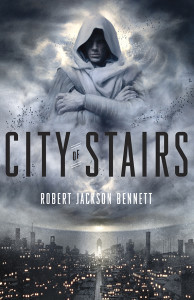
Buy City of Stairs by Robert Jackson Bennett
Ancillary Sword by Ann Leckie — Review
Ancillary Justice took the genre world by storm last year, and Leckie stood deservedly atop the Best Novel podium at last year’s Hugo Award ceremony. Will Ancillary Sword be able to recapture its predecessor’s lightning-in-a-bottle success? Probably not, but it’s one of the year’s best novels and, due to its more focused storyline, smoother narrative, and introspective thematic elements, I actually liked it better than Ancillary Justice. No sophmore slump for Leckie.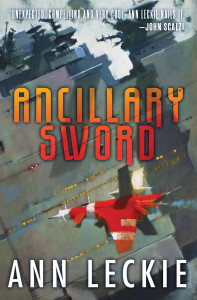
Buy Ancillary Sword by Ann Leckie: Book/eBook
The Eternal Sky Trilogy by Elizabeth Bear — Review
Calling on the Wheel of Time rule, I’m including Bear’s trilogy here as a bit of a self-indulgence and pie-in-the-sky dream scenario. The Eternal Sky trilogy — Range of Ghosts, Shattered Pillars, and Steles of the Sky — is a fascinating epic fantasy that eschews the tired medieval tropes the genre is known for and replaces with a vivid world based on the Turkish-Mongolian khanates of 13th century Asia. My time with Temur and his companions is dear to me, and I’d love to see Bear (who’s already a Hugo Award winner for her short fiction) rewarded for writing the best epic fantasy trilogy of the past decade.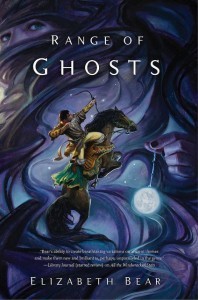
Buy Range of Ghosts by Elizabeth Bear: Book/eBook
Annihilation by Jeff Vandermeer
On the surface, Vandermeer’s weird and haunting opening act in the Southern Reach trilogy appears to be a Lost-esque mystery about Area X, an undefinable pocket of land that has defied researchers and driven explorers crazy for years. Like the tower at the centre of the story, however, delve deeper and what you’ll find is an autobiography about a failing marriage, with raw emotional resonance bared to the reader as the narrator, lost in the mysteries of Area X, discovers herself and comes to understand that labyrinthine relationship between her and her husband.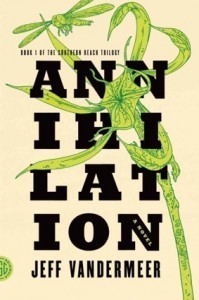
Buy Annihilation by Jeff Vandermeer: Book/Audio
The Goblin Emperor by Katherine Addison — Review
In a modern fantasy landscape that is littered with the broken corpses left in Grimdark’s wake, Katherine Addison (a pseudonym for Sarah Monette) is a shining light, a beacon of nostalgia and hope on the horizon. It took me some time to fall in love with The Goblin Emperor. At first, I was startled by Addison’s slow introduction to the world, and protagonist’s timid and reluctant nature. Without realizing it, however, the midway point of the novel passed and I realized I’d fallen somewhat in love with Maia, the titular Goblin Emperor, and became utterly enveloped by Addison’s dissection of classism, family, loyalty, and love. Even now, I fondly remember my time in Addison’s Elvish empire and look forward to returning again in the future. The Goblin Emperor is without a doubt one of the best fantasy novels of the year.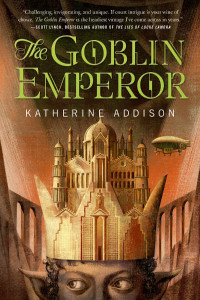
Buy The Goblin Emperor by Katharine Addison: Book/eBook
And don’t forget…
From books I enjoyed, but don’t think are quite up to standard that I hold the Hugo shortlist, to novels that I expect might end up on my shortlist if I read them before nominations, this is a list of other 2014 novels worth looking at:
Words of Radiance by Brandon Sanderson
Child of a Hidden Sea by A.M. Dellamonica — Review
The Mirror Empire by Kameron Hurley
Lock In by John Scalzi
The Bone Clocks by David Mitchell
What are your favourite novels published in 2014? What egregious omissions have I made from my list?
The post 2015 Hugo Nominations v 0.1 — Best Novel appeared first on A Dribble of Ink.