Michael Patrick Hicks's Blog, page 9
October 9, 2018
Review: The Pale Ones by Bartholomew Bennett
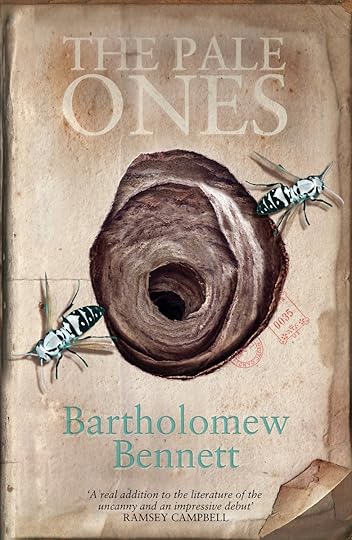
The Pale Ones
By Bartholomew Bennett
My rating: 3 of 5 stars
Bartholomew Bennett makes his horror debut with The Pales Ones, a slow-burn work of literary cosmic horror.
In this first-person account, we are introduced to a used book dealer who makes his way through the day-to-day patrolling the discount racks of charity shops for novels he can resell online. His dealings bring him into the orbit of Harris, another seller with a favor to ask and a spate of secrets to hide...
Bennett gives us hints of horror throughout The Pale Ones, small flashes of insight into that which lies beyond, hidden just out of view and slanted slightly askew from one's direct perspectives. At one point in their collecting of battered, broken spines and battered books, Harris talks briefly of magic and the secrets of illusion and revelation. It's a singular moment upon which The Pale Ones turns, shifting from a tale of shelf hunting into something more ambitious and deeper - if, that is, our narrator can be believed as Bennett begins to introduce some subdued moments of madness and hints of insanity.
You would think that a horror story involving books would be right up my alley, and while I appreciated The Pale Ones it's a bit too slow and uneventful for my tastes. I kept waiting for something big and impactful to occur, but Bennett keeps things decidedly quiet, taking a very soft and understated approach. There are elements within the narrative, though, that point toward twistier, thornier issues, the story wrapping around itself in Möbius strip-like fashion. It's interesting, if not deeply engaging; neat, but lacking any lasting power or splashiness to make it truly memorable.
[Note: I received an advanced readers copy of this title from the publisher, Inkandescent.]
View all my reviews


Review: Vox by Christina Dalcher [audiobook]
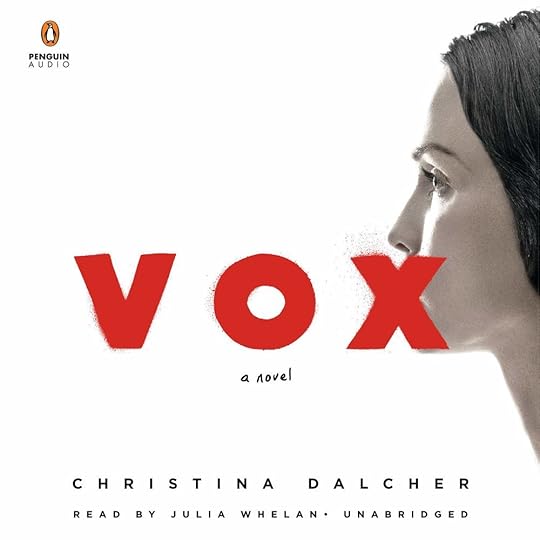
Vox
By Christina Dalcher
My rating: 3 of 5 stars
Fair warning - all those fragile little white boys who are always complaining "why's it always gotta be so political? Ugh!" should probably skip this review and get back to complaining about Asian women existing in Star Wars or a female Doctor Who, cause it's gonna get real political up in here...
The simple fact of the matter is all art is political. Vox, by Christina Dalcher, in particular is fully informed by the current political trends in the USA. Dalcher explores the aftermath of the forceful rise of far-right Christian rule in America (a very real, very legitimate threat), where the presidency has become the puppet figurehead of a highly influential extremist evangelical preacher (rather than say, oh, I dunno...Russia.). Overnight, America changes as the Pure Movement sweeps through government, and in short order women are forced to wear bracelets that deliver electric shocks if they speak more than 100 words a day. Reverend Corbin believes a woman's place is in the home, and the US government begins removing women from the workplace, forcibly establishing its absolute patriarchal rule. Women are all but silenced and utterly removed from the day-to-day life of society.
In an interview with The Bookseller, Dalcher said her novel is not a call to arms, but "a call to pay attention. ... The fact is that our lives really can change in a heartbeat. We saw this with [Donald Trump's] executive order banning travel from Muslim countries to the United States. Everything changed very quickly." The rise of Trump has seen a radical and rapid shift in democratic norms bending toward authoritarianism (to see just how much his first year in office changed things, Amy Siskind's The List: A Week-by-Week Reckoning of Trump's First Year looks worthwhile). Listening to Vox, narrated by Julia Whelan, over the course of a week that saw alleged rapist Brett Kavanaugh, nominated by serial sexual offender Donald Trump, appointed to the Supreme Court is a stark reminder of just how real the patriarchal rule in America is and how fully women's voices can (and will) be ignored, if not yet completely silenced.
Vox uses its allegorical limitations on women's voices to make some very important points, ones we should all be cognizant of and working to prevent (pssst...don't forget to vote November 6!). This is a highly political book that takes American gender wars to the next step, highlighting both men and women's complicity in this national silencing, the patriarchal "norms" of Christianity, and the sad fact that women really have become a punching bag in American society (to the point that Trump even mocked a sexual assault survivor and Kavanaugh accuser Christine Blasey Ford during one of his recent rallies to stir up his base).
While it has plenty of worthwhile things to say, Dalcher's work ultimately exists in the shadow of Margaret Atwood's The Handmaid's Tale, and oftentimes feels utterly derivative in its plot points and execution. So much of the story in Vox has been done before, and while Dalcher does insert a few original story beats much of the book merely feels like a reworking of Atwood's seminal novel.
Strangely, I actually liked Dalcher's book better thanks to some of her concepts and willingness to get into some of the nitty gritty. It's not the dull slog I recall The Handmaid's Tale being, and there's actually some moments of action. Dalcher posits her story from the perspective of a neurolinguist, although I would have appreciated a bit more focus on the impact of female children's communication development being so forcefully aborted. Imagine, if you will, a baby girl just learning to talk and babble, and then being electrocuted once she breaks the 100 word limit. Picture how stunted she would become once denied a voice. Dalcher approaches this topic late in the book in a very brief segment, but it's an idea I would have loved to have seen more fully explored.
And therein lies my main rub with Vox. Dalcher presents some intriguing ideas, but never truly commits to any of them. The shock bracelets present an interesting premise, but how women were subjugated and forced into wearing them is entirely glossed over. The impact on America's economy of losing half its workforce is all but ignored. We do get a few potent reminders of what the far-right Christian rule looks like in Dalcher's near-future, but we could have used more. There's a lot in Vox that feels half-baked.
Thankfully, Julia Whelan, an Audie Award winner, is fully committed as this audiobook's narrator. I first listened to Whelan earlier this year in her reading of Michael McDowell's The Amulet, so when I found out she was narrating Vox I couldn't miss the chance to listen to this book, as well. She does an outstanding job here, capturing those moments of high emotional intensity - you can feel the stress and worry, the excitement and fear, and those brief glimmers of hope that shine through this dystopian nightmare. Whelan is an excellent narrator and she kept me engaged throughout the entirety of Vox.
Dalcher shows some promise as a novelist in this debut, and I'll be curious to see how she develops as she steps out the shadows of Atwood's influence and discovers her own voice and original ideas. Vox, like A Handmaid's Tale, is certainly a product of its time and its era's politics, with Trump's regime and #MeToo clearly weaved into the story's DNA. Here's to hoping its more extreme ideas stay solidly in the realm of fiction.
View all my reviews
October 7, 2018
Review: Out Behind the Barn by Chad Lutzke and John Boden
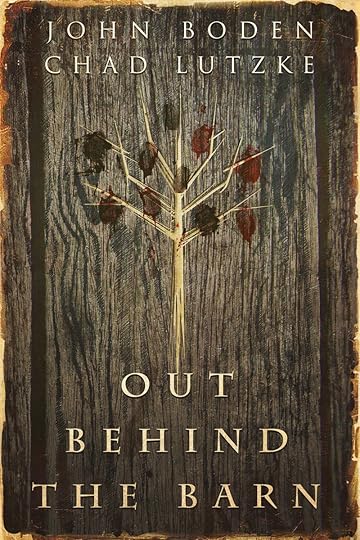
Out Behind the Barn
By Chad Lutzke, John Boden
My rating: 4 of 5 stars
Not often do I finish a horror story and think immediately that it was quite lovely. Yet, that was my initial reaction to Out Behind the Barn, a slim novella from Chad Lutzke and John Boden.
That's not a whole lot else, frankly, that I can say without spoiling Out Behind the Barn. It's a slowly paced family drama, and the authors are absolutely methodical and deliberate in their parceling out of information. They drop hints to the nature of their characters with sly winks and nods, rather than through a pounding impossible-to-miss delivery. It's no mistake that the boys, Ronny and Davey, read a lot of Edgar Allan Poe and Ray Bradbury during their homeschooling sessions, and Lutzke and Boden use their characters' love for these authors to prime the pump of readers expectations.
Such is the manner in which seeds are laid, and when it comes time to reap their fields in the story's climax, Lutzke and Boden do so with the same reverential quietude that came before. I've not read Boden's work before, and Lutzke is an author I've only recently discovered. Of the former I can definitely say I'll be reading more of his material. Of the latter, I feel I can positively say that Lutzke is a writer who prizes emotional gravitas. He seeks out the hearts of his characters and plumbs their depths with familiar intimacy to the point that he stops writing characters and begins writing actual, full-fledged people.
Maggie and her boys are no exception. Each feels supremely realistic, and like most people, they have their secrets. What's most striking about Out Behind the Barn, though, is its eloquent sadness. There's a darkness here, an irreparable degree of psychological damage borne of deep sorrow, but also an atmosphere of love and hope. It is, after all, a story about family, of the rights and wrongs committed upon one another, as well as the damage. Oh, most certainly the damage.
[Note: I received an advanced copy of this title from the authors.]
View all my reviews
October 5, 2018
Review: The Fungus by Harry Adam Knight
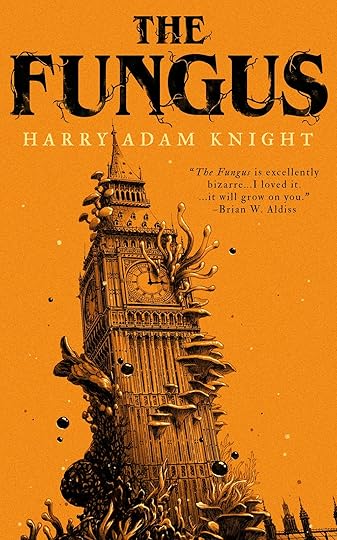
The Fungus
By Harry Adam Knight, John Brosnan, Leroy Kettle
My rating: 5 of 5 stars
The Fungus by Harry Adam Knight (a pen-name for collaborators John Brosnan and Roy Kettle) is a page-turner right from the get-go, wasting absolutely no time at all thrusting readers into the horror of a grandiose and apocalyptic plague. Knight hardly lets up on the rapid-fire pace, packing in plenty of mayhem, violence, and gore as the UK collapses quickly and totally.
As with Slimer, another Knight collaboration recently reissued by Valancourt alongside The Fungus, this is a story of science gone awry, however it's far more epic in scope. Knight showcases the peril of unintended consequences as a scientific answer to the problem of world hunger sees genetically modified fungus infecting broad swathes of England, turning the island nation into a no man's land forcefully quarantined by Europe.
I've got a heck of a soft spot for fungal horror and The Fungus hit on all the right notes for me. I loved that Knight drew on multiple species of fungus, and it's clear the authors did their homework in figuring out the various horrifying ways these modified strains would impact humanity. All those pesky homo sapiens suffer from things like dry rot, are eaten alive or violently explode, or develop symbiotic or parasitic relationships with the various types of fungus. Brosnan and Kettle threw in so much variety in these apocalyptic strains that it was absolutely impossible for me not to appreciate their studiousness and creativity, as well as the utterly twisted imagination required to pull it all off.
When it was originally published in the late 1980s, The Fungus proved to be the most successful of Brosnan and Kettle's Harry Adam Knight works, and I suspect this reissue may repeat that bit of history. I'm also hopeful that Valancourt will be able to secure to reprint rights to other Knight titles, like Bedlam and Carnosaur, as well as Brosnan's Simon Ian Childer pseudonym. Now that I've gotten a taste for Brosnan's and Kettle's works, I want and need more, and quickly too!
View all my reviews
October 3, 2018
Review: Slimer by Harry Adam Knight
Slimer (A Star Book)
By Harry Adam Knight
My rating: 4 of 5 stars
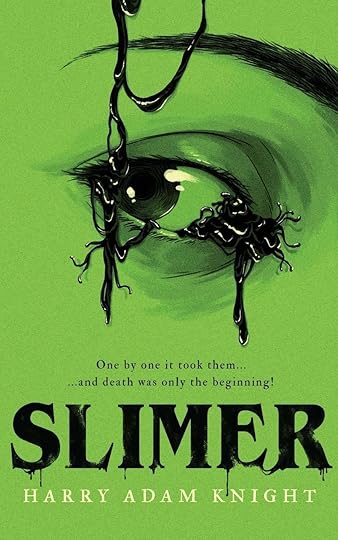
After their yacht sinks, a group of drug smugglers find safety aboard a seemingly abandoned oil rig in Harry Adam Knight's Slimer. But since this is a horror novel, you know damn well there's nothing safe about an oil rig left derelict in the middle of the North Sea, shrouded in fog and pounded by storm-churned waves. One look at M.S. Corley's gorgeous new cover for this Valancourt edition of a lost 1983 classic should help further solidify that assumption.
Valancourt, a heroic small-press publisher responsible for rescuing forgotten horror stories from the dustbins of publishing history, have outdone themselves with a pair of Knight novels to kick off October. This and The Fungus arrive just in time to satisfy Halloween reading splurges (along with a re-issue of James R. Montague's Worms), and I'm finding myself in a bit of eco-horror heaven.
Knight, a pseudonymous nom de guerre for UK authors John Brosnan and Roy Kettle, have crafted an energetic thriller rooted in scary science and influenced by horror classics like The Blob and John W. Campbells' Who Goes There (the basis for the 1951 film, The Thing from Another World, and John Carpenter's immortal 1982 classic, The Thing). Searching for the secret of immortality, a covert group of scientific researchers have created something new, something beyond their wildest dreams...something wildly monstrous.
While there's a clever bit of sci-fi shenanigans at the core of Slimer, it's merely crafty set-up to get us into the blood and guts of survival for these stranded criminals. Brosnan and Kettle avoid getting bogged down in the technicalities or plausibility of the science, but when they do slow down enough to explore the background of their story Knight presents a really nifty spin on Richard Dawkins's selfish gene theory. I also really dug the psychological aspects of their particular brand of horror here, particularly their explorations of what happens to the victims of this book's creature.
Slimer has a high body count and Knight is focused on action over characters, which makes it difficult to get too attached to anybody aboard the rig. This is a book geared primarily toward the spectacle of fun gory horror and, unfortunately, the characters are paper-thin as a result. The men are reduced to simple archetypes: Paul is the leader, Mark is the drug addict, Alex is the giant asshole. No further depth or dimension required. The female characters don’t even receive this much development, sadly, and are largely indistinguishable from one another, existing primarily to provide scenes of titillation and victimization.
The characters are really this book's biggest hurdle for me, particularly the redolent, dated whiff of 1980s misogyny, but Slimer remains a highly entertaining bit of escapist pulp. Despite the central premise being overly familiar nowadays thanks to both the prior works of horror that have clearly inspired it and those works that have since followed, such as Paul E. Cooley's The Black and Pig by Edward Lorn and Craig Saunders, Knight shows a few sparks of originality in their execution thanks to the science underpinning it all. Thirty-five years after its publication Slimer shows only a few signs of its age; it's still a spry, fast-paced work of action-packed horror.
View all my reviews
October 1, 2018
Halloween Horror Reads!
It’s officially October, which means it’s time to start thinking about all those great Halloween reads, either in your TBR already or hitting up the bookstores from some personal Trick or Treating.
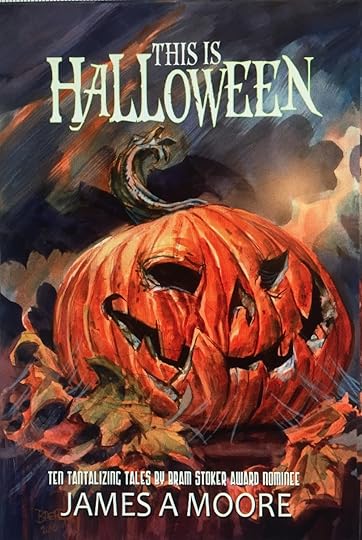
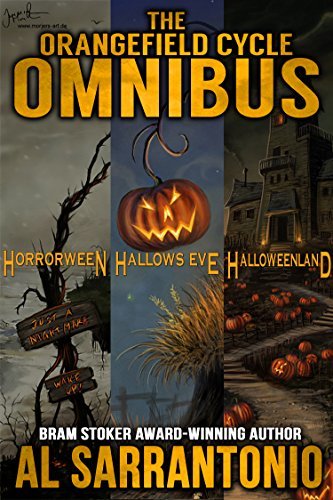
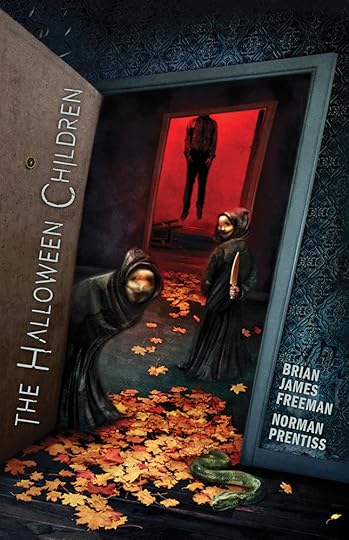
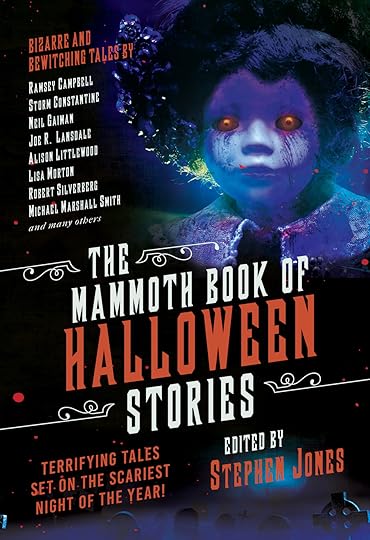
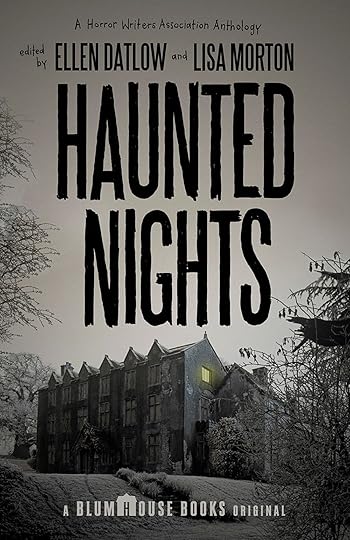
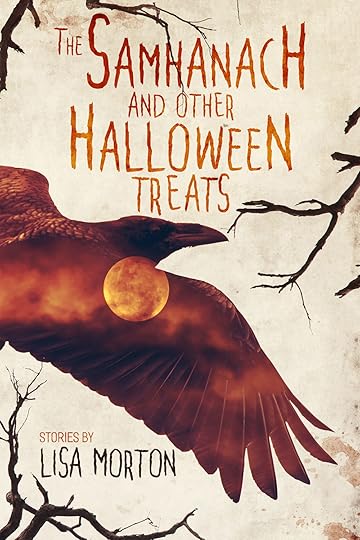
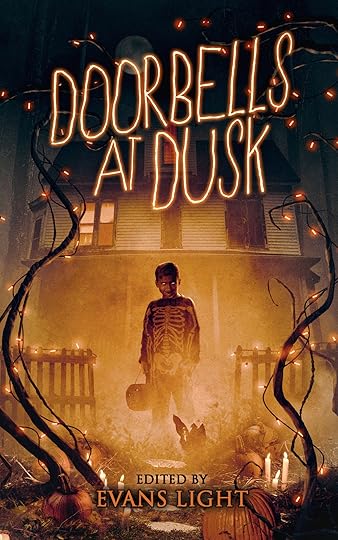
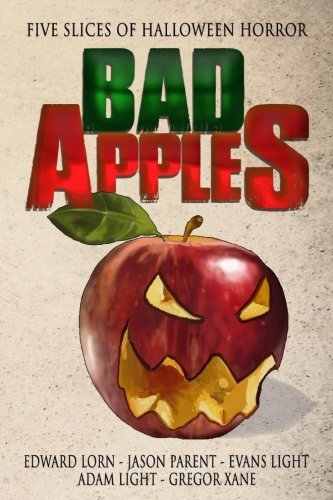
I love a good Halloween-themed read, especially over the 31 days between now and month’s end. My review commitments are keeping my reading time pretty tight this month, though, but I’m hoping to spice things up with a few pumpkin frights in between all the ARCs demanding my attention. Here are a few of the many Hallowen books in my TBR that I’m planning to pull from in the coming weeks as October wears on.
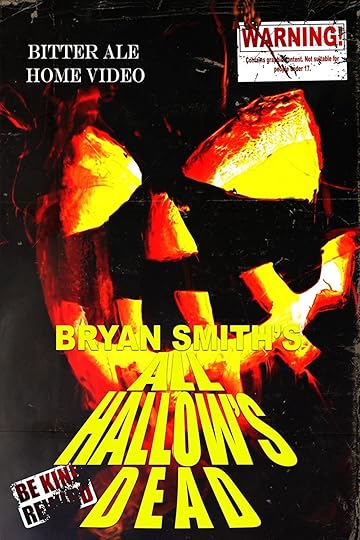
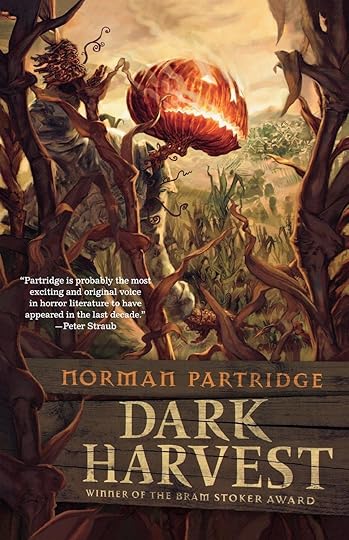
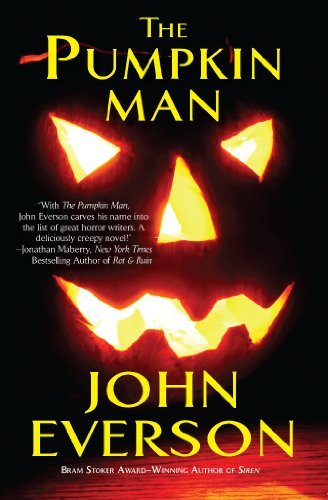
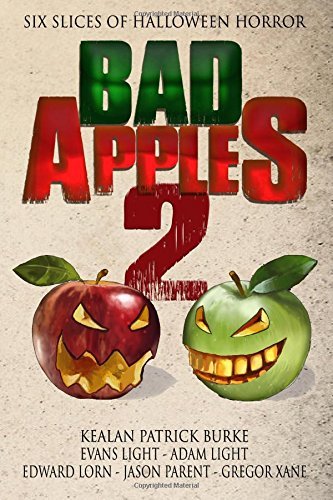
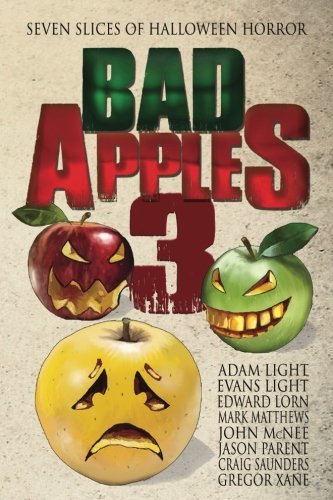
Some of these - most of the anthologies in particular - I’ve read previously and can personally vouch for and won’t be returning to again this year simply due to time constraints. Others will be brand new to me, like Bryan Smith’s All Hallow’s Dead, John Everson’s The Pumpkin Man, and Norman Partridge’s Dark Harvest. I’m hoping to get to each of these three if nothing else, but we’ll see. Time is a rare and fleeting commodity these days.
Below are thirteen (naturally!) Halloween horrors that have caught my eye over the past few years. Click the pic to head over to the Amazon product page to find out more about these titles and buy a book or two if they strike your fancy (and remember, this site does use affiliate links, so purchasing a book I’ve linked to helps me run this site, in addition to supporting the authors and publishers of the works featured here). And head down to the comments section to recommend some Halloween-specific reads, especially those by women authors, which I had a difficult time pinning down for this list!
Happy Halloween!
Review: The Toy Thief by D.W. Gillespie
The Toy Thief (Fiction Without Frontiers)
By D.W. Gillespie
My rating: 3 of 5 stars
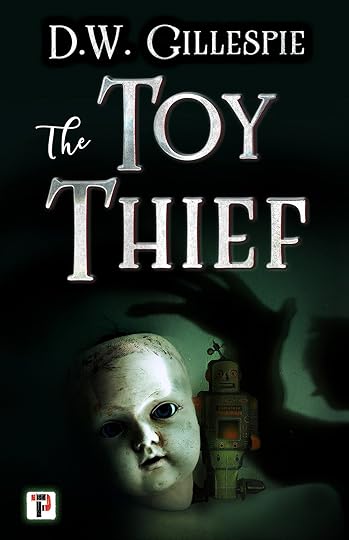
D.W. Gillespie is the author of a number of short stories, but if I recall right The Toy Thief is his novel-length trad pub debut (he has a few indie titles out, too). It's a solid introduction to his work, and Flame Tree Press has signed him for a second release in 2019, which I'm most certainly game to read.
The Toy Thief is a coming-of-age story involving Jack, her brother Andy, and the strange titular rat-man creature that invades their home to take their most cherished toys. Told in a tight first-person perspective, Jack tells us the story of this significant past event, slowly revealing the details of their encounters with the Thief and the ways in which their history has colored and shaped the present for this family.
Jack is an unreliable and unlikable narrator, an abrasive woman who thinks quite highly of herself and isn't shy about taking others down a peg or two when her ego demands it. She believes she is better than those that surround her, but also aware that if she lived in another location, like Hollywood or New York, she'd only be average at best. She vacillates between shrill and personable. On the surface, she could just be another tough chick as imagined by a male writer, but there's enough hints in the story to convince me there's more to her story and how events have shaped and altered her personality. It's safe to say that the Thief has made Jack the woman she is today, and her encounters with him have permanently changed both her and her brother.
The Toy Thief itself is an interesting creature, and Gillespie injects it with a lot of promise and potential. I liked the history of this particular monster quite a lot, and its cravings and desires that compel it to steal from the children are pretty dang nifty.
On the horror front, though, The Toy Thief isn't particularly scary. Gillespie generates some solid moments of creepiness, but never any actual fright, and he eschews violence and gore for the most part. Perhaps it's more appropriate to view The Toy Thief as a dark family drama rather than a straight-up work of horror. In a brief supplementary interview with Gillespie, the author speaks of his admiration for the film work of Guillermo del Toro, whose influence can be felt here, particularly the del Toro of Pan's Labryinth and Crimson Peak, which rely heavily on atmosphere, family dynamics, and neat-o creature design far more than blood-curdling, spine-tingling terror.
Readers looking for a fast-paced, gore-filled romp might be disappointed, but those looking for something slower and quieter may find themselves engaged by Jack's autobiographical musings. The Toy Thief certainly has me curious to see what else Gillespie has up his sleeve in future books and I find myself looking forward to his sophomore effort, One by One per a recent tweet, to steal away some more of my time.
[Note: I received an advance reading copy of this title from the publisher, Flame Tree Press.]
View all my reviews
September 30, 2018
Review: Currency of Souls by Kealan Patrick Burke [audiobook]
Currency of Souls
By Kealan Patrick Burke
My rating: 4 of 5 stars
My original CURRENCY OF SOULS audiobook review and many others can be found at Audiobook Reviewer.
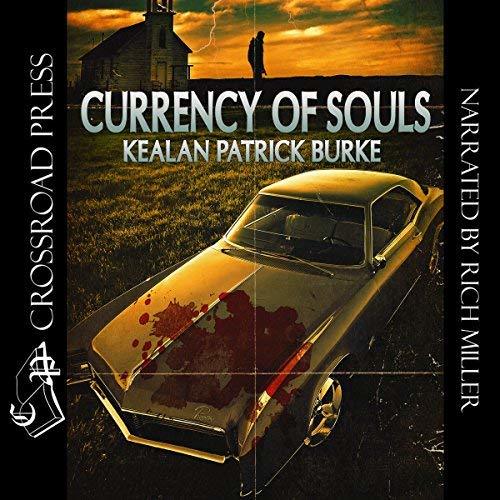
Few horror authors write as eloquently and thoughtfully as Kealan Patrick Burke, a Bram Stoker Award-winning author who carefully chooses each word that makes it onto the page for maximum impact. Textually, Currency of Souls is a fine example of Burke’s methodical deliberation, and narrator Rich Miller delivers a reading that is aurally arresting right from the get-go.
Currency of Souls is a bit of a genre mish-mash. Tonally, it feels like a modern-day western with it bar-room setting, the Sheriff, and a handful of misfits populating the near-dead town of Milestone, but there’s enough violence and death to put it solidly in the horror genre, as well as a few fantasy elements and plenty of tragedy to boot. Milestone, however, is more than your average run-down locale, and each of the barflies carries the weight of their secret sins like an albatross. This is a down of damnation, and it may or may not be Purgatory or at least some facet of it, and each of the drinkers are constantly being manipulated by darker forces to murder one another. To say much more, though, would be a crime.
Burke keeps the story moving along with plenty of twists and turns, betrayals, and double- and triple-crosses. None of the cast are quite who they appear at first blush, and Burke slowly reveals their true faces and natures in due course. The story itself is weighted in symbolism and degrees of complexity. Simply put, there is a lot going on throughout the entirety of this book. Listeners should expect to not only pay close attention to all the things being said but especially to what is left unsaid. I suspect Currency of Souls is a title that only grows more rewarding with multiple listens, and that future rereads will reveal additional previously unseen facets.
Rich Miller has a deep, brassy voice that immediately captures the atmosphere and tone of Burke’s work, perfectly in tune with the western genre elements present here. I was immediately lost in this man’s reading, lulled in by the strong, yet comforting rhythms of his narration. There’s a kind-of Sam Elliot vibe to Miller’s presentation, which I certainly dug, and the recording is crystal-clear enough that I could practically smell the smoke and whiskey stink of Eddie’s Tavern.
Currency of Souls is a bit like a good whiskey, in fact. The writing is smooth and read by Miller it leaves a pleasantly warm feeling deep in your chest, but the story itself is a complex and full-bodied spirit, possessing various layers of richness. Its narrative threads are knotty and tangled, and it takes some work to unravel before you can fully appreciate it. It’s the type of story you want to let linger a bit before you take another sip and see what else is there to discover.
[Note: Audiobook provided for review by the audiobookreviewer.com]
View all my reviews
September 27, 2018
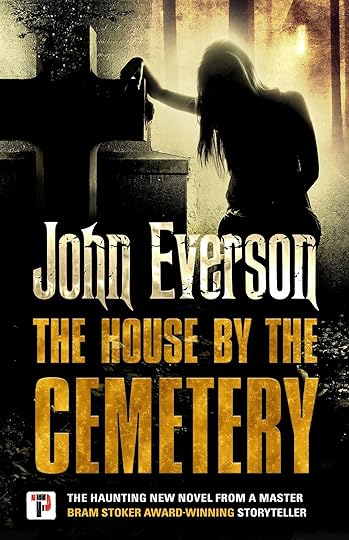
Review: The House by the Cemetery by John Everson
The House by the Cemetery (Fiction Without Frontiers)
By John Everson
My rating: 3 of 5 stars
The House by the Cemetery has one of the coolest premises I've come across and, frankly, I'm surprised it hasn't been done more often - set up a Halloween haunted house attraction at an actual honest-to-goodness haunted house. As far as premises go, this is beautifully simplistic but also pretty damn smart.
Mike, a carpenter, knows all about the rumors of the house by the cemetery, but he grudgingly accepts the job offer to rehab the rundown domicile and get it ready for Halloween. In no time flat, Mike is finding out all sorts of weird things about the house. Unexplained noises, old occult symbols painted on the walls, recently murdered animals, and lots and lots of bones. Mike is also divorced and prone to thinking with his little head instead of his big head, so what else is he to do but say yes when the young and super attractive Katie shows up at the house's doorstep offering to help with the rehab and to share his cooler of beer?
Despite the great premise, John Everson doesn't exactly break any new ground with The House by the Cemetery, but he does keep things pretty consistently enjoyable and page-turn worthy. Horror fans who have read their share of occult and haunted house stories will find all their predictions about this book's big reveals proved accurate. The plot twists aren't all that surprising, and large chunks of the story feel repetitive, particularly the first half of the book surrounding Mike's labors at building a new porch and putting in new flooring.
Everson still manages to keep the story moving along in entertaining fashion, particularly as the team of house haunters prepare for their time in the spotlight by decorating rooms in homage to their favorite horror flicks. There are rooms devoted to A Nightmare on Elm Street, Texas Chainsaw Massacre, giallo slashers, J-horror, zombies, and so on. It's a fun bit of teasing for what readers can expect once the blood starts spilling, but having the story stretched out across a summer to Halloween time-span means Everson has to save all the really good gory stuff for the book's final third. There's a fair amount of waiting around in anticipation for the story to kick into high gear during Cemetery's climax, but once that final section rolls around...hot damn! Everson paints the house in so much read that it almost makes Fede Alvarez's Evil Dead look milquetoast in comparison.
The House by the Cemetery might have been a seriously killer novella, but it feels a bit too padded as a full-length novel. That said, this is still a solid read and it skates by on its sheer fun factor, as well as its exhibition of appreciation and love for the horror genre as a whole. Once Everson gets his groove on, though, things take a turn for the weird and it's pretty freaking wild and wicked.
[Note: I received an advanced reader copy of this title from the publisher, Flame Tree Press.]
View all my reviews
September 26, 2018
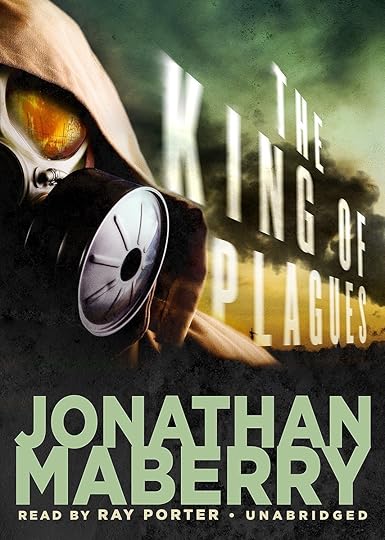
Review: The King of Plagues (Joe Ledger #3) by Jonathan Maberry
The King of Plagues: A Joe Ledger Novel
By Jonathan Maberry
My rating: 4 of 5 stars
Having listened to the first three installments of the Joe Ledger series, The King of Plagues included, it's safe to say that I'll be a devout follower of Jonathan Maberry's hero for the foreseeable future (particularly since I've already downloaded the rest of these books and have book #10 on pre-order for its late-October release). But having also done a minor bit of binge listening and working through these first three books in fairly quick succession (for me, anyway), I'm not entirely sure what else I have to add beyond what I have already said in my reviews for Patient Zero and The Dragon Factory.
Maberry is a reliable author to turn toward, and the bulk of his work that I've read has left me satisfied. His Rot & Ruin series is a superb run of Young Adult post-apocalyptic zombie novels (a few which also feature Joe Ledger, naturally), and his latest, Glimpse, was an early favorite of my 2018 reads. His Ledger books follow a formulaic structure, as series books typically do, but they've proven to be immediately engaging. I like Ledger and his tough, smart-ass, but self-aware attitude, and Maberry has surrounded him with a great cast of supporting players and ultra-villainous baddies who you just cannot wait to see their asses kicked and/or killed.
The King of Plagues introduces us to a secret society of ultra-wealthy global elites, the 1% of the 1%, who control literally every single thing. They are the Seven Kings, and through their network of assassins, drug cartels, legitimate industries, terror cells, street gangs, government agencies, etc., they covertly run the world, destabilizing economies and nations for their own gain and pleasures. For the Goddess they serve, this is not enough, and so Sebastian Gault (a returning villain responsible for the zombie outbreak in Patient Zero) is recruited as their King of Plagues, with the goal of unleashing the ten Biblical plagues upon mankind in an act of global Armageddon. Joe Ledger, on sabbatical from the DMS, is called back into action to face what is easily the greatest threat he's faced thus far.
One thing that surprised me is the somewhat slower, more methodical pace of The King of Plagues in comparison to the prior two entries. Given this book's focus on germ warfare and biological terrorism, Maberry is forced to be a bit more restrained in the gunplay. While there are still plenty of great big giant action scenes, there are also quieter, more dramatic plays on turmoil. It is, after all, a little too reckless to get into a gunfight while wearing a hazmat suit and locked in a room surrounded by vials of ebola and contaminated air.
Restraining the violence is a good thing sometimes, and such moments allow Maberry to fully capitalize on the emotional horrors and physical trauma of murder by way of viral attacks, and the sense of powerlessness in the face of invisible microbial terrors. Other aspects of The King of Plagues are equally restrained, giving the book a bit more a grounded in reality feel. The Seven Kings aspect feels slightly comic-bookish and grandiose, but it's also hard to discount them given real world machinations and the influence of the ultra-wealthy on systems of governance and law. What cannot be discounted, though, is the severely human antagonists at the heart of Plagues. In fact, there's nary a zombie or genetically engineered beserker to be found. The horrors here are entirely human and natural, even if already highly deadly diseases have been given an extra bit of fictional oomph. For a series that has been populated with scientifically plausible-enough monsters, it's notable that Maberry bypasses that particular facet in favor of viruses and plagues, exhibiting the elasticity of this series and allowing the author and his characters to stretch their legs into some deeper and more diabolical arenas.
My only real complaint comes with a dangling loose end that came at the finale of the prior entry, The Dragon Factory. At that book's close, we saw Ledger on the hunt for an assassin that had previously escaped his crosshairs. It's an element that is all but abandoned here, as Maberry picks up the story sometime following Ledger's pursuit and his acquisition of an awesome white German Shepherd named Ghost. Apparently Ledger's hunt and Ghost's introduction are told in a short story, available separately naturally, which frankly irks me a bit. It's a bit jarring to have Ledger all of a sudden in the company of a killer attack dog, and denied the pay-off of The Dragon Factory's most pressing story thread.
This small issue aside, The King of Plagues is certainly a heck of a lot of fun. Ray Porter continues to impress, taking his rightful place as The King of Narrators as he exhibits a knack for various accents as Ledger's search for the Seven Kings takes him overseas to England and Scotland. It was fun listening to Porter adopt a Scotsman's brogue for some pertinent scenes, and his portrayal of the inmate Nicodemus allowed him to exhibit even further range in one particularly creepy scene.
Now that I've worked my way through the opening trio of this long-running series, I will be taking a small break from Joe Ledger's adventures before I get burned out. But you can be damned sure I'll be back for more soon!
View all my reviews