
Leo X. Robertson's Blog, page 27
February 26, 2014
Findesferas Part 3
Juan
The brothers had maintained a decent sprint for a few miles after bolting out of the forest, and started to relax when they reached the main road. There were high trees still, but this was certainly not the domain of Kurupi. The sky was uncharacteristically steely, thick sepia clouds letting streaming sunbeams through that drew arbitrary spotlights on the ground. The air was thick with the smell of dust.
Juan ventured for a resolution to the slap that stung his face.
'How much closer are we?'
'Not very. We walked a few miles, we have all this road ahead of us.'
The men’s footsteps cut tiredly through the silence, long dragging pads.
'You…you stopped telling me about Octavia.'
'It's not fair on you.'
'It's okay.'
'I think we need a new deal. Tell me about Lalia.'
Juan stopped, hunched over, pretended he had to catch his breath. His brother knew better.
'It helps, seriously. Tell me about her. Look where we're going, there's nothing else to talk about anyway. Tell me about her.'
Matías was right. Neither of the brothers had gotten used to their surroundings.
Paraguay was lost, wasted. Still, some beauty resided in the broken landscape of fractured buildings, marmoreal skies of grey, empty space below the highways, no cars on the streets, no calls from their friends, an old war taking place on new ground, no place for guns or horses in their lives. There was nothing for it but to spend their time recounting old memories of when the world still made sense to them.
'Fine… she was a difficult woman.'
'What do you mean?'
’It’s the truest thing I can say about her. Difficult to know. Difficult not to love.”
'Okay…'
The sky was heavy with rain and stopped bearing the weight of it. Big droplets splashed straight through the men’s uniforms and spread warmly on their heads and shoulders.
'I loved those crooked teeth she had, her thick red lips. When we first met, she used to cover her mouth when she smiled, I couldn't believe someone like her could be the slightest bit self-conscious. She stopped when we got married.
'She was so serious, intense, I couldn't understand it, but she always thought I was so directionless. And yet we both knew we had to be together. If she were alive she would tell you that she made me marry her, but I let her think that.'
'Can I ask you something?”
'Sure.'
‘Did you know what she was going to do?’
Juan stopped to think, then sat down in the middle of the road. Matías crossed his arms, looking down at his daydreaming brother, then decided to join him, repositioning the πSniper on his back so he could sit. Juan looked up at the rain, shutting his eyes hard when the droplets landed on his face. A minute passed, his breathing harder, droplets mixed with tears.
'I think that… I think that I can't say that I didn't…. That I didn't… That I wasn't completely in the dark… about what she was going to do.'
Matías shuffled over to his brother and placed an arm around his shoulder, and they both found the time to look up at the rain.
Octavia
A light summer rain fell all around. Ana was very lucky indeed to continue living in her house in Asunción with Octavia. Most of the other civilians had to be relocated, but the two women carried on regardless, away from all the fighting and the nastiness beyond the city limits. It made the most sense when the war began to cordon off the city with a large wall that was to be guarded day and night. Paraguay had seen more than enough bloodshed, paid its price, cut down to size, knew the effects of war much more than most other countries. This time, like times before, was to be no different- Paraguay would remain a country, and fight to provide a good quality of life for its citizens.
Besides, thought Ana, there was something so natural about waking up with the sun and sleeping with the night. It gave her pleasure to think of her ancestors doing the same in small villages bordered by the forests. What was so different after all? Octavia was grateful, too, and although she had the little boy by her side, she insisted on helping out around the house. The garden was her domain, she told Ana, who would watch with loving disapproval, cup of tereré in hand, as Octavia guarded her floating sleeves while lugging the rusty hand-powered lawnmower out of the shed and around the grass. They kept a home and a pretence together, the two women, and spent their evenings reading books and chatting about what they would do when Juan and Matías returned again, and when that would be. The truth was that this doubly saddened Octavia, who both dreaded and longed for the day when the two men would come back, and stayed awake at night thinking about the kind of life she would end up leading. It was heartbreaking to her to think how five years ago, the family had marvelled at her pregnancy, fine well knowing how improbable it was for Matías to have impregnated her. Was he really the father? Was it someone else? The virgin forbid, was it Kurupi up to his mythical deflowering deviances again? And that dear little boy, thought Octavia, as painted fingernails moved to mouth and an age-old habit came back to life, little flecks of purple paint sticking to her bottom teeth, by my side with that milk-tooth smile of his, when I cannot bear to look at him.
Ana would also spend evenings staring at the ceiling, running her conversations with Octavia through her head and thinking herself so silly for indulging in naïve notions of her sons returning. Like this the two women could live for years, keeping a house together, keeping a home for the brothers when they were able to return, visiting the neighbours, greeting Paulo when they went to collect the daily rations. Ana would still wait until late at night when she was sure Octavia was asleep to sneak out to the porch with the caña paraguaya and cigars, praying for her sons to be safe.
The garden was lit up in all the blinding colours of the flowers by the sun. Ana was marvelling at the beauty of her garden, and trying to ignore the ratchety sound of the lawnmower that Octavia was shoving back and forth across the lawn. She had forgotten to do it yesterday, so she was doing it angrily in the morning after breakfast. The fence rose high round the garden, keeping the rest of the world out, and on sunny days it was the perfect place to play house.
'Why don't you slow down? You'll hurt your back.'
'Almost done' said Octavia sweatily, which was neither a worthy excuse nor an answer.
'You silly girl, sit and have tereré with me, would you just?’
'Fine.' She sounded offended at the kind offer as an affront to her hard work, but she still sat down at the small garden table, frantically brushing wet locks of hair out of her face, her son prancing round 'Mum, mum!'
'How do you like your garden?' asked Octavia, not showing pride in her work, but in herself, for keeping up with the housework. She didn't realise that she would be a better companion to Ana if she just looked after herself and kept off her feet. The mother in Ana was spilling over.
Ana looked fondly at her little garden, the red roses, peonies, tulips, delicate little passionflowers of Paraguay, draping lapagerias, a symphony of colours in the midday sun.
'No, it's not my garden anymore, it's Lalia's.'
'I forgot this is where she was spread. Ah well, even in death, still keeping those roses going', said Octavia, looking away, embarrassed that she hadn't managed to match the tone to make her quip work.
'She could tell me the name of all the flowers in the garden.'
'She did many things, that woman.'
'What do you mean?'
'Oh what am I saying, I didn't really know that much about her.'
'Mum look!'
The boy was at full tilt with his weight against the lawnmower, desperate to show his mum how alike they were, but the handle swung and he fell, an instinctive little hand catching on the blades. He cried out.
Octavia went to him in the grass, and tentatively asked for the injured hand, but she knew what was about to happen. There was blood. A little red ball on a fingertip, a lucky miss, a bloody sphere. It was enough, enough to make her gag, and she ran to the bathroom past the disapproving eyes of Ana, who was left with the boy.
'Hey, not to worry, you, it's just a little cut.'
She wiped away the blood with a napkin, and gave the ruby finger a kiss.
Still the boy cried for a while, but the wails decayed and he just sat frowning in the grass.
Octavia came back out with a look of sympathy for herself, hand still at her mouth and wrinkled brow to milk the worry.
'What was that all about?'
'How can you say that to me? You know I don't do blood.'
'Do I?'
'Well I can't, so…'
'So what? I love my grandson, but you're looking after him.'
'I'm grateful for your help but please don't question my parenting.'
Ana got up, and walked into the house. ‘Sort this behaviour out, Octavia, you’re both in my house.’
What took Octavia back was not that she thought Ana was being irrational, only that she actually brought up the argument. The thought of motherhood was too much for her: it was a concept she liked to muse over upon observing watery paintings, sculptures with soft outlines, but… to do it, not just the cuts and scrapes, the inescapable constant responsibility… all she could think was… would she have been able to do it, be a mother on the inside, all the time, if it was Matías’ son?
Marshal
Steamboats stuttered up the rippling river of mirrored silk, slicing a meandering path through the water, as the marshal and his men made their way from Mato Grosso in Brazil back to their beloved Paraguay.So it had continued for miles and hours, tired legs stuck upright and packed on the boats, transporting the many victorious and bloodthirsty men back home with a fearless energy, convinced that this energy alone would win them the war. The marshal himself stood on the prow of the very first steamboat, lest any of his lesser soldiers see his country before him, but there was nothing to see, and only the languid sounds of lazy gulls and brushing grasses of the banks on the side of the ships, but the men remained primed, ready to fight, anxious for their next encounter. So they were glad when little steel triangles spiked up where the horizon met the river’s meandering taper, and grew with the passage of time to awkward cobbled boats of bastard metals that looked like sinking claws- the Brazilians were invading, making their way up the river in the same direction as the Paraguayans.
There was shuffling of feet and jerking breaths from which angry syllables arose as the men grew anxious as salivating dogs too disciplined to move. They knew what would happen if they started to fire before the marshal gave his command. From behind, the marshal had not shifted, and the soldiers started to worry. Had he not seen the boats? Were they going mad, had they collectively birthed these odd, floating constructs to ease their firing minds? The chuntering of coal smoke accompanied the brushing grass and cawing gulls. No, this was happening. But why didn’t the marshal give any orders? But what officer would dare tap him on the back, call out, request instruction of the hefty patriot with his dripping necklace of ears?
The boats grew nearer still. The soldiers pendulated eerily, trying to gauge their progress toward the enemy as the marshal slowly began to eclipse their field of vision. Creeping, lapping, brushing. There was silence. With no order, the men grew more and more frustrated, some scratched at the back of their necks, some caressed their rifle stocks, some murmured, so quietly. So it was to be a stealth approach.
Dunk. What? The marshal stamped forwards, over the prow and had one tattered boot on the enemy’s boat, which they had just crashed into.
'Get the rope, lads! Tie the boats together!'
Shit! Then it was close quarters combat! They could have been firing all this time, and now so many of them would die. Still, no instruction had been given, other than the rope, and the Brazilians did not make a sound.
The boats were tied together, and the enemy soldiers were facing them, all stuck in the same position with their hands at their side, forgotten limbs. Why had they not yet attacked? Perhaps they were about to agree on the rules of combat, but… it had been so long since anyone had done things properly. The marshal strode onto the enemy ship, pivoted his head around, looking for whoever was in charge. He spotted the head officer by his regal epaulettes, the gold rope now frayed and torn, three boats across. It was almost comical to see how deftly the marshal hopped between the boats and over to his target, the frozen officer, breathing deeply.
'My dear sir, why isn't this pleasant?' said the marshal, smoothing his matted black hair, 'Like the good old gams of our forefathers, a nice little meeting of our ships indeed.'
The officer nodded like a baby discovering its neck and performing the act for the first time. Before he could reply, he had to control his breathing.
'And a lovely day for it too.'
The officer’s face bunched together in a worried frown. What was the meaning of this? The marshal paced about, head rolling around on his shoulders as he took in the majestic panoramic blue of the sky.
'Yes, I imagine it was just like this all that time ago, the last time our countries were at war, don't you think?'
The officer was beyond reaction.
'You do know about the wars of our past, right? Don't you remember what you did to my country?' The marshal paced forward and broke the seal of the officer's personal space.
'You do know of the pain your ancestors caused mine? The murder, the humiliating defeat? That Paraguay was never the same again? They did tell you monkeys in school at least, of all the deaths? All the Paraguayans that died at your dirty hands?'
His mouth was forming a larger and larger ‘O’ like his enlarging eyes, hands pressed to his sides in… no, it didn’t look like fear, like… catatonia. The marshal lifted his necklace of ears and placed it around the neck of the frozen man, patting it down and smoothing it into place.
'Do they not haunt you as they haunt me, all those dead men? My God! How they cloud my head!' the marshal clapped his sweaty paws to the sides of his head 'How they twist in pain and bones break, they scream in fire and clots of flesh burst forth from exit wounds, uniforms tearing apart, do you not see them as I do? Don't you see them?'
But there was a peace in the marshal’s eyes as he pushed his head against the frozen officer, the cartilage of their noses almost pressed together, an exchange of bitter breath.
'Well, see them now. Look at my eyes. They live in me. See them now.'
A horrific scream erupted from the officer, his crimson face contorted, feet rooted to the floor, that scream thought the soldiers, won’t stop hearing that scream that went on for what felt like… the marshal cupped the man’s head delicately like a glass bowl, gripped his fingers around his jaw but the man did not draw back, started to turn the man’s head as if he was examining it, this curious screaming ball, but he kept turning in little increments, turning, the rest of the man was rigid all the way up to the neck as his chin was pushed beyond his shoulder, the screaming head kept turning, all the Brazilians looked on with prurient fascination to the sight and the new sound of fractured twigs as the ligaments in the screaming man’s neck began to tear, the marshal tilting his own head like a craftsman he switched the position of his hands to opposite sides of the head to keep the twist going as the man’s trachea began to occlude itself and the screaming was flecked with tones of saliva and blood, but fading like a radio running out of battery.
The body went loose. The marshal held it upright by the head, which he slowly lowered to the deck, before gently kicking at the dead officer’s legs until he slipped into the water, gone.
He looked around at the rest of the Brazilians.
'Are you my men now?'
They were silent.
'Untie the ships!'
Some soldiers sheepishly switched to the new ships with the Brazilians, who all turned to face forward, and there were no more words. The Paraguayan soldiers were thankful to have more space, but beneath their uniforms they were in permanent flinch to stand alongside their new allies.
The itching need for a fight was gone, and it was a relief. But… though they were loath to admit it, they would all rather have seen some of their own men dead, some of these men dead too, a lethal exchange of ammunition, than have witnessed what just happened, because the itch was replaced with something much weightier and more insidious. Staring down the barrel of that act of transcendental hypnosis, they had a newfound heavy dread.
Findesferas
The rotating cafeteria was one of the more pleasant areas on the ship. The huge circular strip of glass that ran round the barrel of it let you see the stars beneath your feet, and above your head. Octavia was too scared to enter that first day, and gripped tightly on to Juan’s arm. There was no denying that you were in outer space when you entered the rotating cafeteria. Nowhere on earth, after all, could you ever have looked directly up above you and seen someone dining on the ceiling. Now Octavia was used to it, and it was no longer the reason she was gripping onto Juan.
There was a meek, thin girl who caught Juan’s attention. Her glittering gold earrings entranced him like a magpie. She held her tray in trembling hands, lank black hair draped over her face, she shook her head and her gaze jittered toward the thick strip of glass. Juan smiled curiously as she looked at the galaxies outside and gripped desperately to the food counter for support, dropping her tray and gasping for air.
He walked up to her, and wordlessly collected the tray and the foil packets of rations that slid across the floor.
'I'm new here', she said.
'We all are', said Juan, 'Would you like to eat with me and my friend?'
She scanned the room to see if anyone had noticed, but they all looked preoccupied. Her strained shoulders dropped, then recovered into a decent posture. She looked to Juan and he saw her clearly. All the features of his face began to slant downwards in a curious look of lament. She frowned, and brushed her long hair behind her ear, turning to Octavia who smiled kindly and waved with a perfect efficiency at the girl, who came over to join her.
'Hello my dear, what's your name?'
'Juliana.'
'Nice to meet you Juliana, how are you adjusting?'
'Not well, really. I've had this feeling for days that something bad is going to happen to me.'
Octavia had hoped for lighter lunchtime chat.
'I wouldn't worry about it, we all have feelings like that. It's a huge difference for everyone.'
'I didn't mean everyone, I meant me. Something bad is going to happen to me.'
Octavia sighed, and the girl looked at the table. She was in one of those moods that, despite her best efforts, was going to suck all the cheer out of everyone around like a walking event horizon. Octavia knew it, but she was armed.
’That’s a cute little necklace, where did that come from?’
Juliana twisted the little orange rocket in her fingers.
'My… my dad, the captain gave it to me. I'm his daughter.'
The polite faces of Octavia and Juan dropped, and they leaned in over the table.
'I know a lot about this ship, too much. It's my dad's own design, although he says it was created by something else, that “he was a vessel through which it could be constructed”. And by the way, stick to where you know: this place is a labyrinth, and because the ship isn't done, there isn't always lighting. You could get lost in a cold dark tunnel of this ship and people might not find you for days. I mean, what the hell are we doing in space? How could this be any safer than back on earth? Everyone thinks they're so brave, makes me sick. We'll just keep slashing and burning our way through the universe, it's all we can do, poor thing can't wait to see the back of us, and we're too bloody noble to just while out the last of our love then die.'
Juan and Octavia’s faces twitched, but they didn’t give in to their impulse to look at her with disdain. She held a steely disposition, then folded, slumping, saying ‘Please, don’t pay me any attention, you’re both very kind, I’m just not doing too well here.’
To Octavia’s shock, Juan took her small hand in his, eyes shining with dripping crystal, said ‘This is why we all need each other more than ever. Don’t be embarrassed for saying how you feel.’
'Thank you, Juan.'
Octavia clapped her hands together, and their heads turned to her.
'So! Your father's on the ship too. Any other family here?'
'Just me, my dad and my boyfriend.'
Octavia drummed her fingers excitedly on the table.
'There's a boyfriend!'
'Yeah.'
'Well that's… lovely.' She smiled kindly at the girl. Her eyes flitted around as she thought of what next to say. 'It's been great to meet you, but I think Juan and I are going to head back. I'm sure we'll see you here in future.'
She coiled an arm around Juan’s waist and lifted him up briskly, and his face flushed. Juliana smiled a bleak smile, looking toward Octavia, shame in her eyes.
As they walked away, they heard a radio crackle, and turned to see Juliana flipping one of her earrings into her ear, and nodding seriously.
'Guys, that was my dad. He said he'd like to meet you two at some point. He says to go by his office.'
They nodded gently, and with a look of flattered surprise, before turning and heading off again.
Juan and Octavia had a gentle amble back to their respective rooms, in silence, looking around, but sometimes one caught the other then and looked away, before Octavia snorted and began to laugh, and Juan joined in.
'Is she serious? Where does that all come from?' Octavia poked Juan playfully with a long red nail.
'Behave, you, she's young, don't you remember being that age? This is tough for all of us.'
'See you, you're too romantic. By the way, didn't she remind you of-'
'Yes', said Juan, and with that frustrated syllable Octavia exclaimed a gentle 'Oh', and looked away, touching her cheeks with the pads of her fingers to see if she had gone red.
'I didn't mean to… it's that, her age, too, it's the age when I first met her, as if it's happening again', he offered.
'I can imagine', said Octavia breezily, but for the rest of the journey she was silent.
Paraguayans enjoy mate (mah-tay) which is also popular in Uruguay and Argentina. More specific to Paraguay is tereré which is also prepared with yerba mate but served cold with ice and remedio jujo, a special herb. Tereré is also served in a larger mug. Those who haven’t grown up with mate or tereré tend to find the strong herbal taste difficult to stomach.
The Paraguayan War, or The War of The Triple Alliance, lasted from 1864-1870, and grew quickly to catastrophic proportions. It is known as one of the bloodiest wars of relatively recent times, and while figures vary, it is thought that upwards of 70% of Paraguayan males between the ages of 15 and 65 died through disease, starvation or in battle. Paraguay now is much smaller than it was pre-war. Reasons for the war are much disputed, and include but are not limited to:
The ruling of Paraguay by the mad dictator Mariscal Francisco Solano López, who sent his much weaker country into a war with Brazil, initiating The Triple Alliance between Argentina, Brazil and Uruguay against Paraguay
The moving of civil wars in Argentina to Uruguay in an attempt to destabilise the country and strengthen governance over the Mar del Plata region
The effect of British imperialism in Paraguay and British desire to take advantage of the country
The lack of acceptance of Paraguay by Argentina as an independent nation, despite its independence from Spain in 1811
Large ideological differences
Going into some of these reasonings in depth, it can be shown that a clear explanation for the war is not so simple. For example, Mariscal López has been portrayed as a villainous dictator, and he most certainly showed signs of barbarism (including an incident when he had his mother flogged when she was 70 years of age upon her revealing to him that he was born out of wedlock) but his madness has also said to be an easy cover-up explanation for the war. During the conference of Yataity Corá in 1866, López appeared to concede that there was enough bloodshed and desire an end to the war, which does not constitute the behaviour of a pure tyrant. Also, it is easy to describe the ordering of Paraguay’s attack on Brazil (a country which quite heavily outnumbered and outgunned Paraguay) as lunacy, when it was actually in the best interests of Paraguay to maintain equilibrium in the region surrounding the Rio del Plata, as this would have ensured peace for all parties with interest in this area. Since Brazil invaded Uruguay in an attempt to collapse their government, this constituted a breach of the Rio del Plata equilibrium. The rash generalising of personality traits in order to “gloss over” detailed critical analysis of the historical events surrounding this or any war is to be discouraged.
The British imperialistic influence in Paraguay is also an easy blame. As a result of the civil war in the US, cotton supplies in Britain were limited, and so it could be argued quite reasonably that Britain would want to incite war so they could make investments in the country. Britain had a history of using this strategy. López desired to find new markets for a number of Paraguayan exports, especially cotton, sending many batches to Europe with this goal, nor was there any significant red tape when it came to international trading between such nations. Clearly, it is not easy to say any of the factors outlined above alone was responsible for The War of The Triple Alliance, nor the subtle combination of them either, as applying sound and careful reasoning will reveal that the answer is not quite so simple.
The curious reader is referred to the work of D. Abente at Miami University, who explains three possible models (The Balance of Power Theory, The Power Transitional Model and The Imperialist Theory) which show potential in analysing the core reasons for the war.
Paraguay was defeated long before the war ended. It is not completely understood why the war did not end in 1866 (particularly around the time of the Yataity Corá conference as mentioned above). What followed this time was what is often considered a wholly unnecessary lengthening of the war, which caused a huge number of both military and civilian deaths. Perhaps it could be the dogged desire of Brazil to take out López, since he was killed on March 1, 1870, and true to their word, the war was ended. López, whether seen as a dictator, peacekeeper or tyrant, is to this day in Paraguay seen as a hero. He appears on the 1000 guarani note, and the day of his death is celebrated as “Hero’s day.” The election of President Fernando Lugo in 2008 is the most recent example of an historical event in Paraguay when people have chosen to congregate outside The National Pantheon of the Heroes, López’s final resting place.
Could it be, that the inability to establish a coherent reasoning for The War of The Triple Alliance and the mystery of López’s actions had caused the war to begin again?


February 21, 2014
Findesferas Part 1
The marshal woke up with a shudder so violent that his head almost bounced on the hard, smooth surface beneath him. As he moved his arms to raise himself up, he felt the weight and texture of a silky material, diaphanous, slippery like a flat fluid. It was wide, folded upon itself, covered him completely. His hands found the edges of the material and he pulled it up before his eyes. Light, paler than the moon, like a spotlight pointing upward from an unknown source, reflected off of the material, and the marshal scanned left to right: red, white, blue. It was the Paraguayan flag, and as he dragged it across his face, a telltale spot of blood identified it as the very flag he had torn up and tried to ingest, rather than give to the Brazilians, intact again. How was this possible?
Irritated, he clawed away at the flag almost frictionlessly, pushing it to one side so he could stand up. He looked down at his vast belly, removing his leather gloves to feel the red felt-like touch of his uniform. He was hit by a wash of peace, calm and reassured.
'So, I have died a hero's death', he thought to himself.
The glass beneath his feet made dull clunking sounds as he walked straight ahead, leaving the flag behind as a reference point. The pale light from below revealed the floor to be made of a thick glass, which the marshal saw to be concentrically warped like an old circular window.
'Then the floor is circular, too.'
The rings of glass warp got smaller and smaller towards the flag.
'I woke up in the centre of this floor.'
All around was impenetrable darkness, no walls of which to speak, just thick nothing. Beneath the floor was nothing. Above was nothing. A negative mist all around. The marshal sighed. He continued clunking in a straight line, eyes on the floor, using the rings as a guide, walking for a good number of minutes, until he shocked himself as his forehead hit off something. He stood back and jerked his head up. ‘Hm’, just more nothing, plainly in front of his face. He reached a hand forward to feel an invisible flat cold.
'Is this glass too?'
He gave it a knock. Clunk. He placed his hand flat on the wall again, and rubbed it from one side to another. This… container he was in, whatever it was, it was so wide that he could not detect any local curvature at the boundary. Suddenly he didn’t feel so heroic.
He remembered the story of the minotaur. Place your left hand on the wall of the maze, never remove it, not for anything. When you go back again, turn around and use your right hand, never get lost. So, the marshal placed his left hand on the wall, and paced his way regally around the room, in an imperceptible curve. This took some time, but he wasn’t to know how long.
'God! This could go on forever. How am I to know where I am if I can't see anything? If there's nothing but glass all around?' When he got bored, he could always retreat back to the flag by following the warped circles again.
He desired to test his hypothesis that he was in a large glass beaker by dropping a glove on the floor. This seemed perfectly logical, but as he peered over his belly, he realised how dim the light was at the walls, and he couldn’t see his own feet. He stroked his thick, bushy beard in curious consideration. With the smooth glass beneath his feet, he had little need for his boots, so he took them off and kneeled down to place boots and glove in a leathery line by the wall.
'It will be hard to miss this under my bare feet', he thought. And so, left hand went back on the wall and the marshal paced his way round.
He thought absentmindedly about the war, not with any sense of regret, just replaying some moments of it to keep his brain ticking on his jaunt around the jar. Perhaps no one had believed that he would really fight to the death for his country, almost against all reason it seemed, by the end. But who else was going to do it? Amidst all the chaos, it looked like the very nation of Paraguay was going to be completely eradicated. It was through some small miracle that she escaped it in the past, during The War of The Triple Alliance. He knew in his heart she would have no such luck this time. Even in death he felt discontented by this thought, that his great country would die as he did. A man does not shed a tear for his lost nation. Sure enough, he felt the soft sigh of crushed leather under his feet. This was some large infinite cylinder of sorts. The marshal felt a rage inside him begin to grow, utterly dumbfounded by his new surroundings. This was no place for a field marshal to spend eternity! Where was the glory in a large glass beaker? What a mess, a mistake surely? How dare he end up here, after all he fought for, how valiantly and proudly he defended his beloved country until the very end…
Well, if he was going to spend any longer here, he should know the dimensions of the object. With this, he decided to pace back towards the centre, and just as he decided to do so, a large wet slap sound rang out, and he felt a shudder in the glass beneath him, and a loud meditative gong noise caused him to crouch down, bracing himself should the glass shatter. It seemed to come from right in front of him. He edged slowly back to the middle, fearing what he was going to see. As he returned to the centre, he saw a silky corner of the flag emerge from the darkness, and to his horror as he edged ever nearer, another boot, toe pointed down to the floor. He stood back nervously, letting the black smoke dissolve the image before him for an instant, before drawing nearer still, boot reappearing, connected to a leg, another boot, another leg, another man in the pale spotlight upon the flag. He kneeled down and saw that it was in fact a bloodied corpse. On closer inspection, his red shirt and white trousers showed him to be a soldier, one of the marshal’s own.
'Well, what was all that about? Hm, obviously he fell from above, was it the fall that killed him?'
What was happening?
The marshal turned the body over, not at all phased by the gore, to see if he knew the man, but he was too badly damaged from the fall. It was safe to say that he wasn’t going to be possible to identify. He sighed.
What else to do? The marshal lay down beside the man, placing his stubby hands comfortably on his barrel chest, and looked up. Nothing but dark. What was the meaning of this place? He felt no sympathy for this other man, and began to feel a bit annoyed by his presence. This soldier’s corpse had no place in his hero’s promised land, disappointing as said land turned out to be. He frowned a deep frown.
It was difficult to tell how much time passed until the marshal noticed a pale dot emerging from directly above, but it was about to get easier. He was startled by this new change in his surroundings, and stood up to narrow his eyes at the dot. There was a low, breezy sound that appeared to accompany this new sight that was slowly expanding in size.
'Could it be that…?'
The marshal placed his hands on the vicinity as near to his hips as he could reach. Yes, as the dot got closer still, it sprouted four fronds, waving back and forth, and as the object spun around the fronds moved in and out of sight, the whistling grew louder. The marshal’s eyes became much wider as his suspicions were confirmed, the object was a second body hurtling to the floor! He waddled carefully away, his feet slipping on the glass, moving out of sight as the body slammed on the floor, the marshal still within earshot of a loud cracking sound that caused his face to twist in disgust. Then he understood, he didn’t know how, but once the idea entered his head he knew it to be true.
This was no beaker, no infinite glass cylinder. This was some form of human hourglass, and these bodies were like grains of sand. He was the very first grain. This was all for him, and it was no hero’s death.
FInal cover design for my novel “Findesferas” which...
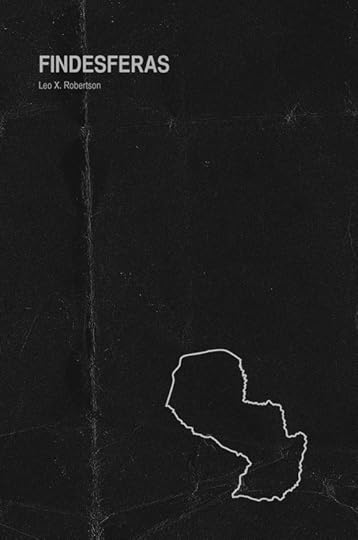
FInal cover design for my novel “Findesferas” which takes place in Paraguay- serialised on this blog but also available in paperback or as a free ebook here: http://www.lulu.com/shop/leo-x-robertson/findesferas/ebook/product-21459755.html
February 9, 2014
Front cover for “Findesferas”, my novel about...
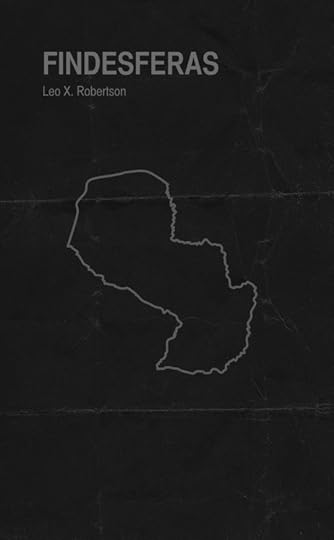
Front cover for “Findesferas”, my novel about Paraguay!
Findesferas: Introduction (Epilogue 1)
The marshal woke up with a shudder so violent that his head almost bounced on the hard, smooth surface beneath him. As he moved his arms to raise himself up, he felt the weight and texture of a silky material, diaphanous, slippery like a flat fluid. It was wide, folded upon itself, covered him completely. His hands found the edges of the material and he pulled it up before his eyes. Light, paler than the moon, like a spotlight pointing upward from an unknown source, reflected off of the material, and the marshal scanned left to right: red, white, blue. It was the Paraguayan flag, and as he dragged it across his face, a telltale spot of blood identified it as the very flag he had torn up and tried to ingest, rather than give to the Brazilians, intact again. How was this possible?
Irritated, he clawed away at the flag almost frictionlessly, pushing it to one side so he could stand up. He looked down at his vast belly, removing his leather gloves to feel the red felt-like touch of his uniform. He was hit by a wash of peace, calm and reassured.
‘So, I have died a hero’s death’, he thought to himself.
The glass beneath his feet made dull clunking sounds as he walked straight ahead, leaving the flag behind as a reference point. The pale light from below revealed the floor to be made of a thick glass, which the marshal saw to be concentrically warped like an old circular window.
‘Then the floor is circular, too.’
The rings of glass warp got smaller and smaller towards the flag.
‘I woke up in the centre of this floor.’
All around was impenetrable darkness, no walls of which to speak, just thick nothing. Beneath the floor was nothing. Above was nothing. A negative mist all around. The marshal sighed. He continued clunking in a straight line, eyes on the floor, using the rings as a guide, walking for a good number of minutes, until he shocked himself as his forehead hit off something. He stood back and jerked his head up. ‘Hm’, just more nothing, plainly in front of his face. He reached a hand forward to feel an invisible flat cold.
‘Is this glass too?’
He gave it a knock. Clunk. He placed his hand flat on the wall again, and rubbed it from one side to another. This… container he was in, whatever it was, it was so wide that he could not detect any local curvature at the boundary. Suddenly he didn’t feel so heroic.
He remembered the story of the minotaur. Place your left hand on the wall of the maze, never remove it, not for anything. When you go back again, turn around and use your right hand, never get lost. So, the marshal placed his left hand on the wall, and paced his way regally around the room, in an imperceptible curve. This took some time, but he wasn’t to know how long. ‘God! This could go on forever. How am I to know where I am if I can’t see anything? If there’s nothing but glass all around?’ When he got bored, he could always retreat back to the flag by following the warped circles again.
He desired to test his hypothesis that he was in a large glass beaker by dropping a glove on the floor. This seemed perfectly logical, but as he peered over his belly, he realised how dim the light was at the walls, and he couldn’t see his own feet. He stroked his thick, bushy beard in curious consideration. With the smooth glass beneath his feet, he had little need for his boots, so he took them off and kneeled down to place boots and glove in a leathery line by the wall. ‘It will be hard to miss this under my bare feet’, he thought. And so, left hand went back on the wall and the marshal paced his way round.
He thought absentmindedly about the war, not with any sense of regret, just replaying some moments of it to keep his brain ticking on his jaunt around the jar. Perhaps no one had believed that he would really fight to the death for his country, almost against all reason it seemed, by the end. But who else was going to do it? Amidst all the chaos, it looked like the very nation of Paraguay was going to be completely eradicated. It was through some small miracle that she escaped this happening in the past, during The War of The Triple Alliance. He knew in his heart she would have no such luck this time. Even in death he felt discontented by this thought, that his great country would die as he did. A man does not shed a tear for his lost nation. Sure enough, he felt the soft sigh of crushed leather under his feet. This was some large infinite cylinder of sorts. The marshal felt a rage inside him begin to grow, utterly dumbfounded by his new surroundings. This was no place for a field marshal to spend eternity! Where was the glory in a large glass beaker? What a mess, a mistake surely? How dare he end up here, after all he fought for, how valiantly and proudly he defended his beloved country until the very end…
Well, if he was going to spend any longer here, he should know the dimensions of the object. With this, he decided to pace back towards the centre, and just as he decided to do so, a large wet slap sound rang out, and he felt a shudder in the glass beneath him, and a loud meditative gong noise caused him to crouch down, bracing himself should the glass shatter. It seemed to come from right in front of him. He edged slowly back to the middle, fearing what he was going to see. As he returned to the centre, he saw a silky corner of the flag emerge from the darkness, and to his horror as he edged ever nearer, another boot, toe pointed down to the floor. He stood back nervously, letting the black smoke dissolve the image before him for an instant, before drawing nearer still, boot reappearing, connected to a leg, another boot, another leg, another man in the pale spotlight upon the flag. He kneeled down and saw that it was in fact a bloodied corpse. On closer inspection, his red shirt and white trousers showed him to be a soldier, one of the marshal’s own.
‘Well, what was all that about? Hm, obviously he fell from above, was it the fall that killed him?’
What was happening?
The marshal turned the body over, not at all phased by the gore, to see if he knew the man, but he was too badly damaged from the fall. It was safe to say that he wasn’t going to be possible to identify. He sighed.
What else to do? The marshal lay down beside the man, placing his stubby hands comfortably on his barrel chest, and looked up. Nothing but dark. What was the meaning of this place? He felt no sympathy for this other man, and began to feel a bit annoyed by his presence. This soldier’s corpse had no place in his hero’s promised land, disappointing as said land turned out to be. He frowned a deep frown.
It was difficult to tell how much time passed until the marshal noticed a pale dot emerging from directly above, but it was about to get easier. He was startled by this new change in his surroundings, and stood up to narrow his eyes at the dot. There was a low, breezy sound that appeared to accompany this new sight that was slowly expanding in size.
‘Could it be that…?’
The marshal placed his hands on the vicinity as near to his hips as he could reach. Yes, as the dot got closer still, it sprouted four fronds, waving back and forth, and as the object spun around the fronds moved in and out of sight, the whistling grew louder. The marshal’s eyes became much wider as his suspicions were confirmed, the object was a second body hurtling to the floor! He waddled carefully away, his feet slipping on the glass, moving out of sight as the body slammed on the floor, the marshal still within earshot of a loud cracking sound that caused his face to twist in disgust. Then he understood, he didn’t know how, but once the idea entered his head he knew it to be true.
This was no beaker, no infinite glass cylinder. This was some form of human hourglass, and these bodies were like grains of sand. He was the very first grain. This was all for him, and it was no hero’s death.
Findesferas: Chapter 1
The story of how the choguy bird came to be starts with an indigenous Guaraní boy, playing on a sunny day, who asks the orange tree if he can have one of its fruits. The wind that whistles through the tree replies that he can have all the oranges he wants if he only climbs along the branches. The boy, so pleased with this offer, begins to climb the tree, but as his mother sees what he’s doing she cries out ‘Ñanderú - guazú! Mirí, mirí! (My god! Little one! Little one!)’. The boy jumps to hear the cries of his mother, loses his grip on the branch and falls to the ground. The distraught mother runs to the boy to help him, but he does not regain consciousness, and she cries out in anguish. The boy has died. How the wind whistles now with such sadness! ‘And to think that I offered the boy all those oranges… Up he went along the branches, and couldn’t take a single one!’
Then God, knowing how much joy the boy brought to his mother, and how much he loved oranges, wakes him up in his mother’s arms and turns the little Guaraní boy into the choguy bird, who flies up high in the orange tree.
‘Cunumí! Guirá-mirí! (My son! A little bird!)’ exclaims the mother.
‘Choguy, choguy!’ says the boy.
Choguy, choguy, choguy, choguy,
que lindo va, que lindo es
perdiéndose en cielo guaraní.
How cute he is, how sweet he is, losing himself in the Guaraní sky.
Choguy, choguy, whistled the bird outside the window of young Juan and Matías, at two o’clock in the morning. To the twins, it was not the innocent call of the bird, but of the evil Kurupi, the stunted god with hairy feet, come to snatch them in the night. Their little hearts started pounding, Juan ran over to his brother and grabbed his arm as hard as he could, but Matías told him with a look that they could relax: the call was so close outside the window, so Kurupi was far away, as it was said. Juan watched in anticipation as Matías peered out to the ground beneath the mango tree outside. No fallen mangoes. The Kurupi was not in the tree. Close birdcall and no mangoes: neither of these were proof that the boys were safe from the Pombero, however.
They heard their grandmother, out on the porch, talking in a low voice in the dark. A strip of dim light from the window ran over Matías’ face, who looked at his brother in disbelief. Juan, confused, about to cry, shook his head as Matías took his hand in his and led him out the bedroom and slowly creeping down the stairs. Their grandmother’s voice grew in volume as they approached, and while the words had not yet taken form they had a repetitive tone like a chant. Juan pulled in the opposite direction from Matías, trying to ballast his brother’s foot from reaching the next step as they creeped closer and closer, down the stairs and to the cool kitchen tiles, crouching by the countertop. Their grandmother, back to the boys was bent over, hands on her thighs, gold rings catching the pale glow of streetlamps, whispering the same phrase over and over. As the boys approached, Juan’s nails cut little arcs in Matías’ arm, who used his strength not to cry out as they both saw that their grandmother was not alone, the outline of a small dwarf-like naked boy with straight and straw-like hair, the figure visible through the upside-down V of grandma’s legs, the strength of her stance giving conviction to her words:
‘Kuarahy Jára, take this caña paraguaya and these cigars, you will bring no harm to this family. Kuarahy Jára, take the gift I give you, do not harm my grandsons tonight.’
They crept back upstairs, afraid to turn their backs to the little beast in case he saw them, made it back to the bedroom and crawled into the same bed, limbs overlapping, Juan started to cry.
‘Shut up!’ hissed Matías.
‘What’s grandma doing?’
‘I don’t know.’
‘What’s going to happen to us?’
‘Nothing.’
‘Why?’
‘Because I’m here.’
(30 years later)
Oh, dear oh dearest captain!
Guide us the infinite!
How noble art thou captain,
And yet a piece of shit?
Where guidest us dear captain,
In dark day and deep night,
When deepest dark betrayal,
Cast thou in terrible light?
How beautiful the fair maiden,
Was never more than the fruit,
That bore your fair-haired wifey,
Before this awful pursuit?
How easily you cast off
The joy of yesteryear,
When verily your life’s work,
Was hardly ever so queer.
What will become of your bloodline,
When bloodline turn-ed to oil?
And oil began to grant thee
Grand plans and great turmoil.
O captain thou art brilliant,
But none so foul or fair,
Would burn thy lovely daughter,
To carbonaceous air.
How dare thee noble captain,
Play god with one so young?
Despite her overthinking
Incapable of fun.
O captain my old chum,
How far off fallest thou,
From the path on which we travel,
To the land beyond the clouds?
Please remedy me this!
Great lord of skies above!
How awful the proceedings
Like a twisted turtledove!
Of darkness we’ve seen plenty,
Few light and far between,
The gods and heavens sent me,
To save your precious teen!
Captain taught you me this,
That life is but a sphere,
It starts with an abyss,
And ends with doubtless fear.
O friend dear friend of mine,
Pray do explain me this,
How crushed you so your daughter,
Sent quick to darkest bliss?
Now ends this tragic tale,
And misdemeanours so
Dastardly that I failed,
We finish the fatal show
True, torture was aplenty,
And ruminations too,
What message we find if any,
Be short and sweet and true,
Were learn-ed more the nation,
And from the benefit,
Of silent contemplation,
Could we avoid a tale so fit,
To demonstrate our failure
As humans? We doth quiver:
Look out for your poor neighbours,
And from cruel fates deliver!
Juan had memorised the last stanza: he felt it had a grand feeling to it, a crescendo, and he all but sang it out looking expectantly at Matías, who stared unflinchingly down the scope of his πSniper , no target, just desperate not to meet Juan’s eyes.
‘…Is that it finished, then?’
‘Um, yeah. What did you think?’ Juan embarrassedly took out the map, and pretended to trace their advance from their position with his finger.
‘What’s it about?’
‘I’m not really sure, just going where my brain is.’
‘Right.’
‘There’s nothing out there, Matías.’
‘I know.’
Matías sighed, and turned to his brother, anxiously pushing a damp lock of hair out of his eyes with his piano fingers. ‘It’s shit, bro.’
Juan looked at him in astonishment. ‘That’s it?’
‘Okay, if you want some advice, don’t worry about it. You’ve got plenty of time to work on it while we’re out here.’
‘Ok… thanks.’
Down the scope of Matías’ rifle, the day was hot, wavy and silent. Every morning for the last few months, Juan and Matías would leave the base camp together to defend from a nearby skyscraper. They lay on the cool tiles and a pleasant breeze entered through the broken windows. It was beautiful up there, and one of Juan’s single remaining pleasures was to lie on his back and look out past the jagged shards and up at the sky, pretending he was a giant fly stuck to the ceiling and the floor was made of clouds. If the floor was clouds, you could be anywhere in the world, anywhere.
The war used to be panicky and confused, but over the years there was a noticeable decline in action. This was mostly because everyone had finally figured out what side they were on. It started as everyone’s one-man war against everyone else, and through all the disorder was a mass annihilation. Finally, the country leaders decided to do it the old-fashioned way and team up their countries against each other. This seemed the most logical type of war, which wasn’t really saying much at all.
Juan and Matías couldn’t even fight through the crazed civil wars in Paraguay. It was this same break out of civil war in Uruguay that was destroying its force against its bordering countries, Argentina and Brazil. After all the years, still there remained pockets of ignorant bliss: one could almost take a holiday in Montevideo and forget everything that had passed. For the soldiers, the best solution was just to wait, and find out slowly who the enemies were. Waiting was great and it was dull, and Juan had more than enough time to work on his poetry, but it just would not get better, and he knew why.
Matías rolled onto his back, searched through his pocket, in which he found:
1. A smashed lighter. All the lighter fluid was pooled together and saved for fuel purposes.
2. A tattered letter from Octavia. Matías was never sentimental about objects, but now felt that he had to be. They were the only close reminder of his wife at home. This object was sentimental indeed, but not something he otherwise would have kept.
3. A match, and a sandy rolled-up cigarette. Ah, there it is.
Matías lit the cigarette and puffed it into the still air above him. Little clouds ventured out of the broken building into the wind and the ash scattered about.
‘Can I tell you again?’
‘That’s the deal. Listen to my poetry and you can tell me when you want.’ Juan laid it out like that, but he would listen to his brother anyway: he did so long before he started writing poetry again.
‘Okay. I followed her to an art gallery. She was sweeping all this soft, brown draping clothing behind her, I saw how confidently she strode down the street, I didn’t even see her face.’ Pause. He had to get every detail just right, every time.
‘The grey streak of…’
‘Oh yeah, so her hair was jet black, but there was a grey streak of it that was blowing behind her, so shiny in the sun, just for me, I thought. I wasn’t surprised when she headed into the gallery, and then I knew she worked there. When she turned around, I thought she had the most beautiful face I’d ever seen, I promise you that. Angular in a really unusual way, but all the dips and troughs added up perfectly. I pretended I was interested in one of the paintings, but just to get talking to her. I saw the way she looked at me. She knew I didn’t care. I didn’t even look at any of them, just at her, I couldn’t tell you what they were now. She was laughing, all the time laughing, jingling her chunky jewellery about. All these different stones I’d never seen before, and I couldn’t tell how her clothes were divided up, just strange segmented layers of linen cloth wrapping her up from every direction. She had her own style. I knew she would be difficult.’
Juan thought about what a good brother he was, keeping Matías’ memory fresh about Octavia. But in his heart grew a terrible pain each time, each detail, each thought about her like a punch in the chest. Juan was a coward.
Later, the men were to return to the camp outside the city of Caacupé, where three fellow soldiers, Gustavo, Cesar and Marco, were sitting in a circle on sacks of yerba mate.
It was unofficially agreed by all that no conflict was to take place in the city. War was not reason enough to disrespect the city and its significance. Caacupé was a very important place for all of Paraguay. The story goes that an indigenous boy christened by missionaries by the name of José, headed out into the forest in search of timber. José was a happy boy, a woodcarving artist, ambitious and always learning new things. While gathering timber that day, José was distracted by the exotic sights and sounds of the birds and other animals on his journey, enjoying the warmth of the still air and the gentle bird calls all around. He strayed too far from home and lost his way. José was confident and resilient. He hid the wood he had collected in a safe place and carried on confidently along what he thought was the path back to his village, but hours passed, the night grew darker and José couldn’t even find where he hid the wood, let alone find his way out of the forest. Suddenly, he realised that the birds were silent, and now the sound of distant murmurs was carried through the air. José walked faster, away from the murmurs, but they did not die out. José was being followed. He ran, the cruel branches and vines of the many trees catching and cutting his arms and legs. His pursuers were a group of the godless mbayas, fearsome warriors. They whooped and laughed, speaking in an unfamiliar language, closing in on José, surrounding him as he stopped to rest behind a tree. José was spent, the hunt had gone on for too long. He was lost, didn’t know what to do. He prayed, ‘Oh holy virgin! If I escape with my life, I promise you that I will carve a beautiful wooden statue in your image with the very tree that protects me now.’ The warriors got closer to José’s tree, his heart pounding as he heard twigs snap underfoot not seconds away, and finally he saw the men. They stared at him. They stared through him. They continued on. José was safe! Once the men were far enough away, he hacked a decent chunk of the wood from the tree, now recognising where he was and walked safely back to the village to fulfil his promise. José made two statues of the virgin: one rests in the church of Tobatí and the other (the only image of the virgin with gold jewellery and real hair) in the Basilica of Caacupé, where hundreds of thousands of people would make a pilgrimage from the capital Asunción. The devout would do so on their knees.
As Juan and Matías lay high above in the broken skyscraper, a rival group of Paraguayans with an oily agenda were about to invade. Matías spotted them just quick enough as they appeared first as five small dots on the horizon,
Juan bolted down the stairs at an alarming speed, swinging off the banister and jumping three, four steps at a time, landing hard and bracing himself to absorb the shock but the pain accumulated as the numbers of the floors descended, he got to 20… the horses came nearer. Juan wanted to cry. Still he ran down, down the stairs, three men, Gustavo, Cesar, Marco, lives in his hands, come on! 15… at the field the rebel Paraguayans whooped, here they come, the soldiers turned and saw, running to the trenches, preparing to do battle, 10… oh god, thought Juan, my heart is exploding! He was sliding down now, two steps at a time, throwing his body weight forward to propel himself down in time… 5… It’s only five floors, use the lift shaft! They were all opened for emergencies, electricity long since switched off, Juan drew his sleeves over his hands and leaned forward onto the thick twisted wire, gripping tightly between sleeves and boots, firing down the cable sang ‘wheoooww, wheooohhwww’ and smack! Boots hit the floor and he ran with his remaining strength to the trenches.
Soon enough, bullets were whistling overhead. Juan crouched down in the trench, close to tears, clutching onto his rifle as if it was his brother’s arm. Matías lay on the cool tiles of floor, head and arms well above ground level, elegant fingers supporting the πSniper effortlessly, big docile cow eyes. The galloping hooves made the ground shake, and while Matías’ elbows were resting on the tiles, the scope was steady, and narrowing in on its target. There was a loud guttural foaming sound that cut through the static of the artillery fire as a πBullet caught Gustavo in the neck, and Juan, hearing his friend’s voice in the foam started to cry with anger, raised himself up enough to prop his πRifle on the lip of the trench, and looking in the opposite direction fired off a round that soared through the air landing square between the eyes of one of the enemy soldiers.
Matías, seeing this improbable act started to return fire, catching a horse in the flank that wildly shook off its rider. Cesar, leaning on the trench wall was breathing hard, πPistol raised by the side of his head, concentrating and judging the distance of the men by the sound of the horses. Marco was behind the sacks of mate, intermittently dipping over the top and firing a shot from his πRifle, but every time, nothing. Cesar’s breathing was now more rapid, his brow knitted, he scrambled above the trench, and Matías looking down the scope did not see him as he ran screaming at the remaining three men, zig-zagging as bullets almost caught his feet, chest and arm, firing wildly and hitting one man in the neck and another in the head. The last rider tugged hard on the reins and changed his path, trampling Cesar underhoof, closer and closer to the trenches he rode, galloping galloping, the men were waiting for a chance, a clear shot and crack! Marco popped back down behind the sacks for the last time. One man left, Matías fired off a shot that flew on a divine path, partitioning the air in all directions as it traded speed for altitude, flying down down from the window of the building across the streets of the city, a little golden bird of death, a soundspeed saviour, rifling pirouetting nearer nearer and softly parting flesh, spending but an instant in the assailant’s heart, then tearing out his back and like the newly dead man, but much faster, making its final home in the earth.
Juan heard the horse gallop onwards, where she may, and as the sound of hoofbeats faded asymptotically to nothing, he closed his eyes hard to force out the tears of loss for his departed friends.
It was a time before Matías made it out the skyscraper, walking at his own pace towards his brother, and slower still as he emerged from the shadow of a building into sunlight to indulge in the small pleasure of extra-terrestrial warmth. The pleasures were few. Large flapping insects passed his ears with a bell-shaped curve of vibrating insect noise, Doppler-dragged into lower tones as they trailed away behind them, and in that moment he felt his home, Paraguay, all around. Not the Paraguay of now, or before the war, but what Paraguay was, sunlight, warmth, buzzing insects, the timeless combination of senses that made up the almost imperceptible notion in his head of that elusive sensation, Paraguay.
He reached the trench, and with a sigh, grabbed a bag of mate and yanked his brother’s arm almost clean out of its socket, dragging him out of the trench and into the thicket of trees, not speaking, only performing.
The brothers sat, cross-legged, facing each other, Matías wiping the sweat from his forehead with his sleeve, Juan’s breathing no less rapid several minutes later, erupting into tears once again. Matías stared at him, furrowing his brow, then cranking back his arm as he gave his brother a vicious slap that rang out through the trees.
The waiting had done terrible things to them.
‘I hope you know that it was your fault.’
Juan’s mouth started to open, the tears on his face stopped in disbelief.
‘You were supposed to be watching from down there, but you just couldn’t leave me alone! What did you think you were doing in that building with me?’
‘What are you talking about? I’ve been there with you every day!’
‘Listen to what you’re saying! I can’t protect you all the time anymore, you’ll have to start looking after yourself.’
‘I…’
‘Quiet, you know what things there are in these forests.’
Juan touched his fingertips to his flushed cheek, trying to remember the last time his brother had slapped him like that. When he was five, probably.
The impatience, the years of disruption and the fleeting nature of safety and companionship was too much. Both the surviving men knew that. Neither of them had to try and understand Cesar’s actions, only sympathise. They were just one day away from running blindly at their enemies themselves, the fantasy of drawing their own wars to a desperate conclusion was just too tempting. What a pleasure it was to think it could be over one way or another, for good, never again.
Friendships and camaraderie had developed much faster than usual amongst the troop, and all that time spent doing nothing together had them convinced that they could ride out the war, return to their cities and continue on living as they had. They made plans and remembered birthdays, took turns preparing the breakfast, their whole system of living with its own in-jokes and nostalgic memories erased in an unfortunate meeting with some opposing soldiers. The brothers took time that they didn’t have to reflect in the forest, no safer here.
Right, what was the new plan then? Matías reached into Juan’s pocket and pulled out the map. Juan was better with the maps, but this was just a signal Matías was giving to wake him up a bit. Juan took the map back and pulled out his compass. ‘There is a village some miles from here’, said Juan in a wavering voice.
‘If we head east out of the forest, we can reach Ypacaraí in a few hours.’
‘Good.’
‘Matías… You shot someone.’
Matías sighed, placed a hand on his shoulder, flashed him a steely look.
‘It’s why you’re still here.’
An even more hideous whistle than that of the bullets began to plague the air. ‘Choguy, choguy’ said the trees. Losing himself in the Guaraní sky. ‘Choguy, choguy’, fainter and fainter each time. The brothers met eyes in silence, not breathing, rose to their feet. The gentlest rustle of leaves was unbearable as they walked towards the beams of light slicing through the trees, and Juan’s eyes started to well up again. The little arcs of his nails began to form on his brother’s arm, and Matías used the pain to focus as they patiently proceeded towards the light, out of the trees. As a mango fell to the ground, the two men stopped and closed their eyes. Matías shook his head ‘No, no’. Kurupi was fast approaching, the seductive stream of light getting closer as the men began to walk again, gently increasing their pace as the choguys got louder and louder before emerging from the thicket and breaking into a sprint in the direction of Ypacaraí.
January 23, 2014
Cover that my sis designed for my short story collection! :D :D
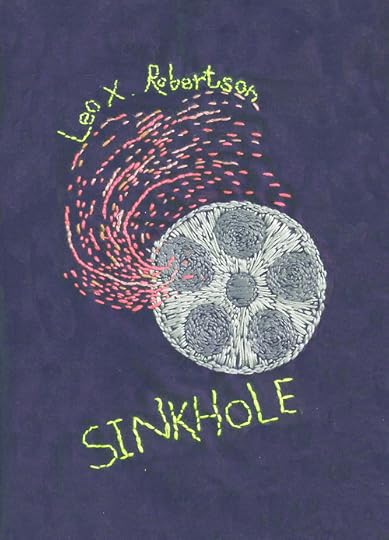
Cover that my sis designed for my short story collection! :D :D
January 21, 2014
Review: QWP's type A+
It was said that James Joyce was distinct from any other author in that he only published masterpieces: not anymore. Literary genius, thy name is Pu.
Using her instantly clear-voiced narcissistic prose, Pu takes us through a wonderfully concussed melange of racism, religious bigotry, homophobia, stereotyping, eating disorders and assorted judgments, creating a vivid world of amoral realism lending itself to such giants as Easton Ellis. Along the way, even with postmodernism veritably saturating the wealth of literary techniques, qwp manages to invent her own: in the very act of passing this work of cutthroat social commentary as a memoir at the laughable age of 23 or whatever, she makes the statement that her ideas are her own, and proclaims a bravely self-named protagonist to be her Nabokovian slave, her own unreliable narrator grinning from the very cover in an act of narcissism even before the words begin, an easily-overlooked act of true artistry unseen in any other contemporary work. But enough: let us now deconstruct the utterly dustless mirror of life, the diamond-cutter’s lens into a true sliver of reality: type A+.
Nowhere in a work have I ever seen such vivid appropriation of the single-page hypocrisy. We hear Pu boldly state ‘I try to see the good in people and ignore blemishes’, and later on that same page describes a head triage nurse as ‘”WT with a degree,” with the abbreviation standing for “white trash”.’ In a later example, she bravely denounces the lecturers of her Caribbean author class as ‘idiotic people in academia that want so badly for dead white males to be chauvinists, imperialists, racists etc.,’ and not 500 words later describe a woman as a ‘Washed-up child actress (intense Southern accent, general disdain for anyone that is not Caucasian)’ so wide is the bore on Pu’s slanderous shotgun that once you enter her twisted world, no one is safe. And of course there is the most famous of her gratuitous Mean Girls references (bar the time she tries to pass the “like seeing dogs walk on their hind legs” joke as her own as an obvious commentary on contemporary reappropriation of other sources, or “plagiarism”):
‘She was a complete stranger to me, and everyone in the lineup looked confused as to who this weirdo was. I was waiting for Damian from Mean Girls to jump up and say, “She doesn’t even go here!”’
And later on the same page:
‘What the heck kind of scholarship pageant references pop culture to measure a woman’s grace!?’
And as the novel continues, the effects of the protagonist’s personality disorder escalate into an almost surreal horror to which she is oblivious, most evident in the scene where she pays a homeless man 20 dollars- and a bottle of prescription painkillers that she has stolen from her work- to wash her car, and like the most masterful of auteurs has clearly pained herself at the writing desk for that extra detail, in this case a touching monologue of how selfless this act is, a perfectly-crafted bathetic stanza of purest dramatic irony: her narrator is lost, cut-off from the world around her, all her connections to society plugged with self-delusion. And towards the end the characters around her begin to dissolve, total strangers giving her only the advice she wants to hear and the words that she herself gives them, such as in this example, where she crashes into the car of a man, then inexplicably has coffee with him:
‘”Don’t do it.”
Okay, thanks jerk. First, your car positions itself to get hit by my car, and now you’re telling me to ditch the only honourable intention in my life. You should probably be the next Oprah.
“You obviously don’t want to be in medicine. Let me guess: everyone has already told you this is what you should do. You’re smart, so you could do it, and now you’re too proud to walk away after you’ve got all your plans lined up.”
Wow. Adam’s words hit me like a brick wall.’
Pu is clearly a disciple of another American great: her protagonist is much like Wallace’s Hideous Men, but instead of internalising all the questions she is asked, she fills the mouths of the people she meets with answers to questions that never existed. This is used to heartbreaking effect.
Now in a work as dense as this, there are obviously a plethora of new meanings that arise from further readings (for example, I haven’t yet deciphered the purpose of her change of present to past tense for the last few chapters). I mean, consider such subtleties as her insane spending but meagre pay, and relentless bashing of her father? A lazy reader may not connect the almost Eva Smith-like significance of her father, working his way through her life, paying for everything but going unseen. It is these subtle tragedies with which type A+ is enriched. I’m afraid all that can follow from this interpreter’s humble offering are some scattered analyses of other quotes from within.
‘There are a few substantive [e-mails], like my mom telling me she paid my credit card bill, and it was $6000 and she doesn’t know how I spend that much money, or my ex-boyf asking me what I want for our anniversary, which actually won’t be our anniversary but obviously I’ll be wanting the standard strand of pearls in some sort of fancy arrangement that I don’t yet have.’ Her protagonist is a voracious man-eater, from whom no man is freed even in the act of relationship dissolution. This is an obvious reference to the timelessness of our age upon the advent of online communication and social media, where past, present and future horrifyingly collide. In fact, to all owners of this work she has given a permanent record of her protagonist’s shamelessness, and since this was her obvious intent, I have to commend her.
‘It’s about Shakespeare, and we’re reading Macbeth, which I’ve read maybe 30 times… I just wish I had a mimosa to make my crazy headache go away. Out, damn hangover!’ Here we see how her deliberately limited writing abilities demonstrate how reading does not mean understanding, and in this, she may be directly voicing her complaint to us book reviewers. She then couples this with her sentence-long assumption of the role of Lady Macbeth in a bold juxtaposition of the beauty of Shakespeare’s words with the triviality of popular culture. And Shakespeare comes back into play in the most unlikely of places: ‘Thankfully, by early afternoon, most of the hives have started subsiding. In case you’ve never had hives, they do this weird thing where they kind of fuse back into your body, like when you take cooked ground beef out of the fridge and the layer of fat reabsorbs as it comes to room temp, or like that part in Hamlet when the Melancholy Dane talks about his “too, too, solid flesh” that “would melt/Thaw and resolve itself into a dew.”’ While these two sections are spread far apart in the novel, there may well be deeper Shakespearian analogies lurking beneath, which would most likely reveal themselves in a second reading. Indeed, she has created a Shakespearian immortal, but with all the love that he so beautifully documented in his sonnets reflected inward upon herself.
And her meticulous conjuring of a young homophobe:
‘[My 40-year-old date] also turned out to be surprisingly spry on the dancefloor, which is important because I want my daughters to take ballet and jazz. I prefer to have no sons and only five girls, but in case I do have sons, I’ll stick to my plan of leaving them in the wilderness for 48 hours at the ripe age of six years old, to make sure they don’t turn out gay.’
‘UM. Homosexual-says what?! That was it. I cannot take a man seriously when he says “breasts.” Unless we’re talking about something serious, like chicken breasts or breast cancer, there is no way that this person is going to know how to change my tire or build my white picket fence. Douglass was already skating on thin heterosexuality ice, but now he had cracked it and was probably disappointed he couldn’t do more perfect figure eights or triple lutzes in a leotard adorned with sequins, feathers, and those rubies from the next room over.’
Her OCD cost-calculating and status-evaluating:
‘I’ve determined a simple formula for calculating the real cost of any item for which someone may mention a specific dollar amount:
Actual Cost = (n*1.5)/2, where n Is the claimed dollar value.
In this case, it is very obvious that the actual cost of these “$800 boots” is:
(800*1.5)/2, or $600. Casual $200 mark-up. Idiot.
(and yes, I realize the equation could be simplified to Actual cost = 0.75n. I’m not an idiot, but I like using fancy algebra, okay).’
‘He bought me some beers, which I threw away half-drunk, just so he would understand that I’m a little high maintenance. This seemed to really piss him off, so I immediately concluded: 1) he probably only makes $60,000/year, 2) he was too pretty and therefore doesn’t understand the concept of women being high main, and 3) we could therefore never get married.’ We must be thankful for these regions of greater narcissistic transparency which aid in finding this similar style in subtler regions of the text- I can only assume this was totally intentional on Pu’s part.
In the incessant “I am snapped out of my reverie” and mentions of her hatred of tequila (every time she drinks it), bizarre calorie counting and fat-and-skinny shaming alike contrasted with binge drinking, qwp’s protagonist is, in essence, all the problems of superficial culture in one. Every possible positive trait is applied to her, even when they start to contradict, and every negative trait is projected outwards likewise. I can only imagine with her protagonist working in a clinic that Pu herself (the author, not the character) spent many tiresome hours in all kinds of medical facilities and conducting endless interviews to really get to the heart of a narcissist as she does so successfully in this short work, creating a true original who sees beyond the peroxide blonde hair of the heroin-addicted single mother who enters her clinic to the stunning brunette beneath (sorry I didn’t mark a quotation there).
Reading type A+ is in many ways like reading Delany's Hogg again, except while Hogg revealed a brooding evil in all of us, type A+ is much kinder, and reveals a kaleidoscope of hideous traits we can hopefully find lacking in ourselves, at least to this same degree: in this, I believe that the concepts tackled here have benefitted from a female touch, and allow Pu to show us how drained a person’s words can make us feel even when she refrains from frequent swearing.
As Jonathan Franzen stated, something which is autobiographical requires pure invention, and in this way the author made absolutely sure that this work was completely 100% Pu. This guerrilla-published objet is available to one and all, and is absolutely essential reading to those of you bamboozled by the perma-positively reinforcing mindtraps of the narcissistic zeitgeist.
Of course, if this was serious in any way, I may lose sleep to think that such a person exists.
Luckily it’s not!
5 ‘Pu’s out of Pu.
January 4, 2014
Review: The Broom of The System by David Foster Wallace, and some chat about Goodreads :-)
I’ve pained and obsessed over the recognition of genius in others for a long time now and finally feel like I’ve made some progress in my own thoughts: this is the most I will ever have to say about a book I read only a third of before giving up.
This, this, a story told to me with all the confidence of a young man so filled with self-belief and enthusiasm for a tale that he might well explain the entire plot of a film he enjoyed to me after I had just answered ‘Yes, I did see it.’ [1]
To those of you who identified a general “first-book-problem-feel”, the following: almost completely paraphrased, apart from the DFW bits- I made them up obvs.
Robert McKee says: There must be an inciting incident very early on in the story- if possible, in the very first scene. If a scene does not progress your story, it is there most likely for background information. Cut it out! Find another way to put in that information.
DFW says: There must be an inciting incident at some point, surrounded by volumes of superfluity that wrap it up in 100 pages of background information before the next plot point arises. Tell the story out of order for no apparent reason, undercutting almost all story progressions you have. For example, if two characters are going to date, show them in bed together, and then explain how they first met- since your audience already knows that they are together, the excitement will instead come from… from um… [2]
Robert McKee says: it doesn’t need to be cut out of your story if it isn’t advancing the plot only if you are being funny.
DFW says: Exactly! Just as well I’m always funny.
(I say: this in particular strikes me as a bit of a risk. Occasionally hilarious, sometimes very funny, but frequently incomprehensible and at that point, since it doesn’t advance the plot, purely self-indulgent. Depending on how much you weight each of these properties might well determine your overall enjoyment- that’s something I can’t predict for sure.)
Anton Chekhov says: Cut a good story anywhere, and it will bleed.
DFW says: Hide your story under a thick callus, that chapters may be shorn off in their entirety with no harm done whatsoever to the sequence of events.
Anton Chekhov says: Remove everything that has no relevance to the story. If you say in the first chapter that there is a rifle hanging on the wall, in the second or third chapter it absolutely must go off. If it’s not going to be fired, it shouldn’t be hanging there.
DFW says: Lay guns on the floor, the walls, cover your characters in guns and meticulously detail every occasion on which they ever encountered a gun. May none of them go off.
[The developers of the game Half-Life 2] say: Give the player a hint of the true depth of the world, and let them fill in the rest themselves.
DFW says: The first gun that Lenore ever encountered was a Smith & Wesson M&P22 with a scratch on the hilt from where her father snatched it off her at age 11 and it scraped on the steel buckle of his Versace patent leather belt given to him as a present by Lenore’s great grandmother on the… And the second gun she ever encountered was… and the gun’s owner was…
Stephen King (On Writing) says: I’m not particularly keen on writing which exhaustively describes the physical characteristics of the people in the story and what they’re wearing… I’d rather let the reader supply the faces, the builds, and the clothing as well… if I describe (my Carrie), it freezes out yours, and I lose a little bit of the bond of understanding I want to forge between us. Description begins in the writer’s imagination, but should finish in the reader’s. When it comes to actually pulling this off, the writer is much more fortunate than the filmmaker, who is almost always doomed to show too much… including, in nine cases out of ten, the zipper running up the monster’s back.
DFW says: the zipper was of stainless steel (that is a steel alloy with a minimum of 10.5% chromium content by mass) manufactured by…
Anton Chekhov says: Don’t tell me the moon is shining; show me the glint of light on broken glass.
DFW says: Tell me the moon is shining, its angle, proportions, the exact hue and how it relates personally to each of the characters and the first time they saw the moon and how exactly the moon has and will always affect them because when they were five their mother first used bad language in front of them on the vernal equinox. This is what is known as “characterisation”.
Marina Abramović says: To be a young and famous artist is the killer.
DFW says: To be a young and famous artist is- the goal!
Ira Glass says: (well, all of this, worth a watch for storytellers)
DFW says: Hehehe. Wait, seriously?
Samuel R. Delany in Dhalgren says: Should I triumph over my laziness, I suspect I would banish all feeling for economical expression which is the basis of style. If I overcame my bitterness, I’m afraid my work would lose all wit and irony. Were I to defeat my power-madness, my craving for fame and recognition, I suspect my work would become empty of all psychological insight, not to mention compassion for others who share my failings. Minus all three, we have work only concerned with the truth, which is trivial without those guys that moor it to the world that is the case.
DFW says: (weepily a la Renee Zellwegger) You lost me at “economical expression”.
I’ve kept my own writing mostly well-hidden, never seriously pursued publication and pained about not adhering to all of these rules, but here’s someone who starts writing at the same age as me, can gleefully forget about all of them and be praised to high heaven (I will explain how to handle this kind of jealousy in due course).
This is the heart of postmodernism. Or wait, is it? All these things I seem to have collected after the age of 22, as a somewhat crude but nonetheless useful comparison. None of the writing seemed to be to be a knowledgeable revelation of the conceits of storytelling, it was much more accidental. As an example, I have a friend who works as a camera technician and made a postmodernist short film that was really good, but he wondered why his boss advised him not to use Godard’s techniques in future- well, you need to know the rules before you can break them, this we know. It’s not that I have a problem with the rules being broken, it’s my suspicion that they went by unknown. And I have grown to believe and maintain that “quirk” in storytelling is some form of enemy.
To use DFW’s analogy, the different parts of a broom might indeed be useful for different applications, but in this case we shouldn’t be forced to choose parts. Without enough glue to hold the thing together, I don’t know what it is, but it’s not a broom.
Back to the jealousy: if you want to be jealous of someone, you have to be jealous of everything, so the aphorism goes. Wallace fans should most definitely read Although Of Course You End Up Becoming Yourself where his suffering, self-doubt and unenviable smoking and junk food habits come to light- and by the way, not the useful Proustian suffering or the brand of anger-fuel that stokes Dostoyevsky’s creativity furnace, but a kind of useless almost Scottish yawning stretch of misery, so it seems to me. And let’s talk about that too. A book like this, so sprawling, warm and large can only come from a similar country- as a Scot, I’ve chosen the wrong role model. And the chapters with the short story ideas: what’s his point? Have you never had a failed short story concept? If they were chapters in Broom that just consisted of the short story I’d still want them excised and put somewhere else, but at least then it would make sense but no, it’s like a treatment that’s been halfheartedly converted into a convenient conversation, yet more evidence that this is a work far from a British claustrophobic minimalism that would be more interesting for me at least.
In the pointless self vs. DFW that I conducted, I’ve since decided that it’s noble to do any work well, and competition is far too diffuse for exact comparisons between any of us- what a relief. This is most apparent in artistic circles, but I see it extending to work of any form. This of course you already knew but as a scientist I’m not one to believe something without witnessing the evidence.
Finally: Screenwriter Larry Cohen says: Anything in life is going to be disastrous for you if you live your life to please other people… (and all the rest here at 5:00 min onwards)
So, best of luck to all individuals doing anything! We’re all trailblazers in our own way, and even when our disciplines don’t lend themselves to fame, we’ll know when we’ve caught the big fish, and ultimately that might be the extent of our satisfaction. That will be good enough for us!
If you found any of this useful, it’s a greater joy that you did so than that you read it from me, and that was the anxiety release of 1/3 of The Broom of The System.
[1] As I go on to discuss, apparently info-dumping is fine now. Here are some thoughts on Goodreads reviews in general.
I’m a chemical engineer but I don’t understand the Second Law of Thermodynamics. Entropy is disorder and disorder always increases, you cannot make a 100% efficient heat engine. Fine, but I don’t know what that means.
Entropy is defined as follows:
dS = dQ/T
That is, an infinitesimal change in disorder is equal to an infinitesimal change in heat divided by absolute temperature. Fine. But I don’t know what that means.
That doesn’t make me a bad chemical engineer. And I can use the Second Law because it’s been written down and understood by someone else, but that still doesn’t mean that I understand it.
Why, if you are a writer or otherwise, would you need to love and understand every enormous complex book that comes your way? Would you need to pretend to understand it, ever?
There was a code implanted in my brain that set off quite recently and programmed me to voraciously consume and purge out art. I mean to say that 2+ years ago when I never needed to care about writing fiction I only read Murakami about 2 maybe 3 times a year, because his were the only books that resonated with me. I used to enter bookshops and think ‘Wow, look at all these books- who the hell reads all of this? I’ll have one Murakami, please.’ And that was just dandy. It is no surprise to me that if now programmed to read 100 books/yr I genuinely like/love about 5 of them and understand around 20-25, depending on how many enormous complex meticulously WTF books I have chosen to read that year. And that’s just fine. And in trash there are moments of greatness, and in “really important works” sometimes there’s none at all. And that’s just fine too. Reading anything is just what you’re doing right now, it’s scanning your eyes left to right over a bunch of ordered letters, no matter what those letters seem to communicate.
It’s no secret to either of us that the reason we communicate on this site is not through an interest in how respectively clever or verbacious either of us are- I submit that such an interest would only serve to distance us. Why then, if that is true, would that change for writing reviews or fiction?
[2] In …Becoming Yourself he will suggest that the non-linearity of his writing reflects the non-linearity of modern life. Yet Robert Musil writes in an extended musing in The Man Without Qualities that “our activities no longer follow a logical sequence” in 1000+ pages of linearly-structured albeit Modernist prose. I suspect that Wallace’s non-linearity is part of his apparent fondness for quirks.
December 24, 2013
Story: The VHS Woman
A face. My face. On the screen at night. Rich warm skin tones and heavy green eyeshadow with red lips and bouffant hair. Large earrings that occluded the earlobe and dangled almost to the shoulder. My face held it all. Perfectly. I sit watching myself. On the screen I raise my hand slowly and press it gently to the side of my face, thin fingers and lacquered nails of red. On the screen I move my hand slowly down, down. In my living room I move my hand slowly down, down. I look sad, I look shocked. But it’s an act. I’m acting. My eyes become a blur as the tears slide around the bottom rim of my eyelids and my lips gradually part. My teeth are crooked, but pure white. A shudder of static. The image shakes left and right and the outlines of my hair, my face, my turquoise jacket with the shoulder pads like the lens was covered in Vaseline but it wasn’t. My image is fading. On the tape.
Like this I sit every night. When the tape was recorded it was a full moon and my face was illuminated in the glow, so it works especially well on those nights again. There are no mirrors in my house. The video is my mirror. But I’m losing her. I sigh. This tape is no good any more. I watched it too much. I could see when I raised my hand that the skin on the back of my fingers was creased and striated. I could feel when I touched my face that it didn’t have the same softness, the skin did not spring back.
I move to the next one. I open the sealed box beside the TV and brush away the little packs of silica that I stored over the years. From April 15th 1985 to April 16th 1985. There I am again in the same get-up doing the same act. My mirror returned. I rewound her and fast-forwarded her as I had before and she was me. She didn’t last either. Only weeks later I was on to April 17th. Then I had an idea. April 18th. Like a nicotine patch I weaned myself from the past in increments. Then one week later in 1985. Then a month. Then 1986. I looked at 1986 for a long time. I got so close to my old TV that I felt the static tickle my face. There were crow’s feet even then. My face still held the heavy make-up, the streaks of red blush on the cheekbones. It all worked but the foundation cracked around the corners of my eyes, giving way to the little crevices I know well enough today. I had a thought. I stopped to mirror myself in the television. I brought my hands up and delicately brushed the thin skin at the sides of my eyes. Sure, they felt much deeper. 1987. The style was changing, only a little. It wasn’t the shoulder-padded jacket, it was a neon pink bomber jacket. The hair was in a scrunchie. The whole act had changed. I was smiling in the video. As my eyebrows raised, my forehead turned into three or four rows of little skin rolls. I mirrored myself and held my palm to my head. As I released the expression, the skin fell back to its resting position much slower than it once had. I could tell. Curious. I felt adventurous. 1997. This one took me aback. I had stopped dyeing my hair. The lips were still red but the eye make-up was much more subtle. A light coating of mascara. A red blazer and a gold cross. I snorted. Don’t think I ever thought I’d need this one. Then to DVD. 2007. A black polo neck and hair in a loose braid. No make-up at all. Shots of silver and grey in my hair. I did not smile at all. In the video I rubbed my face with one hand all over, sporadically, scrunching up my features then stopped. Breathing heavily. I began to cry, silently, the tears ran in two wet lines down to my chin. My mouth opened. This time, it was not a deliberate effort of mine to mirror myself on the TV, I just did it. Myself and I cried together. I hugged my knees to my chest and my hair fell down before me, all grey. But there was a release. I knew I was doing well. My hand shook as I placed the next DVD in the player and pushed it in. I heard the whir of the disc as it started to play and the light of the screen passed through my eyelids. I knew I was there. 2013. I looked in horror at my wide staring eyes, my lolling jaw, liver spots, some short black hair jutting from my chin. Such a rapid run through history and I saw my ears were larger, my nose was droopier with the growth of new cartilage. I turned off the player. The room was dark and I was perched on a large black cushion on the floor, leaning my back against the angular coffee table. I examined the backs of my hands, saw the distended blue veins and spider-like tendons. I pinched the skin. It peaked and relaxed so slowly back to its resting position. I pulled back the sleeves of black silk bathrobe and looked at my arms. The same. Spotted white skin. I ran three fingertips over the flesh. One reached the crook of my elbow and I let it run back and forth, then it drew circles all the way back to my hand, it felt nice. I closed my eyes, breathed deeply and ran my hands through my hair, pressing my fingers into my skull and leaning my head back. As time passed, each of my mirrors had crumbled. The woman of 1985, she was not me. Nor were the rest. Nor even the horrified woman of yesterday. None of them were me. I brought my head back to resting position. I turned to see a dim light emerging from beneath the long, thick curtains. So it was morning. The room was just illuminated enough for me to make out all the objects it contained. I turned my head to see my reflection in the glass of the TV screen. Today, I would leave the house.


