Mary L. Erlain's Blog, page 3
October 2, 2025
Faster Trend Spotting through Collective Observation

Here are some creative and well-thought-out logical ideas for spotting trends and recurring challenges faster through collective observation:
Centralized Data Aggregation & Analysis
“Trend Beacon” – AI-Powered News & Social Media Aggregator:Description: Develop an AI platform that continuously scans news articles, social media feeds (Twitter, Reddit, etc.), forums, and blogs for keywords, sentiment shifts, and emerging topics. It would then generate real-time alerts and visual trend maps.Benefit: Provides an unbiased, large-scale overview of public discourse and emerging narratives.“Challenge Pulse” – Incident & Problem Log Analyzer:Description: A system that integrates with customer support tickets, internal bug reports, project management tools, and service outage logs. It uses natural language processing (NLP) to identify common themes, recurring issues, and escalating problems across different departments or clients.Benefit: Proactive identification of systemic operational or product challenges before they become widespread crises.“Insight Harvest” – Collaborative Data Annotation Platform:Description: A platform where users (employees, experts, or even a curated public) can annotate, tag, and categorize raw data streams (e.g., customer feedback, competitor announcements, market reports). Gamification elements could encourage participation.Benefit: Leverages human intelligence for nuanced interpretation of complex data, complementing AI analysis.Community & Collaboration Platforms
“Idea Synapse” – Cross-Departmental Brainstorming & Observation Hub:Description: A dedicated internal platform where employees from diverse departments (sales, marketing, R&D, customer service) can share observations, customer anecdotes, competitor intel, and early warning signs. It would include voting, commenting, and topic-tagging features.Benefit: Breaks down silos, fostering organic cross-pollination of insights from different vantage points.“Expert Connect” – Curated External Expert Network:Description: Create a secure, invite-only platform for industry experts, academic researchers, and thought leaders to share their perspectives on emerging trends and challenges. Regular moderated discussions and trend reports would be generated.Benefit: Taps into external, specialized knowledge and foresight, offering a broader perspective than internal teams alone.“Client Co-Pilot” – Customer-Led Trend Reporting Portal:Description: A specialized portal or feature within a product/service where key clients or users can directly submit observations about market shifts, emerging needs, or recurring frustrations they encounter.Benefit: Direct, unfiltered insights from the end-users experiencing market dynamics firsthand.Gamification & Incentivization
“Trend Hunter” – Gamified Observation Challenge:Description: Implement an internal or external gamified system where individuals are rewarded (points, badges, recognition, small monetary incentives) for submitting validated observations of emerging trends or recurring challenges. Leaderboards and “most impactful observation” awards could be featured.Benefit: Motivates consistent vigilance and active participation in observation by making it fun and rewarding.“Pattern Pioneer” – Predictive Analytics & Forecasting Contest:Description: Host regular internal (or even public) contests where participants use aggregated data to predict future trends or identify potential challenges. The accuracy of predictions would determine winners.Benefit: Cultivates a proactive, foresight-oriented mindset and helps validate predictive models.Visualization & Accessibility
“Horizon Scan” – Interactive Trend Visualization Dashboard:Description: A dynamic, real-time dashboard that visually represents emerging trends and recurring challenges using heat maps, cluster diagrams, timelines, and sentiment gauges. Users can drill down into specific data points.Benefit: Makes complex data easily digestible and actionable, enabling faster comprehension of macro shifts.“Challenge Matrix” – Root Cause & Impact Mapping Tool:Description: A collaborative digital whiteboard where users can map out identified challenges, their potential root causes, interconnectedness with other issues, and projected impact. AI could suggest related problems.Benefit: Facilitates a deeper understanding of systemic issues rather than just surface-level symptoms.Automated & Proactive Systems
“Anomaly Alert” – Predictive Anomaly Detection System:Description: An AI-driven system that monitors various data streams (sales, website traffic, customer service volume, social media mentions) and automatically flags unusual spikes, drops, or deviations that could indicate an emerging trend or challenge.Benefit: Automated early warning system that catches subtle shifts before they become obvious.“Competitor Watch” – Automated Competitor Activity Tracker:Description: A tool that automatically monitors competitor websites, press releases, job postings, product launches, and social media for shifts in strategy, new offerings, or emerging challenges they are facing.Benefit: Provides competitive intelligence in real-time, allowing for faster response to market shifts.Focused Observation & Learning
“Deep Dive Digests” – Curated Trend & Challenge Briefings:Description: Regular, concise, and highly curated reports or newsletters summarizing the most significant emerging trends and recurring challenges identified by the collective observation platforms, tailored to different departmental needs.Benefit: Ensures key insights are disseminated efficiently to relevant stakeholders without information overload.“Scenario Sim” – Trend-Based Scenario Planning Tool:Description: A software tool that allows teams to input identified trends and challenges and then simulate various future scenarios. This helps in understanding potential impacts and developing proactive strategies.Benefit: Moves beyond observation to proactive strategic planning based on potential futures.“Observation Academy” – Training & Skill Development:Description: Develop training modules and workshops to teach employees how to effectively observe, document, and report trends and challenges. This includes critical thinking, data literacy, and communication skills.Benefit: Empowers individuals to become better “trend spotters” and “challenge identifiers,” enhancing the overall collective observation capability.The post Faster Trend Spotting through Collective Observation appeared first on Peak Development Strategies.


October 1, 2025
Learning from Others

Leverage Existing Knowledge to Avoid Common Pitfalls
It’s a common adage that experience is the best teacher, but it doesn’t have to be your experience every time. By strategically observing and analyzing the journeys of others, we can gain invaluable insights and accelerate our own growth. Here are some creative and well-thought-out logical ideas for learning from others’ successes and failures without having to make every mistake yourself:
“Success Archetype” Case Studies: Instead of just reading biographies, analyze the patterns of successful individuals in a particular field. What common traits, strategies, or pivotal decisions did they share? Create a “Success Archetype” for your desired outcome.“Failure Autopsy” Reports: For every major failure you observe, conduct a mini-autopsy. What were the contributing factors? What assumptions were made? What could have been done differently? Document these as “Failure Autopsy Reports” for future reference.Reverse-Engineer Masterpieces: Whether it’s a successful product, a brilliant marketing campaign, or a compelling speech, deconstruct it. What elements made it work? What was the underlying strategy? This is reverse-engineering success.“Pre-Mortem” Workshops: Before starting a new project, gather a team and imagine it has already failed. What are all the ways it could go wrong? This “pre-mortem” exercise helps identify potential pitfalls proactively, drawing on imagined failures.Mentorship “Shadowing” Programs: Instead of just meeting with a mentor, ask if you can shadow them for a day or a week. Observe their decision-making process, how they handle challenges, and their daily routines. This offers experiential learning without the risk.Cross-Industry Innovation Audits: Look at successful (or failed) strategies in completely different industries. Can a tactic from the hospitality industry be applied to software development? This encourages lateral thinking and avoids industry-specific blind spots.“Consequence Mapping” for Observed Actions: When you see someone make a decision (good or bad), try to map out the likely short-term and long-term consequences. This is an exercise in predictive analysis based on observed behavior.“Anti-Patterns” Documentation: Just as there are design patterns for success, there are “anti-patterns” for failure. Document common mistakes or dysfunctional approaches you observe in your field, acting as a warning system.Simulated “What If” Scenarios: Based on historical events or observed failures, create hypothetical “what if” scenarios. How would you have acted differently? What would the outcome be? This is risk-free decision-making practice.“Lessons Learned” Knowledge Base: Create a personal or team knowledge base specifically for lessons learned from projects, observed events, or even news stories. Tag entries by theme (e.g., “communication breakdown,” “resource misallocation”).“Biographical Empathy” Exercises: When reading about someone’s journey, try to put yourself in their shoes at critical junctures. What were their pressures? What information did they have? This builds empathy and understanding of decision contexts.“Public Failure” Analysis Clubs: Form a small group dedicated to analyzing public failures (e.g., product recalls, business bankruptcies, political blunders). Discuss the root causes and what could have been done differently. This fosters collective learning from external events.“Future History” Projections: Based on current trends and historical patterns, try to project how certain actions or strategies might play out in the future. This is about learning from the past to anticipate the future.Expert Interview “Pattern Extraction”: When interviewing experts, don’t just ask about their successes. Probe deeply into their biggest mistakes, what they learned, and what they would do differently. Look for common threads in their failure narratives.“Competitive Disadvantage” Deep Dives: Instead of only studying successful competitors, deeply analyze those who have failed or are struggling. What are their weaknesses? What mistakes are they making? This offers insights into what not to do.The post Learning from Others appeared first on Peak Development Strategies.
September 30, 2025
Ideas for Cross-Industry Peer Insights

Gaining Insights from Peers Across Industries and Roles to See Blind Spots and Uncover New Approaches
Here are some creative and well-thought-out logical ideas to facilitate cross-industry and cross-role peer insights:
Ordered
“Innovation Safari” Exchanges:Organize structured reciprocal visits where small teams from different industries spend a day embedded in each other’s workplaces.Focus on observing daily operations, problem-solving methodologies, and cultural nuances.Follow up with a facilitated debriefing session to identify transferable practices and blind spots.“Reverse Mentorship” Circles:Establish groups where senior leaders from one industry are mentored by mid-career professionals from a completely different sector.This allows for fresh perspectives on established practices and challenges conventional thinking.“Problem-Solving Pop-Ups”:Host short, intense workshops (e.g., 2-3 hours) where a company presents a specific, current business challenge.Invite a diverse panel of peers from unrelated industries to act as a “consulting board,” offering out-of-the-box solutions.“Cross-Pollination Sprints”:Facilitate virtual or in-person “sprints” focused on a common theme (e.g., customer experience, talent retention, supply chain resilience).Participants from various industries collaborate for a defined period to develop innovative solutions applicable to multiple contexts.“Industry-Agnostic Best Practice Audits”:Create a framework for auditing specific processes or strategies (e.g., onboarding, project management, data analytics).Peers from different industries use this framework to “audit” each other’s approaches, providing structured feedback and identifying alternative methods.“Thought Leader Salons”:Organize intimate, invitation-only gatherings (virtual or physical) with 5-7 thought leaders from highly diverse fields (e.g., a neuroscientist, a fashion designer, a logistics expert, a musician).The discussion is guided by open-ended questions designed to challenge assumptions and explore interdisciplinary connections.“Blind Spot Brainstorms”:Facilitate sessions where individuals or teams present a business area they feel is “stuck” or lacking fresh ideas.Peers from different backgrounds are specifically tasked with identifying potential blind spots or unconsidered angles based on their unique experiences.“Innovation Challenge Platforms”:Develop an online platform where companies post specific innovation challenges.Open it up to a curated community of professionals from diverse industries to submit ideas and solutions, fostering a competitive yet collaborative environment.“Sector Swap Shadowing”:Arrange for professionals to shadow a peer in a completely different industry for a day or two.The goal is not to learn the specifics of that industry, but to observe the underlying operational principles, decision-making processes, and cultural dynamics.“Ethical Dilemma Debates”:Present complex ethical dilemmas that transcend specific industries (e.g., AI ethics, data privacy, sustainability).Gather a cross-industry panel to debate potential solutions, revealing diverse ethical frameworks and priorities that can inform one’s own approach.“Analogy-Based Problem Solving”:Train participants to identify analogous problems in completely different domains.For example, if a company struggles with supply chain bottlenecks, peers from event management or emergency services might offer solutions based on their analogous challenges.“Cross-Functional/Cross-Industry Project Teams”:Form temporary project teams composed of individuals from different companies and different industries to tackle a shared, non-competitive problem (e.g., community initiative, industry standard development).This hands-on collaboration naturally exposes diverse working styles and problem-solving strategies.“Future Trend Forecasting Hubs”:Establish virtual or physical hubs dedicated to forecasting future trends.Regularly convene experts from disparate fields (e.g., futurists, demographers, technologists, artists) to discuss emerging patterns and their potential impact across industries.“Storytelling & Case Study Swap Meets”:Organize sessions where peers from different industries share their most challenging or successful case studies.The focus is on the narrative, the decision points, and the lessons learned, allowing others to draw parallels and identify new approaches in their own contexts.“Diversity of Thought Workshops”:Design workshops specifically aimed at highlighting and leveraging cognitive diversity.Bring together individuals from various industries, educational backgrounds, and personality types to tackle a common abstract challenge, demonstrating how different perspectives lead to more robust solutions.The post Ideas for Cross-Industry Peer Insights appeared first on Peak Development Strategies.
September 29, 2025
Reconnecting with Purpose and Passion
Here are some logical and creative ideas to help you step back from the daily grind and reconnect with your purpose and passion:
The “Purpose Prompt” Journal Retreat:Concept: Dedicate a weekend or a few days to a secluded location (cabin, quiet Airbnb).Activity: Bring a specially designed journal with pre-written prompts focused on values, past joys, future aspirations, and defining moments. No digital devices allowed.Outcome: Uninterrupted self-reflection, leading to clearer insights into core motivations.The “Skill Revival” Workshop:Concept: Identify a hobby or skill you once loved but abandoned due to lack of time (e.g., painting, playing an instrument, writing poetry).Activity: Enroll in a short, intensive workshop or hire a private tutor for a few sessions.Outcome: Rekindling dormant passions, reminding you of intrinsic joys beyond work.The “Shadowing a Dream” Day:Concept: Reach out to someone working in a field you’ve always admired or been curious about.Activity: Ask if you can “shadow” them for half a day or a full day, observing their work and asking questions.Outcome: Gaining practical insight into potential new passions or confirming existing interests, offering a fresh perspective on career paths.The “Digital Detox & Nature Immersion”:Concept: Completely disconnect from all screens and immerse yourself in a natural environment.Activity: Plan a hiking trip, camping excursion, or simply spend extended periods in a local park or botanical garden. Focus on sensory experiences.Outcome: Reduced mental clutter, allowing space for intuitive thoughts and a renewed appreciation for simplicity.The “Volunteer for a Cause” Sprint:Concept: Dedicate a concentrated period (e.g., a full week, or every Saturday for a month) to volunteering for a cause you deeply care about.Activity: Choose an organization that aligns with your values (e.g., environmental, social justice, animal welfare).Outcome: Experiencing the tangible impact of your efforts, fostering a sense of contribution and purpose beyond personal gain.The “Idea Incubation” Challenge:Concept: Set aside dedicated time to brainstorm and develop a completely new idea, unrelated to your current work.Activity: This could be a business concept, a creative project, a community initiative, or even a personal growth plan. Focus on the process of creation.Outcome: Tapping into innovative thinking, discovering hidden entrepreneurial spirit or creative drive.The “Mastermind Group for Life”:Concept: Form a small group (3-5 people) with trusted friends or colleagues who are also seeking purpose.Activity: Meet regularly (e.g., bi-weekly) to discuss personal goals, challenges, and aspirations, offering mutual support and accountability.Outcome: Shared exploration, diverse perspectives, and a supportive community for personal growth.The “Heritage Exploration” Journey:Concept: Delve into your family history or cultural heritage.Activity: Research your ancestry, visit historical sites related to your background, or learn a traditional craft or language from your heritage.Outcome: Connecting with your roots can provide a deeper sense of identity and purpose, understanding where you come from to know where you’re going.The “Silent Retreat for Clarity”:Concept: Attend a structured silent retreat (e.g., a meditation retreat or a spiritual gathering).Activity: Engage in guided meditation, contemplation, and introspection without external distractions or conversation.Outcome: Profound self-awareness, allowing inner wisdom to surface and provide direction.The “Bucket List Blitz”:Concept: Identify 3-5 long-held desires or experiences from your “bucket list” that you’ve always put off.Activity: Dedicate specific time and resources to actively pursue and complete at least one of them.Outcome: Reigniting a sense of adventure and personal agency, proving that your dreams are achievable.The “Mentorship Reversal” Experience:Concept: Instead of seeking a mentor, become one for someone else.Activity: Offer your expertise and guidance to a younger person, a struggling colleague, or someone in a different field.Outcome: Gaining perspective on your own knowledge and strengths, finding purpose in helping others grow.The “Personal Mission Statement” Workshop:Concept: Dedicate a focused session (alone or with a coach) to crafting a clear and concise personal mission statement.Activity: Use guided exercises to define your core values, unique strengths, and desired impact on the world.Outcome: A powerful guiding principle that can inform all future decisions and actions, ensuring alignment with your deepest purpose.The “Creative Constraint” Project:Concept: Undertake a creative project with specific, challenging constraints.Activity: For example, write a short story using only 500 words, compose a song using only three chords, or paint a picture using only primary colors.Outcome: Fostering innovation, problem-solving skills, and a renewed appreciation for the creative process, regardless of the outcome.The “Impact Interview” Series:Concept: Interview 3-5 people whom you admire for their impact on the world or their community.Activity: Ask them about their motivations, challenges, and what drives their passion.Outcome: Gaining inspiration from diverse paths, expanding your understanding of what purposeful living looks like, and potentially identifying new areas of interest.The “Day of Play” Experiment:Concept: Design an entire day dedicated solely to activities that bring you pure, unadulterated joy and playfulness, with no agenda or goal.Activity: This could involve building LEGOs, playing board games, swinging at a park, drawing stick figures, or simply running through sprinklers. Embrace silliness and spontaneity.Outcome: Reconnecting with your inner child, rediscovering the joy of being present, and remembering that purpose can also be found in simple happiness.The post Reconnecting with Purpose and Passion appeared first on Peak Development Strategies.
September 26, 2025
Strengthen Leadership Through Uncertainty and Change

Here are some creative and well-thought-out logical ideas to strengthen your ability to lead through uncertainty and change:
Embracing a Growth Mindset and Agility
The “Scenario Architect” Workshop: Develop and facilitate a recurring internal workshop where leaders proactively brainstorm and map out plausible future uncertainties (e.g., economic shifts, technological disruptions, talent shortages). For each scenario, they collaboratively design contingency plans and adaptive strategies, fostering a mindset of preparedness rather than reactivity.“Adaptive Playbook” Creation: Instead of rigid annual plans, create an “Adaptive Playbook” that outlines core principles, decision-making frameworks, and communication protocols for navigating various types of change. This playbook should be a living document, regularly reviewed and updated based on new insights and emerging challenges.Reverse Mentoring for Disruptive Trends: Implement a program where junior employees, particularly those immersed in emerging technologies or cultural shifts, mentor senior leaders on disruptive trends. This helps leaders stay ahead of the curve and understand potential future impacts from a fresh perspective, breaking down traditional hierarchical learning.Cultivating Resilience and Well-being
“Resilience Rituals” Integration: Encourage and model the integration of “resilience rituals” into daily routines. This could include short mindfulness exercises, gratitude journaling, or designated “unplug” times. Leaders who prioritize their own well-being are better equipped to support their teams through stress.“Failure Friday” Learning Sessions: Dedicate a specific time (e.g., once a month) for “Failure Friday” sessions where leaders and teams openly discuss projects or initiatives that didn’t go as planned. The focus is on learning from mistakes, identifying root causes, and extracting actionable insights for future endeavors, destigmatizing failure.“Compassionate Leadership” Training: Invest in training focused on compassionate leadership, emphasizing empathy, active listening, and emotional intelligence. In uncertain times, people crave understanding and support, and leaders who demonstrate compassion build stronger, more resilient teams.Enhancing Communication and Transparency
The “Truth Beacon” Communication Strategy: Establish a “Truth Beacon” communication strategy where leaders commit to consistent, transparent, and frequent communication, even when the news is difficult. This builds trust and reduces anxiety, as people prefer clear information over speculation.“Ask Me Anything” (AMA) with a Twist: Implement regular “Ask Me Anything” (AMA) sessions but with a twist: leaders commit to addressing the toughest and most uncomfortable questions directly and honestly. This fosters psychological safety and demonstrates a willingness to confront difficult realities.“Narrative of Hope” Development: Beyond immediate updates, leaders should actively work on crafting and communicating a “Narrative of Hope.” This involves articulating the long-term vision, highlighting progress, and emphasizing the organization’s ability to overcome challenges, providing a sense of purpose and direction.Fostering Collaboration and Empowerment
“Cross-Pollination” Project Teams: Form “cross-pollination” project teams composed of individuals from different departments and levels to tackle complex, uncertain challenges. This breaks down silos, encourages diverse perspectives, and empowers a wider range of employees to contribute to solutions.“Empowerment Zones” for Decision-Making: Define “Empowerment Zones” where teams or individuals are given full autonomy to make decisions within clearly defined parameters. This decentralizes decision-making, speeds up response times, and fosters a sense of ownership and accountability.“Idea Hackathon” for Problem-Solving: Organize internal “Idea Hackathons” focused on specific uncertainties or challenges facing the organization. Encourage all employees to participate, generating innovative solutions and tapping into the collective intelligence of the workforce.Leveraging Data and Foresight
“Early Warning System” Dashboard: Develop a customizable “Early Warning System” dashboard that tracks key indicators and emerging trends relevant to your industry and organization. This allows leaders to identify potential threats or opportunities before they become critical issues.“Future Gazing” Roundtable: Convene a regular “Future Gazing” roundtable with external experts, futurists, and thought leaders. This provides leaders with diverse perspectives on emerging trends and helps them anticipate future challenges and opportunities more effectively.“Pre-Mortem” Analysis for New Initiatives: Before launching significant new initiatives, conduct a “pre-mortem” analysis. This involves imagining the initiative has failed and then working backward to identify potential reasons for failure. This proactive risk assessment helps leaders mitigate potential pitfalls in uncertain environments.The post Strengthen Leadership Through Uncertainty and Change appeared first on Peak Development Strategies.
September 25, 2025
A Coach Listens Deeply
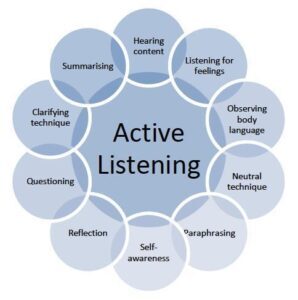
Empathy and Insight through Deep Listening
Here are some creative and well-thought-out logical ideas that illustrate how a coach listens deeply, helping you process challenges with empathy and insight:
Ordered
The Echo Chamber Effect: The coach acts as a reflective surface, echoing back the client’s own words and feelings in a slightly rephrased manner. This allows the client to hear their own thoughts from an external perspective, often revealing new nuances or contradictions they hadn’t noticed.Example: “It sounds like you’re feeling a strong pull towards change, but also a significant fear of the unknown. Is that a fair summary of your internal conflict?”The Unspoken Word Detective: Beyond what is said, the coach pays close attention to pauses, tone shifts, body language, and what is not being said. This deep listening helps them identify underlying emotions or unspoken concerns that the client may not even be consciously aware of.The Metaphor Unpacker: When a client uses a metaphor (e.g., “I feel like I’m drowning,” “It’s an uphill battle”), the coach doesn’t just acknowledge it. They gently unpack the metaphor, asking questions that explore its deeper meaning and implications for the client’s challenge, revealing insights.The Emotional Compass: The coach acts as an emotional compass, helping the client identify, name, and understand the core emotions driving their challenges. This goes beyond surface-level feelings to pinpoint deeper emotional roots.The Pattern Recognizer: Through consistent deep listening over multiple sessions, the coach begins to identify recurring patterns in the client’s thoughts, behaviors, and emotional responses. Pointing out these patterns with empathy can be a profound catalyst for insight.The “What Else?” Provoker: Rather than accepting the first answer, the coach uses open-ended questions like “What else is coming up for you?” or “Is there anything else you’d like to share about that?” to encourage deeper exploration and uncover hidden layers of the challenge.The Future-Pacing Listener: While listening to current challenges, the coach also subtly listens for glimmers of the client’s desired future state or values. They then gently connect the current challenge to these aspirations, providing motivation and direction.The Silence Holder: The coach understands the power of silence. They create a safe space for the client to pause, reflect, and gather their thoughts without feeling pressured to fill the void. This allows for deeper processing and genuine insights to emerge.The Perspective Shifter: After deep listening, the coach can offer a gentle reframe or alternative perspective on the client’s challenge, not to dictate, but to broaden their understanding and open up new possibilities for solutions.The Strengths Spotter: Even when a client is focused on their struggles, the coach listens deeply for instances of resilience, past successes, or inherent strengths. They then reflect these observations back to the client, building self-efficacy and a more balanced view of their capabilities.The Core Belief Investigator: Through empathetic questioning and attentive listening, the coach helps the client uncover limiting core beliefs that might be contributing to their challenges. This involves listening for repeated negative self-talk or assumptions.The Values Aligner: The coach listens not just to the problem, but to the client’s deepest values and what truly matters to them. They then help the client see how their challenge might be misaligned with these values, or how aligning with them can provide a path forward.The Accountability Partner (through listening): By deeply listening to the client’s commitments and aspirations, the coach subtly becomes an accountability partner. Their attentive recall of previous discussions helps the client stay on track and reflect on their progress.The “What If…?” Explorer: After understanding the current challenge, the coach can, with empathy, pose “what if” scenarios. This isn’t about solving, but about exploring potential outcomes or alternative approaches in a safe, hypothetical space, fostering creative problem-solving.The Narrative Reshaper: The coach listens to the client’s personal narrative around their challenge. Through insightful questions and empathetic reflection, they help the client identify disempowering elements of their story and collaboratively reshape it into a more empowering and proactive narrative.The post A Coach Listens Deeply appeared first on Peak Development Strategies.
September 24, 2025
Consistent Check-ins and Goal Reviews

Leveraging Technology & Automation
“AI Accountability Buddy”: Develop a simple AI chatbot that, at pre-scheduled intervals, initiates conversations with users about their goals. It could ask probing questions, suggest resources, and even offer gentle nudges or celebratory messages. This gamifies the review process and provides a personalized, non-judgmental touch.“Progress Pulse Notifications”: Implement smart notifications within a goal-tracking app that aren’t just reminders, but also display a quick visual summary of recent progress (e.g., “You’ve completed 3 out of 5 tasks for this week’s goal!”). This provides immediate positive reinforcement and a sense of accomplishment.“Automated Milestone Celebration Emails”: Configure an email automation system to send out celebratory emails or messages whenever a user hits a predefined milestone for their goal. Include personalized graphics or short video clips. This reinforces positive behavior and makes progress feel significant.“Calendar Blocked Review Sessions”: Encourage users to not just schedule check-ins, but to “block out” dedicated, recurring time slots in their digital calendars specifically for goal review and planning. This treats review as a non-negotiable appointment.“Interactive Progress Dashboards”: Create visually engaging and customizable dashboards that allow users to see their progress across multiple goals at a glance. Include trend lines, completion rates, and upcoming milestones. Visual data makes progress tangible and motivating.Social & Collaborative Approaches
“Peer Accountability Pods”: Facilitate the formation of small, self-selected groups of 3-5 individuals who commit to regular, informal check-ins with each other. They share progress, offer support, and celebrate successes. This leverages social support and shared commitment.“Goal-Sharing Showcase”: Host a regular (e.g., monthly or quarterly) virtual or in-person “showcase” where individuals can voluntarily share their progress and insights with a wider community. This fosters a sense of community, provides inspiration, and encourages public commitment.“Reverse Mentorship Reviews”: Pair individuals who are further along in achieving a similar goal with those just starting. The “mentee” reviews their progress with the “mentor,” who provides feedback and guidance. This offers fresh perspectives and personalized advice.“Collaborative Goal-Setting Workshops”: Organize workshops focused not just on setting goals, but on developing robust review mechanisms. Participants can brainstorm creative check-in ideas and accountability strategies together. This empowers individuals to take ownership of their review process.Gamification & Incentive-Based Ideas
“Goal Streak Challenge”: Introduce a “streak” system where consistent check-ins or progress updates build a continuous streak. Offer small, symbolic rewards or badges for maintaining long streaks. This taps into the desire for consistency and achievement.“Progress Points & Leaderboards”: Assign points for completing tasks, attending check-ins, or reaching milestones. Display these points on a leaderboard (optional, with privacy settings) to foster friendly competition. This injects a competitive element and makes progress quantifiable.“Reflection Prompts Lottery”: For each successful check-in, users get an entry into a weekly or monthly lottery for a small prize. The “prize” could be a valuable resource, a 1-on-1 coaching session, or a donation to their favorite charity. This adds an element of surprise and reward.“Goal “Time Capsule” Reviews”: At the beginning of a long-term goal, encourage users to write a “future self” letter detailing their aspirations and challenges. Schedule an automated delivery of this letter at a key review point to reflect on their journey. This provides a powerful personal reflection tool.“The “Why” Reinforcement Exercise”: During check-ins, include a mandatory brief section where users re-articulate why this goal is important to them. This can be a quick written reflection or a voice note. This constantly reconnects individuals to their intrinsic motivation.“Flexible Review “Menu”: Instead of a rigid review format, offer a “menu” of different check-in options (e.g., quick 5-minute self-reflection, 15-minute guided review, peer discussion). Users choose the format that best suits their current needs and time constraints. This increases flexibility and reduces review fatigue.The post Consistent Check-ins and Goal Reviews appeared first on Peak Development Strategies.
September 23, 2025
Identifying and Course-Correcting

Introduction
In any endeavor, whether personal or professional, the ability to critically assess performance and implement strategic adjustments is paramount to success. This document outlines some logical ideas for identifying what’s working, what’s not, and how to effectively course-correct. Each idea focuses on a specific aspect of analysis and intervention, providing a comprehensive framework for continuous improvement.
1. Data-Driven Performance Metrics
What’s Working: When key performance indicators (KPIs) are consistently met or exceeded, it indicates effective strategies.
What’s Not: Stagnant or declining KPIs signal areas of weakness or failure.
How to Course-Correct:
Deep Dive into Lagging Metrics: Identify the specific factors contributing to underperformance. A/B Test New Approaches: Experiment with alternative strategies to see what resonates. Reallocate Resources: Shift focus and investment to areas with higher potential for improvement.2. Stakeholder Feedback Analysis
What’s Working: Positive and constructive feedback from clients, employees, or partners.
What’s Not: Recurring complaints, disengagement, or lack of communication.
How to Course-Correct:
1. Implement Structured Feedback Loops: Regular surveys, one-on-one meetings, and suggestion boxes. 2. Address Common Concerns Publicly: Show that feedback is valued and acted upon. Develop Action Plans Based on Insights: Translate feedback into tangible improvements.3. Process Efficiency Audits
What’s Working: Streamlined workflows, minimal bottlenecks, and quick turnaround times.
What’s Not: Redundant steps, excessive waiting periods, or frequent errors. How to Course-Correct:
Map Out Current Processes: Visually represent the entire workflow to identify inefficiencies. Apply Lean Principles: Eliminate waste, optimize flow, and improve value delivery. Automate Repetitive Tasks: Free up human resources for more complex or creative work.4. Resource Utilization Assessment
What’s Working: Optimal use of time, budget, and personnel, leading to high productivity.
What’s Not: Underutilized assets, budget overruns, or burnout among team members.
How to Course-Correct:
Conduct Regular Resource Audits: Assess the allocation and effectiveness of all resources. Cross-Train Employees: Build flexibility and resilience within the team. Implement Project Management Software: Track progress and resource allocation in real-time.5. Competitor Benchmarking
What’s Working: Outperforming competitors in key areas like market share, innovation, or customer satisfaction.
What’s Not: Losing ground to competitors or failing to differentiate effectively.
How to Course-Correct:
Analyze Competitor Strategies: Understand their strengths, weaknesses, and market positioning. Identify Your Unique Value Proposition: Highlight what makes you stand out. Innovate and Adapt: Develop new offerings or refine existing ones to stay ahead.6. Employee Engagement Surveys
What’s Working: High morale, low turnover, and proactive participation from employees.
What’s Not: Disengagement, high absenteeism, or a toxic work environment.
How to Course-Correct:
Anonymously Survey Employee Sentiment: Encourage honest feedback on workplace culture and management. Address Root Causes of Dissatisfaction: Focus on issues like workload, recognition, or career development. Foster a Culture of Open Communication: Encourage dialogue and create safe spaces for expression.7. Financial Performance Review
What’s Working: Consistent profitability, healthy cash flow, and positive return on investment.
What’s Not: Declining revenue, increasing costs, or negative profit margins. How to Course-Correct:
Detailed Budget Analysis: Pinpoint areas of overspending or underperformance. Cost-Benefit Analysis of Initiatives: Ensure every investment yields a positive return. Explore New Revenue Streams: Diversify income sources to mitigate risk.8. Risk Assessment and Mitigation
What’s Working: Proactive identification and successful management of potential threats.
What’s Not: Unforeseen crises, repeated failures, or a lack of preparedness.
How to Course-Correct:
Develop a Comprehensive Risk Register: List all potential risks and their likelihood/impact. Formulate Contingency Plans: Outline steps to take if a risk materializes. Regularly Review and Update Risk Assessments: Adapt to changing circumstances and emerging threats.9. Learning and Development Effectiveness
What’s Working: Employees acquiring new skills, improved performance after training, and a culture of continuous learning.
What’s Not: Stagnant skill sets, ineffective training programs, or a lack of growth opportunities.
How to Course-Correct:
Evaluate Training ROI: Measure the impact of learning initiatives on performance. Tailor Training to Individual Needs: Offer personalized development paths. Promote Knowledge Sharing: Encourage peer-to-peer learning and mentorship.
10. Customer Satisfaction Tracking
What’s Working: High customer retention rates, positive reviews, and strong brand loyalty.
What’s Not: Increasing customer churn, negative feedback, or a decline in repeat business.
How to Course-Correct:
1. Implement Net Promoter Score (NPS) Surveys: Gauge customer loyalty and willingness to recommend. 2. Personalize Customer Interactions: Build stronger relationships and address individual needs. 3. Expedite Issue Resolution: Quickly and effectively resolve customer complaints.
11. Innovation Pipeline Assessment
What’s Working: A steady stream of new ideas, successful product launches, and a culture of experimentation.
What’s Not: Stagnant innovation, reliance on outdated methods, or a fear of failure.
How to Course-Correct:
Establish an Idea Generation Framework: Encourage diverse input and brainstorming. Allocate Dedicated R&D Resources: Invest in exploration and development. Embrace a “Fail Fast, Learn Faster” Mentality: View setbacks as learning opportunities.12. Communication Effectiveness Audit
What’s Working: Clear, concise, and timely information flows across all levels.
What’s Not: Misunderstandings, missed deadlines due to poor communication, or a lack of transparency.
How to Course-Correct:
Standardize Communication Channels: Ensure everyone knows where to find information. Train on Effective Communication Skills: Focus on active listening and clear articulation. 3Promote Two-Way Communication: Encourage feedback and open dialogue.
13. Technological Infrastructure Review
What’s Working: Reliable systems, efficient tools, and seamless integration of technology.
What’s Not: Frequent system outages, outdated software, or cybersecurity vulnerabilities.
How to Course-Correct:
Perform Regular System Health Checks: Proactively identify and address potential issues. Invest in Up-to-Date Technology: Ensure your tools support current and future needs. Implement Robust Cybersecurity Measures: Protect data and systems from threats.14. Compliance and Regulatory Adherence
What’s Working: Consistent adherence to all relevant laws, regulations, and industry standards.
What’s Not: Penalties, legal issues, or reputational damage due to non-compliance.
How to Course-Correct:
Stay Updated on Regulatory Changes: Monitor evolving legal and industry requirements. Conduct Regular Compliance Audits: Ensure internal processes align with external mandates. Provide Ongoing Employee Training: Educate staff on compliance policies and procedures.15. Strategic Alignment Check
What’s Working: All activities and initiatives directly contribute to overarching goals and vision.
What’s Not: Disjointed efforts, conflicting priorities, or a lack of focus on the core mission.
How to Course-Correct:
Revisit and Clarify Vision and Mission: Ensure everyone understands the ultimate purpose. Align Individual and Team Goals with Strategic Objectives: Create a clear line of sight. Regularly Review Strategic Progress: Assess whether current actions are moving you closer to your goals.The post Identifying and Course-Correcting appeared first on Peak Development Strategies.
September 22, 2025
Sharpening Leadership, Delegation, and Decision-Making Capabilities

Sharpening Leadership
“Lead Like a Maestro” Simulation: Develop an interactive, multi-scenario simulation where leaders must “conduct” a diverse team (represented by AI personas) through complex projects. Success is measured by team cohesion, project completion, and individual growth, forcing leaders to adapt their style to different “instruments” and “movements.”Reverse Mentorship on Emerging Technologies: Pair senior leaders with junior employees who are experts in cutting-edge technologies (AI, blockchain, VR). This not only upskills the leaders but also fosters a culture of humility, open-mindedness, and empowers the next generation of innovators.“The Uncomfortable Conversation” Workshop Series: Facilitate workshops focused on mastering difficult conversations – performance feedback, conflict resolution, delivering bad news. Use improv exercises and real-world case studies to build confidence and empathy.Storytelling for Influence Masterclass: Teach leaders how to craft compelling narratives that inspire, motivate, and clearly articulate vision. Focus on the psychological impact of storytelling in driving engagement and buy-in for strategic initiatives.“Leadership Through Crisis” War Games: Conduct intensive, realistic simulations of organizational crises (e.g., cyber-attack, PR disaster, market collapse). Leaders must make rapid decisions under pressure, communicate effectively, and demonstrate resilience.Enhancing Delegation“Delegation Blueprint” Workshop: A hands-on session where leaders map out their current tasks and identify opportunities for delegation. They then create detailed “delegation blueprints” for specific tasks, outlining objectives, resources, deadlines, and expected outcomes, with peer feedback.“The Empowerment Circle” Peer Coaching: Establish small, cross-functional peer coaching groups focused solely on effective delegation. Members share challenges, brainstorm solutions, and hold each other accountable for delegating more effectively and empowering their teams.“Stretch Assignment Incubator”: Create a formal program where leaders identify high-potential employees and intentionally delegate challenging, growth-oriented tasks that push them beyond their comfort zone, with clear support structures in place.“Delegation Audit & Feedback Loop”: Implement a system where direct reports provide anonymous feedback to their managers on their delegation practices – clarity of instructions, level of autonomy, support provided. This provides actionable insights for improvement.“The Delegation Game: From Manager to Mentor”: Design a gamified training module where leaders earn points by successfully delegating tasks, providing necessary context, and then shifting their role from manager to mentor, guiding their team members through the delegated work.Improving Decision-Making“Cognitive Bias Buster” Training: An interactive session that uses gamified scenarios to expose common cognitive biases (e.g., confirmation bias, anchoring bias, availability heuristic) and provides practical strategies to mitigate their impact on decision-making.“Decision Matrix Dojo”: A recurring workshop where leaders bring real-world, complex decisions they are facing. They then apply various decision-making frameworks (e.g., Eisenhower Matrix, Pugh Matrix, SWOT analysis, Cost-Benefit Analysis) in a collaborative, structured environment.“Pre-Mortem & Post-Mortem Power Sessions”: Implement a regular practice of conducting “pre-mortems” (imagining a project’s failure before it begins to identify potential pitfalls) and thorough “post-mortems” (analyzing both successes and failures) to learn from past decisions.“Data Storytelling for Decision-Makers”: Train leaders on how to effectively interpret data, identify relevant insights, and communicate them in a compelling way to inform and justify their decisions, moving beyond intuition alone.“Ethical Dilemma Deep Dive”: Facilitate discussions and case studies centered on ethical dilemmas that often arise in leadership roles. This helps leaders develop a stronger ethical compass and make principled decisions, even under pressure.The post Sharpening Leadership, Delegation, and Decision-Making Capabilities appeared first on Peak Development Strategies.
September 19, 2025
Building Confidence and Skill in Handling Sensitive Dialogue

Here are some creative and well-thought-out logical ideas for building confidence and skill in handling sensitive or high-stakes dialogue:
Practical Application & Simulation“Dialogue Dojo” Role-Playing:Concept: Establish a regular, structured role-playing session (e.g., weekly or bi-weekly) where participants take turns acting out various sensitive scenarios.Focus: Include scenarios like delivering bad news, mediating conflicts, addressing performance issues, or handling customer complaints.Benefit: Provides a safe, low-stakes environment for practice and experimentation.“Blind Spot” Feedback Sessions:Concept: Participants engage in a simulated sensitive dialogue while being recorded (audio or video). Afterwards, a facilitator and peers provide constructive feedback, specifically highlighting non-verbal cues, tone, and word choice that the speaker might be unaware of.Focus: Emphasizes self-awareness and external perception.Benefit: Uncovers unconscious habits and provides actionable insights for improvement.“Reverse Engineering” Success Stories:Concept: Analyze real-life examples (from literature, film, or shared personal experiences) of successful navigation of sensitive dialogues. Break down the strategies, language, and emotional intelligence employed.Focus: Learning from best practices and identifying transferable skills.Benefit: Provides tangible models and concrete examples of effective communication.“Stakeholder Hot Seat” Exercise:Concept: One participant plays the role of someone needing to deliver sensitive news or a difficult message. Others play various “stakeholders” (e.g., an angry client, a defensive colleague, a worried subordinate), each with a specific agenda or emotional state.Focus: Simulates the pressure of multiple, potentially conflicting, perspectives.Benefit: Develops adaptability and the ability to respond to diverse reactions.Skill Development & Mindset“Emotional Thermometer” Training:Concept: Workshops focused on identifying and labeling different emotional states (in oneself and others) during dialogue. Includes techniques for active listening and empathy building.Focus: Enhancing emotional intelligence and reading non-verbal cues.Benefit: Improves the ability to de-escalate tension and connect on a deeper level.“Pause & Plan” Micro-Breaks:Concept: Integrate short, deliberate “pause and plan” moments into training scenarios. Encourage participants to verbally articulate their strategy before responding in a difficult situation.Focus: Developing intentionality and strategic thinking under pressure.Benefit: Prevents impulsive reactions and promotes thoughtful responses.“Language of De-escalation” Toolkit:Concept: Provide a curated list of phrases, open-ended questions, and communication frameworks specifically designed for de-escalating tense situations and fostering understanding.Focus: Equipping individuals with practical linguistic tools.Benefit: Offers concrete alternatives to confrontational or accusatory language.“Inner Critic Taming” Workshop:Concept: Address the psychological barriers to confident communication, such as fear of judgment, perfectionism, or imposter syndrome. Incorporate mindfulness techniques and cognitive reframing.Focus: Building mental resilience and self-compassion.Benefit: Reduces anxiety and allows for more authentic expression.Structured Learning & Support“Peer Coaching Triads”:Concept: Form small groups (triads) where members regularly meet to discuss challenging dialogues they’ve encountered, offer advice, and practice specific communication techniques with each other.Focus: Collaborative learning and mutual support.Benefit: Provides ongoing practice and diverse perspectives in a trusting environment.“Scenario Library & Playbook”:Concept: Create a shared digital library of common sensitive dialogue scenarios with suggested approaches, potential pitfalls, and successful strategies. Encourage contributions from all participants.Focus: Building a collective knowledge base and resource.Benefit: Offers quick reference and learning opportunities outside of formal sessions.“Observation & Analysis” Assignments:Concept: Assign participants to observe real-life sensitive dialogues (e.g., in meetings, customer service interactions, or even public forums) and analyze the communication dynamics, successes, and areas for improvement.Focus: Developing critical observation skills and applying theoretical knowledge to real-world contexts.Benefit: Enhances understanding of effective and ineffective communication in action.“Mindful Communication Journaling”:Concept: Encourage participants to keep a journal specifically for reflecting on sensitive dialogues they’ve had or observed. Prompts could include: “What went well?”, “What could I have done differently?”, “How did I feel?”, “What did I learn?”.Focus: Self-reflection, pattern recognition, and continuous improvement.Benefit: Deepens learning and reinforces new communication habits.Advanced Techniques & Specialization“Framing & Reframing” Masterclass:Concept: Advanced training on how to strategically frame messages to ensure they are received positively and how to reframe negative or accusatory statements into constructive dialogue.Focus: Mastering the art of persuasive and diplomatic language.Benefit: Empowers individuals to steer conversations towards productive outcomes.“Navigating Resistance” Workshop:Concept: Dedicated sessions on understanding the roots of resistance (fear, misunderstanding, perceived threat) and developing strategies to acknowledge, validate, and overcome it in sensitive dialogues.Focus: Building resilience and persistence in the face of opposition.Benefit: Equips individuals to handle pushback and maintain a constructive approach.“Post-Dialogue Debrief Protocol”:Concept: Implement a structured process for debriefing after a high-stakes or sensitive dialogue, either individually or with a mentor/peer. This includes evaluating performance, identifying lessons learned, and planning for future similar situations.Focus: Formalizing the learning process and embedding best practices.Benefit: Ensures that every sensitive dialogue, regardless of outcome, becomes an opportunity for growth and refinement.The post Building Confidence and Skill in Handling Sensitive Dialogue appeared first on Peak Development Strategies.