Larry Doyle's Blog, page 9
May 7, 2014
Are Electricity Markets Being Manipulated in Texas?
[image error]Market manipulation is certainly not restricted to Wall Street.
In fact, I believe the most egregious case of market manipulation goes back to the early years of this century when traders in a Houston based firm known as Enron — you remember the names Lay, Fastow, and Skilling, right — manipulated the California electricity market. While Enron rolled in the dough, the only things rolling through the California countryside were blackouts.
Well, how interesting that ten-plus years later we revisit Houston to see the name Enron invoked once again in a case alleging manipulation of the electricity markets right there in Texas. Let’s navigate as the Courthouse News Service recently reported:
HOUSTON (CN) – GDF Suez illegally manipulates the Texas market by taking its power plants offline during times of tight supply, which drives up electricity prices and creates havoc for commodities traders, two traders claim in Federal Court.
Aspire Commodities and Raiden Commodities sued GDF Suez Energy North America Inc., claiming its price fixing scheme violates the Commodities Exchange Act.
The lawsuit accuses GDF Suez and others of using the same scheme that Enron et al. used to create the 2001-2001 California electricity crisis. During periods of peak demand, taking even a small amount of power offline, or threatening to do so, can send the market over the edge.
Based in Houston, GDF Suez North America boasts 13,863 megawatts of generating capacity from its dozens of power plants, and has market stakes in Texas, New England, Canada and Mexico.
GDF Suez North America is part of the French multinational utility GDF Suez S.A. The lawsuit focuses on GDF Suez’s role in the Texas market, which is controlled by The Electrical Reliability Council of Texas – a nonprofit regulated by the Public Utility Commission of Texas – which manages the grid for most of the state.
While GDF Suez would maintain that it is a relatively ‘small fish’ in the Texas electricity market and seemingly not able to impact the broader market, plaintiffs maintain otherwise and that GDF Suez is violating the Commodities Exchange Act.
This case bears watching for a variety of reasons including: implications on electricity markets elsewhere especially in New England where GDF Suez also has a market presence; how rigorous the court will be in applying the rules as laid out in the Commodities Exchange Act; the impact on people’s pocketbooks in the Lone Star state.
For those who may care to review the entire complaint, I welcome providing it: Aspire Commodities, LP and Raiden Commodities LP v GDF Suez Energy North America et al.
Sense on Cents will be watching.
Larry Doyle
Please order a hard copy or Kindle version of my book, In Bed with Wall Street: The Conspiracy Crippling Our Global Economy.
For those reading this via a syndicated outlet or by e-mail or another delivery, please visit the blog to comment on this piece of ‘sense on cents.’
Please subscribe to all my work via e-mail.
The opinions expressed are my own. I am a proponent of real transparency within our markets so that investor confidence and investor protection can be achieved.


May 6, 2014
Eric Hunsader: SEC Report on Flash Crash “Complete and Utter Nonsense”
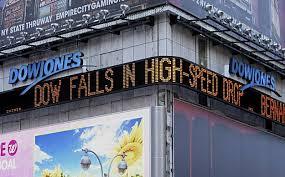 Every now and then I come across commentaries written by well informed individuals that make me question the integrity of those regulating our markets and leave me thinking, “People really need to know this.”
Earlier this morning I had just such a feeling in reading a report written by perhaps the single most knowledgeable individual in the nation today on the inner workings of our equity exchanges.
In light of all the current focus on this topic and the question as to whether our equity markets are ‘rigged,’ stick with me on this as Eric Hunsader of Nanex reposted a commentary impugning the SEC’s investigation of the Flash Crash that roiled our markets and our nation on May 6, 2010.
Hunsader pulls no punches in asserting that the SEC under then chair Mary Schapiro sold investors a ‘bill of goods’ as to what really happened that fateful day.
. . . I’ve spoken with many people across the industry, from CEOs to network engineeers, on and off the record, and have come to understand much of what took place on May 6, 2010. Enough to say unequivocally, the SEC report published on October 1, 2010 is complete and utter non-sense.
Hunsader is playing hardball. His statement not only questions the integrity of the SEC’s report but by extension the integrity of the SEC itself. Hunsader proceeds to methodically expose the SEC for producing what appears to be a sham report so as to appease the market and convey a message that ‘remain calm, all is well.’
The entire opening paragraphs talk about an algo that doesn’t take time or price into account, and therefore begins selling more and more contracts as volume explodes: again, that is pure fabrication. How can I be so sure of this? Because I talked to the people who actually executed the 6,438 trade executions that made up the 75,000 contracts Waddell & Reed (W&R) sold that day.
Worse, and this was difficult for me to believe: the regulator never interviewed the traders that executed the W&R contracts until October 14, 2010 – that is 2 weeks after they wrote the report!
Really.
Isn’t that the primary function of an investigation? You know, interviewing people who you think are guilty? If only the regulator had asked the traders about the algorithm, they would have immediately learned of its passivity (it didn’t cross the bid/ask spread), and that it had price and time components. The algo turned off for 15 to 45 seconds whenever the price moved too far and/or too fast, which explains why it only sold 1,000 contracts during the time the DOW dropped 600 points. These facts directly contradict the SEC report.
“Complete and utter nonsense . . . fabrication. . . never interviewed. . . contradict.”
Hunsader has the SEC and former chair Mary Schapiro on the ropes and throws the knockout in his conclusion:
Here’s what really happened. The SEC didn’t have the capability to look at data in a finer resolution, but rather than admit this deficiency, they made up a story and hoped the viewer won’t notice.
Is it any wonder that the SEC commissioners never signed off on the SEC staff’s final report on the flash crash? They knew it was riddled with errors.
Wow. As if that statement does not add fuel to the fire of those who question the SEC’s competence then if not now to properly oversee our markets. But the bigger question is whether former SEC chair Mary Schapiro lied to the American public in attempting to explain what really caused the Flash Crash.
Let’s get Mr. Hunsader and Ms. Schapiro in the same room and on national television for a public hearing. Let’s embrace the virtue of real transparency so as to learn the truth about the Flash Crash and the current ongoing implications for managing risk.
I strongly maintain that the presumption of meaningful investor protection remains the greatest risk in our markets today.
Thank you Mr. Hunsader for shining an ongoing light into dark and dangerous corners of our markets.
Navigate accordingly.
Larry Doyle
Please order a hard copy or Kindle version of my book, In Bed with Wall Street: The Conspiracy Crippling Our Global Economy.
For those reading this via a syndicated outlet or by e-mail or another delivery, please visit the blog to comment on this piece of ‘sense on cents.’
Please subscribe to all my work via e-mail.
The opinions expressed are my own. I am a proponent of real transparency within our markets so that investor confidence and investor protection can be achieved.

When Jeff Gundlach Talks, Sense on Cents Listens
When I want to know where interest rates are headed, the one individual I listen to more than any other is Doubleline’s Jeffrey Gundlach.
What is Gundlach thinking now? He is decidedly cautious on our economy and increasingly believes that interest rates may move lower from current levels. He had recently opined that there is a growing chance that we revisit the lows in rates seen 2 years ago. The 10yr US Treasury rate currently sits at 2.6%. The low was touched in 2012 at approximately 1.4%.
Let’s navigate and listen to this Sense on Cents Hall of Famer talk about the economy, rates, and also why he is bearish on housing and homebuilders:
Navigate accordingly.
Larry Doyle
Please order a hard copy or Kindle version of my book, In Bed with Wall Street: The Conspiracy Crippling Our Global Economy.
For those reading this via a syndicated outlet or by e-mail or another delivery, please visit the blog to comment on this piece of ‘sense on cents.’
Please subscribe to all my work via e-mail.
The opinions expressed are my own. I am a proponent of real transparency within our markets so that investor confidence and investor protection can be achieved.

May 5, 2014
Bart Chilton: “Regulators Were Asleep at The Wheel”
It is not often when a regulator effectively turns on his own. I did a double take this morning while watching an interview on Bloomberg Surveillance when Bart Chilton, former commissioner at the CFTC, did just that.
This 4-minute clip also addresses the following: the perception of liquidity in the marketplace; Bloomberg’s Adam Johnson misconstrues some activity of high frequency traders during the Flash Crash as beneficial; the captains of finance operating in an irresponsible fashion.
The highlight of this clip, however, comes at the 2-minute mark when Chilton exposes his regulatory brethren while also alluding to the fact that some regulators were trying to do the right thing. One can only assume the powers that be must have silenced those who were not willing to bow down.
In my strong opinion, what one regulator or commentator may define as being asleep would be defined by others with a less deferential view as regulators who are captured and/or corrupted.
Why does this issue remain so important? I strongly believe that the presumption of meaningful investor protection remains the single greatest risk in our markets today.
Navigate accordingly.
Larry Doyle
Please order a hard copy or Kindle version of my book, In Bed with Wall Street: The Conspiracy Crippling Our Global Economy.
For those reading this via a syndicated outlet or by e-mail or another delivery, please visit the blog to comment on this piece of ‘sense on cents.’
Please subscribe to all my work via e-mail.
The opinions expressed are my own. I am a proponent of real transparency within our markets so that investor confidence and investor protection can be achieved.

May 4, 2014
Sense on Cents Instant Classic: ProPublica’s Jesse Eisinger Exposes Wall Street and Washington
The failure to protect the public interest has not only gained a strong foothold on Wall Street, in Washington, and throughout the financial regulatory system but also in the fourth estate, that being our media.
There are a mere handful of journalists who truly expose in meaningful fashion the money and power that dominate our nation’s financial and political capitals. Today I had the distinct pleasure of observing one of these special individuals, ProPublica’s Jesse Eisinger. In a delivery that touches upon many of the issues I address within my book, Eisinger provides a Sense on Cents Instant Classic in this 40-minute interview with Q/A on CSpan.
After this stellar performance, Jesse Eisinger gains immediate induction into the Sense on Cents Hall of Fame.
I thank the regular reader who brought this clip to my attention.
Larry Doyle
Please order a hard copy or Kindle version of my book, In Bed with Wall Street: The Conspiracy Crippling Our Global Economy.
For those reading this via a syndicated outlet or by e-mail or another delivery, please visit the blog to comment on this piece of ‘sense on cents.’
Please subscribe to all my work via e-mail.
The opinions expressed are my own. I am a proponent of real transparency within our markets so that investor confidence and investor protection can be achieved.

May 2, 2014
SEC Fines NYSE for Being ‘In Bed with Wall Street’
[image error]As long as the markets are firm who really cares whether they might be rigged, right?
That seems to be the mentality of those who would prefer not to have meaningful transparency and accompanying truths revealed on scandalous practices (if not very real corruption) at the core of our equity markets and financial regulatory oversight.
The fact that the SEC imposed a fine of $4.5mm yesterday on the NYSE and related parties for a failure to uphold or impose rules that would maintain fair markets is a meaningful event. That said, a token fine of this sort leads to far more questions than answers. Let’s navigate and review the fine and then pose questions and comments. Forbes offers this review:
According to the SEC’s charges, the NYSE and its affiliated its exchanges “repeatedly engaged in business practices that either violated exchange rules or required a rule when the exchanges had none in effect.”
Sound like everything is on the up and up? Maybe not?
Violations occurred between 2008 and 2012, the SEC said, and include misconduct like: using an error account at Archipelago to assume and trade out of securities positions without a rule that permitted such transactions; the provision of co-location services to customers on disparate contractual terms without an exchange rule in place; the operation of a block trading platform (New York Block Exchange, launched in 2009 with the goal of maximizing liquidity access and improving the execution of block trades, the NYSE said at the time) that did not comply with NYSE/SEC rules for a period of time; and the distribution of an automated feed of closing order imbalance information to NYSE floor brokers at an earlier time than was specified in NYSE’s rules.
First some questions.
1. How is it that violations of this sort can go on for such a protracted period? Where was the regulatory oversight from FINRA and the SEC itself?
2. If the SEC found these violations to have occurred at the NYSE, what about the other exchanges including the Nasdaq, BATS, and Direct Exchange? Are we to think that these exchanges did not also provide co-location services on disparate terms?
3. Is a $4.5mm fine meaningfully impactful to change behaviors and practices? Recall that the SEC imposed a $5mm fine on the NYSE in 2012 for, as Forbes states, “allowing a head start on trading information.” What good did that fine do?
Now some comments.
1. A fine of $4.5mm is, as stated in my book, “akin to a slap on the back from an accomplice as opposed to a kick in the pants from a real cop.”
2. The comfort level of those running the NYSE and these related entities that would allow them to engage in the practices exposed by this fine stems from the incestuous, corrosive, and corruptible dynamic explicitly detailed in Chapter 7 of my book. In those pages, I lay out the serious allegations and accompanying evidence as to how the NASD (National Association of Securities Dealers) and the regulatory arm of the NYSE jointly conspired with the NYSE to misappropriate funds of between $180 and $380 million from the NASD’s smaller and medium sized member firms. That sort of fraudulent transaction is just the foundation that would lead to an exchange such as the NYSE operating in an underhanded fashion.
3. I strongly believe the SEC, Mary Jo White, and her predecessor Mary Schapiro (hell, Chris Cox and most other SEC Chairs of the last 20 years as well) have failed to protect investors and the public interest. A fine of $4.5mm is further evidence of that.
4. Regrettably, the media as well have also failed to uphold their mandate to pursue and expose the truth so as to protect the public interest.
I strongly believe the abysmal level of trust and confidence held by the American public in these institutions (SEC, NYSE, media) is justified.
Navigate accordingly.
Larry Doyle
Please order a hard copy or Kindle version of my book, In Bed with Wall Street: The Conspiracy Crippling Our Global Economy.
For those reading this via a syndicated outlet or by e-mail or another delivery, please visit the blog to comment on this piece of ‘sense on cents.’
Please subscribe to all my work via e-mail.
The opinions expressed are my own. I am a proponent of real transparency within our markets so that investor confidence and investor protection can be achieved.

May 1, 2014
Bill Black: Regulators’ Latest Betrayal of Homeowners
[image error]I sing the praises of former banking regulator Bill Black in my book, In Bed with Wall Street, for many reasons.
Black stands up, speaks out, and tells it like it is while all too many in our nation’s capital and regulatory offices prostrate themselves in service and homage to powerful financial elites. Major props to Black for bringing attention today to another in a long line of betrayals of American homeowners.
The WSJ and other periodicals recently made passing reference to an egregious travesty within the bank settlements of foreclosure abuse. Props to Barry Ritholtz at The Big Picture for providing the forum for Black to expose real fraud in the system and the accompanying degradation of the rule of law in the process. Let’s navigate as Black provides the transparency that is truly the great disinfectant to a system that smells:
The Ethics-Free WSJ Story on the Regulator’s Latest Betrayal of Homeowners
The context of this WSJ story is the broader series of betrayals of homeowners by the regulators and prosecutors led initially by Treasury Secretary Timothy Geithner and his infamous “foam the runways” comment in which he admitted and urged that programs “sold” as benefiting distressed homeowners be used instead to aid the banks (more precisely, the bank CEOs) whose frauds caused the crisis.
The WSJ article deals with one of the several settlements with the banks that “service” home mortgages and foreclose on them. Private attorneys first obtained the evidence that the servicers were engaged in massive foreclosure fraud involving knowingly filing hundreds of thousands of false affidavits under (non) penalty of perjury.
As a senior former AUSA said publicly at the INET conference a few weeks ago about these cases – they were slam dunk prosecutions. But you know what happened; no senior banker or bank was prosecuted. No banker was sued civilly by the government. No banker had to pay back his bonus that he “earned” through fraud.
Naturally, the WSJ provides none of that context, but what the article does discuss remains a travesty. It is entitled “GAO: U.S. Foreclosure Review Could Have Generated Higher Payments: Review Could Have Delivered $1.5 Billion More to Consumers if Not Halted, Federal Watchdog Finds.”
I’ve added emphasis to the dishonest euphemisms the WSJ employs (and quotes) for the “f” word (fraud).
“The Government Accountability Office, in a report being released Tuesday, evaluated federal bank regulators’ decision last year to cancel a prolonged review of foreclosure-processing and loan-assistance mistakes.”
“The GAO report shows that the settlement ‘was reached without adequate investigation into the harms committed by the servicers,’ Rep. Maxine Waters (D., Calif.) said in a prepared statement.”
“‘Many of the files did not contain complete data, making it impossible to know whether borrowers were disqualified from the possibility of the greatest cash payouts’ [the WSJ quoting Water’s prepared statement].”
But finishing this process would have been a long and complicated affair. Doing so, the GAO said, would have taken up to two more years for consulting firms to scour thousands of foreclosure files for errors, at a cost to banks of about $4.6 billion.
The foreclosure review was ordered three years ago by the Office of the Comptroller of the Currency and the Federal Reserve, which told banks to hire independent consultants to evaluate allegations the firms used shoddy practices when handling a huge volume of foreclosures during the housing bust.
Sadly, I tend to read the underlying documents and the truly bad news is that the GAO report uses the “f” word only once and is otherwise a mass of euphemisms. This sentence will give you an accurate flavor of the Report.
“In September 2010, allegations surfaced that several servicers’ documents in support of judicial foreclosure may have been inappropriately signed or notarized” [GAO 2014: 7, emphasis added].
In addition to the euphemisms and the fact that the sentence reads like it was written by the banks’ criminal defense counsel, it is a sentence crafted to mislead. By that time there were sworn statements by a series of servicer personnel admitting that their offices engaged in systematic foreclosure fraud through filing affidavits that were known to be false. They admitted to tens of thousands of criminal acts by their organizations.
The one time the GAO uses the word fraud is to report that the foreclosure payout program carefully protects itself from fraud by the victims – by providing that the checks expire after 90 days [GAO 2014: 34 n. 51]. In a very dark Irish humor kind of way I find this hysterically funny. By contrast, when the GAO discusses real frauds the passage again reads as if it were drafted by the bank’s criminal defense lawyers.
“Failure to review documents filed in support of a judicial foreclosure may violate consumer protection and foreclosure laws, which vary by state and which establish certain procedures that mortgage servicers must follow when conducting foreclosures” [GAO 2014: 7 n.13].
Everyone involved in the faux foreclosure review – the “consultants” hired who to do the review, the mortgage servicers, the (non) regulators, and the GAO performed abysmally. The “review” was an expensive farce. The regulators did not conduct the review. The servicers did not conduct the review. The consultants were chosen by the servicers, which the regulators should never have allowed. The consultants were allowed to have additional conflicts of interest such as having worked on the loan foreclosures they were reviewing. The “design” of the (non) study was an embarrassment. The (non) study collapsed almost immediately because it turned out that many of the servicers’ files were so pathetic that the study “design” could not be followed.
Rather than stop and reconsider the implications of those file defects for the likelihood that the servicers engaged in fraud in order to foreclose the regulators decided to continue. The more severe the file defects the greater the incentive of servicers to engage in foreclosure fraud.
The consultants were soon hopelessly behind schedule and budget because of the severity of the loan file defects. Eventually, the (non) regulators gave up and brought the (non) study to an end, not with a bang but with a whimper. Real regulators would have had great negotiating leverage. The servicers had agreed to conduct the study and failed. It would cost the servicers more to complete the review than simply boost the payout by several billion dollars. The two obvious answers were to continue the study and order interim payouts or to stop the study and in return for a significantly larger payout to homeowners.
Naturally, the Office of the Comptroller of the Currency (OCC) and the Federal Reserve found a third, far worse choice. They left the cash on the table that could have gone to the homeowners.
The GAO was no stronger. They do agree that the OCC and the Fed left billions on the table but they also give them a pass, saying that the settlement is in the “range” that would emerge from the regulators assumed rate of bad foreclosures.
The problem, as the facts disclosed in the GAO’s report make clear, but GAO’s analysis ignores, is that the regulators’ assumed rate of bad foreclosures had no reliable basis and was proven to be far too low an estimate by the fact that the loan files were so incomplete that the consultants could not complete the study. So, there is no reliable basis for GAO’s claim that there is any “range” of reasonableness for the payments to homeowners. This passage from the GAO report conveys the GAO and the regulators’ unique approach to (non) quantification.
• Failure to maintain sufficient documentation of ownership. Although the 2010 coordinated reviews found that servicers generally had sufficient documentation authority to foreclose, examiners noted instances where documentation in the foreclosure file may not have been sufficient to prove ownership of the mortgage note. Likewise, during the subsequent consent order file reviews, some consultants found cases of insufficient documentation to demonstrate ownership [GAO 2014: 55].
“Generally,” “instances,” and “some consultants found cases” – billions of dollars were spent to produce nothing but these useless, vague phrases. The “study” “results” were so worthless that the GAO reports that the consultants did not even bother to create reports on their work. Instead, and this is hilarious, the OCC and the Fed held “exit interviews” with the consultants. Only a PR “expert” planning to put lipstick on a wild boar would spend even more money on such a useless exercise.” The GAO tells us that many of the regulators’ exam teams given the exit interview materials concluded that they were useless.
How and why is it that abuse of countless American homeowners can go on without meaningful justice and proper restitution? Well, when those at the OCC and Federal Reserve charged with pursuing that justice and restitution are warmly ‘in bed with Wall Street’ then we may be dismayed by these results as detailed by the GAO but we should not be surprised.
By the same token, those at the OCC and Federal Reserve and atop Capitol Hill as well should not be surprised that the American public holds them in utter contempt.
Thank you Bill and Barry.
Navigate accordingly.
Larry Doyle
Please order a hard copy or Kindle version of my book, In Bed with Wall Street: The Conspiracy Crippling Our Global Economy.
For those reading this via a syndicated outlet or by e-mail or another delivery, please visit the blog to comment on this piece of ‘sense on cents.’
Please subscribe to all my work via e-mail.
The opinions expressed are my own. I am a proponent of real transparency within our markets so that investor confidence and investor protection can be achieved.

April 30, 2014
Elizabeth Warren Exposes Larry Summers: The Game Is Rigged
 Why is it that our nation does not have real statesmen in public service? Why is it that very real corruption and scandal — legal and otherwise — have gained a stranglehold on our political process? Why is it that an SEC attorney states at his retirement sendoff that “the system is broken?”
Say what you want about Senator Elizabeth Warren (D-MA), her politics, and her personal foibles, but she provides a national public service in exposing the fraud that is disguised as Washington politics in her new book, A Fighting Chance.
Credit to The New York Times’ acclaimed financial journalist Gretchen Morgenson for launching into the charades played by those in Washington who profit personally while America grows increasingly disenchanted if not totally disgusted. Senator Warren uses the same term to characterize our political process as recently used by Michael Lewis in describing our equity markets.
“The game is rigged and the American people know that. They get it right down to their toes.”
Morgenson draws further attention to Warren’s work and specifically this revealing passage in which the senator from Massachusetts exposes one Larry Summers:
A telling anecdote involves a dinner that Ms. Warren had with Lawrence H. Summers, then the director of the National Economic Council and a top economic adviser to President Obama. The dinner took place in the spring of 2009, after the oversight panel had produced its third report, concluding that American taxpayers were at far greater risk to losses in TARP than the Treasury had let on.
After dinner, “Larry leaned back in his chair and offered me some advice,” Ms. Warren writes. “I had a choice. I could be an insider or I could be an outsider. Outsiders can say whatever they want. But people on the inside don’t listen to them. Insiders, however, get lots of access and a chance to push their ideas. People — powerful people — listen to what they have to say. But insiders also understand one unbreakable rule: They don’t criticize other insiders.
“I had been warned,” Ms. Warren concluded.
When honest public debate and dialogue is stifled, the fertile ground for scandal, corruption, and payoffs under the guise of politics is enriched.
Make no mistake, the American public suffers tremendously under this construct. Not that this pathetic and corrosive reality is anything new but at what point does the American public say, “ENOUGH!!”
I would only hope that a massive anti-incumbent and anti-corruption movement develops in our country and sweeps the land. While the media can direct enormous focus on stories that play on our sense of public decency, the simple fact is under the current construct in Washington, we are getting screwed in spades each and every day.
Major props to Warren for exposing the “way the game is played” that leads to the fleecing of the American public. Major props to Gretchen Morgenson for giving Warren’s work an elevated platform.
Where is the rest of the media to further expose the likes of Larry Summers and the other phonies who present themselves as supposed leaders but are cloaked in the money and power that has little meaningful connection to this land we call America?
We are long overdue to clean out the Washington sty and throw these pigs and bums out!
Larry Doyle
Please order a hard copy or Kindle version of my book, In Bed with Wall Street: The Conspiracy Crippling Our Global Economy.
For those reading this via a syndicated outlet or by e-mail or another delivery, please visit the blog to comment on this piece of ‘sense on cents.’
Please subscribe to all my work via e-mail.
The opinions expressed are my own. I am a proponent of real transparency within our markets so that investor confidence and investor protection can be achieved.

April 29, 2014
Sense on Cents Instant Classic: SEC Commissioner Stein Accuses Agency “Strayed From Its Mission”
[image error]“Financial institutions that are ‘too big to fail,’ combined with politicians who are too compromised to govern and regulators who are too captured and corrupted to protect, produce an incestuous cabal that is simply too big to trust.” pg 187, In Bed with Wall Street: The Conspiracy Crippling Our Global Economy
America is now well attuned to the fact that Wall Street banks that are ‘too big to fail’ are also ‘too big to regulate’, ‘too big to prosecute’, and ultimately ‘too big to trust.’ Of this there is absolutely no doubt.
As if those injustices were not too much to bear, we learn this morning that these banking behemoths are now also ‘too big to bar.’ How is that? With major props to one of the few lone voices crying for integrity inside the regulatory ‘tollbooth’ that is the SEC, I welcome giving SEC Commissioner Kara Stein real credit for standing up and speaking out on this ‘too big’ topic. The following statement is a little lengthy but oh so worth it. Let’s navigate as Commissioner Stein issued a dissenting opinion on the SEC website that qualifies as an instant Sense on Cents classic:
Commissioner Kara M. Stein
April 28, 2014
I respectfully dissent from the Order, approved by a three-to-two vote of the Commission, to overturn the automatic disqualification of Royal Bank of Scotland Group, plc (“RBS”) from eligibility as a “Well-Known Seasoned Issuer.”
In January 2014, a subsidiary of RBS was criminally convicted for its conduct in manipulating the London Interbank Offered Rate (“LIBOR”). The scheme profited RBS to the detriment of individuals, businesses, and governments around the globe. Under federal securities laws and regulations, this criminal conviction automatically precluded RBS from eligibility as a Well-Known Seasoned Issuer (“WKSI”) and the attendant benefits that our rules provide to WKSI filers.
Since the inception of WKSI nearly a decade ago, the Commission had not granted a WKSI waiver for criminal misconduct. Last fall, that changed when the staff, through delegated authority, granted a waiver to another large issuer despite its criminal wrongdoing. Last Friday, the Commission compounded that error when it granted a waiver for another criminal wrongdoer.
The arguments in both instances implicate a structural problem with our policy, whether dealing with criminal or civil misconduct. They rest largely upon the notion that the triggering conduct is insignificant when considered in the context of a large financial institution with global operations. I fear that the Commission’s action to waive our own automatic disqualification provisions arising from RBS’s criminal misconduct may have enshrined a new policy—that some firms are just too big to bar.
Over the years, Congress and the Commission have adopted numerous disqualification provisions, intended to protect investors and the markets from “bad actors.” Yet the Commission routinely waives them. We need to step back and think broadly about what these provisions are intended to accomplish, and ask ourselves — are we achieving the intended goals? Are they being fairly applied to all firms and individuals? Large institutions should be treated no differently, neither better nor worse, than small and medium-sized issuers.
Sound policy arguments have been made that we need more tools to police and regulate our markets. But, we also need to ensure that we correctly and fairly utilize the tools we have. These disqualification and bad actor provisions have the potential for deterrence at large institutions that no one-time financial penalty could ever wield. Yet, we repeatedly relieve issuers of the supposedly automatic consequences of their misconduct.
Our website is replete with waiver after waiver for the largest financial institutions. Some large firms have received well over a dozen waivers of one sort or the other over the past several years. One large financial firm alone, in the last 10 years, has received over 22different waivers — often making the argument that it has a “strong record of compliance with federal securities laws.”
Just last summer, the Commission adopted a bad actor provision mandated by Congress for Rule 506 offerings. Yet, we have already granted five of those waivers, all but one to large banks and broker-dealers, RBS among them.
Since 2010, the Commission has granted at least 30 WKSI waivers. Twenty-nine of them went to large financial institutions and broker-dealers. In many cases, these issuers are receiving their second, third, and even fourth WKSI waiver in less than four years.
It is true that large financial institutions may have vast operations and thousands of employees, making certain types of civil or even criminal misconduct statistically more likely. However, their size and complexity should not insulate them from the same regulatory consequences that other issuers must bear. The kind of reasoning that is used to support waivers in this context has led the Commission, by inches and degrees, to where it is today, almost reflexively granting waivers of all types, and most often to large financial institutions.
Last Friday’s Order exemplifies this problem. Among the many disqualification and bad actor provisions enacted by Congress and the Commission, loss of WKSI status may have the fewest ramifications. Nevertheless, when, as here, a subsidiary of a large financial institution is convicted for committing a crime that helped skew the value of trillions of dollars’ worth of financial instruments and contracts worldwide, we still grant relief. Say what you will about how isolated or insignificant this conduct was within the context of the entire institution, it still managed to wreak havoc on financial markets across the globe. Yet we provide our implicit “Good Housekeeping Seal of Approval,” and tell the investing public that this issuer is still deserving of reduced Commission review and subject to fewer investor protections.
If we are going to abrogate our own automatic disqualification provision on these facts, then we should consider discarding these disqualification and bad actor provisions entirely, along with the pretense that they have any real meaning.
In my view, nearly every factor in the “Division of Corporation Finance’s Revised Statement on Well-Known Seasoned Issuer Waivers” weighs strongly against a waiver for RBS. The egregious nature of the misconduct weighs against a waiver. This is criminal conduct, part of a widespread scheme undertaken by multiple banks to manipulate LIBOR for profit. LIBOR affects in some way nearly every financial market across the globe — consumer and corporate loans, interest rate swaps and derivatives, mortgages, college loans, futures and options. LIBOR rigging impacted millions of American families, businesses, and communities. And all of this occurred at a time when the global economy was facing its worst crisis in decades.
This conduct has led to fines and penalties at RBS of roughly $1 billion. In addition, nine individuals at various banks have been arrested by UK authorities, and the Department of Justice (“DOJ”) has charged eight individuals at banks and brokerage firms. DOJ’s press release notes that the criminal investigation continues. In fact, one of the individuals charged is mentioned by name throughout the Statement of Facts attached to the RBS Deferred Prosecution Agreement as directly colluding with RBS traders. If additional arrests are made, or this individual or others decide to cooperate or otherwise provide additional information, we could be faced with even more damaging information relevant to our waiver analysis.
The misconduct also hurt many banks at a time when governments around the world were trying to ensure that banks could continue to provide the credit needed to keep our economies moving. In fact, the Federal Deposit Insurance Corporation (“FDIC”) filed a complaint last month on behalf of 38 failed U.S. banks.
The FDIC’s allegations reveal disgraceful conduct at relatively high levels. For example, the FDIC Complaint quotes from telephone transcripts revealing that RBS’s London-based Head of Money Markets Trading, and its Head of Short-Term Markets for Asia, knew of the rigging. The Head of Money Markets Trading is quoted as saying: “People are setting to where it suits their book. . . . LIBOR is what you say it is.”
Suffice it to say, this is egregious criminal conduct with far-reaching consequences in the United States, in the markets the Commission oversees, as well as in global financial markets. This factor weighs strongly against granting a waiver.
The duration and extent of the misconduct also weighs against granting a waiver. The manipulation was relentless and protracted, occurring hundreds of times over the span of four years. The criminal conduct involved at least 21 different employees, some of them market-desk heads. How could management not know? Did no one question the source of these profits? Alternatively, if management did not know, this too is a problem.
As for the impact of denying a waiver, RBS has failed to offer evidence that would show any significant impact from loss of WKSI status. RBS’s waiver request simply lists all of the capital raising it has done through takedowns from its WKSI shelf registration over the past few years. However, these same types of offerings could be made from a non-WKSI shelf, so they have not isolated any effect from the loss of WKSI. This will not prevent RBS from raising capital. It will simply protect investors by requiring a higher level of review of RBS’s registration statements.
I am also unpersuaded that the remedial steps taken justify a waiver. Remedial steps are important, and deserving of credit because their implementation should represent a necessary condition for even considering a waiver. However, if a WKSI issuer is able to secure a deferred prosecution agreement, and its subsidiary pleads to a felony, then thorough remedial steps are usually required and almost certain to have occurred. If this is heavily weighted in favor of a grant, as opposed to serving as more of a baseline for consideration, it will nearly always result in granting a waiver for criminal misconduct. This should not be the case.
Finally, the Division’s revised statement on WKSI Waivers accords much weight to the question of whether the conduct at issue relates to disclosures. This conduct does implicate false disclosures. RBS artificially boosted its profits by submitting false LIBOR rates and misleading counterparties. The scheme was designed to, and did, inflate trading profits. Moreover, these false disclosures created the impression to investors that RBS was more creditworthy that it actually was.
The FDIC’s complaint describes that the manipulation “artificially increased [the] ability to charge higher underwriting fees and obtain higher offering prices for financial products.” Further, “had market participants and purchasers of the [] financial products known the true credit risk and liquidity issues…some market participants would have declined to do business with them or would have demanded more favorable terms.”
The misconduct is directly related to disclosure, and this weighs against granting a waiver.
Setting aside how closely this conduct may be related to disclosures, we should not give the issue so much weight as to effectively circumvent the language of our own rule. Almost all of the enumerated crimes in the rule that trigger WKSI ineligibility do not, on their face, relate to disclosure. They include, for example, larceny, theft, robbery, extortion, forgery, counterfeiting, embezzlement, and wire fraud. The touchstone in this context is not disclosure as much as it is honesty and integrity. On that measure, RBS’s misconduct weighs against granting a waiver.
As to any significance that could arise from the fact that most of this conduct occurred at a subsidiary of a subsidiary, I am unpersuaded. Rule 405 specifically provides for disqualification based upon the misconduct of subsidiaries, and for good reason. Large institutions often have complex structures operating through dozens or even hundreds of subsidiaries. Why would we encourage large issuers to structure around our rule by creating ever more complicated business organizations?
In the end, this should be simple. We have a rule that confers a special benefit to issuers that have a good track record. And we have a rule that calls for automatically rescinding that benefit when the issuer misbehaves. Here, the Commission waived that common sense rule despite egregious criminal misconduct. RBS failed to justify why we should do so. In granting this waiver, I believe the Commission has strayed from its mission, and strayed from a careful and prudent course. Accordingly, I cannot and do not support the Commission’s Order.
Commissioner Stein not only gets a gold star for her stand for justice, but also gains immediate induction into the Sense on Cents Hall of Fame in the process.
Stein’s compelling opinion begs the question how SEC Chairperson Mary Jo White can continue to pretend that she is upholding the rule of law and her mandate to protect investors.
Navigate accordingly.
Larry Doyle
Please order a hard copy or Kindle version of my book, In Bed with Wall Street: The Conspiracy Crippling Our Global Economy.
For those reading this via a syndicated outlet or by e-mail or another delivery, please visit the blog to comment on this piece of ‘sense on cents.’
Please subscribe to all my work via e-mail.
The opinions expressed are my own. I am a proponent of real transparency within our markets so that investor confidence and investor protection can be achieved.

April 28, 2014
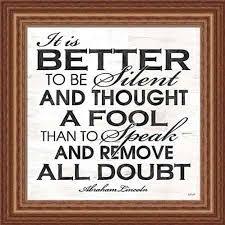
FINRA Enforcement Chief Brad Bennett on HFT, “Better To Be Silent and Thought a Fool . . .”
 In today’s version of “You Can’t Make This Stuff Up,” we hear from Brad Bennett, the Head of Enforcement at Wall Street’s self-regulatory organization FINRA. Bennett and others spoke on a panel this past Friday at a conference sponsored by the Practicing Law Institute.
On the hot button topic of high frequency trading, Bennett weighed in with a comparison that is so dismissive as to defy credulity. Let’s navigate as the folks at Wealth Management were there to cover and reported:
Benefiting from faster access to the markets is akin to buying a first-class plane ticket, and doesn’t sound unfair, said the top cop at Wall Street regulator FINRA.
Bennett was on a panel with the enforcement heads of the SEC, the Consumer Financial Protection Bureau and the Dept. of Justice.
Bennett specifically had the following to say:
“The interesting thing of what Lewis writes about is his primary focus is on preferential access – the exchanges allowing people to locate closer to their trading engines such that their pipes are faster which (you know), that’s an interesting area of investigation because if fully disclosed, one could look at it like, well, can you buy first class ticket and get a first class seat on the airplane? Do you get off quicker if you buy first class and get drinks, well yes you do. Is there anything unfair about this if it’s fundamentally disclosed? I don’t know, doesn’t sound like it to me but those are the kinds of issues that have to be worked thru.”
Bennett is not some mid-level regulatory official. As the Head of Enforcement, he is charged with making sure Wall Street firms play by the rules to the absolute letter of the law and to mete out punishment when they do not. Given FINRA’s track record (which leads me to define this regulatory organization as little more than a pack of meter maids), perhaps we should not be surprised by Bennett’s rather flippant remark. I guess some might call him the Head Meter Maid.
So, once again, I will pose the question to Mr. Bennett and his FINRA colleagues: are you upholding your mandate to fully protect investors and the public interest or are you protecting the industry that funds you? The comment equating co-location of computers on equity exchanges to a first class plane ticket so as to facilitate what appears to be massive front running puts that question front and center once again.
Bennett references that the practices involved might generate “an interesting area of investigation if fully disclosed.”
Well, Mr. Bennett, let’s do just that.
Will you and your colleagues at FINRA allow for an independent outside audit so that full disclosures on this front and others can bring meaningful transparency to these topics? Will you and your colleagues at FINRA agree to your organization being subject to the Freedom of Information Act?
I will be the first to sing your praises if you open the doors and windows into these areas of national concern.
If not, then I can only view your comparative statement as further evidence confirming that you would be “better to be silent and thought a fool than to speak up and remove all doubt.”
Navigate accordingly.
Larry Doyle
Please order a hard copy or Kindle version of my book, In Bed with Wall Street: The Conspiracy Crippling Our Global Economy.
For those reading this via a syndicated outlet or by e-mail or another delivery, please visit the blog to comment on this piece of ‘sense on cents.’
Please subscribe to all my work via e-mail.
The opinions expressed are my own. I am a proponent of real transparency within our markets so that investor confidence and investor protection can be achieved.