Larry Doyle's Blog, page 8
June 2, 2014
Lessons from a Wall Street Whistleblower
 Those occupying positions of financial and political leadership typically like to promote themselves as possessing real courage and bold vision. Yet, when it comes to defending people who display those very virtues, our supposed leaders often look very much like cowards.
I am reminded of this very reality in reading of the travails of selected whistleblowers on Wall Street. Let’s navigate to a commentary in this weekend’s Financial Times, highlighting lessons shared by Peter Sivere, a former compliance officer at JP Morgan whose confidence was violated by an SEC attorney named George Demos and subsequently his career derailed while trying to do the right thing.
I hold Sivere in the highest regard for trying to do his job in sharing information of illegal practices at JP Morgan. He deserved to be treated as a true hero. Cowards are unfamiliar with the virtues Sivere displayed.
Sivere shared the following chilling perspectives and lessons on his experience:
Although the events occurred nearly 10 years ago, Sivere still feels their effects. “Immediately after I was let go, you feel the emotions that you would [expect to] feel – let down, rejected,” he says. “You felt like if you did the right thing, the firm would stand up for you. That didn’t happen.”
He has no regrets about becoming a whistleblower. But he still wonders why JPMorgan Chase did not support him. He quotes – with some irony – an expression used by Jamie Dimon, the bank’s chairman and CEO, in a 2009 speech to the Harvard Business School in which he said, “Do the right thing, not the expedient thing.” According to Sivere, “I had no reason to believe what I did was contrary to what senior management would expect from me and any JPMorgan Chase employee. You are taught at a young age right from wrong. Yet as we grow older and have our own self-interests in sight many of us lose that feeling of right and wrong.”
The ordeal taught Sivere much about the way the world works and the powerful forces aligned against whistleblowers. He ticks off a list of what would have been nice to know before he embarked along this path: “I wish I had known about the revolving door between Wall Street and Washington. I wish I had known how ruthless external counsel for a corporation could be. I wish I had known that even if company policy may indicate it does not tolerate retaliation, retaliation may be in the eye of the beholder. I wish I had known how in bed the [Wall Street regulators are] with the firms they regulate. I wish I had known that the compliance department is mostly there for window dressing and is really not supposed to find anything. I wish l had known that at the end of the day compliance will be silenced by other forces. I wish I had known that the house always wins. I wish I was not so naive.”
Peter Sivere? True American hero.
Those working to perpetuate a corruptible status quo? Not so much.
Navigate accordingly.
Larry Doyle
Please order a hard copy or Kindle version of my book, In Bed with Wall Street: The Conspiracy Crippling Our Global Economy.
For those reading this via a syndicated outlet or by e-mail or another delivery, please visit the blog to comment on this piece of ‘sense on cents.’
Please subscribe to all my work via e-mail.


May 24, 2014
Book Talk: In Bed with Wall Street at Library of Congress, June 5th
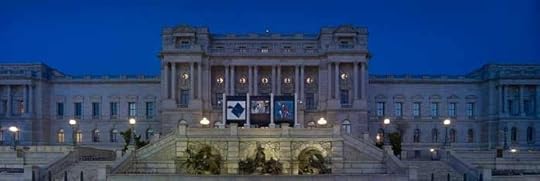 For those in and around the metro Washington DC area, I hope you might be able to join me on June 5th when I speak about my book, In Bed with Wall Street: The Conspiracy Crippling Our Global Economy, at the Library of Congress.
The Library of Congress happens to be the largest library in the world. That said, as I have only half-kiddingly told friends about this speaking engagement, I feel like my book talk at the LoC is the equivalent of going into the reading room next to the master bedroom and revealing a host of illicit behaviors of the masters of the house.
How so? Recent reviewers have shared the following impressions regarding the financial-political-regulatory menage-a-trois exposed within the pages of my book:
“If you think Flash Boys was explosive, In Bed with Wall Street is downright nuclear.”
Eye-opening. Captivating. Motivating. Inspiring. Anger-provoking, as it should be. Tells it like it is and tells it like it should be.
. . . a full throttle indictment of our pay-to-pay political system and the ties that bind it to our corrupt, bloated and inefficient financial services industry. Sparks fly in this fast paced book . . .
The details of my talk from the Library of Congress’ website:
Wall Street
June 5, 2014, 11:30 a.m. – 12:30 p.m.
Author Larry Doyle discusses his recently published book “In Bed with Wall Street: The Conspiracy Crippling Our Global Economy.”
Location: Pickford Theater, Third floor, James Madison Building (101 Independence Avenue SE between 1st and 2nd Ave)
Contact: (202) 707-1209
I am confident in stating that the talk will provide real exposure on issues that impact all of us. For those who cannot join me on the 5th, please make your friends, Congressional representatives, and our financial regulators aware of the talk so they can all get a healthy serving of truth, transparency, and integrity.
I hope many of the regular readers of my blog living or working in the DC area can join me on the 5th.
Navigate accordingly.
Larry Doyle
P.S. I wish everybody an enjoyable Memorial Day weekend, but let’s never forget the true meaning of this holiday.
Please order a hard copy or Kindle version of my book, In Bed with Wall Street: The Conspiracy Crippling Our Global Economy.
For those reading this via a syndicated outlet or by e-mail or another delivery, please visit the blog to comment on this piece of ‘sense on cents.’
Please subscribe to all my work via e-mail.

May 22, 2014
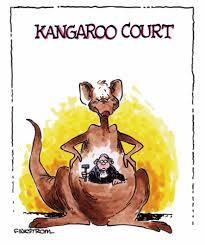
Wall Street’s Kangaroo Court: Calling Out FINRA’s Linda Fienberg
 Do you ever hear or read a statement put forth by a public official, industry representative, or a regulatory spokesperson and think “are you kidding me?” . . . if not something far less polite than that?
I would guess that in a world in which politicians and their spokesmen are not often called on the carpet, many people allow statements worthy of being challenged to go in one ear and out the other if they bother to listen at all.
Well, today I am not of a mind to be quite so dismissive given the fact that the topic at hand — Wall Street arbitration — not only touches every employee on Wall Street but also every investor in the nation.
Let’s navigate and continue to play to win for those who care about real transparency and integrity in America.
I am compelled to address a statement put forth recently by Linda Fienberg, the president of FINRA’s dispute resolution and chief hearing officer. The statement made by Ms. Fienberg deals specifically with the manner in which FINRA records testimony in arbitration hearings. The implications of Fienberg’s statement directly impacts the case of Mark Mensack.
For those unaware, I wrote about this fascinating case in chapter 5 (Kangaroo Court) of my book, In Bed with Wall Street. I highlighted the fact that while Mensack appealed his lost arbitration, the folks at FINRA only provided him with 10 of the 18 hours worth of testimony in the case. Can you imagine that? Think it might be a little challenging to make a legitimate appeal when so much testimony is missing. Many readers of my book have told me of all the egregious injustices, scandalous practices, and corruption revealed in my book, Mensack’s case and the missing testimony take the cake.
Clearly this topic and and the injustice done to Mensack have caught the attention of many folks. Think Advisors’ Jane Wollman Rusoff wrote a fabulous commentary, Brokers Say FINRA Arbitration ‘Rigged’, Like Dealing with The Devil, on Wall Street arbitration just the other day. In the midst of her hard hitting review, Rusoff addresses the Mensack case and includes a retort from Fienberg:
One advisor who tried to appeal is Mark Mensack, now an independent fiduciary consultant and RIA with Piedmont Investment Advisors in Lansdowne, Virginia. But he was unsuccessful in his attempt after losing an arbitration case to Morgan Stanley. It mattered not at all to FINRA that, when he obtained a copy of his recorded hearing proceedings, in preparation of the appeal, eight hours were missing in 14 different places — all material that supported his case.
Fienberg says: “On rare occasions, it has happened that an arbitrator has forgotten to turn on the recording device. But we have a built-in procedure now to almost ensure that cannot happen again.”
Let’s take the gloves off.
Clearly, Fienberg would like to have us believe that the individual operating the recording device in Mensack’s case simply forgot to turn the machine on. If we were to believe that, we would have to accept that the operator “forgot” at 14 separate times . . . for an average duration each and every time of 34 minutes and 18 seconds . . . AND . . . that these operational memory lapses just so happened to occur in the midst of when the representatives for Morgan Stanley were testifying.
What are the odds of all those crooked curves in the court aligning? I do not think so Ms. Fienberg.
CHALLENGE!!!
I am calling Linda Fienberg out. In my strong opinion, a statement as weak and pathetic as that put forth by Ms. Fienberg only further confirms that the FINRA arbitration system is truly a kangaroo court.
Ms. Fienberg, FINRA CEO Rick Ketchum, and all of their FINRA colleagues should think long and hard about the impact that their operational “forgetfulness” had on Mr. Mensack’s professional and personal well being and that of his family.
I might imagine that the folks at FINRA do not appreciate being called out like this but when they put forth a statement such as that by Ms. Fienberg to explain away such a grievous injustice as that done to Mr. Mensack — and who knows, likely others as well — then too bad.
Do you think Fienberg et al deserve to be called out?
What’s that?
Did somebody in the back of the room say “bull%#&^”, “blow&*^”, and “banana republic?”
Navigate accordingly.
Larry Doyle
Please order a hard copy or Kindle version of my book, In Bed with Wall Street: The Conspiracy Crippling Our Global Economy.
For those reading this via a syndicated outlet or by e-mail or another delivery, please visit the blog to comment on this piece of ‘sense on cents.’
Please subscribe to all my work via e-mail.

May 20, 2014
Sheila Bair Recommends Geithner’s Book, Warns of Future Bailouts. Instant Classic
[image error] Hell hath no fury like a woman scorned.
Those watching the Wall Street-Washington regulatory battles over the years are well aware that there is no love lost between former Treasury Secretary Tim Geithner and former FDIC chair Sheila Bair. While Tim is now out making the rounds promoting his new book, Stress Test, Bair takes the opportunity to offer some faint praise but also some glancing and direct hits.
In what I would qualify as deftly slipping a punch, Bair actually recommends Geithner’s book. In doing so, though, she then proceeds to lay Tim and his cohorts out with a serious warning we all should heed.
In a Sense on Cents Instant Classic, Bair provides a must read review of Geithner’s tome at CNN Fortune: Why I Recommend Tim Geithner’s Book:
In his new book, Stress Test, former Treasury Secretary Tim Geithner says nice things about me, kind of. For the most part, he fairly recounts our disagreements during the 2008 financial crisis and its aftermath. If you share my skepticism of the bailouts and their generosity, you will think well of the positions I took. If you share his world view that we were justified in throwing trillions at the big banks to “save the system,” you will not. Wherever readers come out, Tim’s book has reinvigorated a much-needed debate about whether our financial system should be based on a paradigm of bailouts or on one of accountability.
Though the vast majority of Americans favor the latter, Washington’s love affair with big finance continues. Regulators and politicians may spout a good line about ending “too big to fail,” but their actions speak louder than their talking points. Financial reform has been tepid. The hard work to force mega-banks to raise more capital, replace their unstable short-term funding with long-term debt, and simplify their legal structures is at best, half-done.
But who can blame the regulators for being timid when members of both parties in Congress seem to value campaign contributions over system stability?
No doubt about that.
But what lessons have been learned from the greatest crisis of the last 85 years? Bair would maintain that Tim and his team have learned very little but rather have institutionalized a bailout mentality. I encourage readers to ponder Bair’s words and heed her warning:
. . . what’s troubling is his failure to acknowledge the inherent instability created when Wall Street thinks it has a giant put on Uncle Sam.
While an enjoyable read, Tim’s book is also a warning. As much as he is trying to justify the decisions he made and actions he took during the crisis, I sense he is also trying to prep the public for future bailouts. And with this message, I fear, he is reflecting the unspoken views of many on Wall Street where he is now employed: The system is still unstable, there will be another crisis, and yes, they will need to be bailed out again. Of course, Wall Street titans would like bailouts to be new paradigm — after all, they are so much easier than trying to reform the system and hey, they made money last time!
The problem is, when Wall Street blows up, the rest of us suffer. The cash profits from the bank bailouts are poor recompense for the millions who lost their homes and their jobs, to say nothing of taxpayers and the huge risks the government took with their money. For these things, the public will never be adequately compensated.
I guess I would feel better about Tim’s rationalizations of the bailouts if I thought he was more committed to avoiding them in the future. But instead of openly and vigorously advocating for meaningful financial reform, he seems to think we have pretty much done all we can or should do. I think we should apologize for the bailouts. He wants to be thanked for them. But if we glorify regulators when they bail out the industry, while savaging them when they try to regulate it, what kind of system will we have?
I fully concur. We have witnessed very little in terms of truly meaningful reforms because the corrosive flow of money from Wall Street to Washington and favors paid back in return remain in vogue.
We all pay a very steep price for this glaring lack of financial-political-regulatory leadership.
Navigate accordingly.
Larry Doyle
Please order a hard copy or Kindle version of my book, In Bed with Wall Street: The Conspiracy Crippling Our Global Economy.
For those reading this via a syndicated outlet or by e-mail or another delivery, please visit the blog to comment on this piece of ‘sense on cents.’
Please subscribe to all my work via e-mail.

May 19, 2014
William Bowen Gives Best Commencement Speech at Haverford
[image error]Periodically I like to take a break from my standard navigation of our economic landscape to draw attention to more general news or remarks that I believe warrant special recognition.
To that end, I recall the aggressive commentary put forth by Dr. Benjamin Carson at the National Prayer Breakfast (link provides the video of Carson’s “must view” remarks) in early 2013 when he warned our nation on the dangers of the increasing political correctness that is overtaking our society. If you have not viewed Carson’s remarks, do yourself and your kids a favor and view it with them.
In the footsteps of Carson’s forewarning, not surprisingly we have seen a number of institutions of supposed higher learning allow their commencement speakers to be disinvited by a student body, faculty, and/or outside forces that do not appreciate their views and positions. These institutions include Brandeis, Rutgers, Smith, and Haverford. If this is not the essence of political correctness run amuck, I do not know what is.
Yet hopes springs eternal.
Haverford replaced its original speaker, Dr. Robert Birgenau of the University of California-Berkeley, with William Bowen, a former president of Princeton University. Leaving little to interpretation, Bowen does all the students — and faculty and administration, as well — at Haverford and every other academic institution a huge public service in stating so succinctly what many a commencement speaker in years past, present, and future have or will overlook.
Bowen speaks from the heart in stating:
“If you expect to agree with commencement speakers on everything, then who will you get to speak? Someone totally boring.”
Does that statement apply to about 95% of commencement speakers each and every year? I would maintain that it applies to most and perhaps all of the commencement speeches I have heard over the years.
Bowen goes a step further, though, in categorizing those students at Haverford who rallied against Birgenau as “immature and arrogant.”
I can imagine that some might view Bowen’s assessment as overly abrasive, but if undergraduate education is intended to prepare students for the real world, then everybody at Haverford should say “thank you” to Bowen for his hard-hitting wisdom. You can read the full text of Bowen’s speech here.
If only every other commencement speaker might be so brief and direct in their remarks, we would all be better off.
Navigate accordingly.
Larry Doyle
Please order a hard copy or Kindle version of my book, In Bed with Wall Street: The Conspiracy Crippling Our Global Economy.
For those reading this via a syndicated outlet or by e-mail or another delivery, please visit the blog to comment on this piece of ‘sense on cents.’
Please subscribe to all my work via e-mail.

May 16, 2014
If Credit Suisse Pleads Guilty, Pays $2.5B Fine, Should Brady Dougan Be Fired or Indicted?
[image error]Credit Suisse is widely speculated to be close to pleading guilty to charges that it facilitated tax evasion for selected American clients.
Pretty heavy stuff indeed.
Truth be told, though, I really think this expected guilty plea by Credit Suisse is more a desired outcome for the DOJ looking for a specific offense rather than a natural progression of an investigation. I mean if that were the case, then the DOJ should have already had a number of guilty pleas and a host of them in the on deck circle.
But let’s take this expected guilty plea on the part of Credit Suisse to the next step. What does it mean?
Will there be any real teeth to it aside from the payment of the fine itself? If there is little more than a deferred prosecution agreement along with the payment of the fine, then this guilty plea can take its proper place next to the rest of the judicial charades that have played out over the last number of years.
In my opinion, a guilty plea by Credit Suisse should come with a change in management at the very top of the firm, that is, CEO Brady Dougan should be canned. Beyond that, though, I personally believe Dougan should be brought back before Congress to explain how it is that the firm he runs can/might plead guilty in May or June after his Congressional testimony was reported in early March:
The American-born CEO told a U.S. Senate subcommittee on Wednesday that he and other top managers were not aware a small group of Credit Suisse private bankers had helped U.S. customers evade taxes with offshore accounts.
“The evidence showed that some Swiss-based private bankers went to great lengths to disguise their bad conduct from Credit Suisse executive management,” Dougan told the senators.
A small group? Some private bankers? Now we are about to get a guilty plea?
As I asked in March and repeat again, Did Credit Suisse CEO Brady Dougan Commit Perjury? Why is it important that this line of questioning is pursued? Testifying truthfully to Congress is supposed to be not only important but required. Not testifying truthfully — and on its face, one would think Dougan did not — should come with serious implications, i.e an indictment. Not to do so allows for the continued degradation of the rule of law in America.
For Dougan or others to think that “everybody does it” in terms of not testifying truthfully to Congress is unacceptable.
A breakdown in the practice of the rule of law is little more than a stepping stone on the path to a weakened nation and social fabric that defines the US of A circa 2014.
Navigate accordingly.
Larry Doyle
Please order a hard copy or Kindle version of my book, In Bed with Wall Street: The Conspiracy Crippling Our Global Economy.
For those reading this via a syndicated outlet or by e-mail or another delivery, please visit the blog to comment on this piece of ‘sense on cents.’
Please subscribe to all my work via e-mail.

May 14, 2014
Not If But When the Next Crisis Comes . . .
 With mid-term elections on the near term horizon, I expect we will hear various pols and their selected pundits tout Dodd-Frank as not being perfect but as having brought meaningful reform to Wall Street.
Really? I know, politico-speak is more noise than substance but let’s get real.
When there is not a lot to grab onto in terms of truly meaningful political accomplishments, we should not be surprised that any legislation that has been passed will be used as fodder to feed the masses.
So when you hear a pol from either side of the aisle play this game talking about Dodd-Frank, make sure you hit them with the following insider assessments:
1. James Kidney, retiring SEC attorney, in April 2014 said the SEC is nothing more than “a tollbooth on the banksters’ turnpike.”
2. Scott O’ Malia, commissioner at the CFTC, in May 2014 said, “I do not believe that the CFTC’s systems are adequate to oversee today’s fast and complex derivatives markets.”
3. Sheila Bair, former chair of the FDIC, when questioned in May 2014 why we have not seen more reform responded that “the regulators have not had the fortitude to stand up” to the forces imposed on them by the industry and Congress.
4. Alan Blinder, speaking at an investment conference in Boston in May 2014, stated that Wall Street’s mode of self-regulation was a mistake.
5. None other than former Treasury Secretary Tim Geithner when asked in early May 2014 about the ‘too big to fail’ banking model, “Does it still exist?” Yeah, of course it does.”
So there you go.
We largely remain in the same position and with the same predicament that brought on our crisis in 2008.
So, not if but when the next crisis comes, we have no reason to be surprised.
When you see a politician — and especially those on any of the Congressional banking or finance committees — remind them of these insiders’ views on Wall Street reform.
Navigate accordingly.
Larry Doyle
Please order a hard copy or Kindle version of my book, In Bed with Wall Street: The Conspiracy Crippling Our Global Economy.
For those reading this via a syndicated outlet or by e-mail or another delivery, please visit the blog to comment on this piece of ‘sense on cents.’
Please subscribe to all my work via e-mail.

May 13, 2014
Message for Tim Geithner On the Release of Stress Test
[image error]Dear Tim,
Congratulations on the release of your book. I assure you that I will read it and review it here at my blog.
Given your positions formerly as head of the New York Federal Reserve and Secretary of Treasury, you will certainly receive enormous media attention and exposure in touting your book and your take on dealing with the crisis of 2008. To wit, I see just this morning that The Wall Street Journal is running your editorial entitled The Paradox of Financial Crises.
Tim, let’s cut the bull$hit.
During your tenure and now in this editorial you and your colleagues — including your predecessor Henry Paulson — would like to frame the debate for the American public as one in which people are either for or against the Wall Street bailout. I firmly believe that is a false premise and an incorrect reading of the American psyche.
I personally believe the only thing worse than bailing out the Wall Street banks would have been not bailing out the banks. But an honest review of the bailout goes much deeper than that. Let’s navigate and address the unanswered questions, concerns, and anxieties that continue to rile many people in our nation. These issues revolve not around the topic of bailing out the banks as your editorial this morning would like to entertain as the center of the debate.
Come on, Tim, let’s get real.
America is a forgiving crowd, but only after meaningful accountability and truths are revealed. These virtues and the pursuit thereof are where you and your colleagues both in Washington and on Wall Street have failed America and continue to do so.
You want historical cover impacting your legacy as Treasury Secretary for bailing out Wall Street, then address the following:
1. The massive regulatory capture of Washington by Wall Street that allowed for real scandal, corruption, and fraud to propagate like never before.
2. The fact that the same players in banking and regulatory circles who drove our markets, economy, and nation into a ditch going into the crisis almost uniformly remained in place post crisis.
3. The serious degradation of the rule of law, violation of property rights, and all consuming cronyism that has now gained acceptance as ‘business as usual’ in America.
4. The flow of funds from Washington that went into the front door of the Wall Street banks and seemingly right out the back door in the form of executive compensation with little to no impact on life on Main Street.
5. The revolving door that promotes a system of payoffs and kickbacks between our financial and political elites.
6. The fact that not one individual of substance on Wall Street was ever held to account for the control fraud that will forever define this period.
There you go.
Tim, let’s dispense with the platitudes and pandering that are all too frequently proffered as meaningful journalism these days. Who in the media will have the balls to pose these points, or will we be forced to continue to swallow more of the same “nonsense on cents?’
What say you, Tim?
Do those in the audience have other questions or topics the Secretary should be compelled to weigh in upon?
Navigate accordingly.
Larry Doyle
Please order a hard copy or Kindle version of my book, In Bed with Wall Street: The Conspiracy Crippling Our Global Economy.
For those reading this via a syndicated outlet or by e-mail or another delivery, please visit the blog to comment on this piece of ‘sense on cents.’
Please subscribe to all my work via e-mail.
The opinions expressed are my own. I am a proponent of real transparency within our markets so that investor confidence and investor protection can be achieved.

May 12, 2014
“If You Think Flash Boys Was Explosive, In Bed with Wall Street Is Downright Nuclear”
[image error]While many in and around Wall Street and Washington have been either dismissive or silent on the issues Michael Lewis addresses in his book Flash Boys, a select few brave souls have issued a real siren call over the years.
Lewis pays respect to these ‘men in the arena’ who have shined a light on the less than pristine plumbing of our equity exchanges. Specifically on page 202 in a footnote, Lewis writes the following:
*Eric Hunsader, the founder of Nanex, a stock market data company, is a fantastic exception to the general silence on this subject. After the flash crash, it occurred to him to use his data to investigate what had gone wrong, and the search never really ended. “Almost every rock I overturn, something nefarious crawls out from under it,” he said.
Hunsader has brilliantly and relentlessly described market dysfunction and pointed out many strange micro-movements in stock prices. When the last history of high-frequency trading is written, Hunsader, like Joe Saluzzi and Sal Arnuk of Themis trading, deserves a prominent place in it.”
I fully concur.
I have long held Saluzzi and Arnuk as heroes in the pursuit of promoting real transparency on Wall Street. Shortly after the release of Flash Boys, those longstanding Sense on Cents Hall of Famers pointed me in the direction of Mr. Hunsader and his herculean efforts at his firm Nanex.
Having read much of Hunsader’s work over the last 6 weeks, I echo the sentiments expressed above by Mr. Lewis. A few weeks back, I reached out to Hunsader to draw his attention to my book, In Bed with Wall Street.
I am more than a little bit pleased to share with you some progressively enthusiastic tweets that Hunsader sent out to his 89k followers as he worked his way through my book over this past weekend:
“Reading “In Bed with Wall Street”. Riveting, fast read that will make you furious. Highly recommended.”
“Want to know the real FINRA/SEC? Read “In Bed with Wall Street.”
“Chapter 4 &5 alone of “In Bed with Wall Street” are worth buying the book and your time reading it.”
Hunsader expresses a deep appreciation for the broad based impact of my writing in stating:
“If you think #Flash Boys was explosive, “In Bed with Wall Street” is downright nuclear.”
Saving perhaps the best for last, and in words that I hope anybody reading this might embrace, Hunsader tweets:
“”In Bed with Wall Street” is required reading for any citizen concerned about the future of the USA. Well done Larry Doyle.”
Having learned all too well that there are very real forces within our social fabric that would just as soon have little to no light shone upon a status quo that allows for scandalous and corruptible practices, I thank Eric Hunsader not only for his own efforts at Nanex but also in drawing attention to my pursuit for real truth and transparency.
Spread the faith and navigate accordingly.
Larry Doyle
Please order a hard copy or Kindle version of my book, In Bed with Wall Street: The Conspiracy Crippling Our Global Economy.
For those reading this via a syndicated outlet or by e-mail or another delivery, please visit the blog to comment on this piece of ‘sense on cents.’
Please subscribe to all my work via e-mail.
The opinions expressed are my own. I am a proponent of real transparency within our markets so that investor confidence and investor protection can be achieved.

May 8, 2014
CFTC’s Scott O’ Malia ‘Blows The Whistle’
 What does it say about a regulatory oversight system when individuals from inside start to ‘blow the whistle?’
I think it speaks volumes that all is not well, and somebody better start to really pay attention and take some meaningful action.
A month or so ago we heard from retiring SEC attorney James Kidney voicing real concerns in describing the commission as little more than a “tollbooth on the banksters’ turnpike.” Now we hear CFTC (Commodities Futures Trading Commission) commissioner Scott O’ Malia also blowing the whistle. Let’s navigate as Pensions and Investments highlights O’ Malia’s siren call:
“I do not believe that the (Commodity Futures Trading Commission’s) systems are adequate to oversee today’s fast and complex derivatives markets,” Scott O’Malia said Tuesday at a TABB Forum conference on derivatives in Chicago.
Mr. O’Malia said he was “tired of asking the commission” about proposals for a strategic technology plan, “so I am instead going to seek input from the exchanges, other self-regulatory organizations and high-frequency traders, who have invested millions of dollars in their own technology, for their thoughts on how the commission should design the 21st-century mouse trap to spot disruptive and manipulative trading practices — at any speed.”
Do you sense O’ Malia’s frustration? I do.
Do you think any traders may be ‘speeding’ given that the cops are not able to properly monitor the traffic?
Mr. O’Malia said the CFTC does not have an order message data collection and analysis system. Without one, he said, “How can the commission understand and make decisions about today’s automated trading strategies? … We still have work to do. We need to improve our data collection.”
How is it that this commission might be so ill-prepared to properly monitor this market that some estimate to be a quadrillion (a thousand trillion) in size? In my opinion, O’Malia’s whistle is a sign of real failure on behalf of those running the CFTC and those in Washington charged with funding it to make sure that this critically important regulator is properly equipped.
Is anybody in Washington listening to what O’ Malia is saying? Or are we still supposed to operate under the guidelines that it is better to be quiet and take real national risk — and yes, I do consider this a matter of national security — rather than draw attention to a regulatory system that runs the gamut from ill-equipped to incompetent to captured to corrupt?
Thank you Mr. O’ Malia.
Navigate accordingly.
Larry Doyle
Please order a hard copy or Kindle version of my book, In Bed with Wall Street: The Conspiracy Crippling Our Global Economy.
For those reading this via a syndicated outlet or by e-mail or another delivery, please visit the blog to comment on this piece of ‘sense on cents.’
Please subscribe to all my work via e-mail.
The opinions expressed are my own. I am a proponent of real transparency within our markets so that investor confidence and investor protection can be achieved.