Larry Doyle's Blog, page 7
June 17, 2014
Senate Investigation of High Frequency Trading: Will We Learn Anything?
 The United States Senate Permanent Subcommittee on Investigations is holding a hearing today to “examine conflicts of interest, investor loss of confidence, and high speed trading in U.S. stock markets.”
The hearing will focus on two specific conflicts of interest: payments by wholesale broker-dealers to retail brokers for their customer orders, known as “payment for order flow;” and “maker-taker” rebates or fees that, depending on the circumstances, exchanges either pay or charge to brokers for executing trades on their platforms.
While I hope that some meaningful discussion might expose some of the crony, if not corrupt, practices within our markets, if past is prologue I am prepared to be underwhelmed. Why so?
The topics on the agenda are certainly worthy, but how aggressive will the committee be in probing these practices? Even more importantly, in addressing these conflicts, how aggressive will the committee be in exposing those charged with protecting the public interest, those being the regulators themselves, whose mandate is to protect investors?
In my opinion, the points highlighted above are the mere side effects of the real conflict of interest that should be on trial today. What are the three components of the conflict of interest that operate on Wall Street?
1. Self-regulation –> the Financial Industry Regulatory Authority (FINRA).
2. Regulatory capture/corruption –> the deeply embedded culture within the SEC.
3. Political payoffs –> the manner in which political sycophants feed at the Wall Street trough.
If we held a conflict of interest hearing, then perhaps we could pull back the blanket and expose all the players and practices ongoing in the Wall Street bed.
Many might think that the hearing I want is too much to ask for. That said, I would be willing to bet that my proposed hearing would attract a lot more attention and support than what we will hear today.
What do you think?
For those interested, today’s hearing will be webcast on the subcommittee’s website.
Larry Doyle
Please order a hard copy or Kindle version of my book, In Bed with Wall Street: The Conspiracy Crippling Our Global Economy.
For those reading this via syndicated outlet or by e-mail or another delivery, please visit the blog to comment on this piece of ‘sense on cents.’
Please subscribe to all my work via e-mail.


June 16, 2014
Uncle Sam Wants Names of VA Whistleblowers; POGO Protects Identities
 You do not need to read my blog to know the Veterans Administration has some serious issues that have impacted the health and well being of countless veterans. These issues are not new developments.
Very simply, the failures within the VA are due to a government that is badly mismanaged and often engaged in practices that are fraudulent, if not totally corrupt.
The VA has not only failed countless numbers of veterans but, in adding insult to injury, it has punished those internally who have tried to do the right thing. How so?
Whistleblowers who have brought attention to the fraud and corruption within the VA have not been embraced but rather ignored, intimidated, and often fired. As we well know, mismanagement, fraud, and corruption much prefer the cover of darkness than the light of transparency.
The VA may want to have us believe that they have a practice that prevents reprisals against whistleblowers but, as displayed in today’s New York Times, the reality displays a stark contrast. So if you are an employee of the VA, would you run the very real risk of losing your job by bringing information to the Inspector General of the organization? Maybe not. Might you prefer to seek out an organization that has a longstanding tradition of pursuing real transparency within the government and protecting whistleblowers in the process? Looks a little more appealing.
In fact, that organization, the Project on Government Oversight, has been inundated with information from whistleblowers within the VA. How is Uncle Sam, in the personage of the IG’s Office at the VA responding? They have issued a subpoena demanding that POGO turn over the names of the whistleblowers. POGO recently issued the following letter entitled We Won’t Reveal Our Sources in response:
If you’ve been following the news about the growing scandal at the Department of Veterans Affairs, you may have seen that the VA’s Inspector General has issued a subpoena to the Project On Government Oversight demanding we turn over the names of all VA whistleblowers who have contacted us in the last month.
The deadline for us to comply with the subpoena passed at 10 a.m.
We’re writing this email to keep you updated on this serious threat to our mission. Under no circumstances does POGO plan to release any information that would compromise whistleblowers.
It has not happened in our 33-year history. It’s not going to happen now.
Over the years, the government has tried to force us to reveal our sources several times, including a subpoena for my home phone records. We have prevailed every time. And we will prevail this time.
We believe the IG’s attempt to get our records violates not only our constitutional rights but it also sends a chilling message to anyone who might speak out about corruption or mismanagement within the VA.
In the last few days, we’ve received encouragement and support from many of our friends and supporters. Sen. Tom Coburn sent a letter to the VA IG questioning the reasons for the subpoena. Peter Van Buren, a former U.S. Foreign Service officer who blew the whistle on policy failures he witnessed in Iraq, summed up what’s at stake in a terrific column, which we posted here.
For now, we’re waiting for the IG to make the next move, which we hope involves a realization that its subpoena is terribly misguided. However, if that doesn’t happen, we’re going to need your support, whether it’s sending emails to the IG, signing petitions or contributing to our fight against the subpoena. I will give you another update next week.
With sincere appreciation for your support,
Danielle Brian
Executive Director
Sen. Coburn’s letter to the IG (LD’s edit: A great read.)
Where are those within the Obama administration and elsewhere on Capitol Hill who want to do the right thing by the veterans and would tell the VA’s IG to stand down and retract this subpoena?
If Washington truly cares about the veterans, I would recommend they embrace POGO and the information they have gathered so the appropriate corrective measures can be taken and those engaged in the mismanagement, fraud, and corruption can be exposed.
I welcome supporting POGO and its great work. I hope you will, as well.
Navigate accordingly.
Larry Doyle
Please order a hard copy or Kindle version of my book, In Bed with Wall Street: The Conspiracy Crippling Our Global Economy.
For those reading this via syndicated outlet or by e-mail or another delivery, please
Please subscribe to all my work via e-mail.

June 14, 2014
The IRS Scandal: “That’s a Lie”
 Saturday morning in America.
Should be a great day and a beautiful weekend with plenty of sports activity to captivate fans and fathers in the crowd. In the process of making the most of the weekend, though, let’s not lose sight of the fact that our nation remains under assault both from without and within.
As a father, I am very concerned for the future of this country. While I am concerned about the threat of terrorism and our fiscal condition among many other issues, my greatest concern actually centers on the lack of moral fiber and true leadership that are integral to the ongoing degradation of the rule of law in America.
Why so concerned — er, actually pissed off — on a beautiful Saturday morning? I am insulted, and hope you are as well, that we are forced to swallow such a line of horse$&it that e-mails within the IRS were lost because a computer crashed. This crock might only be compared to the junior high excuse that my dog ate my homework.
But rather than my railing further on this degrading end-of-week insult, let’s review Karl Denninger’s commentary “That’s a Lie” at The Market Ticker:
The Internal Revenue Service told Congress Friday it has lost a trove of emails to and from Lois Lerner, a central figure in the agency’s Tea Party controversy, sparking outrage from congressional investigators who have been probing the agency for more than a year.
The IRS said it cannot locate many of Lerner’s emails prior to 2011 because her computer crashed during the summer of that year.
Horsecrap.
Lerner’s computer sent those emails through a mail server. That server is a centralized device that, in a government installation (like the IRS) is, with a high degree of certainty, backed up and those backups are archived on a permanent basis.
In addition good business practice requires that Lerner’s computer be subjected to the same routine backups and some generation of those are typically retained permanently by policy, law or both.
Where are the backups?
“The fact that I am just learning about this, over a year into the investigation, is completely unacceptable and now calls into question the credibility of the IRS’s response to congressional inquiries,” said Rep. Dave Camp, R-Mich., chairman of the House Ways and Means Committee. “There needs to be an immediate investigation and forensic audit by Department of Justice as well as the inspector general.”
Yep.
I don’t believe there are no backups of both the server and Lerner’s computer. This means that they were almost-certainly deliberately destroyed, which is a crime (obstruction.)
This, in fact, is what usually gets government people when they get busted. It’s not the original act — it’s the attempt to cover up what they did.
As for Mr. Camp he needs to get a special prosecutor and independent auditor in there. Asking the DOJ to look into this is sort of like asking a Mexican Drug Lord to investigate whether one of his “mules” is involved in money laundering…..
Thank you, Mr. Denninger, for laying it out so poignantly. This issue is not one of right vs. left, but rather right vs. wrong.
If it looks like corruption and abuse of power, and smells like corruption and abuse of power, and feels like corruption and abuse of power, then . . . quack, quack . . .
America and our children deserve so much better.
Yes, I’m pissed and I am glad I have the voice provided by this blog to voice my concern and disgust. I hope that regardless of your political leanings you are pissed, as well. Abuse of power is central to degrading the rule of law which undermines our democracy.
I think fighting for our democracy is a worthy cause.
To add further fuel to this fire and to confirm Denninger’s line of reasoning, you might find this 5-minute clip from a hearing on April 1, 2014 to be of real interest. In fact, you really need to watch this. Specifically at the 2:25 mark, the current head of the IRS John Koskinen is quoted as saying, “We can find Lois Lerner’s emails.”
Happy Saturday . . . and, as always, navigate accordingly.
Larry Doyle
Please order a hard copy or Kindle version of my book, In Bed with Wall Street: The Conspiracy Crippling Our Global Economy.
For those reading this via syndicated outlet or by e-mail or another delivery, please visit the blog to comment on this piece of ‘sense on cents.’
Please subscribe to all my work via e-mail.

June 13, 2014
Sense on Cents Index of Cronyism and Corruption
 Those engaged in cronyism and corruption much prefer to operate under a cover of darkness. When transgressions due occur, those caught in the web of such practices typically like to pay a fine and quickly move on.
Given the preponderance of these practices in our current economy, I think it is a good idea that, rather than addressing cases on an individual basis, we compile an index of those involved. In doing so, we can then reflect back on them and gain a fuller appreciation for how widespread and destructive this cronyism and corruption is within our nation.
With no further adieu, I kick off the Sense on Cents Index of Cronyism and Corruption:
1. Today’s FT highlights: ”Goldman Sachs and Bain Capital paid $121m to settle a lawsuit alleging they conspired with other private equity firms to fix the price of some of the biggest ever leveraged buyouts.
Both Goldman and Bain said they came to the settlement, approved on Tuesday in the District Court of Massachusetts, to put an end to the protracted and costly litigation, which was brought in 2007 against 13 private equity firms of which five remain: Blackstone, Carlyle, Kohlberg Kravis Roberts, Silver Lake and TPG.
“We’re pleased to put this matter behind us,” said Goldman, which paid $67m. Bain paid $54m. Neither company admitted wrongdoing.
Shareholders in eight companies bought between 2003 and 2007 first brought the case, alleging they were denied a higher price for the buyout because private equity firms agreed not to compete against each other.”
2. Reuters reports UBS expected to pay $8 billion fine for manipulating currency markets.
3. The Guardian reports on lawsuit against exchanges for aiding and abetting high frequency traders.
I will continue to add to this list, and encourage readers to submit examples as you see them so we can make the index truly meaningful.
Navigate accordingly.
Larry Doyle
Please order a hard copy or Kindle version of my book, In Bed with Wall Street: The Conspiracy Crippling Our Global Economy.
For those reading this via syndicated outlet or by e-mail or another delivery, please visit the blog to comment on this piece of ‘sense on cents.’
Please subscribe to all my work via e-mail.

June 12, 2014
Spent: Looking for Change (Compelling Documentary)
Are you aware that nearly 70 million Americans are underserved, that is effectively locked out, by traditional financial services companies? How about the fact that these underserved fellow Americans paid $89 billion — that’s right billion with a B — in interest and fees to manage their finances? What do you think of the reality that 25% of the children in America live in underbanked homes? Are you aware that almost half of all US households report that they could not come up with $2,000 in case of an emergency? Yes, almost half.
To witness some first hand accounts of people representative of so many in America struggling to make ends meet, I strongly encourage you to watch a recently released documentary that runs a little more than a half hour. I believe this film, Spent: Looking for Change, will leave a strong impression on you. It certainly did on me.
In light of the statistics shared above, there should be no real surprise why our economy continues to lag and the disconnect between Wall Street and Main Street grows ever wider. There are many reasons for these realities, but regrettably the American dream is becoming nothing more than a pipe dream for many in our nation.
What do you think?
Larry Doyle
Please order a hard copy or Kindle version of my book, In Bed with Wall Street: The Conspiracy Crippling Our Global Economy.
For those reading this via syndicated outlet or by e-mail or another delivery, please visit the blog to comment on this piece of ‘sense on cents.’
Please subscribe to all my work via e-mail.

June 11, 2014
How Are People ‘Tweeting’ Dave Brat’s Victory Over Eric Cantor?
[image error]Twenty four hours ago, how many people who follow politics and the markets in America knew the name Dave Brat? I would guess not that many.
I will admit that, prior to last evening, I did not know Dave Brat or that there even was a Republican primary scheduled in the state of Virginia. What a difference a day makes. Talk of Dave Brat’s historic upset of Eric Cantor is now dominating the airwaves and social media. In the quintessential example of ‘David slays Goliath,’ Brat brought down Cantor after having raised a paltry sum of $231,000.
Is it appropriate to compare Brat’s victory to the throwing of tea into Boston Harbor?
While plenty of the established talking heads will look to quickly paint Brat’s victory with the standard political fare, I think — and hope — that Brat’s victory is a statement that “the system is broken.” Is Brat’s victory an indication that the established status quo in Washington should be nervous? Let’s navigate and see how folks are tweeting this monumental upset:
“The issue is the Republican Party has been paying way too much attention to Wall Street and not enough attention to Main Street,” Mr. Brat said.
“Dollars do not vote, you do. This election is about basic American values and virtues…power belongs to the people.” -Dave Brat
David Brat: “All the investment bankers should’ve gone to jail. Instead they went into Eric Cantor’s Rolodex.”
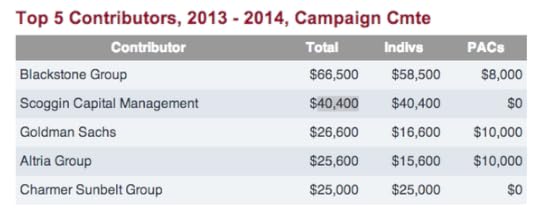
“If [Cantor] ever took a vote that challenged the rich and powerful, it’s news to me.” (A listing of Cantor’s top contributors):
DaveBrat‘s main slogan is: “I will make Washington as irrelevant to your every day life as possible.”
The Chamber of Commerce backed Eric Cantor. Crony Capitalism lost tonight in VA. Dave Brat, an economist, beat it.
‘People Are Sick and Tired of Centralized Government’
Principled. “Fundamentals matter”: Dave Brat: GOP “Paying Too Much Attn To Wall Street And Not Enough To Main Street”
Dave Brat told Chuck Todd: “I’m not anti-Wall Street. I’m anti-distortions to the free-market.”
Dave Brat says he wants free markets & equal treatment to all. Corporate America won’t like that.
America doesn’t want amnesty. Eric Cantor wants amnesty. Therefore, America doesn’t want Eric Cantor.
Dave Brat‘s campaign manager, year out of college, had only run a delegate race before unseating the House maj leader.
Dave Brat Reflects on Defeating Cantor: ‘The People Know the Country is Going in the Wrong Direction’
DaveBrat: Cantor was out of touch, “I was door knocking and I know what was on the mind of the folks”
“DaveBrat had two paid staffers who ran his campaign on a flip phone.”
I think it will only get more interesting from here. Well established interests on both sides of the aisle never like when an upstart enters the room looking to upset the status quo. Brat is a proponent of term limits. He states as much on his site:
I am a strong proponent of term limits for members of Congress. Career politicians and special moneyed interests have corrupted our democratic system. I pledge to support and submit legislation that enforces term limits. Ideally, Congressional term limits would be for 12 years total, across both The House and The Senate. Thus, I pledge to term limit myself to 12 years in Congress.
Here’s hoping that Brat, and others like him, can pull back the blanket and expose the crony corruption ongoing in Washington on so many fronts.
Larry Doyle
Please order a hard copy or Kindle version of my book, In Bed with Wall Street: The Conspiracy Crippling Our Global Economy.
For those reading this via syndicated outlet or by e-mail or another delivery, please visit the blog to comment on this piece of ‘sense on cents.’
Please subscribe to all my work via e-mail.

June 10, 2014
SEC Commissioner Stein Tells FINRA To Toughen Up
[image error] “Speak softly but carry a big stick.”
Real leaders and financial cops very much appreciate that principle. Those playing politics and crony capitalism circa 2014 find it to be anathema.
Why is it that bad practices on Wall Street (e.g high frequency trading, abusive sales practices, market manipulation) are too often tolerated in Washington while costing ordinary Americans untold sums? Very simply, when the punishments do not fit the crimes the practices will perpetuate. The penalties become little more than a cost of doing business. Those ‘writing the tickets’ are little more than meter maids.
Those engaged in regulatory oversight might not appreciate these assertions but these realities are part and parcel of the self-regulatory model on Wall Street. To think otherwise is simply to be willfully blind. SEC commissioner Kara Stein recently told the folks at FINRA to take off their blinders.
Let’s navigate and review Stein’s comments from a talk she delivered to FINRA’s Division of Market Regulation:
Lastly, I want to speak with you about enforcement. Your enforcement process is crucial to your ability to enforce your rules and protect the markets. And your general principles are in the right direction. Your sanctions should be designed to deter misconduct and improve business standards. And recidivists should be treated more harshly.
But, I fear the results, after months or years of hard work by you, are too often financially insignificant for the wrongdoers. Your enforcement cases must be impactful, and provide strong motivation for compliance.
I would encourage you to examine your sanctions and update them.
Let’s ponder Steins remarks. “Financially insignificant for the wrongdoers.” Sounds synonymous with ‘cost of doing business.’
As in the fact that FINRA’s sanctions represent approximately one tenth of one per cent of Wall Street’s bottom line. (From page 3 of FINRA’s 2012 Annual Report: “Overall in 2012, FINRA brought 1,541 disciplinary actions against associated persons and firms, levied fines totaling more than $69 million and ordered restitution of $34 million to harmed investors.”)
Think about that. If you are engaged in practices that generate meaningful do-re-mi and the cops on the beat are writing tickets that total one tenth of one per cent of your bottom line, what are you going to do? You will keep doing what you’re doing. That is human nature.
Stein is calling out the meter maids at FINRA. I commend her. What will FINRA do? Will they remain firmly ‘in bed with Wall Street’ or might they start to uphold their mandate to protect the public interest? Is Commissioner Stein speaking for SEC chair Mary Jo White, as well? I think we should hear directly from the Chair on an issue of this magnitude. Additionally, and perhaps more importantly, where are those on the Congressional banking, finance, and oversight committees calling for the same?
Writing parking violations while those inside the banks are robbing the system blind — and simultaneously paying off their political pals in the process — may be business as usual for FINRA, Wall Street, and Washington, but it is no way to run a regulator . . . let alone a nation.
Navigate accordingly.
Larry Doyle
Please order a hard copy or Kindle version of my book, In Bed with Wall Street: The Conspiracy Crippling Our Global Economy.
For those reading this via syndicated outlet or by e-mail or another delivery, please visit the blog to comment on this piece of ‘sense on cents.’
Please subscribe to all my work via e-mail.

June 9, 2014
The People v Big Finance: “This Case Is About Broken Promises” . . . . Strongly Recommended
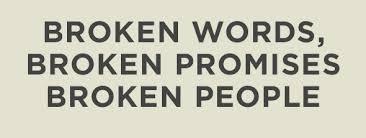 For those who care about free and fair markets — and the accompanying concerns about captured and corrupted regulators and politicians — a recent case filed against the major equity exchanges in our nation qualifies as an absolute must read.
This case brought on behalf of Harold R. Lanier et al against every major exchange in America including the NYSE, NASDAQ, et al centers on the ongoing debate surrounding high frequency trading within our markets.
I believe there is no doubt that those who operate within the high frequency trading arenas hope that compliant financial regulators and like-minded media will provide them the cover necessary to let the games go on.
This lawsuit, though, takes a simplified approach that should allow the general public to understand just how the game is rigged and the system is broken. Let’s navigate the key points of the suit and then an accompanying review written in this weekend’s edition of the UK-based The Guardian.
This case is about broken promises. Plaintiff Harold Lanier, and other Subscribers, (collectively “Subscribers”) entered into Contracts with the defendants, all of which are securities exchanges (“Exchange Defendants”), to receive electronic market data services offered by the Exchange Defendants. The Exchange Defendants promised to be fair by: (1) providing the market data service in a non-discriminatory manner; and (2) providing the Subscribers with “valid” data (i.e., the actual data that is accurate and not stale). The Exchange Defendants did not live up to either promise.
First, the Exchange Defendants failed to live up to their promise to provide Subscribers with the market data in a non-discriminatory manner. In an effort to increase their profits, the Exchange Defendants entered into lucrative side deals with certain customers to whom the Exchange Defendants sold advance access to the market data that Subscribers had contracted for through (1) direct feeds (“Private Feeds”) and (2) co-location services (“Preferred Data Customers”). As detailed in Section IV.C. of this Complaint, for a price, the Exchange Defendants provided access to the data to Preferred Data Customers through arrangements that guaranteed they would receive the data substantially in advance of the Subscribers.
Unbeknownst to Subscribers, these side deals resulted in Subscribers receiving data that was obsolete because the Preferred Data Customers had advance access to the data.
Second, the Exchange Defendants failed to live up to their promise to provide Subscribers with valid data. The validity of the data is what made the electronic data services offered by the Exchange Defendants valuable to the Subscribers. But by entering into the side deals with the Preferred Data Customers, the Exchange Defendants effectively provided to Preferred Data Customers the data that Subscribers had paid for, while giving Subscribers data that was stale. In other words, as a result of the side deals, the Exchange Defendants deprived the Subscribers of the fundamental benefit of their Contracts, i.e., fair access to valid data. Plaintiff and the other Subscribers thereby suffered injury and damage as a result of the Exchange Defendants’ conduct.
Can you imagine if you had contracted with a service entity to receive real time data only to learn that a competitor of yours contracted with that same service provider and received data that was even more timely so as to make the data you received to be stale? Think you would be pissed knowing that you were at a real disadvantage? Of course you would. Let’s now review commentary from The Guardian that raises a host of key points and compels me to ask a number of questions.
In a comment that rings all too similar to those put forth in my book, the lawyer bringing this case learned that:
. . . the deeper he delved, the more forcefully a depressing truth emerged: that a fortress of legislation had been built around the stock exchanges and powerful traders (mostly banks and hedge funds) by lobbyists and politicians.
Recall that then SEC chair Mary Schapiro pointed the finger directly at a Kansas City based firm Waddell and Reed for overloading the system with a sell order so as to cause the Flash Crash on May 6, 2010. Eric Hunsader, an industry insider with unparalleled expertise in mining and studying price data, strongly refutes that explanation.
When Waddell & Reed took the highly unusual step of asking Hunsader to examine their algorithm and its actions on 6 May, he quickly saw that it could never have caused the Flash Crash. The truth lay elsewhere.
What did Hunsader learn?
. . . he made a remarkable discovery: that the price information going to the Securities Information Processor – the so-called “SIP” feed upon which participants rely for live market data – had been delayed. Meaning that when pundits and the public still thought the Dow was in freefall, it was in fact rallying hard. Anyone who sold near that false bottom would have lost their shirt. And anyone who bought made a killing.
Are our equity markets rigged or broken? Call them what you want but that statement tells me all I need to know to maintain that those charged with protecting the public interest are doing anything but.
One final point. This lawsuit strikes right at the heart of integrity in the system and does so for the benefit of the American public against the big money centered on Wall Street and the power connected in Washington. Where is the fourth estate, that being our major media, to provide meaningful coverage of this lawsuit? Why is it that a UK-based periodical is carrying the water in drawing attention to this suit?
One can only surmise that our major financial media are also in bed with Wall Street.
Navigate accordingly.
For those who would like to read and review the 40 page complaint, I welcome linking to it: Harold R. Lanier v BATS, CBOE, NYSE, NASDAQ, et al
Larry Doyle
Please order a hard copy or Kindle version of my book, In Bed with Wall Street: The Conspiracy Crippling Our Global Economy.
For those reading this via syndicated outlet or by e-mail or another delivery, please visit the blog to comment on this piece of ‘sense on cents.’
Please subscribe to all my work via e-mail.

June 4, 2014
Preparation for My Talk at the Library of Congress
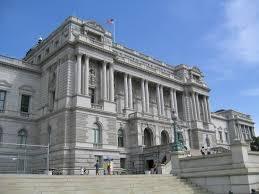 In preparation for my talk tomorrow at the Library of Congress, I thought I would gather some quotes from my book to share with those in attendance regarding shortcomings and failures within our financial regulatory system.
Some in the audience may think these quotes are evidence of meaningful corruption.
I would concur.
pg 105, Attorney Richard Greenfield
“We were able to get discovery, that is document presentation from the NASD (FINRA), very early on. Many of these documents were produced under a confidentiality order; in other words, the NASD wouldn’t produce them unless they could be kept confidential, i.e not in the public record. These documents showed unequivocally that the NASD defendants lied to the members of the NASD. Blatantly, unequivocally, you can’t put any coloration on it, you can’t say they were negligent. They intentionally lied. The lies are repeated over and over in a proxy statement. They are repeated in road shows taken all around the country.”
pg 144, former SEC Attorney Gary Aguirre
“By the time I was fired, I pretty much figured out what was going on at the SEC. I saw how the Enforcement Division — from the top down– had acted to block the Mack investigation, despite the fact that the evidentiary trail led directly to his door. I saw how SEC management would create a fictional rationale for not pursuing the investigation against John Mack, which would be immediately replaced with a new one as the last one imploded. Somewhere between the third and fourth fictionalized account, I understood just how deeply the corruption was embedded in Enforcement’s management. By the time they fired me, my reaction was: Do they really think they’ll get away with it?”
pg 187 Harvard economist Niall Ferguson
I believe the course we must take is clear. As Harvard economist Niall Ferguson opined in a Barron’s interview in April 2012, “When countries improve rule of law, property rights, and investor protections, and when regulation becomes more transparent and corruption reduced, there are major payoffs.”
I am immensely grateful to those at the Library of Congress for inviting me to speak. I fully respect and appreciate that I would not be granted this privilege in many countries around the world.
This is a great nation.
Let’s fight to keep it great.
Navigate accordingly.
Larry Doyle
Please order a hard copy or Kindle version of my book, In Bed with Wall Street: The Conspiracy Crippling Our Global Economy.
For those reading this via a syndicated outlet or by e-mail or another delivery, please visit the blog to comment on this piece of ‘sense on cents.’
Please subscribe to all my work via e-mail.

June 3, 2014
BOE’s Mark Carney Displays Real Leadership . . . Instant Classic
[image error]There is little doubt that our society and those abroad are under enormous pressure given the growing disparity between social classes and a strong sense that many of “the games ongoing within our markets are rigged.”
We certainly hear plenty of political pandering on these topics, but regrettably few of our supposed leaders are willing to aggressively address the systemic and structural nature of these problems. Sufficiently upsetting the status quo is not an accepted practice in our nation so leave it to a Canadian, Mark Carney, to display the real leadership sorely lacking in America.
Carney just so happens to be the Governor for the Bank of England. He recently spoke at the Conference on Inclusive Capitalism. His remarks, Creating a Sense of the Systemic, qualify as a Sense on Cents Instant Classic:
Social capital refers to the links, shared values and beliefs in a society which encourage individuals not only to take responsibility for themselves and their families but also to trust each other and work collaboratively to support each other.
So what values and beliefs are the foundations of inclusive capitalism? Clearly to succeed in the global economy, dynamism is essential. To align incentives across generations, a long-term perspective is required. For markets to sustain their legitimacy, they need to be not only effective but also fair. Nowhere is that need more acute than in financial markets; finance has to be trusted. And to value others demands engaged citizens who recognise their obligations to each other. In short, there needs to be a sense of society.
These beliefs and values are not necessarily fixed; they need to be nurtured. My core point is that, just as any revolution eats its children, unchecked market fundamentalism can devour the social capital essential for the long-term dynamism of capitalism itself. To counteract this tendency, individuals and their firms must have a sense of their responsibilities for the broader system.
So what are we to do? Carney provides the answers:
First, ending “Too Big to Fail.”
The elephant in the room remains and we are all on the hook for it.
Second, creating fair and effective markets.
If that is not an acknowledgement that our global regulatory system remains captured and corrupted I do not know what is.
Third, reforming compensation.
This topic begins and ends with a need for meaningful tax reform and specifically addressing the topic of carried interest.
Fourth, building a sense of vocation and responsibility.
In what appears to be a cousin to my proposed privately staffed Financial Regulatory Review Board (detailed in chapter 12 of my book) to bring a sense of increased integrity and oversight to our financial regulatory system, Carney highlights an actual proposal to promote the same within the UK banking system.
A meaningful change in the culture of banking will require a true commitment from the industry. That is why a second initiative, the creation of the Banking Standards Review Council (BSRC), is particularly welcome. This new independent body, again proposed by the Parliamentary Commission, is designed to create a sense of vocation in banking by promoting high standards of competence and behavior across the UK industry.
So here we sit close to six years out from the greatest crisis since the Crash of 1929 and we continue to face enormous headwinds on a number of fronts. How do we energize our economy by reinstituting the preeminence of the rule of law, embracing the sanctity of property rights, and eradicating the ongoing crony capitalism and corruption within our system?
I say we start by listening to Mark Carney.
For those who might care to read all of Carney’s ten page remarks, I welcome sharing Inclusive Capitalism: Creating a Sense of the Systemic.
I thank the regular reader who brought this to my attention.
Navigate accordingly.
Larry Doyle
Please order a hard copy or Kindle version of my book, In Bed with Wall Street: The Conspiracy Crippling Our Global Economy.
For those reading this via a syndicated outlet or by e-mail or another delivery, please visit the blog to comment on this piece of ‘sense on cents.’
Please subscribe to all my work via e-mail.