
Brett Hetherington's Blog: "First thought:" My Substack page, page 52
February 1, 2015
"Why go the public way? (Part one)" - My latest opinion column for Catalonia Today magazine
 If tomorrow the government for some reason disappeared and we were all left without a system of state would it in fact be such a bad thing?
 There are people across the planet (and especially in the USA) who say that anarchy or virtually no government involvement in our lives is the best situation for the individual.
What they don't recognise is that without important services for the public, run by the public sector all that is left is the whims of a small number of the richest to decide what the rest of us get and how much it will cost.
Since the collapse of communism as an economic alternative to capitalism in the 1990's and mainstream acceptance of market forces as the single dominant principle following the Thatcher/Reagan era, it has been fashionable to see the public sector as the biggest problem to deal with.
A recent example proves exactly the opposite. The financial disaster that has swept across Europe since 2008 has shown us that terrible errors made in the banking sector demanded huge amounts of taxpayer's money to prop-up and compensate for excessive risk-taking by finance "experts."
The ideologues who argued against government regulation and oversight are the very same people who have put out their hands for government bailouts for their shaky financial institutions.
What this continuing disaster clearly shows is that those making decisions in the private sector are at least as likely to stuff up as those in the public sector.
And they are in fact even more likely to make judgements that are in their own self-interest rather than any notion of the common good because that is the nature of business.
To survive they must make profits. In smaller operations the overriding concern is to keep the books balanced and not go into the red too often or for too long. In larger companies with shareholders their main job is to make sure that these shareholders get significant dividends - good returns on their investments. All other matters are minor when compared to the financial bottom line.
Yes, there are some corporations and some bosses who are ethical and treat their employees well but especially in multinational companies those in ultimate control (ie. owners and shareholders) often do not even live in the same cities or even the same countries as the workers who create the revenue for them. Their greatest prioritiy is to produce more wealth for the already wealthy.
On the other hand, there is the public sector. Governments routinely fail the people they are supposed to be accountable to - not shareholders, but instead citizens, or at least voters.
We should not confuse the incompetence or corruption in governments of every kind with incompetence or corruption in the private sector because there are some crucial differences.
In theory, every few years electors in democratic countries have the opportunity to remove governments that let them down, and in fact we often do this.
When the political system itself fails its citizens, such as in the two-party system that has caused many of us to question democracy itself (including in Spain, the UK and the USA) an alternative should arise before too long, provided that the populace takes a strong enough interest in how well it is governed. In Spain, Podemos is one example of this.
The 20th century had one fundamental battle of ideas that ran through it and that was the battle over how much government we would have in our lives and why.
One extreme end of the spectrum held that complete state control of the economy was ideal but across China, Russia and Eastern Europe this has proved to be too much to bear.
So-called free-marketeers countered that this proved that government "interference" in the supply and demand of goods and services (including the supply of labour) was mistaken - that it is somehow counter to human nature.
In this column next month I will be arguing why it is they who are in fact mistaken.
[This article was first published in Catalonia Today magazine, February 2015.]


January 26, 2015
How Portugal beat drug addiction
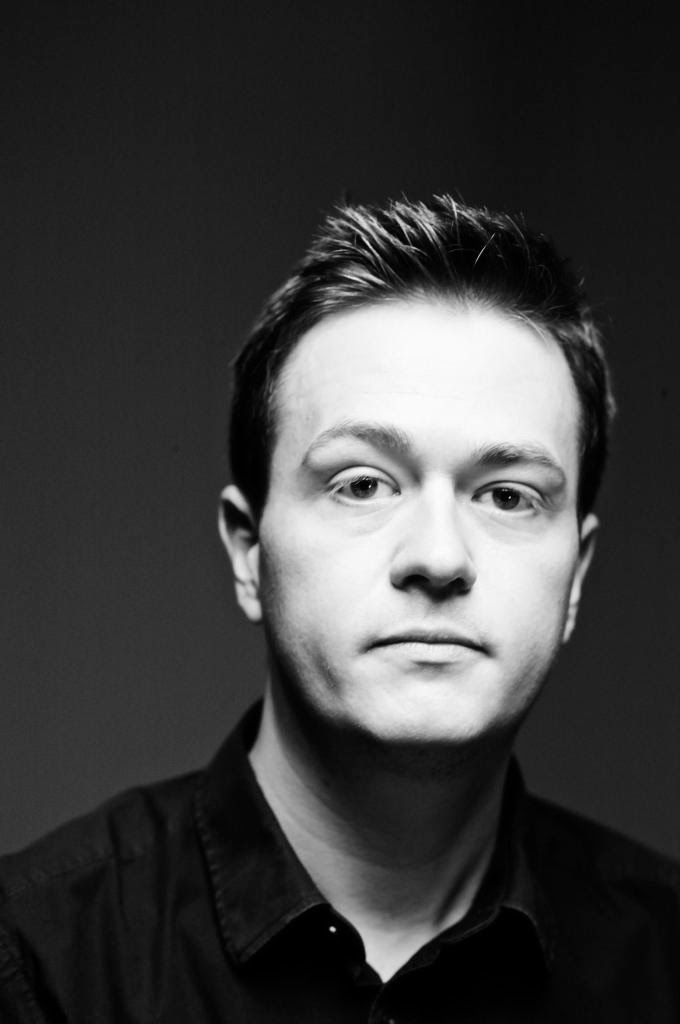 Author, Johann Hari"Nearly 15 years ago, Portugal had one of the worst drug problems in Europe.
 They had tried a drug war, and the problem just kept getting worse.
So they decided to do something radically different.
They resolved to decriminalize all drugs, and take all the money they once spent on arresting and jailing drug addicts, and spend it instead on reconnecting them—to their own feelings, and to the wider society.
The most crucial step was to get them secure housing and subsidized jobs, so they had a purpose in life, and something to get out of bed for. In warm and welcoming clinics, addicts are taught how to reconnect with their feelings, after years of trauma.
One group of addicts was given a loan to set up a removals firm. Suddenly, they were a group, all bonded to each other and to society, and responsible for each other's care.
An independent study by the British Journal of Criminology found that since total decriminalization, addiction has fallen, and intraveneous drug use is down by 50 percent.
Decriminalization has been such a success that very few people in Portugal want to go back to the old system.
The main campaigner against the decriminalization back in 2000 was Joao Figueira, the country's top drug cop. He offered all the dire warnings we would expect from the Daily Mail or Fox News.
But when we sat together in Lisbon, he told me that everything he predicted had not come to pass—and he now hopes the whole world will follow Portugal's example."
Read more from source here.
January 23, 2015
"Literary rambles" through Iberian books
 Literary rambles is a good quality English language blogsite that focuses on recent releases and news from the world of books across Spain and Portugal.
January 17, 2015
Video: "The right to die in Belgium: An inside look at the world’s most liberal euthanasia law"
"With the most liberal laws in the world governing physician-assisted suicide, surveys in Belgium show overwhelming support for its legality. Doctors say euthanasia gives terminally ill patients experiencing constant and unbearable suffering a practical and humane way to die peacefully. But even in a country with far-reaching acceptance, controversy still remains."
January 11, 2015
"Blue Black Friday" - My latest opinion column for Catalonia Today
 Just last month we witnessed the latest craze from the USA arrive here.
 Without doubt, the Black Friday sales will now be an annual event and will certainly grow in intensity each year.
If anything accurately represents pure, raw capitalism it was the sight of crowds of people surging and barging though department store doors. Some had bulging eyes.
Some were smiling in anticipation or possibly relief at finally being inside the gates of the consumerist's palace. Other people were clearly using their arms and shoulders to shove slower shoppers out of their way.In the UK police had to restrain mobs at some Tesco stores and arguments and fights broke out in branches of ASDA (owned by U.S. giant Wal-Mart.) Four arrests for violence were made in Greater Manchester alone.
One report quoted a 56-year-old hairdresser on an overnight trip to a Sainsbury supermarket saying that the scenes were "crazy" and "disgusting". "I got a Dyson [vacuum cleaner], but I don't even know if I want it. I just picked it up," she said.
This pandemonium is aside from the online sales that also form part of the Black Friday marketing push.
Amazon was the first to introduce the trend into Europe in 2010 and this year in Germany and France a number of major retailers (including FNAC) publicised the day and offered claims of reductions.
In Spain, El Corte Inglés went even further than its rivals and hosted a four-day fiesta of supposed discounts.
Naturally, it was in the US where the day went to it's animalistic extremes of riots and frenzied stampedes.
Last year there were separate incidences of a shooting and a stabbing and this year five injuries were recorded, along with three arrests.
The website BlackFridayDeathCount.com has kept records of relevant news stories and has documented at least seven deaths and ninety six injuries in the U.S. since 2006. (Somewhat ironically, the website also sells T-shirts with the words "I survived Black Friday" on them for $18.00.)
Of course, I'm all in favour of a real bargain and I love a bit of a haggling at a market stall.
I would think that many of the people who buy in store or online on Black Friday are genuinely wanting to save money on something that they may not have been able to afford without a drop in the sale price or they simply believe that they are getting a product that will in some way enhance their lives.
I just question whether a lot of the buying is in any real sense, needed.
Having grown up in an Australian city where the shopping mall was the focus of social life for the easily-influenced young, as well as plenty of retired people, I have a fundamental disagreement with spending money as a major free time pursuit.
Europe is full of parks, beaches, squares and even ramblas: all public spaces not specifically made for commercial activity.
Anyone is free to be in theses places without thinking of them self as a consumer first.
In a shopping mall there are usually almost no seats that are not part of some kind of cafe or food joint. To be there is to be a buyer.
Simply put, I just want to live in a part of the world that continues to value things that don't have a money value.
[A version of this article was first published in Catalonia Today magazine, January 2015.]
January 6, 2015
Another season of Australian film in Barcelona
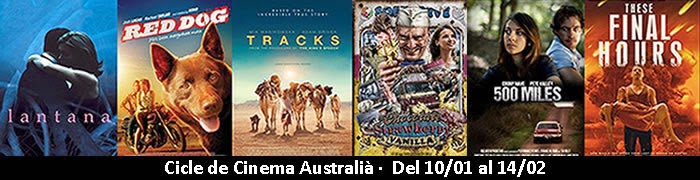
Following on from the successful ASBA-RMIT Australian Film Season, the Australian Embassy and Casa Asia are presenting an Australian Film Season at Cinemas Girona [C/Girona, 175, 08025, Barcelona] starting this Saturday, 10 January, and running each Saturday night until 14 February.
Entry price: 2, 50 Euros.
See link herefor more details.
January 1, 2015
My review of "An Englishman in Madrid" by Eduardo Mendoza
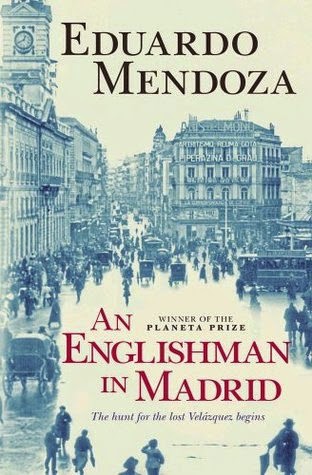 [This article was first published in Catalonia Today magazine, January 2015.]
"Look, I'll tell you how things really are," says one of the author's characters (speaking in 1936) "whatever they say, this is not a poor country. This is a country of poor people."
December 20, 2014
"Peaceful, but menacing: German xenophobia"
 "Calling themselves Pegida, or “patriotic Europeans against the Islamisation of the Occident”, since October they have marched through Dresden every Monday. Their numbers are growing: on December 15th 15,000 protested. Their slogans of xenophobic paranoia (“No shariain Europe!”) seem bizarre in Saxony, where only 2% of the population is foreign and fewer than 1% are Muslim.The marchers make no attempt to explain their demands. Convinced of a conspiracy of political correctness, they do not speak to the press. Few bear any signs of neo-Nazism. They have eschewed violence. What they share is broad anxiety about asylum-seekers (200,000 in 2014) and immigrants."
Read more from source here.
December 14, 2014
Putting down Orwell

It's a genuinely encouraging development to see that with Hispabooksthere is a new publisher for works from Spanish authors because the English-language world benefits from this.
I dislike the title of this article though.
To put down Orwell is a mistake. Yes, his book "Homage to Catalonia" is now dated (in a few parts) but his other writing, especially his non-fiction essays are still insightful and highly relevant. I do agree that it's absurd to build up a picture of Spain only from people like Hemingway.
Chris Finnegan mentionsa number of books I'd like to read. He could just as easily have also mentioned two fine authors originally from Barcelona - Eduardo Mendoza and Juan Goytisolo, whose autobiographyI finished reading recently and highly recommend on a number of levels.
December 6, 2014
"The best of times?" - My latest opinion column for Catalonia Today magazine
 Has there ever been a better time to be alive in the history of our tortured, super-intelligent species?
 At the press of a few buttons we have virtually all the accumulated knowledge of the last several hundred (or is it thousand?) years available. And it is available fast.
We have the answers to a billion conceivable questions and we can communicate almost instantly with the majority of people on the planet, language barriers excepted.
For many of us, our taste buds can be stimulated by the food from dozens of cultures who, just a few short years ago were out of reach, either geographically or economically.
In this increasingly mixed European society, young people have started to grow up sitting next to others from Asia, Africa and assorted parts of the wider continent and for them this is as natural as mother's milk.
On top of all this, there is a gentleness that in so many senses did not exist just a generation ago.
A man can be intimately involved in the care of his baby or child without automatically being a figure of gossip or ridicule. He can be the main cook for his family and not be thought of us somehow suspect.
Finally too, homosexuals are more accepted or at least tolerated in the majority of circles, rather than being chemically castrated as some were less than seventy years ago (in the UK for example.)
Today too, there are increasing numbers of people who are not only acknowledging their own depression or mental illness but are speaking openly about it in public forums and in the media.
Such a development was virtually unthinkable merely a decade ago.
Equally though, the average women in the developed world has a wider horizon than ever before. Her place in the workplace is now barely questioned at all, though she may still be paid less than a man or have trouble getting a full-time position or promoted according to her ability.
Yet despite this progress, despite the modern mind being freer from superstition and religious dogma than probably any time in history, what do we also have?
Underneath the shiny towers of vanity there is a great, putrid sewer stench of injustice.
There is the distinct sensation of a nausea without relief and that comes from having both your eyeballs open and your ears unblocked. Anyone who chooses to not be ignorant knows, as Leonard Cohen wrote, "the deal is rotten."
And all those signs of enlightenment that came to view in the the first half of the 20th century now have a faded quality and there is a hollow ring to the chants, songs and poems of social movements.
Throw into this mix the fact that the warming of the earth continues at pace.
It is only those who genuinely don't understand or politicians who have been bought out by the polluting industries that do not accept the truth of the overheating globe that we walk on.
Or think of the wealth that flows through financial systems. Shockingly, the 85 richest people on the planet now have as much money as the poorest 3.5 billion.
And what else?
There's the vacant look of history's booksSlave labour and murder thy neighbourGreed as a virtue and carers that hurt youThis is the present we have
We see the limp hand of the state and rape-a-dateThe power of one at the point of a gunAnd the good times are back with daily ProzacThis is the future that right now we have
See that liar's smile when the truth's on trial?This is the justice we have.Living and laughing in ignorance blissWe have fashioned a world exactly like this.
[This article was first published in Catalonia Today magazine, December 2014.]
"First thought:" My Substack page

For readers who like stimulating & original lit-bits on social & personal issues. From the mind of an always-curious author/teacher/journalist living long-term in Europe (Catalonia/Spain.)
- Brett Hetherington's profile
- 10 followers

