
Brett Hetherington's Blog: "First thought:" My Substack page, page 50
June 4, 2015
"TTIPing us over the edge" - My latest opinion column for Catalonia Today magazine
 While we are all going about our daily business this month, big business is going about trying to make sure that Europe is run purely in its interest.
If agreed to by the European parliament, the new Free Trade Agreement between the United States and the European Union, better known as TTIP, will do immeasurable damage to the lives of citizens across this continent.
The progressive organisation Global Justice believes that it poses "great risks to hard won measures to protect public health, worker rights and the environment."
Essentially, TTIP is "designed to take away barriers which are behind the customs border – such as differences in regulations, standards and certifications" of goods for trade.
This may sound reasonable but what it means is that Europe would be required by law to have exactly the same product rules as the United States, which are widely known to be the loosest and most anti-consumer protection in the developed world.
The TTIP negotiations have all been conducted in secret sessions - closed to the public and the media.
The reason for this is simple.
The leaks of information from the meetings have shown that TTIP would mean that any business could take any government to court if they believed that a government policy threatens their profits.
This legal method, (known as the Investor State Dispute Settlement (ISDS) mechanism) has already led to countries being sued for putting health warnings on cigarette packets, regulating medicine and energy prices, raising minimum wages, and removing tax incentives.
TTIP would further strengthen the power of big business (because only the largest can afford it) to control what national parliaments can and cannot do for their private citizens.
Fracking, to take just one other example, would be more likely to go ahead because public administrators would want to avoid costly litigation that they are likely to lose defending a decision against it.
On top of all this, there is a fear – from the European Commission itself – that because of TTIP changes up to one million workers employed in small businesses are almost certain to lose their jobs.
So, if accepted, TTIP may well worsen inequality across the EU.
Meanwhile, according to online global web campaigners Avaaz, “cruel factory farms are pumping healthy animals full of antibiotics so that they can produce more meat, faster and cheaper.”
They argue that this practise is also creating drug-resistant superbugs but, in a positive development, several European countries have already drastically cut the use of antibiotics, and now EU ministers are negotiating laws to do so across the wider region.
Unsurprisingly, and in a parallel move with pressure on TTIP, “the farm and pharma lobby is out in full force to stop the new EU laws.”
I would urge readers to think about taking action by signing the online petitions (as I have done) at the websites of the two organizations I’ve mentioned above in this article: Global Justice and Avaaz.
[This article was first published in Catalonia Today magazine, June 2015.]


May 29, 2015
"The Social Good City Guide to Barcelona"
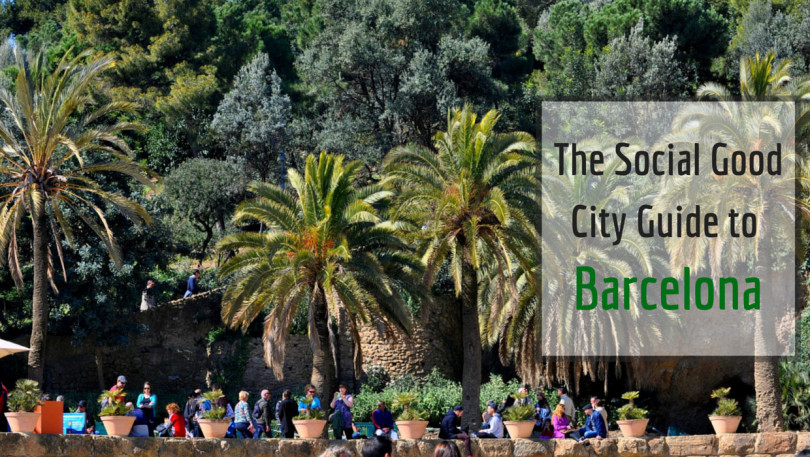 A short but socially-conscious and informative guide for travellers to Barcelona - organised clearly under headings of What to Do, Where to Sleep, Where to Eat and Where to Shop.
May 21, 2015
The Eurovision Song Contest 2015 Quiz
 "Eurovision is a genuinely terrifying experience. This handy Bluffer's '60th anniversary' quiz contains useful information — enabling you to out-bore anyone forcing you to watch it [this weekend.]"
 May 15, 2015
How happy is Spain?

Measuring happiness is a very subjective act but it's fascinating to see that "the 10 countries with the largest declines in average life evaluations typically suffered some combination of economic, political and social stresses .
Three of the countries ( Greece, Italy and Spain ) were among the four hard-hit Euro-zone countries whose post-crisis experience was analyzed in detail in the [most recent and extremely comprehensive] World Happiness Report."
May 5, 2015
Ester Vivas and this year's Biocultura event
 "The [Sabadell-born progressive] journalist Esther Vivas has won one of the 2015 Biocultura Journalism Awards for her blog post in Publicotitled"Beans are cooked."
BioCultura, the Organic Products Fair for Responsible Consumption is an international meeting which is among the two most important of its kind to be held in Europe. Its 22nd meeting is to be held in Barcelona with the awards ceremony on the 9th of May."
May 1, 2015
"Germanwings, depression and blame" - My latest opinion column for Catalonia Today magazine
 The recent Germanwings airline tragedy has naturally been the focus for countless media stories. Many of us in Catalonia know people who were acquainted with victims and their families but there is another personal aspect to the crash that seems to provoke strong reactions in those who have no direct connection to it.
 Because most of the developed world now travels by air at least a few times a year, we are aware, at least semi-consciously, that every time we step on board a flight we are putting our lives in the hands of a small number of people - most particularly the pilots. It’s understandable and even maybe logical that we look for something or someone to blame when a plane is the cause of 150 deaths. Our instincts for justice demand an explanation. Now it has become clear that the co-pilot Andreas Lubitz, made a conscious decision to commit suicide/mass-murder and used his plane as a weapon. We also know that Lubitz had suffered from a severe depressive episode while training to be a pilot in 2009 and was receiving regular medical treatment right up to the day that he plowed the plane into a French mountain. According to his former doctors this treatment was for physical problems, not psychological ones.
What we do not know though, and most probably could never know is exactly why he chose to end his own life in such a horrific way. Lubitz had reportedly told an ex-girlfriend “One day I will do something...and everyone will then know my name and remember me.” This gives an egotistical motive for his actions but does not adequately explain much else. One of the most important points that arises here, and one that a lot of media has distorted or missed altogether, is that depression does not create homicidal maniacs.
A depressed person is actually highly unlikely to take others with them to the grave and the vast majority of people with depression do not hurt anyone because suicide is the main extreme risk, not violence. In this same column in December last year I wrote that “Today too, there are increasing numbers of people who are not only acknowledging their own depression or mental illness but are speaking openly about it in public forums and in the media.” Unfortunately, Andreas Lubitz was not someone who believed that he could do anything like this and apparently went to great trouble to hide his interior struggles from his employers. If he had found the right help, he and his unwitting victims, almost all of them strangers to him, might well have lived.
The statistics show that most murder-suicides happen in domestic settings, and involve a male and his spouse. Murder-suicides involving pilots or in gun massacres are, in fact, a great deal rarer. Lubitz himself then does not fit a standard type or pattern but I would speculate that he was a man (75% of suicides are men) who was overwhelmed with the complications of a high-pressure job and was desperate and confused. In an extravagant gesture, he had just bought matching Audi’s for himself and his current girlfriend, who was pregnant.
There is a real danger that Lubitz’s violence unfairly creates a greater stigma for those who have psychiatric problems and that men in particular will be less likely to talk to mental health professionals or even family and friends. I have had a limited, short-term personal experience with depression and would hate to see a major tragedy like this one lead to a deeper code of silence about the difficulties of the human mind.
[This article was first published in Catalonia Today magazine, May 2015.]
April 25, 2015
"The Last Coal Miners of Spain"
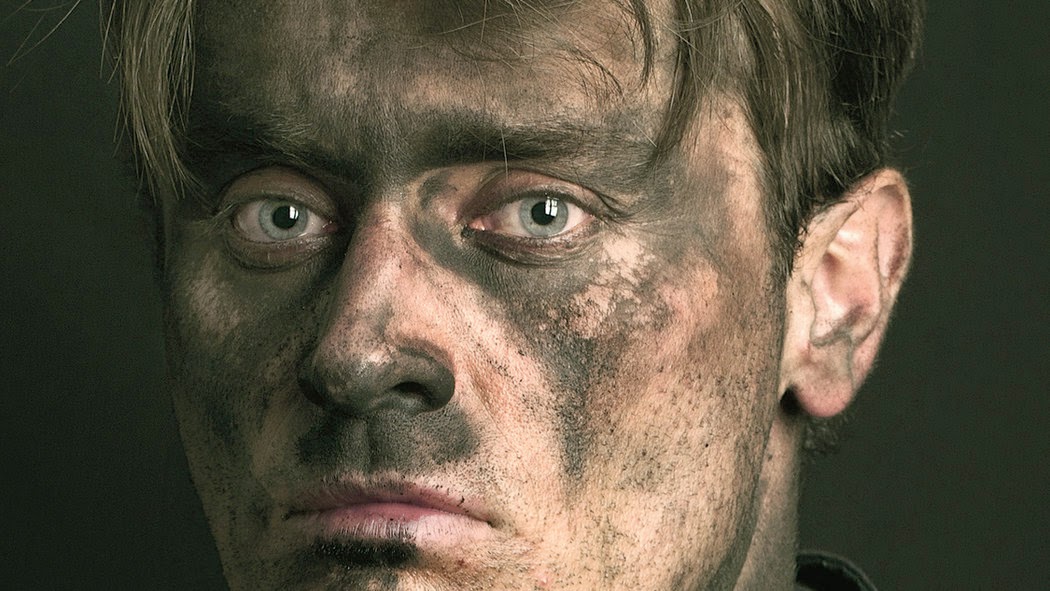 "Coal is on the way out in Europe, and it is dying a slow and ugly death. Its decline has been hastened by competition from the renewable-energy industry, cheaper imported coal from Russia and the United States and new air-quality regulations passed by the European Union.
 The death throes have been especially violent in Spain, where the national coal-mining industry was created by royal order in 1621 to exploit the coal basin at Villanueva del Rio y Minas in Seville. In 1990, 167 coal mines employed about 40,000 workers. Today there are roughly 40 active mines, employing fewer than 4,000 miners. The struggling industry has long been supported by state subsidies..."
Read more from source at the New York Times here.
April 15, 2015
A Very Brief History of Ladino Literature/ Manuel Forcano’s “Catalan Jews”
 "The Sephardi Jews who settled in the Ottoman empire created a rich and varied literature in Ladino—their own dialect of Spanish written in Hebrew characters. Avner Perez traces the history of this literature and its connection to contemporary Spanish literature:
For a long time, researchers thought that literary creation in Ladino had only begun in the first third of the 18th century. Material discovered in recent years has given us a completely different picture. The intellectual elite of the exiled Jews spoke a [uniquely Jewish] dialect, but was still part of the Hispanic world and used literary Castilian in its literary creations. What set [the language of these works] apart [from standard Castilian Spanish] was its use of Hebrew characters as well as the presence of other [distinctive Ladino features].
Three pieces of classical theater in Judeo-Spanish printed in Hebrew characters, dating back to the end of the 16th century, have come down to us. They were the first such pieces printed in Hebrew characters. Two of them, Aquilana, by Bartolome de Torres Navarro (1480-1530), and Tragedia Josephina, by Micael de Carvajal (who died in 1578), are pieces of Spanish classical theater [rendered into an early form of Ladino]. The third, Ma’aseh Yosef (“Joseph’s Tale”), . . . is an original work. All this shows that the intelligentsia that descended from exiles from Spain had a rich cultural life. The channels through which they received the Spanish Renaissance culture were still open.” [Source: Mosaic.] Read more at eSefarad
Manuel Forcano launched his new book last week...
"(Barcelona, 1968; philologist, poet, translator), Els jueus catalans. La història que mai no t’han explicat. [The Catalan Jews: the history they never told you], 384 pages.
The publisher’s summary:
This book gives an overview of the history of Jews in Catalonia, from the first mentioning to the current Jewish communities. When they arrived, where they settled, how they lived, who persecuted them and for which reasons, how they survived the attacks, where and how they prayed, how they organized themselves, which figures led them, what of them has survived, what they wrote and if they did so in Hebrew or Catalan – these are some of the questions that the book answers in an informative and entertaining way. During their century-long presence in Catalonia, from the Jewish communities arose geographers, grammaticians, physicians, poets, philosophers, theologians and kabbalists of enormous prestige, even today venerated in the Jewish world, but unfortunately hardly known in Catalonia.”
Read more from source, Literary Rambles blog here.
April 10, 2015
Video: talking and listening on "Our Finest Hour" once more
 http://www.elpuntavui.tv/video.html?view=video&video_id=124540938
This Thursday I was again a guest on Matthew Tree's English language panel discussion programme, "Our Finest Hour," on El Punt Avui TV.
Also involved were Gary Gibson, maker of the documentary “Spain’s Secret Conflict” and speechwriter Madeline Carey.
April 6, 2015
Spain once planned to invade Australia with an armada
 [Spanish naval officer Alessandro Malaspina]"Documents discovered in the archives of the Spanish navy reveal that Spain planned to invade the nascent British colony in Australia in the mid-1790s.
Chris Maxworthy, vice president of the Australian Association for Maritime History (AAMH), found the documents detailing a plan of attack approved by King Carlos IV to fire “hot shot” cannons, cannons that fired heated balls that could set wooden ships and buildings on fire as well as blow large holes in them, on Port Jackson, modern-day Sydney Harbour."
Read more from the source (The History Blog) here.
"First thought:" My Substack page

For readers who like stimulating & original lit-bits on social & personal issues. From the mind of an always-curious author/teacher/journalist living long-term in Europe (Catalonia/Spain.)
- Brett Hetherington's profile
- 10 followers

