
Brett Hetherington's Blog: "First thought:" My Substack page, page 54
October 17, 2014
"Why Does Spain Have the World's Highest Concentration of Elevators?"
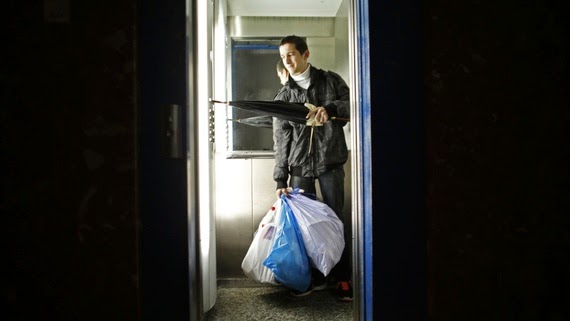 Marcelo del Pozo/Reuters
An article that answers this question [Franco is a big reason] but also so much more...
Marcelo del Pozo/Reuters
An article that answers this question [Franco is a big reason] but also so much more...


October 11, 2014
Europe's secret trade deal
One of those moments when our European Parliament members are actually crucial to the future of both the UK and wider Europe...
"A shady deal is being negotiated in secret right now. It could permanently privatise the Britsih public health system and allow big corporations to sue European governmentsif they don't like our laws (such as simply raising the minimum wage .) It's called the Transatlantic Trade Investment Partnership, or TTIP for short, and this EU-US trade deal is one of the most dangerous ever written.
Members of the European Parliament (MEPs) have the power to scupper it. But first they need to feel the pressure from the people they represent - us, the public. Can you add your name to a huge EU-wide petition and help convince them? Click hereto sign or just read more."
October 3, 2014
"Poor doors" - My latest opinion column for Catalonia Today magazine
 When I was a kid and just starting to try and understand the adult world I used to hear my parents and other grown-ups make what seemed to be jokes about the "tradesman's entrance." I eventually learned that these words were a kind of sexual slang for the anus but were also more literally "the side or back door of a large house, used, especially in the past, by people delivering goods who were not allowed to use the main entrance at the front of the house." Now though, another somewhat similar kind of entry/exit is becoming common in new apartment blocks in those two western-world trendsetters cities of New York and London. Tenants in these buildings must use two different entrances, depending on whether they live in the cheaper flats or the expensive part of the accommodation.
New York mayor Bill de Blasio has stated his opposition to what some of the city's residents have called "poor doors" although his administration has approved a number that have already been planned and built.
Arguing in their favour, David Von Spreckelsen, senior vice president at US property developers Toll Brothers was reported as saying "You have politicians saying how horrible these back doors are. I think it’s unfair to expect very high-income homeowners who paid a fortune to live in their building to have to be in the same boat as low-income renters, who are very fortunate to live in a new building in a great neighborhood."
The mayor of London, Boris Johnson is refusing to ban poor doors despite an increasing number of developments in the English capital having so-called "alternative access." Even bicycle storage spaces, rubbish disposal facilities and postal deliveries are also being separated in some residential complexes.
One argument has been that doing so keeps construction costs down but in New York there are financial incentives to include "affordable" flats in the same location as luxury ones. So it is now apparent that architects are too often entirely at the mercy of owners and investors and will do whatever is necessary to keep them happy.
In central London there is another phenomenon that is becoming more publicised.
Outside several housing buildings and supermarkets, sharp metal spikes have been put into the concrete in the corner of the doorway outside, clearly as a way of preventing homeless people from sleeping there. One charity says this has actually been a common practice for over a decade and I recently saw a photo of a progressive activist pouring liquid concrete to cover over these metal studs.
It's no coincidence that at this very same time the UK Border Agency has recently admitted that it is working on plans for fast-track passport lanes for travellers of "high economic value" (ie. rich) at British airports.
Supposedly this is needed so that they do not have to wait in the queue like the rest of the species.
I'm not pretending that there are not more significant problems in our world at this moment but poor doors, anti-homeless studs and immigration lines that divide people according to the size of their bank balance are all symptoms of a sickness, a backward habit of mind.
After all the public talk is done and the justifications have been made, these things end up encouraging lesser treatment of those without the good fortune to be wealthy.
When the smaller details of life of are changed - doors, queues, public places - it creates less public resistance to the idea of changing bigger details.
In this way, schools or health services can be separated along class lines, without us really noticing.
[This article was first published in Catalonia Today magazine, October 2014.]
September 27, 2014
International meeting of expats to discuss Catalan independence question
.jpg)
"An event is to be held on October 1 at 7:30pm at the Fabrica Moritz in Barcelona: a discussion among the expat community about the independence of Catalonia and how it affects [expats] in particular, followed by a networking session to relax and chat more informally.
The panel discussion will include Maarten de Jongh, Corporate Finance Advisor, originally from the Netherlands; Krys Schreiber, International Press and Communication Consultant, originally from Germany; Martha Moreo, Business Administration and Musician, originally from Argentina of Italian origin and it will be chaired by Liz Castro, editor of What’s up with Catalonia?, originally from the United States.
There is a $5 cover charge at the door which includes two beers, and covers the expenses of the hall.
See flyer poster above for more general information."
September 24, 2014
Homeless in Barcelona
 Matthew Tree
Matthew Tree's beautiful, simple opinion piece in El Punt Avui on the weekend...
"Yolanda Aguila lives on the street - on my street, in fact. I started talking to her a week ago. (For seventeen weeks she has had no home). She did live in an apartment with other people until the council made an inspection and the owner - instead of doing the renovations necessary to get a new certificate of habitability - made them all move out. Therefore, Yolanda is newly homeless. In fact, when you talk to her, if not for the fact that the conversation takes place on a piece of sidewalk occupied by her and her only suitcase, you would not guess that she has no fixed address. Despite a difficult past (taking antidepressants) and poor health (suffering from fibromyalgia and calcification of the bones) she is doing (very) well, mentally. She is 45 years old, likes historical novels (now for example, she is reading Victus by Albert Sánchez Piñol) and eats regularly, thanks to a bar that gives her unsold sandwiches every day. Yolanda tries to give some of this food to other people who are living in her area without a roof over their heads, but most of them do not want to eat, only to drink, in an attempt, she guesses, to kill themselves slowly. She has tried every charity, but most just offer a meal or clothes when what you really need back, above anything else, is a room to rent. Life on the street for her is especially uncomfortable because she suffers from diseases. The last time I saw her, she was crying in frustration.
How is it that this woman is on the street when it costs so little to get her off the street?
If Alícia Sánchez-Camacho [the leader of the Catalan branch of Spain's ruling Popular Party] - who says that we must confront the real problems of the people - sold one of her black crocodile skin handbags, there would be enough money to get a room for Yolanda Aguila.
Anyway, if anyone has any suggestions please contact me through El Pinu/Avui at mtree@elpunt.info"
September 21, 2014
W.H.O. targets a trans fat-free Europe
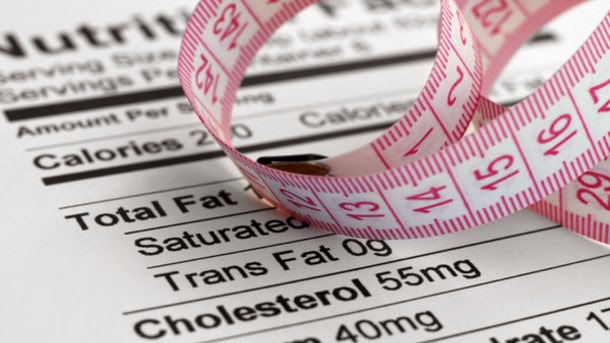 The World Health Organisation (WHO) has called for a complete ban on trans fats throughout Europe as part of a new action plan on diet and health.
More at source here.
September 15, 2014
Season of free Australian films in Barcelona
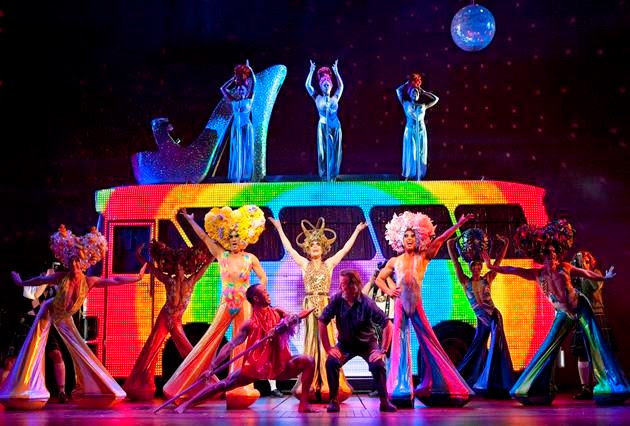 This week is the start of an Australian Film Season, hosted by Barcelona's RMIT in conjunction with ASBA (the Australia Spain Business Association.)
The season comprises 10 films. There will be one film each week, on Thursdays at 7.30pm, with the exception of 2 October.
The premiere will take place this Thursday 18 September at 7.30pm, and will be attended by the Australian Ambassador to Spain, Ms Jane Hardy. The screening will be followed by a cocktail reception.
The screenings will take place at RMIT in C/Minerva 2. This street runs off Diagonal and is very close to Passeig de Gracia.
Admission is free to all screenings.
The list of films and their dates appear below...
18/9 Priscilla Queen of the Desert 25/9 Picnic at Hanging Rock 9/10 The Year of Living Dangerously 16/10 Lantana 23/10 Rabbit Proof Fence 30/10 Gallipoli 6/11 The Lighthorsemen 13/11 Wake in Fright 20/11 Breaker Morant 27/11 Animal Kingdom
September 10, 2014
Leader of Podemos, Pablo Iglesias, visits Jerusalem's Wailing Wall
 The trip was made [last weekend] by a group made up of Spanish political parties, Izquierda Plural (with six Euro deputies) and Podemos (with five).
They visited Ramala after Israel had denied the delegation entry to Gaza two days earlier.
The delegation held meetings with Palestinian leaders, among them the Prime Minister of the United Nation Transitional Government, Rami Hamdala, and with the top Palestinian diplomat, Raid al Malki.
The group also met with Israeli pacifists and left-wing groups such as Rabbis for Democracy, and they visited the old city of Jerusalem.
More from original source here.
September 4, 2014
"Legislating liberties" - My latest opinion column for Catalonia Today magazine
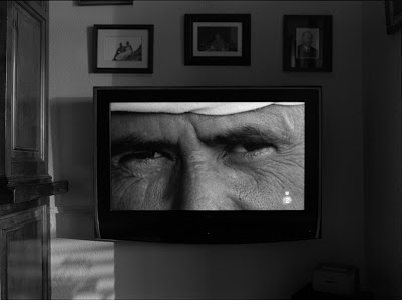 Photo: Javier at [sic]While we were (hopefully) enjoying sun and slumber over the summer it was easy to miss some disturbing international developments (or should I instead call these events disturbing steps back towards some of the worst aspects of the previous century.)
In a ruling barely even mentioned by most mainstream media (and opposed by the Obama White House) the Supreme Court of the USA declared that "companies whose shares are held by a small number of shareholders can refuse to provide health care plans that include contraception coverage, if they have a religious objection."
This decision is important largely because it logically means that corporations – not only individuals – have the right to religious freedom. It also creates situations where they can legally exercise this freedom at the expense of those who do not own business, ie. working people.
Meanwhile the same USA has re-formed it´s diplomatic alliance with previously "evil" Iran, who are also working hard to undermine women´s rights.
There, the national leader Ayatollah Ali Khamenei is heading the charge to put a ban on vasectomies and other birth control surgeries.
His reasoning is that the population of his country needs to be doubled so that "national identity" becomes stronger.
Proposed laws have already been approved that would throw doctors who perform these kinds of operations into prison for five years.
Closer to our part of the world, it is apparent that intolerance against many minority groups (including Jews and Gypsies) is on the rise across Europe.
The latest example of this trend is a recent European Court of Human Right's verdict that upheld a French law banning the wearing of the [Muslim] full-face veil in public.
The vague use of "security concerns" as the rationale for the ban makes it clear that the issue is still being used (particularly by right-wing politicians) as a distraction from political failings.
My understanding is that Muslim women are happy to show their face for an identity or passport check, provided this is done with another women only in a private area. This is a very simple request to accommodate as a matter of routine.
Personally, I just don’t accept that having a law against covering your face means that people will not do it when they are about to commit a crime, as those advocates of the new law argue.
Let’s say I’m going to rob a bank. (I may have to actually do this if I don't get a pay rise soon.) Do I decide to not cover my face to avoid my identity being recognized through the security cameras simply because there is a law against it?
No, instead a robber will simply break two laws instead of just one because they believe they will not get caught anyway.
To my mind, there’s way too much public debate about clothing and not enough discussion of the other factors involved in religion and discrimination.
To me, the hijab/niqab/face covering debate is a trivialisation of the bigger issues. Surely, what someone wears is largely a personal choice, except where women are ‘forced to cover-up’ to varying degrees.
Some Muslim women are in fact much more interested in improving their everyday rights than they are about how much they cover or don’t cover of their heads and faces.
The veil gets media and public attention because it is such an easily visible thing in our fashion-conscious times, as opposed to the more dramatic health and quality of life threatening problems such female genital mutilation (which is also still practised by some non-Muslims, such as Coptic Christians in Egypt as well.)
Clearly, a law should exist to protect women who want to defy those who want to force them to dress against their will.
Equally though, another law should exist allowing women to cover as much as they like, whether any of us thinks that hiding a face is a sad reflection of a culture or not.
The result of any banning of the veil is very likely to be that more Muslim women are kept at home by their controllers: extremist, fundamentalist men.
This leads very rapidly to a situation where a law that is supposed to make Islamic women somehow more free actually has the opposite effect.
Sometimes I think that social progress is just a thing of the past.
[This article was first published in Catalonia Today magazine, Sept. 2014.]
August 24, 2014
Down syndrome, Dawkins and doubt
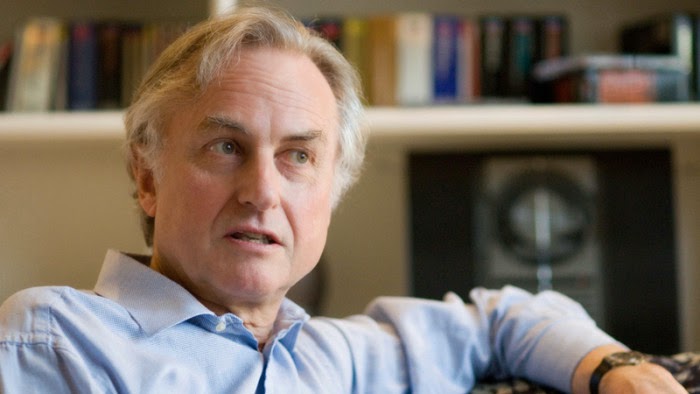
Even the greatest have intellectual blind spots.
I regard Richard Dawkins as having one of the most brilliant minds of our time but I think he was wrong to say what he did this week. He has given a kind of apology/clarification but I'm still unconvinced about his key point, which was...
"if your morality is based, as mine is, on a desire to increase the sum of happiness and reduce suffering, the decision to deliberately give birth to a Down baby, when you have the choice to abort it early in the pregnancy, might actually be immoral from the point of view of the child’s own welfare."
I've spent time around teenagers with Down syndrome and they certainly did not strike me as being especially unhappy, and often seemed quite a bit more happy than many others their age.
I worked with some teenage students with the syndrome during my teacher training in the 1990's and have very fond memories of two kids in particular. Jason was a big, quiet guy who loved soccer and his brother. His favoured response to most questions was "Nuh. Nothin'..."
Here is one woman's beautiful and moving account of the joys of having a brother with Down's syndrome.
"First thought:" My Substack page

For readers who like stimulating & original lit-bits on social & personal issues. From the mind of an always-curious author/teacher/journalist living long-term in Europe (Catalonia/Spain.)
- Brett Hetherington's profile
- 10 followers

