
Brett Hetherington's Blog: "First thought:" My Substack page, page 58
February 6, 2014
The colours of corruption (#2) (My latest opinion column in Catalonia Today magazine)
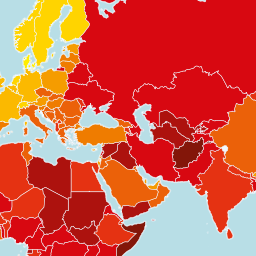
Europe is nauseous from the cancer of corruption.
Yes, it still has the glories of its art, its food, its history and its abundant cultural riches - but it is also shot-through with corrupt men and women.
And I don't just mean Mediterranean Europe or its Eastern bloc neighbours. If we decide to include Russia in wider Europe then the point is even clearer.
If we then go on to acknowledge that Turkey has often been as much a part of Europe as any other more western land covered with olives and sun-ripened tomatoes, then the case is water-tight. Near the end of last December, two of Turkey's government ministers were arrested and, in an open letter to the Turkish press, a state prosecutor alleged police obstruction of a corruption case.
Almost every Spaniard, Greek, Italian or Catalan knows that corruption runs deep through business and government activities, to the point where many people are no longer shocked by fresh daily or weekly revelations of it in the media. We know this all too well because many of us are personally involved in it or we know people who are. It starts from a young age, in truth - the cheating in school tests, then self-serving greedy lies to each other and finally, it is only a small moral step to fiddling the books.I don't pretend that all this only goes on in this part of the world. As (Berlin-based) Transparency International's most recent annual survey showed, most country's citizens have formed some damning judgments on their own homelands. The “Corruption Perceptions Index” for 2013 concluded that almost 70 percent of the world's nations are "seriously corrupt or worse." While they found that “regionally, Eastern Europe and Central Asia ranked the worst, [but] Western Europe and the EU the best” this does not allow for the fact that 4 of the top 5 “cleanest” are northern-European/Scandinavian countries and therefore these rankings for the region are somewhat skewed.
Across the channel from the continent, those reluctant and selective semi-Europeans, the English, have had their own grubby trials to deal with. Apart from the usual political/finance industry collusion, late last year in London's atmospheric bear-pit court at the Old Bailey, 22 journalists, editors, police officers and prison workers began facing charges of conspiracy to commit misconduct.
In a separate example, a minority group spokesperson (from British Future which studies migration and identity) admitted that problems of electoral corruption had existed for some time. He acknowledged that “unhealthy relationships” between parties, candidates and “sections” of communities are continuing, though he maintains it is actually less of a problem than in the past, with clan-based politics from first generation migrants. His comments came in response to a conservative MP who had argued that it was “mainly the Pakistani community, not the Indian community” that was responsible for a Scotland Yard investigation that eventually found no evidence of widespread fraud in postal vote scams in London's Tower Hamlets area. This came on top of a 2008 finding of guilt against another conservative local councillor just outside London.
But corruption comes in so many different forms and has a thousand faces. A plan recently approved by the government in Malta is perfectly designed for malpractice. It will give anyone who wants to purchase a Malta EU passport the right to reside in any of the other 27 member states for a one-off fee of 650,000 euros. This policy is being introduced because, according to the country’s prime minister Joseph Muscat, it will attract “high value” individuals from around the world. Apparently, those who purchase passports are then going to be able to buy citizenship for their immediate family for just 25,000 euros. A private company called Henley and Partners (who state that they “run an important government advisory practice”) will be put in charge of processing the paperwork.(Meanwhile, Spain is also planning on awarding foreigners residency permits if they buy a house for more than US$215,000.)
So, if in fact, as one definition puts it, corruption is “the abuse of power for private gain... and it hurts everyone who depends on the integrity of people in a position of authority," the question must be asked, “Who is not getting hurt from corruption?”
[This article was first published in Catalonia Today magazine, Feb.


February 2, 2014
The tragedy of the war cry: "Be a man!"
 The Good Men Project has just featured an excerpt from my new book, The Remade Parent under the title "“Be A Man!” The War Cry, The Tragedy."
It is a website that has the kind of articles about men, fathers and relationships that are rarely published elsewhere and I highy recommend it.
January 29, 2014
"BCNegra" - Crime fiction week in Barcelona
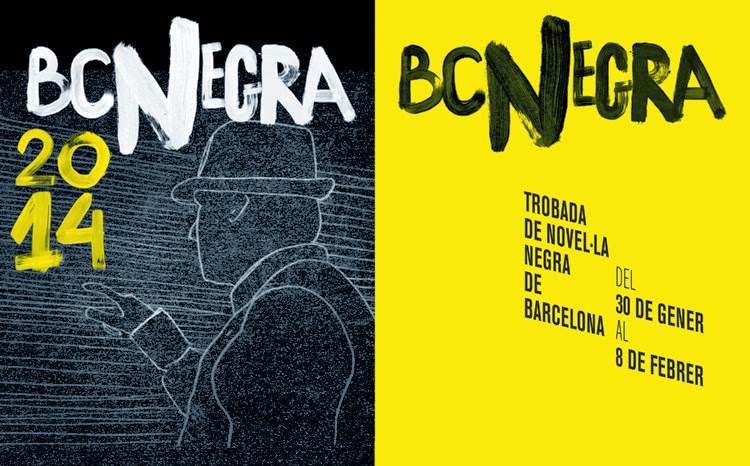 Personally, I think there is too much violence in modern fiction (and maybe it has always been this way) but I also realise that there is some quality writing to be found in books that use murder (as an easy way) to create suspense - Ian Rankin comes to mind.
From today, Barcelona is hosting "BCNegra" (Black Barcelona) or crime fiction week. According to the highly informative blog Literary Rambles: "This year’s star is Andrea Camilleri who will be awarded with the Pepe Carvalho prize. The program is in Catalan and [Castillian] Spanish, but as there are international authors coming, one will also hear some English."
January 28, 2014
"Goodreads" is a good read
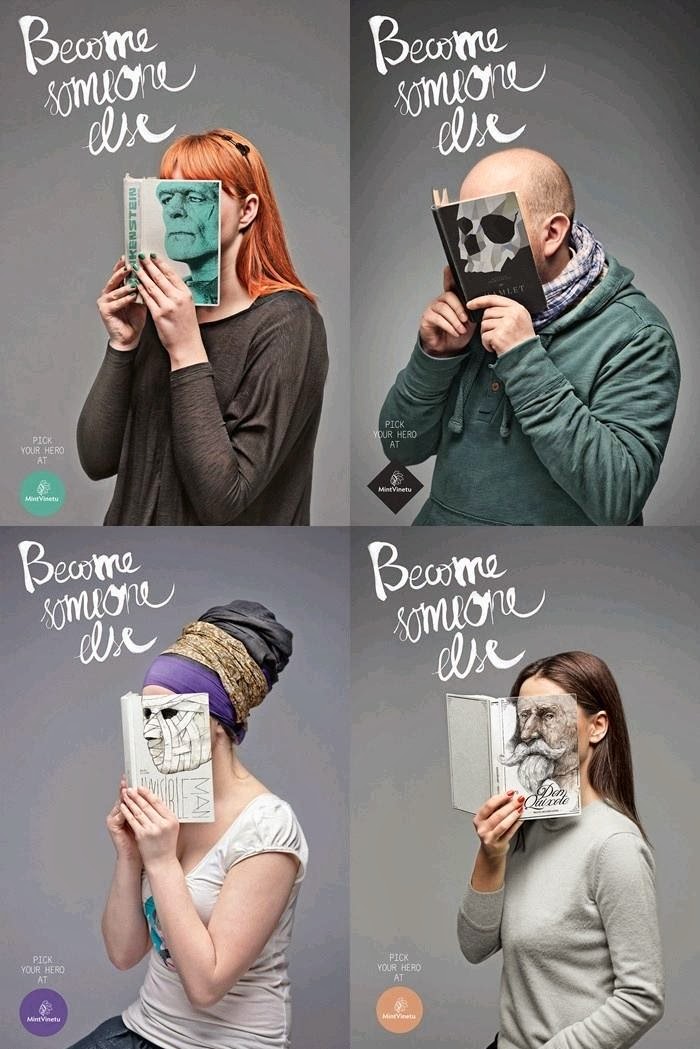 I have just joined the book review site Goodreadsand I am finding it to be a really worthwhile place to visit.
 As well as giving independent authors an opportunity to publicise their work, it allows readers to express opinions on the books they've read and to get involved in conversations with other readers and also some writers.
I should have started visiting it a long time ago.
January 22, 2014
Excavations unearth world's largest collection
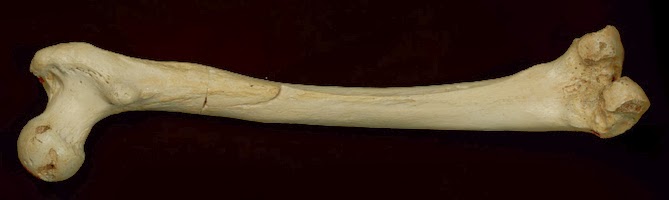
"Excavations of a complex of caves in the Sierra de Atapuerca in northern Spainhave unearthed hominin fossils that range in age from the early Pleistocene to the Holocene.
One of these sites, the ‘Sima de los Huesos’ (‘pit of bones’), has yielded the world’s largest assemblage of Middle Pleistocene hominin fossils, consisting of at least 28 individuals dated to over 300,000 years ago. The skeletal remains share a number of morphological features with fossils classified as Homo heidelbergensis and also display distinct Neanderthal-derived traits."
Read more at source here.
January 18, 2014
Online news about Catalonia in English
VilaWebis a good source of news from and about Catalonia. It's definitely worth keeping an eye on to keep up to date on events here.
January 11, 2014
Wind and hydro-power make up almost 50% of Spain's 2013 usage
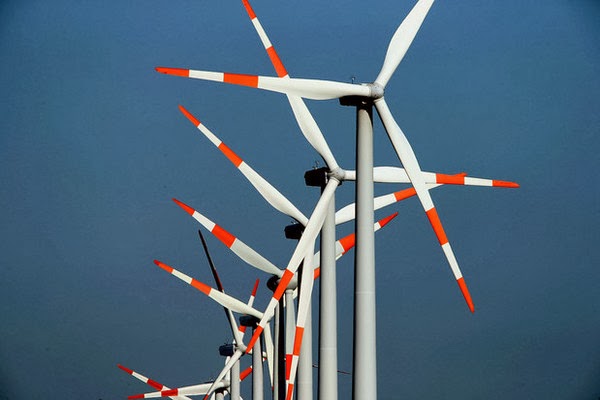 "Over the last couple of years, Spain has embarked on a massive program to increase it's renewable energy production, radically increasing its fleet of wind mills and solar panels. Now that program is bearing some serious fruit.
Red Eléctrica de España, Spain's electricity grid operator, has released a preliminary reportannouncing that in 2013 the single largest source of power in Spain was wind.
Meeting a total 21.1% of the nation's electricity demand, wind farms outshone nation's nuclear reactors which provided a mere 21%.
Moreover, when combined with solar and hydroelectric power, renewables were able to provide a total of 49.1% of Spain's total electricity output, an impressive feat when you consider the United States only drawsa bare 12% from renewable sources. All this reliance on renewable energy has, in turn, allowed the nation to decrease the carbon output of its energy sector by 23.1% in a single year."
[Source: here.]
January 1, 2014
"Why Europe?" (My latest opinion column for Catalonia Today magazine)
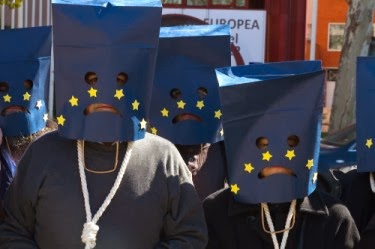 (Photo from Desmontando Mentiras, Global Voices online.)
[A version of this article was first published in Catalonia Today, January 2014.]
Europe exists.
It is certainly under great pressure as an economic group (and therefore also as a political construction) but the past has shown that, as an idea and an ideal, Europe exists.
When I first came to continental Europe I quickly fell in love with this part of the world. I was only 25 but after three months of continual travel I realised that Paris, Berlin, Prague, Italy and Greece made my then hometown in Australia seem ridiculous in comparison, even though it is a capital city.
Sometimes it takes someone who originally comes from outside a place to recognise its worth – someone who does not take it for granted that there is very different kind of life away from shopping malls and quiet suburban streets.
In Europe, I found defined culture, vibrant history and a sense that the twin Australian priorities of sport and making money are often a very distant second to more sophisticated concerns across Europe.
In Australia, to call someone an intellectual is typically to insult them for being pretentious. But over here, a writer is generally regarded well and the creative arts have always had a place of broad respect, which is exactly why they are attacked by those in power who are threatened by their satire and criticism. They are important enough to be attacked.
I accept that people are proud of their own cities and countries and I readily acknowledge the differences between them.
I also believe that (apart from all we have in common as human beings living and striving on this planet) there is a great deal that those of us who live in southern and western Europe share, especially when you think of Mediterranean Europe.
Here, I mean the (relative) similarity of the food, the central importance of family, the great tragedy of wars and re-building from destruction. Europe has been it's own worst enemy but it is a family of states who have more in common than it's people often want to admit.
There is a darker side to Europe though, and as ever, it is institutions that are failing the people.
The faceless, unelected individuals of the European Central Bank (ECB) have told Spanish Prime Minister Mariano Rajoy what to do and he is happily doing as they say.
The ECB wants further wage cuts and the creation of "mini-jobs" to “address the issue” of youth unemployment, in exchange for buying Spanish government bonds. These "mini-jobs" would pay salaries below the minimum wage, which in Spain is 541 euros a month.
Not long ago Rajoy told union leaders that he would also use the letter from the ECB as a “road map” for policies aimed at ensuring that Spain remains in “the vanguard of the Euro zone.” Sadly, this is just one of the latest steps in turning Europe into a low-wage “zone.”
Despite this, there is still popular opinion across the wider region that Europe is worth being part of.
As I write this, thousands of pro-European protesters in Ukraine are facing more government violence against them. They are reported to be angry at the government's last-minute decision not to sign an association deal with the EU, and instead form closer ties with Russia and China.
Europe continues to exist as a progressive ideal but, in some senses, this ideal has begun to seem like more of a dream than a reality.
December 27, 2013
"EU citizenship for sale"
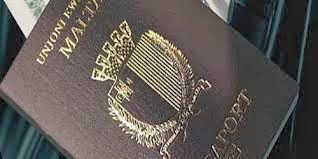 "Tourism to Europe? There is no need to travel - just wire 650,000 euro and you become an official citizen of the European Union. Reside in Germany, the UK - anywhere you like. No qualification needed - just some money. No one has to know where your money comes from.
A plan, which was approved in Malta [last month] is expected to...give those who want to purchase a Malta EU passport the right to reside in any of the other 27 member states. They will even be eligible to become members of the European Parliament.
Malta is selling EU passports for 650,000 euro (US$875,000) as part of a law passed in order to bring in cash and investment. It comes with the benefits of EU membership, including the right to reside and work in the 28-member bloc.
The island country, which has a population of 452,000, is a member of the EU and the Schengen borderless travel area, and has a visa waiver agreement with the US.
The country’s prime minister, Joseph Muscat, said the plan is expected to attract “high value” individuals from around the world who can then invest in the island. Muscat estimated that 45 potential applicants would raise the country around 30 million euro."
Read more from source here.
December 20, 2013
How should we take on the problem of unequal pay in Europe?
Tonight I was involved in an online discussion (through Global Voices) about “How we should we take on pay inequality across Europe.”
The inhumane levels of poverty and joblessness in Catalunya, Spain, and wider Europe demand that more is done to combat these social ills, and now...
"A movement to give every citizen “unconditional basic income”—no work required—is gathering speed in Europe.
For the last 11 months, the European Citizens’ Initiative (ECI) has been spearheading a one-year campaign to gather a million signatures that support "Unconditional Basic Income (UBI)" for all Europeans.
The ECI wants everyone to have a basic, guaranteed wage, which is enough to cover day-to-day expenses.
If they collect one million signatures reaching the minimum requirement from at least 7 European Union (EU) member countries by January 14 2014, the European Commission will have to examine their initiative and arrange for a public hearing at the European Parliament.
In the short term, they want to do some “pilot-studies” and examine different models of UBI.
In the long run, their objective is to offer to each person in the EU the unconditional right as an individual, to have their material needs met to ensure a life of dignity by the introduction of the UBI.
The Basic Income proposal is being presented by citizens from 15 EU member states (Austria, Belgium, Denmark, France, Germany, Greece, Ireland, Italy, Luxembourg, Netherlands, Poland, Slovakia, Slovenia, Spain, United Kingdom)."
[http://basicincome2013.eu/]
"First thought:" My Substack page

For readers who like stimulating & original lit-bits on social & personal issues. From the mind of an always-curious author/teacher/journalist living long-term in Europe (Catalonia/Spain.)
- Brett Hetherington's profile
- 10 followers

