
Brett Hetherington's Blog: "First thought:" My Substack page, page 56
June 4, 2014
"The way we are" - My latest article in the 10th Anniversary edition of Catalonia Today
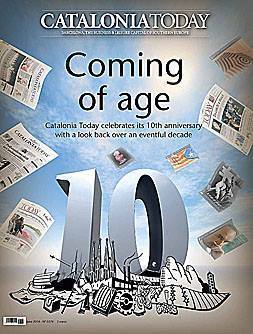
I was a reader of Catalonia Today before I was a writer for Catalonia Today.
My first memory of it (at that time published as a weekly newspaper) was being impressed by (now Editor) Marcela Topor's wonderful interview with the Catalan novelist Vicenç Pagès Jordà in an edition from October 2006.
"Bad readers make incomplete citizens" was the title of the article and I kept it filed away. I also continued archiving all the editions when my own work began to be published.
Last week, at random, I pulled out a copy and, as it it turned out, this one from November 2008 was the final weekly edition before the newspaper became a monthly magazine.
In it I had an article about Barcelona teenagers addictions to mobile phones (which is maybe even more timely today) but it is the content of the other pieces in this thirty two page publication that really impresses me still.
Catalonia Today then had such a great variety of voices, news stories and current information. In that particular issue a reader could open up the paper and be greeted with 'Long Term Resident' Matthew Tree railing against Franco or caressed with a softer story about the comeback of local Catalan donkeys (and here the focus was the beast of burden, not any political asses.)
Flicking through "The Week" section, anyone with decent English could learn about the situation of homeless people here or they might also read an update on the saga of Judge Garzon and his efforts to allow the opening up of mass graves from the Civil war times.
Equally, this issue also gave the opportunity to get well-informed about pollution and Co2 emissions in the Tarragona region or to try and understand the reasons for 30,000 Valencians taking to the streets over the use of English in schools there. A special double-page report by Gabe Abeyta Canepa delved into the world of the Mormon church in this part of the world and detailed the work of the 132 missionaries who walk their shiny black shoes across Barcelona's streets.
Towards the back of the newspaper in the Review section Joseph Wilson did some fine work in the arts, culture and language areas. Apart from the original interviews also there, I was always struck by the page which gave a round-up of the fairs, festivals and other events across the whole of Catalonia.
This made an impact on me because it showed that there was life (and even cultural life) outside Barcelona - a fact that is largely overlooked by both visitors and English language media. Catalonia Today was, and still is, the only print publication that routinely acknowledges the existence of a wider Catalonia outside the capital. It does this in a magazine that you can touch.
It was the first Catalan newspaper in English and I am proud to be a regular part of it. Catalonia Today deserves at least another ten years,...if not more.


June 2, 2014
Review of "Between Two Fires" by David Baird
 This book is exactly the kind of thing you would hope to find when you are aimlessly looking through the shelves in that slowly dying place called a bookshop.
Focusing mainly on the area around his adopted home town of Frigiliana, David Baird has used immaculate research to write in compelling detail about the "people of the sierra" - those who took to the mountains, some to escape, some because they had little choice and some because they had strong political opinions that could then only be expressed in a way that led them to be tagged by Franco's cronies as "bandits."
Here, we find a Spain that is almost impossible to recognise in the modern version of this country. As Baird points out, at the start of the 20th century the average person there lived not much longer than 30 years.
It was an almost feudal land where even subsistence farming was only for the lucky ones. There was no public hospitals or public transport and mules and donkeys were the only way of getting any distance without walking in bare feet or simple shoes.
It was a time of smugglers, travelling repairmen, mass illiteracy and child labour (often starting at 6 years of age.) Progress took the form of a single 30 watt bulb being installed in a house. After Franco's victory this part of the country also became the land of night-time curfews where anyone found in the streets after dark was automatically arrested.
It is unsurprising then that there was a significant level of support for the men who fought against authority. While some townspeople were kidnapped for ransom by the rebels it was the civil guard who were more hated but both sides were feared, and for good reason.
To help the guerrillas, such as providing them food or clothes, was enough to be thrown in prison but to not help them at times meant to the outlaws that you were collaborating with their enemy and could then be a target for recriminations. It is in this sense that ordinary people were caught "between two fires."
Apart from the clarity of Baird's writing and his even-handed approach (which is a relatively rare thing in the highly-politicised arena of Spanish history) half of the book is given over to those who were intimately involved in the events of the time to simply tell their own versions. Their first-hand accounts are vivid, illuminating and often poignant.
In short, this book plays a crucial part in making sure that this war is not a forgotten one, at least to English language readers.
[This review was also published at Good Reads and Amazon books.]
May 30, 2014
"One of every 10 euros spent on healthcare in the EU is for treating depression"
Here is another logical consequence of recent economic and political decisions...
"The increase in cases of depression in recent years is caused by the economic crisis and the associated problems of unemployment, among others..."
Source (in Castellano) here.
"The increase in cases of depression in recent years is caused by the economic crisis and the associated problems of unemployment, among others..."
Source (in Castellano) here.
May 25, 2014
"Jewish community to file complaint after anti-Semitic tweets posted from Spain"
"The Jewish community in...Catalonia has taken action over anti-Semitic messages posted on social networking sites after Israeli basketball team Maccabi Tel Aviv beat Real Madrid to win the Euroleague title on Sunday.
After the game in Tel Aviv was over, nearly 18,000 offensive messages appeared on Twitter, according to Jewish associations, which have announced they are planning to file a complaint with the state attorney on Tuesday. According to sources from the Jewish community, the complaint will include tweets from five users of the micro-blogging site – along with their full names – which, the complainants will argue, constitute incitement of hatred against Jews."
Read more from El Pais [in English] here.
After the game in Tel Aviv was over, nearly 18,000 offensive messages appeared on Twitter, according to Jewish associations, which have announced they are planning to file a complaint with the state attorney on Tuesday. According to sources from the Jewish community, the complaint will include tweets from five users of the micro-blogging site – along with their full names – which, the complainants will argue, constitute incitement of hatred against Jews."
Read more from El Pais [in English] here.
May 20, 2014
Barcelona launch of my new non-fiction book, "The Remade Parent"
 I invite you to come along and join us at the Aunzcat Soc space at C/- Pau Claris 106 Barcelona at 6pm on Friday, June 13, 2014.
We will be launching my new non-fiction book "The Remade Parent."
May 9, 2014
"Sahara sands and other's lands" - My latest article for Catalonia Today
 Fine, red-brown dust covered every flat surface across Europe and the south of the UK just four weeks ago.
 If it was ever needed, it gave the strongest physical evidence that nature does not respect borders as well as telling our eyes, noses and throats that continents can exchange things through the air as easily as we can go on our holiday flights.
Apart from local pollution and pollen, the major source of this all-encompasing powder was North Africa's Sahara desert. Powerful wind storms there whipped up the particles making them airborne well into the north where they were brought down by light rain.
Personally, I like the idea that someone living in Catalunya (or even London) can be affected by natural forces from a desert that we have usually thought of as being "a long way" to the south. (I'm often reminded how close it really is by the Arabic traffic sign on the autopista near El Papiol.)
This desert, like the others I have visited in the USA and Australia, is both enchanting and beguiling.
The apparent emptiness, the sheer width of the open space, the calming shimmer of the sand, the soft curves of the dunes, the barren beauty of the raw plains and the friendly proximity of the stars in your face at night, and (if you are lucky) all from the back of a placid, gentle-paced camel with extra long eyelashes.
To me, the desert is infinitely more preferable than trying to look at the irritatingly ceasless, repetitive and ultimately moronic monotony of the ocean, which for all it's supposed romance and admittedly great bounties, is to me just something that makes me seasick.
But this recent weather phenomenon, including the reporting of it, has another aspect to it.
Many of us are at least subconsciously pleased that it has come from outside where we live or have grown up. It is easy, convenient, mentally lazy, to categorise something that has created a minor health concern like asthma as a problem caused by an "oustide" influence or created by an "external" source.
We can, without even vaguely realising it, make a casual association with other "African problems" like immigration/refugees/hunger/starvation/poverty and this allows us to wash our hands of any possible moral responsibility simply because it was not "us" who made it so.
We can quietly form the idea that it is those from outside our own homelands who bring in trouble/disease/political extremism/desperation or even "false" religion and this means that we have logically gone most of the way to dismissing the needs of negros with "other continent" problems.
And we have barely exercised a brain cell in the process.
Because of the luxury of viewing Africans as others, and not "one of of us" we also set up a chain of thought (or is it more like a lack of thought?) that links "their" difficulties as somehow removed from "our" difficulties.
This permits a kind of unconscious, indifferent racism. By creating the idea of "us" we create the idea of "them." Even the word "foreign" is objectionable to me.
A foreigner therefore, is an "outsider," Auslander in German or an extranjero (which has the suggestion of someone being "extraneous," to an English-language ear, meaning: " irrrelevant/not forming an essential or vital part.)
So, weather can reach out over frontiers. When any person does the same we should be complelled to consider the Latin writer Terentius' words from around 160 BC. He stated that " I am a human being, so nothing human is foreign to me."
[This article was first published in Catalonia Today magazine, May 2014.]
May 6, 2014
Podcast of lecture at the Uni of Barcelona on "Modern Spain and Australia"
 Last Wednesday, I did a talk about the cultural, societal and other differences (and similarities) of modern Spain compared to Australia.
 A podcast of it is available here.
April 24, 2014
Modern Spain and Australia: a lecture at the Uni of Barcelona
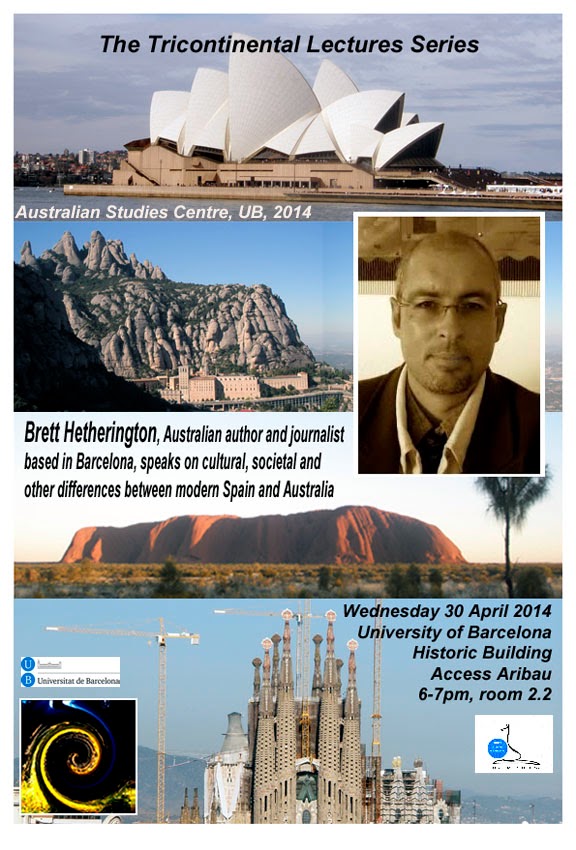
I will be giving a [public] talk at the University of Barcelona next Wednesday.
As part of the Tricontinental Lecture Series, Iwill be speaking about the cultural, societal and other differences (and similarities) of modern Spain compared to Australia.
My talk will take place at 6pm in the Historic Building (Access via C/- Aribau) Room 2.2, on Wed. 30 April.
Everyone is invited.
April 20, 2014
Figueres...but not as we know it
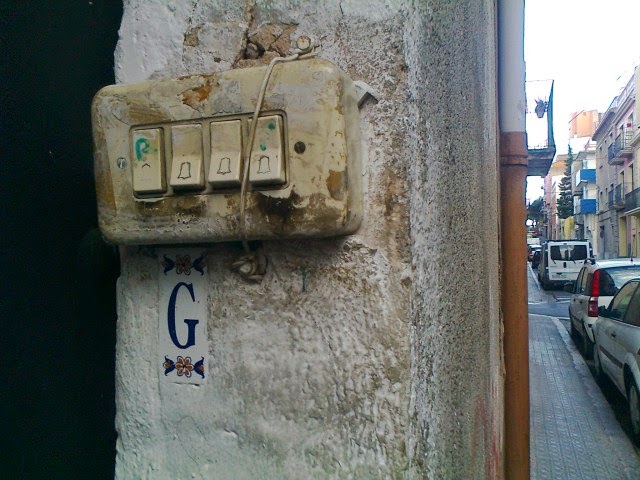 Photo: http://www.vicencpagesjorda.net/cat/g...
An insightful and illuminating piece of writing [in English] by novelist Vicenç Pagès Jordà revolving loosely around Figueres, a Catalan town most famous for being the birthplace ofSalvador Dalí and home to his museum.
Pagès Jordà covers subjects as wide ranging as pataphysics, the mathematical beauty of the Bay of Roses, the first ever submarine, ironic faith and ridicule as desperation.
April 13, 2014
Spain as one of the most equal for housework and gender?
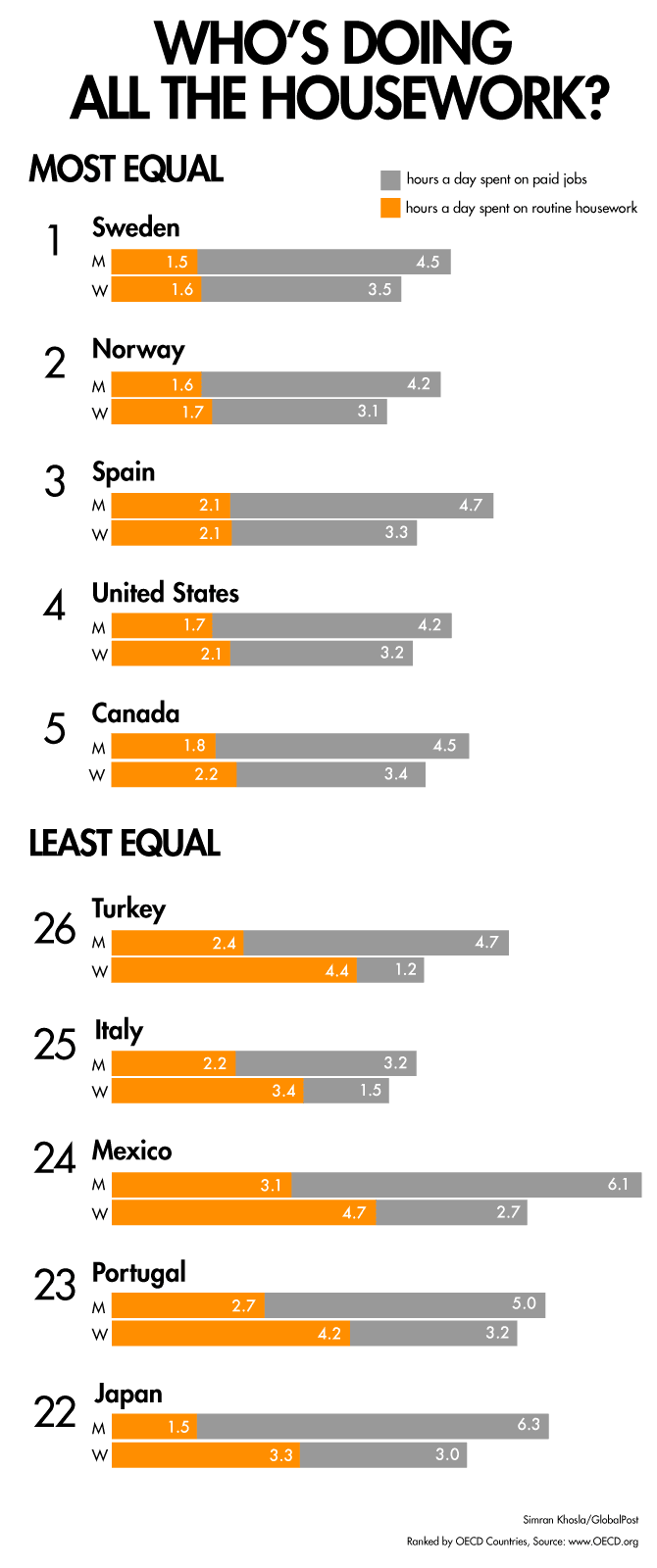 Apparently so!
"The OECD compiled data from national surveys of men and women ages 15 - 64, both single and married. Hours spent on childcare were included as unpaid work for the few countries that had comprehensive statistics.
In Scandinavian countries like Norway and Sweden, government regulations keep work hours to a comfortable 37.5 per week (40- to 50-hour weeks prevail in other Europeancountries)."
[Source: here.]
"First thought:" My Substack page

For readers who like stimulating & original lit-bits on social & personal issues. From the mind of an always-curious author/teacher/journalist living long-term in Europe (Catalonia/Spain.)
- Brett Hetherington's profile
- 10 followers

